
Day: January 10, 2025

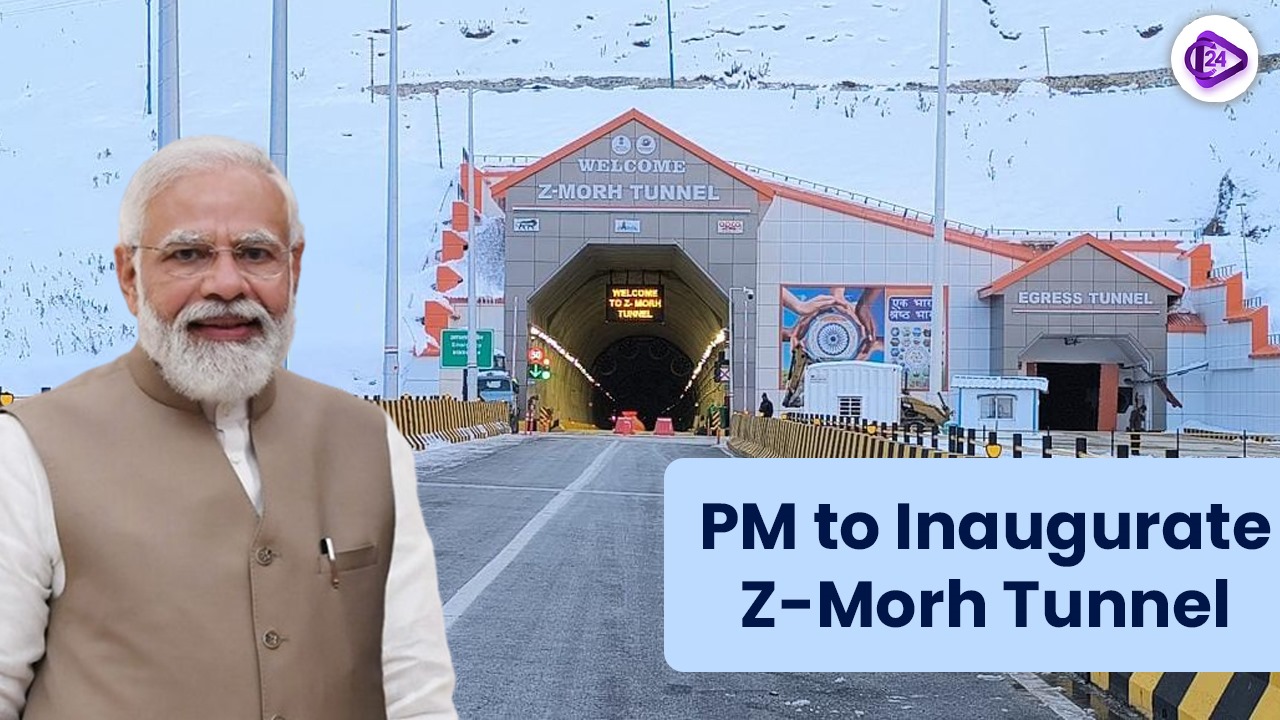
PM Modi to Inaugurate Z-Morh Tunnel: A Game-Changer for Jammu & Kashmir

The immensely awaited Z-Morh Tunnel inauguration by Prime Minister Narendra Modi on 13th January 2025 is probable to turn the wheel in Jammu and Kashmir’s infrastructure and strategic development. The 6.4 km long tunnel to be constructed at an altitude of over 8,500 feet provides the civilization with the prospect of being connected through the year to Srinagar and Sonamarg which is impossible during the winter season. 

Key Points

Economic and Strategic Importance:

  • The Z-Morh tunnel can be termed an important link in the infrastructure network since it is a means through which several items and people move even in the worst of weather.

  • It provides year-round access to Sonamarg and Ladakh and substantially minimizes the problems of road blockades due to snowfall.

Symbol of Resilience:

  • The project also had its problems- time issues and the October 2024 militant attack on the workers’ camp in Gagangir, Ganderbal that caused seven casualties. Nevertheless, construction went on and was perhaps in defiance of terrorism.

Strengthened National Security:

  • Due to rising geopolitical tensions especially in the region of Ladakh, the construction of the tunnel enhances the ability to provide for the population's needs, as well as strengthen its military logistical capacity.

  • These projects along with the 13.1 km long Zojila Tunnel further improve access to sensitive border areas as the latter is under construction and is expected to be completed by December 2026.

Government's Development Push

It is important to note that while initial planning of the tunnels began in 2012 under the Congress-led UPA government, subsequent governments headed by the present prime minister have fast-tracked the project.

The elaborated inauguration is prepared by the government of India to highlight infrastructure-centric development in Jammu Kashmir and Ladakh.

A Message to Militants

The inauguration by PM Modi especially after the recent militant attacks reveals a clear message that India’s developmental vision will not be hindered by acts of terror.

History and Ideology

Z-Morh and Zojila twin tunnels were initially planned during the Congress regime of Manmohan Singh in 2012 and have turned into flagship projects now. The elaborated inauguration is prepared by the government of India to highlight infrastructure-centric development in Jammu Kashmir and Ladakh.

Conclusion

Thus, the opening of the Z-Morh tunnel is a symbol of not only the infrastructure development goal achievement but also the effective and successful fighting against the problems encountered in India. As much as the upcoming Zojila tunnel, represents the nation’s resolve to construct a future of sound development, stability, and connectivity for Jammu Kashmir and Ladakh.

India First Commercial BESS to Boost Renewable Energy in Delhi

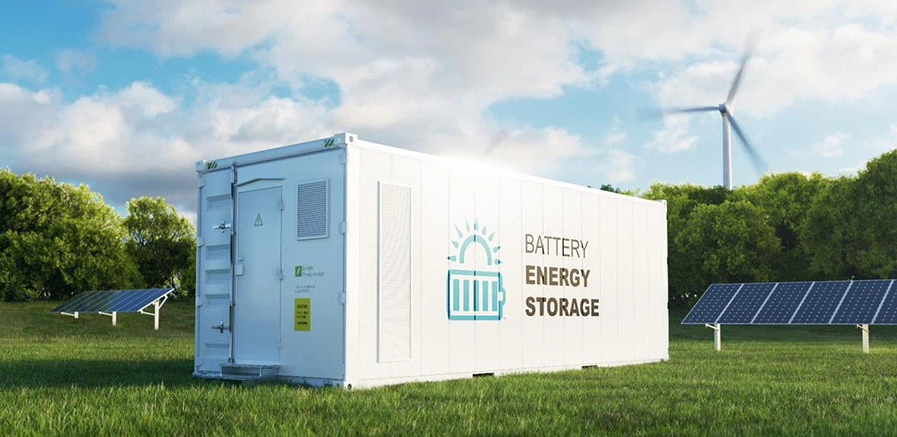
India’s first Battery Energy Storage System (BESS), which is designed at a commercial utility scale, is set to become operational by March 2025 in South Delhi's Kilokri village. This groundbreaking project will play a pivotal role in enhancing the reliability of the energy supply and will significantly contribute to the integration of renewable energy with the national grid. The BESS is expected to store and manage energy efficiently, ensuring that the stored renewable energy can be deployed when demand peaks, thus reducing the reliance on conventional energy sources. By improving grid stability and energy access, this system aims to revolutionize the way India harnesses and utilizes renewable power, supporting the country’s broader goals of sustainable and clean energy use.

Key Features 

  • Capacity:

    • The concept of battery clusters is a 20 MW / 40 MWh cluster of batteries.

    • Produce 4 hours of power daily them being the daytime hours and the nighttime hours.

  • Energy Source:

    • Supported by renewable energy and operating through power purchase agreements.

  • Location:

    • Located at Kilokri village in South Delhi India.

  • Initiative:

    • Designed by BSES Rajdhani a joint venture of Reliance Group and Government of Delhi.

  • Utility:

    • Delivers round-the-clock reliable power to over 12000 low-income consumers.

What is a Battery Energy Storage System (BESS)?

A BESS is an enhanced system in which energy can be stored and administrated depending on grid needs which helps integrate renewable power.

Components

  • Batteries: These are lithium-ion, lead-acid, or flow batteries.

  • Inverters: Change DC (stored) to AC (for connection with the grid).

  • Battery Management System (BMS): Be alert on health and performance monitoring.

  • Thermal Management System: It is responsible for controlling the temperature of the battery.

Advantages

  • It is used to store any unwanted energy and also to supply backup power.

  • Balances load and enhances flexibility in the system for integration of renewable generation resources.

  • Provides clean power as well as inexpensive electricity.

Limitations

  • The main negative aspect of this technology is the high initial cost of capital and the short cycle life of the devices.

  • Distribution losses and costs increase over time and environmental impacts associated with the mining and disposal of critical minerals.

BESS in India: Present Scenario and Future Planning

  • Current Capacity: India had about 37 MWh of BESS in the fiscal year 23.

  • Target: Generate 4 GWh by 2026 and 4 GWh by 2030-31 with support from state funding and subsidies.

Impact

  • Annual reduction of 1.3 MMT of carbon emission.

Government Initiatives

For BESS development, the following are the government initiatives that may be of support to the achievement of this goal or will get in the way:

  • Viability Gap Funding (VGF):

    • Which are approved in September 2023 for 4 GWh capacity and to be commissioned by 2030-31.

    • Funds 40% of the capital cost of the project as the project’s source of finance.

  • Total outlay: ₹3,760 crore for a triennial period 2023–24 to 2025-26.

  • Production-Linked Incentive (PLI) Scheme:

    • ₹ 18,100 crore will be earmarked for the advanced cell chemistry of battery manufacturing.

Significance of the BESS Initiative

  • Environmental Impact: Encourages consumption of clean energy, reliance on which is not associated with high emission of fossil fuels.

  • Economic Growth: Enhances the stability of the electricity grid to afford both industrial and residential applications a stable source of electricity.

Conclusion

Delhi’s first Battery Energy Storage System (BESS) will be a stepping stone in the integration of renewable generation into the grid. This project would mean affordable, clean energy for thousands of people while also eliminating barriers to green energy. Assisted by governmental measures, it points to India’s actions for decreasing CO2 emissions and improving the use of renewable energy sources.

Polar Vortex Shift Triggers Severe Winter Storm in the US

A winter storm has left five people dead in the U.S., school closures, hazardous road conditions, and electricity blackouts. Currently, over 60 million people in 30 states are under weather warnings with seven states under state of emergency. The storm likely caused by a shift in the polar vortex southward may result in severe thunderstorms, tornadoes, and hail in the next coming days.

What is the Polar Vortex?

The polar vortex is made up of a cyclic conduit of strong and fast-moving, upper-air winds that circle the North Pole in a counterclockwise direction, advancing a polar low-pressure system.

  • Purpose: These winds serve as a mechanism that prevents the cold arctic air from spreading towards the central part of the earth.

  • Disruption: At times the vortex becomes reduced in intensity or even disrupted and this lets cold air into parts of mid-latitude regions such as the United States, Canada, parts of Europe, and Asia.

Types of Polar Vortex

  • Tropospheric Polar Vortex:

    • Found in the troposphere level up to the altitude of 15 km.

    • Said to affect nearly all weather conditions.

  • Stratospheric Polar Vortex:

    • Accounts to this class are resident in the stratosphere, which ranges between approximately 15 to 50 km in altitude.

    • Temporarily disappears during the summer season and is most noticeable in the autumn.

How does the polar vortex happen?

  • Temperature Gradient:

    • In winter, the time sunlight shrinks or is nonexistent in the polar regions or cold while in the equatorial region, the temperatures remain high.

    • This temperature difference makes a high-speed, narrow current of air form around a polar vortex or the polar night jet.

  • Pressure Systems:

    • A large temperature contrast provides a stable pattern of a vortex.

    • This is problematic because weak pressure differences cause the vortex to become deformed or disrupted.

Distortion and Arctic Oscillation

  • Weaker Jet Streams: To know this, consider what happens when the pressure difference reduces; the jet streams become slower and more wavy, after which they dump Arctic cold air in the low latitudes.

  • Arctic Oscillation (AO):

    • Positive Phase: Stronger polar vortex, cold air remains confined to the Arctic.

    • Negative Phase: Weaker polar vortex, cold air spills southward, leading to extreme weather events like the recent winter storm.

Climate change Effects and the case of the Polar Vortex

Scientists are actively studying how climate change influences the polar vortex, with key observations including:

  • Polar Amplification:

    • These are warming at a faster rate than mid and high latitudes, thus declining temperature gradient that fuels the jet streams.

  • Weakened Polar Vortex:

    • Reduced temperature contrast leads to a weaker and more unstable polar vortex, increasing its likelihood of distortion.

  • Role of Arctic Sea Ice:

    • As Arctic sea ice diminishes, the dark ocean absorbs more summer heat.

    • In winter, this heat is released into the atmosphere, disrupting wind patterns and weakening the polar vortex.

Effects of the Disturbance of Polar Vortex

  • Severe Weather: Severe cold air, large snowstorms, and hazardous roadway and electricity situation in midlatitude area.

  • Increased Frequency: Another consequence is, that weak vorticity could cause more disturbances in turning cooler and severe colder winters and extraordinary cold in surprise places.

Conclusion

Application values for the polar vortex itself are important for maintaining global climate balance. However, climate change threatens to disrupt agriculture in the area, for instance through serious winters which are difficult to predict. To counter these effects, global warming has to be tackled, understanding the Arctic and its conditions has to be achieved and infrastructure has to be built capable of enduring severe climate shifts.

India Takes a Big Step Toward Self-Reliance in Genomics

India has made significant strides toward becoming self-reliant in genomics in a path-breaking development. It was during the Genome India Data Conclave in New Delhi that Union Minister Dr. Jitendra Singh boasted of the fact that India now has its genomic data. This feat is significant in Indian scientific development, especially in reducing dependence on foreign data in genomics and pushing the country forward into contextual and individualized health care as well as medical treatment.

Launch 

The Indian Genomic Data set is a project of the Department of Biotechnology (DBT) which was initiated at the Genome India Data Conclave. It was also during the event that Dr. Singh presented to the forum the ‘Framework for Exchange of Data Protocols (FeED)’ and the Indian Biological Data Centre (IBDC) Portals. Increased access to these platforms will make it possible for researchers across the globe to access 10,000 whole genome samples, this efforts will deepen the efficiency of research studies that involve genomic data. The IBDC will provide indispensable genetic data to advance innovative medical, health, and scientific fields.

Significance of the GenomeIndia Project

The GenomeIndia project intends to maintain a repository that indeed captures the genetic directory of India. People of this nation are diverse so, it is crucial to know about them for medical purposes. The genomic data shall be very valuable in studying genetic diseases, formulating mRNA vaccines, and managing health as a special challenge for India. In my opinion, such a project is one of the promising steps toward improvement of the genetic research’s accuracy and orientation to the population’s needs.

Diversity in Indian Genomes

Thus, India is genetically as culturally, and geographically diverse. The whole genome samples include 10,000 people from diverse Indian populations a result of which is crucial in the development of Genomic tools for the Indian demographic. Such diversity will bring in a better health solution, especially in genetic diseases or disorders, which are unique to India.

Procedures for Sharing Data Ethically

To maintain accountability for handling genetic data, the GenomeIndia project has established a Framework for Exchange of Data Protocols (FeED). These are founded on the Biotech-PRIDE Guidelines that were adopted in 2021. These guidelines focus on the highest quality of the shared genomic data with a specific emphasis on the national level, to be transparent and take responsibility for how these data are used. This initiative also benefits scientific endeavors it also discusses the ethical aspects related to genomic research.

Growth of India’s Bioeconomy

The bioeconomy in India is on a fast growth track and it supplemented from $10 billion in 2014 to $ 130 billion in 2024. The estimates indicate that the bioeconomy size of India might reach $300 billion by the end of 2030. This growth is due to strong leadership, advances in biotechnology, and the announcement of a new Bioeconomy Policy in India which has given a new direction to India in Biotechnology. Genomic science has a strategic function in this revolution as genetics shapes productions and discoveries in the general commercial spheres such as medical, farming, and environmental.

Future Goals in Genomics

This goal will drive further the process of creating a culture of individualized medicine to enhance the IC’s performance, application, and delivery of optimized treatments. Such partnerships with institutions such as Tata Memorial Hospital are also planned for the future, which will focus on the improvement of the quality and the quantity of data collected and will help the company to better understand the existing genetic disorders, as well as the available treatment options.

Conclusion

The Genome India project marks a pivotal moment for India in genomic science, ensuring self-reliance in healthcare research, addressing genetic diseases, and advancing personalized medical treatments.

India-Taliban Talks 2025: Strengthening Regional Ties and Security Cooperation

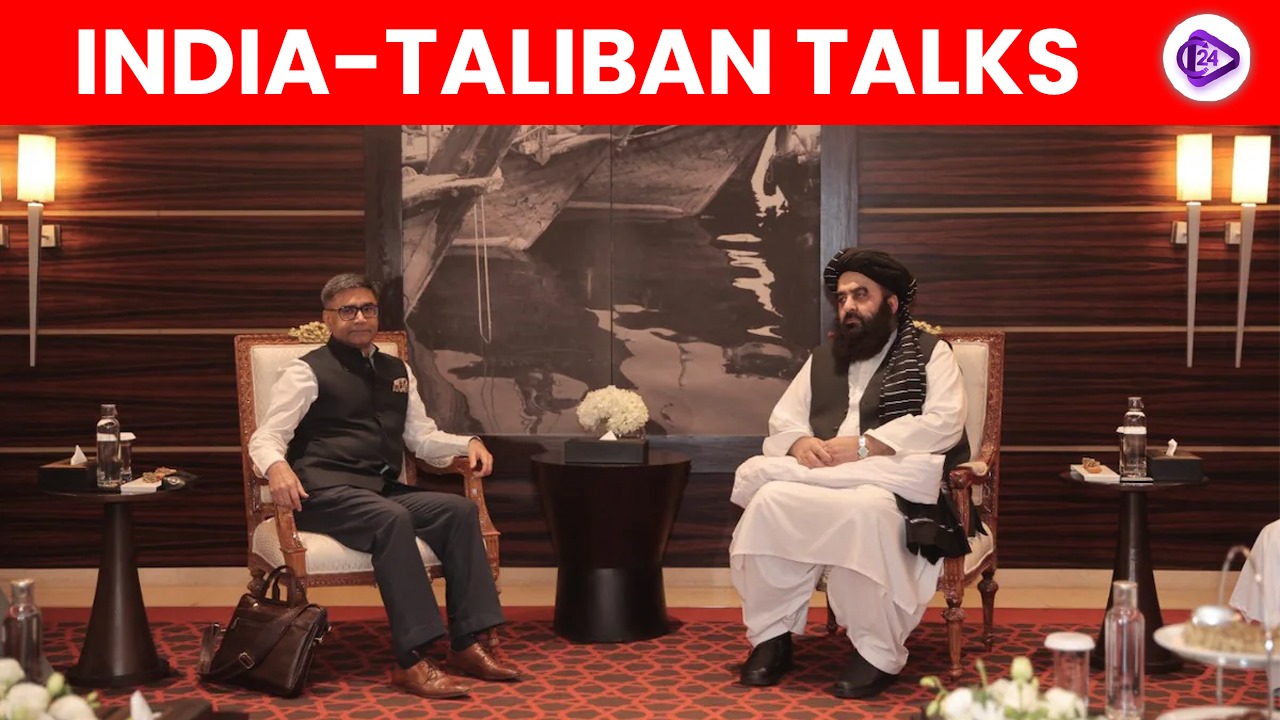
On the 8th of January 2025, the Indian Foreign Secretary Vikram Misri officially met the Afghan Taliban’s Acting Foreign Minister Amir Khan Muttaqi in Dubai – the first official recognition of such a level meeting. Although India has not officially recognized the Taliban regime, such interaction vividly highlights New Delhi’s practical policies consistent with realistic goals when dealing with similar problems and regional interactions.

Key Points Discussed:

  • Security Concerns:

    • India highlighted their worries about Pakistan-based terrorist organizations such as Lashkar-e-Taiba (LeT) and Jaish-e-Mohammed (JeM) compared to inside Afghanistan.

    • The Taliban said that they fully understood these concerns of security and promised to facilitate to ensure that Afghan soil cannot be used by those who have ill intentions against India.

  • Humanitarian Aid:

    • India made further pledges in the form of development aid for Afghanistan's health ministry and refugee resettlement.

    • This aid comes after Pakistan alone has deported more than 500000 Afghanistan residents an event that has worsened humanitarian conditions in Afghanistan.

  • Chabahar Port:

    • Sittings stressed the improvement of using Chabahar Port in Iran for both trade and humanitarian objectives.

    • Owned by an Indian state enterprise, the port helps avoid using Pakistani facilities and provides help to Afghanistan.

  • Development and Cooperation:

    • India restated its willingness to foot the developmental requirements of Afghanistan and contemplated other projects in addition to the ongoing humanitarian ones.

    • They also discussed further development of relations in sports, especially cricket.

  • Humanitarian Engagements:

    • India has supplied wheat, medicines, vaccines, and aid in the form of earthquake assistance since the Taliban seized power in 2021.

    • However, India renewed limited diplomatic relations with the new government in Kabul after 2022 leveling in the political instability.

  • Regional Context:

    • The meeting took place several days after India accused Pakistan of drone overkill in Afghanistan that claimed the lives of dozens of civilians.

India and Taliban relation 

  • Geopolitical Considerations: Consequently, India’s dealings with the Taliban are driven by the changing geopolitics of the South Asian region, especially with the fast-rising China. India has considered interaction with the Taliban as a way to protect its interest in Afganistan and broadly in the South Asian region. 

  • Counter Terrorism: India is worried that groups like Lashkar-e-Taiba (LeT) and Jaish-e-Mohammed (JeM) could use Afghanistan to stage attacks against India. For this, the primary objectives of India’s political engagement with the Taliban are to achieve improved security and thereby reduce the terrorism problem in Afghanistan or its roots in Afghanistan.

  • Counteracting Pakistan’s Influence: Pakistan has always played a vise-like role in Afghanistan’s affairs and that too in a manner which is not very favorable to India. Taliban is another reason India has seen involvement as a way of gaining access to Afghanistan and neutralizing Pakistan’s hold in the region.

  • Protecting Indian Investments: India has committed quite a lot of funds to implement infrastructure facilities in Afghanistan such as roads, electricity, and education. The protection of these investments, and safeguarding of the Indian interest in Afghanistan is one of the key reasons which makes India engage with the Taliban. The Taliban has assured India it will ensure the security of these facilities.

Issues and Concerns

  • Human Rights:  The relevant issues like women's, and minorities' or any form of representation of Afghanistan's disenfranchised groups in the rulership rights protection has not been taken into consideration.

  • Pakistan’s Reaction: The relations between Pakistan and India have never been friendly and Pakistan is most likely to respond aggressively to India’s interaction with the Taliban. Pakistan has accused Afghanistan of hosting the militants who staged attacks in Pakistan, but the Taliban has strongly denied the allegations.

Conclusion 

The future policy of India towards the Taliban will remain a delicate dance between what many will consider justified security concerns and an active ‘stakeholder’ status in efforts at rebuilding Afghanistan. The two parties also agreed to keep meeting and continue dialogue on matters of mutual concern. The meeting is indicative of India’s approach to Afghanistan which is proactively positive and seeks to combine security concerns with development and humanitarian needs.

Draft of Digital Personal Data Protection Act 2025

The Indian government has proposed the rules regarding the Digital Personal Data Protection Act of 2023 and the public has been invited to give inputs till February 18, 2025. These rules are expected to put into practice the Digital Personal Data Protection Act of 2023 provisions in the country. To to regulate the protection of personal data in a digital format by being more accountable and transparent to data fiduciaries including social media and e-commerce companies.

Key Features of the Draft Rules:

  • Data Protection Board (DPB):

    • The Data Protection Board (DPB) shall work digitally to respond to complaints/remain compliant.

    • For violations, it can impose penalties of up to ₹250 crore.

  • Children’s Data Protection:

    • Organizations must be required to take parents' concerns before processing the data of their children.

  • Data Transfers Outside India:

    • The draft allows the transfer of personal data to certain countries that the government can identify.

  • Consent Management:

    • Thus, consent to the usage of data must also be gained in as simple language as possible, in any of the 22 communicating languages that are recognized in India.

    • The consent managers, and third-party services authorized by the DPB, will enable this process.

  • Penalties:

    • Information regarding fines that depend on the level of transgression and recursion is provided in the DPDP Act 2023 for students.

  • Spam Calls and Data Misuse:

    • The DPDP Act also allows citizens to get remedies for data misuse, such as spam calls.

About Data Protection 

  • People can also choose not to allow their data to be processed by any organization and in addition to that, no data of a person should be processed without his or her permission. It should also be formal, informed, and unilateral.

  • Appropriate security to the Data Privacy Act personal information are encryption, storage, and control access requirements to avoid infringements on personal data ownership.

Basic Transparency and Data Subject Rights

  • It becomes mandatory for organizations to give information about how the data has been collected, and processed and further how it will be utilized in easy format.

  • The data collected about data subjects have rights which include the right of access, right to rectification, right to erasure, and right to restriction of processing respectively.

International Standards and Bodies of Regulations

  • Other countries like the EU in its Data Protection Regulation Act or the USA under its California Consumer Privacy Act have even set high bars on data protection. They also required similar laws to cover their privacy and security just as the Indian counterpart did.

  • Non-compliance will be addressed by the Data Protection Board of India The Data Protection Board of India has been raised A of its independence.

The Digital Personal Data Protection Bill, 2023

  • The Bill concerns personal data processed about an organization’s functioning, through the internet or other computer media, processed whether the data was originally collected online or on paper where data on paper is transferred to electronic media and data processed in any country that targets consumers in India.

  • It makes data fiduciaries use reasonable security measures for data, for the accuracy of data for the purpose it served.

  • However consent is a key idea, and exemptions for government data processing may be adverse to privacy.

Concerns with the 2023 Bill

  • The exemptions in national security may increase the number of data collected from the public and thus a violation of privacy.

  • Still, the Bill doesn’t contain regulations on data portability, as well as the right to be forgotten.

  • Cross-border transfers of personal data require enhanced protection measures for satisfactory privacy-protecting mechanisms.

Requirement for Robust Data Privacy Legislation

  • India is still far behind in the enforcement of specific legal data protection standards that meet international standards.

  • The currently implemented Information Technology Act, of 2000 has inadequate provisions for and implementation of the newer issues related to IT like e-commerce, cyber defamation, online scams, etc.

Important Legal Cases

Cases like Shreya Singhal v/s Union of India (2015) and Justice K.S. Puttaswamy (retired) v/s Union of India (2017), the Courts have further strengthened the constitutional right to privacy.

Objectives of the DPDP Act, 2023:

The Act aims to regulate the protection of personal data in a digital format by being more accountable and transparent to data fiduciaries including social media and E-commerce companies. It requires the platform to collect minimal data and grants an individual the right to give ‘consent’ or ‘withdraw’ consent, or ‘port’ data.

Way forward

After public participation and stakeholder approval, the above draft rules will be presented to Parliament as a paper. The enactment will now take two years before it is fully implemented to allow the entities to come to terms with the provisions of the Act. These rules go hand in hand with the principles formulated by the government to protect personal data, gain digital trust, and provide digital services to the citizens in a digital world.

Conclusion

The implementation of the Digital Personal Data Protection Act 2025 is expected to reshape data governance in India, ensuring more transparency, accountability, and protection of personal data in the digital era.

Frequently Asked Questions (FAQs)

The current affairs cover recent national and international events related to UPSC, SSC, Banking, Railways, and State PCS.

You need to read about the current affairs daily, and revise them every week and every month to keep them longer in your memory.

Yes, Class24 provides free downloadable Daily Current Affairs PDFs for easy revision.

Yes, you can practice MCQs and quizzes to boost your exam preparation.

Absolutely. The content is written in simple, easy-to-understand bilingual language suitable for beginners.

Go to class24.com and click on the current affairs section directly, where you find everything that you need.

ssc-toppers

Start Learning Today with Class24

Related current affairs

Class24 offers free video lectures for smart preparation, covering CGL, CPO, CHSL, MTS, and GD exams. Learn from expert faculty, revise concepts easily, practice with PYQs, and improve speed and accuracy through high-quality, exam-focused video lessons anytime, anywhere.

Get success in your hand. Start study anytime anywhere.

The journey becomes simple and enjoyable when you start taking interest in it. And through our app “Class24”, we will be your trusted partners in developing that interest.

Daily Quizzes
Mock Tests
Ongoing

No ongoing tests right now.