


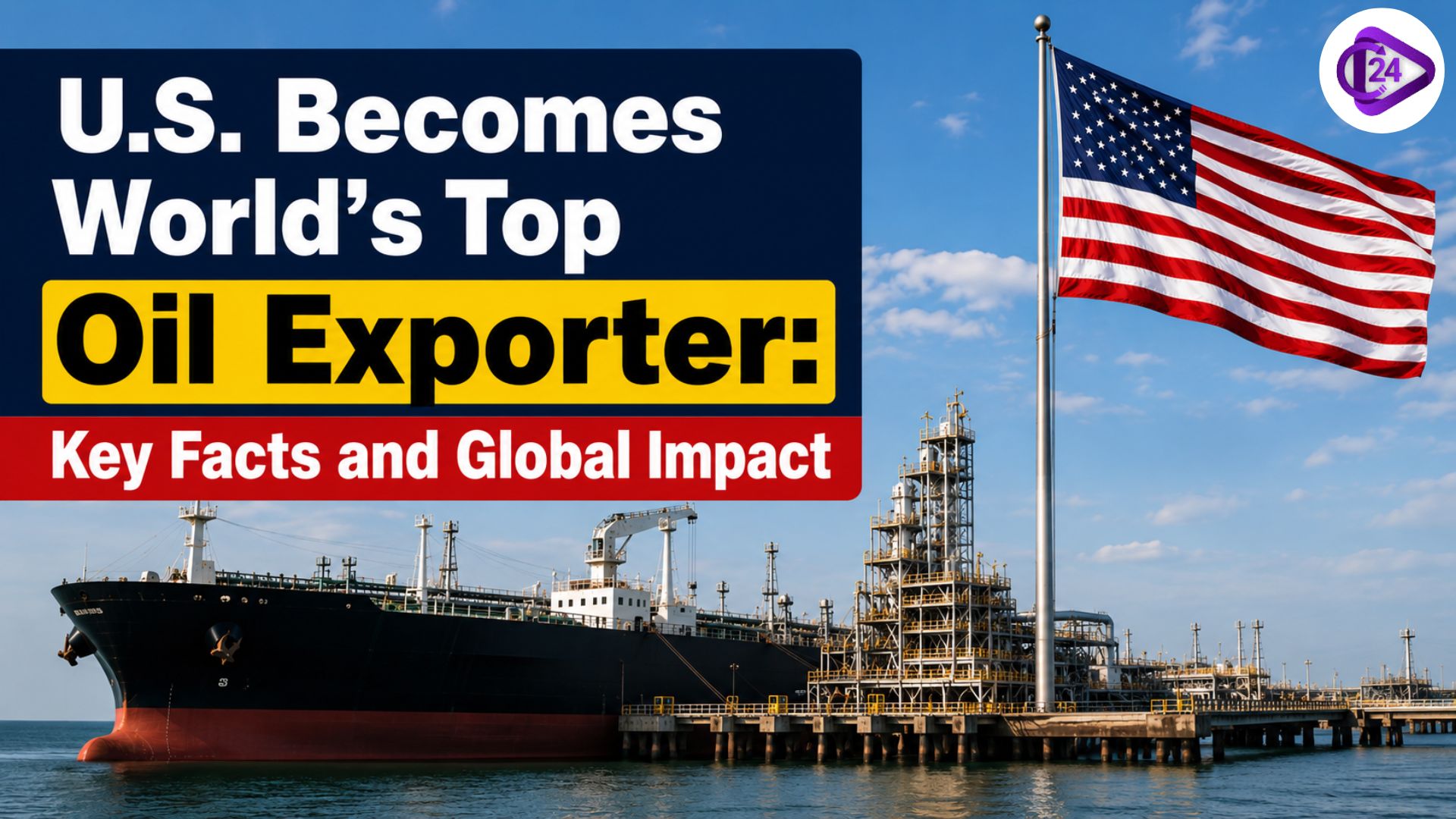
Oil Exporter: A massive shift has propelled the United States to the top spot as the world’s largest oil exporter, changing the world’s energy landscape forever. Many years ago, the United States was experiencing a shortage of energy and was consuming imported oil. Thanks to technological development, higher domestic production, and astute investments, however, the nation has carved itself a niche as a foremost oil exporter in the world.
This accomplishment brings about a significant change in the world of energy. Furthermore, it enhances the economic strength of the USA and its impact on international trade, geopolitics and energy security. The switch of the U.S. to a world-leading oil exporter could have profound consequences on the global energy market, where demand continues to rise.
Key Highlights of U.S. Becoming the World’s Top Oil Exporter
- The combined forces of the United States have become a top oil exporter globally.
- Oil production rose sharply thanks to advanced drilling technologies.
- The development of shale oil recast the energy landscape in America.
- Major European and Asian markets now receive U.S. exports.
- National energy security has been fortified by energy independence.
- Imports of oil are a large source of economic growth and jobs.
- That shift has changed the patterns of trade for energy around the world.
- Rising production has given America greater leverage within energy markets.
Why U.S. Becomes World’s Top Oil Exporter
- The Shale revolution increased oil supply: The combination of hydraulic fracturing and horizontal drilling unleashed the potential of U.S. shale oil resources and caused nationwide crude oil production to soar, making the United States a global powerhouse.
- Record Domestic Oil Production: U.S. crude oil production achieved record levels, contributing to excess commodities that can potentially be exported on the international market.
- Research on advanced drilling technologies: innovations in drilling and extraction have increased efficiency, lowered the cost of production, and allowed companies to access oil reserves that were previously uneconomical.
- Relaxing Export Restrictions: While most restrictive U.S. crude oil export restrictions were lifted in late 2015, this reduced burden created selling opportunities for U.S. producers on global markets, and this development has driven a torrential surge of exports as a consequence.
- Rising Global Appetite: European and Asian nations stepped up their imports of U.S. oil in the face of supply outages elsewhere.
- Improved Export Infrastructure: With significant investments, infrastructure such as pipelines, storage facilities, ports and export terminals were enhanced to move oil on a more efficient basis to customers around the globe.
- Energy Independence Objectives: Increased domestic production lessened reliance on imported oil and enhanced America’s position within the international energy markets.
- Shifts in Global Supply Due to Geopolitics: Traditional suppliers like Russia, as well as Middle Eastern producers, saw disruptions that allowed more capacity for U.S. oil exports around the world.
- Record Highs for Petroleum Exports: Recent history has shown record levels of both petroleum and energy exports from the United States, solidifying America as a top global supplier.
- Competitive Light Sweet Crude: Most US crude produced is relatively high-quality light sweet crude, highly valued by international refiners, thus providing excellent export demand.
PYQs on U.S. and Oil (Previous Year Questions)
| Exam & Year | Question | Options | Answer |
| UPSC Prelims 2013 | The term “Shale Gas” is associated with? | (A) Coal Mining (B) Unconventional Hydrocarbon Resources (C) Nuclear Energy (D) Hydropower | (B) Unconventional Hydrocarbon Resources |
| SSC CGL 2022 | Which country is currently among the world’s largest crude oil producers? | (A) Japan (B) United States (C) Germany (D) France | (B) United States |
| RRB NTPC 2021 | Is OPEC primarily associated with the production of? | (A) Coal (B) Natural Gas (C) Petroleum (D) Uranium | (C) Petroleum |
| SSC CHSL 2023 | The headquarters of OPEC is located in? | (A) Geneva (B) Vienna (C) Paris (D) Brussels | (B) Vienna |
| UPSC Prelims 2018 | “Shale Oil” is obtained from? | (A) Sedimentary Rock Formations (B) Volcanic Rocks (C) Limestone Only (D) Coal Seams | (A) Sedimentary Rock Formations |
| SSC MTS 2022 | Which country is known for the Shale Revolution? | (A) Russia (B) Saudi Arabia (C) United States (D) Iran | (C) United States |
| RRB Group D 2022 | Which organisation publishes global oil market reports? | (A) OPEC (B) UNESCO (C) WHO (D) FAO | (A) OPEC |
| CDS 2023 | Is hydraulic fracturing primarily used for the extraction of? | (A) Gold (B) Crude Oil and Natural Gas (C) Iron Ore (D) Uranium | (B) Crude Oil and Natural Gas |
| SSC CPO 2021 | Which country was most affected by the Arab Oil Embargo of 1973? | (A) United States (B) India (C) Brazil (D) Australia | (A) United States |
| State PCS 2022 | Which U.S. state is the largest crude oil producer? | (A) California (B) Texas (C) Alaska (D) Florida | (B) Texas |
Andaman Islands Set Guinness World Record with 73-Foot Underwater
Conclusion on U.S. Becoming the World’s Leading Oil Exporter
The U.S. Becoming World’s Largest Oil Exporter is a Stunning Paradox in Global Energy History. Through technological innovation and shale oil development, America has gone from an energy importer to a leading exporter as well through strategic investment. In addition, this accomplishment has also bolstered economic growth, increased energy security and expanded global influence. Despite hurdles like market fluctuations and environmental issues, U.S. Becomes World Top Oil Exporter milestone showcases that you can constantly adapt to new situations and continue leading your position in a changing energy landscape.