
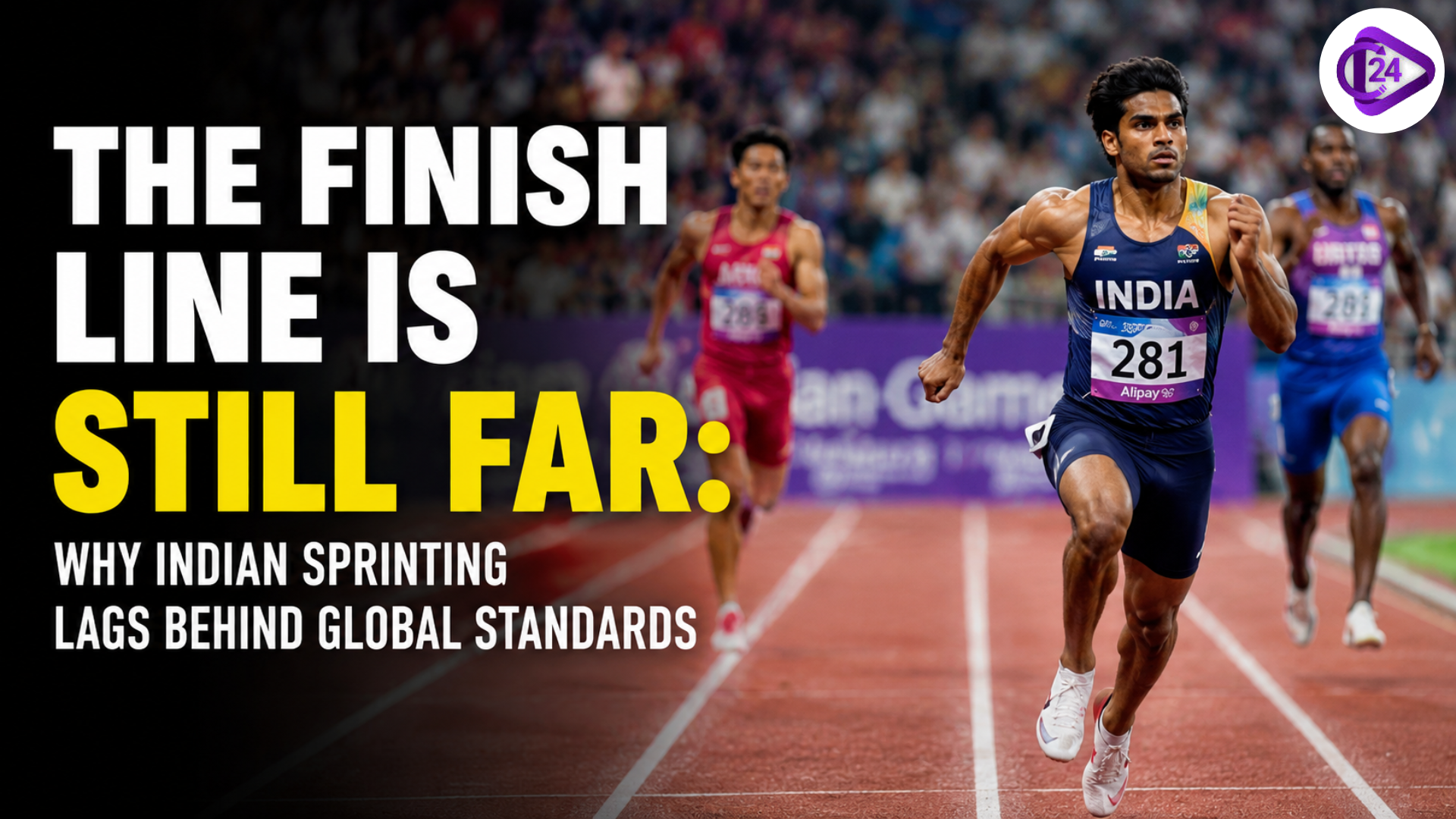
Still Far: Indian athletics has made noticeable progress in recent years, with national records being broken and athletes delivering strong performances at continental competitions. However, sprinting remains a challenging discipline where India continues to trail global leaders such as the United States and Jamaica. Official initiatives by the Sports Authority of India (SAI), Athletics Federation of India (AFI), and the Target Olympic Podium Scheme (TOPS) have strengthened training infrastructure and athlete support. Despite these efforts, factors such as inadequate grassroots development, limited elite competition exposure, and infrastructure gaps continue to affect performance. Bridging these shortcomings is essential for India’s aspirations in world athletics.
Challenges Preventing Indian Sprinting from Reaching Global Standards
- Sprinting events include the 100m, 200m, and 400m races, which are among the most competitive athletics disciplines globally.
- The Athletics Federation of India (AFI) is the apex body responsible for managing and promoting athletics in the country.
- The Sports Authority of India (SAI) provides infrastructure, coaching, sports science support, and athlete development programs.
- India has improved significantly in athletics through schemes such as TOPS and National Centres of Excellence.
- Limited exposure to elite international competitions affects athlete preparedness.
- Many talented athletes begin specialized sprint training relatively late compared to global competitors.
- Advanced biomechanics and performance analytics are still evolving within Indian athletics systems.
- Sports science support, though expanding, remains uneven across regions.
- Grassroots talent identification requires further strengthening.
- Access to certified high-performance tracks remains a challenge in many parts of India.
- Recent concerns have been raised regarding the quality of synthetic tracks across the country.
- Sprinting success requires long-term athlete development and specialized coaching.
- AFI regularly organizes national championships and training camps to improve standards.
- Indian sprinters have recently achieved national-record performances, indicating positive momentum.
- Corporate partnerships and sponsorships are increasing support for athletics.
- Greater participation at school and university levels can strengthen the talent pipeline.
- International training exposure helps athletes adapt to world-class competition standards.
- Investment in coaching education remains critical for sustained progress.
PYQs on Athletics and Sports Development – Still Far
| Exam Name | Year | Question | Options | Answer |
| UPSC Prelims | 2021 | The Target Olympic Podium Scheme (TOPS) is associated with which sector? | (A) Education (B) Sports Excellence (C) Tourism (D) Skill Development | (B) Sports Excellence |
| SSC CGL | 2022 | Which organization is responsible for sports development and training infrastructure in India? | (A) RBI (B) SAI (C) NABARD (D) SEBI | (B) SAI |
| RRB NTPC | 2021 | The International Olympic Committee (IOC) is responsible for organizing which event? | (A) FIFA World Cup (B) Olympic Games (C) Commonwealth Games (D) Asian Games | (B) Olympic Games |
| SSC CHSL | 2023 | Which body governs athletics at the global level? | (A) FIFA (B) World Athletics (C) ICC (D) FIH | (B) World Athletics |
| UPSC Prelims | 2019 | Which scheme provides specialized support to elite athletes preparing for Olympic events? | (A) Khelo India (B) TOPS (C) PMKVY (D) Start-up India | (B) TOPS |
India-Germany Submarine Deal Nears Finalisation
Gurindervir Singh: India’s Rising Sprinting Star
Gurindervir Singh has emerged as one of India’s most promising sprinters and is playing a significant role in elevating the country’s standards in short-distance athletics. Hailing from Punjab, he has consistently improved his performances in the 100m and 200m events, establishing himself among the fastest Indian athletes. In 2025, Gurindervir created history by becoming the first Indian man to run the 100m in under 10.20 seconds, setting a new national record. His achievements reflect the growing potential of Indian sprinting and demonstrate the benefits of improved coaching, sports science, and competitive exposure. As he continues to break barriers, Gurindervir Singh is inspiring a new generation of athletes and strengthening India’s hopes of achieving greater success in global sprinting competitions.
Conclusion – Still Far
Indian sprinting has entered a promising phase, with improved performances, stronger institutional support, and growing public interest. Recent national records demonstrate that Indian athletes are moving closer to international standards, but a significant gap remains when compared with the world’s best sprinters. Continued investment in infrastructure, coaching, sports science, grassroots development, and international competition exposure will be essential for sustained progress. Official efforts by SAI and AFI have laid a strong foundation, but long-term commitment from all stakeholders is needed. If these reforms continue, India can gradually transform from an emerging athletics nation into a competitive force in global sprinting.