

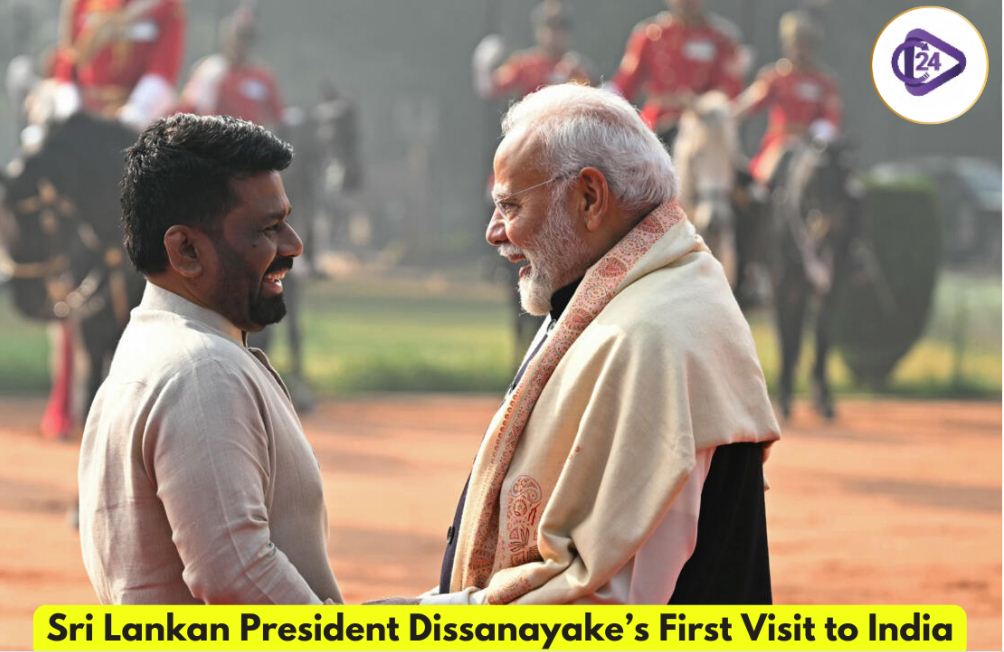
In December 2024, Sri Lankan President Anura Dissanayake paid a trip to India as the country faced an economic hardship and voters displeasure. In the course of parleys with Indian Prime Minister Narendra Modi, Dissanayake gave assurance that Sri Lanka will not permit its soil to be used in manners that are inimical to India’s interests. This assurance have been given at a time when there is apprehension over China’s military power as well as a ban on foreign Scientific Research vessels in Sri Lanka due to the expiration of the moratorium in January 2025. They also spoke of the Tamil minority’s issue with self-governing under Sri Lanka’s 13th Amendment. Dissanayake also focused on the development of all communities and has spoken about the representatives of the Indian fishermen who are fishing in the Sri Lankan waters which affects the native population. India and Sri Lanka proposed several works, among them energy cooperation, the construction of the port of Trincomalee, and in the framework of which India proposed a project of grants for the reconstruction of the railway and port zones. Not a single new credit line was announced on account of Sri Lanka’s continued debt woes.
Key Points of Visit
Sri Lanka’s Assurance to India: It was during the year that Sri Lankan President Anura Dissanayake made a maiden foreign trip to New Delhi.
-
Dissanayake wanted to give confidence to India that Sri Lankan land would not be used in the way that is not good for India chiefly in connection with the research ship of foreign nations. This comes against the background of China’s emerging influence in the Indian Ocean.
Maritime Security and Research Vessels: Sri Lanka’s ban on granting permission for foreign research vessels lasts for one year ending in January 2025.
-
India further expressed its concern over the Sri Lankan decision on moratorium stressing upon the security relation sharing in the maritime research and survey.
Security and Regional Stability: On the issue of security, both leaders spoke in tangent mentioning threats and ensuring a secure Indian Ocean.
-
They revolved around India’s security fears, which made Dissanayake convinced that Sri Lanka would not allow anything that would be inimical to India’s security.
Tamil Minority and Provincial Council Elections: Speaking about the Tamil minority apprehensions, Modi pointed to the questions of the 13th and the devolution of the power to provincial councils.
Fishing Disputes and Poaching Concerns: Dissanayake also addressed the congress regarding the poaching of Indian fishermen conducted in the Sri Lankan territorial waters where Northern Province fishermen are expected to earn their livelihoods and called for a lasting measure to end other ways of destructive fishing that include bottom trawling.
Energy and Infrastructure Cooperation: During the meetings, India-Sri Lanka bilateral relations focused on energy; export of Liquefied Natural Gas, and interconnection of High Capacity Power Grids.
-
Other projects include a multi product pipeline, the joint work on the development of offshore wind power in Palk Straits.
Grant Assistance and Railway Development: India has offered grant for remodeling the Maho to Anuradhapura railway line and for the construction of Kankesanthurai port.
-
Subsequent to the commencement of the Nagapattinam-Kankesanthurai ferry service the two governments have decided on a second ferry servive between Rameshwaram and Talaimannar.
Historical and Cultural Relations of India and Sri Lanka
India and Sri Lanka have had cultural, economic and political relations for over 2500 years now. While Buddhism was introduced by Emperor Ashoka’s son around 3rd century BCE, it developed the strongest cultural relationship. The Europeans came later to Sri Lanka after it was conquered by a South Indian empire called the Chola dynasty in the 10th century, but they left little impact on the country’s art and language. Both countries emerged into independence in 1947 and 1948 respectively and the relation between them has been ever close. What happened with democracy in Sri Lanka is partly India’s making and India became involved in the Sri Lankan civil war (1983-2009) respectably through the 1987 India-Sri Lanka Accord and the Indian Peace Keeping Force (IPKF).
Significance of India and Sri Lanka relationship
Sri Lanka holds strategic, economic, and geopolitical importance for India:
-
Strategic Location: India has always considered Sri Lanka’s location in the Indian Ocean as strategically sensitive for their naval security.
Military Significance: It is a strategic location because naval fleets have to go around Sri Lanka when moving between the Bay of Bengal and the Arabian Sea for the Indian navy..
-
Mitra shakti
-
SLINEX (Sri Lanka-India Naval Exercise)
Economic Ties: India is the second largest trading partner of Sri Lanka, and bilateral trade was $3.6 billion in 2020.
-
India is Sri Lanka’s largest trade partner (USD 5.5 billion in 2023-24).
-
Major investments in energy, telecommunications, and infrastructure.
Geopolitical Role: Sri Lanka is very significant to Indian Indian Ocean policy.India’s strategic stance against China in the region.
Issues in India Sri Lanka Relations
Despite generally good relations, there are tensions, including:
-
Chinese Influence: The China funded ports in Sri Lanka are threatening India’s security.
-
Fishermen Dispute: The problems in the marine area are that Indian fishermen continue to encroach into the Sri Lankan territory.
-
Ethnic Issues: Tamil minorities in Sri Lanka is still a contentious issue in New Delhi.
-
Political Instability: Political instabilities due to fluctuations in leadership in Sri Lanka have influenced processes of cooperation and policies resultant.
Ways to strengthen India Sri Lanka Relations
-
Resolve Fishermen Disputes: Bilaterally in the course of negotiations that take place on a reciprocal basis.
-
Sign a Comprehensive Economic Partnership Agreement: To improve the economic exchanges.
-
Focus on Cultural and Traditional Ties: As a result, it would be effective for constructing better people-to-people relations.
-
Expand Transportation Links: For instance, the beginning of ferry operations between India and Sri Lanka.
-
Mutual Understanding: Customers should pay attention to the concerns of the employees and the other way round to enhance overall relations.
Conclusion
The visit of Sri Lankan President Anura Dissanayake to India in December 2024 marked a significant step in enhancing India-Sri Lanka relations, focusing on security, economic development, and resolving longstanding issues such as the fishermen dispute. With both nations committed to strengthening their strategic and economic cooperation, this visit is expected to lay the foundation for a more secure and prosperous future in the Indian Ocean region.