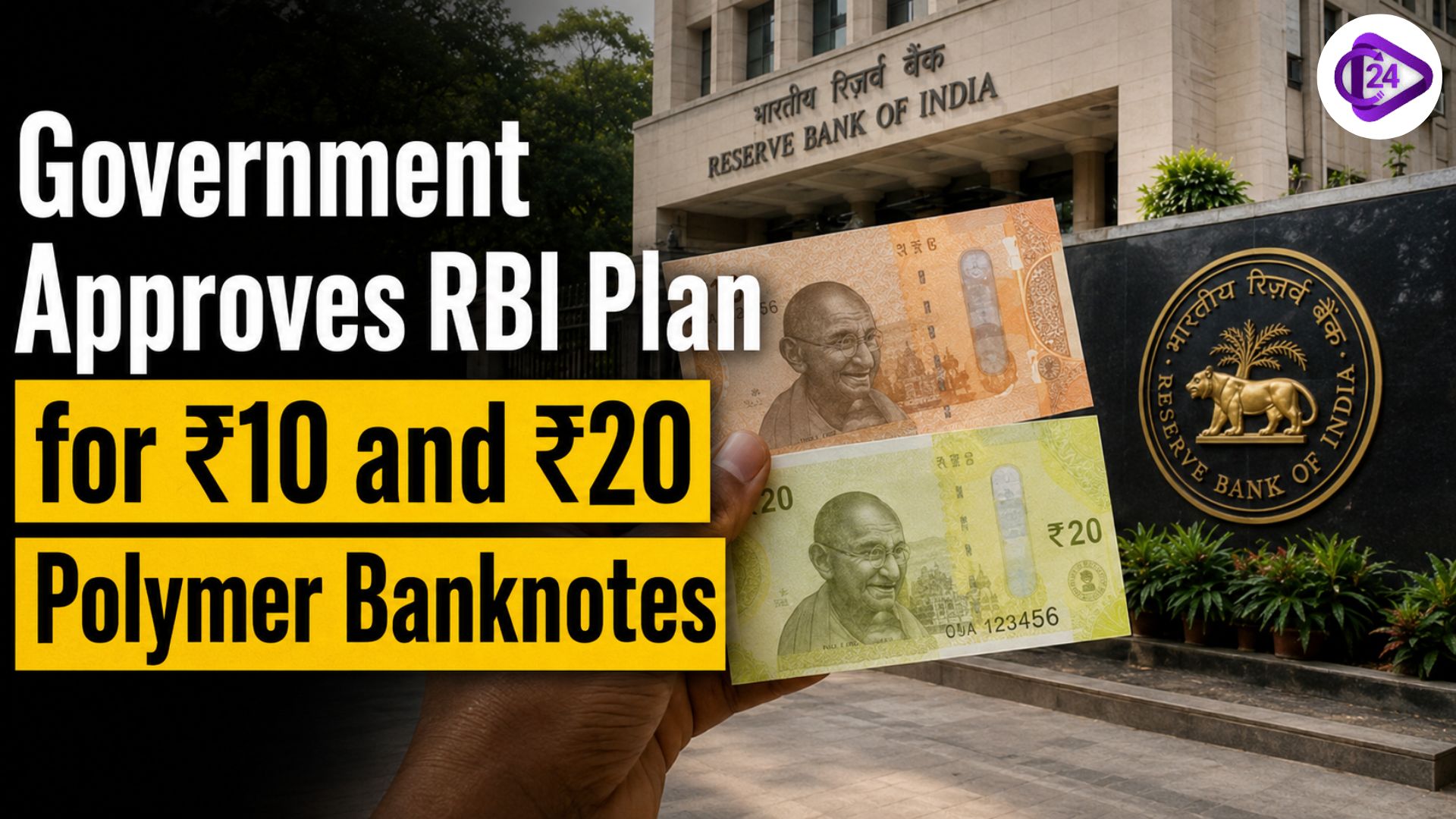


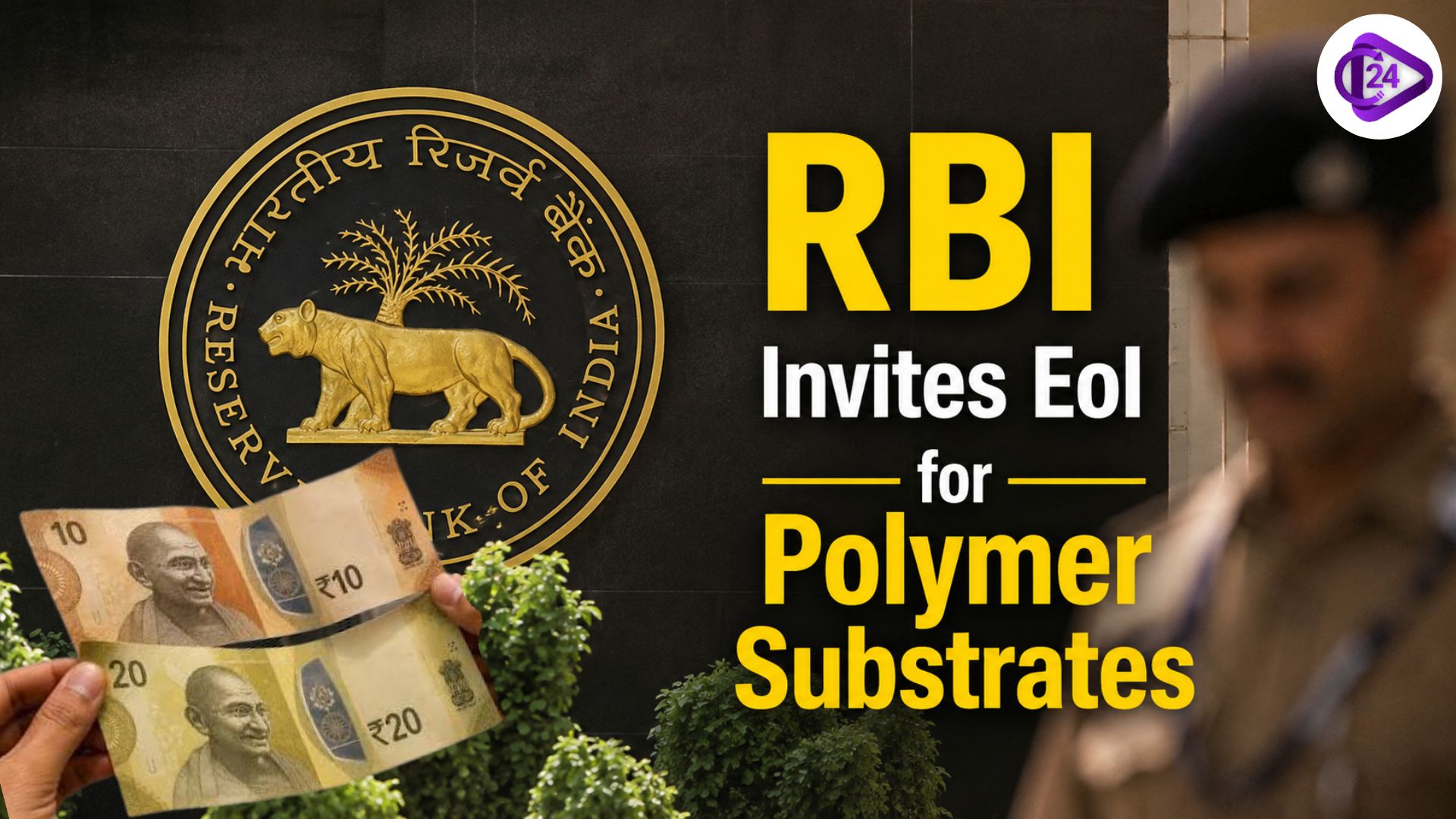
The Reserve Bank of India (RBI) has embarked on a significant move for commercialisation of the polymer (plastic) banknotes by inviting a worldwide Expression of Interest (EoI) for supply of security-grade polymer substrate sheets. This initiative, which is spearheaded through the Reserve Bank of India’s (RBI) publishing house Bharatiya Reserve Bank Note Mudran Private Limited (BRBNMPL), revives a proposal that was first presented more than 10 years ago. Initially, the pilot is expected to cover ₹10 and ₹20 denomination notes that are susceptible to wear-and-tear because of their frequent circulation. Unlike paper notes, polymer banknotes are predicted to last much longer and have additional security features that make counterfeiting more challenging.
Why is RBI’s Polymer Currency Initiative in News?
RBI’s currency printing unit, BRBNMPL, has issued an Expression of Interest (EoI) to make and supply polymer substrate sheets with additional security features in a move towards developing different supplier countries. If the procurement and testing go smoothly, India will likely advance to field trials of polymer banknotes starting with low-denomination notes.
What are Polymer Banknotes?
Polymer banknotes are currency notes utilised in a polymer substrate made from an advanced security-grade plastic instead of conventional cotton-based paper. They also include more advanced state-of-the-art anti-counterfeiting technologies along with a moisture-, dirt-, and folding-resistant durability built into common use. Polymer notes are also cleaner for longer, with a lifecycle that outlasts paper.
Why is RBI Reviving the Plastic Currency Initiative?
Reasons the RBI wants to introduce polymer banknotes:
- Extend the life of your currency notes.
- Less frequent note replacement.
- Better against moisture and dirt.
- Strengthen security against counterfeiting.
- Lower long-term currency management costs.
- Enhance note quality for high-circulating denominations.
- Modernise India’s currency printing technology.
Advantages of Polymer Banknotes
- Increased lifespan: They last 2-4 times longer than paper notes, which means that they need to be replaced less frequently.
- Improved Security: They include more complex protection systems such as unobscured windows, holograms, microprinting, and colour-shifting components that make counterfeiting difficult.
- Water and Moisture Resistant: Polymer notes are not absorbent, making them a better choice for humid/wet conditions.
- Tear Resistant: They are made from sturdy material that resists tears, folding damage, and general wear and tear to keep them in circulation longer.
- Cleaner Banknotes: The smooth polymer surface resists dirt, oil, and dust.
- Reduced Long-Term Expenditure: While production costs are initially higher, their longer service life dramatically decreases printing and replacement costs.
- Eco-friendly: Since there are fewer switches, resources consumed, and old polymer notes can frequently be repurposed into plastic goods.
- Improved Public Handling: The strong, thin, and flexible construction results in improved circulation (note quality) through increased stiffness.
RBI’s Earlier Polymer Currency Proposal
India has not recently looked at polymer (plastic) banknotes. In 2010, the Reserve Bank of India (RBI) suggested that polymer currency should be launched to increase banknote longevity and reduce counterfeiting. The Government approved a pilot in 2011, and the RBI announced polymer notes of ₹10 denomination to be issued in five cities with diverse weather conditions (Kochi, Mysuru, Jaipur, Bhubaneswar and Shimla).
The purpose was to test how the notes performed in different environmental conditions. The project faced high production cost, reliance on imported polymer substrates and scarcity of infrastructure, leading to it being shelved. Then, in 2026, RBI was back to work with a global Expression of Interest (EoI) for buying security-grade polymer substrates, possibly heralding another attempt to modernise the Indian currency system with long-lasting and counterfeiting-proof notes.
PYQs on RBI & Polymer Currency
| Exam & Year | Previous Year Question | Answer |
| RBI Grade B 2023 | Which institution in India has the sole authority to issue banknotes (except ₹1 notes)?
(a) Ministry of Finance (b) Reserve Bank of India (c) NABARD (d) SEBI |
(b) Reserve Bank of India |
| IBPS PO 2023 | Which Act empowers the Reserve Bank of India to issue currency notes in India?
(a) Banking Regulation Act, 1949 (b) RBI Act, 1934 (c) FEMA, 1999 (d) Coinage Act, 2011 |
(b) RBI Act, 1934 |
| SSC CGL 2022 | Who signs the ₹500 and ₹2,000 currency notes issued in India?
(a) Finance Minister (b) Prime Minister (c) RBI Governor (d) President of India |
(c) RBI Governor |
| RRB NTPC 2021 | The issue and management of currency in India is the responsibility of:
(a) SEBI (b) RBI (c) NABARD (d) SIDBI |
(b) RBI |
| SBI PO 2022 | Which department of the RBI is responsible for issuing banknotes?
(a) Banking Department (b) Issue Department (c) Monetary Policy Department (d) Financial Stability Unit |
(b) Issue Department |
| SSC CHSL 2023 | Which material is primarily used to manufacture India’s current banknotes?
(a) Polymer Plastic (b) Cotton-based Paper Substrate (c) Aluminium Foil (d) Synthetic Rubber |
(b) Cotton-based Paper Substrate |
| IBPS Clerk 2024 | Polymer banknotes are mainly introduced to:
(a) Increase currency weight (b) Improve durability and security (c) Reduce the number of denominations (d) Replace digital payments |
(b) Improve durability and security |
| RBI Assistant 2022 | Which of the following is a key advantage of polymer banknotes?
(a) They dissolve in water (b) They are more durable and difficult to counterfeit (c) They require no security features (d) They can only be used once |
(b) They are more durable and difficult to counterfeit |
| State PCS (MPPSC) 2023 | Australia is known for being the first country to introduce:
(a) Digital Currency (b) Polymer Banknotes (c) Gold Coins (d) Plastic Coins |
(b) Polymer Banknotes |
| NABARD Grade A 2021 | Which of the following is an expected benefit of introducing polymer currency notes?
(a) Shorter circulation life (b) Better resistance to wear and counterfeiting (c) Elimination of all paper currency (d) Removal of security features |
(b) Better resistance to wear and counterfeiting |
72nd National Film Awards 2026 Announced
Conclusion
The Expression of Interest (EoI) for polymer substrates by the Reserve Bank of India (RBI) indicates a re-focus on upgrading India’s note-printing logistics. The central bank analyses the use of polymer notes to replace traditional paper currency with more durable, safe and counterfeit-resistant notes. If successful, it will make replacing notes, in the medium- to long-term at least, less frequent and cheaper for the taxpayer as well as lower the number of unsatisfactory-quality banknotes entering circulation.
Most of the world already has polymer currency, so India reinitiating its pursuit of it (after a half-hearted attempt last time) makes sense for fitting the bill with a trend and strengthening currency security against forgery and decreased lifespan, as well as improving operational efficiency and bringing us toward newer global banknote technology best practices.