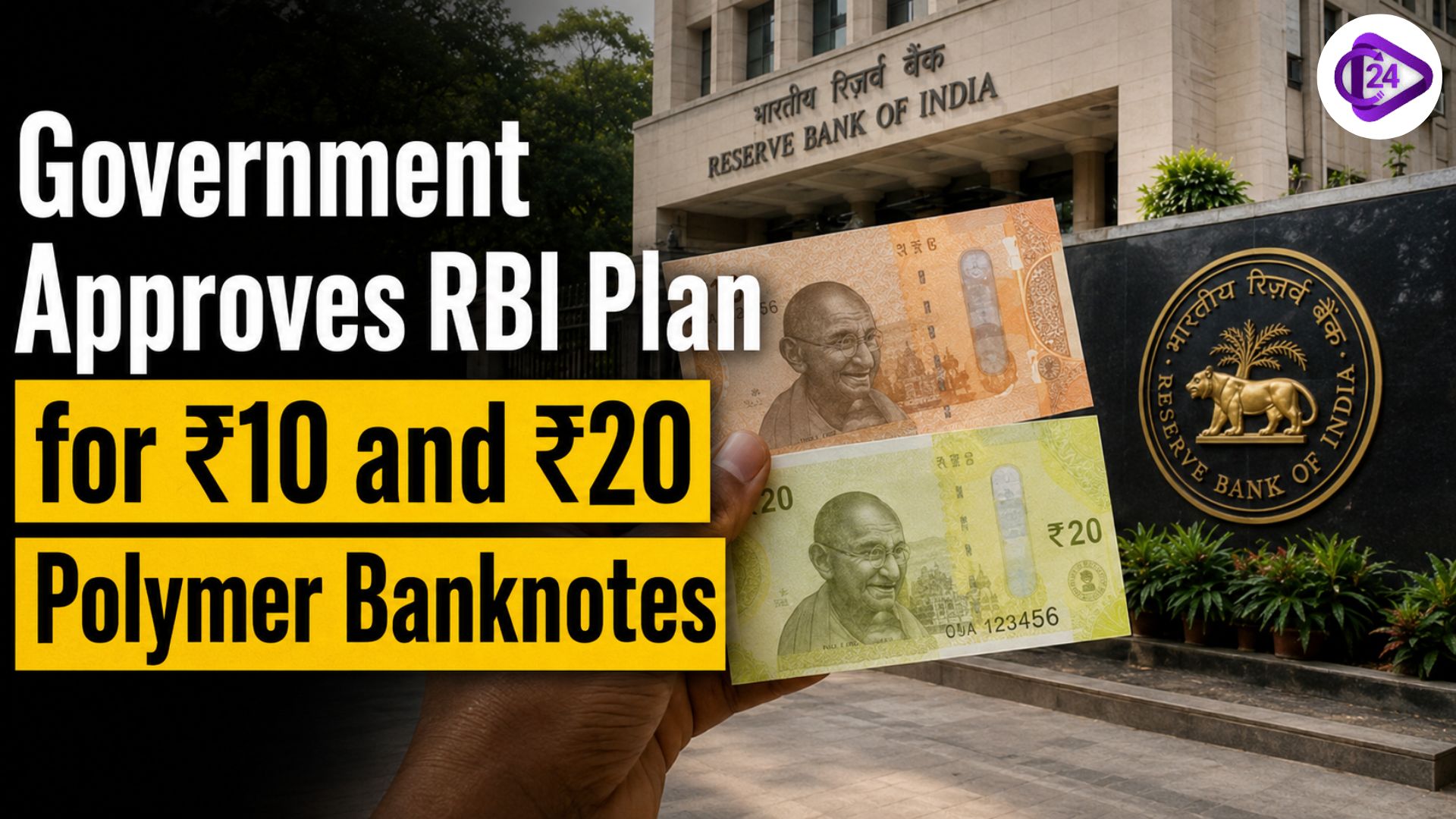


RBI Monetary Policy Meeting Dec 2024 headed by RBI Governor Mr Shaktikant Das announcements: 50 bps cut in CRR to 4%; Repo rate maintained at 6.5% for the seventh time; GDP growth down to 6.6% for FY25 (from 7.2% earlier). The main objective of Monetary Policy is to maintain price stability, to control inflation and while controlling inflation ensure that borrowing remains accessible and affordable for businesses and consumers, and to manage liquidity, balancing the demand for money with the supply.
Key Highlights from the RBI Monetary Policy Meeting (Dec 2024)
| CRR Cut by 50 Basis Points to 4%: | To address existing liquidity concerns to support economic stability and to keep up with the neutral policy stance of RBI. |
| Repo Rate Remains Unchanged at 6.5% |
|
| GDP Growth Forecast Revised Down to 6.6% |
|
| Inflation Projections for FY25 | For FY25 inflation stands at 4.8%; food inflation is to continue for Q3, but could ease in Q4. Quarterly inflation projections are.
|
| Support for the Agricultural Sector | Raised the limits for agricultural finance from Rs 1.6 lakh crore to Rs 2 lakh crore per borrower as a sign of better credit support to farmers. |
| Introduction of SORR Benchmark | To enrich the structures of monetary operations and promote the operation of market price. |
| New Communication Initiative: RBI Podcasts | To increase the outreach and use technology by launching podcasts. |
|
GDP groeth rate (FY25) |
6.6% (earlier 7.2%) |
|
Cash Reserve Ratio (CRR) |
4% (earlier 4.5%) |
|
Repo Rate |
6.5% (unchanged) |
|
Standing Deposit Facility |
6.25% |
|
Marginal Standing Facility |
6.75% |
|
Inflation |
4.8% |
|
Agricultural Loan Limit |
Rs 2 lakh crore (earlier 1.6 lakh crore) |
Measures to Attract Foreign Capital
To increase foreign investment, the RBI raised the ceiling of interest rate on FCNR-B deposits and enhanced FCNR deposit rates, in a bid to beckon higher portfolio investment flows into India FPIs have arrived at $ 9.3 billion in FY25.
Addressing Unclaimed Deposits
The RBI asked the banks to separate accounts of unclaimed deposits by implementing measures under Direct Benefit Transfers (DBT).
Challenges in Domestic Consumption
Private consumption growth declined to 6.0 % in the September quarter down from 7.5 % earlier mainly due to slump in urban demand. Expenditure on fixed assets rose only by 5.4%, however government consumption increased by 4.4%, which is associated with election processes.
Key Members of the MPC
The MPC consists of six members: Three from RBI and the three members appointed by the government.
-
Shaktikanta Das (Governor, RBI)
-
Michael Debabrata Patra (Deputy Governor, RBI)
-
Rajiv Ranjan (Executive Director, RBI)
-
Ram Singh (Director, Delhi School of Economics)
-
Saugata Bhattacharya (Economist)
-
Nagesh Kumar (Director, ISID)
Editorial Insight: A Comprehensive Guide to RBI’s Monetary Policy Framework
RBI and The Monetary Policy
This article is based on the “Staying the course: On the RBI and inflation” editorial published in the Hindu on 7th December 2024
The interest rates and inflation debate has been at the forefront concerning the Reserve Bank of India’s recent stance in light of changing economic conditions. This article discusses the major takeaways related to RBI’s approach to inflation and growth to help understand these better.
Interest Rate Decisions and Inflation Control
In tune with its commitment to controlling food prices, the RBI left the benchmark interest rate unchanged at 6.50% for the eleventh consecutive month. The RBI has not lost its grip on targeting inflation, a vital component of price stability in an economy.
Inflation and Growth Dynamics
Despite holding rates steady, the RBI has to balance taming inflation and making growth sustainable. Inflation has accelerated recently due to food prices, while GDP growth has been below estimate.
Decisions of Monetary Policy Committee (MPC)
MPC unanimously decided to keep rates unchanged despite the growing political clamour for rate cuts, thus remaining faithful to its price stability mandate. Amidst this declining growth, there is a downward revised projection of GDP growth in 2024-25.
RBI’s Inflation Targeting Framework
Operating within the flexible inflation targeting framework, the RBI is obliged to keep headline inflation within the targeted range. This specific legal commitment cannot be overlooked despite clamours over rate cuts.
Future Projections and Support from the Government:
Though the RBI cut its projection for GDP growth in 2024-25, it is optimistic about cooling inflation and a pickup in the pace of economic growth. The balancing role of the government becomes important in cooling prices to help consumption.
The Monetary Policy
Definition
Monetary policy refers to the actions taken by a country’s central bank to manage the money supply and interest rates to achieve macroeconomic objectives. In India, the Reserve Bank of India (RBI) formulates monetary policy using various tools and instruments to meet the goals set out in the RBI Act of 1934.
Quantitative Tools of Monetary Policy
These tools primarily involve controlling the money supply and interest rates in the economy.
1. Bank Rate or Discount Rate
Definition:The bank rate (also known as the discount rate) is the rate at which the RBI is willing to buy or rediscount bills of exchange or other commercial papers from scheduled commercial banks (SCBs).
Impact: A higher bank rate makes borrowing from the RBI expensive, reducing their ability to lend to the public and tightening the money supply.
Opposite Effect: Lowering the bank rate increases the money supply by making borrowing cheaper for banks.
2. Reserve Requirements
Reserve requirements refer to the minimum reserves banks must hold, which are key to controlling the money supply.
Cash Reserve Ratio (CRR):
The CRR is the minimum percentage of a bank’s demand and time liabilities (DTL) that must be deposited with the RBI.
Effect of Increase: If CRR is increased, commercial banks have less money to lend, reducing the money supply.
Effect of Decrease: A decreased CRR leaves banks with more money to lend, increasing the money supply.
Statutory Liquidity Ratio (SLR)
The SLR is the percentage of a bank’s Net Demand and Time Liabilities (NDTL) that must be held in liquid assets such as cash, gold, or government securities.
Effect of Increase: Higher SLR means banks hold more funds in non-lending forms, thus reducing the money available for credit.
Effect of Decrease: Lower SLRgives banks more funds to lend, increasing the money supply.
3. Liquidity Adjustment Facility (LAF)
The LAF enables banks to borrow money from the RBI (via repo agreements) or lend to the RBI (via reverse repo agreements), helping them meet short-term liquidity mismatches.
Repo Rate: The interest rate at which the RBI lends to banks. An increase in repo rate makes borrowing costlier for banks, tightening the money supply.
Reverse Repo Rate: The rate at which the RBI borrows from banks. An increase in reverse repo rate encourages banks to park excess funds with the RBI, reducing the money supply in the economy.
4. Marginal Standing Facility (MSF)
Introduced in 2011, the MSF allows banks to borrow overnight funds from the RBI at a penal rate (typically 25 basis points above the repo rate), providing banks with an emergency funding mechanism.
5. Open Market Operations (OMOs)
OMOs involve the RBI buying or selling government securities in the open market to regulate the money supply.
Buying Securities: Injects money into the system, increasing liquidity.
Selling Securities: Reduces liquidity by taking money out of the system.
6. Market Stabilization Scheme (MSS)
The RBI uses the MSS to absorb excess liquidity from the market. This process is called sterilisation, and it involves selling government bonds, with the proceeds returned to the RBI.
7. Term Repos
Term Repos are liquidity operations in which the RBI lends money to banks for longer periods (e.g., 7, 14, or 28 days), helping develop the inter-bank money market and improving monetary policy transmission.
Qualitative Tools of Monetary Policy
These tools are used to influence the direction of credit and control inflation.
1. Margins Requirements
Definition: The margin is the difference between the value of collateral securities and the value of loans granted.
Effect: By increasing margin requirements, the RBI can limit credit to specific sectors (e.g., real estate), controlling the flow of funds into those sectors.
2. Consumer Credit Regulation
The RBI regulates consumer credit (instalment loans for durables) to control inflation in specific sectors.
Methods: Increasing down payments or reducing the number of loan instalments can curb excessive demand and stabilise prices in sectors like consumer durables.
3. Moral Suasion
Definition: Moral suasion involves the RBI persuading or pressuring banks to adhere to certain policies without resorting to formal rules. It is a soft form of control to ensure cooperation in maintaining monetary stability.
4. Direct Action
If a bank does not comply with the RBI’s monetary policy directives, the RBI can take direct action. This could involve:
Refusing to rediscount bills.
Charging penal interest for non-compliance.
5. CreditRationing
Credit rationing involves setting a limit on the amount that commercial banks can extend. This tool is used to control excessive credit growth and inflationary pressures.
6. Priority Sector Lending
The RBI mandates that a certain percentage of bank loans must be directed to the priority sectors such as:
Agriculture and allied activities.
Micro and small enterprises.
Low-income housing. This helps direct credit to areas that promote inclusive growth.
Primary Objective of RBI Monetary Policy
The fundamental goal of the RBI’s monetary policy is to maintain price stability while fostering economic growth. Price stability is crucial for sustainable economic growth, as high inflation and deflation can destabilize the economy and hinder long-term development.
In 2016, the RBI Act of 1934 was amended to fix an inflation target of 4%, with a permissible margin of ±2%. The government of India, in consultation with the RBI, determines this target every five years.
Monetary Policy Committee (MPC): Structure and Function
Origin:
The Monetary Policy Committee (MPC) was established under Section 45ZB of the amended RBI Act, 1934, following the 2016 amendment. The central government is empowered to form the MPC, which is responsible for formulating monetary policy.
Objective:
The MPC’s main role is to decide on a policy rate, typically the repo rate, that will allow the government to meet its inflation target. The decisions made by the MPC are binding on the RBI.
Composition:
The MPC consists of six members:
RBI Governor (Chairperson)
Deputy Governor responsible for monetary policy
An RBI officer nominated by the RBI’s Central Board
Three external members, appointed by the central government, having expertise in economics, banking, finance, or monetary policy.
These external members are chosen for their integrity, expertise, and ability to provide informed input in decision-making.
Monetary Policy Framework
Origin and Objective:
Before the 2016 amendment, the RBI did not have a legal mandate for managing the country’s monetary policy framework. The 2016 amendment provided this mandate, and the policy rate (repo rate) is set based on an ongoing evaluation of macroeconomic factors like inflation and growth. Liquidity conditions are adjusted to align money market rates with the policy rate.
Why Repo Rate as the Policy Rate?
The repo rate at which the RBI lends to commercial banks plays a central role in the monetary policy framework. Changes to the repo rate impact liquidity conditions in the financial system, affecting aggregate demand, inflation, and economic growth. By adjusting the repo rate, the RBI influences the broader money supply, making it a critical tool in controlling inflation and fostering growth.
Conclusion
These key decisions and measures point more to the directional shift of the RBI towards the maintenance of macro-economic stability which has been further threatened by forces such as inflation, growth slow down, and liquidity conditions. To this end, the central bank will continue engaging in anticipative policies aimed at medium to long-term sustainable growth and sound monetary structure.