


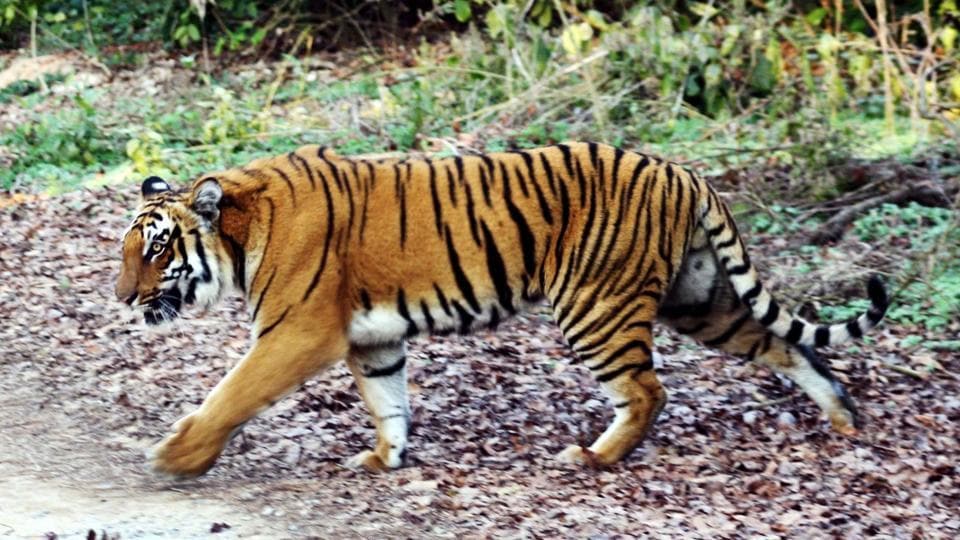
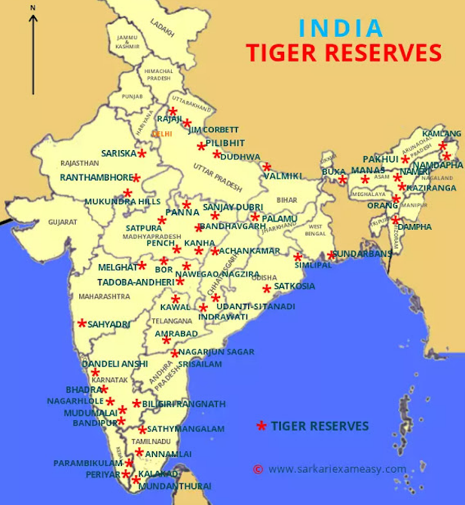
Ratapani Wildlife Sanctuary near Bhopal is declared the 8th Tiger reserve of the state and 56th in the country. As of November 2024, there are 56 tiger reserves in India, safeguarding a total area of 75,796.83 square kilometres. This constitutes over 2.3% of the country’s total land, contributing significantly to the conservation of India’s rich biodiversity.
First tiger reserve in India: Palamau tiger reserve in Jharkhand
Latest 56th tiger reserve:
- Veerangana Durgawati tiger reserve in MP- 2023
- Dholpur- Karaulitigerreserve in Rajasthan- 2023
- Guru Ghasidas-Tamor Pingla tiger reserve in Chhattisgarh- 2023
- Ratapanitigerreserve in MP- 2024
Data point:
Tiger Population in India
- India is home to 70% of tigers in the world.
- As of now, 56 tiger reserves are protecting their wildlife habitat
- India’s tiger population increased to 3,682 in 2022, up from 2,967 in 2018.
- This also indicates significant growth over the last decade; 2,226 tigers were reported in 2014, up from 1,706 in 2010.
- Five states (Madhya Pradesh, Karnataka, Uttarakhand, Maharashtra, and Tamil Nadu) each have more than 300 tigers.
- Eight states have more than 200 tigers.
- There has been a decline in tiger occupancy in the Western Ghats, especially in the Wayanad landscape and the Biligiriranga Hills
What is Project Tiger?
- Project tiger was introduced on 1st April 1973 in Jim Corbett National Park in Uttrakhand under Indira Gandhi govt to save tigers in India and increase their population. The main aim is to save Royal Bengal tigers from becoming extinct.
What is the National Tiger Conservation Authority (NTCA)?
- It is a statutory body under the Ministry of Environment, Forest and Climate Change set up in 2005 to implement Project Tiger& increase & protect tiger and their habitat. It plays an important role because the number of tigers has increased all over the country. Its roles are:
- Implementation of Project Tiger and its policies
- Management of tiger reserves
- Monitoring the tiger population
- Research and development
|
S.No. |
Tiger Reserve |
Area |
State |
|
|
1. |
Nagarjunsagar Srisailam |
3296.31 |
Andhra Pradesh |
|
|
2. |
Manas National Park |
3150.92 |
Assam |
|
|
3. |
Melghat Tiger Reserve |
2768.52 |
Maharastra |
|
|
4. |
Similipal National Park |
2750 |
Odisha |
|
|
5. |
Amrabad Tiger Reserve |
2611.39 |
Telangana |
|
|
6. |
Sunderbans Tiger Reserve |
2584.89 |
Odisha |
|
|
7. |
Dudhwa Tiger Reserve |
2201.7748 |
UP |
|
|
8. |
Satpura Tiger Reserve |
2133.30 |
MP |
|
|
9. |
Namdapha Tiger Reserve |
2052.82 |
Arunanchal Pradesh |
|
|
10. |
Kanha Tiger Reserve |
2051.79 |
MP |
|
Conclusion:
The declaration of Ratapani Wildlife Sanctuary as a Tiger Reserve marks a major step in India’s tiger conservation efforts. With 56 reserves safeguarding tigers, India now holds 70% of the world’s tiger population. Thanks to Project Tiger and the NTCA, India’s tiger numbers have seen significant growth, ensuring the protection of these majestic creatures for future generations.