


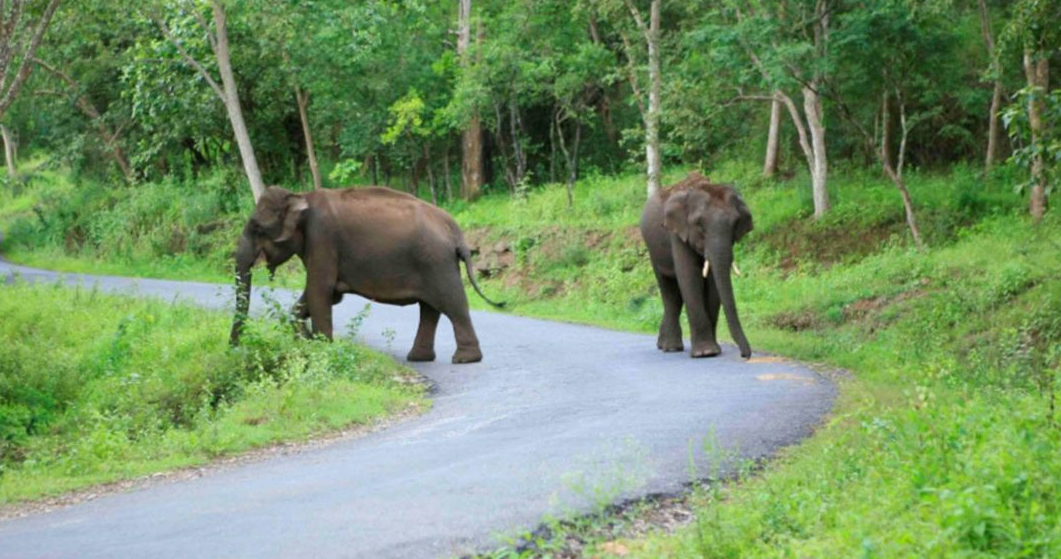
National Wildlife Health Policy: Safeguarding Ecosystems and Public Health

The National Wildlife Health Policy (NWHP) serves as an Indian governmental initiative to create systematic approaches for wildlife health surveillance and management. The policy follows directives from both the National One Health Mission and implements preventive measures against zoonotic diseases while improving both disease detection and sector cooperation. The extensive...

National Wildlife Health Policy: Safeguarding Ecosystems and Public Health

The National Wildlife Health Policy (NWHP) serves as an Indian governmental initiative to create systematic approaches for wildlife health surveillance and management. The policy follows directives from both the National One Health Mission and implements preventive measures against zoonotic diseases while improving both disease detection and sector cooperation. The extensive protected area network of India requires Wildlife health management because protection of biodiversity and public health safety depends on it.

Key Points: 

  • The National Wildlife Health Policy includes three essential parts to advance its implementation.

  • Comprehensive Wildlife Surveillance System: Establishing disease monitoring across terrestrial, marine, and avian ecosystems.

  • Integration with National One Health Mission: Coordinated pandemic preparedness and disease control efforts between wildlife, livestock, and human health sectors.

  • National Referral Centre for Wildlife (NRC-W): Acting as a referral body for wildlife disease investigation, diagnostics, and treatment.

  • National Wildlife Health Database operates as a monitored database containing time-specific data and past records from wildlife components along with animal farming and human health domains.

  • Wildlife Health Information System: Streamlining disease surveillance and facility-level reporting with spatial-temporal data integration.

  • Satellite Diagnostics Laboratories will develop laboratories adjacent to vital forest regions which enable regular disease detection procedures during critical forest administration periods.

  • The prevention of zoonotic spillovers in national parks and sanctuaries occurs through Livestock Vaccination Programs that target vaccinations for domestic animals located near these areas.

Need of National Wildlife Health Policy 

  • Today 56% of human developing infectious diseases begin as animal pathogens.

  • The vast network of protected areas in India reaches 1,014 locations that cover 5.32% of the national territory requiring constant wildlife health monitoring.

  • Preventive wildlife surveillance systems function as a tool for reducing potential pathogens that can transfer between wildlife and human and livestock populations.

Challenges in the Current Framework

  • Fragmented Disease Surveillance: Lack of coordination across ministries handling environment, agriculture, and animal husbandry.

  • A centralized wildlife health database does not exist which prevents timely disease monitoring.

  • The absence of sufficient wildlife disease laboratories creates long delays between diagnosis and treatment processes.

  • Field staff members managing wildlife diseases demonstrate poor capacity because they lack proper training and available resources.

  • The spread of zoonotic diseases becomes more likely because of unrestricted human contact with wildlife which results from black-market wildlife sales and agricultural animals inhabiting forest areas.

  • The Wildlife Protection Act mainly concentrates on conservation activities without establishing proper disease prevention measures or wildlife health management strategies.

  • Limited Community Involvement: Low awareness and participation of local communities in vaccination and disease prevention initiatives.

National One Health Mission

  • Launched: In 2022 to strengthen inter-ministerial coordination for pandemic preparedness

  • Objective: The initiative aims to unite human medical strategies with those of animal disease control throughout both human and animal health domains.

Key Focus Areas:

  • 22 BSL-3/4 operational laboratory facilities exist throughout the country for outbreak detection and prevention functions.

  • One Health principles require institutional establishment to promote understanding between human health and animal health alongside environmental health.

  • Research and surveillance: The system requires further development of research operations as well as surveillance improvements alongside stronger involvement from community members for data sharing initiatives and innovative progress

  • National Institute for One Health in Nagpur: Serving as a central coordinating body for national and international One Health activities.

Conclusion

Implementing the National Wildlife Health Policy as a fundamental measure to protect long-term wildlife health in India and stop zoonotic diseases from spreading. The policy advances biodiversity conservation efforts through its disease surveillance programs and diagnostic infrastructure development and inter-sectoral collaboration improvements which create public health security. Through integration with the National One Health Mission India will strengthen its pandemic readiness by adopting a total health framework that manages people along with animals and ecological systems.

Cabinet approves Emergency Credit Line Guarantee Scheme 5.0
Cabinet Approves Increase in Supreme Court Judge Strength to 37
Union Cabinet Approves Mission for Cotton Productivity in India
Vande Mataram Insult to Become Punishable Offence, Cabinet Clears Amendment
UDGAM Portal Update: 30 Banks Integrated to Help Legal Heirs Trace Unclaimed Funds
Malcolm Adiseshiah Award 2026, Raghav Das Gaiha Honoured
07 May 2026
06 May 2026
05 May 2026
04 May 2026
02 May 2026
01 May 2026
30 April 2026
29 April 2026
17 April 2026
16 April 2026

Start Learning Today with Class24

Buy a course

SSC

Railway

Banking

Teaching Exams

Rajasthan Exams

K12 Courses

Class24 Mobile Application

Class24 also has a mobile application so that it becomes easily accessible and convenient. This can be downloaded on an Android device. Users have appreciated this app and the content provided as 4.1 out of 5 is its rating in the App Store. People loved it because Class24 is giving content which is extremely rich in every sense. The app comprises a wide variety of features for smooth learning:

  • User-Friendly Interface: The app is categorized into various sections so that students can navigate and access various resources with ease.
  • Offline Access: The study materials can be downloaded and the student can access them even when not connected to the internet.
  • Inbuilt eBook Reader: There is a lightning-fast reader for eBooks within the app, so reading is seamless.
  • Progress Tracking: The app tracks student’s progress in preparation and keeps them organized and focused.

Courses and Subjects Offered

The total syllabus will be covered, and there are in-depth practice materials so as to give deep preparation in the courses designed to each one of them. All the subjects come under the aegis of courses offered by Class24 to meet different needs of various aspirants such as:

Preparation Tips for All Exams

Preparation tips for all exams mentioned below:

  • Previous Year Papers: Try to attempt at least 5-10 years of question papers to know the pattern of questions, how much difficulty one would face while answering, and how many frequently asked topics were in the examination.
  • Take Mock Tests: Attempt Mock Tests regularly in order to time and accuracy. You may analyze the performance and make an improvement for weak areas.
  • Focus on Time Management: Solve questions in the given time to make a habit of having speed and efficiency. Allocate time sensibly between Paper 1 and Paper 2, while appearing in the examination.
  • Current Affairs: For Current Affairs and TET exams, be updated about current affairs, teaching aptitude, and general awareness.
  • Regular Revision: Spend your daily and weekly time for revisions to not forget concepts and formulas. Use flashcards or do self-summary notes for quick revisions.
  • Understand the Exam Pattern and Syllabus: Understand the pattern of your exam paper and syllabus very well. Both Current Affairs and CSIR NET examinations are two-tier ones and involve both Paper 1, which consists of general aptitude and Paper 2 that involves specific aptitude subjects.
  • Make a Study Plan: Divide the preparation time into three phases of concept building, revision, and mock tests. Allocate more time to weaker areas while maintaining equilibrium with stronger sections.
  • Online Coaching or Study Groups: Enroll in online coaching programs like Class24 to get proper guidance and a structured approach to the study. Study groups will be useful to discuss doubts and share resources.
  • Stay Consistent and Motivated: Maintain a steady study schedule. Stay motivated by making small achievable goals.
  • Use Quality Study Materials: Suggested study material refers to a textbook, a set of previously published question papers, and web sources such as Class24.

Conclusion

Class24 is a one stop solution for aspirants preparing for Current Affairs, CSIR NET, SET, UP PGT English, UP TGT PGT, UPHESC Assistant Professor, TET, IGNOU B.Ed and other competitive exams. There are structured courses, live classes, mock tests along with the guidance of experts to assist candidates in achieving success in their respective fields.

Get success in your hand. Start study anytime anywhere.

The journey becomes simple and enjoyable when you start taking interest in it. And through our app “Class24”, we will be your trusted partners in developing that interest.

Daily Quizzes
Mock Tests
Ongoing

No ongoing tests right now.