


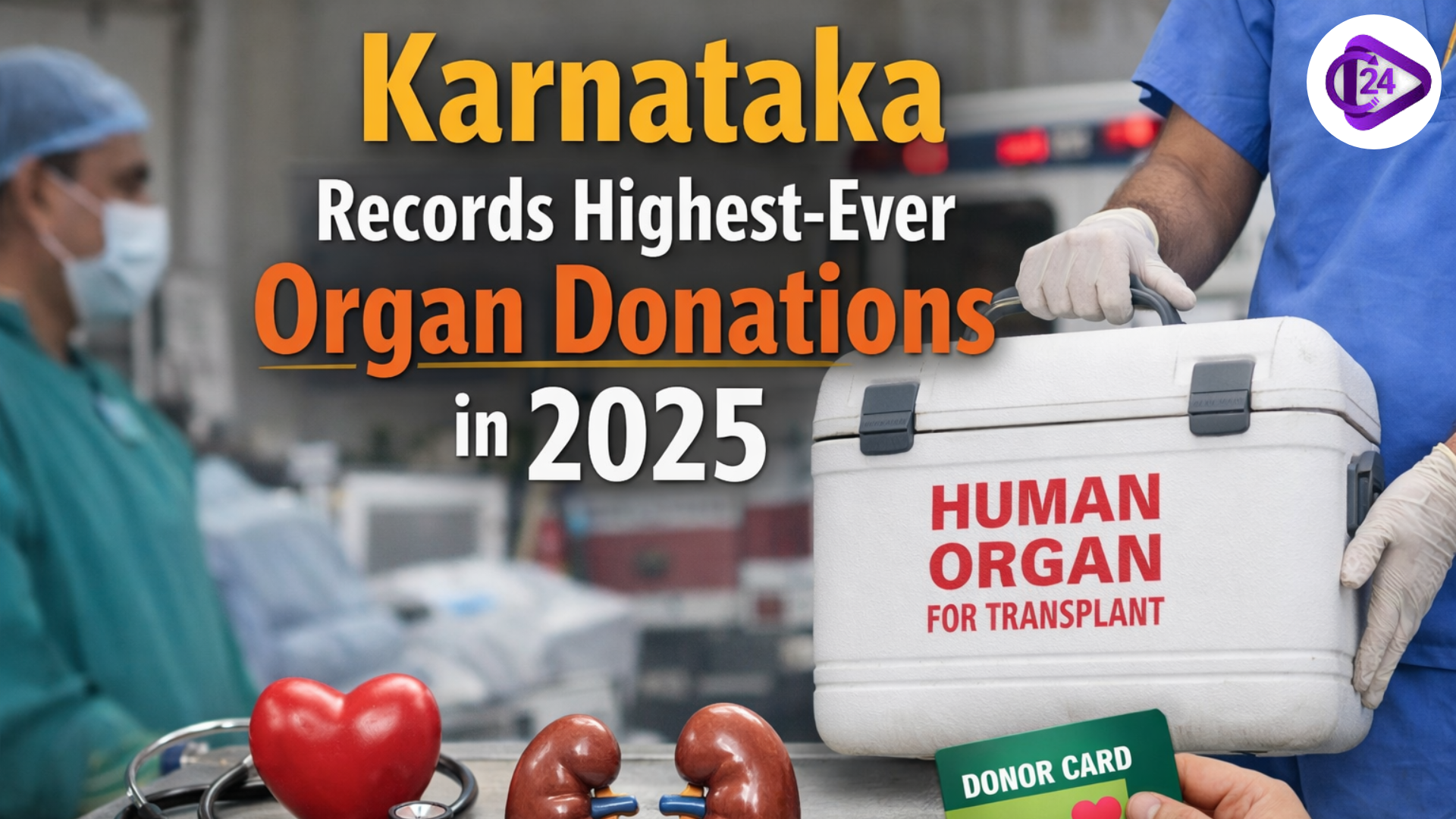
Karnataka recorded its highest number of organ donors in a single year, with 198 donors. This is the state's best performance in healthcare and a significant milestone. According to officials, this accolade makes Karnataka the third in the country for the number of organ donations, second only to Tamil Nadu and Telangana. The record indicates enhanced awareness, better coordination through the State Organ and Tissue Transplant Organisation (SOTTO), and improved hospital systems to support transplantation. The milestone also underscores increased societal approval of organ and tissue donation, reflecting the state's commitment to saving lives through expanded transplant practices.
Record Organ Donations in Karnataka Explained
-
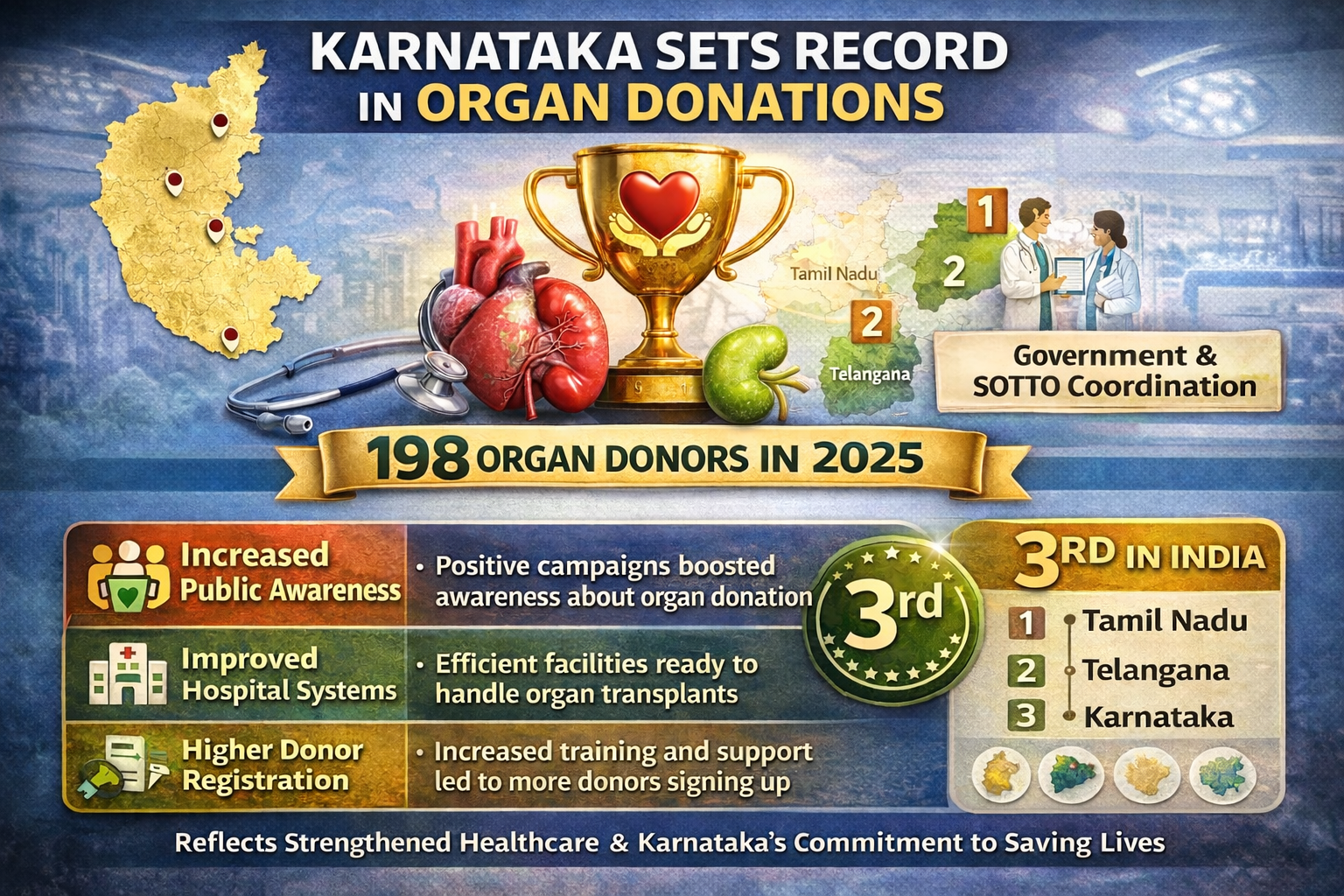
In 2025, Karnataka recorded its highest-ever annual organ donation total of 198 donors, surpassing the previous year’s high of 178.
-
By 2025, the state ranked 3rd in the country for organ donations, after Tamil Nadu and Telangana.
-
The milestone reflects increased public awareness, stronger coordination by the State Organ and Tissue Transplant Organisation (SOTTO), and improved hospital systems that support the transplant process.
-
Increased government campaigns and medical staff training led to higher donor registration.
-
It highlights a growing public appeal for organ and tissue donation and the state’s commitment to saving more lives.
Expected Questions on Organ Donation – Laws & Articles
Which act governs organ and tissue donation in India?
A) Transplantation of Human Organs Act, 1994
B) Medical Termination of Pregnancy Act, 1971
C) Epidemic Diseases Act, 1897
D) Clinical Establishments Act, 2010
Answer: An Explanation: The Transplantation of Human Organs Act, 1994, regulates organ donation and transplantation in India.
Which amendment legalised living unrelated organ donation under strict conditions in India?
A) 1994 Act Amendment, 2011
B) 1994 Act Amendment, 2011
C) 2014 Transplantation Amendment
D) No such amendment exists
Answer: B
Explanation: The 2011 amendment of the Transplantation of Human Organs Act allowed living unrelated donations under strict conditions and authorisation.
Organ donation in India is primarily governed under which article of the Constitution regarding the right to life?
A) Article 14
B) Article 21
C) Article 19
D) Article 25
Answer: B
Explanation: Article 21 guarantees the right to life and health, forming the constitutional basis for promoting organ donation.
Which of the following statements regarding the National Organ and Tissue Transplant Organisation (NOTTO) is correct?
-
It coordinates organ and tissue donations at the national level.
-
It was established under the Transplantation of Human Organs Act.
-
It maintains a national registry of donors and recipients.
A) 1 and 2 only
B) 2 and 3 only
C) 1 and 3 only
D) 1, 2, and 3
Answer: C
Explanation: NOTTO coordinates organ transplantation and maintains the registry; it was created by the Ministry of Health, not directly under the 1994 Act.
Conclusion (Karnataka Organ Donation Record 2025)
The state of Karnataka has a record of 198 organ donors in 2025, which shows that the state is devoted to saving lives by ensuring proper public awareness, coordination of hospitals, and legal adherence. The success of this shows an increasing level of acceptance towards organ and tissue donation in society, as it enhances the transplant infrastructure of India and provides a model to other states to increase donation programmes.