


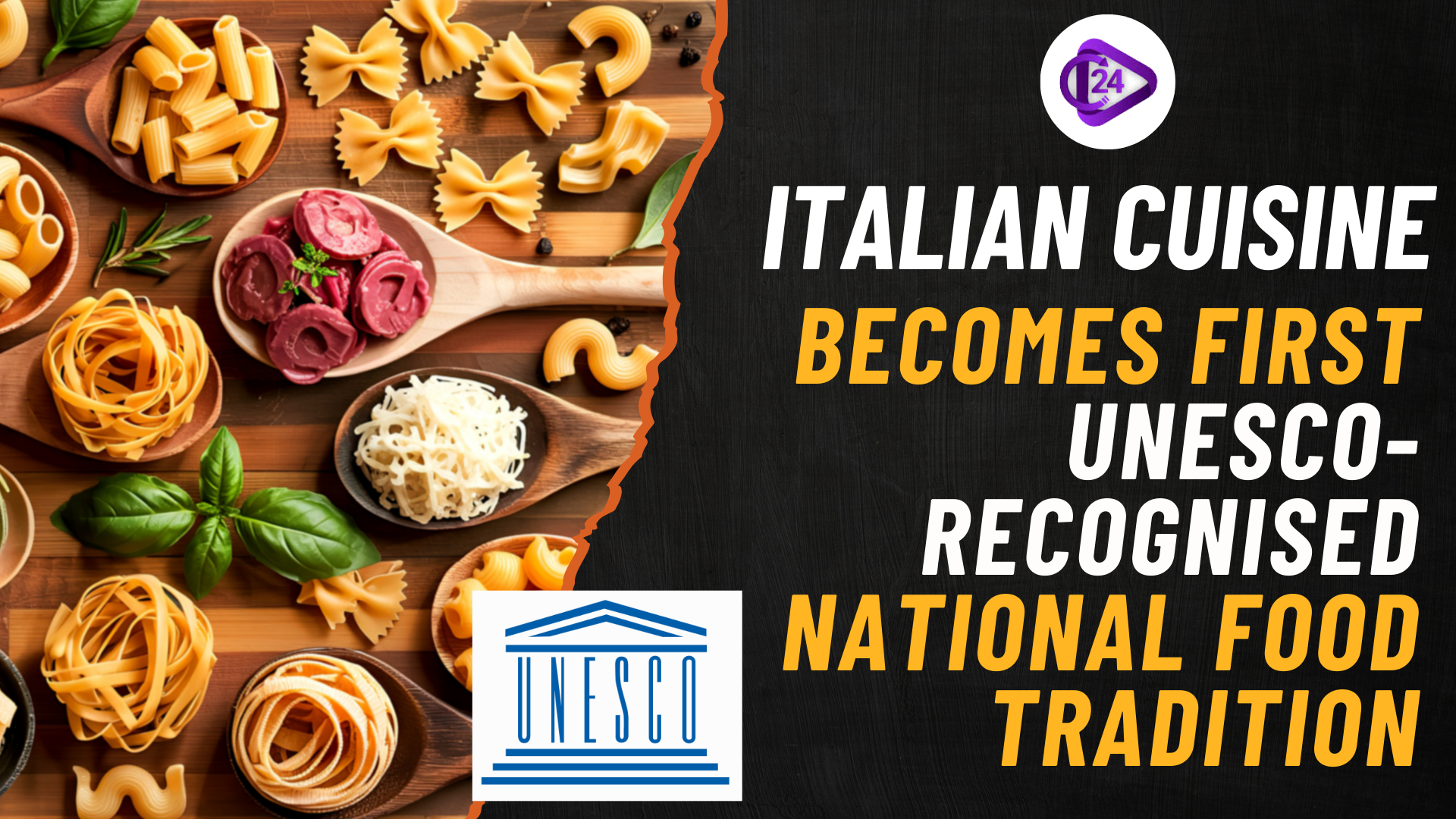
Italian cuisine has become the first national cuisine in the world to receive the Intangible Cultural Heritage of Humanity status from the United Nations Educational, Scientific and Cultural Organisation. This historic recognition protects Italy's rich culinary traditions, focusing on regional recipes, family rituals, and community dining practices that have been passed down through generations. Italian cooking is renowned not only for its flavours but also as a cultural symbol of identity, social cohesion, and sustainable practices. UNESCO's honour highlights the significance of Italy's gastronomy globally, fostering connections among people, conserving traditions, and inspiring culinary excellence across the world.
Key Highlights of Italian Cuisine
-
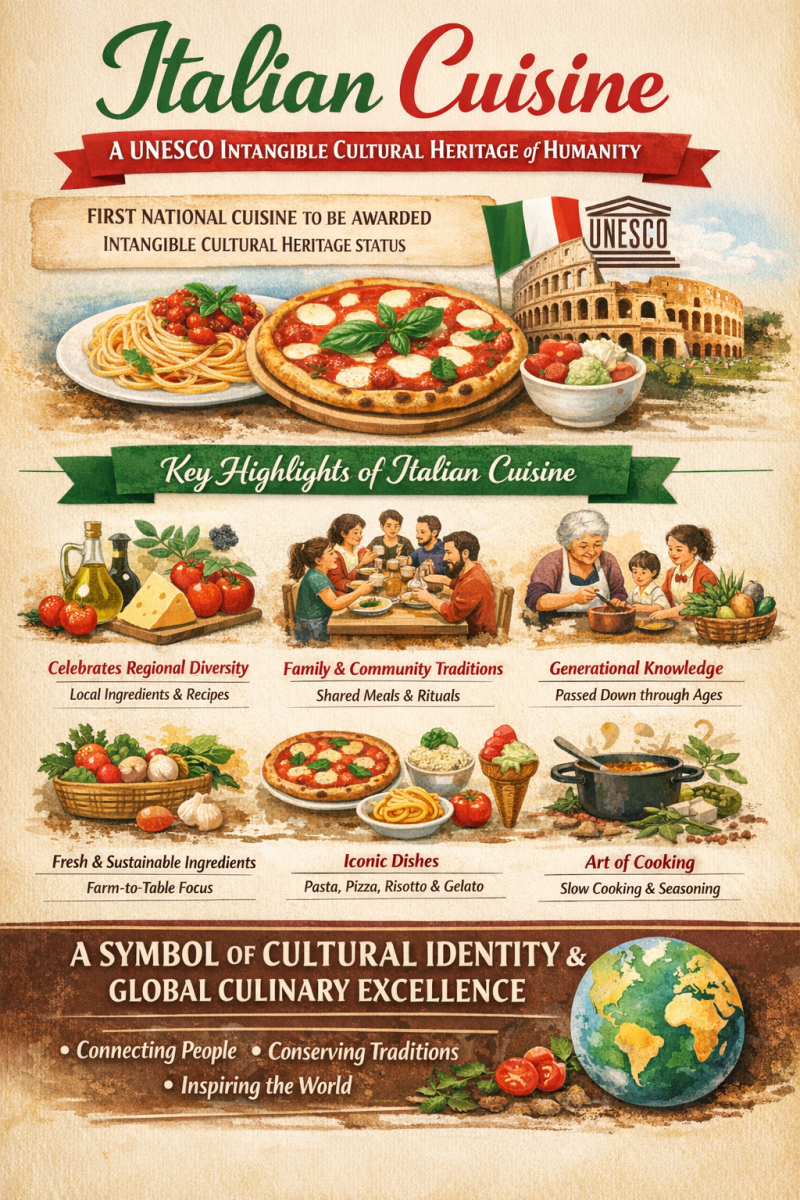
First national cuisine to be awarded NIH – Intangible Cultural Heritage status.
-
Celebrates regional diversity for ingredients, recipes and cooking methods.
-
Highlights family and community rituals of dining, focusing on shared meals.
-
Preserves the generational knowledge that has been passed down through the chefs and home cooks.
-
Emphasises fresh local and sustainable ingredients.
-
Dishes ranging from iconic classics such as pasta, pizza, risotto and gelato.
-
Recognises culinary methods, including slow cooking, fermentation and seasoning.
-
Helps foster cultural identity, social unity and international culinary influence.
Asked Questions in the Govt. Exam (PYQs)
| Question | Answer | Exam |
|---|---|---|
| How many elements of India were listed in the UNESCO Representative List of Intangible Cultural Heritage of Humanity? | 13 elements | SSC CHSL |
| In which year did UNESCO include Yoga in its Intangible Cultural Heritage list? | 2016 | SSC CHSL |
| Which of the following was included in the Intangible Cultural Heritage List of UNESCO? | Kumbh Mela | UPSC Prelims |
| Consider the following properties: Shantiniketan, Rani-ki-Vav, Sacred Ensembles of the Hoysalas, and Mahabodhi Temple Complex at Bodhgaya. How many of these were included in UNESCO’s World Heritage List? | Only two | UPSC Prelims |
| Which World Heritage Site is famous for its ancient stepwell architecture? | Rani-ki-Vav | SSC/UPSC GK |
| Nalanda Mahavihara is a UNESCO World Heritage site associated with which religion? | Buddhism | SSC/UPSC GK |
Expected Questions About UNESCO
Ajanta Caves, a UNESCO World Heritage Site, are famous for what?
-
A) Rock-cut sculptures
-
B) Fresco paintings
-
C) Stepwells
-
D) Temples
Answer: B) Fresco paintings
Explanation: The Ajanta Caves contain ancient Buddhist frescoes dating back to the 2nd century BCE – 480 CE.
Which UNESCO World Heritage Site is part of the Mountain Railways of India?
-
A) Darjeeling Himalayan Railway
-
B) Konkan Railway
-
C) Howrah Bridge
-
D) Nilgiri Express
Answer: A) Darjeeling Himalayan Railway
Explanation: It represents engineering excellence and scenic railway heritage in India.
The Mahabodhi Temple at Bodhgaya, a UNESCO World Heritage Site, is significant for which reason?
-
A) Birthplace of Buddha
-
B) Place of Buddha’s enlightenment
-
C) Site of the first Buddhist monastery
-
D) Ancient university
Answer: B) Place of Buddha’s enlightenment
Explanation: It is a major pilgrimage site for Buddhists worldwide.
Which UNESCO-listed dance form is from Odisha?
-
A) Kathak
-
B) Chhau
-
C) Bharatnatyam
-
D) Kathakali
Answer: B) Chhau
Explanation: Chhau is a martial and folk dance recognised for cultural expression.
Which Indian festival celebrated in Kerala is proposed for UNESCO recognition?
-
A) Onam
-
B) Vishu
-
C) Thrissur Pooram
-
D) Attukal Pongala
Answer: D) Attukal Pongala
Explanation: Attukal Pongala is a women-centric ritual attracting mass participation.
Which Indian site is recognised by UNESCO for rock-cut architecture?
-
A) Ellora Caves
-
B) Red Fort
-
C) Fatehpur Sikri
-
D) Charminar
Answer: A) Ellora Caves
Explanation: Ellora Caves represent Buddhist, Hindu, and Jain rock-cut architecture.
Which UNESCO World Heritage Site in India is associated with the Mughal period?
-
A) Humayun’s Tomb
-
B) Konark Sun Temple
-
C) Ajanta Caves
-
D) Mahabodhi Temple
Answer: A) Humayun’s Tomb
Explanation: It showcases Mughal architecture and influenced later monuments including the Taj Mahal.
Which of the following is UNESCO’s headquarters?
-
A) New York
-
B) Geneva
-
C) Paris
-
D) Vienna
Answer: C) Paris
Explanation: UNESCO is headquartered in Paris, France, promoting global education, science, and culture.
Which site in India is recognised for Buddhist cave monasteries?
-
A) Sanchi
-
B) Ajanta
-
C) Khajuraho
-
D) Fatehpur Sikri
Answer: B) Ajanta
Explanation: Ajanta features rock-cut monasteries and paintings, a UNESCO World Heritage Site.
Kumbh Mela is recognised by UNESCO under which category?
-
A) Tangible Heritage
-
B) Intangible Cultural Heritage
-
C) World Heritage Site
-
D) Global Landmark
Answer: B) Intangible Cultural Heritage
Explanation: It represents cultural rituals, mass gatherings, and religious traditions.
Which of the following sites is part of India’s Western Ghats UNESCO World Heritage Site?
-
A) Nilgiri Biosphere Reserve
-
B) Kaziranga
-
C) Sundarbans
-
D) Rann of Kutch
Answer: A) Nilgiri Biosphere Reserve
Explanation: It is recognised for its biodiversity and ecological significance.
Which UNESCO World Heritage Site is located in Gujarat, India?
-
A) Rani‑ki‑Vav
-
B) Hampi
-
C) Mahabalipuram
-
D) Sanchi
Answer: A) Rani‑ki‑Vav
Explanation: The stepwell architecture is recognised for cultural and engineering excellence.
Which UNESCO World Heritage Site in India is known for its Hoysala architecture?
-
A) Pattadakal
-
B) Hoysaleswara Temple, Halebidu
-
C) Konark Sun Temple
-
D) Ajanta Caves
Answer: B) Hoysaleswara Temple, Halebidu
Explanation: It is a classic example of Hoysala temple architecture and sculpture.
Conclusion (Italian Cuisine)
Italian cuisine's recognition as the first national cuisine that receive the title of Intangible Cultural Heritage, by the United Nations Educational for Scientific and Cultural Heritage, spoke volumes about its cultural importance throughout the world. Celebrating regional recipes and family rituals, and sustainable practices, it preserves generations of culinary knowledge. This honour highlights the role of Italy in spreading the message of cultural identity, social cohesion and gastronomic excellence around the world.