

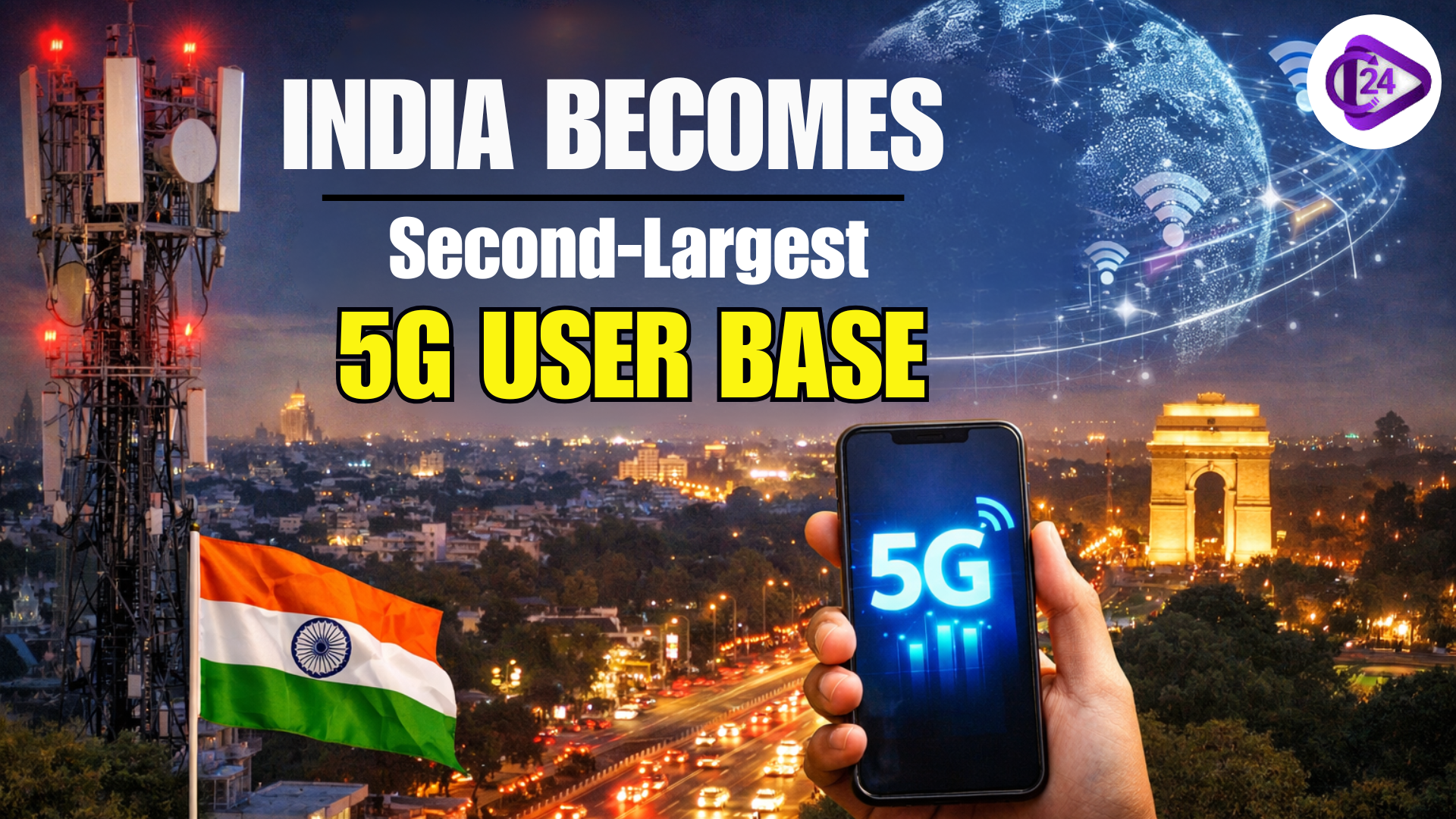
India has become the second biggest 5G market in the world, and the subscriber base of 5G in the country is also over 400 million users, second only to China. This milestone was announced by the Union Communications Minister Jyotiraditya Scindia and signifies how India is rapidly adopting the next generation in mobile technology, and with the highest-speed-in-the-world network coverage, with 5G coverage now reaching about 99.6 per cent of the districts and 85 per cent of the population. The success is an indication of the rapidly digitalising nature of India and a healthy investment in telecommunications infrastructure and 5G, facilitating connectivity, innovation, and economic development.
How India Became the World’s 2nd-Largest 5G Market
-
India emerged as the second-largest 5G market, with more than 400 million users, thus second after China, and one of the fastest 5G market adoption rates in the world.
-
This has been facilitated by the quick issuance since 2022, which has created 5G nationwide, covering approximately 99.6 per cent of the districts and 85 per cent of the population.
-
There are 4,695G base stations installed by telecom providers that facilitate the growth of services.
-
Since its release, 2505 million mobile users have switched, indicating a high level of consumer demand.
-
This expansion highlights the digitalisation of India, telecommunication infrastructure, and rural connectivity as a part of the 5G expansion.
MCQs Recently Asked in Exams
| Exam | Year | Question | Answer |
|---|---|---|---|
| SSC MTS | 2023 | In which year was the 5G telecommunications technology launched in India? | 2022 |
| DSSSB Jail Warder | 2024 | When did 5G services begin to be offered in India? | 1 October 2022 |
| DSSSB Assistant Superintendent | 2024 | In September 2023, India’s first 5G training labs and 5G applications in the health sector were launched in which state? | Assam |
| MP Patwari Group-2 | 2023 | Where was the 5G telephony service launched by Prime Minister Narendra Modi at the India Mobile Congress 2022? | New Delhi |

Conclusion (India Becomes World’s 2nd-Largest 5G Market)
The success of India as the second-largest 5G market with a population of more than 400 million people demonstrates the fast pace of technological adoption and strong telecommunication infrastructure. The milestone is an indicator of digital transformation, ubiquitous connectivity, and economic development, which makes India a pioneer in next-generation mobile technology and the future.