

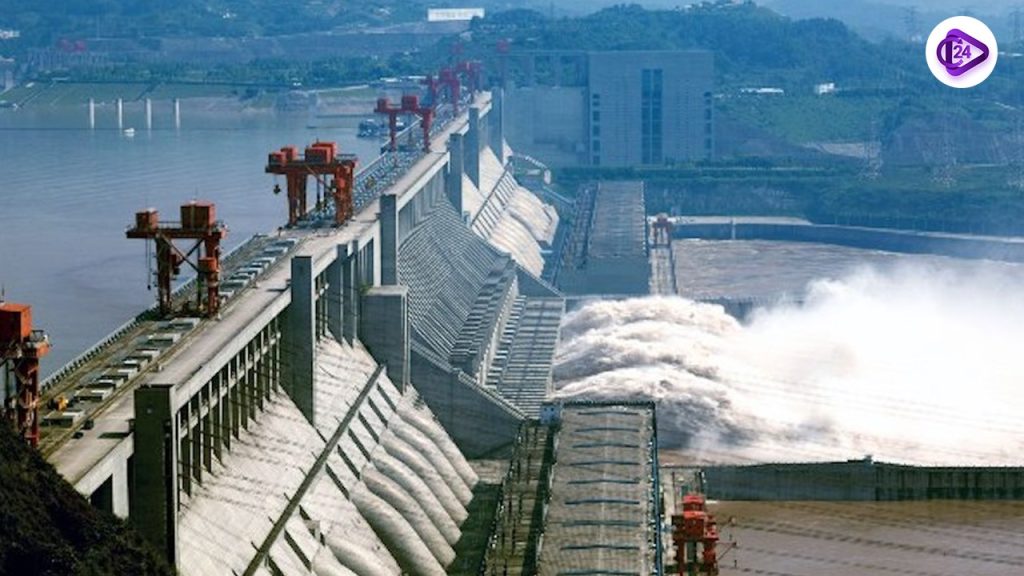
Recently the Chinese government has permitted the construction of the biggest hydropower dam called the Yarlung Zangbo River in Tibet, which is expected to produce 300 billion kilowatt hours annually and would be even larger than the Three Gorges Dam. It supports China’s ambition of becoming carbon neutral, offers employment in Tibet, and fosters the engineering industries. However, questions are raised on costs of above 254.2 billion yuan, displacement of people and ecological effects on ecologically sensitive zones of Tibet. Sourcing water from the river, the dam’s height is within a 2,000-meter-drop over a distance of 50 km this presents certain engineering difficulties but boasts of huge energy prospects. Hydro-politically, the construction of the dam may influence downstream resources; and water, making Indians and Bangladeshis nervous about scarcity of water, ecological change, and alteration of sedimentation. India has apprehensions about the Brahmaputra River and has stressed on the need for transboundary water management. Environmental and geopolitical issues related to the project require further regional cooperation, assessment of ecological conditions, and domestic water recourse development.
Key Points
-
Project Overview:
-
Yarlung Zangbo River’s lower reach in Tibet has been approved for construction of the largest hydropower dam in China.
-
It is expected that the electric power generation per year will be 300 billion kilowatt-hours.
-
This is several times the 88.2 billion kWh capacity of the currently the largest hydropower facility namely the Three Gorges Dam.
-
-
Economic and Environmental Outlay:
-
The cost of the project is likely to go a notch higher than the 254.2 billion yuan ($34.83 billion) used in the Three Gorges Dam project.
-
As expected, no statistics on the estimated numbers of persons displaced or indeed the environmental losses have been provided.
-
It has been thought that impact will be done on one of the richest ecosystems found on the Tibetan plateau.
-
-
Engineering Feat:
-
One segment of the Yarlung Zangbo river falls 2000 meters in 50 km and possesses gigantic hydropower resources yet entailing practically insurmountable difficulties in construction.
-
Geographical Context
-
Yarlung Zangbo River:
-
It starts in Tibet and drain into India as the Brahmaputra and Bangladesh.
-
Contains steep gradients in some sectors and is hji accorded the capacity to produce vast hydropower.
-
-
Proposed Location:
-
The breeding ground of silurus, this fish inhabits the lower reaches of the river on the eastern Tibetan plateau.
-
A part of the river has an available head of 2,000 meters in 50 km and hence is favorable for large power station development.
-
Significance of the Project
-
Energy Generation:
-
Projected to produce capacity of approximately 300 billion kWh per year which will triple that of the Three Gorges Dam hydropower.
-
Is in line with Chinese carbon peaking and carbon neutrality vision.
-
-
Economic Impact:
-
Expected to provide employment in Tibet and to stimulate engineering and construction industries.
-
The estimated cost of this project is expected to go higher than the said Three Gorges Dam project in china which cost 254.2 billion yuan.
-
-
Strategic Importance:
-
Hydropower potential of Tibet makes up more than one-third of China’s total hydropower capacity.
-
Enhances the China’s energy security by adding other renewable resources into the mix.
-
Environmental Concerns
-
Ecosystem Impact:
-
Tibet has a rich and complex bio geographical system, while large scale construction affects bio diversity.
-
Changes to the flow of river water may have implications for the life of fish and local wetlands downstream.
-
-
Displacement:
-
While the construction of Three Gorges Dam resettled 1.4 million people the Tibet plan also raises such questions.
-
Geopolitical Implications
-
Downstream Impacts on India and Bangladesh:
-
The Brahmaputra provides water for agriculture, drinking, and for people’s living in northeast India and Bangladesh.
-
Variations in the magnitude of river flow and sediment build-up may culminate to water deficits, poor crop yields and development of degraded ecosystems.
-
-
China’s Hydro-Hegemony:
-
Since China has direct command over the upper water sources of the transboundary rivers, it may indirectly control the countries that are located below such rivers.
-
It escalates tensions between two countries, which have delicate relations since India-China standoff in Doklam and the Galwan Valley face-off.
-
-
Concerns for Bangladesh:
-
China has less intake from the Brahmaputra while Bangladesh which lies downstream relies much on the river for agriculture and flood management.
-
China’s perspective
-
Chinese officials argue that the project does not impose ecological burdens on the production of downstream water or the local environment.
-
Focus on Development:
-
The project forms the strategic configuration that seeks development of Tibet and assimilation into mainstream china as well as addressing energy demands.
India’s Stand
-
Concerns Raised:
-
Both environmental and political concerns of the Indian government have recently raised concerns regarding the effect it may have on the flow and, therefore, the sustainable utilisation of the Brahmaputra.
-
Underlined the need for compliance with the principles of the management of transboundary river resources.
-
-
Strategic Response:
-
Deepening and expanding diplomatic relations between African countries and China and Bangladesh.
-
Investigating the viability of hydropower projects India wise to harness it efficiently from the Brahmaputra.
-
About Brahmaputra River System:
-
Different Names:
-
Tibet: Yarlung Tsangpo.
-
India: Dihang in Arunachal Pradesh; Brahmaputra in Assam.
-
Bangladesh: Jamuna.
-
-
Origin:
-
Source: Chemayungdung Glacier, near Mount Kailash, Tibet.
-
Divided from Manasarovar Lake by Mariam La Pass.
-
-
Course:
-
Tibet: Gentle slope through the Tsangpo valley, receiving tributaries like Raga Tsangpo.
-
India: Breaks through the Himalayas to enter Arunachal Pradesh as Dihang, merging with Lohit and Dibang to become Brahmaputra.
-
Bangladesh: Merges with the Ganga as Jamuna to form the Sunderbans delta.
-
-
Major Tributaries:
-
Left Bank: Dibang, Lohit, Burhi Dihing, Dhansiri.
-
Right Bank: Subansiri, Manas, Teesta, Kameng.
-
-
Dams on Brahmaputra:
-
Zam Hydropower Station (China, operational since 2015)
-
Way forward
-
Bilateral and Multilateral Mechanisms:
-
Enhance Cooperation on water sharing between China, India and Bangladesh.
-
Call for an application of regional regime based on the international law like UN Watercourses Convention.
-
-
Ecological Studies:
-
Joint environment impact assessments should be made in order to tackle environmental issues.
-
-
Alternative Strategies:
-
India can improve capacities to store water and the kind of irrigation in place to reduce disruptions that may arise.
-
It’s important to look at regional blocs to have more bargaining power when negotiating with these players.
-
Conclusion
The attempts to build the world greatest hydropower dam in Tibet again indicates China’s aim and objective in the field of renewable power as well as territorial influence. While it promotes economic and environmental values added it also highlights the importance of cooperation on transboundary river system and sustainable development. Hence, management of the conflict between ecological concern, stability of the regions interested and developmental objectives will be an important task in addressing this issue.