


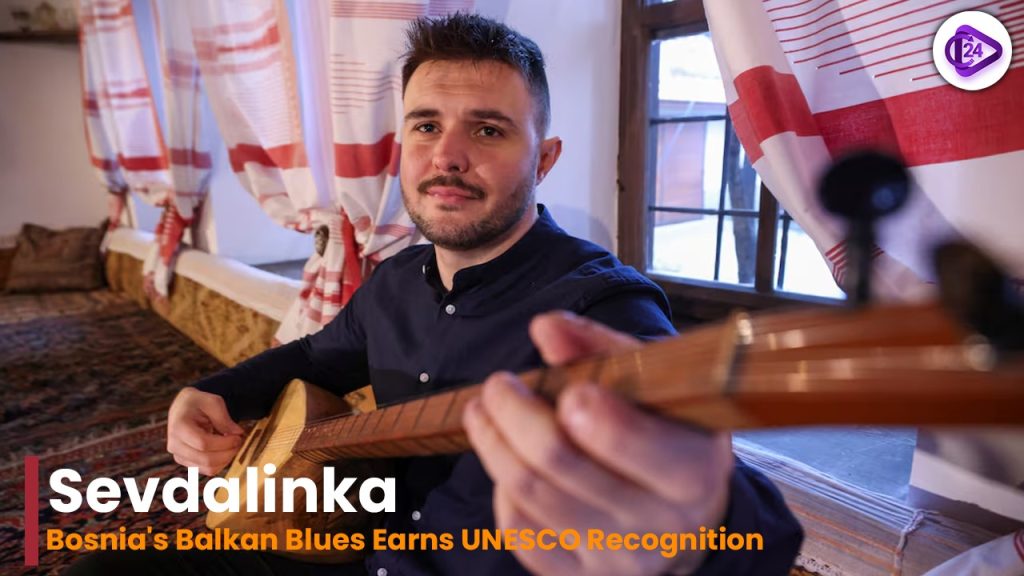
Sevdalinka, the love song of the Bosniaks now famous as the “Balkan Blues” combines elements of south/Slavic poetry and music that gave birth in the 16th century under the Ottoman Empire. Added to UNESCO’s National Inventory of Intangible Cultural Heritage in Bosnia this year. Originally sung solo with a type of stringed instrument similar to a lute, Sevdalinka is being revisited by artists like Damir Imamovic who has a project called “SevdahLab”. There are people like Enes Salman and Zanin Berbic who devote their time to the development of such a tradition. The loneliness of these songs persists even to this day making Sevdalinka a photogenic image of Bosnia that is also timeless.
Conception and Past Significance
Sevdalinka is said to go as far back as the 16th century, during which the eastern European country of Bosnia and Herzegovina was under the rule of the Ottoman Empire. This is a nostalgic type of popular South Slavic city love song which is based on the connection of South Slavic oral poetry and Ottoman music. Translation Sevdalinka along with its music usually reflects themes of love, love loss, desire, and pain throughout the generations.
Sung a cappella or supported by the lute, Sevdalinka has become an essential part of family and community entertainment and experience sharing. It is not only music but it is the way to save the history and emotions of Bosnian people, which has been kept only in the tradition and was told from mouth to mouth.
Introduction to Sevdalinka
-
Sevdalinka is a traditional type of depressive love song also known as Balkan Blues which originates from Bosnia and Herzegovina.
-
It has its origins in the 16th century and is a mixture of South Slavic oral epic and Ottoman music.
-
Sartorial and literate, its subjects encompass matters of the heart, passion, the pain of lost love, and the complexity of human passions, thereby relating to virtually every age.
UNESCO Recognition
-
Notably, Sevdalinka was recently welcomed to the list of Intangible Cultural Heritage National Inventory of UNESCO.
-
This is a positive step because it will help to safeguard one of the cultural assets of America and further attempts at promotion of it around the world.
Modern Revival and Global Appeal
However, over the recent past, Sevdalinka music has been revived through the interlace with modern artists. One of the leaders of this revival is Damir Imamovic who was born in a family of sevdalinka singers.
-
Damir Imamovic’s contributions include:
-
He got several awards for his creations such as the European Best Album awarded by Songlines and the Transglobal Music magazines for the 2020/2021 period.
-
Developing a multicultural educational project “SevdahLab” to share the history and significance of Sevdalinka with people all over the world.
-
Key Practitioners Keeping the Tradition Alive
-
Enes Salman:
-
A folk singer who has been singing Sevdalinka since the age of 14
-
Currently, Salman is one of the few musicians engaged in the active propagation of Tar as a performing art.
-
-
Zanin Berbic:
-
A music researcher and caretaker of the ethnographical collection of the Sarajevo Regional Museum music section.
-
Berbic spends the rest of his life teaching, singing, and popularising Sevdalinka usually with the help of saz, a long-necked lute considered to be a part of Ottoman classical repertoire.
-
He underlined that Sevdalinka is closely connected with his life ‘Sevdalinka is my life’.
-
Cultural and Emotional Resonance:
-
Sevdalinka is the traditional music that represents the sadness and tragedy of Bosnia and Herzegovina from melodies to lyrics.
-
It is a symbolic expression of the hardships, happiness, and strength of the Bosnian people in general that would otherwise be forgotten.
-
To the practitioners, including Salman and Berbic, it is not only a tradition, but a lifestyle as well as an incarnate representation of their line and the past.
Significance of Modern Efforts
-
This art form has been brought to the present day, and worldwide, and recognition as well as more modern interpretations are necessary to help this form of traditional art live on.
-
Luckily, there are musicians, such as Imamovic, who were able to adapt the Sevdalinka stereotype to the modern world and integrate it into present culture widely.
-
This has put an even higher stamp of approval from UNESCO which defines the subject as a valuable piece of culture.
Conclusion
Preservation and promotion of Sevdalinka indicates that cultural heritage plays an essential role in enhancing both, national and international identity. Younger people inter alia adapt and transform this prehistoric custom and guarantee that the sorrowful tunes of the “Balkan Blues” will play on and reverberate throughout the ages both locally and internationally. Sevdalinka continues to be a living culture of Bosnia and Herzegovina due to the hardworking attitude of artists and institutions.