


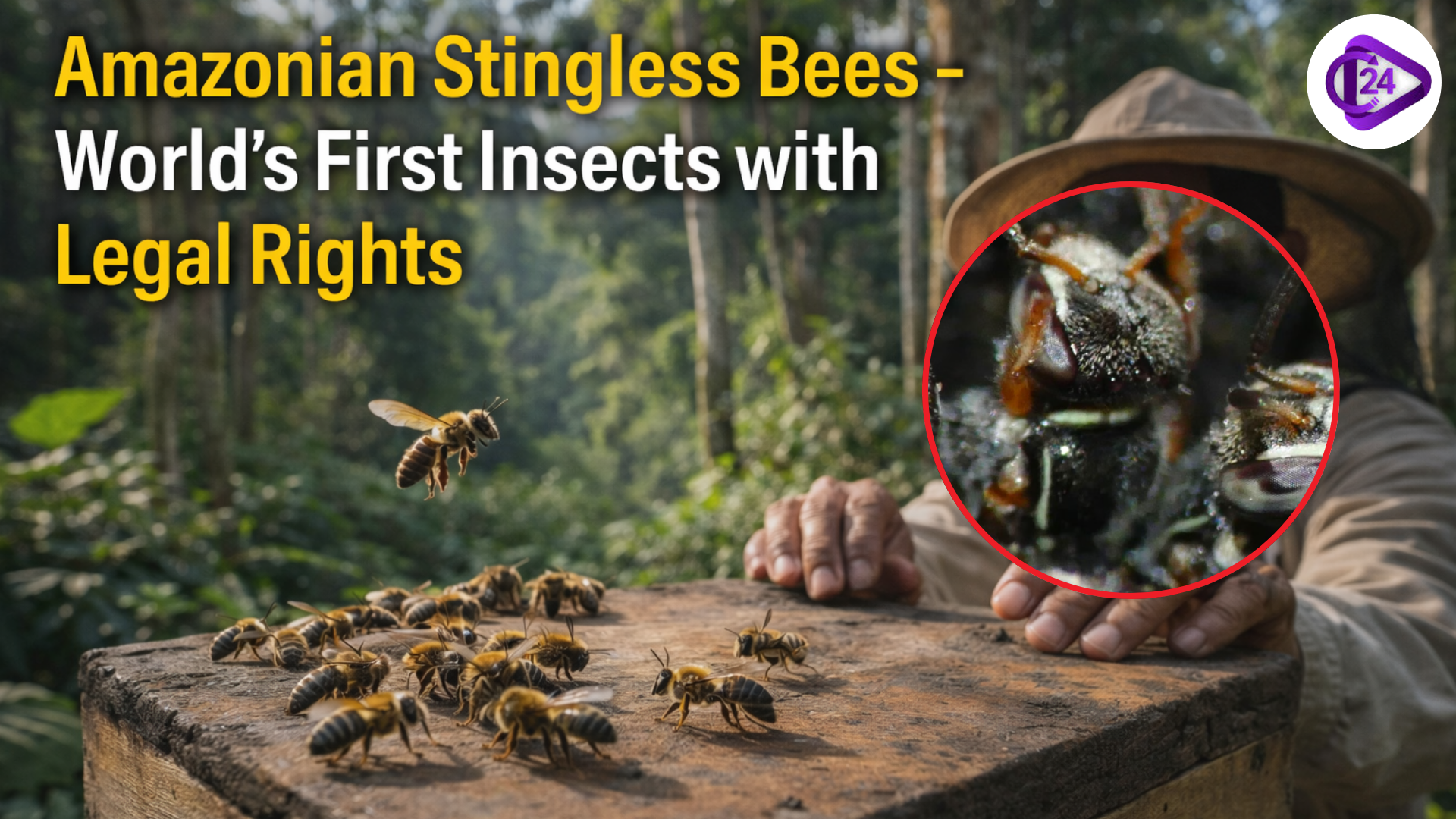
The world has recorded history when the stingless bees in the Amazonian region were the first insects to be given legal rights through formal legislation. The municipalities of Satipo and Nauta in the Peruvian Amazon in a historic action declared these indigenous pollinators as rights-bearing entities in a plan that granted them the rights to exist, procreate, have healthy populations and live in unpolluted and otherwise healthy environments. It is an unprecedented level of legal protection of the bees, which are crucial to rainforest biodiversity and the Indigenous cultures, against the forces of deforestation, pesticides, and climate change, establishing a new international precedent in conservation and environmental law.
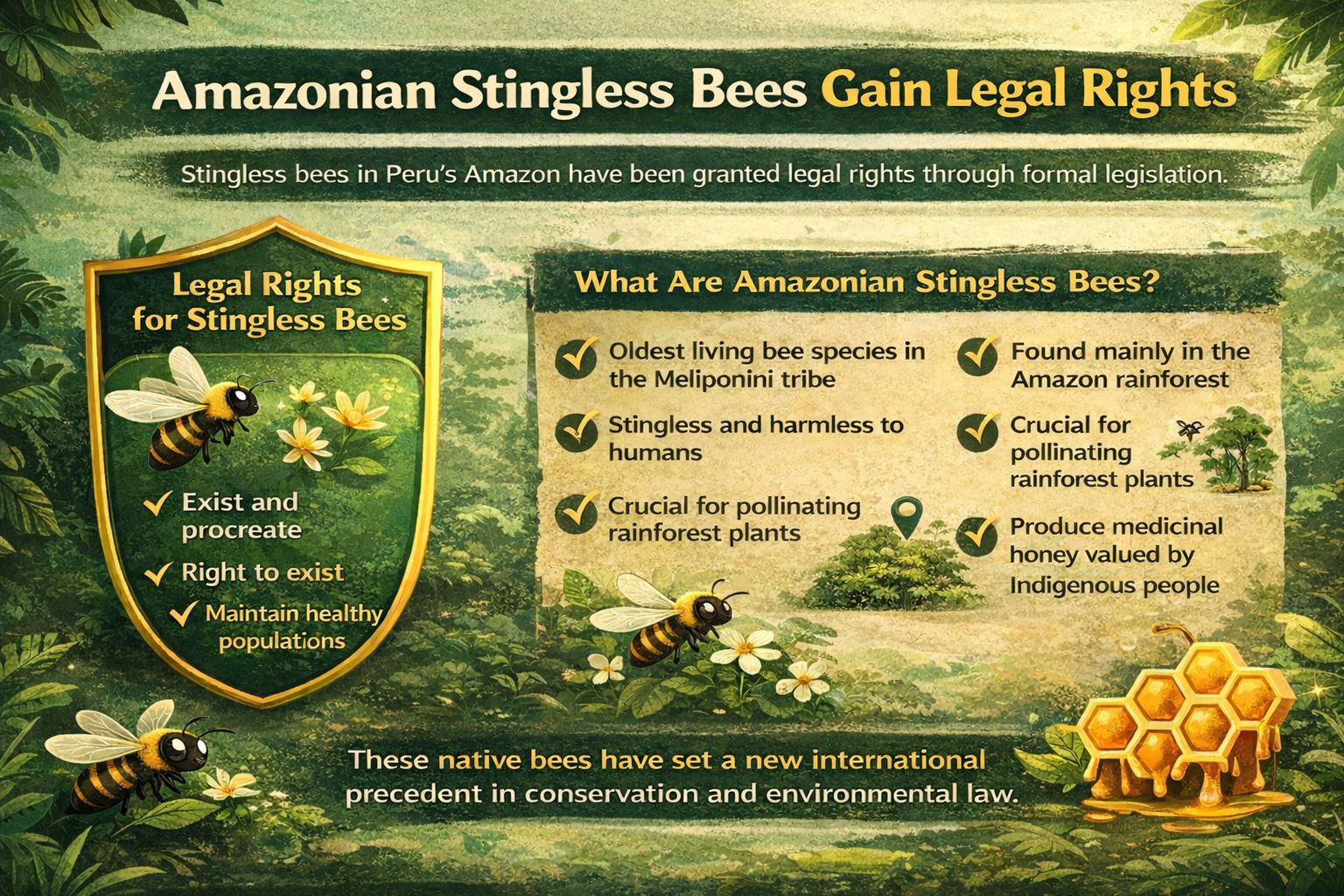
What are Amazonian Stingless Bees?
-
Stingless bees of the Amazon rainforest are indigenous and pollinate the rainforest; they are in the Meliponini.
-
They do not have stingers or have a non-functional one; hence, they are harmless to people.
-
They are the oldest living species of bees on earth, with a lifespan of millions of years.
-
They are generally common in tropical areas, particularly in the Amazon basin.
-
They play an important role in pollinating rainforest crops and plants.
-
Their honey is regarded as having medicinal value and their cultural value by Indigenous communities.
Amazonian Stingless Bees: Species, Habitat and Role in the Ecosystem
-
Amazonian stingless bees are members of the Meliponini tribe that contains hundreds of species distributed around the world, with an extremely high diversity in the Amazon basin.
-
They inhabit mostly the tropical and subtropical woods and nest in hollow trees, logs and natural depressions.
-
These bees are important pollinators of rainforest plants, fruit trees and crops and aid in the regeneration of the forests.
-
They contribute to the well-being of biodiversity, stable food chains and ecosystem resilience.
-
They contribute significantly to the livelihoods of Indigenous people because of pollination and honey-making.
-
The fact that there are some is a good sign of a healthy forest ecosystem.
Conclusion (Amazonian Stingless Bees)
The stingless bees in the Amazon are essential to the survival of the rainforest, biodiversity, and food security. Pollinating thousands of plant species, they ensure the ecological balance and Indigenous livelihoods. By giving them a status in the law, it becomes clear that there is a need to ensure the protection of even the minute life forms to provide a sustainable and resilient planet.