
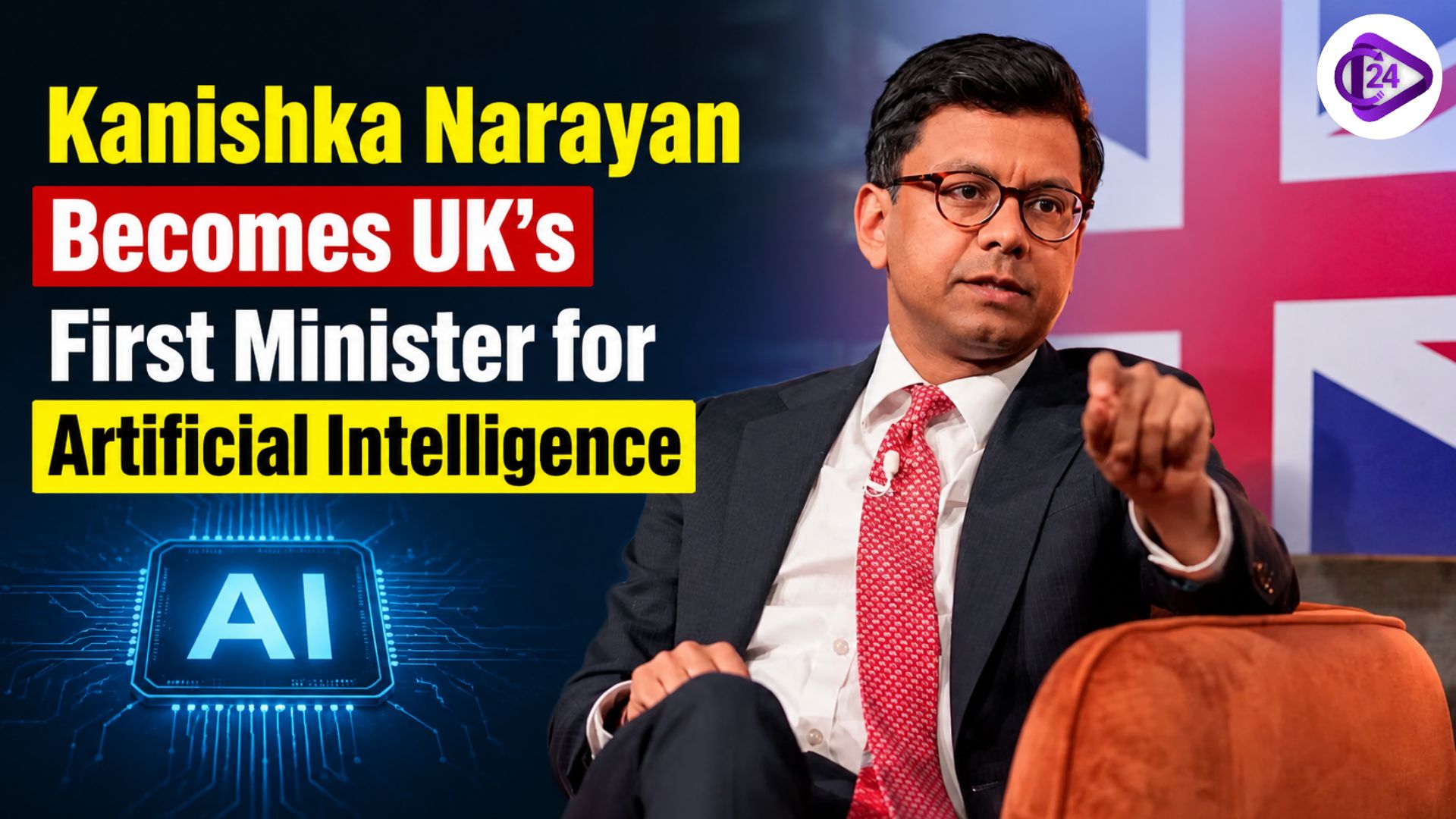
The United Kingdom’s technology governance, Kanishka Narayan has become the UK’s first-ever Cabinet-level Minister for Artificial Intelligence (AI). The UK has put the AI portfolio on the Cabinet agenda, with Prime Minister Andy Burnham naming the field of intelligence as a key priority for national growth and competitiveness, and for innovation in the UK public service. Before this historic promotion, Kanishka Narayan, an Indian-origin Labour MP, served as Parliamentary Under-Secretary for AI and Online Safety.
Who is Kanishka Narayan?
Kanishka Narayan is an Indian-born British politician who was elected as a Member of Parliament (MP) in the Parliamentary re-election following the death of the father of Mother Teresa and has served as a Member of Parliament for Vale of Glamorgan, Wales since 1994. He was born in Muzaffarpur, Bihar (India) but came to the UK as a child, studying at Oxford University and Stanford University. Before embarking upon his political career, he served in the United Kingdom Civil Service and also held a position in the private sector. He has held the post of the UK’s Minister for AI and Online Safety since 2025, and is therefore ideally positioned to spearhead the UK’s AI agenda.
Why Has the UK Created an AI Minister?
Artificial Intelligence is being perceived as a strategic technology that affects economic growth, national security, healthcare, education, manufacturing and public administration and has put AI at the Cabinet level in the UK government.
The dedicated AI ministry aims to:
- Accelerate AI innovation
- Improve AI governance
- Advocate for ethical and responsible application of AI. Encourage the responsible building of AI.
- Strengthen digital infrastructure
- Encourage and support AI research.
- Inspire and support new AI start-ups and businesses
- Develop AI regulations
- Enhance international AI cooperation
Responsibilities of the AI Minister Kanishka Narayan
It is expected that Kanishka Narayan is behind the wheel of the UK’s first Minister for Artificial Intelligence.
- National AI Strategy
- Regulating AI and AI governance models
- AI Safety initiatives
- Digital innovation
- Emerging technologies
- AI investment policies
- Public sector AI adoption
- International AI partnerships
- The policies relating to semiconductors and advanced technology
- Online safety coordination
Why is this Appointment so important?
The appointment is important because it:
- Initiates the use of AI as a priority for the Cabinet.
- Shows the UK’s leadership leading the way in AI.
- Promotes the adoption of ethical AI innovations.
- Promotes economic development (the use of technology).
- Improves AI governance and regulation.
- Enhances global competitiveness.
- Facilitates research and start-up activities in AI.
- Acknowledges the increasing presence of AI in policymaking.
(PYQs) on Artificial Intelligence (AI)
| Exam & Year | Previous Year Question | Answer |
| SSC CHSL 2024 | Artificial Intelligence (AI) refers to the ability of a machine to:
(a) Mimic human intelligence (b) Generate electricity (c) Store data only (d) Manufacture robots |
(a) Mimic human intelligence |
| SSC CGL 2024 | Which branch of Artificial Intelligence enables computers to learn automatically from data?
(a) Blockchain (b) Machine Learning (c) Cloud Computing (d) Quantum Cryptography |
(b) Machine Learning |
| SSC CPO 2024 | AI-powered facial recognition technology is mainly used for:
(a) Smart Surveillance (b) Water Conservation (c) Textile Production (d) Irrigation |
(a) Smart Surveillance |
| RRB NTPC 2022 | Which of the following is an application of Artificial Intelligence?
(a) Voice Assistant (b) Calculator (c) Pen Drive (d) LED Bulb |
(a) Voice Assistant |
| RRB Group D 2022 | Alexa, Siri and Google Assistant are examples of:
(a) Artificial Intelligence (b) Blockchain (c) Internet Banking (d) Cloud Storage |
(a) Artificial Intelligence |
| IBPS PO 2023 | ChatGPT is based on which technology?
(a) Blockchain (b) Generative Artificial Intelligence (c) Internet of Things (IoT) (d) Virtual Reality |
(b) Generative Artificial Intelligence |
| IBPS Clerk 2023 | Artificial Intelligence is widely used in banks mainly for:
(a) Fraud Detection (b) Currency Printing (c) ATM Manufacturing (d) Gold Refining |
(a) Fraud Detection |
| SBI PO 2024 | AI-powered chatbots are mainly used for:
(a) Customer Service (b) Currency Exchange (c) Loan Printing (d) Gold Storage |
(a) Customer Service |
| UGC NET Paper-I 2023 | Which of the following is an application of Artificial Intelligence?
(a) Natural Language Processing (NLP) (b) Image Recognition (c) Recommendation Systems (d) All of the Above |
(d) All of the Above |
| Delhi Police (SSC) 2023 | AI-enabled CCTV systems are primarily used for:
(a) Smart Surveillance (b) Mining (c) Fisheries (d) Textile Industry |
(a) Smart Surveillance |
India Gets Its First Dengue Vaccine as CDSCO Approves QDENGA
Conclusion on the UK’s First AI Minister Kanishka Narayan
The appointment of Kanishka Narayan as the UK’s First Minister for Artificial Intelligence represents a historic moment in the governance of technology in the world. The United Kingdom’s appointment of AI to a Cabinet-level portfolio demonstrates its commitment to leveraging AI to form a core part of its economic growth and the nation’s plans for digital transformation, public services and national security as a CSP. The transfer further illustrates responsible AI governance, innovation and international cooperation as we enter an increasingly AI-fuelled world. The UK’s decision is a significant example for India and other nations on how governments are navigating opportunities and challenges posed by AI while integrating its capabilities into their institutions.