
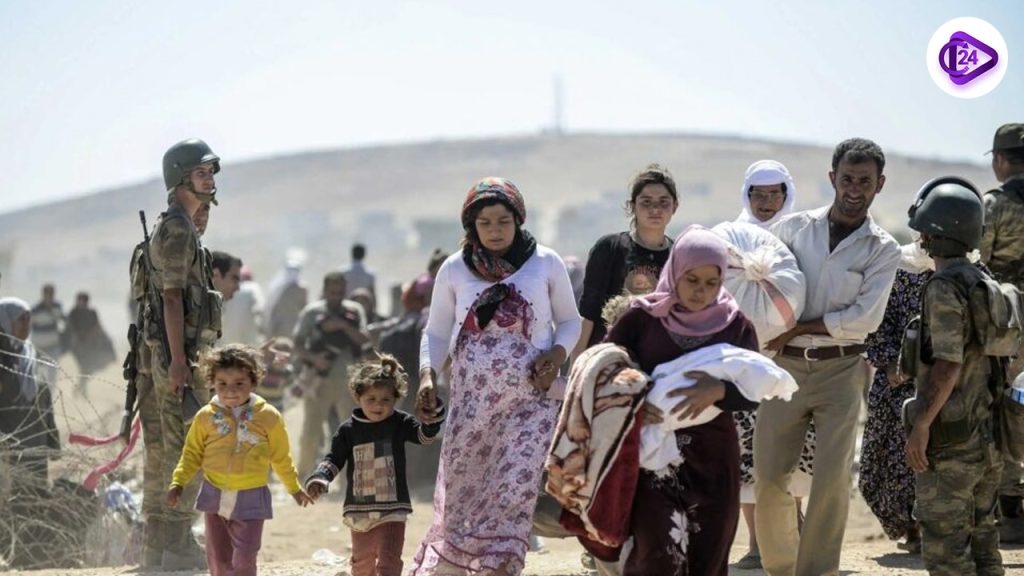
The Syrian crisis remains one of the most complex and ongoing conflicts in the Middle East. After the Assad regime regained control over most of Syria, regions like Idlib continue to be controlled by rebels and extremists. Additionally, the Kurds have established a semi-autonomous region in northeastern Syria, straining relations with Turkey, which fears Kurdish separatism. The conflict has resulted in severe humanitarian and geopolitical challenges, with millions displaced and international powers playing key roles in shaping the outcome.
Key Points:
-
Recently, the Assad regime recaptured majority of the territory in Syria, territories in the north like Idlib remain in the hands of rebels and/or extremists.
-
The Kurds have created, more or less, quasi-independent entity in the north east and relations with Turkey are challenging.
Who are the Kurds?
-
The Kurds are the world’s largest stateless ethnic group. They number around 25 million to 35 million, and mostly inhabit the highlands of southern and eastern Turkey, northern Iraq, northeastern Syria, northwestern Iran, and parts of Armenia, minorities in all of these countries.
-
Kurdish national identity has existed for over 2,500 years; however, they became an independent nation in the 7th century, during which most of them accepted Islam.
-
The Treaty of Sèvres proposed the formation of a Kurdish state in 1920, but this was reversed by the Treaty of Lausanne in 1923, as it divided the region and did not give the Kurds any kind of autonomy. Despite several attempts to set up a Kurdistan, the Turkish state has continually suppressed Kurdish movements for self-rule, resulting in considerable repression over the years.
Arab Spring
-
Arab Spring which was an uprising for democracy swept across several parts of Middle Eastern mostly Muslim countries such as Tunisia, Morocco, Syria, Libya, Egypt, and Bahrain.
-
The Arab Spring started in December 2010 when the Tunisian street vendor, Mohammed Bouazizi committed suicide by self-immolation following police confiscation of his vegetable stands for selling vegetables without a permit.
Background and Origins of the Syrian Conflict:
-
Syrian Civil War still goes on and started in 2011 by protests against the regime of President Bashar al-Assad as part of the Arab Spring uprisings.
-
It also turned into a civil war involving the government, various rebels, Kurds, ISIS and other international players such as Russia and the United States and Turkey.
Role of External Powers:
-
Russia: Assad’s closest friend, which actively supports the dictator providing him with military supplies, conducting air raids for him, and supporting him diplomatically.
-
United States: Originally backing Kurdish parties and rebellion; primary goals was the ISIS, but had multiple ties with the Assad government.
-
Turkey: Against the Kurds in Syria, saying that they are affiliated with the Kurdish separatists in Turkey. Sure supports the Syrian opposition forces in the northwest.
-
Iran: A close ally of Assad; supplying military, financial and all other type of support.
Impact of ISIS and Extremist Groups:
-
ISIS emerged during the civil war; it took control of extensive areas of both Syria and Iraq but was nearly wiped out by a coalition headed by the United States and bolstered by the SDF.
-
The war also motivated formation of other extreme groups therefore compounding the conflict.
Humanitarian Crisis:
-
More than half a million people have been killed, and millions of others are still struggling to find a shelter, being internally displaced or seeking asylum in neighboring countries and in Europe.
-
Major loss of physical capital, including but not limited to hospitals, schools, and houses, thus a humanitarian crisis.
Use of Chemical Weapons:
-
The Syrian government has been convicted many times of using chemical weapons on citizens leading to condemnation and restrained military action by a number of states including the United States and states allied to it.
Ceasefires and Peace Negotiations:
-
Many cease fire deals and peace negotiations have been made in the past, but none of them have created a sustainable solution.
-
There have been efforts to convene peace talks in the form of the Geneva Peace talks together with the Astana Process with key players being Russia, Turkey, and Iran and yet the conflict hasn’t been resolved.
Syrian Refugee Crisis:
-
In decent years, millions of the population have escaped the fighting and the country has become home to one of the largest refugee crises in the world. Other frontier countries of the region such as Turkey, Lebanon, and Jordan have been the most affected.
Geopolitical Implications:
-
The Syrian conflict has played a major role in shaping regional relations in the Middle East by resulting in a constant struggle between different world authorities.
-
The conflict between the United States and Russia is still a problem as well as Turkey’s fear of Kurdish self-rule makes it difficult for there to be peace in the region.
India’s Role and Interest:
-
India has kept out of the conflict over the region and has encouraged restraint for a diplomatic solution to be sought.
-
From it emerged concerns in humanitarianism and also has strategic concerns on the relation with both the Syrian government and Russia.
Conclusion
The Syrian conflict continues to be a deeply complex crisis with far-reaching geopolitical and humanitarian consequences. Despite the Assad regime regaining control, tensions persist, particularly with the Kurds and various international powers. The ongoing humanitarian disaster, marked by millions of displaced people and widespread destruction, highlights the urgent need for a sustainable peace solution. While numerous peace talks have taken place, a lasting resolution remains elusive, keeping the region unstable. India’s approach has focused on urging diplomacy and restraint, recognizing the broader global implications of the conflict.