

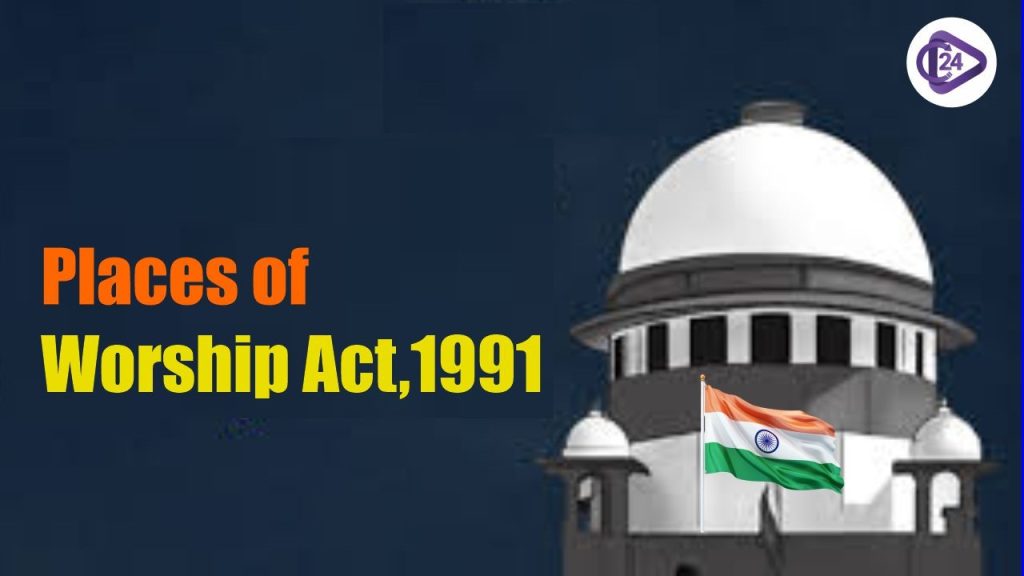
Places of Worship Act 1991: Legal Debate and Implications for Secularism in India

The Places of Worship Act, 1991, preserving India’s secular fabric, faces judicial scrutiny. The Supreme Court examines its constitutionality amid debates on fundamental rights, historical justice, and communal harmony....
Places of Worship Act 1991: Legal Debate and Implications for Secularism in India
Places of Worship Act 1991

The Places of Worship (Special Provisions) Act, 1991, which was adopted when Communal tensions in Independent India kept increasing, was intended to preserve status quo as those places of worship were before the eve of India’s Independency day on fifteenth August 1947. It prohibits any legal proceedings for changing the character of such a place, except in the following cases.

  1. Exemptions were the situations as S.R. Bommai issued by the Supreme Court and the Babri Masjid-Ram Janmabhoomi case was one of the important cases settled by the apex court.
  2. Places of interest are controlled and preserved in accordance with the Amateur and Ancient Monuments and Archaeological Sites and Remains Act of 1958.
  3. Certain premises that dealt with conflicts or conversions through yielding before the enactment of the Act.

The Act is considered a legal policy to protect the secular fabric of India by withholding historical hurts for political or communal propaganda.

The Supreme Court Hearing: Major Arguments

The Special Bench of the Supreme Court led by Chief Justice Sanjiv Khanna will be entertaining the petitions that seek to declare the Act unconstitutional. These pleas present several important arguments:

1. Historical Injustice:

The Act, according to the petitioners, legalizes historical wrongs – the demolition of Hindu temples by invaders and denies Hindus the right to regain their worship places.

2. Violation of Fundamental Rights:

They argue that the Act deny their rights to their religion which they have under Article 25 right to freedom to practice and propagate religion and Article 26 the right to freedom to managing of religious affairs of the Constitution of Kenya.

3. Secularism Paradox:

Interestingly, the petitioners contend that the Act un-secular by proving favoritability to one religious group against others and this contention is refuted by the supporters of the Act.

The Secularism Debate

Petitioners’ View: They argued that the release of rights to Hindus and other communities to regain the areas where the temple was demolished in the past is secular because it recognizes the rights of all religions.

Supporting the Act:

1. Judicial Sanction in Ayodhya Judgment:

The Ayodhya verdict of the Supreme Court stated that the Act preserves the secular fabric of the country as it avoids people’s battle over the historic dispute.

2. Legislative Intent:

The Act is an embodiment of the principle of non-retrogression that was agreed to in that the country should progress forward without re-opening of charges that have been dealt with before.

Implications of the Hearing

The Supreme Court judgment may have serious implications on India’s secular fabric and communal relations:

1. If the Act is Upheld: Affirms the continuing leadership of India to the principles of secularism enshrined in the Constitution. Closes any luggage of exploiting Judicial Chambers for the procurement of remedies for historical injustices. Promotes a strong statement against the political influence on the issues of religion.

2.If the Act is Struck Down or Diluted: This creates possibilities of legal actions against places such as the Gyanvapi Mosque at Varanasi or Shahi Eidgah Mosque at Mathura. Harms such as worsening of ethnic tensions, political instabilities, and conflicts that unsteadify social order and cohesion. Stands for removing the spirit of non-retrogression and eradicating legislative protection.

Judicial Activism as a Protector of the Principle of Secularism

In this respect, it can be stated that the judiciary has consistently led the way in the pursuit of secularism. For instance, in S.R. Bommai v/s Union of India which was in 1994 and the Ayodhya issue which was in 2019, the Supreme Court concentrated on secularism as one of the supreme values in the Indian Constitution.

This case will extend the challenge to the judiciary further in terms of ensuring that India’s pluralist character is upheld amidst increasing polarization.

Conclusion

It can be seen that the Places of Worship Act of 1991 is another testimony of the Indian determination to strive to break free from the skins of a troublesome past so as to build a secular India that belongs to everyone. This upcoming decision by the Supreme Court is not only a final determination and decision but of the nation itself, on the secular life that it envisions.

This case engages with law, religion, and constitutional values in India to the extent that it fits incredibly well within the proposed topics of secularism, judicial accountability, and constitutional morality.

Kerala Deploys ANNAM.AI Smart Weather Stations for Advanced Weather Monitoring
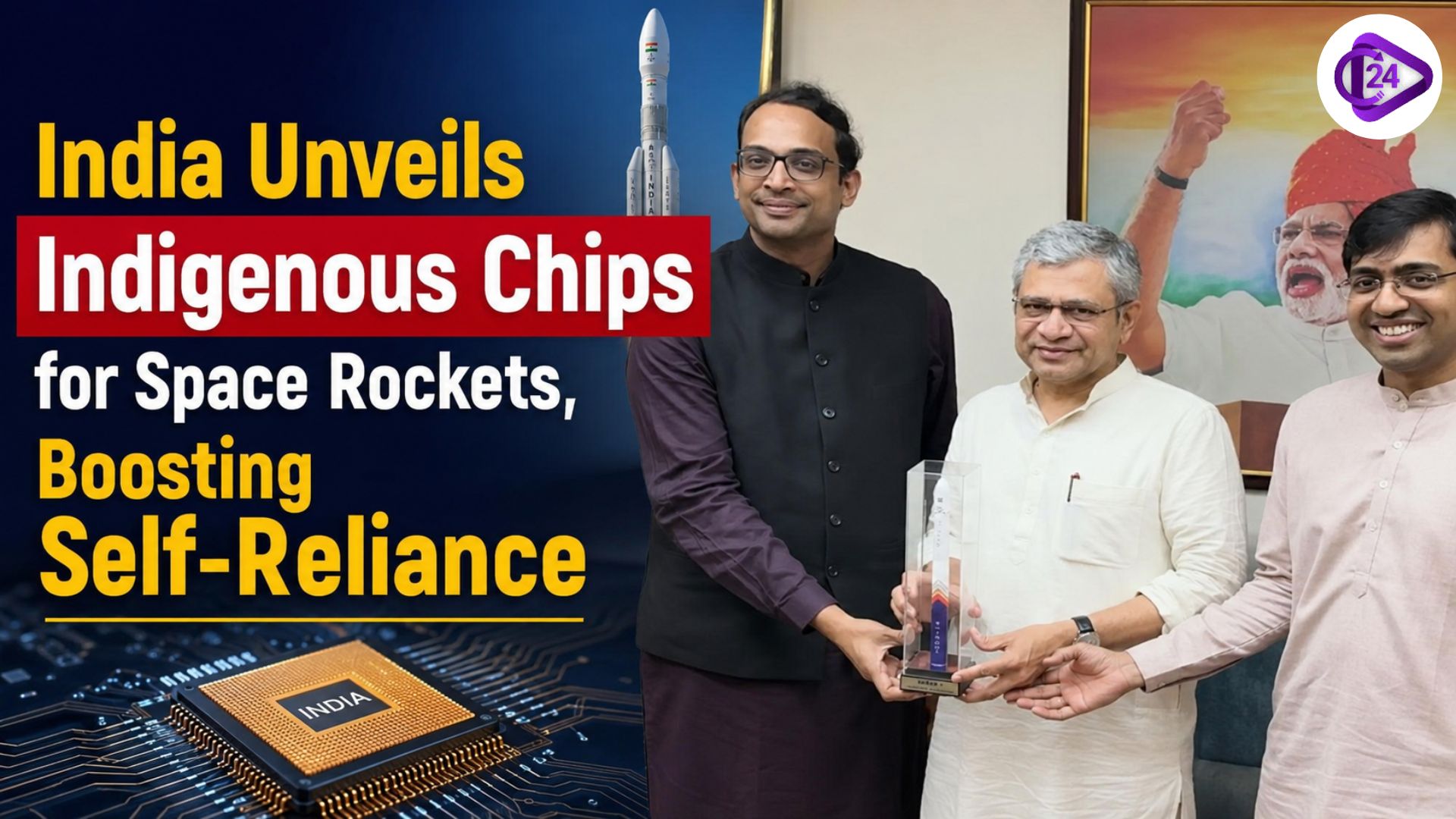
India Unveils Indigenous Chips for Space Rockets, Boosting Self-Reliance
Government Approves RBI Plan for ₹10 and ₹20 Polymer Banknotes
Sarvesh Kushare Wins India’s First CWG 2026 High Jump Silver Medal
MJPJAY 2026: Mahatma Jyotirao Phule Jan Arogya Yojana, Key Facts & Benefits
Esha Singh Wins Gold in 25m Pistol at ISSF World Cup 2026

Start Learning Today with Class24

Class24 Mobile Application

Class24 also has a mobile application so that it becomes easily accessible and convenient. This can be downloaded on an Android device. Users have appreciated this app and the content provided as 4.1 out of 5 is its rating in the App Store. People loved it because Class24 is giving content which is extremely rich in every sense. The app comprises a wide variety of features for smooth learning:

  • User-Friendly Interface: The app is categorized into various sections so that students can navigate and access various resources with ease.
  • Offline Access: The study materials can be downloaded and the student can access them even when not connected to the internet.
  • Inbuilt eBook Reader: There is a lightning-fast reader for eBooks within the app, so reading is seamless.
  • Progress Tracking: The app tracks student’s progress in preparation and keeps them organized and focused.

Courses and Subjects Offered

The total syllabus will be covered, and there are in-depth practice materials so as to give deep preparation in the courses designed to each one of them. All the subjects come under the aegis of courses offered by Class24 to meet different needs of various aspirants such as:

Preparation Tips for All Exams

Preparation tips for all exams mentioned below:

  • Previous Year Papers: Try to attempt at least 5-10 years of question papers to know the pattern of questions, how much difficulty one would face while answering, and how many frequently asked topics were in the examination.
  • Take Mock Tests: Attempt Mock Tests regularly in order to time and accuracy. You may analyze the performance and make an improvement for weak areas.
  • Focus on Time Management: Solve questions in the given time to make a habit of having speed and efficiency. Allocate time sensibly between Paper 1 and Paper 2, while appearing in the examination.
  • Current Affairs: For Current Affairs and TET exams, be updated about current affairs, teaching aptitude, and general awareness.
  • Regular Revision: Spend your daily and weekly time for revisions to not forget concepts and formulas. Use flashcards or do self-summary notes for quick revisions.
  • Understand the Exam Pattern and Syllabus: Understand the pattern of your exam paper and syllabus very well. Both Current Affairs and CSIR NET examinations are two-tier ones and involve both Paper 1, which consists of general aptitude and Paper 2 that involves specific aptitude subjects.
  • Make a Study Plan: Divide the preparation time into three phases of concept building, revision, and mock tests. Allocate more time to weaker areas while maintaining equilibrium with stronger sections.
  • Online Coaching or Study Groups: Enroll in online coaching programs like Class24 to get proper guidance and a structured approach to the study. Study groups will be useful to discuss doubts and share resources.
  • Stay Consistent and Motivated: Maintain a steady study schedule. Stay motivated by making small achievable goals.
  • Use Quality Study Materials: Suggested study material refers to a textbook, a set of previously published question papers, and web sources such as Class24.

Conclusion

Class24 is a one stop solution for aspirants preparing for Current Affairs, CSIR NET, SET, UP PGT English, UP TGT PGT, UPHESC Assistant Professor, TET, IGNOU B.Ed and other competitive exams. There are structured courses, live classes, mock tests along with the guidance of experts to assist candidates in achieving success in their respective fields.

Get success in your hand. Start study anytime anywhere.

The journey becomes simple and enjoyable when you start taking interest in it. And through our app “Class24”, we will be your trusted partners in developing that interest.

class24 app
Daily Quizzes
Mock Tests
Ongoing

No ongoing tests right now.