

Space exploration is rapidly expanding, but its effect on the environment from rocket exhaust to space debris is excluded from current global sustainability initiatives such as the Paris Accord. There is, therefore, the need for urgent intervention to address these emerging issues.
Space debris or space litter, includes non-functional man-made objects including satellites, rocket stages, fragments from a collision, or an accident orbiting around the Earth. Currently, more than 19,000 individual satellites have been launched, of those at least 13,000 are still functioning; however, only a few thousand remain active or are intentionally used. Consequently, there is congestion in LEO with more than 13,000 metric tons of space debris. Space debris has several drawbacks such as interference with the communications system and satellites, on top of that the collision risks which may create even more debris when planning subsequent space missions. Orbital debris management and mitigation is emerging as one of the most critical concerns to space entities globally.
Impact on the Environment
-
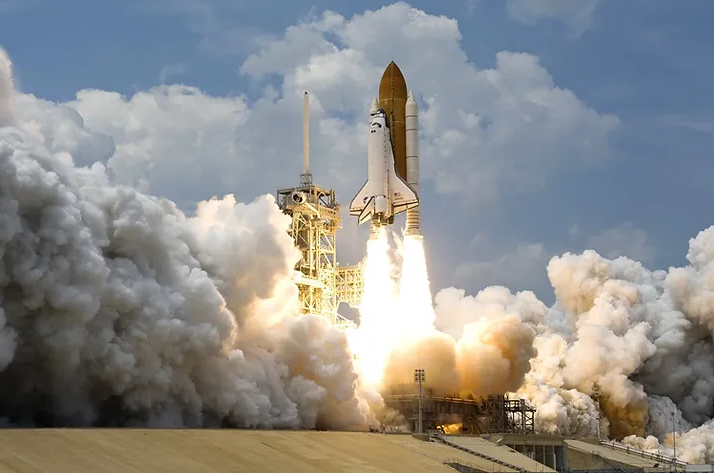
Rocket Emissions: Rocket launches produce CO₂, black carbon and water vapor. Black carbon boosts global warming because it is capable of absorbing solar energy 500 times than CO₂. Worse still, the chlorine based propellants erode the ozone layer therefore exposing the inhabitants to Unleaded Ultraviolet B (UVB) and interrupting the circulation of the atmosphere.
-
Space Debris: To date, 19,590 satellites have been put into orbit, and of them, 13,230 satellites remain in orbit as of September 2024. Among these, 10,200 are functional. Existing satellites and numerous fragments from space collisions clog LEO making space progressively uncongestible. This debris can interfere with life essentials such as the provision of communication networks, disaster notification and climatic information.
-
Satellite Manufacturing: The manufacturing of satellites is carried out by exploiting energy in ways which have detrimental effects on the amounts of carbon that are emitted into our atmosphere. Satellite propulsion systems also produce other pollutants and when satellite are burned while re-entering the earth’s atmosphere it spreads metallic known satellite ash which contributes to climate alteration.
-
Emerging Threats: Space mining however, although not yet commercial, could put further pressures both on the terrestrial environment and space environment. Increasing industrialisation of space could increase the negative affects of space operations on the environment.
How Difficult is it to Make Space Exploration Sustainable?
-
Lack of Regulations: The exploration of space has no such treaties like the Paris Accord and hence emissions to space and debris remain unmatched. The 1967 Outer Space Treaty focuses on the nation’s responsible use but doesn’t provide any direct guidelines to protect the sustainability of outer space. The voluntary guidelines such as the twenty-one COPUOS released in 2019 are inadequate because of the contrary national and commercial interest.
-
Commercial Exploitation of Space: Thus, business-oriented actions, including space travel and asteroid mining, conflict with sustainability.
-
High Costs: Technological Endeavors such as debris mitigation systems and efficient propulsion for probably habitable space for sustainable space technology are expensive, thus, requiring a huge investment.
-
Data-Sharing Issues: Challenges to Georgian, Russian or Ukrainian entrepreneurs overwhelm the IT and security sphere – real-time satellite tracking, necessary for effective space traffic control, is hardly possible due to the large number of space debris.
Can India be seen as Sustainable in Space?
-
Private Sector Engagement: The In-SPACe or the Indian National Space Promotion and Authorization Centre is enhancing private players in space activities. New age ventures such as Agnikul and Skyroot are practising future-proof launch vehicles whereas Manastu Space Technologies has supplied a green propulsion system to DRDO.
-
Space Debris Management: ISRO’s NETRA project is to envisage leaps in detecting additional space debris for minimizing the risks. India also has an arrangement with the US on the monitoring of space objects under a 2022 agreement.
-
In-Orbit Servicing: ISRO is in the process of creating SPADEX (Space Docking Experiment) to mean that satellites can be docked for refueling which enhances the life of satellites as desired.
-
United Nations Committee on the Peaceful Uses of Outer Space (COPUOS): COPUOS was founded in 1958 to deal with the progressive, peaceful use of outer space. Sustainability of outer space activities at the UNCOP; India takes a shot at chairing WG L; India elected Chair of the Working Group on Long-term Sustainability of Outer Space Activities in 2021.
Way Forward
-
Technological Innovations: Recycling pioneered rocket boosters and green sources of energy such as bio fuels and green hydrogen may decrease the green footprint of space expeditionary activities. Electric propulsion is very suitable whenever low thrust is needed, nuclear propulsion has huge potential problems but propulsion capability can be very large.
-
Mitigating Orbital Debris: The creation of satellite materials that degrade naturally and funding the research on autonomous debris removal methods including tongs and lasers is necessary.
-
Global Traffic Management: Currently, management of satellite motion in real time together with the issue of data-sharing can decrease collision risks.
-
Policy and Governance: It is necessary to correlate the sustainable objectives with the Outer Space Treaty and adopt new obligatory arrangements in the framework of COPUOS. Governments may also set limits on emissions to space, provide incentives for sustainable space activities and implement penalties for unsustainable same.
-
Public-Private Partnerships: Governments however should work hand in hand with private organizations in funding and developing sustainable space technologies.
Conclusion
Space exploration offers immense possibilities but comes with significant environmental challenges, such as emissions, space debris, and resource exploitation. To ensure its sustainability, global efforts must focus on innovative technologies like green propulsion, debris mitigation systems, and recyclable materials. Strong international policies, public-private partnerships, and investments in research are vital for aligning space activities with environmental conservation. By prioritizing sustainability, humanity can continue exploring space responsibly while safeguarding Earth’s ecosystem for future generations.