
Day: October 17, 2025

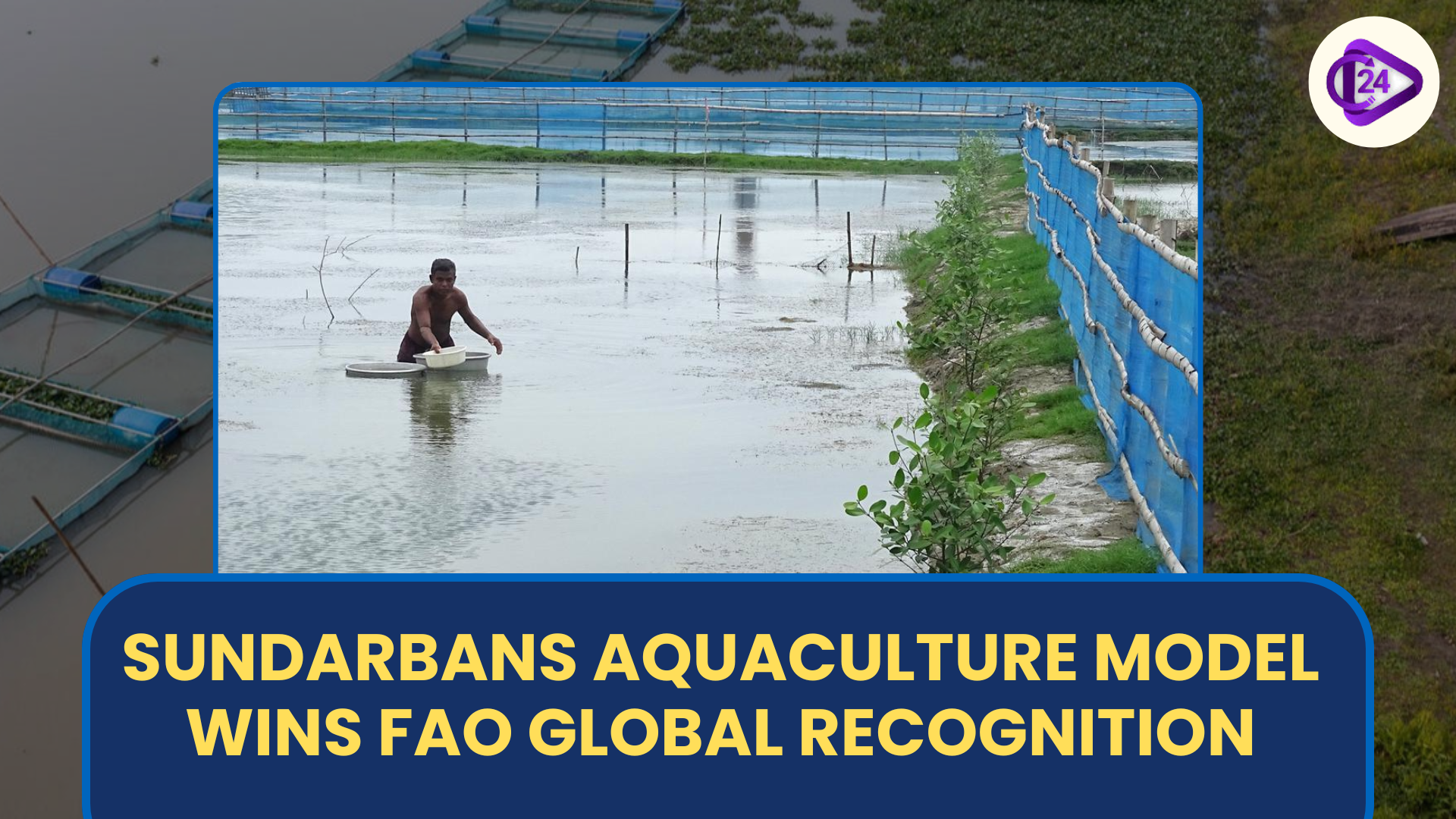
Sundarbans Aquaculture Model Wins FAO Global Recognition for Sustainability

The Sundarbans Aquaculture model was acclaimed by the international body, the Food and Agriculture Organization (FAO), as a pioneer in its practice. The model was designed to combine shrimp cultivation with mangrove cover, encouraging climate-based livelihoods while also safeguarding vulnerable natural environments. It has increased revenue, decreased production costs, and enhanced sustainability through its implementation on several hectares by local farmers. The award emphasizes the success of ecosystem-based aquaculture practices, which are economically viable and sustainable for conserving the environment. The recognition makes the Sundarbans a world model of how sustainable aquaculture can help communities and support biodiversity in the endangered coastal areas.

Key Facts of Sundarbans 

Location: It covers the southern West Bengal (India) and Bangladesh, and is the largest mangrove forest in the world.

Rivers: the Delta of the Ganga, Brahmaputra, and Meghna.

Flora and Fauna: Royal Bengal Tigers, estuarine crocodiles, and a variety of mangroves are famous.

Economy: Fisheries, aquaculture, honey collection, and tourism are the key sources of livelihood.

Climate Threats: Cyclones, the rise of sea level, and intrusion of salinity impact ecosystems and human settlements.

Conservation: Sundarbans National Park (UNESCO World Heritage, 1987) and Biosphere Reserve (1989).

Innovations: Environmentally friendly models of aquaculture are known worldwide.

Conclusion

The success of ecosystem-based and sustainable practices, which once more balance livelihood generation with environmental preservation, can be seen in the FAO recognition of the Sundarbans aquaculture model. The model can boost the income of farmers and decrease the ecological impact and climate resilience by combining shrimp farming and mangrove protection. It provides an international standard of sustainable aquaculture in the risky coastlines areas.

India Conducts First-Ever DNA-Based Elephant Census, Reveals Population Decline by 25%

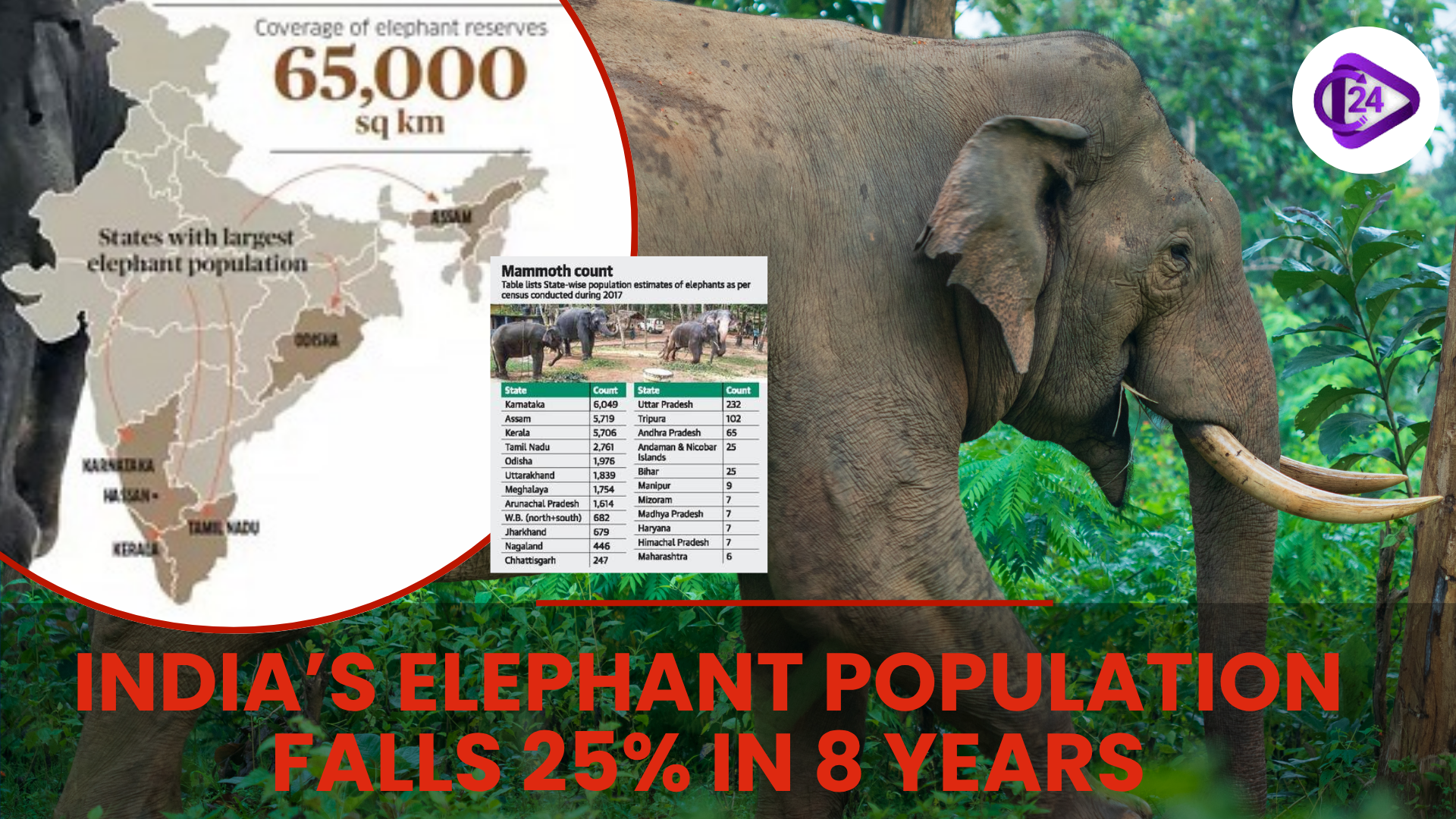
The number of wild animals in India, especially wild elephants, has decreased by a quarter in the last eight years, and this has as well cast serious concerns about the conservation of wildlife and the ecological balance. The most recent Synchronous All-India Elephant Estimation (SAIEE 2021-25) indicates that there were around 22,446 elephants, a decrease from 29,964 compared to 2017. Key threats are loss of habitats, fragmentation of forest corridors, and growing human-elephant conflicts, particularly in areas such as Central India and Assam. Newer methods of DNA-based census have come up with more precise numbers of the population, which market necessity toward conservation efforts, habitat rehabilitation, and conflict abatement. There is an urgent need to protect the lives of the iconic elephants in India by taking immediate action that will guarantee the existence of biodiversity.

India Uses DNA Mark-Recapture Technique to Assess Elephant Population

  • The population of the elephants was estimated in India by the DNA-based mark-recapture technique, which was first applied in the country.

  • Dung samples are used to determine the genetic material of individual elephants without causing their disturbance.

  • The technique offers better population estimates when compared to the conventional visual surveys.

  • It allows improved knowledge on the distribution of the elephants, their movement, and genetic health, which helps in the enhancement of conservation tactics.

Elephant Hotspots in India: Key States, Reserves, and Protection Acts

  • The highest population of elephants in India is found in Kerala, Karnataka, and Assam.

  • The well-known elephant reserves are Periyar Wildlife Sanctuary (Kerala), Mudumalai (Tamil Nadu), and Kaziranga National Park (Assam).

  • Important laws protecting elephants: Wildlife Protection Act 1972, Project Elephant (1992), and Prevention of Cruelty to Animals Act 1960.

  • These will be used to preserve habitats, curb poaching, and alleviate human-elephant conflicts.

Conclusion

The initial DNA-based elephant census in India indicates that the population has reduced by 25 percent, which means that there is a serious conservation crisis. The sophisticated approach will give precise information on distribution, movement, and genetic health, which will be used to protect them in a better way. Otherwise, immediate intervention, such as rehabilitation of the habitats, anti-poaching, and conflict resolution, is necessary to protect elephants and save the rich biosphere of India as an asset for future generations.

India Ranks 102nd in Global Hunger Index 2025: Hunger Remains a Serious Challenge

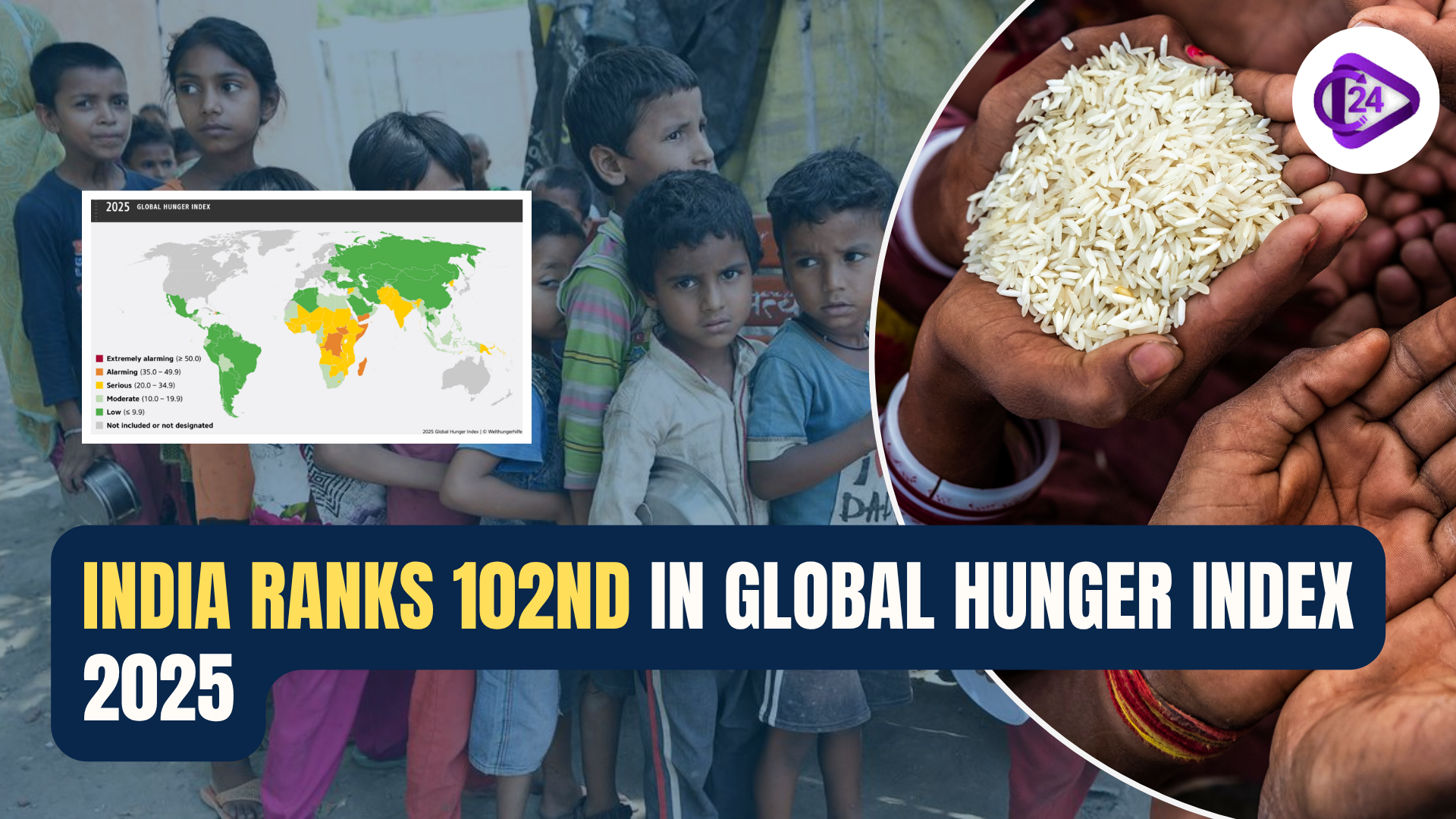
India is 102nd in the Global Hunger Index (GHI) 2025, which indicates current food insecurity and malnutrition. The country has a score of 25.8, which is in the serious category. India is still faced with high levels of child wasting (18.7%), stunting (32.9%), and under-nourishment (12%) despite the economic growth and welfare schemes. The results show that there have been imbalanced developments in the achievement of nutritional security, especially in vulnerable and rural groups. The report has highlighted the necessity to increase policy implementation, access to nutritious food, and specific actions to tackle child malnutrition and maternal health.

Global Hunger Index 2025: Top Performers vs Worst-Hit Countries

  • There is a stark contrast between countries that effectively address hunger and those in crisis, as shown in the Global Hunger Index 2025.

  • Top-performing countries like Finland, Ireland, the Netherlands, and Japan have scores below 5, reflecting the lowest levels of hunger.

  • Countries such as Somalia, South Sudan, Yemen, Chad, and Madagascar have been most affected, with hunger levels reaching alarming or extremely alarming levels.

  • Ongoing war, poverty, and climate change continue to drive food insecurity in these impoverished areas.

Highlights the Global Hunger Index (GHI)

  • Global Hunger Index (GHI) is an initiative initiated in 2006, and is published annually by both Concern Worldwide (Ireland) and Welthungerhilfe (Germany).

  • They are both major global humanitarian organisations based in Dublin and Bonn.

  • India has improved and now it is ranked 102, compared to 105 in 2024, and yet, it belongs to the category of serious hunger.

Conclusion

The position of India as the 102 nd most starving country in the Global Hunger Index 2025 is also a reminder of the necessity of more decisive measures on nutrition, food security, and poverty eradication. Millions of people continue to underfeed, notwithstanding the advancement of welfare plans and agrarian development. Hunger-free India is a goal that can be achieved through long-term policy attention, balanced allocation of resources, and community-based nutrition programs.

Frequently Asked Questions (FAQs)

The current affairs cover recent national and international events related to UPSC, SSC, Banking, Railways, and State PCS.

You need to read about the current affairs daily, and revise them every week and every month to keep them longer in your memory.

Yes, Class24 provides free downloadable Daily Current Affairs PDFs for easy revision.

Yes, you can practice MCQs and quizzes to boost your exam preparation.

Absolutely. The content is written in simple, easy-to-understand bilingual language suitable for beginners.

Go to class24.com and click on the current affairs section directly, where you find everything that you need.

ssc-toppers

Start Learning Today with Class24

Related current affairs

Class24 offers free video lectures for smart preparation, covering CGL, CPO, CHSL, MTS, and GD exams. Learn from expert faculty, revise concepts easily, practice with PYQs, and improve speed and accuracy through high-quality, exam-focused video lessons anytime, anywhere.

Get success in your hand. Start study anytime anywhere.

The journey becomes simple and enjoyable when you start taking interest in it. And through our app “Class24”, we will be your trusted partners in developing that interest.

Daily Quizzes
Mock Tests
Ongoing

No ongoing tests right now.