
Day: September 19, 2025

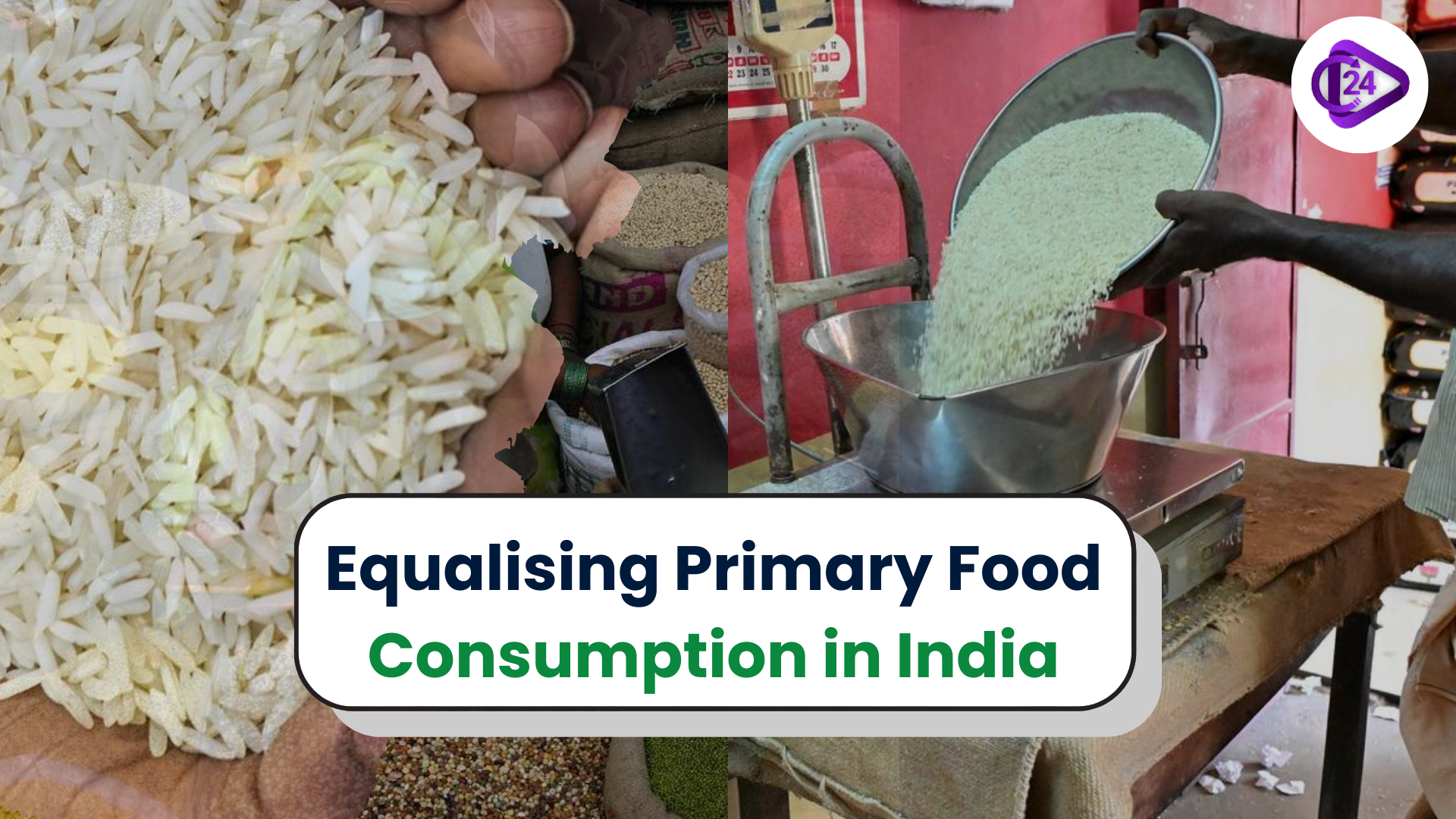
Equalising Primary Food Consumption in India: PDS & Nutrition Gaps

The increasing attention to food deprivation and its measurements in India depicts some serious gaps in spite of the statements of poverty reduction. The traditional poverty indicators of calorie consumption do not reflect the food consumption inequalities. This paper suggests a transitory change to the thali meal as a more comprehensive solution and the necessity to focus on unequal food intake, specifically pulses. It also criticizes the Public Distribution System (PDS) because it is inefficient and recommends its reorganization to deliver pulses to the poorest population members, which would cause a more balanced food system nationwide.

Key Points in Detail

Food Consumption and Poverty Measurement.

  • The world bank reports that extreme poverty in India has been drastically reduced though there is high food deprivation particularly in the rural parts.

  • The article criticizes traditional poverty measures, which view them as being too caloric oriented, whereas they need to take into consideration other important elements such as nutrition, energy, and food satisfaction.

  • It is suggested that a more appropriate measure of real food intake would be the so-called thali meal, a balanced mix of rice, dal, vegetables, roti, curd, and salad.

Research Results on Food Deprivation.

  • In spite of the optimistic estimates made by the World Bank on poverty, almost half of the rural population with a quarter of the urban population are unable to spend two thalis in a day on food at the present level of food expenditure.

  • This truth is shown in the actual spending on food after subtraction of rent, transport and other important expenditures, because food deprivation is even more prevalent than the figures of poverty.

Effects of Public Distribution System (PDS).

  • PDS has been successful in its aim to ensure that people are not deprived of food since it offers subsidized cereals but it has drawbacks. Food deprivation in the rural areas is high despite the subsidies.

  • Even the PDS is giving significant subsidies to those who are able to spend above two thalis a day, yet this may not be essential.

  • The effectiveness of the PDS in the equalization of cereal consumption among various income levels is also emphasized. As it is, it might not be viable enough to help the poorest population meet nutritional needs.

The idea that PDS should be expanded to Pulses.

  • There is a huge gap in the nutritional value of the poorest households versus the wealthiest households. The per capita consumption of pulses is significantly lower by the poor people.

  • To close this gap and have more balanced nutrition for everyone, the PDS needs to be expanded to include pulses which are essential in protein consumption.

  • The government would also be able to fulfil the nutritional requirements of the poorest with a redistribution of resources between unnecessary cereal subsidies and pulses, which will enhance the effectiveness of the PDS.

Restructuring the PDS

  • The article suggests reorganizing the PDS, according to which more subsidies on cereals to richer households will be eliminated, and the funds will be used to feed more people in need of pulses the most.

  • Reorganization of this kind would not only be financially feasible but it would also enable the PDS to be more efficient in meeting the real nutritional concerns of the poorest in India.

Budgetary Adjustments and Policy Modifications.

  • The stocking level of the Food Corporation of India could be reduced by cutting the unnecessary cereal subsidies and concentrating on pulses, thus causing significant savings in the level of stock.

  • The proposal recommends a more specific PDS, addressing nutrition instead of just meeting the calorie needs, which would enable the government to spend money more appropriately.

Conclusion

Although the food subsidy system in India is a success in terms of harmonizing the consumption of cereals, it requires considerable reorganizing to help meet the nutritional requirements of the poorest. The government can make the food system more efficient and fair by increasing the range of PDS to include pulses and cutting on the unnecessary subsidies of cereals. The change would not just contribute to the resolution of food deprivation but would also guarantee the poor families access to balanced nutrition, which would make a significant contribution to the population's health and economic status.

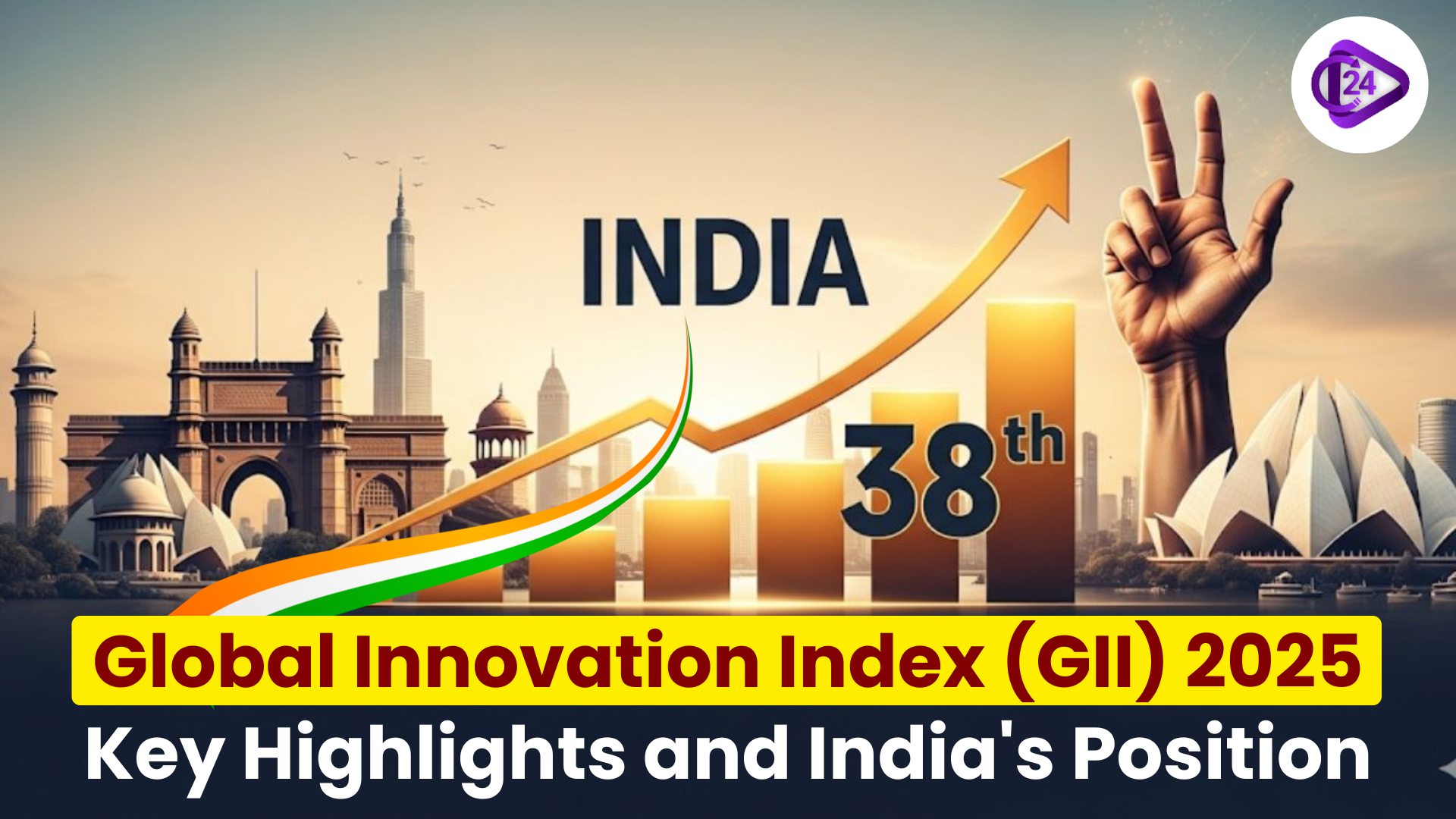
Global Innovation Index (GII) 2025 – Key Highlights and India’s Position

The World Intellectual Property Organisation (WIPO) has published the 18th edition of the Global Innovation Index (GII) 2025 and it has ranked approximately 140 economies based on the innovation ecosystems. Laid down in 2007, the GII is an annual index, which assesses economies on several measures of innovation, including research and development and business sophistication and infrastructure.

Major Findings:

Reduction on Research and Development (R&D) Growth:

  • In 2024, the growth rate of global R&D came to 2.9 percent, the lowest level of growth since the financial crisis of 2010. WIPO predicts another 2.3 percent decline in 2025.

Top Countries:

  • Switzerland has been ranked as the global leader in innovation, ranking 15th in the world as the leader in innovation with Sweden, United States, South Korea and Singapore ranking 2-5 respectively.

  • China has broken into the top 10, achieved the 10th position in the world and is in the forefront among the middle-income economies.

India's Performance:

  • Rank: India has improved consistently, shifting the position between 48 in 2020, and 38 in 2025.

  • Regional Leadership: India is ranked first in lower-middle-income economies and top in the Central and Southern Asia region.

Best Performances:

  • Outputs of Knowledge and Technology: India is at position 22.

  • Market Sophistication: India is ranked 38.

Weaknesses:

  • Business Sophistication: 64th position.

  • Infrastructure: Ranked #61.

  • Institutions: Ranked #58.

  • The remarkable characteristics of India are its exports of ICT services, its active venture capital (VC) ecosystem, robust late-stage VC and start-up funding, and a substantial and growing number of unicorns and intangible assets, which signify the existence of a healthy tech-based economy.

Significance for India:

  • Strengths: India has been steadily advancing up the ranking, which indicates the improvement of the country in the areas of the digital economy, startups, and ICT exports. The nation is becoming a tech innovation and entrepreneurship hub in the world.

  • Challenges: India has a number of challenges associated with the growth, such as infrastructure, business sophistication and institutional quality, which requires significant reform to create a more favorable environment to support innovation.

Indian Major Innovation Initiatives:

  • Startup India (2016):

    • DPIIT initiated this initiative and offers tax exemptions, Fund of Funds and credit guarantee schemes and facilitation of ease of compliance to develop start ups.

  • Atal Innovation Mission (AIM):

    • An innovation promotion initiative suggested by a NITI Aayog, called Atal Tinkering Labs at schools, Incubation Centres to startups and New India Challenges to solve national issues.

  • National Initiative Aimed at Developing and Harnessing Innovations (NIDHI):

    • A DST program providing aid to innovators in the form of PRAYAS (idea to prototype), Entrepreneur-in-Residence fellowships, and incubation assistance.

  • Digital Public Infrastructure (DPI):

    • UPI and Aadhaar, along with other platforms such as ONDC and DigiLocker, offer scalable frameworks that can enable innovation in the field of fintech, commerce, and governance.

  • Production Linked Incentive (PLI) Schemes:

    • These plans give incentives to conduct research and production in such areas as electronics and semiconductors, electric vehicles (EVs), and pharma.

WIPO Overview:

  • WIPO is a non-profit organization which is funded by the United Nations, with the purpose of assisting the global creators and innovators in protecting their ideas and facilitating them on their path to the market.

  • It boasts 194 member countries which consist of developed and developing countries such as India, Italy, Israel and the US.

  • Head Office: Geneva, Switzerland.

Conclusion

The increasing global innovation index in India is indicative of its increased significance in global innovations, especially in technology and startups. The nation however must fill in serious shortcomings in infrastructure, business complexities, and institutional backup to carry and expedite this troop. The current government programs like the Startup India, the AIM and the PLI programs are paving the way to making India a major global destination in terms of innovation.

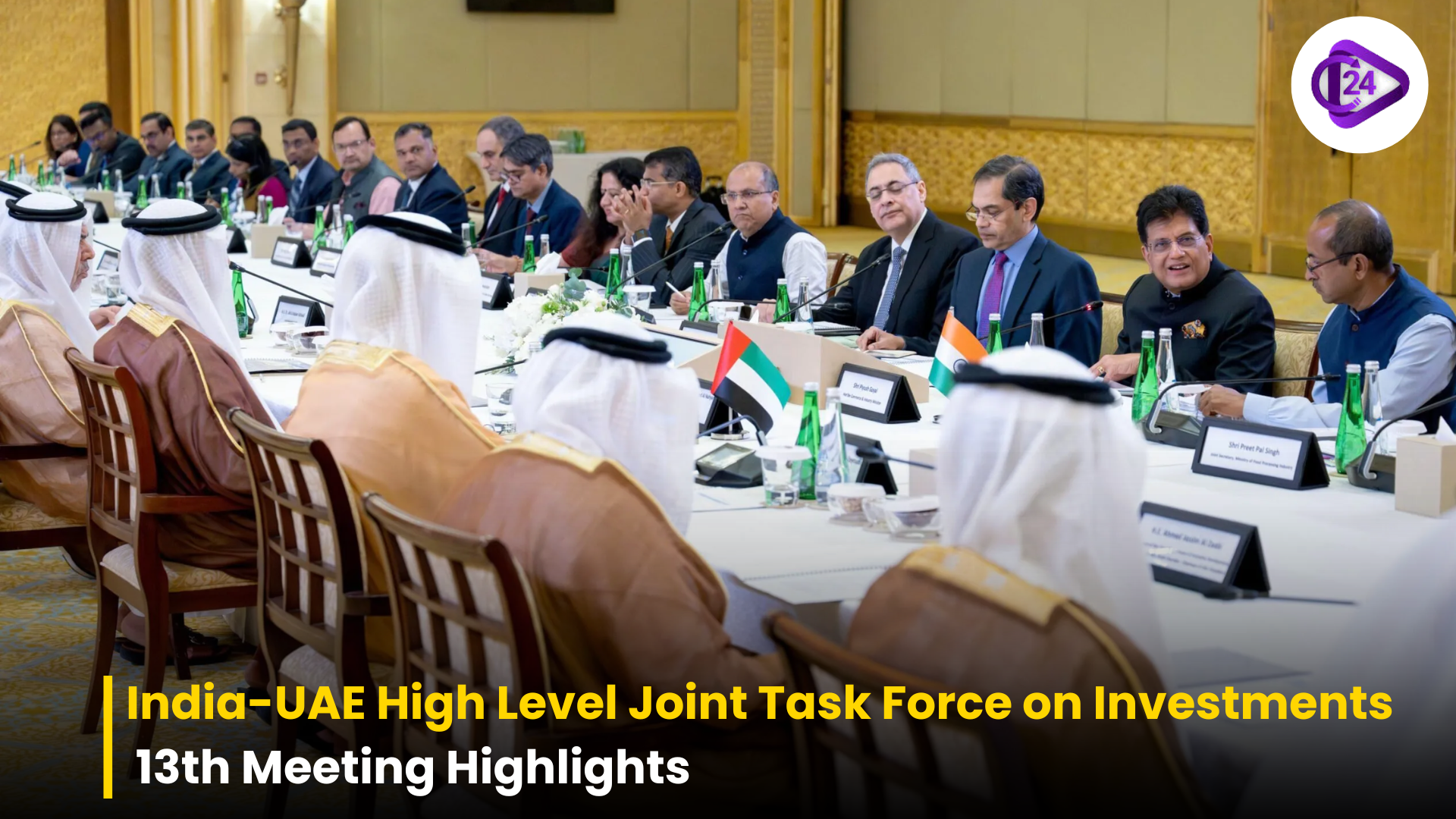
India-UAE High Level Joint Task Force on Investments: 13th Meeting Highlights

The 13th meeting of India-UAE High Level Joint Task Force on Investments was held in Abu Dhabi, chaired by Sheikh Hamed bin Zayed Al Nahyan, Managing Director of the Abu Dhabi Investment Authority and Indian Minister, Piyush Goyal. The meeting covered the progress of the ongoing projects, such as the Bharat Mart in the UAE, and addressed the opportunities in the maritime sphere, space sphere, and trade in local currencies and digital currencies implementation. The India-UAE Comprehensive Economic Partnership Agreement (CEPA) signed in May 2022 has led to a large increase in bilateral trade with non-oil trade increasing by 34 percent in the first half of 2025.

Key Points in Detail

Co-Chairs and Attendees

  • Under the chairmanship of Sheikh Hamed bin Zayed Al Nahyan (UAE) and Shri Piyush Goyal (India).

  • It was attended by senior officials in different government ministries and investment entities in both countries such as the Ministry of Commerce and Industry, the Ministry of External Affairs, the Reserve Bank of India, and Invest India.

Bilateral Trade and Investment Development.

  • India-UAE CEPA: The agreement, which was signed in May 2022, has seen the bilateral trade increase in tandem by almost 38 billion in the first half of 2025, an increase of 34 percent in comparison to 2024.

  • Bharat Mart Project: A 2.7 million square feet facility in Jebel Ali Free Zone will be used to display Indian products to the world market as a sign of an increasing economic relationship between India and the UAE.

Future Areas of Cooperation

  • Maritime Sector/Space Sectors: The two countries discussed the possibilities of further cooperation in the spheres.

  • Central Bank Digital Currencies and payment systems: Development of bilateral trade in local currencies and uniting payment systems between India and the UAE.

Strategic Programs and Problems.

  • The two nations examined current strategic plans and also collaborated towards solving the challenges encountered by investors.

  • These two actors agreed to complete the work on Central Bank Digital Currencies (CBDC) and payment systems.

Leadership Remarks

  • Sheikh Hamed bin Zayed Al Nahyan: Spotted the remarkable development of business and investment between India and the UAE and assured the necessity to proceed with mutual success by the efforts of the task force.

  • Piyush Goyal: Underlined the fact that India was the fastest-growing large economy of the world, and that the UAE is playing a major role in the growth story of India.

Conclusion

The 13 th edition of the India-UAE High Level Joint Task Force was a great step towards improving the bilateral economic association and particularly in terms of trade, investment and strategic partnership in various fields. There is a future of transformation in the India-UAE partnership with initiatives such as Bharat Mart and further development of integration of payment systems and sustainability and innovation. The CEPA is still a major catalyst in the process of market accessibility and cooperation between the two countries in the sphere of a private sector, which enhances the relations between both states.

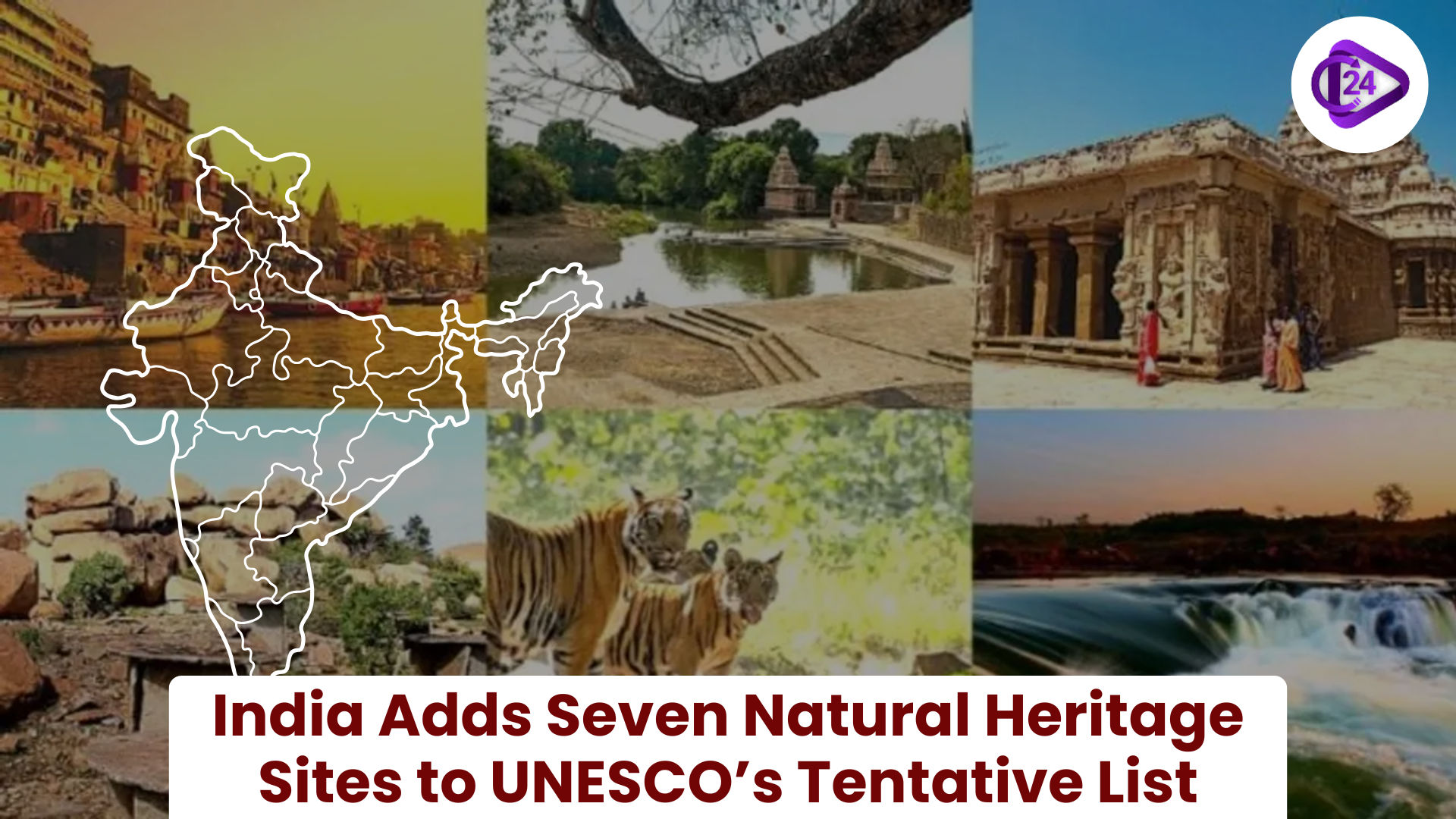
India Adds Seven Natural Heritage Sites to UNESCO’s Tentative List

India has gone a long way as far as protecting its natural heritage is concerned, and seven super sites have been included under the UNESCO Tentative List of World Heritage Sites. This leaves all the sites that are under consideration to be 69, which comprises 49 cultural sites, 17 natural sites and 3 mixed heritage sites. These additions demonstrate Indian concern for preserving natural resources and Indian heritage. The new sites that have been added are located in different states and feature different geological and natural marvels such as the Deccan Traps of Maharashtra or the Meghalayan Age Caves of Meghalaya.

Key Points in Detail

Tentative List of World Heritage Sites, UNESCO.

  • The current Tentative List has 69 sites in India 49 cultural, 17 natural, and 3 mixed.

  • The nomination process of any site to have its name listed on the World Heritage List is first, inclusion in the Tentative List.

Details of Newly Added Sites

  • Deccan Traps at Panchgani and Mahabaleshwar, Maharashtra: The well-preserved lava flows are located in the Koyna Wildlife Sanctuary which is a UNESCO world heritage site.

  • Geological Heritage of St. Marys Island Cluster, Karnataka: The place is famed with unusual columnar basaltic rocks; these formations are estimated to be 85 million years old.

  • Meghalayan Age Caves, Meghalaya: Mawmluh Cave is one of the complex of caves which is considered a global standard point of the Meghalayan Age.

  • Naga Hill Ophiolite, Nagaland: Provides some insight into tectonic processes as its crust is of the oceanic type.

  • Erra Matti Dibbalu (Red Sand Hills), Andhra Pradesh: Red sand hills that show the earth's climate history.

  • Natural Heritage of Tirumala Hills, Andhra Pradesh: Geological importance and Silathoranam (Natural Arch).

  • Varkala Cliffs, Kerala: It comprises some erosional landforms and natural springs along the Kerala coastline.

India Global Heritage Strategic Pledge.

  • These additions make India more influential in conservation efforts globally.

  • The compilation and submissions of the nominations have been done through the Archaeological Survey of India (ASI).

International Recognition

  • In 2024, India hosted the 46th session of the world heritage committee demonstrating Indian commitment to heritage conservation.

Conclusion

It is appropriate to note that the inclusion of seven new natural heritage sites in UNESCO Tentative List by India is a manifestation of its continued effort to conserve its rich natural and cultural heritage. This is a project with the assistance of the ASI to make sure that these magnificent places will one day be accorded international recognition due to their value in science, culture and ecology.

Frequently Asked Questions (FAQs)

The current affairs cover recent national and international events related to UPSC, SSC, Banking, Railways, and State PCS.

You need to read about the current affairs daily, and revise them every week and every month to keep them longer in your memory.

Yes, Class24 provides free downloadable Daily Current Affairs PDFs for easy revision.

Yes, you can practice MCQs and quizzes to boost your exam preparation.

Absolutely. The content is written in simple, easy-to-understand bilingual language suitable for beginners.

Go to class24.com and click on the current affairs section directly, where you find everything that you need.

ssc-toppers

Start Learning Today with Class24

Related current affairs

Class24 offers free video lectures for smart preparation, covering CGL, CPO, CHSL, MTS, and GD exams. Learn from expert faculty, revise concepts easily, practice with PYQs, and improve speed and accuracy through high-quality, exam-focused video lessons anytime, anywhere.

Get success in your hand. Start study anytime anywhere.

The journey becomes simple and enjoyable when you start taking interest in it. And through our app “Class24”, we will be your trusted partners in developing that interest.

Daily Quizzes
Mock Tests
Ongoing

No ongoing tests right now.