Day: September 1, 2025

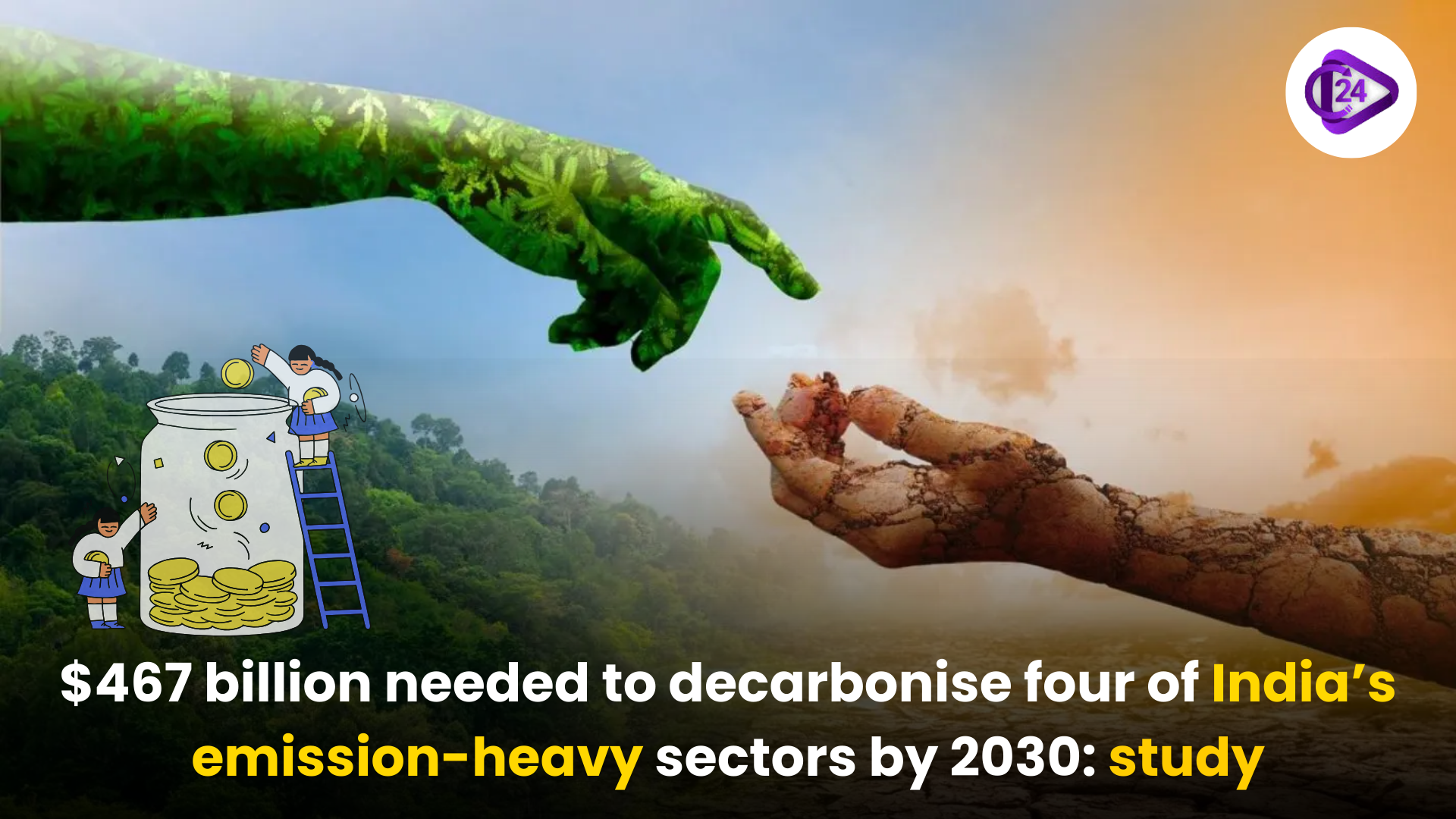
$467 Billion Needed to Decarbonise India’s Four Major Sectors by 2030

India will require an extra investment of 467 billion dollars in 2030 to decarbonise 4 emission-intensive areas: power, steel, cement and road transport. These industries make up more than half of the CO2 emissions of India. It is a bottom-up, sector-specific estimate, which is lower than past estimates of more than $1 trillion. According to the research, this mobilisation of finance may assist India in achieving the targets of the Paris Agreement and transition to low-carbon development.

Sector-wise Investment Needs

Sector

Additional Investment Needed

Notes

Steel

$251 billion

Hardest to decarbonise; requires technologies like carbon capture and storage (CCS); covers existing and projected growth emissions.

Cement

$141 billion

Similar challenges as steel; CCS and other low-carbon tech required.

Power

$47 billion

The sector is already shifting rapidly towards renewable energy.

Road Transport

$18 billion

Limited data; investment would support electrification and other clean mobility solutions.

  • Total: $467 billion

Impact of Investment

  • Avoidance of 6.9 billion tonnes of CO2 in 2030 by decarbonising power and steel alone on top of cement.

  • The emission cuts of road transport are excluded because of the lack of data.

The Present Climate Development in India.

  • Half of the non-fossil electricity generation – goal already achieved.

  • Forests and trees absorb 2.53 billion tonnes of extra carbon – probably, and pending confirmation, they do.

  • Reduce intensity of emissions by 45 percent of 2005 levels – could be achieved before 2030.

Financing and Policy Implications

  • India is a supporter of international climate finance, according to Paris Agreement, but has struggled to access it.

  • It is proposed that internal funds can be raised to the tune of $467 billion, particularly by involving the private sector.

  • The macroeconomic analysis indicates that the investment could be fully felt without affecting exports, inflation, or the general economic stability in a negative way.

Conclusion

The biggest CO 2 emitters in India, steel and cement, will need most of the decarbonisation funding. There is also a need to invest specifically in power and road transport to achieve climate objectives. It is possible to decarbonise sectors strategically through financing and the adoption of technology. India has shown its readiness to develop low-carbon in the shortest time possible, but it will be based on the funding and the policy endorsement.

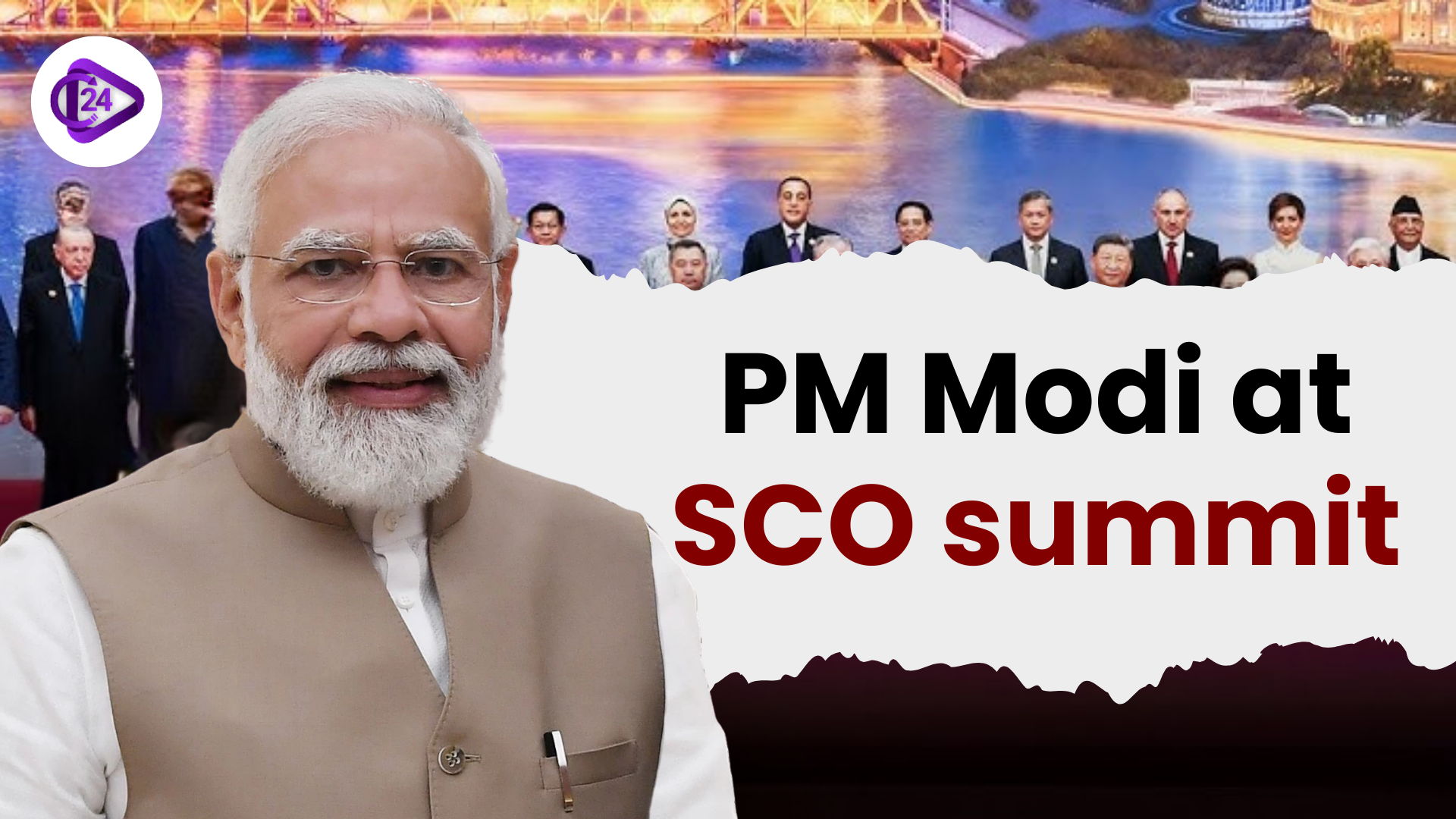
PM Modi at SCO Summit: India and China Commit to Fair Border Solution

Prime Minister Narendra Modi attended the Shanghai Cooperation Organisation (SCO) summit at Tianjin where he met the Chinese President, Xi Jinping. The two presidents highlighted peace and quiet along the India-China border and assured to have a just, reasonable and mutually agreeable solution to the boundary issue. They also talked of trade, investment, people to people relations, terrorism and regional cooperation. Both leaders emphasised that the border problem must not characterize the general bilateral relations and that India and China are developmental partners but not competitors.

Key Outcomes

  • Border Peace and Tranquillity

  • Both leaders admitted successful disengagement in 2024.

  • Commitment to a fair, reasonable, and mutually acceptable resolution of the boundary question.

  • It was stressed that the border problem should not characterize general relations.

Bilateral Relations

  • Covenant to enhance people to people relationships:

  • Direct flights, visa facilitation.

  • Resumption of Kailash Mansarovar Yatra and tourist visas.

  • International collaboration to fight terrorism.

  • Facilitation of equilibrium trade and investment, resolution of trade deficits.

  • Mutual acknowledgment of strategic autonomy.

Global & Regional Cooperation

  • International coordination on bilateral, regional, and global matters such as terrorism and equitable trade.

  • Emphasis on cooperation over rivalry – “development partners, not rivals.”

  • The metaphor that Xi uses in describing the India-China partnership is the cooperative pas de deux of the dragon and the elephant.

Other Diplomatic Engagements

  • PM Modi visited the Senior General Min Aung Hlain of Myanmar:

  • India promotes peace process and developmental needs in Myanmar.

  • Encouraged fair and inclusive elections in Myanmar.

  • Went to the SCO banquet with the leaders such as Putin and Pakistani PM Shahbaz Sharif.

  • Invited President Xi to BRICS Summit 2026 in India.

Significance

  • The stability in the India-China border plays a significant role in the security and economic collaboration in the region.

  • Emphasis on trade, strategic autonomy, and people-to-people links signals normalisation of relations post-2020 border tensions.

  • Remarkable of the multi-alignment and active diplomatic policy of India to balance India-China, India-US and other world powers.

Conclusion

The India-China encounter is a good beginning towards bilateral relations characterised by dialogue, trust-building, and practical interaction. The two countries are trying to boost regional, economic, and cultural performance by isolating the border problem while trying to improve overall relations. The agreement on respect and strategic cooperation shows that India and China are not looking at each other as rivals but are moving towards development cooperation, which will establish stability in the region and a positive multilateral relationship.

Educate Girls Wins Ramon Magsaysay Award 2025

The Asian non-profit group Educate Girls, which aims to educate poor and disadvantaged girls in India, will be mentioned among the three winners of the Ramon Magsaysay Award 2025. Other winners: Shaahina Ali (Maldives) and Flaviano Antonio L. Villanueva (Philippines). The award is awarded on the basis of greatness of spirit and transformative leadership in Asia, and was founded in 1958.

About Educate Girls

  • Also referred to as Foundation to Educate Girls Globally.

  • Concentrates on combating gender injustice in education especially in rural and remote regions of India.

Core Work:

  • Determines the most needy communities regarding education of girls.

  • Brings out-of-school girls into classrooms.

  • Make sure that they remain in school until they attain higher education qualifications and can be employed.

  • Initiated in Rajasthan and extended to the whole community.

Significance of the Award

  • The first Indian non-profit to be awarded the Ramon Magsaysay Award.

  • The article features recognition of the Indian people-led initiative to educate girls, which began with one girl in the Indian village to transform the culture and mindset.

  • As the first of its kind in the history of the organization and beneficiaries, recognized by Safeena Husain, founder and Gayatri Nair Lobo, CEO.

Impact and Legacy

  • Enhances gender equality in education.

  • Inspires community participation and shifts cultural attitudes towards girls’ education.

  • Testifies social injustices in India that the role of non-profits played.

Conclusion

Educate Girls Ramon Magsaysay Award honors the game changing effect of targeted grassroots intervention in schooling. It highlights the role of education that is gender-inclusive, community participation and social change that is sustainable in India.

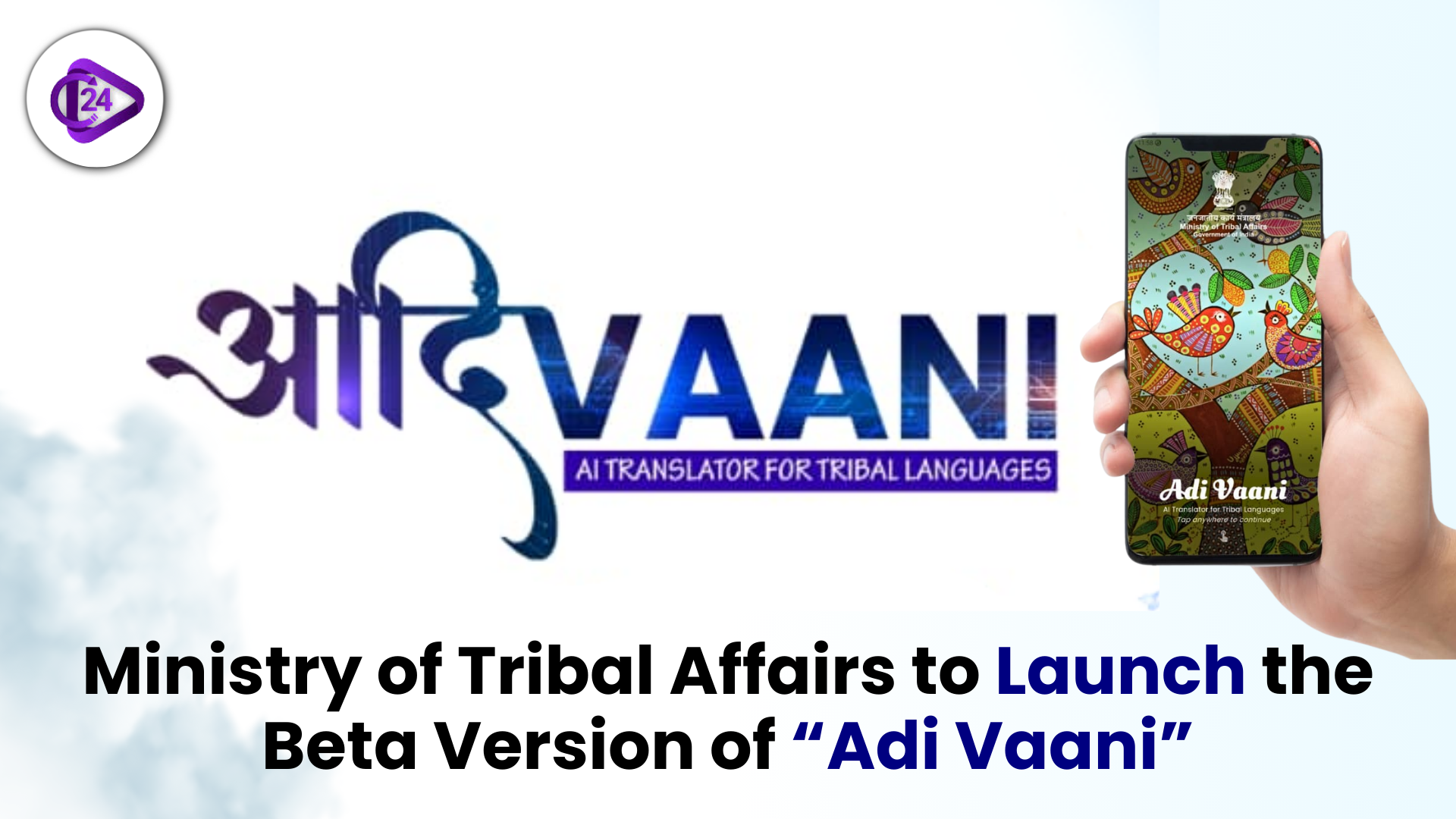
Ministry of Tribal Affairs to Launch the Beta Version of “Adi Vaani”

The Government of India, through its Ministry of Tribal Affairs, has released the Beta Version of Adi Vaani, an AI based translator of tribal languages. This project was implemented in the year 2008 on the basis of the Janjatiya Gaurav Varsh; this is geared towards ensuring communication differences between the tribal and the non-tribal groups in India are bridged without compromising the rich linguistic diversity of India. It is on the Play Store and will soon have iOS support and a dedicated web platform.

Key Features of Adi Vaani

  • Real-Time Translation: Supports text and speech translation between Hindi/English and tribal languages.

  • Interactive Language Learning: Helps students and early learners to learn tribal languages.

  • Cultural Preservation: Scans folklore, oral tradition and manuscripts with the OCR technology.

  • Public Awareness: Provides subtitles for Prime Minister’s speeches, health advisories, and government schemes.

  • Inclusive Toolkit: features Text-to-Text, Text-to-Speech, Speech-to-Text, Speech-to-Speech, bilingual dictionaries, and curated repositories.

Scope & Languages in Beta Launch

Supported Languages:

  • Santali (Odisha)

  • Bhili (Madhya Pradesh)

  • Mundari (Jharkhand)

  • Gondi (Chhattisgarh)

  • Future Languages: Kui, Garo, and so on.

Methodology & Technology

  • AI Models: Uses No Language Left Behind (NLLB) and IndicTrans2 when dealing with low-resource tribal languages.

  • Community involvement: Data collection, validation and recidivism development involves community participation by tribal Research Institutes (TRIs), experts and local communities.

  • Partner Colleges: IIT Delhi, BITS Pilani, IIIT Hyderabad, IIIT Naya Raipur and TRIs in Jharkhand, Odisha, Madhya Pradesh, Chattisgarh and Meghalaya.

Impact & Way Forward

  • Cultural Preservation: Digitizes and safeguards tribal knowledge and languages at risk of extinction.

  • Empowerment: Supports education, healthcare communication, and civic participation in tribal regions.

  • Inclusive Governance: Ensures last-mile delivery of government schemes in tribal languages.

  • Global Leadership: Places India as a leader in AI-based protection of endangered languages.

  • Alignment with National Missions: Contributes to Digital India, Ek Bharat Shreshtha Bharat, Adi Karmayogi Abhiyan, and Janjatiya Gram Utkarsh Abhiyan.

Conclusion

Adi Vaani is an innovative move to maintain tribal languages and culture and improve education, government, and inclusion in tribal regions. The program encourages the people, teachers and cultural laborers to join hands in the preservation of the tribal lingual heritage of India.

Frequently Asked Questions (FAQs)

The current affairs cover recent national and international events related to UPSC, SSC, Banking, Railways, and State PCS.

You need to read about the current affairs daily, and revise them every week and every month to keep them longer in your memory.

Yes, Class24 provides free downloadable Daily Current Affairs PDFs for easy revision.

Yes, you can practice MCQs and quizzes to boost your exam preparation.

Absolutely. The content is written in simple, easy-to-understand bilingual language suitable for beginners.

Go to class24.com and click on the current affairs section directly, where you find everything that you need.

ssc-toppers

Start Learning Today with Class24

Related current affairs

Class24 offers free video lectures for smart preparation, covering CGL, CPO, CHSL, MTS, and GD exams. Learn from expert faculty, revise concepts easily, practice with PYQs, and improve speed and accuracy through high-quality, exam-focused video lessons anytime, anywhere.

Get success in your hand. Start study anytime anywhere.

The journey becomes simple and enjoyable when you start taking interest in it. And through our app “Class24”, we will be your trusted partners in developing that interest.

Daily Quizzes
Mock Tests
Ongoing

No ongoing tests right now.