
Day: August 29, 2025

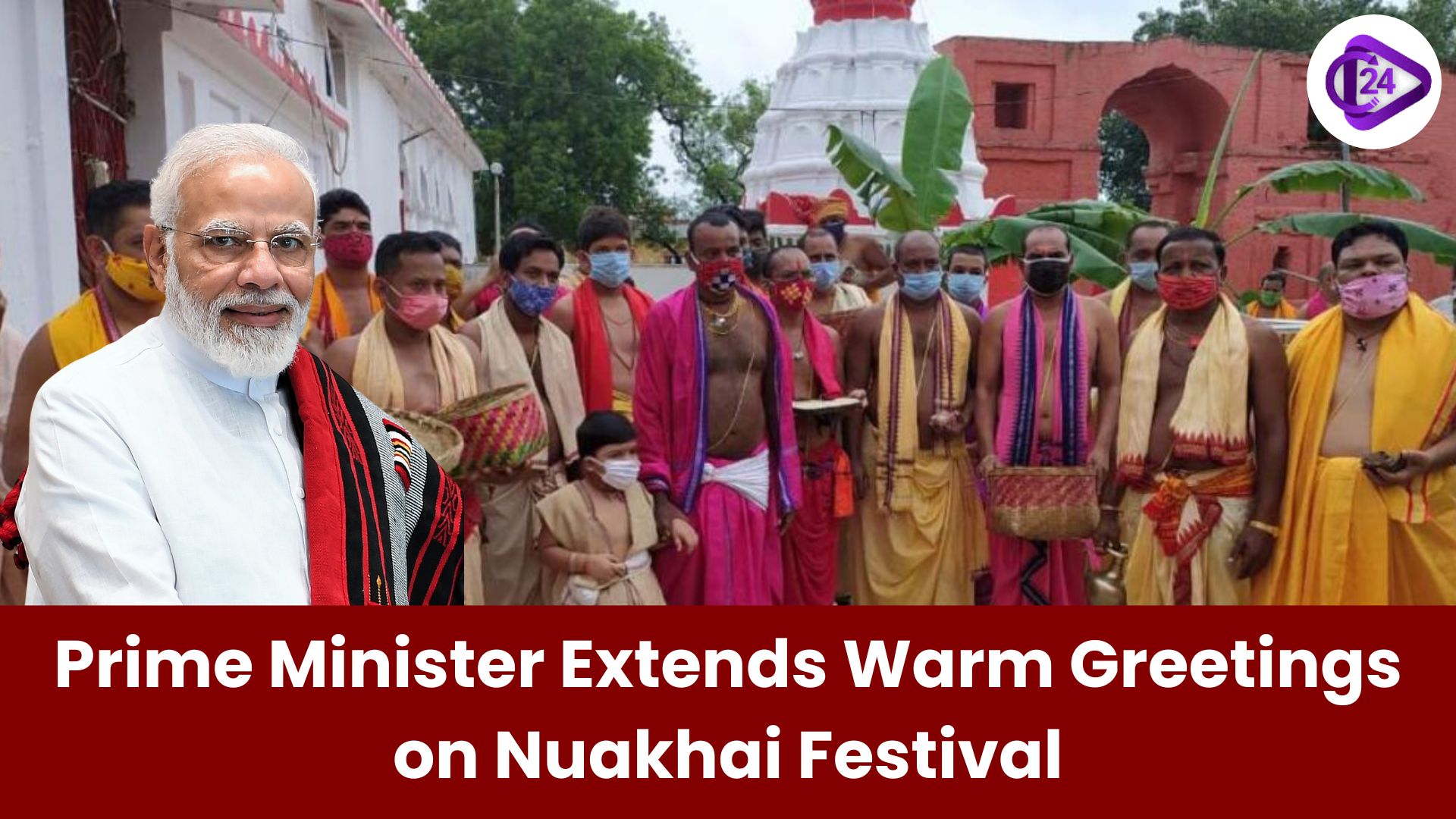
Prime Minister Extends Warm Greetings on Nuakhai Festival

During the celebration of Nuakhai, the Prime Minister of India Shri Narendra Modi sent warmest wishes to people of India highlighting the spirit of gratitude and oneness the festival brings. He recognized the unrelenting work of farmers in his message, who are the lifeblood of India, in sustaining it and improving it.

Key Points from the Prime Minister’s Message:

  1. Thank you, Farmers: The Prime Minister has indicated his deepest appreciation to farmers whose diligence keeps the country alive and propels its development.

  2. Health and Prosperity Wishes: His wishes were good health, prosperity, and happiness at all the homes and he focused on the unification and the spirit of the festival.

  3. Message on X: The Prime Minister’s message read, “Wishing everyone a joyous Nuakhai. This is a dear festival that reminds us of how we owe much to the farmers who toil to keep us all alive. May we all be healthy, prosperous and happy. Nuakhai Juhar!”

  4. Nuakhai Festival 2025: A Celebration of Harvest and Tradition in Western Odisha

Presidential Greetings:

  • President Droupadi Murmu in her message wished Odisha people a greetings of Nuakhai calling it a festival of brotherhood and mutual harmony. 

  • She hoped that there would be happiness, prosperity and well-being among the citizens, with special reference to the Odisha people.

Introduction:

  • Nuakhai festival was observed on the 28th of August, 2025 in the western Odisha with great enthusiasm. 

  • This is an agricultural festival that is offered at the beginning of harvesting season and is celebrated very vigorously particularly among tribal and farming communities.

Key Rituals and Traditions:

Rituals at Samaleswari Temple:

  • The festival started with the rituals at the Samaleswari Temple in Sambalpur, and freshly produced rice, the so-called Nabanna, was ceremonially presented to Goddess Samaleswari.

  • A ceremonial bath was administered to the goddess, with a new saree and ornaments, which represents how the festival is closely related to agriculture.

Nuakhai Juhar:

  • After the rituals, Nuakhai Juhar was seen, young members of the community wish the elders with respect and get blessed. 

  • This is a representation of unity, gratitude and respect- the key values of the festival.

Origins and Significance:

  • One of the most popular festivals in western Odisha is Nuakhai that is also spelt as new rice and is held one day after Ganesh Chaturthi.

  • The festival can be traced back to the 12th century AD when the then Chauvan Raja Ramai Deo of Patnagarh encouraged agriculture instead of hunting and made farming a fixed source of livelihood in the area.

Beyond the Harvest: Cultural and Social Importance

  • Unity and Family Reunion: Nuakhai is not only a harvest festival, but a family gathering time and social unity, especially in the countryside. The event has an emotional and cultural value because families that do not reside in Odisha usually go back home to celebrate.

  • The Role of Agriculture in Identity: The festival also underscores the importance of agriculture in the making of culture and economic identity of the land. It is a festival of not only harvest but the spirit of community and respect to one another.

Conclusion:

Nuakhai is more than a festival of harvest and a demonstration of the agricultural heritage and community life of western Odisha. The festival unites families, enhances social ties, and reminds the nation of the central place farmers have in the success and survival of the nation. The message of the President and the Prime Minister emphasize the need to be grateful, united, and respectful that characterize Nuakhai.

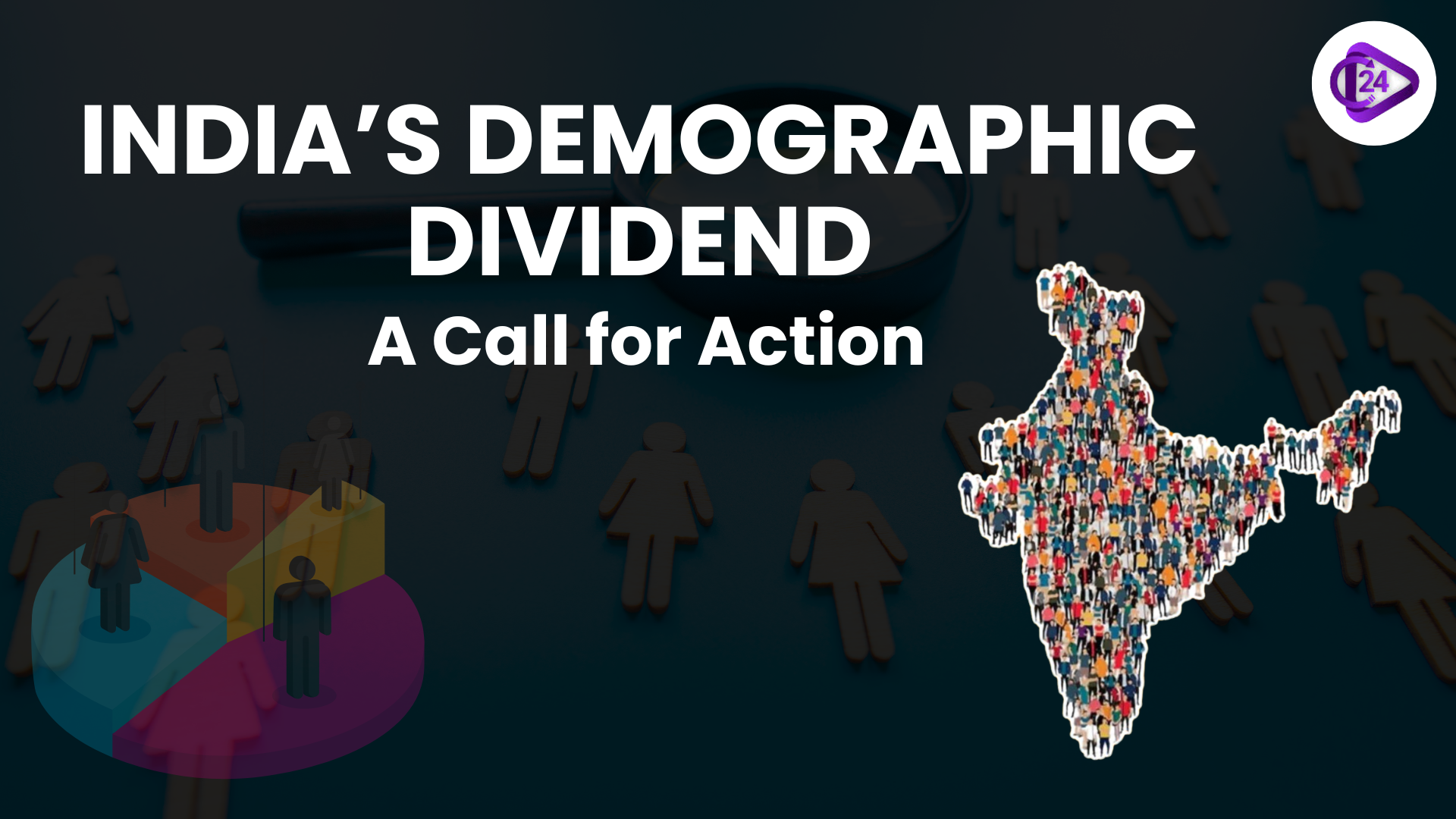
India’s Demographic Dividend as a Time Bomb: A Call for Action

India has also been touted as having a demographic dividend of a young population of over 800 million individuals under the age of 35 making the country one of the biggest sources of workforce globally. Nonetheless, this democratic advantage is becoming fragile in regard to evolving into a demographic time bomb because of great disparities existing between the education and the real-life abilities, degrees and workability. Otherwise, India, being left unattended, the young population might become a burden rather than a booster of national growth, a booster of increasing unemployment and social unrest.

Key Insights and Concerns:

The Changing Nature of Work:

  • This is where the future of work is being determined by the new technologies and especially Artificial Intelligence (AI) that is predicted to replace up to 70% of existing jobs worldwide by automating up to 30% of the work in most current professions.

  • New employment in AI development and implementation is also coming at an extremely fast rate but the Indian education system, which revises its curricula every three years, is lagging behind the changes in technology.

Mismatch Between Education and Employability:

  • Even though India has been generating millions of graduates annually, the fact is that a big number of them are underemployed or unemployable. This is 40-50% of engineering graduates who are unable to get jobs because the gap between qualification and industry demands has only continued to grow.

  • One in six leaders in higher education believes that the existing curricula do not meet the demands of the fast changing labor market.

The Skills Crisis in India:

  • According to a McKinsey report, about 7 out of 10 Indian jobs will be threatened by automation by 2030.

  • The World Economic Forum predicts that 170 million new jobs will be created because of technological advancement, which is offset by the fact that 92 million jobs may be displaced during the same time.

  • Skilling should be a national issue yet the Indian education system is still rooted in the old system where many learners walk out of schools without the practical skills demanded by their employers.

The Mismatch Begins Early:

  • Indian high school students do not necessarily know the enormous amount of career choices they have at their disposal. A Mindler Career Awareness Survey established that only 7 careers are known to 93% of the students and there is no career guidance given to the students during the schooling years.

  • Two-thirds of high school graduates end up pursuing degrees that are not of interest or skill which result in a disconnect between education and skills needed in the labor market.

Digital Tools and Analog Mindsets:

  • Although India has taken strides in terms of access to technology, with ubiquitous smartphone penetration, and even attempts by the government to establish AI laboratories, schools still have the traditional, exam-driven curriculums.

  • EdTech platforms are also geared mostly towards test preparation and rote memorization, but not assisting students in career exploration and acquisition of job-ready skills.

  • The actual gap that exists between what the students do and what the employers actually require is high, as only 43% of Indian graduates are job-ready.

Government Initiatives and Challenges:

  • Such programs as Skill India Mission were created with the aim of educating more than 400 million people by 2022, yet they had hardships in implementation, and there are still many youths who do not know the required skills.

  • Several plans have been initiated in India such as PMKVY, PMKK and SANKALP to counter the skills gap, but there has to be a national strategy to harness education, skilling and industry need into being one cohesive force.

The Need for a Cohesive Strategy:

  • In order to realise the India demographic dividend, it is vital to:

  • Match learning processes and developing employment opportunities.

  • Introduce career guidance programs at their early life so that students make wise choices regarding their future.

  • Redesign skill development programs to emphasize skills that are applied in the industry and not just the academic knowledge.

  • Encourage the government, business and education sectors to work as a team to establish an ecosystem that helps in anticipating the education-employability gap.

The Decisive Decade:

  • The capacity of India to use its young population as an asset lies in its capacity to equip them to face the AI-driven economy. When the nation does not work out these problems, it will likely produce a generation of unemployable young people who may turn out to be a time-bomb to social and economic stability. The youth demonstrations of the 1990 Mandal Commission years act as a reminder of the possible chaos that may be caused by unfulfilled desires and absence of opportunity.

  • This crisis can be repaired, but it must be done immediately in order to prepare the young generation of India not only for the jobs of yesterday, but also for the jobs of tomorrow. Provided that India manages to achieve such an endeavor, its demographic dividend may be a global resource. Otherwise, it may turn out to be a national burden that will deteriorate the social fabric and the process of economic development.

Conclusion

India is at a crossroad, and the prospect of using its young labor force in the global digitization leadership is open. The country, however, needs to move fast in tackling the skills issue and get its youth ready to meet the demands and opportunities that the future of work offers. In the absence of this transformation, the demographic dividend in India could be transformed into a demographic time bomb very easily. The clock is ticking.

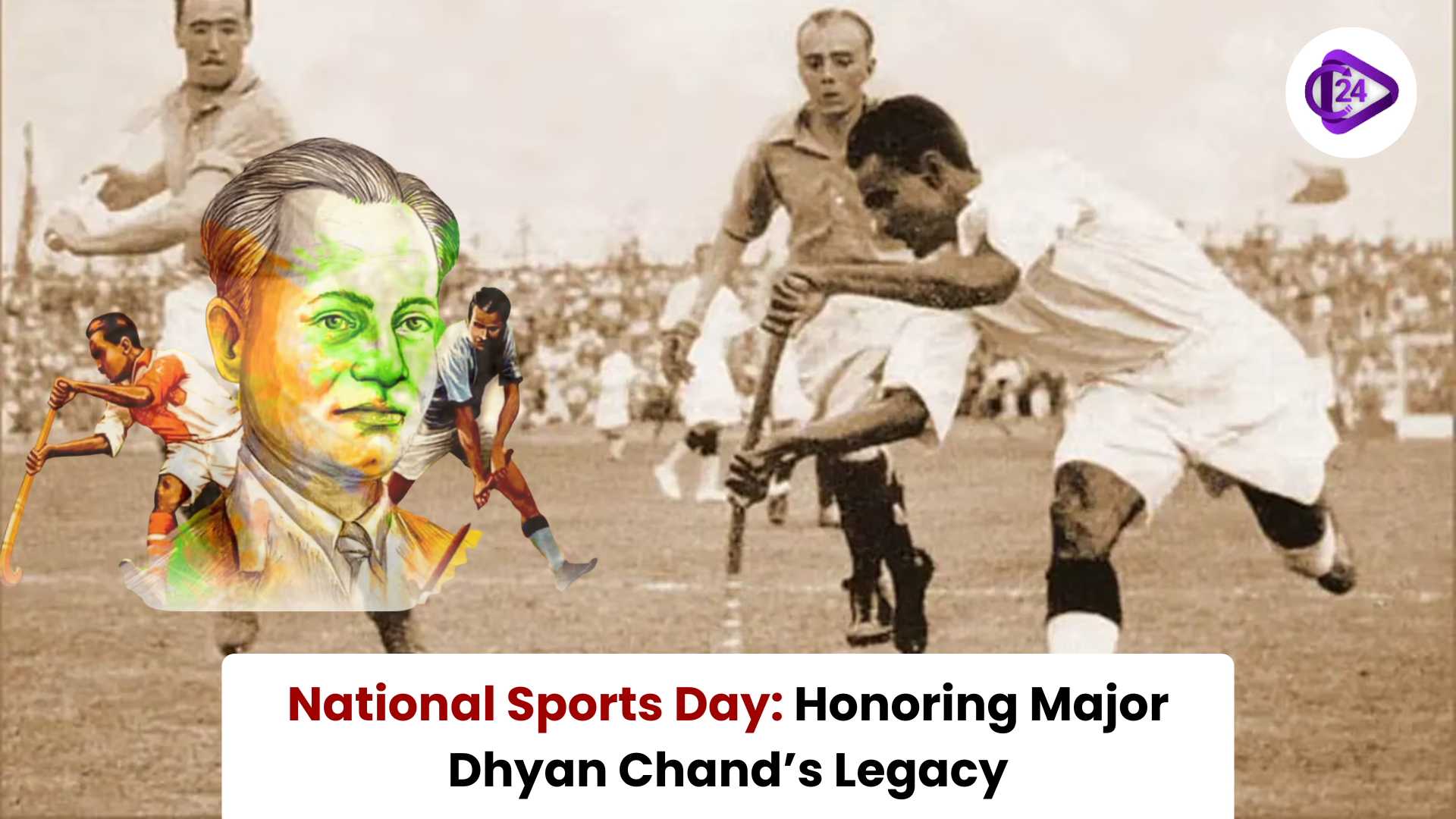
National Sports Day: Celebrating Major Dhyan Chand’s Legacy and India’s Sporting Achievements

Today National Sports Day is being observed throughout India in memory of the birth of the legendary hockey player Major Dhyan Chand, the as well known as the Wizard of Hockey. Observed on the 29th of August annually, the day focuses on the value of sports and physical activities in addition to commemorating the role of Major Dhyan Chand to the Indian hockey and sports.

Key Highlights:

Tribute to Major Dhyan Chand:

  • Today the Youth Affairs and Sports Minister Mansukh Mandaviya floral tribute to Major Dhyan Chand in the Major Dhyan Chand national stadium in New Delhi.

  • The Minister recognized the legendary status of Major Dhyan Chand in the world of hockey and the contribution he has made to the Indian sport.

Fit India Movement:

  • In a commemoration ceremony, Dr. Mansukh Mandaviya will be the head of Fit India Pan-India Sports Movement up until August 31st.

  • The national three day movement will be conducted in the theme, Ek Ghanta, Khel ke Maidan Main, where people will be encouraged to embrace fitness and sporting activities.

  • There will also be sports activities in India involving leading athletes and representatives of the population to promote fitness and sports culture.

  • Not just the legacy of Major Dhyan Chand but also the historic milestones in the sporting history of India are retrospected in the National Sports Day. The following are 17 proud moments that have come to characterize the Indian experience in sports:

India’s Sports achievement over the years

  • 2025: Gukesh Becomes World No. 3 in Chess

    • Gukesh Dommaraju achieves a career-best Elo rating of 2776, becoming the third-ranked player globally after his impressive performances at the Norway Chess and Tata Steel Chess tournaments.

  • 2024: Indian Men's Hockey Team Wins Olympic Bronze

    • The Indian Men Hockey Team wins a bronze in the Paris 2024 Olympics and beats Spain 2-1.

  • 2023: Satwik-Chirag win BWF World Championships Bronze

    • The first-ever gold in men's doubles in BWF World Championships was won by Satwiksairaj Rankireddy and Chirag Shetty.

  • 2022: Nikhat Zareen Wins World Boxing Championship Gold

    • Nikhat Zareen wins the 52 kg division of the IBA Women World Boxing championship.

  • 2021: Neeraj Chopra Wins Olympic Gold

    • Neeraj Chopra is the first Indian Olympic winner achiever in the field of track and field at Tokyo 2020 Olympics.

  • 2020: Koneru Humpy Named BBC Indian Sportswoman of the Year

    • Chess Grandmaster Koneru Humpy is made BBC Indian Sportswoman of the Year 2020.

  • 2019: P.V. Sindhu Wins Badminton World Championships

    • P.V. Sindhu is the first Indian to take a gold medal in the BWF World Championships.

  • 2018: Mary Kom Wins Record Sixth World Boxing Title

    • Mary Kom is the most decorated female boxer having six world championship golds.

  • 2016: Dipa Karmakar Reaches Olympic Final in Gymnastics

    • Dipa Karmakar is the first Indian female gymnast to make an Olympics final.

  • 2015: Sania Mirza Becomes World No. 1 in Doubles Tennis

    • Sania Mirza is now the No. 1-ranked women's doubles player after she won the Grand Slams with Martina Hingis.

  • 2014: India Wins Men’s Kabaddi Gold at Asian Games

    • India is a dominant winner of gold in Kabaddi at the 2014 Incheon Asian Games.

  • 2012: India Wins Six Medals at London Olympics

    • India records the highest number of Olympic medals ever with six medals at the London Olympics 2012.

  • 2011: India Lifts ICC Cricket World Cup

    • India is the winner of the ICC Cricket World Cup playing under the leadership of M.S. Dhoni.

  • 2010: Commonwealth Games are held in Delhi, India.

    • India is home to the Commonwealth Games in Delhi and the games present a big sporting infrastructure.

  • 2008: Abhinav Bindra takes the first individual Olympic Gold of India.

    • India achieved its first individual gold of the Olympics in shooting with Abhinav Bindra in the 2008 Olympics held in Beijing.

  • 1952: India Wins First Individual Olympus Medal- K.D. Jadhav.

    • In the Helsinki Olympics, K.D. Jadhav becomes India’s first individual Olympic winner in wrestling.

  • 1951: India Hosts First Asian Games in New Delhi

    • India receives an invitation to the first Asian Games in New Delhi, and it receives its introduction into continental sport.

Conclusion

National Sports Day is the ceremony that honours the great sporting heritage of India, by celebrating the efforts and the persistence of the sportsmen across generations. Since the legacy of Major Dhyan Chand in hockey or the sporting feats of such athletes as Neeraj Chopra and P.V. Sindhu, the day reminds people of the attitude of persistence, cohesion, and achievement which characterizes Indian sport. It also encourages the country to go on in pursuit of more sporting successes with the encouragement of the youth to take up fitness and sporting culture.

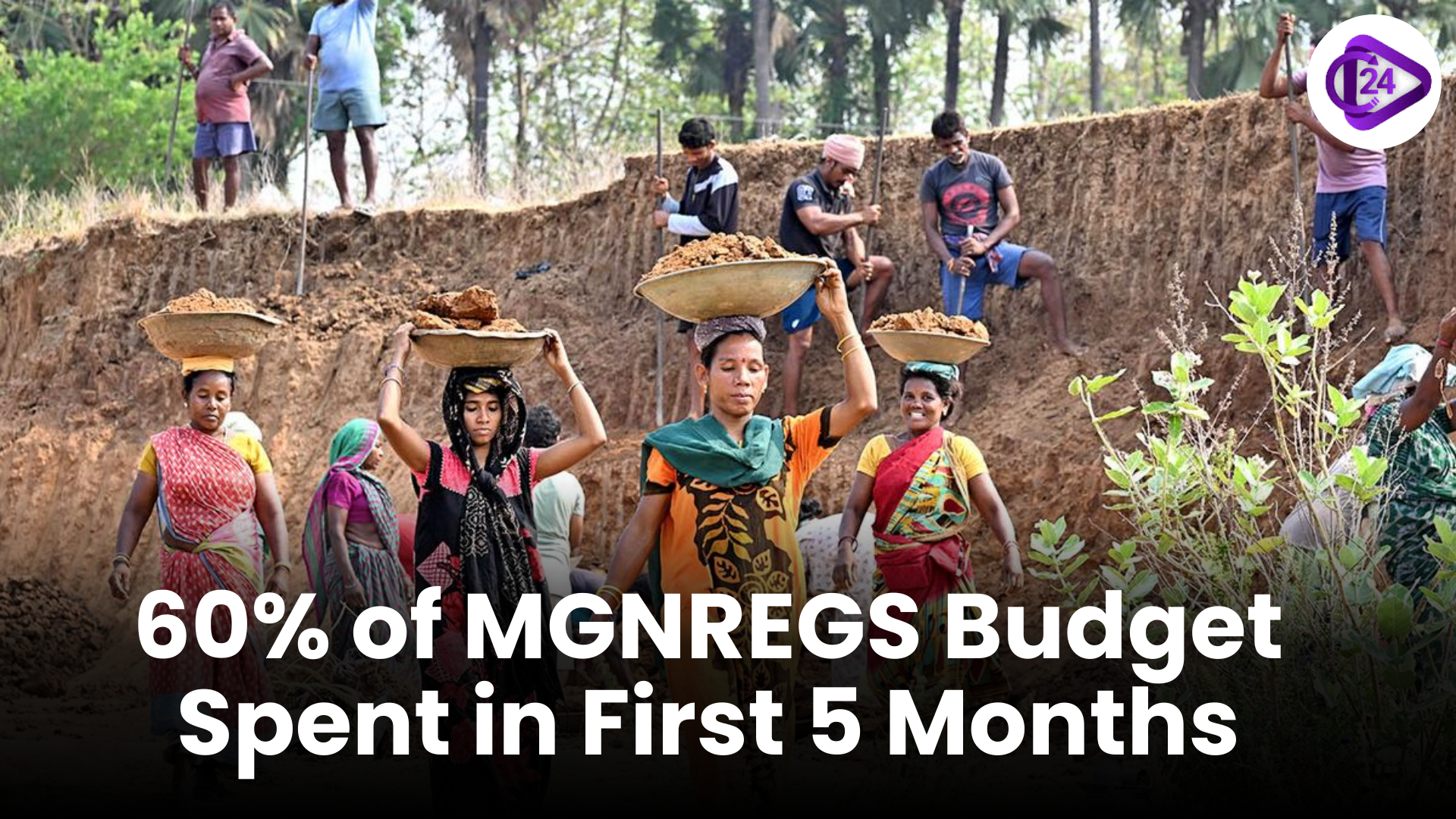
Nearly 60% of MGNREGS Budget Already Spent in First 5 Months of Financial Year

One of the major rural employment schemes of the Union government, the Mahatma Gandhi National Rural Employment Guarantee Scheme (MGNREGS) has already depleted almost 60% of its financial provisions in the coming 2025-26 financial year. According to the Ministry of Rural Development data, 51,521 crore of 86,000 crore that has been allocated to the scheme has already been expended; and there remains a month to the second quarter. The Finance Ministry had limited the spending to 60% of the annual budget in the first half of the year.

Key Points

Budget Exhaustion and Pending Liabilities:

  • To date 86,000 crore funds allocated to MGNREGS have been expended in the 2025-26 financial year on 3 projects and 309 activities.

  • This spending constituted 38% of the clearing of arrears of the last financial year (2024-25).

  • As per the Ministry of Rural Development, the amount of wage liabilities and material liabilities were outstanding as ₹17,259.56 crore and 15,641 crore respectively as at April 1, 2025.

Government's Cap on Spending:

  • The Finance Ministry has capped spending below MGNREGS in the first half of the financial year at 60% and hence reserves 79 crore to be spent on in September 2025.

  • This limit implies that the government has already surpassed its budget limit at a faster rate than was expected, considering it has only a month left in the second quarter.

Number of Active Workers:

  • The MGNREGS remains to be an essential lifeline to rural households as 12.15 crore active workers rely on the scheme to be provided with income supplement.

  • This high figure of labourers makes the expenditure to be high with the scheme paying wages and material expenses on rural work.

Shortfall and Lack of Additional Funds:

  • The cost of the same period last year of the last financial year (2024-25) was ₹61,829 crore that led to a dire shortfall.

  • Although the financial pressure is continuing to increase, the Finance Ministry has not offered any extra budget towards the scheme.

  • The Ministry of Rural Development officials have sought a reallocation rate but no signs of the Finance Ministry has shown that they will send additional resources.

Conclusion:

The 2025-26 financial year budget deficit in the MGNREGS is very high, with almost 60% of the budget expended in the initial five months. The necessity of more funds is also significant, particularly because a large fraction of the budgeted funds has to be spent on paying off the past year liabilities. Although 12.15 crore active workers are benefiting through the scheme, the Finance ministry has not yet given its consent on any extra funds as this strains the rural employment program. The case illustrates the increasing pressures of servicing the financial requirements of one of the flagship welfare programs in India.

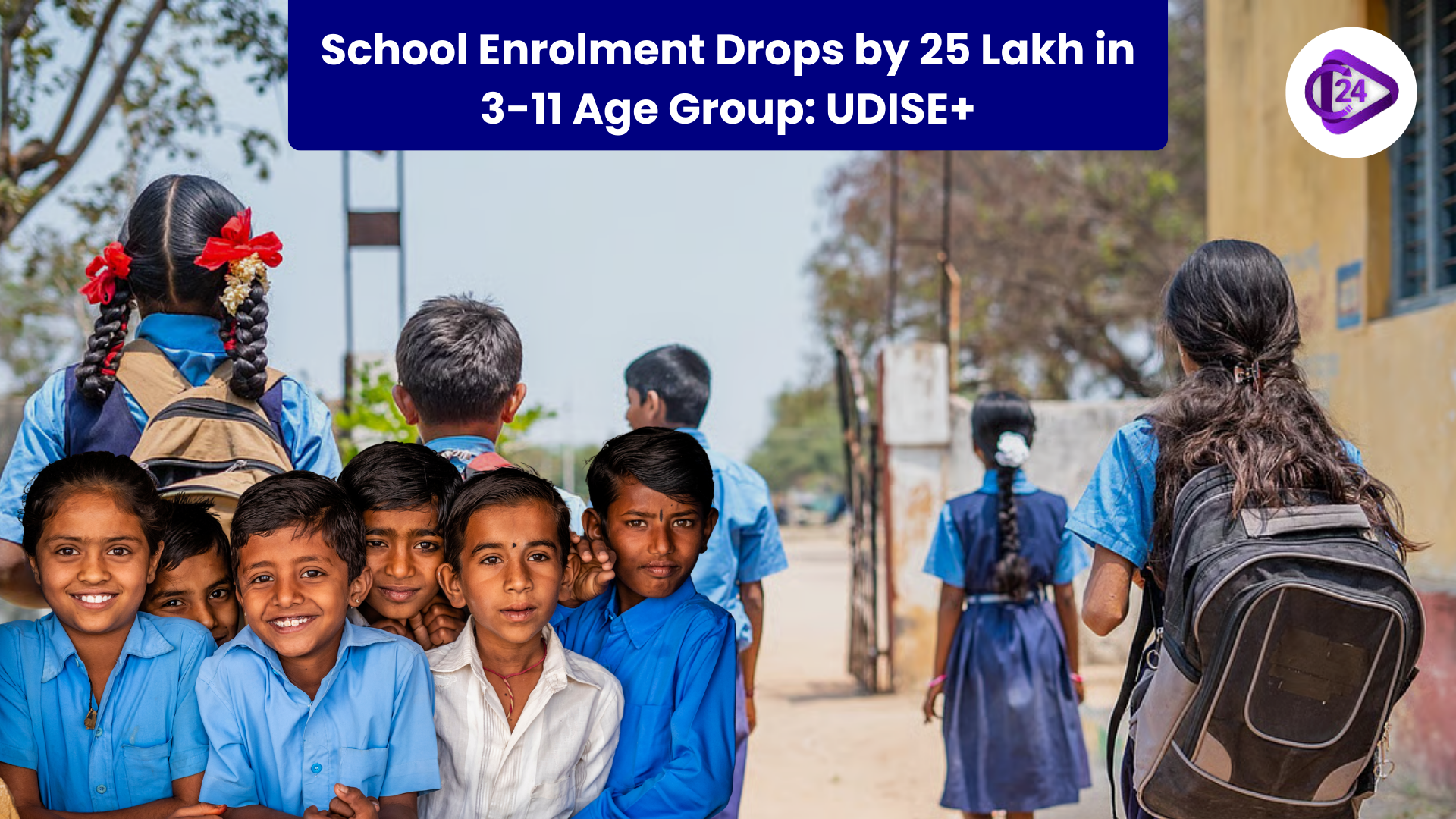
School Enrolment in 3-11 Age Group Drops by 25 Lakh: UDISE+ Report

Data published by the Education Ministry, the Unified District Information System for Education Plus (UDISE+) has shown a major decline in school enrolment among the 3-11 age-group in India during the academic year 2024-25. This covers children in anganwadi, pre-school and Classes 1 to 5. The overall enrolment in this category has gone down by almost 25 lakh students, which was 12.09 crore in 2023-24 to 11.84 crore in 2024-25.

Key Points

Decline in Enrolment for 3-11 Age Group:

  • The 3-11 age bracket registered a reduction of 24.93 lakh students as it fell by 12.09 crore in 2023-24 to 11.84 crore in 2024-25.

  • There was also a declining trend in total school enrolment (Classes 1 to 12): in 2023-24, the highest level of 24.8 crore dropped to 24.69 crore in 2024-25, the lowest enrolment since 2018-19.

Effects of dropping birth rates:

  • A decline in the birth rates in India with fertility rates below replacement in most states has helped to reduce the number of children in the primary school-age population.

  • The National Family Health Survey 2021 gave a total fertility rate (TFR) of 1.91 children per woman in India, lower than the replacement rate of 2.1.

  • There are still states such as Uttar Pradesh, Bihar and Meghalaya whose fertility rates are above the replacement rates and hence to some extent the reason behind the higher enrolment rates.

Changes in Enrolment Trends:

  • Classes 6-8 enrolment rose by 6 lakh, as compared to 6.31 crore in 2023-24 and 6.36 crore in 2024-25.

  • Likewise, there were also increases in enrolment in Classes 9-12, by 8 lakh students, as 6.39 crore in 2023-24 to 6.48 crore in 2024-25.

Improvement in Gross Enrolment Ratio (GER):

  • The middle school (Classes 6-8) Gross Enrolment Ratio (GER) increased to 90.3% in the year 2024-25 compared with 89.5% in the year 2023-24.

  • In the case of secondary school (Classes 9-12), GER improved to 68.5% in 2024-25 compared to 66.5% in 2023-24, which indicates an optimistic result of the enrolment of students in higher classes.

Dropout Rates Declining:

  • The dropouts have decreased in the different levels of education:

  • Preparatory stages (Class 1-5): Preparatory: In 2023-24, the rate of dropout was 3.7% and in 2024-25, it was 2.3%.

  • Middle school (Classes 6-8): The dropout rate dropped to 3.5% (as compared to 5.2%).

  • Classes 9-12): There was a reduction of dropout rate during secondary school period which was 10.9% to 8.2%.

Conclusion:

The age group of 3-11 years has a decline in school enrolment due to the demographic changes particularly the low birth rate in India. Nevertheless, higher class enrolment and GER and dropout rate improvements are on a positive trend, indicating that the education system retains students better. On the one hand, the general enrolment numbers are decreasing, but the growing student enrolment in upper classes as well as the growing Gross Enrolment Ratio (GER) point to the consistent emphasis on enhancing the education outcomes.

Frequently Asked Questions (FAQs)

The current affairs cover recent national and international events related to UPSC, SSC, Banking, Railways, and State PCS.

You need to read about the current affairs daily, and revise them every week and every month to keep them longer in your memory.

Yes, Class24 provides free downloadable Daily Current Affairs PDFs for easy revision.

Yes, you can practice MCQs and quizzes to boost your exam preparation.

Absolutely. The content is written in simple, easy-to-understand bilingual language suitable for beginners.

Go to class24.com and click on the current affairs section directly, where you find everything that you need.

ssc-toppers

Start Learning Today with Class24

Related current affairs

Class24 offers free video lectures for smart preparation, covering CGL, CPO, CHSL, MTS, and GD exams. Learn from expert faculty, revise concepts easily, practice with PYQs, and improve speed and accuracy through high-quality, exam-focused video lessons anytime, anywhere.

Get success in your hand. Start study anytime anywhere.

The journey becomes simple and enjoyable when you start taking interest in it. And through our app “Class24”, we will be your trusted partners in developing that interest.

Daily Quizzes
Mock Tests
Ongoing

No ongoing tests right now.