
Day: August 18, 2025

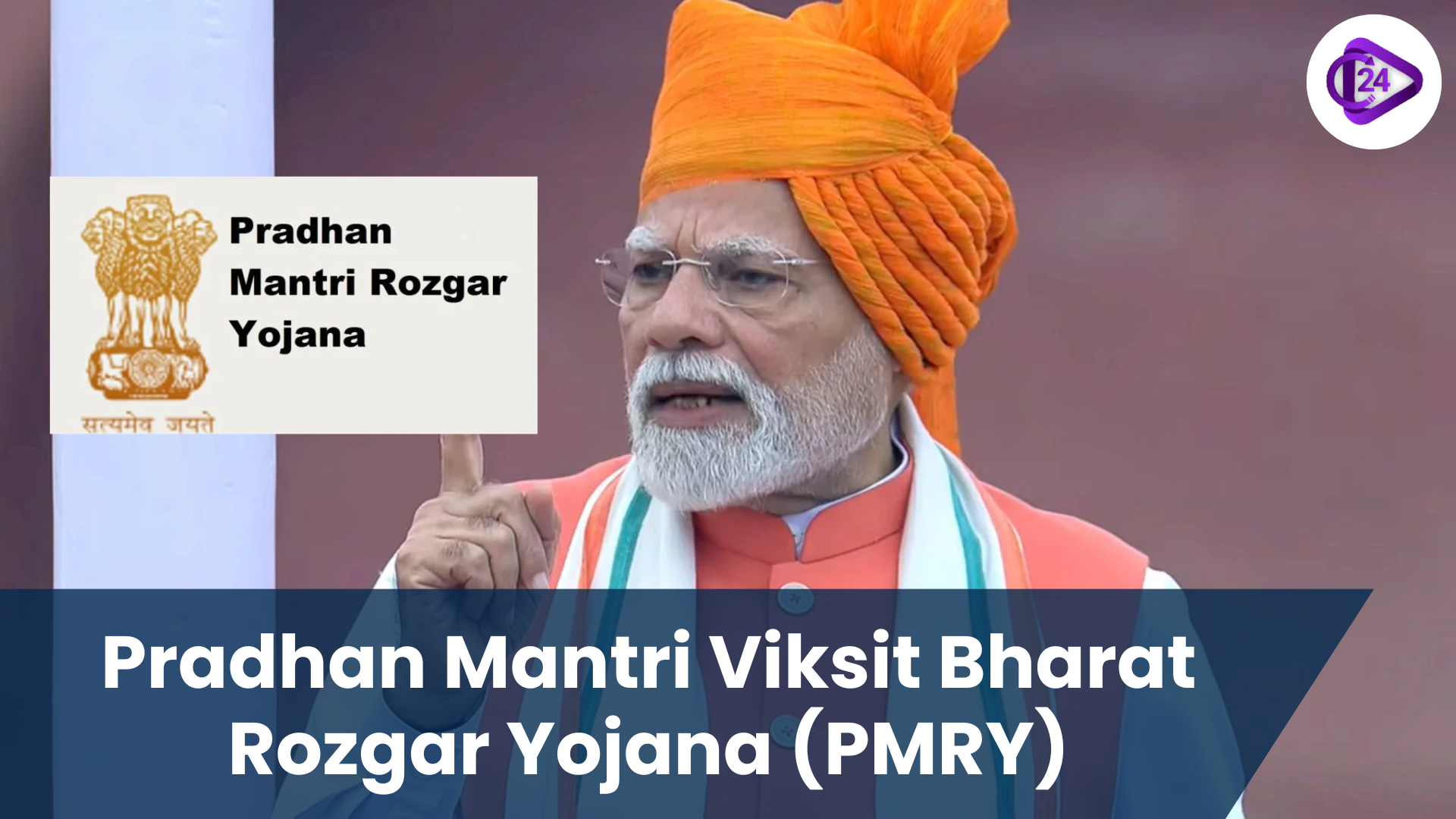
Pradhan Mantri Viksit Bharat Rozgar Yojana (PMVBRY) – A Push for Youth Employment

In his 12th Independence Day speech (2025) PM Modi mit elevated the Pradhan Mantri Viksit Bharat Rozgar Yojana owing an outlay of 1 lakh crore rupees. By creating 3.5 crore employment in 2 years, the scheme is consequently a historic move towards swatantra Bharat to Samriddha Bharat. It consists of two parts, direct incentives of up to 15,000 and up to 3,000 per month to create new employment opportunities by the employers of first time employees. Transparency will be attained through settlement by the implementation of Payments via DBT and PAN-linked accounts. The scheme will enhance employment, formalization of the work force, and widening of social security.

Context 

  • In his 12th Independence Day speech (2025) PM Modi mit elevated the Pradhan Mantri Viksit Bharat Rozgar Yojana owing an outlay of 1 lakh crore rupees. 

  • By creating 3.5 crore employment in 2 years, the scheme is consequently a historic move towards swatantra Bharat to Samriddha Bharat.

Key Points

Overview

  • Employment Challenge: there is a high level of unemployment and informal labor in India amongst the youth.

  • Policy Push: The current move of the government is on mass employment to address challenges of demographic dividend.

  • Economic Linkage: there is a connection between manufacturing growth, formalisation of the economy, and inclusive development at the level of employment generation.

Cost & Target

  • Outlay: 1 lakh crore; Jobs to be created: 3.5 crore to be created in 2 years.

  • Objective: To increase young people in employment and formalisation of the employment workforce.

Part A Support to First-Time Employees

  • Eligibility: employees who are first time joining and registered with EPFO and had salaries equal to or less than 1 lakh/month.

  • Incentive: One month EPF salary (up to 15000 made in 2 instalments.

  • Disbursement:

  • 1st instalment, after 6 months of service.

  • 2nd instalment after 12 months + running through a financial literacy programme.

  • Savings push: A portion of the incentive will be in a fixed deposit/ savings tool.

  • The Beneficiaries are: 1.92 crore first-time employees.

Part B- Employer Incentives

  • Incentive: Six new employees up to 2 years or 2 new employees up to 2 years per 1 employee and a reward of up to 3000 per month up to 2 years maximum 600000 (salary of 1,00,000 or less).

  • Condition: New jobs were to be maintained during a period of at least 6 months.

  • Special Focus: Manufacturing industry where incentives are offered upto 3 rd and 4 th year.

  • Projected Beneficiaries: 2.6 crore individuals workforce.

Incentive Payment Mechanism

  • Staff: DBT-Aadhar-based Payment System.

  • Employers: Immediate transfer into the PAN-linked accounts.

  • Puts an end to opacity, minimises leakages.

Expected Outcomes

  • Creation of massive employment in every sector and particularly manufacturing.

  • EPFO registration and coverage of social security to formalisation of the workforce.

  • The promotion of the culture among the young people of saving.

  • To improve the concept of Atmanirbhar and Samriddha Bharat.

Conclusion 

The PMVBRY is a milestone in terms of employment generation that has been initiated to address youth unemployment and informality in India. The scheme tries to begin a virtuous circle of job creation, formalisation, and Social security by motivating the employees and the employers. 

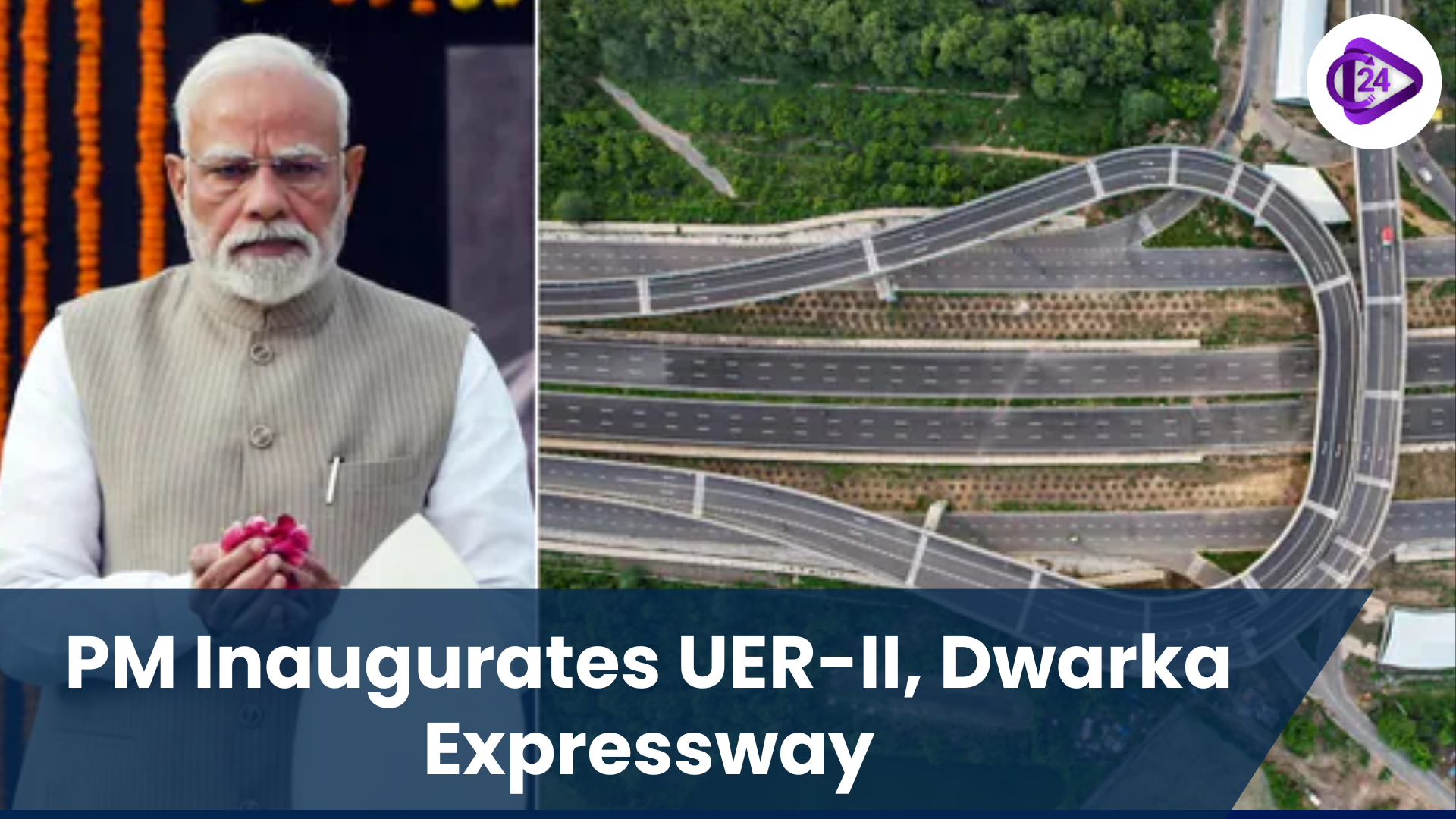
PM Inaugurates UER-II, Dwarka Expressway: Boost to Connectivity and Economy

A 16.5 km of the Dwarka Expressway and a major chunk of the UER-II-urban extension road made at a cost of close to 11,000 crores was inaugurated by the Prime Minister Narendra Modi in Delhi. The Dwarka Expressway and UER-II, 10 km and 66-km respectively, would decongest Inner Ring Road, Outer Ring Road and NH-48 once operational. These projects will enhance connections with Alipur, Narela, Bawana, Rohini, Mundka, Najafgarh, Bahadurgarh and Sonipat. The projects will minimize the environmental pollution, travel time saving and economic booster to the NCR. A call to PM Modi asking the citizens to go vocal for the locals was also encouraging to use Made-in-India products.

Context 

  • Prime Minister Narendra Modi inaugurated the Delhi section of Dwarka Expressway and a major stretch of the Urban Extension Road-II (UER-II), built at a combined cost of nearly ₹11,000 crore. 

  • The 66-km UER-II stretch and 10-km Dwarka Expressway section will help decongest Delhi by diverting traffic from Inner and Outer Ring Roads and NH-48.

Key Points

Overview

  • City Projections: Delhi is plagued by continuous traffic jams and pollution, on Ring Roads, as well as NH-48.

  • Infrastructure Push: UER-II is visualised as the third Ring Road in Delhi facilitating movement of freight and passenger traffic.

  • Policy Message: Policy Massage: PM, in addition to inaugurating infrastructure, has brought about economic nationalism with vocals for locals.

Urban Extension Road-II (UER-II)

  • Long: 66 kilometers; Price: 5600 crores.

  • It is a link road between NH-44 (Alipur) and NH-48 (Najafgarh Road) passing through Bawana region, Narela backside, Mundka, and Najafgarh.

  • Offloads traffic into Inner and Outer Ring Roads and eases traffic jams at Mukarba Chowk, Dhaula Kuan and Mahipalpur.

  • Advantages of freight transportation to Bahadurgarh / Sonipat / nearby industrial centres.

Delhi Section, Dwarka Expressway

  • Length: 10 km (Shiv Murti to Delhi- Haryana border); Cost: 5400 crore.

  • Existing alternative link in case of congestion in NH-48 between Delhi and Gurugram.

  • It has tunnels and under passage to make connectivity with Dwarka, IGI Airport and Gurugram smoother.

Economic and environmental effect

  • It will take less time to travel and less consumption of gasoline → decrease in automobile pollution.

  • Increase logistics, trade and industrial connectivity in NCR.

  • Development of direct, high speed connectivity with the other emerging economical corridors.

Appeal by PM: Vocal of Local

  • Encouraged masses to use more Made-in-India goods, more particularly in festivals.

  • The mantra of the said Vocal for Local should be a way of life taking a cue of the call given by Charkha and Mahatma Gandhi of the Swadeshi.

  • Strained that the self reliant India needs government policy as well as people participation.

Conclusion 

Opening of UER-II, and Dwarka Expressway is an important move in alleviating traffic congestion and lowering travel time and enhancing economic transparency within NCR. In tandem with the physical infrastructure is the support of economic self-reliance and citizen-led growth discoursed by the PM when she asked the citizens to be vocal of being local. In a combination, these efforts reinforce the urban circulation and national economic policy.

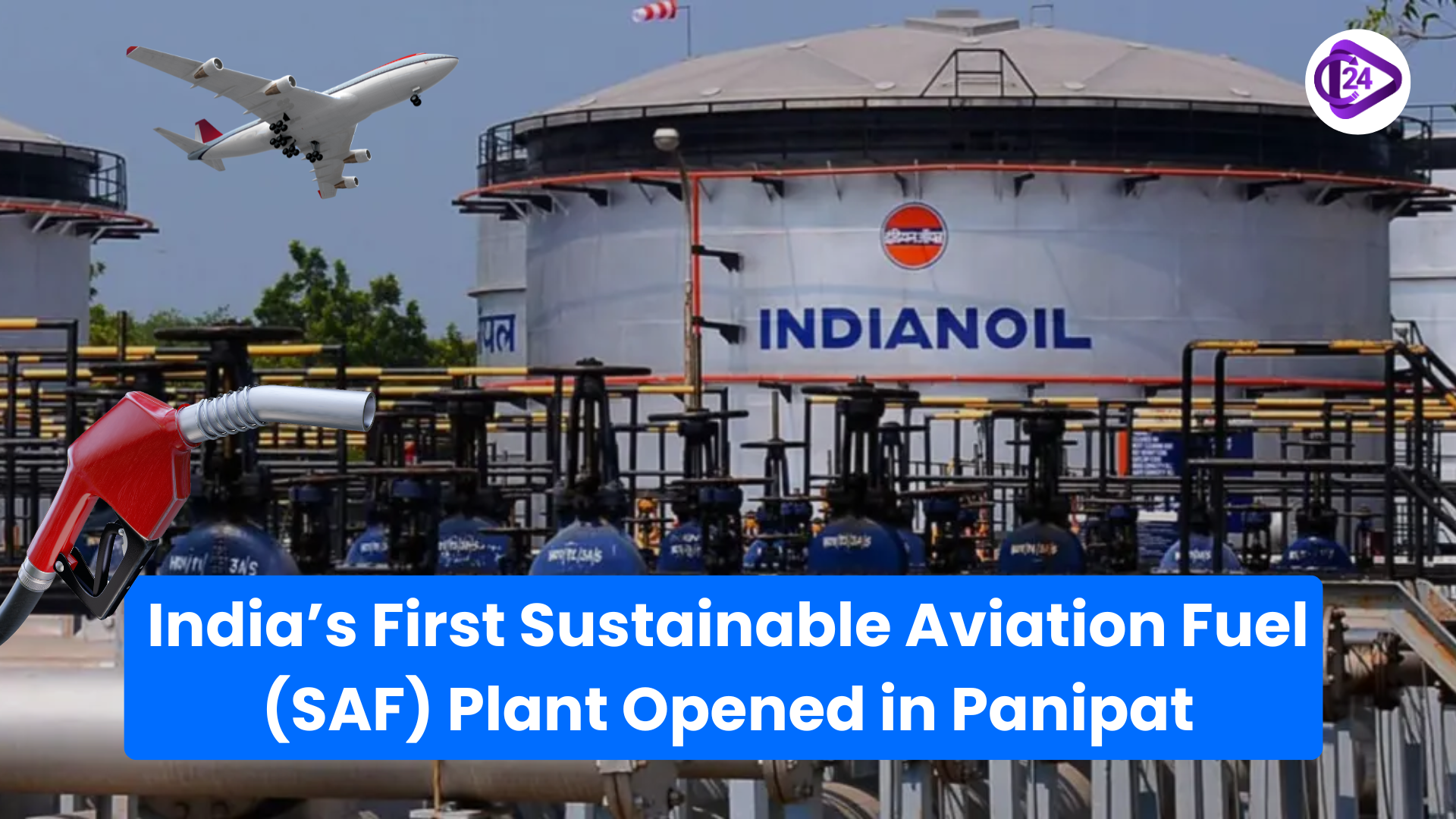
India’s First Sustainable Aviation Fuel (SAF) Plant – Used Cooking Oil

In December 2025, the Indian Oil Corporation (IOC) will commence commercial production of Sustainable Aviation Fuel (SAF) at its Panipat refinery at Haryana. With used cooking oil as its feedstock, the plant is expected to yield a capacity of 35,000 tonne per annum, able to satisfy the initial 1% SAF blending on international flights mandate in India that will become effective in 2027. IOC is the first Indian firm to be certified with ISCC CORSIA SAF as it meets international decarbonisation standards in the aviation industry. Compared to conventional jet fuel, SAF can result in up to 80 percent of lower lifecycle carbon emissions and will require no engine upgrades in the current airplane engines. This great endeavor is not only positioning India in the international SAF roadmap but also minimizing the carbon footprint as well as energy security.

Context 

  • In December 2025, the Indian Oil Corporation (IOC) will commence commercial production of Sustainable Aviation Fuel (SAF) at its Panipat refinery at Haryana.

Key Points

Overview

  • India Green Aviation Push: Aviation generates a large amount of emissions; SAF is identified as one of the major decarbonisation avenues in India.

  • Global Mandates: CORSIA imposes the obligations on global airlines to offset the excess emissions against the 2020 level after 2027.

  • National Policy Framework: NBCC India has started to provide its indicative target regarding the SAF blending, which is 1 percent in 2027 and 2 percent in 2028 of international flights.

Production & Feedstock

  • Panipat IOC refinery will be able to produce 35000 TPA SAF using used cooking oil.

  • The cooking oil will be obtained through aggregators within the hotels, restaurants, and the food industry players such as Haldiram.

  • Big challenge: Small vendor and household collection.

Certification & Compliance

  • Heated furnace: IOC will be the first Indian company to be ISCC CORSIA certified and will then be able to produce commercially.

  • Exports are increased and certification ensures that we meet the worldwide aviation emission offsets schemes.

Compatibility of the Blending & Engine

  • At the chemical level, SAF has a very favorable mixability with Aviation Turbine Fuel (ATF).

  • Airbus asserts that all its planes could fly with a blend of 50 percent SAF.

  • Indian airlines have already made test flights by using SAF mixture.

Policy & Targets

  • INDIA to commence blending 1% SAF in 2027 and 2% (on international flights only) in 2028.

  • Future domestic-blending requirement is anticipated, following cost and supply chain stabilisation.

  • Cost challenge: The SAF is costlier than the conventional ATF (3 times).

Global Relevance

  • Europe is not new to SAF blending requirements; European carriers may be the first customers of IOC to SAF in India.

  • India expects to emerge as one of the exporters in the international SAF industry.

  • SAF was also anticipated to provide more than the 60 percent contribution to global efforts of decarbonisation in the aviation industry.

Conclusion 

This is a turning point in the aviation decarbonisation of India through the SAF project in Panipat. It not only fortifies the energy independence of India but it also suits the international carbon reduction obligations of CORSIA. Yet, barriers such as scalability, cost competitiveness, and efficient feedstock collection are the major areas of concern when it comes to broader use.

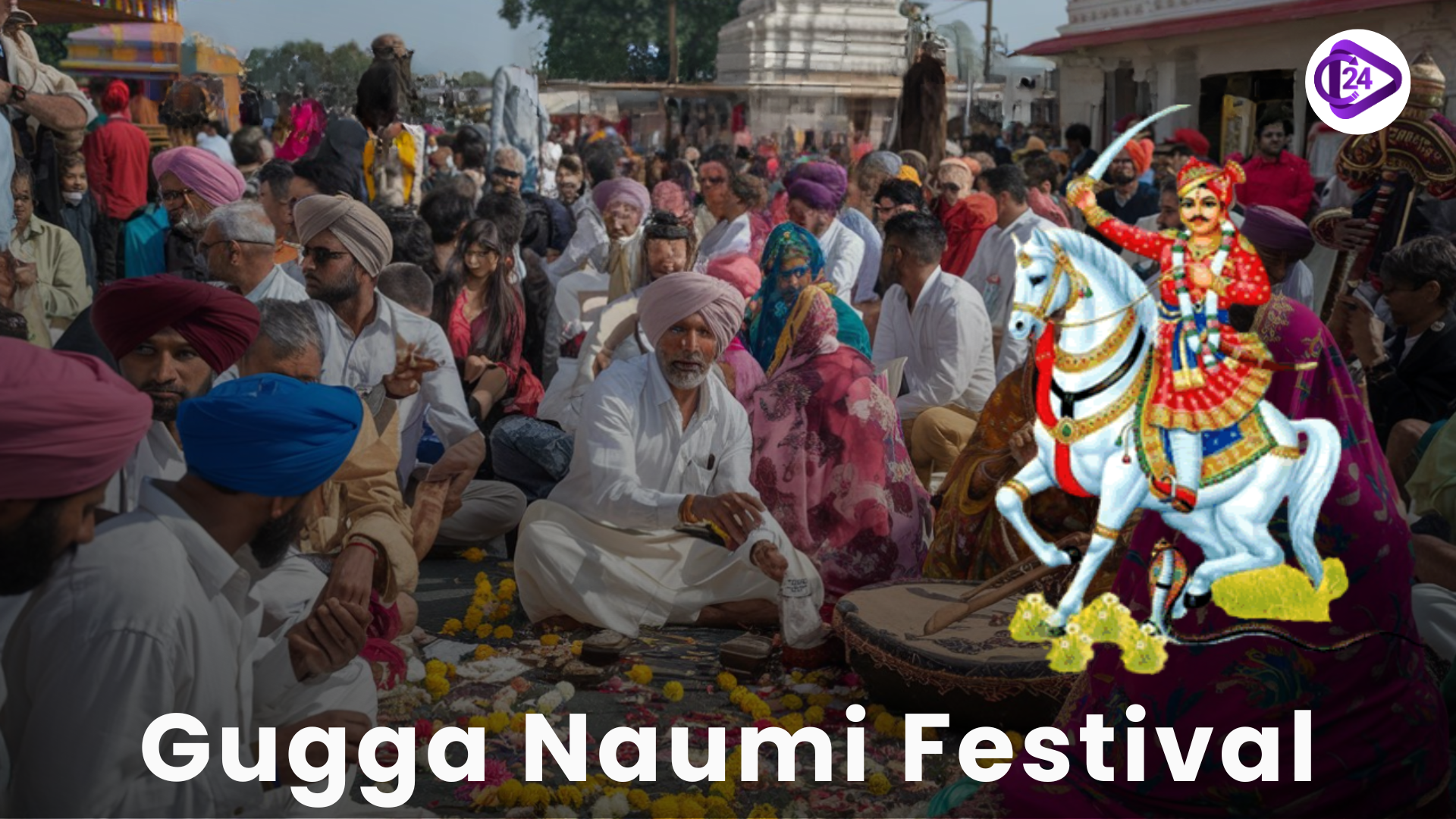
Gugga Naumi Festival: Folk Devotion and Cultural Unity in India

Gugga Naumi is a folk -religious fair held mostly in Rajasthan, Haryana, Punjab, Jammu & Kashmir and Uttar Pradesh. Devoted to Gugga Pir, a folk deity of the Chauhan Rajputs, they believe that he will protect his followers against snakebites, and that he brings fertility, health, and prosperity. The festival is celebrated on the ninth of Krishna Paksha during the month of Bhadrapad which normally starts around Raksha Bandhan. Festivals, Gugga Medi, entry of Hanumangarh, Rajasthan, have some major fairs, rituals and processions. It has a syncretic nature in the sense that it involves both the Hindus and the Muslims, which makes it socially and culturally valuable.

Context 

  • It is witnessed between Raksha Bandhan and Krishna Paksha Navami of Bhadrapad month each year.

  • Worship centres: Gugga Medi, Hanumangarh, in Rajasthan.

  • Famous as a festival of snake worship, folk religion and unity.

Key Details

Date & Observance

  • A day before Purnima of Bhadrapad month (Janmashtami).

  • It starts on the day of Raksha Bandhan and carries on to one week.

Major Celebrations

  • Visits to the village of Gugga Medi (Hanumangarh, Rajasthan).

  • The standard of Gugga Pir is a Garuda (snake charmer).

  • Pir ke Sole types of devotional songs are sung.

  • Faires, rites and propitiation that were maintained at Gugga shrines (Marhis).

About Gugga pir

  • Gugga, Guggapir or Gugga Zahir Pir or Guaji.

  • Rajput of the Chauhan Chauhan also called Agni vamsa clan of princes.

  • It is shown on a blue horse with blue & yellow flags.

  • Had powers over poisonous snakes.

Worshipped for:

  • Snakebites prevention.

  • Children’s well-being.

  • Healing powers.

Conclusion

Gugga Naumi is a cultural and not only a religious practice that provides the symbolism of the unity and the diversity of rural India. It reinforces bonds between the community, and maintains centuries old customs of worshiping snakes and folklore. This festival also gives prominence to the composite cultural ethos of India, by crossing religious lines.

Frequently Asked Questions (FAQs)

The current affairs cover recent national and international events related to UPSC, SSC, Banking, Railways, and State PCS.

You need to read about the current affairs daily, and revise them every week and every month to keep them longer in your memory.

Yes, Class24 provides free downloadable Daily Current Affairs PDFs for easy revision.

Yes, you can practice MCQs and quizzes to boost your exam preparation.

Absolutely. The content is written in simple, easy-to-understand bilingual language suitable for beginners.

Go to class24.com and click on the current affairs section directly, where you find everything that you need.

ssc-toppers

Start Learning Today with Class24

Related current affairs

Class24 offers free video lectures for smart preparation, covering CGL, CPO, CHSL, MTS, and GD exams. Learn from expert faculty, revise concepts easily, practice with PYQs, and improve speed and accuracy through high-quality, exam-focused video lessons anytime, anywhere.

Get success in your hand. Start study anytime anywhere.

The journey becomes simple and enjoyable when you start taking interest in it. And through our app “Class24”, we will be your trusted partners in developing that interest.

Daily Quizzes
Mock Tests
Ongoing

No ongoing tests right now.