Day: August 14, 2025

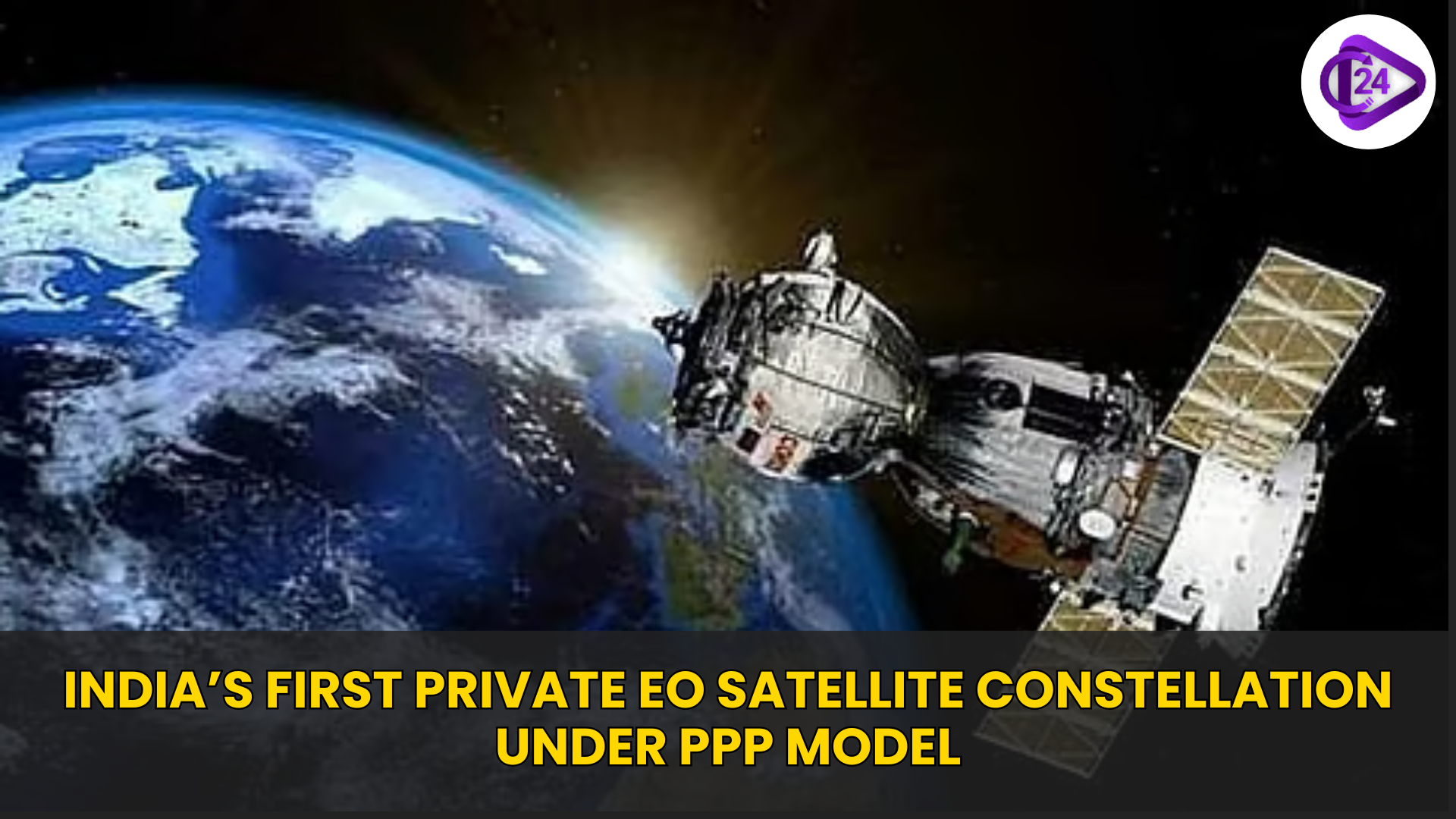
India’s First Private EO Satellite Constellation under PPP Model

Within India, its first domestic-built commercial Earth Observation (EO) satellite constellation will soon come into existence on a Public-Private Partnership (PPP) basis. IN-SPACe has picked the PixxelSpace India- led consortium on an 80-20 basis utilizing Bengaluru-based start-up PixxelSpace with an aim to implement the project. This 1200 crore project will introduce 12 advanced EO satellites in 5 years. The constellation will enable climate monitoring, agriculture, disaster management and national security applications and guarantee data sovereignty at the same time. It is one of the key achievements of the Indian private space industry in the ability to oversee high-tech large-scale missions.

Context

  • The Indian National Space Promotion and Authorisation Centre (IN-SPACe) has granted a private entity, in the first of its kind mandate, to design and launch a commercial EO satellite system. 

  • The step is part of India's reforms in the space sector to improve on the role of the private sector.

Key Points

  • IN-SPACe picks PixxelSpace India-led consortium to deliver India's first indigenous commercial EO satellite constellation on PPP.

  • Piersight Space, Satsure Analytics India and Dhruva Space.

  • Investment: 2000crores [1,200crores] over 5 years Rs 12, 12 EO satellites.

  • Applications India: Climatological surveillance: surveillance of changing climatic conditions Disaster management: surveillance of disasters Agriculture: surveillance of agricultural fields Marine surveillance: surveillance of coastal and offshore waters National security: surveillance of national boundaries Urban planning.

  • Significance: Decreases foreign dependency, provides data sovereignty, increases the capacities of the private space industry.

Features

1. Consortium Details

  • Lead Partner: PixxelSpace India (Bengaluru).

  • Partners: Satsure Analytics India, Dhruva Space, Piersight Space.

  • Selection Process: Three consortia took part in a competitive bidding approach.

2. Project Overview

  • Satellites: 12 enhanced EO satellites.

  • Timeframe: more than 5 years.

  • Budget: 1,200+ crore (Rs.) (private investment).

  • Model: Public-Privat Partnership (PPP).

3. Capabilities & Applications

  • Data Products: Value-Added Services (VAS) and Analysis Ready Data (ARD).

  • Applications:

    • Analysis of climate change

    • Disaster management

    • Mapping of the productivity of agriculture

    • Marine surveillance

    • Intelligence concerned with national security

    • Infrastructure monitoring and Urban planning

4. Strategic Significance

  • Secures data sovereignty through more reliance on foreign EO sources of data.

  • Increases in-country capacity in high-resolution geospatial information.

  • The process indicates maturity of India in carrying out intricate missions in the private space industry.

5. Policy & industry implications

  • In line with space sector reforms that facilitated the entry of the private sector.

  • Spurs investments and innovations within the space ecosystem in India.

  • Establishes a precedent to future large-scale PPP space proposals.

Conclusion

Building the first Indian composition of privately owned EO satellites is a radical part in the space voyage of the country. It develops self-sufficiency, enhances national security and illustrates the possibility of PPP models development of innovation and mass investment in strategic industries.

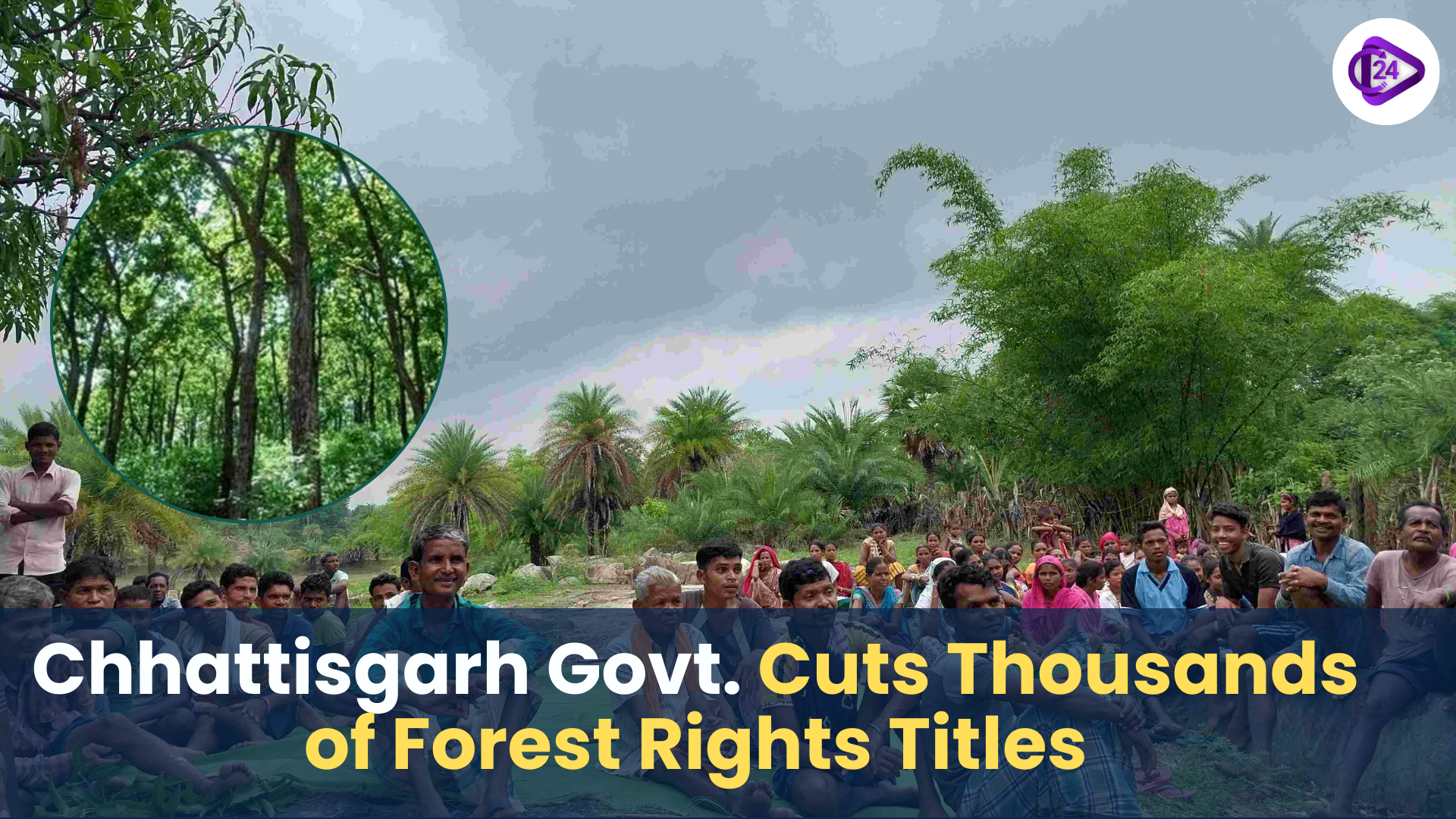
Chhattisgarh Govt. Cuts Thousands of Forest Rights Titles

According to the RTI information, thousands of forest rights titles (IFR and CFRR) have gone missing in official records in the state of Chhattisgarh in the last 17 months especially districts, such as Bastar, Rajnandgaon and Bijapur. The officials of the state explained it by the mistakes with the reporting and interconnection of the levels of administration and argued that no titles given were withdrawn. The scholars raised the deviation because the Forest Rights Act (FRA) 2006 does not provide a way of recovering titles that have been given back. The Scheduled Tribes and the forest dwellers are granted rights in terms of land and resources under the Act. Chhattisgarh has more than 43 percent of the forest area under the FRA titles but implementation misses pace in some of its newly free of Naxalism districts.

Context

  • In 2006 the Forest Rights Act (FRA) legitimized the individual and group rights of Scheduled tribes and other forest dwellers to land and products in forests. 

  • The possibility of title reductions brings about issues of transparency, accuracy of all records, and quality of implementation in the sensitive districts.

Key Points

  • RTI results: Reduction in number of forest rights in several districts across Chhattisgarh.

  • Case studies: Bastar IFR titles depreciated by 268 (37,958/Jan 2024- 35,180/May 2025); Rajnandgaon CFRR titles lost half its value in a month (40/Jan 2025- 20/Feb 2025).

  • Govt justification: Miscommunication and reporting mishaps between gram sabha, sub-divisional and district level.

  • FRA 2006: There are no legal mechanisms to withdraw titles already granted.

  • National perspective: Indian numbers: total 282396 ha of forests covered under FRA titles. Chhattisgarh is home to 43% of this.

Data Point

1. The Data Discrepancy

  • Bastar: 16 months decline in IFR titles 2,778.

  • Rajnandgaon: half-month in 2024 has witnessed a cut in 50 percent of CFRR titles.

  • Bijapur: CFRR titles decreased (April 2024) 299 to 297.

  • FRA is not enacted in Raipur, Durg and Bemetara.

2. Government Position

  • Not title-withdrawing changes; changes caused by the reporting error.

  • It has been attributed to lack of communication between the various administration levels.

3. Expert Concerns

  • In FRA revisions are not provided by way of post grant revocation of titles.

  • Cutbacks should be an issue of record integrity and right security in the community.

4. Implementation Patterns

  • Chhattisgarh: 4.82 lakh IFR (as of May 2025) titles distributed and 4,396 CFRR titles distributed.

  • It is being implemented more slowly in three districts recently declared Naxalism-free.

5. Broader Significance

  • A correctness of FRA is significant in the regard to the livelihood security of tribal and forest-dwelling populace.

  • It brings to fore the administrative issues relating to decentralised implementation of rights.

Conclusion

Unaccounted decline of the registered forest rights titles in Chhattisgarh highlights the importance of delineation of good monitoring, having open data being managed, and preservation of tribal rights stipulated in FRA. Shortage of FRA coverage, especially among the State population, with such an extensive percentage of the national population, may be catastrophic socially and politically.

India Achieves 100 GW Solar PV Module Manufacturing Capacity under ALMM

In the Approved List of Models and Manufacturers (ALMM), India increased the manufacturing capacity of its solar PV modules capacity to 100 GW by the year 2025 as compared to 2.3 GW in the year 2014. Such a leap is dictated by government incentives such as the Production Linked Incentive (PLI) Scheme of High-Efficiency Solar Modules and the efforts to establish an even playing field to local manufacturers. The manufacturers have increased in such a way that in 2021 they were only 21 manufacturers and 100 manufacturers operate 123 units now. The milestone lends credence to the Atmanirbhar Bharat vision and the goal of non-fossil capacity up to 500 GW by 2030. It also establishes India as a major player in the world solar value chain and also a part of global decarbonisation.

Context

  • Approved List of Models and Manufacturers (ALMM) In order to guarantee quality and reliability of solar PV deployment, it is possible to list test manufacturers on what is known as the Approved List of Models and Manufacturers (ALMM). 

  • The policy will enhance domestic capacity, lower the imports reliance and make them self-sufficient regarding renewable energy technology.

In News (Key Facts)

  • Target: 100 GW solar PV module manufacturing capacity under ALMM (2025).

  • Growth: 2.3 GW (2014) 8.2 GW (2021) to 100 GW (2025).

  • Manufacturers: 100 manufacturers and 123 manufacturing units by 21 (2021) manufacturers.

  • The drivers of policy: PLI Scheme of high-efficiency Solar Module, Order of MNRE of ALMM (2019), and measures of protection of domestic industries.

  • Targets: It helps achieve India's target of 500 GW non excellent capacity by 2030 and Atma Nirbhar Bharat mission.

Key Points

1. Policy Timeline

  • 2019: MNRE issues ALMM Order.

  • 2021: The first ALMM list is published (8.2 GW capacity).

  • 2025: Capacity exceeds 100 GW within a 4-plus year mark.

2. Growth drivers

  • High-efficiency module production giving PLI Scheme incentivising production.

  • The investment in vertically integrated operation and new technologies in the solar industry.

  • Infrastructure and ease of doing business supported by the state and Central government.

3. Industry Expansion

  • Combination of old and new players.

  • Utilisation of advanced and environment friendly production technologies.

  • Variety of manufacturing environments to serve the local and the foreign markets.

4. Strategic Significance

  • Strengthens India in the international supply chain of solar.

  • Increases the uptake of clean energy and aids with climate pledges.

  • Minimises the reliance on foreign renewable energy infrastructure importation.

Conclusion

100 GW of the ALMM is the turning point India moves in solar technologies and becomes a manufacturing giant. With persistence policy support, innovation and investment, it is likely that in coming years, India can become a paradigm powerhouse in the international solar industry and at the same time achieve its national renewable energy goals.

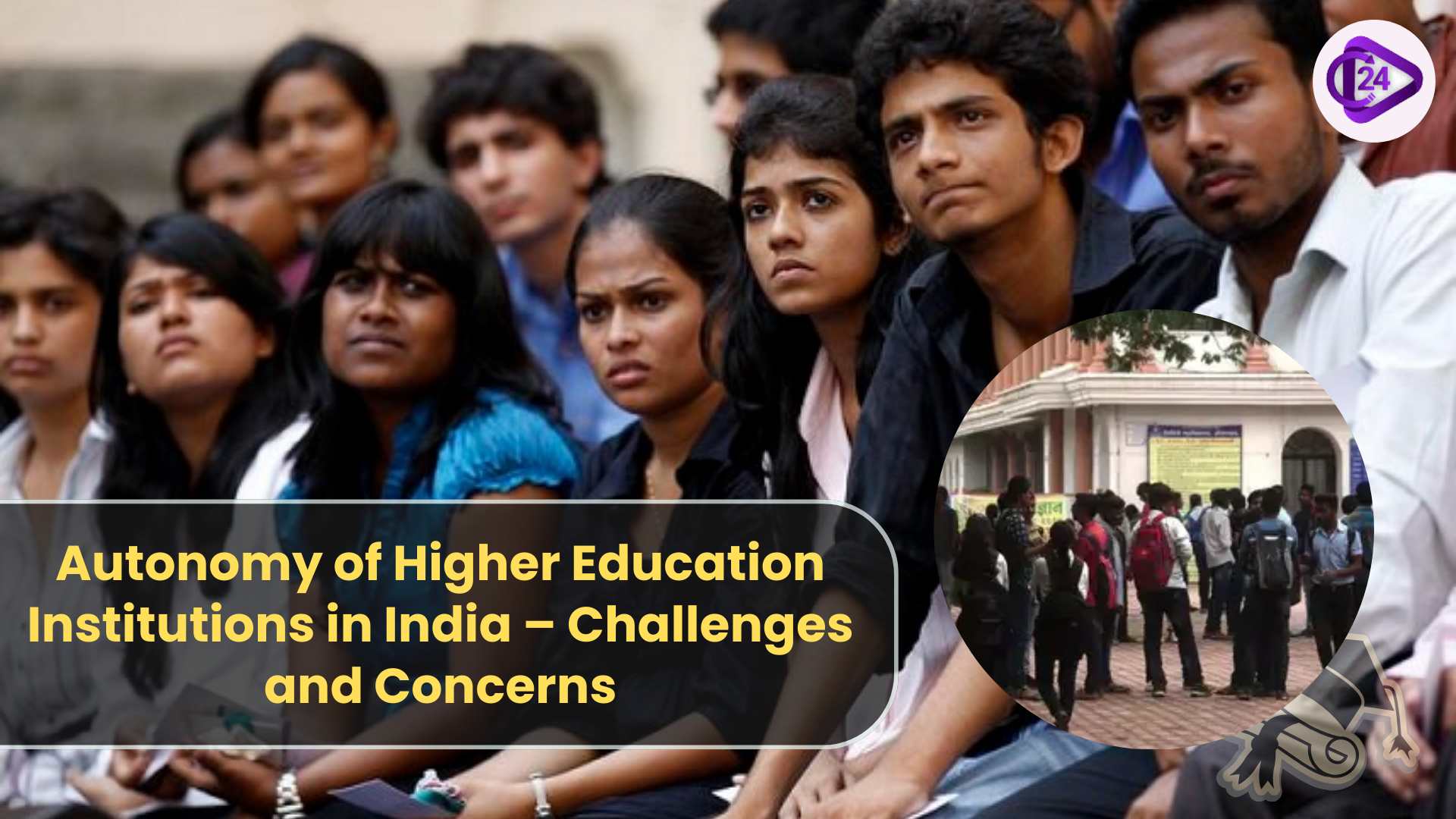
Autonomy of Higher Education Institutions in India – Challenges and Concerns

Higher education in India is in a downward trend wherein there is enormous interference at the political level especially in hiring the vice-chancellors and other faculty positions at the cost of merit and academic freedom. The independence, paramount in attaining excellence, is gradually being worn out by the control mechanisms, including the centralised position of regulation, licensing and funding on the part of the UGC. There is increasing power of ideologically based appointment which erupts the quality and pluralism and diversity within the campuses. Checks and balances of institutions on statutes are bypassed rather frequently and thus result in standardisation that suppresses innovations. The collapse in the standards of academic learning will increase faster without academic institutions taking initiatives to preserve their independence.

In News

  • Problem: The poor level of autonomy at the institutional level in universities because of political control in decision making, employment and programs.

  • Recent Trend: Appointments based on ideology particularly past 2014 and more prominence of RSS-BJP inclinations in appointment of both faculty and leadership.

  • Institutional Control: UGC is vested with collectively shared powers of licensing, regulating, as well as funding, so that neither checks nor balances can be used.

  • Effect: Quashing of otherness, pluralism and differentiation – forerunners in academic excellence.

  • Caution: Once autonomy is lost it is hard to gain back and once the institutions are compromised it will take decades to rebuild.

Background

  • Autonomy in Higher Education: This means the independence in the academic, administrative and financial decisions-making process allowing innovation and free-thinking.

  • Historical Context: Early political interference In the 1970s, there was initial political interference; it intensified with Emergency in 19751977, coalitions (19892014) later provided some checks and since after 2014, interventions have been more centralised and ideologically shaped.

Key Challenges

1. Political Interference

  • Increased appointment of VCs and faculty in ways that are increasingly not merit based but politically loyal.

  • By-passing statutory procedures of the appointments.

2. Institutional Capture

  • UGC plays a role of a regulator, licensor and fund-distributor- a server of centralisation.

  • Research control was influenced by the other bodies such as ICSSR, ICPR, CSIR, DST.

  • Issues with centralised admissions through NTA (CUET, JEE, NEET) with integrity issues.

3. Checks and Balances Erosion

  • Elimination of norms of seniority / rotation of the position of dean and HoD.

  • Selection-committee manipulation.

4. Influence on the Academic Quality

  • Suffocates diversity and pluralism, which is the principal to academic excellence.

  • The consequences of poor appointments are long term since one retires as a faculty.

Consequences

  • Academic decadence and an intellectual decline.

  • Politicisation of Campuses, minimising the room of autonomous thinking.

  • Perpetual loss of trust among people and reputation of institutions.

Way Forward

  • Amplify Statutory Autonomy: Intensify the legal provisions to defend the autonomy of universities.

  • Open Appointments: Search committees removed from the political fray.

  • Decentralisation: Divide among various bodies in regulation, accreditation and funding.

  • Capacity Building: Governor on ethics in governance academies.

  • Stakeholder Claim: University communities have to be on the front line of defending their autonomy.

Conclusion

The key to academic excellence, innovation and democratic culture is university autonomy. When politics takes grip on the administration of higher education, these values are eroded leading to a lasting damage which is difficult to correct. That the only way to protect the autonomy is not only to make systemic reforms and also resist actively by the academic communities but also to depend not on the goodwill of the government.

Frequently Asked Questions (FAQs)

The current affairs cover recent national and international events related to UPSC, SSC, Banking, Railways, and State PCS.

You need to read about the current affairs daily, and revise them every week and every month to keep them longer in your memory.

Yes, Class24 provides free downloadable Daily Current Affairs PDFs for easy revision.

Yes, you can practice MCQs and quizzes to boost your exam preparation.

Absolutely. The content is written in simple, easy-to-understand bilingual language suitable for beginners.

Go to class24.com and click on the current affairs section directly, where you find everything that you need.

ssc-toppers

Start Learning Today with Class24

Related current affairs

Class24 offers free video lectures for smart preparation, covering CGL, CPO, CHSL, MTS, and GD exams. Learn from expert faculty, revise concepts easily, practice with PYQs, and improve speed and accuracy through high-quality, exam-focused video lessons anytime, anywhere.

Get success in your hand. Start study anytime anywhere.

The journey becomes simple and enjoyable when you start taking interest in it. And through our app “Class24”, we will be your trusted partners in developing that interest.

Daily Quizzes
Mock Tests
Ongoing

No ongoing tests right now.