
Day: August 1, 2025

Malaria’s New Frontlines: Vaccines, Innovation, and the Indian Endgame

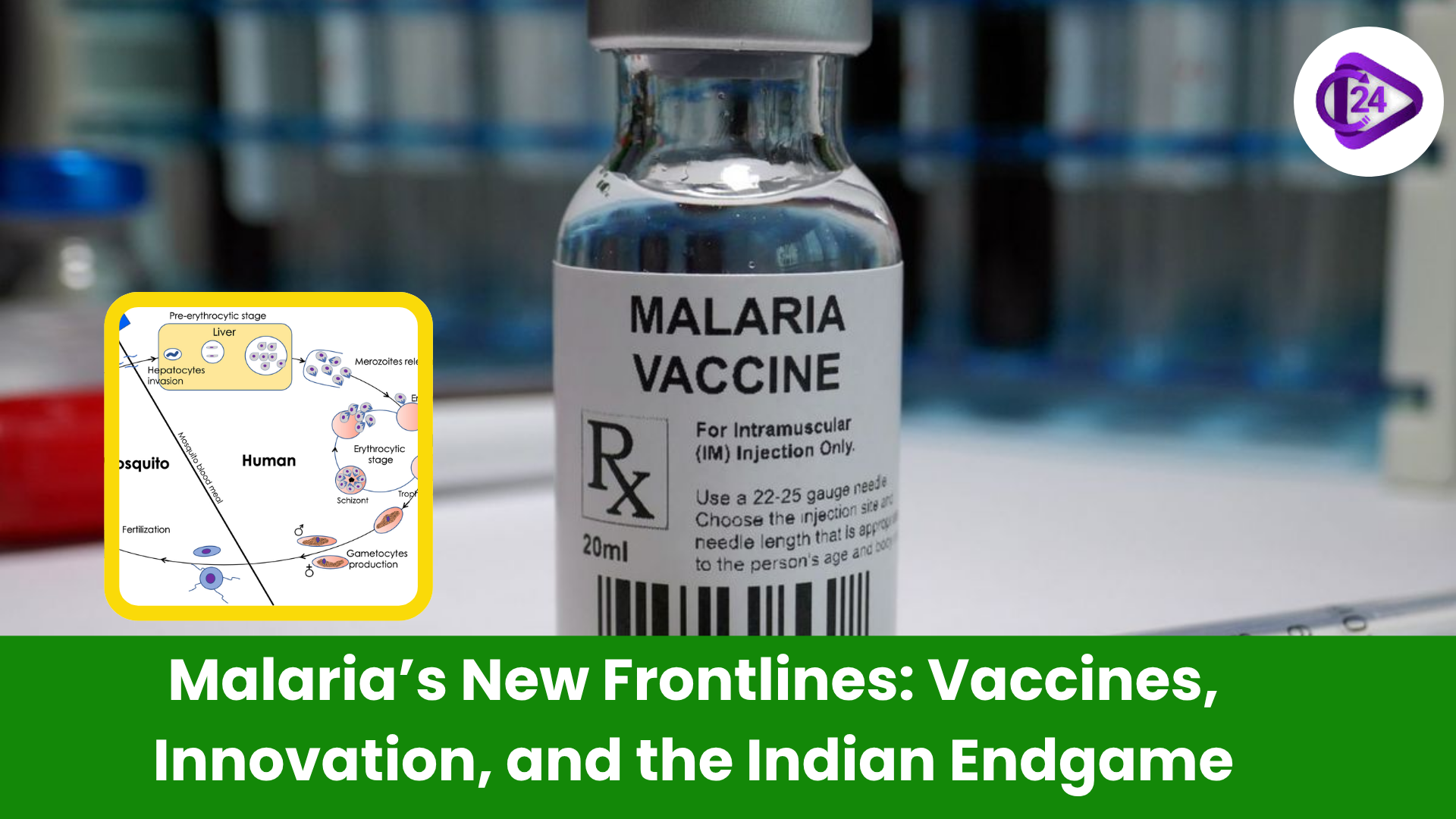
Malaria is the most ancient human plague, which is still a topical problem of public health in a great number of regions all over the world. In spite of the significant progress on a global scale, it is estimated that almost 294 million individuals were infected in 2023, with 600,000 losses of lives. India which has achieved more than 80 percent reduction in malaria burden between 2015 and 2023 are now faced with a more complex task, eliminating malaria by 2030 in the face of not just hidden reservoirs, drug-resistance but also of negligent species such as Plasmodium vivax.

The endgame against malaria is no longer in terms of evenly distributed disease control; it is precision targeting, sophisticated science and socio-political alignment. The way ahead is brightened by innovative vaccine research, local innovation, emerging biological technologies and technologies will require everlasting dedication.

Malaria in India

  • The fact that India has managed to reduce malaria is clear, but the disparities are severe in the regions. For example:

    • In 2023, there were 56 per 1,000 of the population in Lawngtlai (Mizoram).

    • More than 22 cases per 1000 were reported in Narayanpur (Chhattisgarh).

  • This is because the high-burden zones are mainly tribal and isolated, with low representation of healthcare facilities and diagnostic and surveillance systems.

  • India must struggle against Plasmodium falciparum and the relapse-prone Plasmodium vivax which is more difficult to find and get rid of because of the inactive stages in the liver.

Approved Vaccines

  • RTS,S/AS01 (Mosquirix):

    • Approved 2021; ~55% in year 1.

    • Has to be taken four times; it diminishes with time.

  • R21/ Matrix-M (Oxford-Serum Institute):

    • WHO- approved in 2023.

    • Appears with an efficacy of up to 77 per cent; only a few doses and cheaper to administer would suit Indian circumstances.

Whole-Parasite Vaccines

  • PfSPZ, and PfSPZ-LARC2 (Sanaria):

  • Take radiation-attenuated P. falciparum sporozoites.

  • Single-shot potential; initial testing indicates efficacy of up to 79% in early testing.

  • Can be applicable to outbreak areas or mobile populations.

Vaccine Candidates at the blood stage

PfRH5-based vaccines:

  • Homes on vital red blood cell invasion protein.

  • Provides cross-strain immunity – one of the main advantages in the ecology of parasites in India.

  • Population-level innovations: Go after Transmission

Targeting Transmission: Population-Level Innovations

Transmission-Blocking Vaccines (TBVs)

  • Pfs230D1 (Mali Trial): 78% reduction in mosquito transmission.

  • Indian Innovation -AdFalciVax:

    • ICMR-RMRC (2025) developed the first two-stage TBV in India.

    • Pre-treatment and transmission-blocking antigens are combined.

    • Stays in room condition during 9 months in the room – crucial in approaching rural outreach.

    • It is now at preclinical stages; the future challenge is human trials.

  • Pvs230D1M (Thailand trial):

    • Acts on P. vivax-cut off the mosquito transmission by 96%.

Next-Gen Platforms: mRNA and Engineered Immunity

  • mRNA-based vaccines:

    • Vaccine: Pfs25 mRNA blocks total transmission in mice, NIH-CureVac.

    • The mRNA candidate of BioNTech was put under clinical hold, which led to the problem of translation.

  • Antibody Engineering:

    • D1D2.v-IgG. antibody blocks RIFIN /LILRB1 association on the one hand normalizes the attack by the immune system.

    • In the pre-LAB phase, it has the potential to make vaccines more effective or develop new drugs.

  • Antigen Optimization:

    • Fusion of PfCSP with immune attracting molecules such as MIP3 enhances T-cell as well as antibody response.

Gene Drives and Genetic Editing: A Vector-Level Revolution

  • CRISPR based gene drives:

    • In the laboratory, colonies of Anopheles gambiae were eradicated by fertility-interfering genes.

    • Ecological and ethical concern; it cannot be reversed.

  • Mosquito Immuno-editing:

    • Genomic editing of the FREP1 gene prevents parasite development – spreads fast with gene drives.

  • Self-limiting vectors:

    • Infected modified mosquitoes die out sooner in a positive reinforcement creating a blockage of the spreading process.

Challenges in India

  • Vivax Neglect:

    • No licensed vaccine in existence; P. vivax research is grossly underfunded.

    • Primate models, such as P. cynomolgi are not readily available, and this impedes research.

  • Regulatory and Infrastructure Bottlenecks:

    • Lab to trials (e.g. AdFalciVax) requires industrial collaboration, immune biomarkers and GMP-quality materials.

    • The process of approval may take up to 8 years.

  • Systemic Gaps:

    • Scientific innovations must be accompanied by trained staff, rural diagnostics, resistance monitoring, and tactics of controlling the vectors.

The Road to the Future: Strategic Plan in Public Health

  • Policy and Funding:

    • India needs a “COVID-era” kind of boost — emergency money, super-speedy green-lights, and political will.

  • Multilateral Collaboration:

    • Exchange information with ICMR, DBT, academia, biotech firms and WHO to have international benchmarking.

  • Bear on Hotspot Elimination:

    • Strategies to include targeting tribal and forested areas with vaccine and control strategies.

  • Integration of Public Health:

    • Integrate vaccines and surveillance with community engagement and strengthening of the health systems.

Conclusion

Now when it comes to the malaria story of India, it is a story of not so symmetrical battlegrounds, whether on the urban outskirts and the forest depths or P. falciparum or P. vivax. India is now better prepared than ever to face the problem with powerful new vaccine platforms and homegrown solutions, such as AdFalciVax, as well as genetically targeted vector controls.

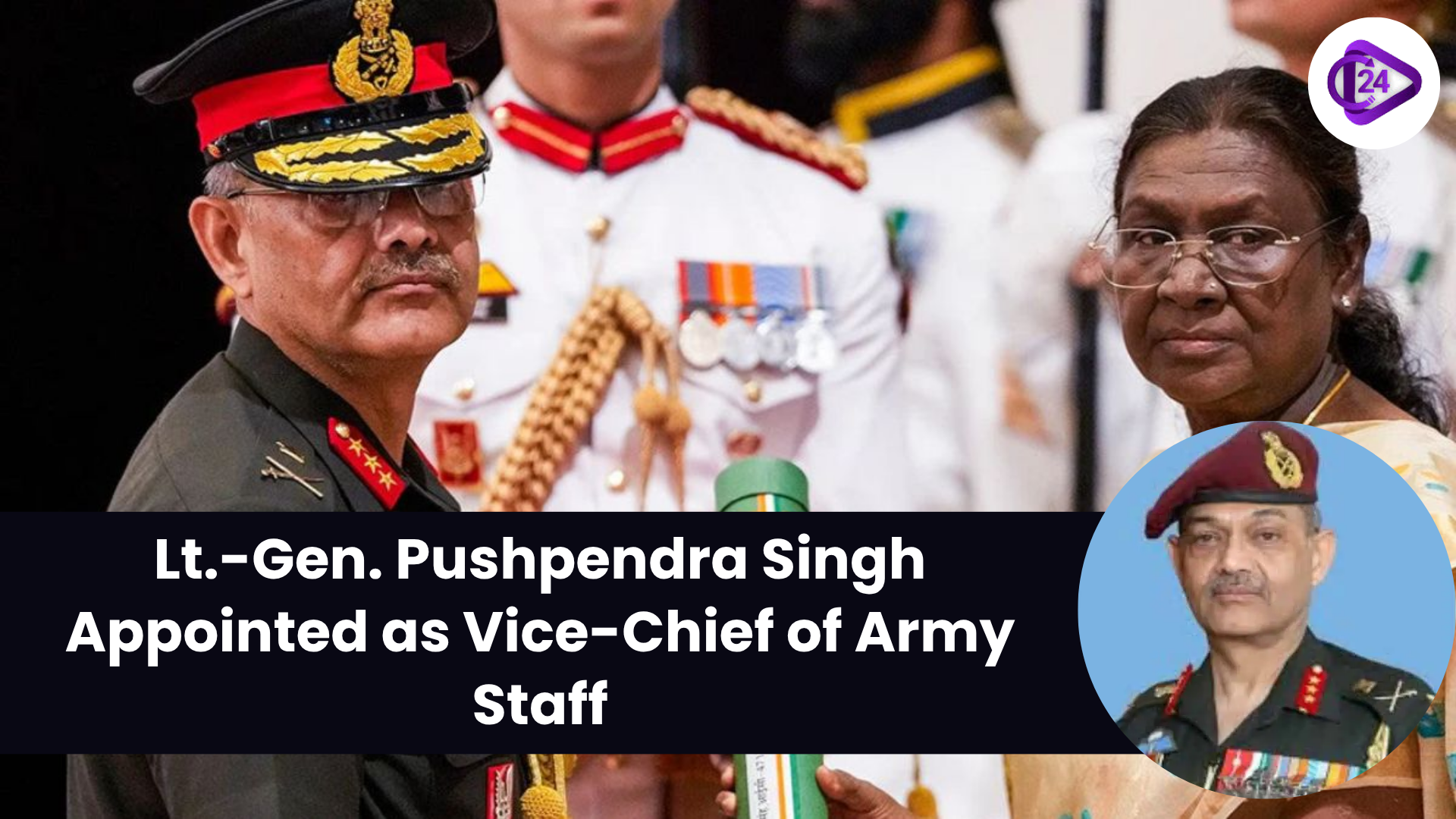
Lt.-Gen. Pushpendra Singh Appointed as Vice-Chief of Army Staff

Lieutenant-General Pushpendra Singh (Parachute Regiment), a senior officer of the Indian Army, has been appointed by the Government of India as the Vice-Chief of the Army Staff (VCOAS). The appointment will be made when India is undergoing major military reforms and when the country is being challenged in new strategic ways on more than fronts.

Key points

  • Pushpendra Singh, a lieutenant general in the Parachute Regiment, has been appointed Vice-Chief of the Army Staff, a position that is under the chairmanship of the army chief, an incumbent who is a four-star general.

  • His taking over will be on a Friday, August 2, 2025, replacing Lt.-Gen. N.S. Raja Subramani.

  • Career Span: More than 35 years of impeccable service with the Indian Army.

  • He has served in parts of Special Forces, and since then has commanded Rashtriya Rifles in counter-insurgency operations.

  • He was formerly the General Officer Commanding (GOC) of IX Corps and the Director General of Military Operations (DGMO).

  • Is skilled in the area of strategic planning, military diplomacy, and joint operations.

  • His appointment symbolizes the conformity of the Army leadership to the security issues in the region.

Served as:

  • Director General Military Operations (DGMO) – makes a crucial difference when it comes to LAC tensions.

  • General Officer Commanding (GOC) IX Corps.

  • Commanded troops in these areas of operation such as Northern Command and North East.


Position

Name

Chief of Defence Staff

General Anil Chauhan

Chief of the Army Staff

General Upendra Dwivedi

Chief of the Air Staff

Air Chief Marshal A.P. Singh

Chief of the Naval Staff

Admiral Dinesh K Tripathi

Importance of the Appointment

  • Stability of Leadership: Follows Lt.-Gen. N.S. Raja Subramani, thus no hard landing on top.

  • Operational Preparedness: Special Forces and high-altitude warfare experience go hand in hand with the modernisation and border defence priorities of India.

  • Strategic Timing:

    • This comes on the backdrop of heightened defence diplomacy and exercises (e.g., Yudh Abhyas, Malabar).

    • Deals an impetus to the preparedness of India considering threats by China (LAC) and Pakistan (LoC).

  • Institutional Reforms:

    • The key player in the execution of the theatreisation and the joint command.

    • Collaborates with the Chief of Defence Staff (CDS) and DMA on long term military planning.

Strategic Context

  • Such appointments are crucial to India given the country is focusing its future defence, cyber and space wars, and tri-service synergy.

  • As there are no settled border problems and with competition in the Indo-Pacific increasing, the new leadership needs the experience to steer the modernisation process and doctrine changes.

  • The Vice-Chief also deals with defence procurement, properties and facilities, and liaising with the Integrated Defence Staff (IDS) and CDS.

Conclusion

The promotion of Lt.-Gen. Pushpendra Singh to the post of Vice Chief of Army Staff signifies how India values professional competence and operational experience in putting up a military hierarchical leadership. His years of experience in the field, particularly concerning special operations and leadership within strategic commands have supposedly enhanced the level of preparedness in the Indian Army regarding conventional warfare and hybrid warfare situations.

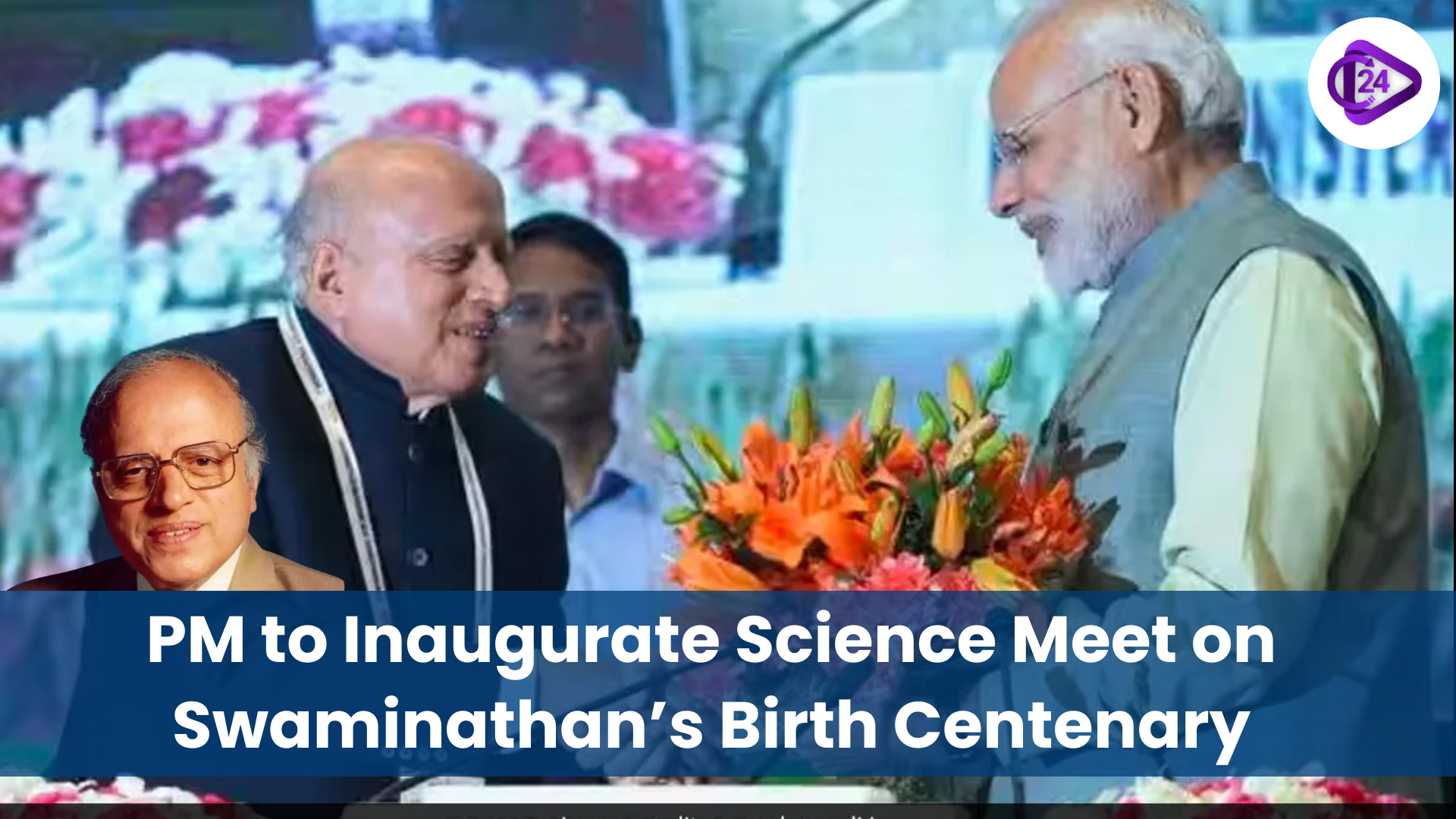
PM to Inaugurate Science Meet on Swaminathan’s Birth Centenary

On August 7, 2025, Prime Minister Narendra Modi will open a 3-day science conference to celebrate the 100th birth anniversary of M.S. Swaminathan. Another event, which will be organized by MSSRF, will focus on his achievements in the domains of sustainable agriculture and food security. Swaminathan is considered to be the Father of the Green Revolution in India as he helped in raising crop productivity when faced with a food crisis. His concepts of biohappiness, evergreen revolution, and sustainable farming are still having an influence in policy discourse. To celebrate his enduring legacy on the agricultural community and the role of farmers, awards, commemoration objects and agritech initiatives will be presented, thus embedding his long-lasting contribution to the agricultural sector.

Context

  • The rise of M.S. Swaminathan (1925-2023) was the most renowned agricultural scientist in India and he initiated the Green Revolution which reformed the food security balance in India. 

  • Currently observing the advent of the centenary conference dedicated to him, one can consider his legacy in science, policy, and humanitarianism in a multi-dimensional way.

Key Points

Early Life and Background

  • He was born 7 August 1925 in Kumbakonam, Tamil Nadu.

  • His involvement in agriculture science was influenced by Mahatma Gandhi as well as the Bengal famine which occurred in 1943.

  • Was a student of the IARI, a graduate of the Ph.D. in genetics course of Cambridge University and finally followed the research in WIS, Netherlands and University of Wisconsin, USA.

Indian Agricultural contributions

1. Green Revolution

  • Did research with Norman Borlaug resulting in designing / adopting Mexican dwarf wheat to live in Indian conditions.

  • Managed HYV (High Yield Variety) and demonstration plots to facilitate their acceptability by farmers.

  • Result: four years after it started with 12 million tonnes of wheat production, now it was 23 million tonnes of wheat production, doubled.

2. Institutional Leadership

  • Director, IARI (1961-72)

  • Director General, ICAR (1972-79)

  • Secretary to the Government, Ministry of Agriculture (1979-80)

  • Planning Commission, Member (1980-82)

  • IRRI, Philippines (DG) (1982)

  • President, IUCN (1984-90)

M.S. Swaminathan Research Foundation (MSSRF)

  • His World Food Prize money founded it in 1988.

  • Emphasis: Employ pro-poor, pro-women, pro-nature and utilization of proper science and technology.

  • Innovations: Ecotechnology-based Biovillages and village Knowledge Centres, and nutrition- sensitive agriculture research.

The Most Significant Ideas and Promotion

1. Evergreen Revolution

  • Environmentally friendly growth in food production.

2. Biohappiness

  • A term popularized by Swaminathan is that biodiversity should be used in a sustainable way to increase food security, livelihoods, and restoration of ecosystems.

3. Food Security and PDS

  • A strong advocate of the Public Distribution System, MSP reforms, and policies that focus on the farm communities.

4. National Commission on Farmers (2004-06)

  • Recommended: Minimum Support Prices (MSP) 50% above the cost, land reforms and availability of credit.

  • Part of the mega Aquaculture Act, 2006.

Research Contributions

  • Invented cryogenetics, cross-breeding between species and radiation breeding.

  • Cytogenetics of hexaploid wheat.

  • Started research on the photosynthesis efficiency in C4 rice

  • Posted crop immunity to weather extremes and control of infestations.

Identification and Rewards

  • Indian Awards

    • Padma Shri (1967), Padma Bhushan (1972) Padma Vibhushan (1989)

    • S.S. Bhatnagar Prize, Indira Gandhi Peace Prize, Lal Bahadur Shastri Award

  • International Honors

    • World Food Prize (1987)

    • Ramon Magsaysay Award (1971)

    • NEP Sasakawa Prize, Einstein World Science Award, FDR Medal etc.

    • More than 80 honorary doctorates

    • Bicentenary Conference (August 2025)

    • The location is ICAR Headquarters, New Delhi.

    • Was inaugurated by PM Modi

Features:

  • Publication of reprint of first edition of In Search of Biohappiness and publication of commemorative volume of the Text Book by the Hindu.

  • Launch of ₹100 coin, commemorative stamp.

  • Establishment of M.S. Swaminathan Award on Food and Peace ($25,000).

  • Inauguration of Agritech Grand Challenge (Grants to the tune of 1 crore to startups).

  • The involvement of 30 international speakers, 120 Indian experts and 300 farmers.

Conclusion

The work of M.S. Swaminathan was the scientific and ethical cornerstone of India's food self-sufficiency and rural development. His concepts of biohappiness and sustainable farming are becoming increasingly important as India grapples with the problems of climate change and biodiversity collapse, and nutritional insecurity. The centenary is not only a commemorative measure but a mandate to overcome the lack of equity in our world which is also ecologically insecure.

Frequently Asked Questions (FAQs)

The current affairs cover recent national and international events related to UPSC, SSC, Banking, Railways, and State PCS.

You need to read about the current affairs daily, and revise them every week and every month to keep them longer in your memory.

Yes, Class24 provides free downloadable Daily Current Affairs PDFs for easy revision.

Yes, you can practice MCQs and quizzes to boost your exam preparation.

Absolutely. The content is written in simple, easy-to-understand bilingual language suitable for beginners.

Go to class24.com and click on the current affairs section directly, where you find everything that you need.

ssc-toppers

Start Learning Today with Class24

Related current affairs

Class24 offers free video lectures for smart preparation, covering CGL, CPO, CHSL, MTS, and GD exams. Learn from expert faculty, revise concepts easily, practice with PYQs, and improve speed and accuracy through high-quality, exam-focused video lessons anytime, anywhere.

Get success in your hand. Start study anytime anywhere.

The journey becomes simple and enjoyable when you start taking interest in it. And through our app “Class24”, we will be your trusted partners in developing that interest.

Daily Quizzes
Mock Tests
Ongoing

No ongoing tests right now.