
Day: July 21, 2025

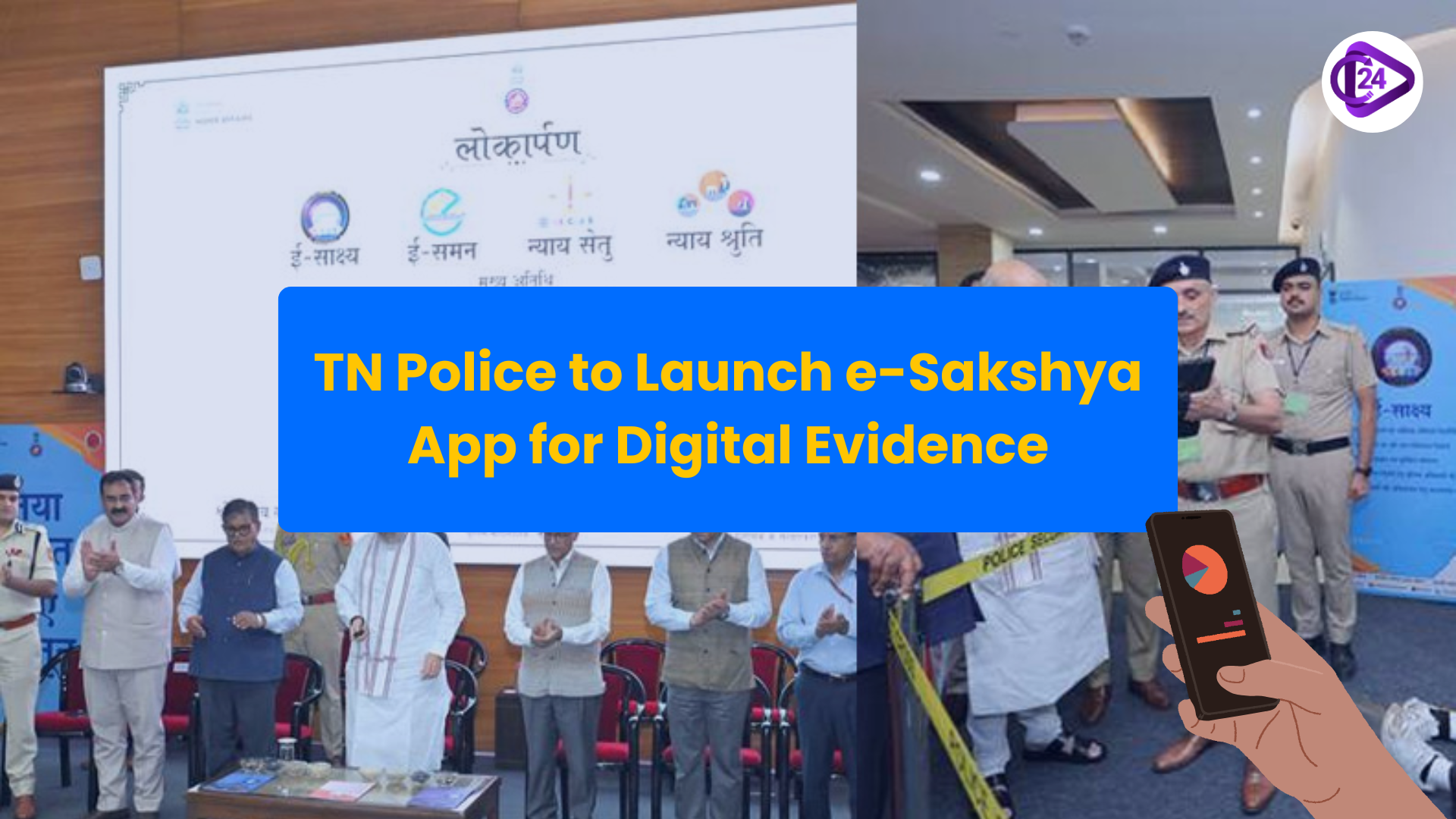
Tamil Nadu Police to Launch e-Sakshya App for Digital Evidence Collection

The Tamil Nadu Police is soon going to introduce e-Sakshya, a phone application that has been created by the Union Home Ministry to gather digital pieces of evidence. It will enable investigating officers to document audio, video and photo evidence at crime scenes which are all geo-tagged, time & hash-verified. The application is developed to enhance chain of custody and make the digital evidence admissible before the court pursuant to the Bharatiya Nagarik Suraksha Sanhita (BNSS), 2023. The officers are made to work with the application and in offline cases manual certification procedures will be applicable. The evidence will be processed alongside ICJS and will be accessed by magistrates through the Sakshya portal.

Context:

  • The Bharatiya Nagarik Suraksha Sanhita, 2023, states that appropriate digital evidence of a crime scene must be carried out to ensure greater transparency, accountability, and the rapidity of trials.

  • The growing suspicion of tampering with evidence and delays justifies the move as part of the countrywide effort to use technology and blockchain to make law enforcement more modern.

Highlights of e-Sakshya App:

  • Gathers: Photographs, audio and video tapes at crime scenes

  • Time stamped and Geo tagged evidence

  • Hashes verification builds on immutability

  • Auto-prints prescriptive legal document certificates

  • Tampering-free data using blockchain-based backend

  • Incorporated with ICJS and Sakshya portals to reach courts

  • Manual certification (Part A & B) option offline in the event of the app non-availability

Implementation Details:

  • Downloaded on the mobile phones of every investigating officer

  • Every officer who is trained in using apps

  • Includes search and seizure, recording of witnesses and crime scene recording

  • Packets known as SID (Secure Immutable Data) are associated with:

  • FIR Number

  • GD ( General Diary ) Number

  • CNR (Case Number Register) Number

Legal Framework:

  • App is in line with BNSS 2023 requirements on admissibility of evidence

  • Under manual fallback system, Part-A (used by police/videographer) and Part-B (used by forensic expert under Section 329)

  • Transparency was that evidence was auto-routed to magistrates and courts

Significance:

  • Enhances the validity of evidence and court acceptability.

  • Deters fraud and procedural slip-up Reducts instance of fraud and procedural slip-ups

  • The digitalization of criminal justice Enhances digital readiness of criminal justice system

  • Becomes an example to the other Indian states

Conclusion

The launch of the e-Sakshya app marks a transformative step in digitizing India’s criminal justice system. By ensuring tamper-proof, geo-tagged, and hash-verified evidence, it enhances the credibility and admissibility of digital proof in courts. Integrated with ICJS, it reduces delays, strengthens transparency, and deters manipulation. The app aligns with BNSS 2023, setting a national benchmark for digital policing. This initiative will likely inspire other states to adopt similar technology-driven law enforcement practices.

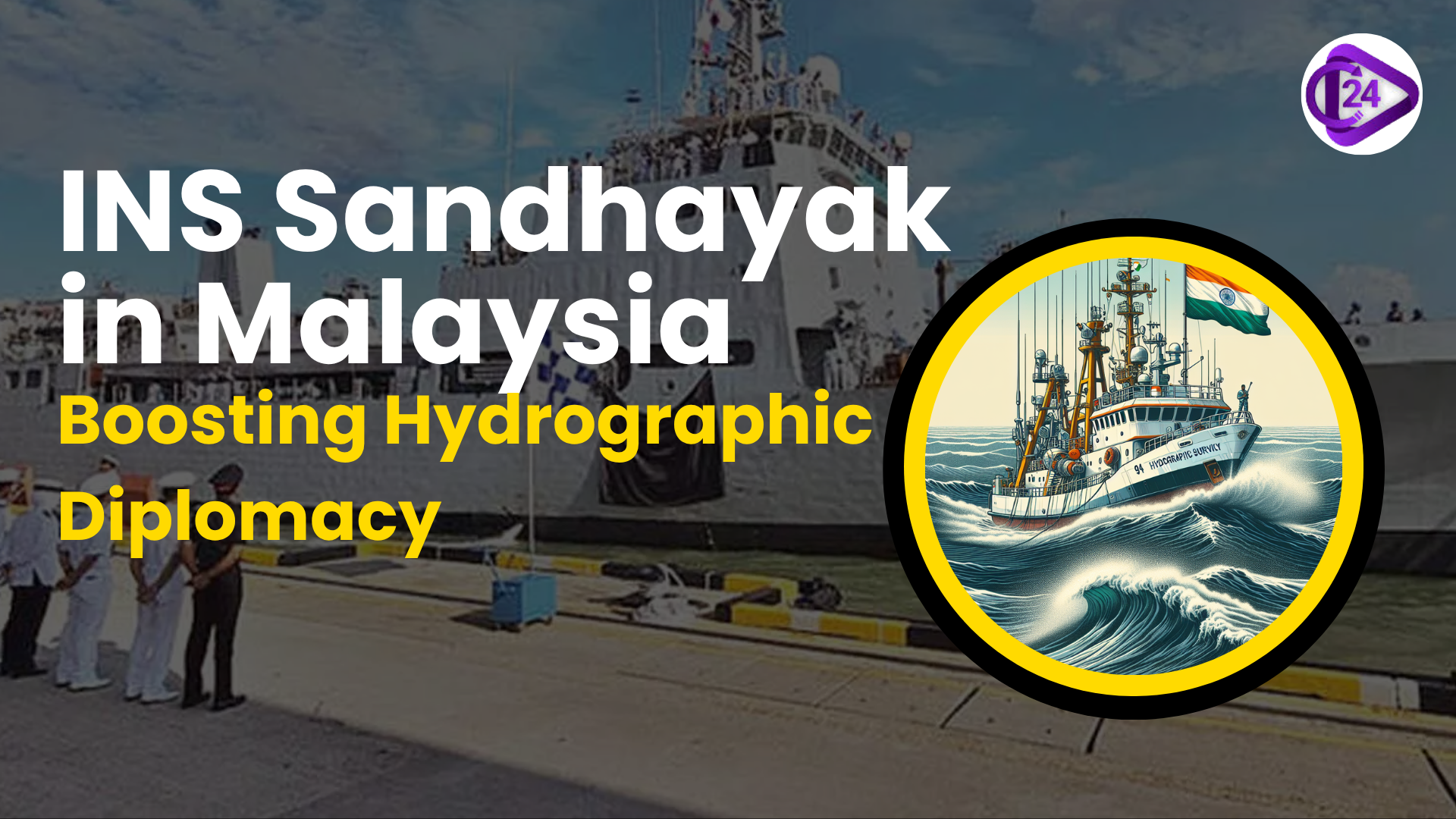
INS Sandhayak Visits Malaysia: Strengthening India’s Hydrographic Diplomacy

The maiden overseas port of call was undertaken by the INS Sandhayak, an Indian developable Survey Vessel Large (SVL) that called in at Port Klang, Malaysia on 16, 18 and 19 July 2025. The visit is an indication of India’s regional hydrographic cooperation under Indian Naval Hydrographic Department (INHD). Ins Sandhayak was commissioned 2024 in February and is suitable to be used in coastal and deep-sea survey, oceanographic, SAR and humanitarian missions. It involved sharing of knowledge, technical collaboration and interaction within the frame of the MAHASAGAR (Mutual and Holistic Advancement for Security and Growth Across Regions) vision. This enhances India maritime diplomacy and capacity building in South East Asia.

Context:

  • India is becoming more active in the Indo-Pacific in terms of maritime capacity-building and hydrographic collaboration.

  • This visit is one of the elements of the Indian vision of MAHASAGAR, the development of maritime security, and growth on the regional level.

About INS Sandhayak:

Feature

Details

Type

Survey Vessel Large (SVL)

Class

Sandhayak-class

Commissioned

February 2024

Designed & Built by

Indian shipyards under “Aatmanirbhar Bharat”

Capabilities

– Coastal & deep-water surveying

– Oceanographic data collection

– Search & Rescue (SAR)

– Humanitarian assistance with onboard hospital & helicopter support

Important Goals of Malaysia Visit:

  • Enhance hydrographic relationships in Southeast Asian states.

  • Encourage cooperation in the field of techniques of the survey and maritime mapping.

  • Share information and equipment on hydrographic surveying.

  • Restate the strategic reach of India in terms of institutional and official activities.

Strategic Vision – MAHASAGAR:

Element

Description

Full Form

Mutual and Holistic Advancement for Security and Growth Across Regions

Purpose

To enhance India’s regional maritime cooperation and security architecture.

Focus

– Maritime safety

– Capacity building

– Collaborative hydrographic missions

Implications:

  • Increases India’s soft power using non military navy diplomacy.

  • Promotes both inter-operability and data-sharing between the regional navies.

  • Assists the lesser countries in maritime domain awareness (MDA) and response to disaster.

  • Favours India as a net security provider in the Indian Ocean Region (IOR).

Conclusion:

Port call of INS Sandhayak to Malaysia is a demonstration of the increased role of India in hydrographic diplomacy and safe, collaborative Indo-Pacific.Sandhayak-class ships are key to India aspirations on Blue Economy, outreach to navies, and even regional maritime cooperation with the MAHASAGAR initiative.

Indian Army’s AI Roadmap by 2026-27: From Drone Swarms to Smart War Rooms

To incorporate Artificial Intelligence (AI), Machine Learning (ML), and Big Data Analytics in its activity, the Indian Army has developed a roadmap that should be fulfilled by 2026-27. Implementation will be under the office of a special AI Task Force reportable to the Directorate General of Information Systems (DGIS). Notable uses are drone swarming, real-time battlefield surveillance, LLM-based summarisation systems and sensor data fusion. Following Operation Sindoor, a cyber-intelligence operation of the Army against terror infrastructure in the Pakistan-occupied Kashmir, the roadmap was expedited. The AI drive will be used to change decision-making, surveillance, and threat analysis in line with the preparation of modern warfare.

Context:

  • AI is something that was investigated by the Indian Army, so Operation Sindoor made it clear that such technologies require accelerated adoption.

  • A recent Army-led cyber-intelligence operation in Pakistan-occupied Kashmir, Operation Sindoor was against terror infrastructure.

 AI in Army Operations – Key Areas of Deployment:

Domain

AI-based Application

Surveillance & Reconnaissance

Drone swarming, sensor fusion, satellite and ground data analysis

Information Warfare

AI tools to summarise large data (LLMs), generate battlefield awareness

Decision-Making

Real-time data processing from multiple sources for faster, accurate decisions

Command Centres

Smarter, AI-assisted war rooms with predictive threat modelling

Operational Coordination

Seamless info sharing, simulation, and mission planning using AI models

 Focus Tools & Technologies:

  • Large Language Models (LLMs): In order to summarise and streamline military intelligence in minimal time.

  • Chatbots and pattern detectors: Chatbots that are powered by AI and are used in the field of early warnings.

  • In real time, sensor fusion: To combine drone-based, satellite, aircraft and ground sensor feeds.

  • Slimming threat prediction based on past and real time data feeds.

Institutional Mechanism:

  • Directorate General of Information Systems (DGIS): this is an existing entity that will also have an AI Task Force created

  • External Experts and representatives of Army Directorates will be involved.

  • Training, technology integration, strengthening of capacity and R&D partnerships will also come under the task force.

Implications:

  • The strategy is a milestone towards the preparation of next-gen warfare.

  • Boosts the cyber capabilities, situational awareness and border security of India.

  • Provides quicker, independent operation in the high-stakes counter-terrorist and border forces.

  • Enhances civil-military Artificial Intelligence partnership in national defence.

Conclusion

The faster AI implementation timeline of the Indian Army marks a huge step into digitised systems of defence hunting, where the latest technology, including LLMs, unmanned aerial vehicles, and sensor fusion are being included to provide a new meaning to modern combat.

 Under the protection of an institution and practical stimuli such as Operation Sindoor, technology has become the force multiplier in the national security of India.

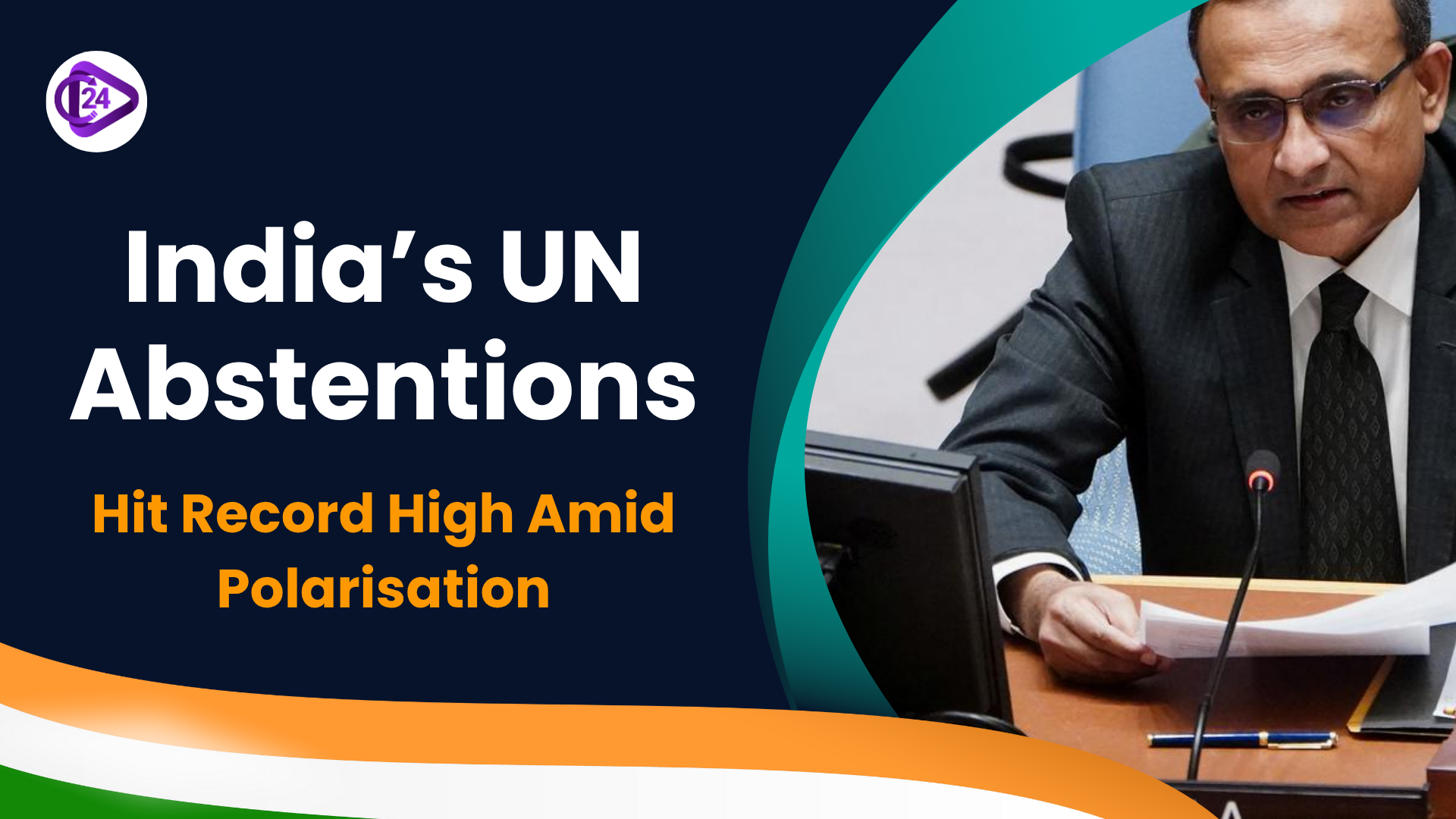
India’s UN Abstentions Reach Record High Amid Global Polarisation

The percentage of votes not cast in UN votes by India has hit an all time high of 44 percent whereas yes votes have been reduced to 56 percent, the lowest since the year 1955. This is a trend that has come up in the wake of global polarisation and complexity of UN resolutions especially since 2019. The history of voting stability in India between 1946 and 2025 recording neutral stands was rife in recent years. According to former representatives of the UN, abstention allows India to exercise the autonomous position without obligations to one or the other option. Abstention serves as a diplomatic instrument because these resolutions usually contain complex and multi-purpose resolutions that contain conflicting clauses.

Context:

  • India has been an active partner in UN resolutions although it was part of consensus periods.

  •  Nevertheless, the current level of geopolitical tensions on the global scale has complicated the possibility of clear-cut sides being taken, particularly after 2019.

  •  With an eye on emerging as a middle power, India aims to enjoy strategic autonomy and flexibility in its foreign policy that has been enacted through altered voting patterns.

Key Data: India’s UN Voting Trends (1946–2025)

Period

‘Yes’ Votes (%)

Abstentions (%)

Notable Trend

1946–1969

20–100% (volatile)

0–40%

Early fluid stance

1970–1994

74–96%

8–19%

High support for resolutions

1995–2019

75–83%

10–17%

Stable and consistent

2020–2025

56% (lowest)

44% (highest)

Shift towards neutrality

What Is the Reason Behind the Shift toward Abstention?

  • Global Polarisation on Rise:

    • There is even less possibility of consensus by big powers.

    • The abstention in India is some kind of non-alignment 2.0 policy to counter the superpower tensions.

  •  Christmas Tree Resolutions:

    • The UN resolutions today put together a package of issues, which are not related to each other, many of which India might not agree with.

    • Case in point: Resolution can authorize pacifying duties and such but with political strings that India is not content with.

  • Strategic Outlook of India:

    • The course of abstention also enables India to remain neutral whilst safeguarding the interests of the country.

    • Represents the stance of India as a speaker of the Global South that is not the member of blocs.

    • Provides a diplomatic window to future dealings and dealings of bilateral relations.

Conclusion:

The increased rate of abstention that India has taken to the UN is not a case of being undecided, rather an actualization of a strategic realignment to the polarized and multifaceted world order. International resolutions are increasingly gaining politicisation and layers and instead of taking very strong stances, or expressing a definite stance, India is settling on being flexible and playing its own game on the global platform, achieving strategic autonomy.

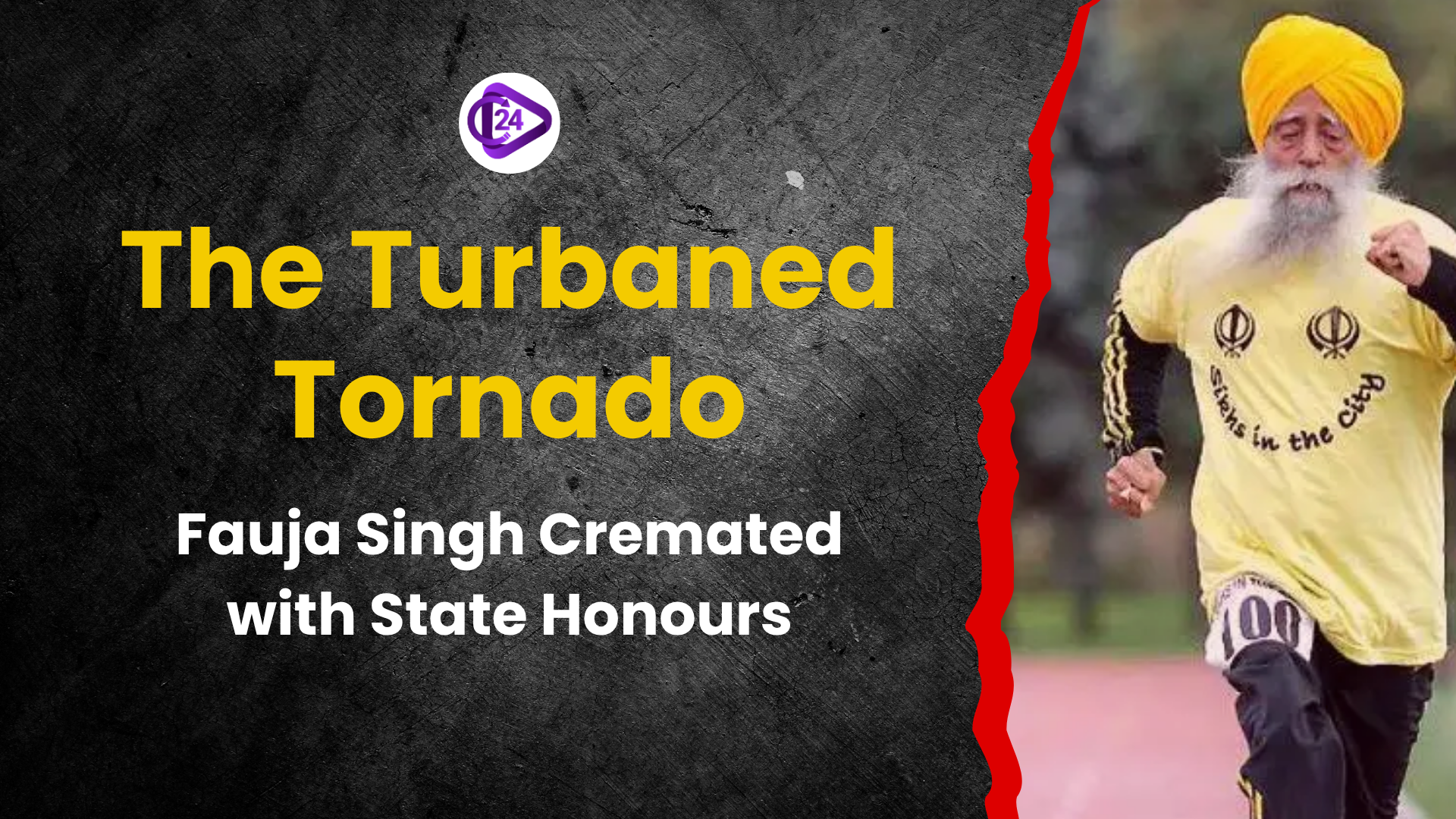
Fauja Singh, World’s Oldest Marathoner, Cremated with State Honours

One of the oldest runners who ever lived called the Turbaned Tornado by Fauja Singh, was cremated in his ancestral village Beas in Jalandhar district of Punjab, with all state honours. He died at the age of 114 years after getting hit by an SUV on his way to work when crossing the Jalandhar-Pathankot highway on July 14. CM of Punjab Bhagwant Mann, Governor of Punjab Gulab Chand Kataria, and other leaders attended his funeral. The final rites were done by his son Harvinder Singh and a gun salute paid by the Punjab Police. Fauja Singh had won the inspirational marathon career until well into his 100s.

Context:

  • Fauja Singh was a Canadian citizen, who became an inspiration to millions of people having run the marathons at the age of 100

  •  He has come to represent health, discipline and fighting spirit, especially to the Sikh and the Punjabi diaspora.

  •  He was an example of strength of the human will and had mixed records as the oldest marathon runner on record.

Life and Legacy of Fauja Singh

  • Year of birth: 1911 (officially recorded 1911), April 1

  • Nickname: The Turbaned Tornado

  • Marathon Career: Began running marathons when he was 89 years old and finished a marathon in Toronto Waterfront at the age of 100

  • Retirement: Ran in his final competitive race in 2013 at the age of 102

  • Acknowledgments: appearances in Adidas commercials, Olympic torch bearer of London 2012 London 2012, and the topic of documentaries and biographies

State Honours and Cremation

  • Birth place: Beas, Punjab (home town in Jalandhar)

  • Punjab CM Bhagwant Mann, Governor Gulab Chand Kataria, Minister Mohinder Bhagat and others were the attendees.

  • Presentation of gun salute by Punjab Police

  • The funeral pyre was lit by Son Harvinder Singh

Childhood and Early life

  • Born: Beas Pind, Jalandhar, April 1, 1911, Punjab (then British India).

  • Early Difficulties: Could not walk until 5: Weak, frail shaped legs during childhood.

  • Occupation: Farmer by profession and came to the UK in 1992 following the death of his wife.

Journey into running

  • Beginning of Running: Began jogging at age 89 as a method of adaptation to the fact that his son had died in 1994.

  • Career debut: At the age of 89 in 2000 he entered competitive running when he completed the London Marathon in 6 hrs 54 min.

Marathon Achievements

  • Toronto 2011: Completed a full marathon at age 100 and took 8 hrs 11 min to complete (not officially recognised as there was no birth certificate); Set age group record (ages 96-109) in marathon-torch-relay race, most suitable category available (also set age group world record in half-marathon in 2007 in age category 96-109 years).

  • It was a Personal Best of 5 hrs 40 mins at the 2003 Toronto Waterfront marathon, at the age of 92.

  • World Records: Established 8 age-group world records in a single day (100m, 400m and 5000m) on August 9, 2011, in the Birchmount Stadium, Canada.

  • Retirement: Finally retired in 2013 at the age of 101, after a 10 km race in Hong Kong.

Notable Marathons

  • London Marathons 2000-2004: He has given remarkable performances, time below 7 hours.

  • 2003 New York City marathon: 7 hrs 35 min.

  • 2012 London Marathon – 7:49.

  • Hong Kong Marathons (10 km): ran this distance in 1 hr 34 min (2012) and 1 hr 32 min (2013).

Biopic and Literature

  • Turbaned Tornado by Khushwant Singh published in 2011.

  • Biopic: Fauja, directed by Omung Kumar B was announced in 2021.

Rewards and Incentives

  • Ellis Island Medal of Honor (2003): This was given to her as the first non-American because she upheld racial tolerance.

  • Pride of India (2011): Honoured as an inspiration to the country.

  • Olympic Torchbearer: Olympic torchbearer carrying the Olympic torch in the London 2012 Olympics.

  • PETA Campaign: Vintage man with the history-first man to appear in PETA advertising campaign; endorsed vegetarianism.

  • Ad Campaigns: Appeared in an advertisement campaign of a big sport brand featuring David Beckham and Muhammad Ali.

Death

  • Death date: July 14, 2025, (age 114), he was struck by a car in his birthplace village in Punjab.

Conclusion

Fauja Singh has experienced a story which is about endurance, resilience, and positivity. He transcended age limits and motivated generations with his infallible nature and simplistic way of life. His death is a loss of an era yet he will always remain a source of inspiration to other athletes and dreamers the world over.

Frequently Asked Questions (FAQs)

The current affairs cover recent national and international events related to UPSC, SSC, Banking, Railways, and State PCS.

You need to read about the current affairs daily, and revise them every week and every month to keep them longer in your memory.

Yes, Class24 provides free downloadable Daily Current Affairs PDFs for easy revision.

Yes, you can practice MCQs and quizzes to boost your exam preparation.

Absolutely. The content is written in simple, easy-to-understand bilingual language suitable for beginners.

Go to class24.com and click on the current affairs section directly, where you find everything that you need.

ssc-toppers

Start Learning Today with Class24

Related current affairs

Class24 offers free video lectures for smart preparation, covering CGL, CPO, CHSL, MTS, and GD exams. Learn from expert faculty, revise concepts easily, practice with PYQs, and improve speed and accuracy through high-quality, exam-focused video lessons anytime, anywhere.

Get success in your hand. Start study anytime anywhere.

The journey becomes simple and enjoyable when you start taking interest in it. And through our app “Class24”, we will be your trusted partners in developing that interest.

Daily Quizzes
Mock Tests
Ongoing

No ongoing tests right now.