
Day: July 17, 2025

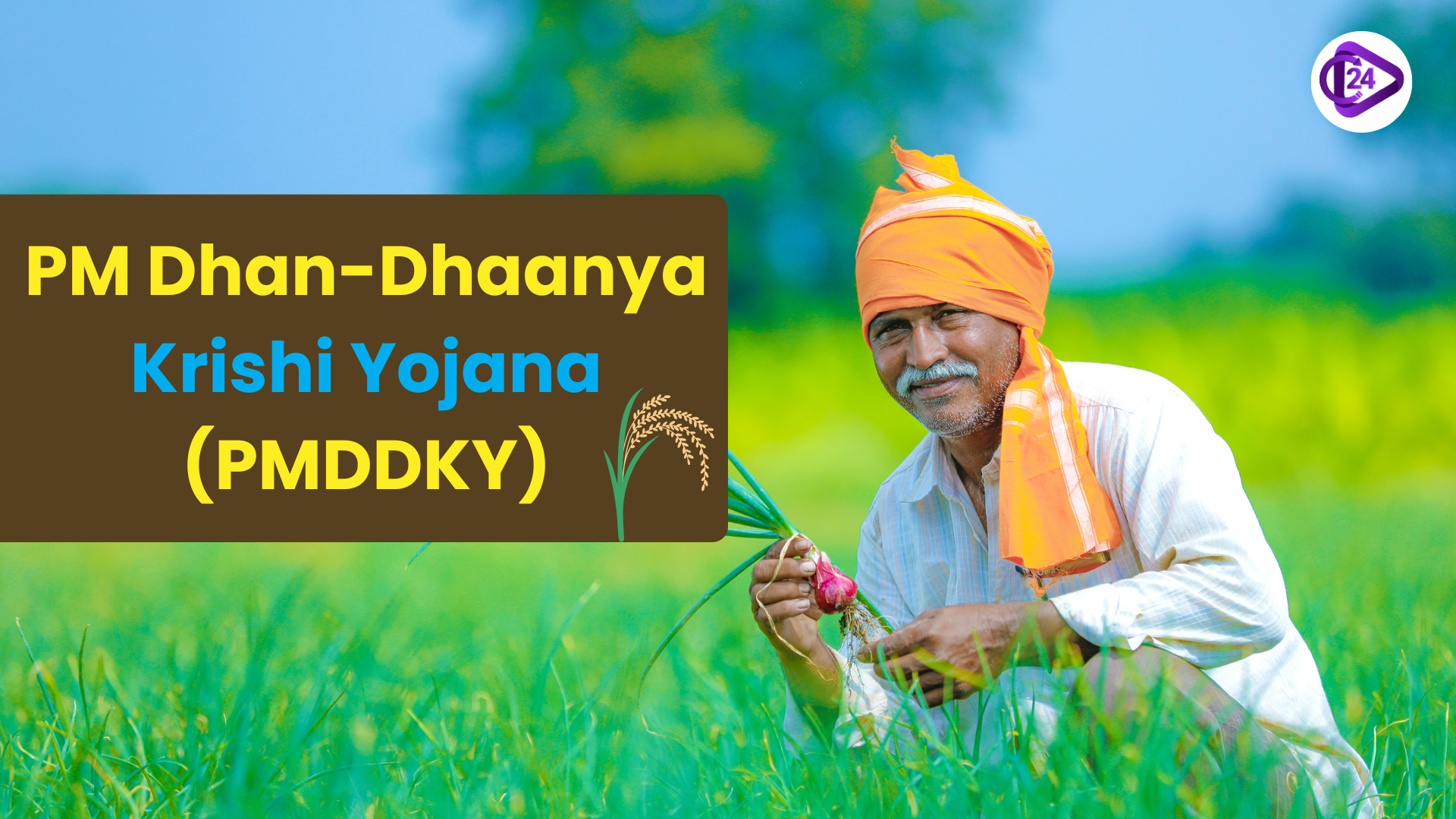
PM Dhan-Dhaanya Krishi Yojana (PMDDKY): Government Merges 36 Schemes to Launch Flagship Agri-Plan

The Prime Minister Dhan-Dhaanya Krishi Yojana (PMDDKY) introduced in the 2025-26 Union Budget has the vision of transforming farms by enhancing their productivity and creating a sustainable agriculture environment. This plan is a consolidation of 36 schemes in 11 ministries into a single scheme generating an annual outlay of 24,000 crore to be pursued over a period of 6 years. There will be at least 1.7 crore farmers benefited in ways like improved irrigation, post-Harvest storage facilities and easy access to credit. It is a district-based programme which resembles the Aspirational Districts Programme, with national, state, and district planning committees. 100 of the worst performing districts will be targeted by the programme to transform the sector of agriculture.

Context & Background:

  • Putting the Union Budget 2025-26 agri-initiative as a first-of-its-kind comprehensive agri-initiative on record.
  • It was launched to substitute and harmonize 36 overlapping schemes in agriculture and allied fields.
  • Following the example of the Aspirational District Programme, one is to be mindful of convergence, competition, and collaboration.

Key Objectives of PMDDKY:

Objective

Focus Area

Productivity Enhancement

Use of technology, better inputs, irrigation

Sustainable Practices

Natural & organic farming, soil and water conservation

Value Addition

Post-harvest infrastructure, agro-processing

Credit Access

Short-term and long-term credit facilitation

Crop Diversification

Moving away from water-guzzling and monoculture crops

Local Livelihood Creation

Allied sectors like dairy, fisheries, and food processing

Structural Features:

  1. Converged Approach:

    • Merges 36 existing schemes across 11 ministries.

    • Works in partnership with States and private sector.

  2. Targeted Districts:

    • 100 districts selected based on:

      • Low productivity

      • Low cropping intensity

      • Low credit disbursement

    • Each state will have minimum one district selected.

  3. Implementation Mechanism:

    • District Dhan Dhaanya Samiti will prepare localized agriculture plans.

    • Inclusion of progressive farmers in planning.

    • Committees at District, State, and National levels for planning and monitoring.

  4. Monitoring:

    • Monthly review mechanism to assess progress.

    • Linked to national goals: self-sufficiency, sustainability, diversification.

Budget & Duration:

Particulars

Details

Total Outlay

₹24,000 crore per year

Duration

6 years (2025–2031)

Target Beneficiaries

1.7 crore farmers

Coverage

100+ districts

Modelled on Aspirational District Programme:

Similarities

  • Prioritise on low performance districts
  • Data-driven monitoring
  • Multi-sectoral convergence
  • Localization of planning including stakeholders
  • Monthly performance report & comparison

Expert Insights (from CEEW):

Strengths:

  • Broad and blending strategy.
  • Focus on diversity and sustainability.
  • Agro-ecological and income conformity.

Criticism:

  • Credit-based selection is flawed: Reliance on credit isn’t always linked to productivity.
  • Suggested improvement: Use net agri-income per hectare instead as a better indicator.

Significance for India’s Agri-Economy:

Area

Impact

Doubling Farmer Incomes

Through diversification, storage, and value chain integration

Sustainability

Promotion of organic, natural farming, water-soil conservation

Agri-Infrastructure

Stronger local storage and irrigation facilities

Financial Inclusion

Structured access to credit and insurance

Holistic Rural Development

Boost to allied sectors and employment in rural areas

Challenges Ahead:

  • Division in various departments.
  • Well developed district level planning capacity.
  • Preventing local implementation capture of the elites.
  • Instead of parallel schemes, making sure actual convergence.

Way Forward:

  1. Apply solid agri-data and GIS in planning at district levels.
  2. strengthen the Gram Panchayats and the farmer producer organisations (FPOs).
  3. Target the small and marginal farmers and be equitable.
  4. Intensify connections to e-NAM, PM-KUSUM and PMFBY, and other agri-schemes.
  5. Use the monitoring and evaluation of institutions, academia, NGOs, and research institutes.

Conclusion:

The PM Dhan-Dhaanya Krishi Yojana is a landmark change in India agricultural policy since it has integrated the scattered schemes through a mission mode philosophy. Its approach of sustainability, inclusion and decentralization can potentially turn bad-performing agri-districts into self sufficient and resilience rural economies provided it is well done with local control, visibility and involvement of the farmers.
 

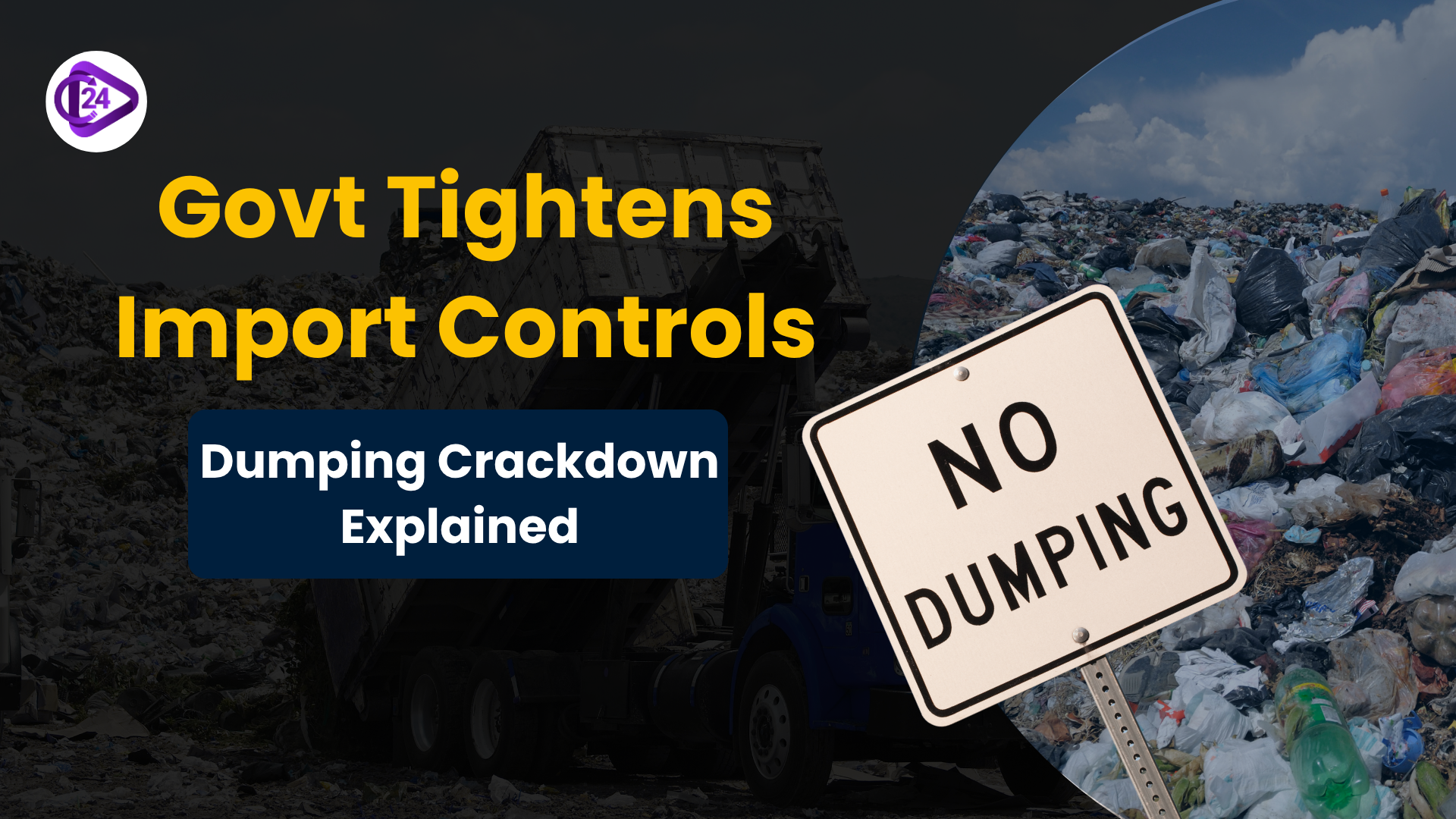
Govt. Cracks Down on Dumping and Import Surges: Commerce Ministry Tightens Controls

India has launched anti-dumping investigations on 8 product lines from 12 countries to safeguard domestic industries. DGFT has curbed disguised imports like gold alloys used to evade duties. Real-time monitoring of trade volumes and diversion tracking is being implemented. This move strengthens Make in India and shields MSMEs from unfair global competition.

  • A massive campaign has been initiated by the Commerce Ministry to combat import surges and the dumping of cheap commodities that injure Indian industries.

  • In June 2025, the DGTR launched anti-dumping investigations into 8 product lines of 12 countries or groupings.

  • DGFT has started curbing imports that are likely to conceal high duty items such as gold as cheaper items.

  • Targeted countries are China, Taiwan, Indonesia, Switzerland, Egypt and the Gulf countries.

  • The government is exchanging real-time information among ministries in order to harmonize trade policy and industrial protection.

Key Agencies Involved

Agency

Role

DGTR (Directorate General of Trade Remedies)

Investigates dumping, safeguards domestic industries

DGFT (Directorate General of Foreign Trade)

Regulates and restricts imports/exports

Ministry of Commerce

Oversees trade policies and coordinates with other ministries

What is Dumping?

Dumping can be described as a situation where a producer based in a foreign country supplies his product in a recipient country below the normal price due to economic advantages. Sometimes below the cost.

 Impact: Hurts local industries with cheap imports so local producers get undercut and their jobs are lost, closing down.

What is an Import Surge?

  • The sudden, unnatural growth of imports of a certain commodity within a short time.’

  • Often due to:

    • Diversions of international trade

    • Dodging customs taxes

    • Laax's enforcement of rules in imports

Recent Actions by Govt.

Action

Details

🛑 Anti-dumping probes

8 investigations in June 2025 across 12 countries/groups

📊 Commodity monitoring

Real-time surveillance of import volumes across sectors

🚫 Gold alloy restriction

DGFT banned free import of gold-mixed alloys used to bypass duties

🔄 Trade diversion tracking

Focus on shifts in global trade flows post-pandemic & geopolitical changes

Countries Facing Anti-Dumping Probes

  • China, Taiwan

  • Indonesia, Malaysia

  • Kuwait, Oman, Qatar, UAE, Saudi Arabia

  • Switzerland, European Union

  • Egypt (glass wool)

  • Indonesia (paperboards)

Products Under Probe

  • Industrial chemicals

  • Glass wool

  • Paperboards

  • Metal alloys containing gold

Expert Insight

  • Exporters use dumping to snag up importing country market shares.

  • This is a threat to MSMEs and to domestic manufacturers in India, particularly to the chemicals and paper industries.

  • Intense surveillance + DGTR inquiries are likely to moderate the trade transparency against the national interest.

Policy Implications

  • Improves the trade defense system already in existence in India as per WTO policies.

  • Imports connection: – Defends home companies by the Make in India agenda and Aatmanirbhar Bharat.

  • Has the potential to increase bilateral trade frictions, as well as offering good competition.

Conclusion

The Indian government is taking a pro-active approach in enhancing its trade in order to spy it effectively by cracking down the dumping and unfair import activity with the help of the DGFT and DGTR. Such initiatives are a result of a new strategic approach to supporting and safeguarding domestic producers against the international price controls and creation of a more resilient, self-sufficient economy.


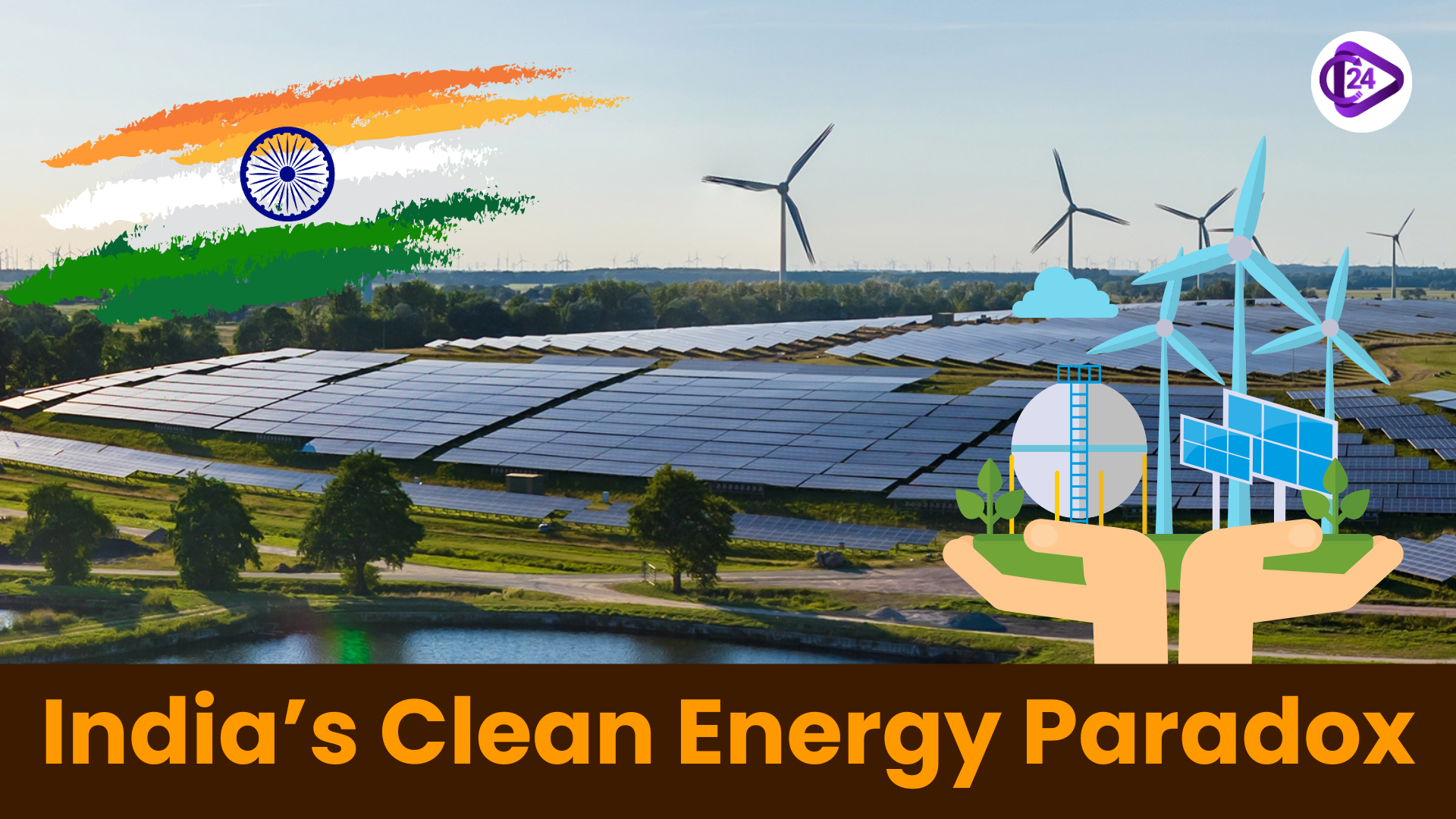
India’s Clean Energy Paradox: Installed Capacity at 50%, But Supply Still Below 30%

India has achieved 50% of its installed electricity capacity from non-fossil sources, five years ahead of the 2030 target. However, actual clean energy generation remains below 30% due to low Capacity Utilisation Factors (CUF) of solar and wind power. Coal still dominates with 75% of real electricity production, ensuring base-load and peak demand supply. Experts recommend smart grids, battery storage, and hybrid renewable projects to bridge the gap between installed capacity and actual clean energy supply.

  • India has already met 50 percent of its installed electricity capacity by non-fossil sources five years earlier than its 2030 target under the Paris Agreement NDC.

  • Nevertheless, real electricity generated by clean sources is within 30%, because of the low Capacity Utilisation Factors (CUF) of both solar and wind.

  • Solar and wind trail coal (60%) and nuclear (80%) in terms of energy production (~20 and ~25, 30 CUF, respectively).

  • Coal continues to reign supreme with 75 percent of real production, particularly base-load and peak demand in the evening.

  • Future solutions proposed by experts are smart grids, the flexible price point, and hybrid projects using batteries.

Key Concepts Explained

Installed Capacity vs. Actual Generation

Term

Meaning

Installed Capacity

The total potential output of power plants if run at full capacity.

Actual Supply / Generation

Actual electricity delivered over time, accounting for CUF.

Although clean energy makes up 50% of installed capacity, it contributes only 28% to actual electricity generation, due to intermittency and lower CUF.

Capacity Utilisation Factor (CUF)

Energy Source

Typical CUF

Solar

~20%

Wind

~25–30%

Coal

~60%

Nuclear

~80%

Why it matters: More CUF means more output from the same capacity. While solar and wind supply varies with weather and the time of day, so does the real supply.

Challenges in Clean Energy Adoption

  • Coal maintains the base-load power (steady power), particularly at night.

  • Shortages of storage always come in the form of evening demand spikes, in which thermal generation plants are still obligatory.

  • Flat power prices do not encourage the efficient use of solar in the daytime.

  • The use of renewables is constrained by grid inflexibility as well as poor battery storage.

Expert Recommendations

  1. Differential Tariffs: such as telecom, where they provide lower rates of electricity during the day so people are encouraged to use solar.

  2. Smart Grids: Demand-supply management in real time that is flexible.

  3. Battery Storage: Necessary to store surplus solar to use in the evening.

  4. Hybrid Projects: Satellite, solar, and wind, hydro, and storage, 24×7 clean energy.

Policy Implications

  • The dream of clean energy is coming true in India faster than ever before, but success now lies not necessarily in capacity, but also energy efficiency.

  • The new energy agenda has to be on delivering energy in real time rather than megawatt targets or giving focus on energy storage, and tariff innovation and demand-side management.

  • The next step of the Indian green transition will consist of hybrid renewable energy systems and change of electric utility rate structure.

Conclusion

Although India is reaching 50 percent non-fossil capacity is good, the effective clean energy consumption is quite low because of the systematic constraints such as little CUF and the absence of storage. India will find its way into clean energy transition through technology upgradation, pricing changes, and intelligent renewable and battery-based hybrid systems integration.

Frequently Asked Questions (FAQs)

The current affairs cover recent national and international events related to UPSC, SSC, Banking, Railways, and State PCS.

You need to read about the current affairs daily, and revise them every week and every month to keep them longer in your memory.

Yes, Class24 provides free downloadable Daily Current Affairs PDFs for easy revision.

Yes, you can practice MCQs and quizzes to boost your exam preparation.

Absolutely. The content is written in simple, easy-to-understand bilingual language suitable for beginners.

Go to class24.com and click on the current affairs section directly, where you find everything that you need.

ssc-toppers

Start Learning Today with Class24

Related current affairs

Class24 offers free video lectures for smart preparation, covering CGL, CPO, CHSL, MTS, and GD exams. Learn from expert faculty, revise concepts easily, practice with PYQs, and improve speed and accuracy through high-quality, exam-focused video lessons anytime, anywhere.

Get success in your hand. Start study anytime anywhere.

The journey becomes simple and enjoyable when you start taking interest in it. And through our app “Class24”, we will be your trusted partners in developing that interest.

Daily Quizzes
Mock Tests
Ongoing

No ongoing tests right now.