
Day: July 16, 2025

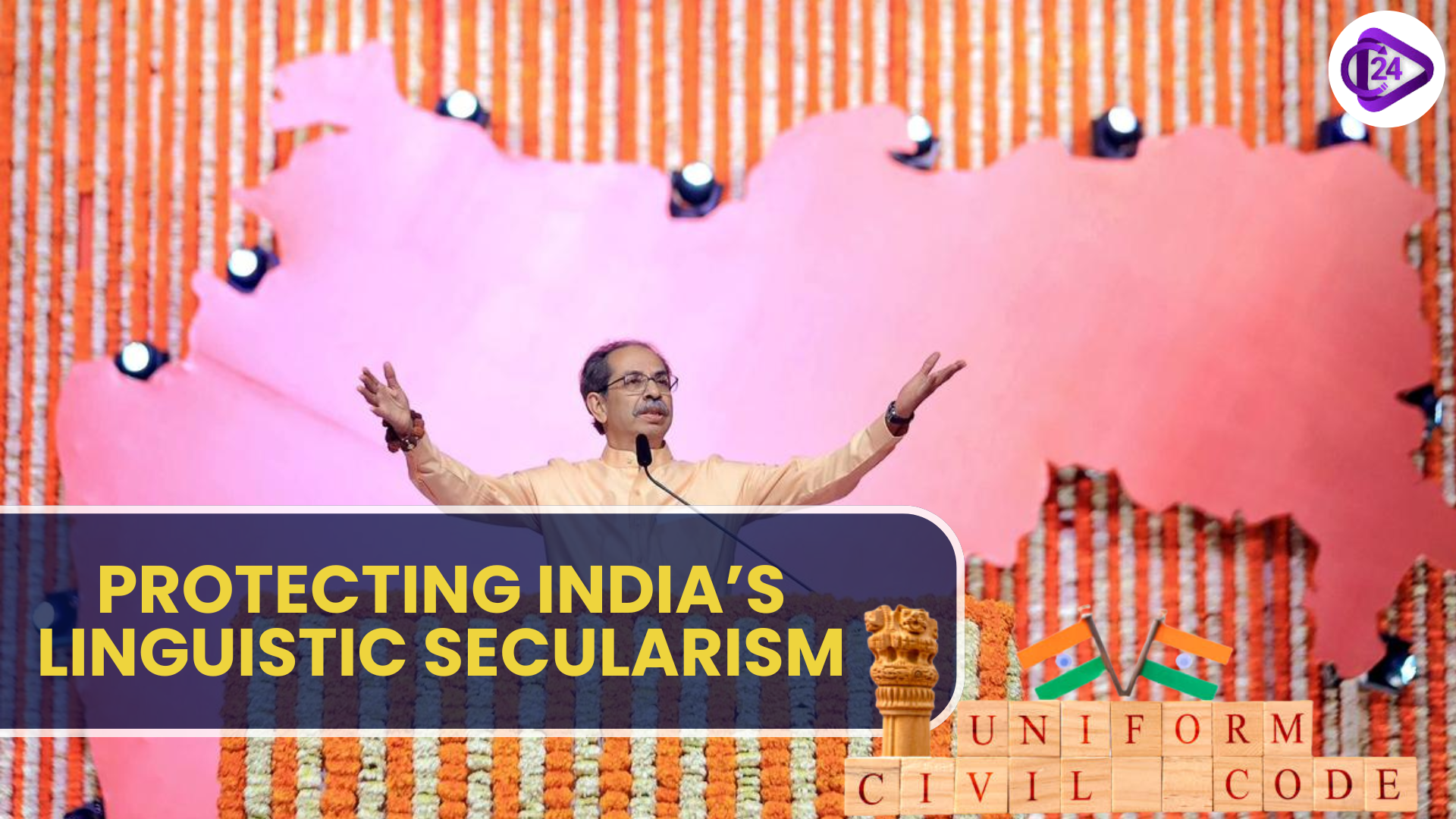
The Need to Protect India’s Linguistic Secularism: Safeguarding Unity in Diversity

Indian secularism is closely associated not only with religious liberty, but also with the plurality of languages, wherein the constitutional guarantee is provided. India has 121 languages and 270 mother languages (2011 Census) as a country that promotes unity with regard to different cultures in the country. This secular fabric however is being questioned by the increasing form of linguistic chauvinism as is the case in Maharashtra. Articles 29 and 343 of India Constitution endorse accommodative linguistic rights and prohibit impositions. It is imperative to protect linguistic diversity in order to maintain the unity in diversity in India and its democratic spirit.

Context:

  • The discourse on linguistic identity, the imposition of Hindi and the rights of the regional languages have been re-emerging following the cases of language-based violence.

  • The paper makes the case of linguistic diversity as one of the pillars of Indian secularism and how this is being challenged by the mounting identity politics.

Key Points

  • Indian Secularism: wider than religion

  • Secularism in India is not similar to the western model:

  • not only state-religion separation but state neutrality and being supportive of all identities.

  • There is also linguistic neutrality therein, pro or anti none of the languages.

  • This constitutionally enables the state to tame communalism based on religion and language.

Constitutional Safeguard for language

  • Article 343: Hindi written in Devanagari script is not a national language, but an official language.

  • Other states are at liberty to make their own official languages.

  • Article 29: Every citizen, and especially the minorities, are entitled to keep language, script, culture.

  • Eighth Schedule: It contains 22 Scheduled Languages.

2011 Census:

  • There are 121 major languages.

  • Mother tongues were mentioned as 270.

  • More than that, 96.08 % speak one of 22 pulled-up Languages.

Dangers to Linguistic Secularism

  • Opposition to a forced Hindi in the South and northeastern States.

    • Tamil Nadu: past anti-Hindi Dravidian movement.

  • The identity politics is on the rise with recent attacks based on language in Maharashtra.

    • It is not true cultural protection, but exclusive nationalism.

  • The threat of division of the country and loss of diversity in unity.

Globalisation Vs Linguistic Chauvinism

  • The power of India is in tolerance and liberalism.

  • The imposement of language or religion in the name of nationalism is retrogressive.

  • Globalisation requires a tolerant and not close-minded cultural enforcement.

Political Parties Role

  • The political leadership should avoid gaining votes through language sentiments.

  • There is a necessity to proactively maintain pluralism as the one projected by the Constitution.

  • Linguistic secularism is needed to uphold democratic and federal spirit in India.

Conclusion:

The secularism in India is multidimensional as it is focused on religious or linguistic inclusiveness. Where a nation is as multi-lingual as India is, not only is the appreciation of all languages a cultural norm but it is even a constitutional rule. The political and civil society actors should make sure that language should not be a tool of division, but an instrument of unity in the Indian plural democracy.

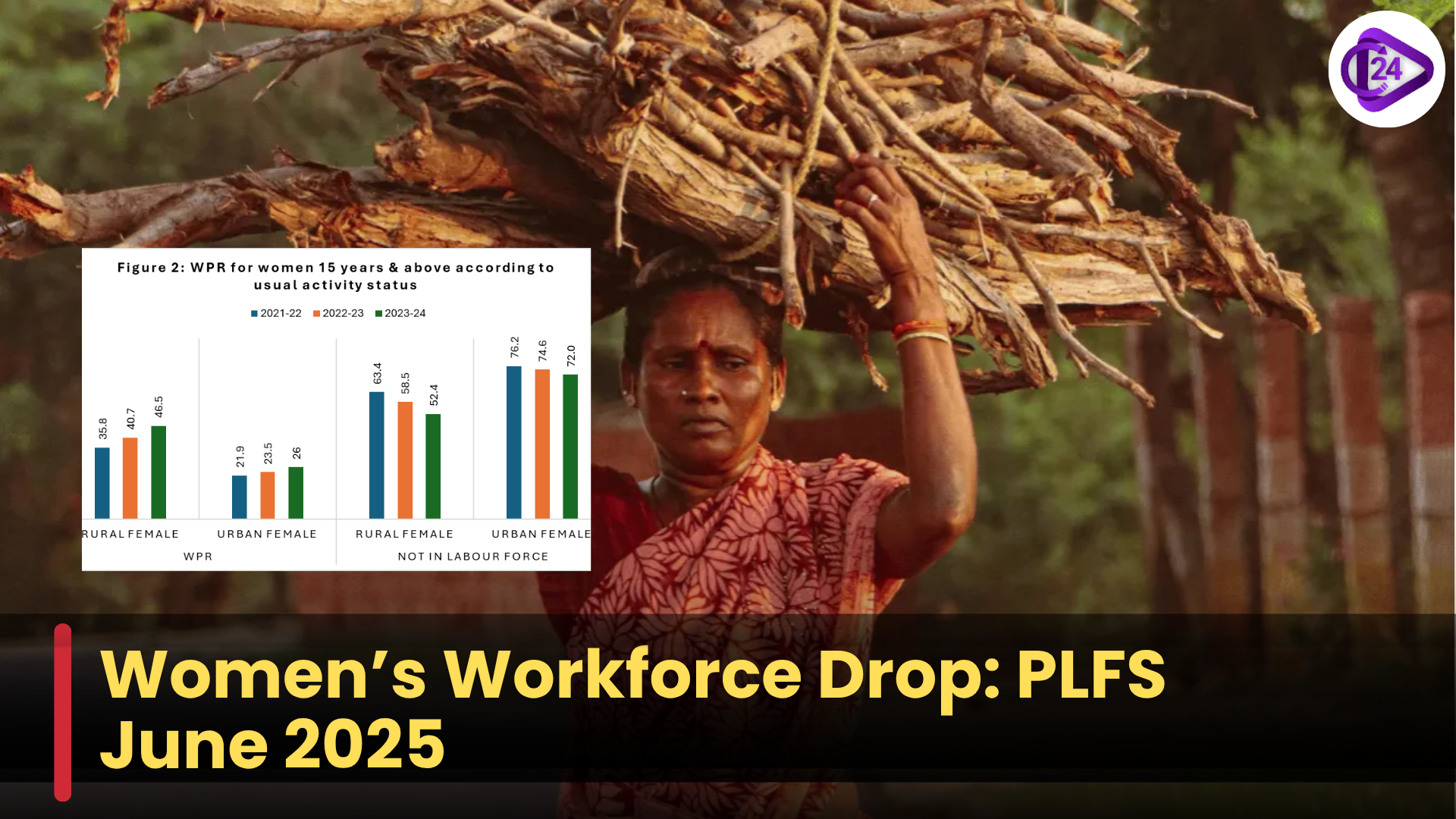
Drop in Women’s Labour Force Participation in India: PLFS June 2025 Highlights

Periodic Labour force survey June 2025 shows that there was a reduction in women participation in the labour force in both the urban and rural regions. Female total LFPR among the aged 15+ dropped to 35.2 % and 25 % in countryside and cities respectively compared with a better Figure in May. The government blames this on the seasonal agricultural trends, heat wave and a shift of unpaid female assistants into staying at home. The rate of unemployment did not change significantly, coming at 5.6 %. There was a slight drop in female unemployment. The evidence brings to question the labour dynamics and the patterns of employment based on gender differentiation and gender relations.

Context

  • In a bid to gauge the employment indicators like Labor Force Participation Rate (LFPR), Worker Population Ratio (WPR), Unemployment Rate (UR), the Ministry of Statistics and Programme Implementation (MoSPI) conducts the PLFS (Periodic Labour Force Survey) on a monthly basis. 

  • These are critical data that can be used in tracking labour market trends and in formulating gender sensitive and area specific employment policy.

Key Points:

Reduction in Female LFPR (15+ Age Category):

  • Rural Women:

    • June: 35.2%

    • May: 36.9%

    • April: 38.2%

  • Urban Women:

    • June 25.0%

    • May: 25.3%

Combined (All Age Groups, Rural + Urban):

  • June: 24.5%

  • May: 25.5%

Reasons for Decline (as per Govt.):

  • Seasonal agriculture cycle (post-Rabi, pre-Kharif downtime)

  • Extreme summer heat, limiting outdoor work for women

  • Drop in rural inflation, reducing pressure on women from higher-income households to work

  • Shift of unpaid helpers back to household/domestic responsibilities

Other Employment indicators:

  • LFPR(15+ years):

    • June: 54.2 %

    • May: 54.8 %

  • Male LFPR:

    • Rural: 78.1 % (as opposed to 78.3 % in May)

    • Urban: 75 % (85.1 % in May)

Employment Higher than 15 years:

  • In general: 5.6% (comparable with May)

  • Female UR: Moderate negative change of 0.1 %

  • Male UR: Did not change

Change of Employment in Agriculture Sector:

  • Agriculture rural female labor:

    • May: 70.2 %

    • June: 69.8 %.

Conclusion

According to the June 2025 PLFS report, there is a worrying decline in the participation of women in the economy, especially rural counterparts, brought about by seasonal and socio-economic pressures. Although short-term processes such as heat and crops could justify the dip, the continuing of such tendencies suggests underlying gendered structural problems in the Indian labour market. To curb this trend, policymakers should now appreciate diversified rural jobs, education and skill building programmes, and inclusion job creation to achieve even economic growth.

India Receives Second GE-F404 Engine for LCA Tejas Mk-1A Jets

The U.S has delivered the second GE-F404 engine to India on the indigenous Light Combat Aircraft (LCA) Tejas Mk-1A project. By the end of FY 2025-26, Hindustan Aeronautics limited (HAL) will be receiving another 12 engines. The engines currently behind schedule as a result of global supply chain hitches will be incorporated into the 83 LCA Mk-1A jets to be ordered by the Indian Air Force (IAF). There is an offer to obtain additional 97 airbuses. The advancement forms a part of India-U.S. defence cooperation and self-reliant defence manufacturing.

Context

  • LCA Tejas Mk-1A is an improved model of Indian built 4th generation fighter aircraft designed and produced by HAL.

  • The plane has GE-F404 engines, which are vital to the development of self-reliant defence (Atmanirbhar Bharat) and into the air superiority modernization in India.

  • To achieve the goal of fleet expansion and indigenisation by IAF, these engines have to be delivered on time.

Key Points

Schmetter Engine Engine Status:

  • July 2025 – second GE-F404 brought in.

  • Planned overall: 13 engines in FY 2025 26; the 1st engine was delivered in March of 2025.

  • Produced by GE Aerospace, USA; it consumed supply chain time to be delivered.

LCA Tejas Mk-1A Programme:

  • The engines will be GE-F404 installed in 83 LCA Mark-1A fighter aircraft to be purchased by IAF.

  • As a part of initial rollout, HAL is working toward supplying 10+ aircraft in the near future.

  • Improves the combat performance, mission capabilities and reliability of Tejas.

Future Expansion:

  • Advanced considerations are being carried out regarding the purchase of 97 more LCA Mk-1A jets.

  • Would raise the entire IAF Tejas Mk-1A inventory to 180 planes.

  • Funds long-range outlook to quit the MiG-series aircraft.

India United States Defence Cooperation:

  • Rajnath Singh and Pete Hegseth, the Defence Ministers of India and the United States, have just talked about more efforts.

  • Export of GE engines is included in the rising bilateral defence trade and technology relations.

  • Prior to collaboration of GE-HAL on production of GE-F414 engines in LCA Mk-2 in India.

Strategic Significance:

  • Enhances the aerospace industry in India and fighter capacity building.

  • Enhances the fighting capabilities of IAF in its scope of security in its region.

  • Enhances the dedication of India towards indigenisation and international defence cooperation.

Conclusion

A second GE-F404 engine has also landed, making it a vital milestone in the LCA Tejas Mk-1A programme and strengthening India indigenous defence manufacturing as well as strategic independence. With India strengthening defence relations with the U.S. and almost on the verge to modernize its fleet, the incorporation of these engines is an indicator of the synergy between technological cooperation and self-reliance in national security.

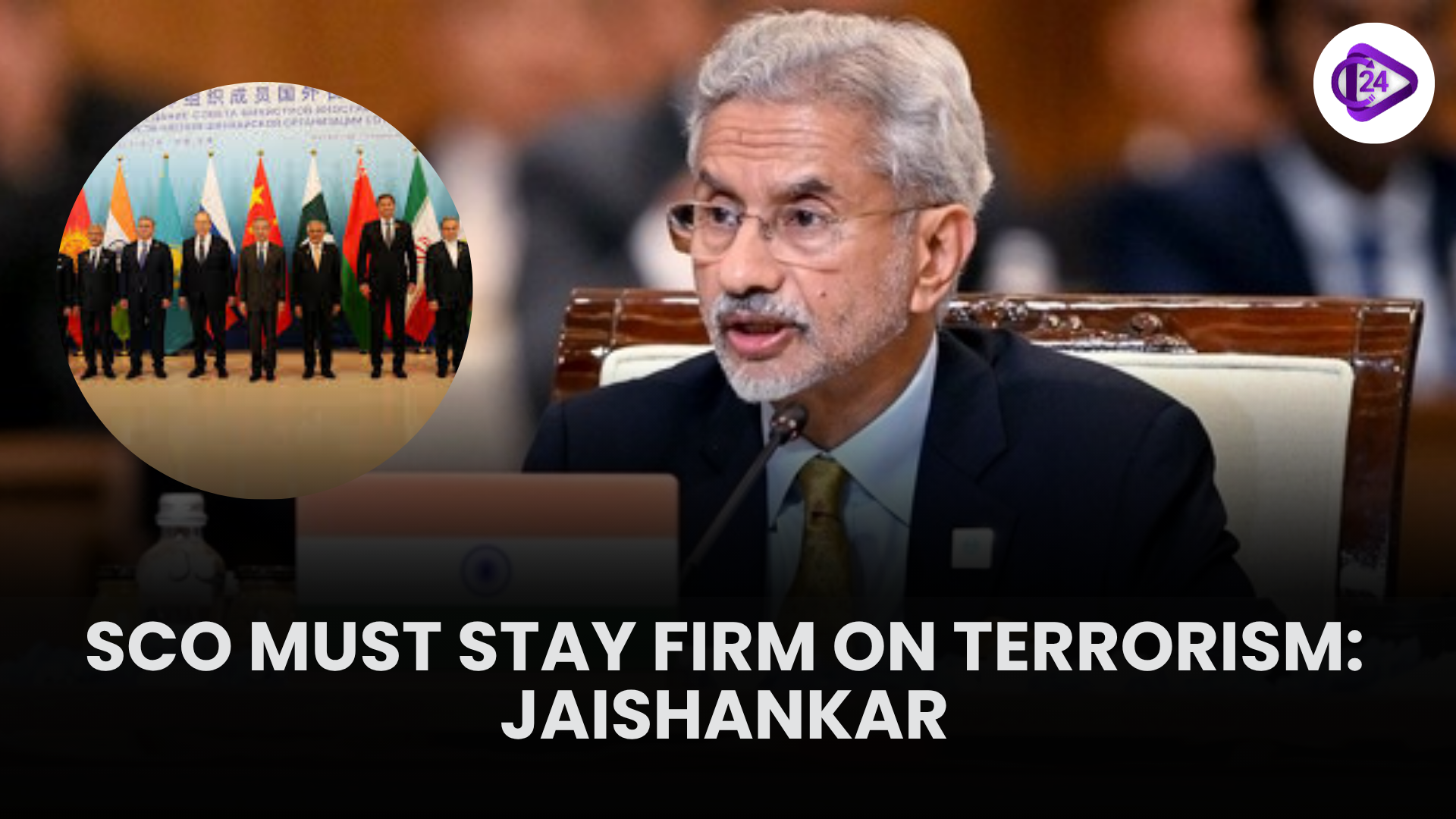
SCO Must Remain Uncompromising on Terrorism: EAM Jaishankar at Tianjin Meet

Speaking at the SCO Council of Foreign ministers held in China, the External Affairs Minister S. Jaishankar demanded a tough and strictly no-nonsense attitude to the brand of terrorism that presented itself in the world. He mentioned the April 22 attack on tourists in the Pahalgam area of Jammu & Kashmir saying that this was intended to create fissures along community lines and damage the economy. Highlighting the principles of creation of SCO in order to prevent the terrorism, separatism, and extremism, he called on the members to take decisive steps. Trade barriers were also mentioned by Jaishankar, who insisted on greater connectivity through the International North-South Transport Corridor. Chinese President Xi Jinping, the FM of Pakistan and other important regional leaders attended the meeting.

Context:

  • The Shanghai Cooperation Organisation (SCO) is the Eurasian, economical, political, and security alliance and was established in 2001 to fight the so-called three evils: terrorism, separatism, and extremism. 

  • The Indian presence in the SCO is also on the regional strategic interests besides its agenda on enhancing the global interests on terrorism. 

  • The SCO-CFM 2025 gathering in Tianjin, China, gave India a chance to raise its security concerns in front of the upcoming SCO Leaders Summit (Aug 31-Sep 1).

Key Points:

The Strong Stance of India toward terrorism:

  • Pahalgam Attack (Apr 22):It focused on the tourists in J&K; it was a premeditated one to trouble peace and create communal disharmony.

  • Message by Jaishankar: SCO should not lose focus on its fundamental mission, that is, zero tolerance on terrorism, no matter how geopolitically sensitive the situation is.

  • Referring to the UNSC Resolution: India called on SCO to endorse action on the basis of the April UNSC resolution that was related to the attack.

About SCO

  • The SCO officially encompassed India in 2017 together with Pakistan.

  • The SCO is becoming relevant due to changing geopolitical horizons of Asia, instability in Afghanistan, and ever-growing multipolarity in the world.

  • In 2023, India was a host to the SCO Summit, which affirmed its presence in Eurasia diplomacy.

SCO goals:

  • Enhance trust between and amongst member states and neighbourly ties.

  • Foster political, economic, trade, energy, transport, tourism, environmental and cultural interaction.

  • Celebrate peace, security and stability in the region.

  • Foster a democratic, fair international political and economic order.
    Combat the “three evils”: terrorism, separatism, and extremism.

Composition of SCO:

Category

Members

Founding States

China, Russia, Kazakhstan, Kyrgyzstan, Tajikistan

Full Members

China, India, Russia, Kazakhstan, Kyrgyzstan, Tajikistan, Uzbekistan, Pakistan, (Iran since 2023)

Observer States

Afghanistan, Belarus, Mongolia

Dialogue Partners

Sri Lanka, Turkey, Egypt, Saudi Arabia, Nepal, Qatar, etc.

Organizational Structure:

  • Council of Heads of State: The paramount decision making organ.

  • Council of Heads of Government: Cooperation in economy and trade.

  • Council of Foreign Ministers: Organizes the foreign policy.

  • RATS (Regional Anti-Terrorist Structure): located in Tashkent, responsible to counter-terrorism.

  • SCO Secretariat: Admin unit located at Beijing.

The importance of SCO:

  • Geostrategic Coverage: Has 40 % of the world population and 22 % land mass.

  • Security cooperation: The cooperation strengthens with military exercises, e.g. the Peace Mission.

  • Economic integration: Advancement of trade, energy as well as connectivity in Eurasia.

  • Opposite to Western blocs: Provides the regional alternative to NATO, QUAD.

  • Forum of dialogue: Assists in cooling down regional tensions such as Indo-Pakistan tensions.

The significance to India of SCO:

  • Counter-Terrorism Cooperation: is important in combating cross border terrorism.

  • India gets a verdict – Access to Central Asia: Enhances Indian Connect Central Asia.

  • Strategic Dialogue with China & Russia: Provides a neutral platform.

  • Stability in Afghanistan: India can help in positive ways after the withdrawal of the US.

  • Energy Security: The energy resources located in Central Asia can supplement India.

  • Economic Diplomacy: Helps to increase the trading and investment in the region.

  • Cultural Exchange & Tourism: Member states share similarities in civilization hence people to people contacts.

Way Forward of India:

  • Enhance interaction by means of regional initiatives (Chabahar Port, INSTC).

  • Increase trade with the use of national currencies to cut down on USD reliance.

  • Nurture the concept of digital and cyber collaboration as growth areas of the future.

  • Use RATS to bring to spotlight terrorism concerns by Pakistan.

  • Multilateral diplomacy using the SCO platform regarding Central Asia and Eurasia.

  • Improve cultural diplomacy using Buddhism, Ayurveda as well as yoga.

  • Soft power will be demonstrated by supporting the humanitarian needs of Afghanistan.

Conclusion:

The Shanghai Cooperation Organization is a key pillar of India's engagement in Eurasia. As much as it has strategic advantages as far as counterterrorism, connectivity, and even multilateralism are concerned, geopolitical issues posed by the opposing neighbours require India to streamline its interests. India is placed in a good position to make a fruitful and effective contribution to the stable and multipolar Asia by utilizing its soft power and strategic autonomy, and by its developmental priorities.

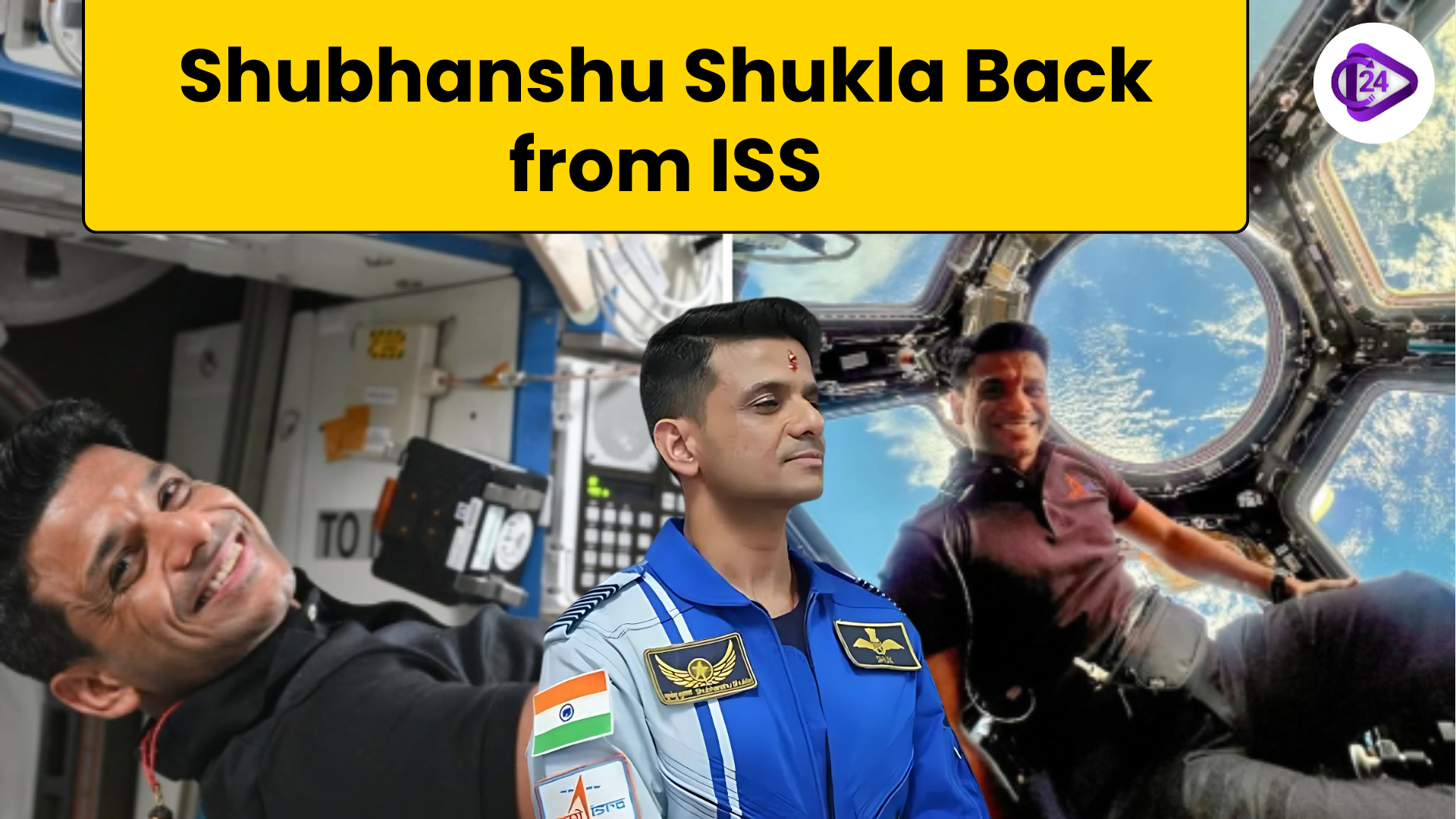
Shubhanshu Shukla landed safely back to Earth after an 18-day Axiom Mission 4

Indian Air Force Group Captain Shubhanshu Shukla, one of the examples of astronauts in the Gaganyaan project, landed safely back to Earth after an 18-day Axiom Mission 4 (Ax-4) to the International Space Station (ISS). A SpaceX Dragon capsule that was traveled by Shukla and three other astronauts made its splashing down off the San Diego coast. On the mission, the crew has orbited the earth 320 times and carried out more than 60 research activities. The success of the mission is an important milestone to the development of the Indian human spaceflight program. Shukla has now gone through post flight rehabilitation under the eyes of ISRO.

Context:

  • The involvement of India with the Axiom Mission 4 is evidence of its strategic partnership in space missions with other countries in preparation of the first manned space mission of India scheduled to be launched by Gaganyaan.

  • The position of Group Captain Shukla as a flight crew member in Ax-4 is a representation of the readiness and experience gained by India in human space flight coupled with international partners such as SpaceX and Axiom Space.

Key Points for UPSC

Mission Overview:

  • Name of Mission: Axiom Mission 4 (Ax-4)

  • Launch Date: June 25, 2025, on SpaceX Falcon 9 out of Kennedy space center in Florida

  • Splashdown Date-July 9, 2025, 3.02 PM IST off San Diego Coast

Crew Members:

  • Commander: Peggy Whitson (U.S.)

  • Shubhanshu Shukla India (Pilot)

  • Mission Specialists: Tibor Kapu (Hungary), Sławosz Uzna nski – Wisniewski (Poland)

Achievements of Mission

  • Space stay time duration: 18 days

  • Revolutions made: 320

  • Miles travelled: 8.4miles

Research & Outreach:

  • more than 60+ scientific experiments

  • 23 learning and community participation activities

Back to earth -Re-entry and Return:

  • Deorbit burn: Started at 2 PM IST; took about 18 min

  • Splashdown sequence: Drogue and main parachutes have been deployed successfully

  • Recovery operations:

  • Shannon vessel recovered capsule

  • Medical check up and rehab were aided by astronauts

Post-Mission Procedures:

  • Medical surveillance aboard and helicopter transportation to land

  • Last stop: Houston, to be reunited with respective teams

  • Experiential needle A unique one-week follow- trip (after missions) made by the flight surgeons of ISRO in order to re-adapt oneself to the terrestrial level of gravity is called Shubhanshu Shukla.

About Axiom- 4 UPSC

Overview

  • Axiom Space is organizing the fourth privately funded visit to the ISS, Ax-4.

  • NASA, SpaceX, and ISRO sponsor it, and it is regarded as the good international cooperation.

Launch Information

  • Initial mission Crew Dragon C213 capsule.

  • It was launched with the use of SpaceX; Falcon-9 Block 5 at the Kennedy Space Center (LC-39A).

  • Several launch delays took place such as the leakage of LOx on June 11, 2025.

Crew Members

  • Peggy Whitson (USA): Experienced astronaut and the commander of missions.

  • Shubhanshu Shukla (India): First Indian commercial astronaut to go to ISS.

  • Sławosz UznaASH-WiSNiewski (Poland): Is a representative of the Polish space science partnership.

  • Tibor Kapu (Hungary): Mission specialist who is involved in scientific activities.

Conclusion

The fact that Group Captain Shubhanshu Shukla who had arrived at the ISS is safe back on earth is a historic moment in the story of human spaceflight in India. His involvement in the Ax-4 will not only bolster India space diplomatically, but will also help in gaining the much needed operational experience in the ensuing Gaganyaan mission. It shows the willingness of India to be one of the foremost spacefaring countries by virtue of cooperation, invention, and capacity enhancement.

India’s Renewable Rise: 50% Non-Fossil Capacity Achieved Ahead of 2030 Target

India has crossed a significant milestone in terms of clean energy; the country is encountering half of its entire installed electricity capacity with non-fossil sources five years ahead of schedule in 2030. This milestone indicates healthy policy support, new initiatives such as PM-KUSUM and PM Surya Ghar coupled with a swift upsurge in solar, wind, and bioenergy. It has also boosted livelihood in the rural areas and has reduced pollution as well as improved access to energy. The experience in India has changed so that the country is viewed as a global climate leader despite its low per capita emissions. In the future, the priority will be given to strong grid integration, storage, digitalisation, and sustainable consumption.

Context:

  • As a country that signed the Paris Agreement, India had committed to its Nationally Determined Contributions (NDCs) to increase its 50 percent installed electricity capacity based on non-fossil sources by 2030. 

  • This was achieved in July 2025, which means that India was five years ahead of schedule in the process of energy transition. 

  • The announcement is consistent with the international leadership on climate and domestic objectives of self-reliance, sustainability and inclusive growth.

Key Points for UPSC

Milestone Achievement:

  • India currently enjoys 50.08% of the overall generation of non-fossil energies (Renewables + Large Hydro + Nuclear).

  • Dispatched electricity production: 365.67 GWh (as of June 30, 2025).

Policies and schemes

  • PM-KUSUM: Solar pumps and agrovoltaics for farmers.

  • Pm surya ghar Muft Bijli Yojana: 1 crore households to get rooftop solar.

  • Solar Parks and Wind-Solar Hybrid Policy: Those are large low-tariff solar plants.

  • Increase of bio energy: improve income in rural areas and close the economy.

Benefits of energy transition

  • Decarbonisation + Development: Improved health of people, jobs in the countryside, decrease in harm to the air.

  • Clean energy through decentralised energy.

  • Improved resilience and energy security to climate.

Global Climate Global:

  • India is one of the few G20 countries that are on schedule to meet/exceed NDCs.

  • Promoting climate justice and sustainable lifestyles, green growth at the international platforms (COP, G20).

  • The per capita emissions are amongst the lowest in the world.

Road Ahead:

  • Increase twice in per capita clean electricity usage – particularly in rural vicinities.

  • Make a long-term investment in the grid in Battery Energy Storage Systems (BESS) and pumped hydro to stabilise the grid.

  • Focus on AI and digitalisation of smart grids and energy markets.

  • Discuss digital infrastructure on cybersecurity issues.

  • Encourage solar/wind infrastructure, circular economy, green hydrogen.

Conclusion:

The success of India to reach 50 percent non-fossil energy, five years ahead of the schedule, shows that economic gains and sustainability can be compatible issues. Through effective leadership, progressive policies, and the embracement of technology, India has taken the position of a leader in the global move towards green transition. To take decisive steps towards decarbonisation, India should aim at resilience, equity and innovation to anchor decarbonisation and propel a sustainable inclusive energy future.

Frequently Asked Questions (FAQs)

The current affairs cover recent national and international events related to UPSC, SSC, Banking, Railways, and State PCS.

You need to read about the current affairs daily, and revise them every week and every month to keep them longer in your memory.

Yes, Class24 provides free downloadable Daily Current Affairs PDFs for easy revision.

Yes, you can practice MCQs and quizzes to boost your exam preparation.

Absolutely. The content is written in simple, easy-to-understand bilingual language suitable for beginners.

Go to class24.com and click on the current affairs section directly, where you find everything that you need.

ssc-toppers

Start Learning Today with Class24

Related current affairs

Class24 offers free video lectures for smart preparation, covering CGL, CPO, CHSL, MTS, and GD exams. Learn from expert faculty, revise concepts easily, practice with PYQs, and improve speed and accuracy through high-quality, exam-focused video lessons anytime, anywhere.

Get success in your hand. Start study anytime anywhere.

The journey becomes simple and enjoyable when you start taking interest in it. And through our app “Class24”, we will be your trusted partners in developing that interest.

Daily Quizzes
Mock Tests
Ongoing

No ongoing tests right now.