
Day: June 17, 2025

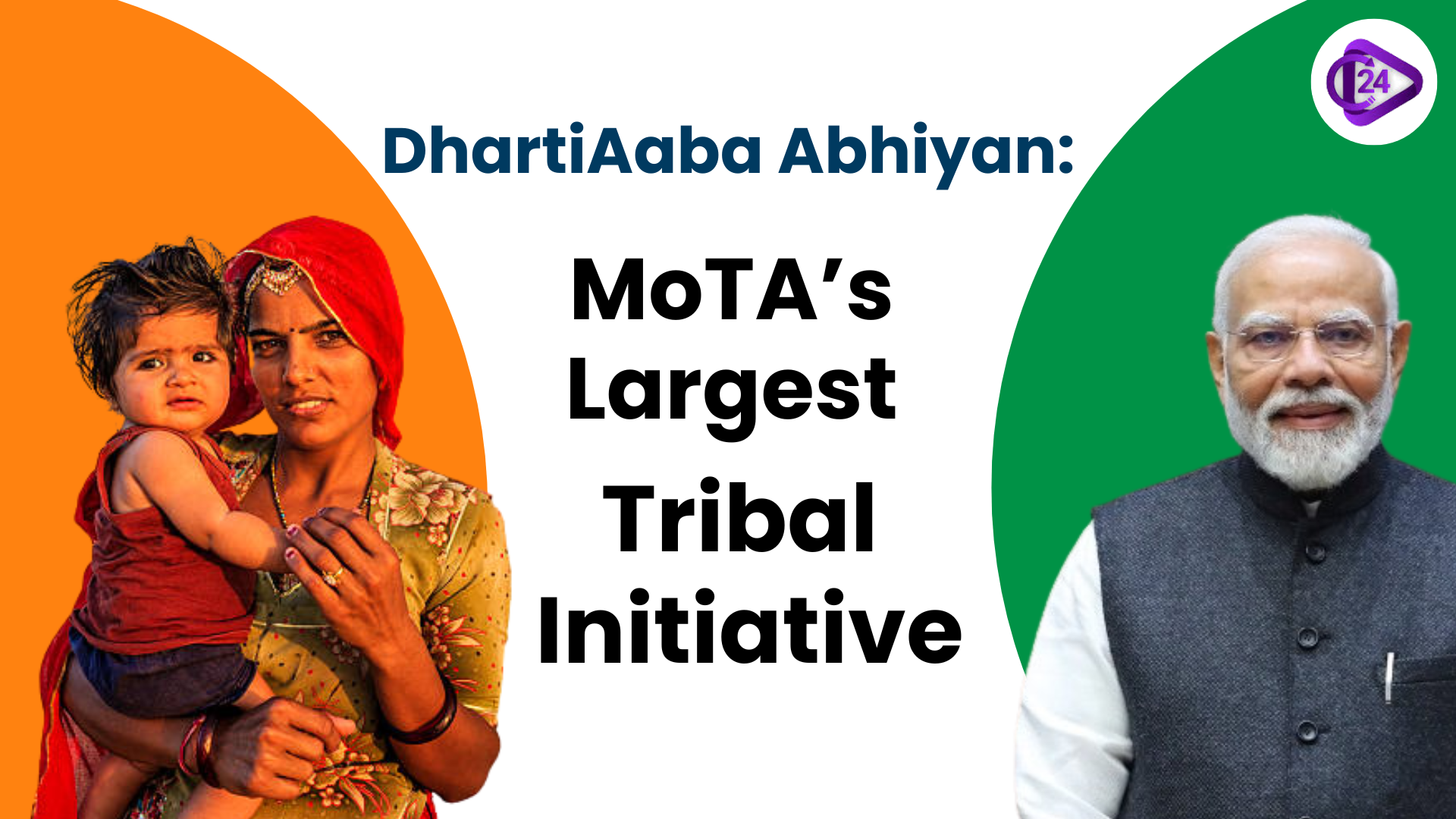
MoTA initiates the biggest tribal empowerment programme- DhartiAaba Janbhagidari Abhiyan

The DhartiAaba Janbhagidari Abhiyan launched by the Ministry of Tribal Affairs (MoTA) is an all-country campaign focused on empowering tribal populations and providing the government benefits. Such a humongous program spreads over 100,000 villages and settlements of 549 tribal-prevalent districts and includes a particular emphasis on tribal populations that are Particularly Vulnerable Tribal Groups (PVTGs). The campaign will also be aimed at recognizing the tribal communities and providing vital services such as healthcare, financial inclusion as well as livelihood programmes at their own doorstep.

Context

  • The DhartiAaba Janbhagidari Abhiyan belongs to the wider movement called Janjatiya Gaurav Varsh venerating the heritage of the tribal peoples of India. 

  • The campaign is an illustration of the vision of the Prime Minister, Narendra Modi, who wants to see inclusive governance where the most disadvantaged groups in the country enjoy the benefits of the development process.

Key Points

Campaign Overview:

  • Huge Geographical Extent: The campaign operates in 549 tribal-dominated districts and 207 PVTG-dominated districts with a reach to 104,330 villages and habitats.

  • Duration: The campaign would be launched between June 15 th and June 30 th 2025.

Goals and Importance:

  • Empowerment of the Tribal Communities: The program will seek to celebrate the legacy and contribution of the tribal communities in India by making sure that they have the government benefits and services due to them.

  • Government Scheme Delivery: The Abhiyan provides end-to-end delivery of government schemes including Aadhaar Card en rolls, health card delivery, bank account openings, PM-Kisan Yojana enrolment, pension schemes and skill training.

Important Campaigns Sponsored by the Campaign:

  • Participatory Approach: The project is further community driven (Janbhagidari) with the prominent participation of the tribal leaders and grass root level functionaries.

  • Benefit Saturation Camps: These camps will be located in the village, where vital government facilities and services will be offered to the eligible tribal households so that none of the households is uncovered.

Government Support:

  • Inter-Ministerial Cooperation: There is linking up of different ministries, and the stakeholders in the campaign to provide a wide spectrum of services.

  • Pre-Campaign Mobilization: More than 125 District Magistrates and Deputy Commissioners have already started an awareness program, with Panchayati Raj Institutions and the leaders of the tribal community.

Focus Areas:

  • Medical welfare: Ayushman Bharat health cards.

  • Financial Inclusion: The Jan Dhan bank accounts were opened, the pension or the insurance was enrolled in.

  • Livelihood Programs: Enrolling in different types of skill training or livelihood programs so as to empower the tribal people economically.

Government initiatives

  • Janajatiya Gaurav Varsh: This is an initiative they boast and applaud the cultures and efforts made by the tribal society in India.

  • PM-JANMAN and DAJGUA: The larger agenda of the campaign is associated with the overall objectives of PM-JANMAN and Dharti Aaba Janjatiya Gram Utkarsh Abhiyan (DAJGUA), brightening the future of the tribal people, making it lastingly empowered and with dignity.

Conclusion

DhartiAaba Janbhagidari Abhiyan is a landmark in the enhancement of the tribal population where the required services and benefits are being given to tribal society itself. The campaign is critical in achieving the dream of inclusive governance coupled with upliftment of the tribals in a dignified way through utilizing the community-led approach and extending governmental perquisites to the farthest strength with regard to scheduled tribes. The program not only celebrates the rich legacy of the tribal population but even works towards the social-economic rise of the tribals.

UPSC Prelims Practice Questions

Q.1 With reference to the DhartiAaba Janbhagidari Abhiyan, consider the following statements:

  1. It is launched by the Ministry of Rural Development.
  2. It focuses on delivering government benefits to tribal populations, including Particularly Vulnerable Tribal Groups (PVTGs).
  3. The campaign covers over 500 tribal-dominated districts in India.

Which of the statements given above is/are correct?
A. 1 and 2 only
B. 2 and 3 only
C. 1 and 3 only
D. 1, 2 and 3

Q.2 What is the primary aim of the DhartiAaba Janbhagidari Abhiyan?
A. Promote digital education in tribal schools
B. Ensure saturation of government welfare schemes in tribal villages
C. Launch new tribal welfare legislations
D. Establish new tribal universities

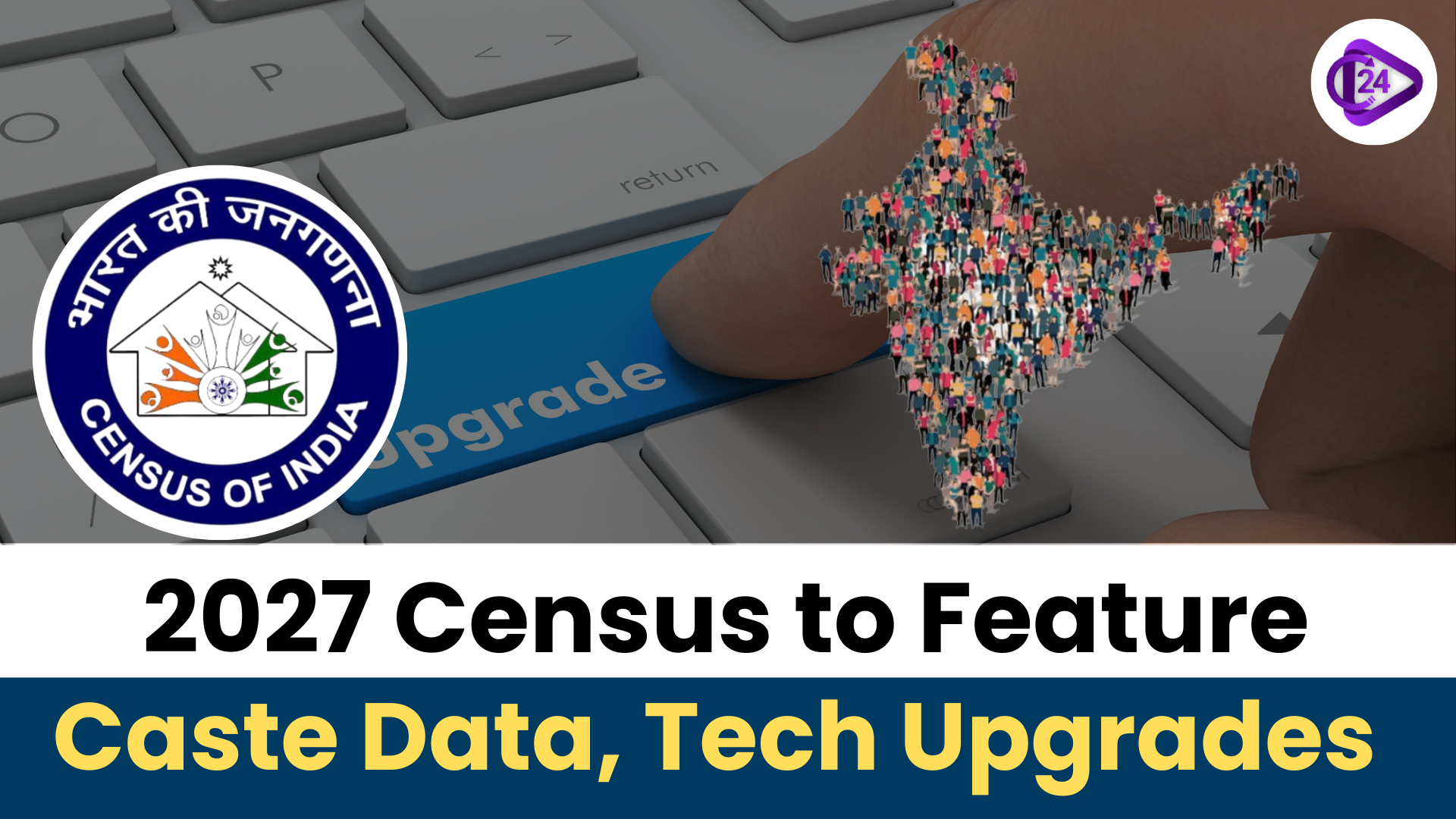
India’s 2027 Census: A Landmark Digital Initiative with Caste Enumeration and Technological Advancements

The 16th Census of India, due to take place in 2027 will also be a landmark digital exercise and it will mean a change of direction of data collection. The Census will comprise two stages viz., house-listing and population enumeration with the use of mobile applications, GPS tagging, and an efficient data security system. It also will be the first Census to enumerate caste since 1931 and with new variables of migration, use of technology and gender identification. There will be support in terms of more than 30 lakh enumerators and quality control mechanisms to enhance accuracy and inclusiveness in the process.

Context:

  • In the notice published by the Union Home Ministry in relation to the 2027 Census, there is a plan to conduct a digital two step enumeration which broadly will happen in two stages with the aim of deriving more accurate demographic data. 

  • It is going to include new categories along with such perennial problems as caste enumeration, digital literacy, and the gathering of social-economic data.

Key Points

Freezing date and boundaries census:

  • The 2027 Census will commence with the house-listing in the year 2026 and the population enumeration stage will commence in the early period of 2027.

  • Most of the regions will also maintain the reference date as March 1, 2027, except those areas which are snow-bound (Ladakh, Jammu & Kashmir, Himachal Pradesh, and Uttarakhand) as they will have the reference date of October 1, 2026.

  • Administrative boundaries would not be changed before the Census process is over and the integrity of the data collection process would not be impeded by State interference.

What is the Census in India?

  • Population Census: It gives rudimentary statistics of the human resources, demographics, culture and the local, regional and national economic structure.

  • History of Census: The Census started in the year 1872, and that too was just a non-synchronous exercise, the first synchronous Census was held in 1881 during the reigns of the British under the guidance of W.C. Plowden.

  • The office of the Registrar General and Census Commissioner of India under the ministry of Home Affairs is charged with the duty of conducting the Census in every decade.

Legal/ Constitutional Census in India:

  • Legal Source: In the Seventh Schedule of the Indian Constitution, under the Union List (Entry 69) the Census is included.

  • Census Act, 1948: The Census is done under the provisions of an enactment called Census Act, 1948.

Two Phase Census Process:

  • Phase 1 (House-listing): This will be between March 2026 and September 2026 and data in buildings, household amenities, and infrastructure will be gathered.

  • Phase 2 (Population Enumeration): Based on individual person level demographic data such as occupation, conditions of inhabitants and personal demographics.

Caste Enumeration:

  • Caste enumeration will be included in the Census after the last time in 1931 and it is a long-standing requirement that caste based data be collected. 

  • This will be of great contribution in the architecture of specific welfare policy towards the marginalized groups.

Digital Approach:

  • Census will be done through mobile applications whereby the application will have GPS tagging, offline data collection, and real-time synchronization when there is an availability of connectivity.

  • Strict data security modalities will be put in place to guarantee safe collection, transmission and storage of the data.

  • A computerized system will raise the alert of any mistakes and this will aid in ensuring that a data difference is raised like unrealistic age groups or duplication of data.

New categories introduction:

  • The Census will also create new categories linked to migration, among which there will be reasons, displacement caused by climate events or natural disasters.

  • It will be possible to acknowledge new gender because people will be able to call themselves transgender.

Technological Problems/ Solutions:

  • The Census app is developed to work even in the offline mode in the regions with low connectivity, and the addition of the field support and diagnostic tools will help resolve technical problems in real-time.

  • To facilitate the easy collection of data, enumerators will be extensively trained on electronic literacy, soft skills and the relevant provisions of the law.

Personnel Involved:

  • There are about 34 lakh enumerators and supervisors and 1.3 lakh Census functionaries that will be set to work across India in two phases.

National Population Register (NPR):

  • There is no official news about the revamp of the National Population Register (NPR) and 2027 Census as yet. 

  • NPR was updated the last time in 2015, and some NPR stages are not expected this time.

Influence on the Policy Planning:

  • The Census will play a major role in future welfare schemes of India particularly since it uses caste and migrational data.

  • It will assist in the shaping of specific interventions and resource distribution on marginalised communities.

  • Since it has been scheduled before the next Lok Sabha election of 2029, it will be important in terms of delimitation of constituencies and redistribution of parliamentary seats.

Quality Assurance and training:

  • The enumerators will be heavily trained, to make sure that they would be adequately competent when it comes to data collection, digital literacy, and remarks of the people.

  • Automated systems and periodical checks will also make sure that the accuracy of data is maintained and correction can be made before submitting data.

Conclusion

The 2027 Census will become an historical moment in the history of demographic data collection in India, as the country goes digital to achieve improved accuracy, efficient, and inclusive data collection. The Census will be valuable in support of policy guidelines particularly to the disadvantaged groups with the new items such as caste, reasons of migration and gender identity. The improved technological path with the help of millions of enumerators will make this Census one of the most accurate and complete enumerations of the population ever in the history of India.

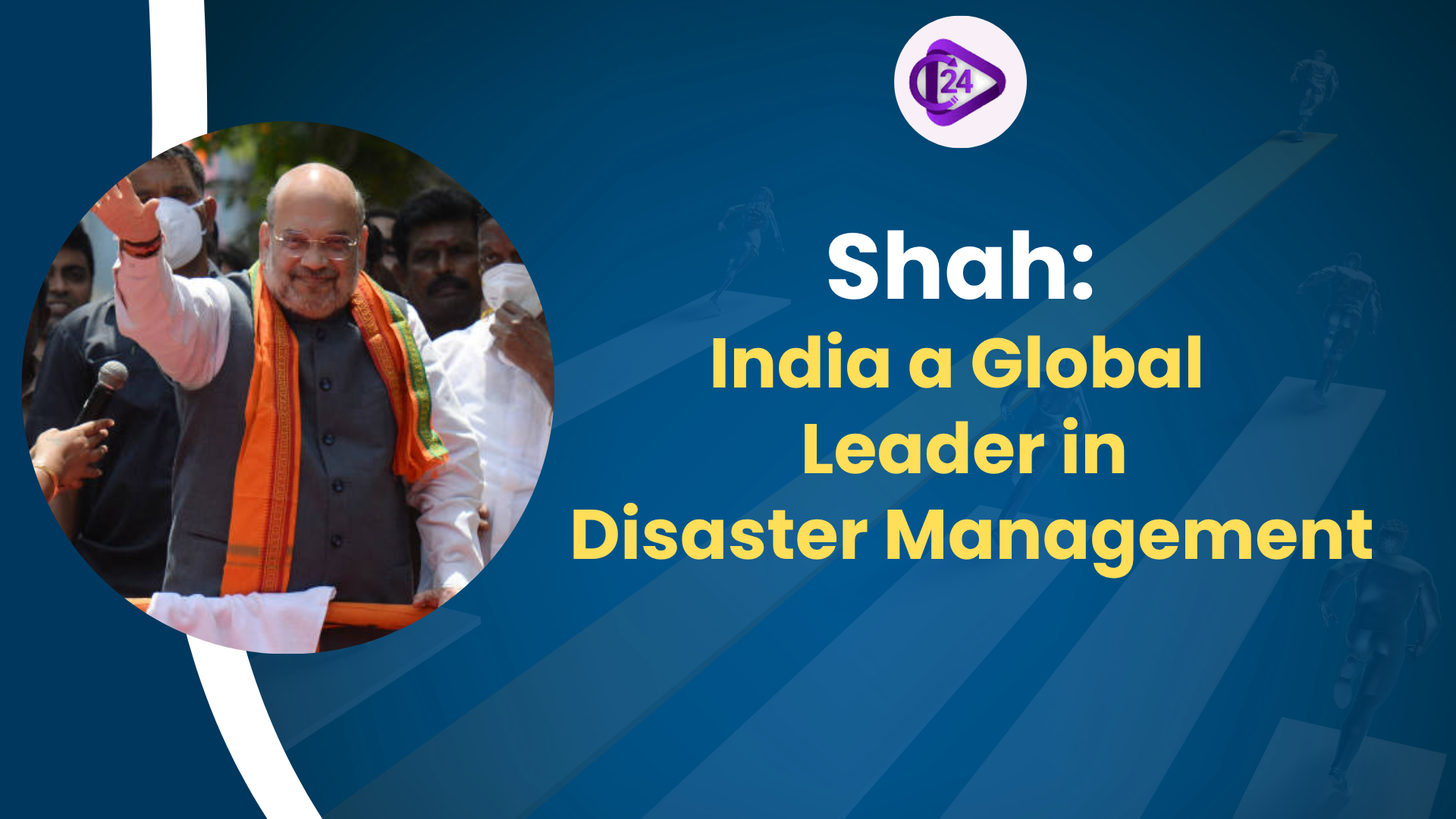
Shah Claims India as Global Leader in Disaster Management

Amit Shah, the Union Home Minister, has announced that the activities of the NDMA, NDRF and other agencies of India to handle disasters has helped India lead the world in this area. Shah pointed at the change disaster mitigation has undergone in India in the last 10 years, where the country has worked to reduce process-level casualties, to zero casualty targets. He also stressed on the need to conserve the environment given global warming and climate change.

Context

  • The result of the efforts of the NDMA, NDRF, as well as other disaster response agencies is that India has emerged as a global leader in disaster response, according to Union Home Minister Amit Shah.

Key Points

The role of India as a leader in disaster management:

  • Amit Shah referred to the contributions of NDMA (National disaster management authority) and NDRF (National disaster response force), to assert India as the leader in responding to disaster management in the world.

  • The disaster mitigation approach has over the last decade been changed with emphasis being given to zero casualty.

The Environmental Conservation role:

  • Shah indicated the rise in influence of climate change and global warming whereby the rate of disasters in the world was on the rise.

  • He also paid attention to the inclusion of environmental conservation in the strategy of disaster management in India.

Enhanced Disaster Resilience:

  • The formation of the Coalition for Disaster Resilient Infrastructure is regarded as an important part of improving the disaster management capacities in India.

  • India is now more prepared to undertake a disaster with the concept of resilience and quick response.

About Disaster Management

What is a Disaster?

  • A severe disruption that involves a community or community in a severe disturbance that involves immense human loss, material, economic and even environmental loss that is beyond the capacity of the affected population to cope up with its own resources.

Categories of Disaster:

  • Natural Disasters: These are expected to be walks, floods, hurricanes, tornadoes, volcanic eruptions, landslides, tsunamis, and droughts, which are usually caused by natural forces.

  • Human-made Disasters: These are the industrial accidents, fire, nuclear explosion, chemical spills, and terrorism due to human activities which can be prevented.

Disaster and Hazard Difference:

  • Hazard: A threat or something which has the potential to cause harm to a person upon occurrence. It may be natural (e.g. earthquakes, floods) or man-made (e.g. chemical spills, industrial accidents).

  • Disaster: Hazard, which produces a major impact, causing damage or destruction that cannot be coped with by the community.

Disaster Management Cycle:

  • Mitigation: Any actions that can lessen damage during potential catastrophes by applying some preventive action (e.g. building codes, flood barriers).

  • Preparedness: Developing the process of how to react to the disaster and having the resources and systems to quickly respond to it (e.g. training emergency responders, designing evacuation strategies).

  • Response. Actions to reduce the harm of a disaster carried out at the first stage (e.g., search, rescue operation, emergency aid).

  • Recovery: The long-term process toward normalcy, building of infrastructure and on-going support to the communities affected by the disaster (e.g. in the context of rebuilding homes and psychological support).

Disaster Management in India

Government Initiatives:

  • National Disaster Management Authority (NDMA): Was put in place to oversee an organization in the management of disasters, making of national policies as well as making plans of preparedness.

  • Disaster Management Act (2005): To enhance disaster management in India by establishing the National Disaster Response Force (NDRF) and State shiato Disaster Response and District-level disaster management plans.

  • Pradhan Mantri National Relief Fund (PMNRF): It is an organisation that gives funds to victims of natural calamities in India.

  • National Policy on Disaster Management (2009): Is concentrated on risk reduction, preparedness as well as mitigation.

  • Disaster Recovery Framework:In all disaster situations that have major consequences to the government such as floods or earthquakes, the government then embarks on recovery plans to repair the infrastructure and other essential services.

India and the World:

  • With the world being faced by disasters that are increasing as a result of climate change, the role of India in disaster management has come to be known internationally.

  • The response of India is regularly developing to manage an increasing scope of natural and man-made disturbances.

Future Outlook:

  • Future of disaster management in India will probably be aimed to incorporate even more modern technologies and adaptation of climatic changes to tackle the growing challenges in the environment.

Conclusion

The country has recorded major milestones in the field of disaster management in the last decade alone when Prime Minister Modi and other resourceful agencies such as NDMA and NDRF put India in the international leader position. The speeches of Amit Shah indicate how many achievements have been made to reduce disaster victims and how much attention is paid to saving the environment as part of the global response towards climate change and natural catastrophes.

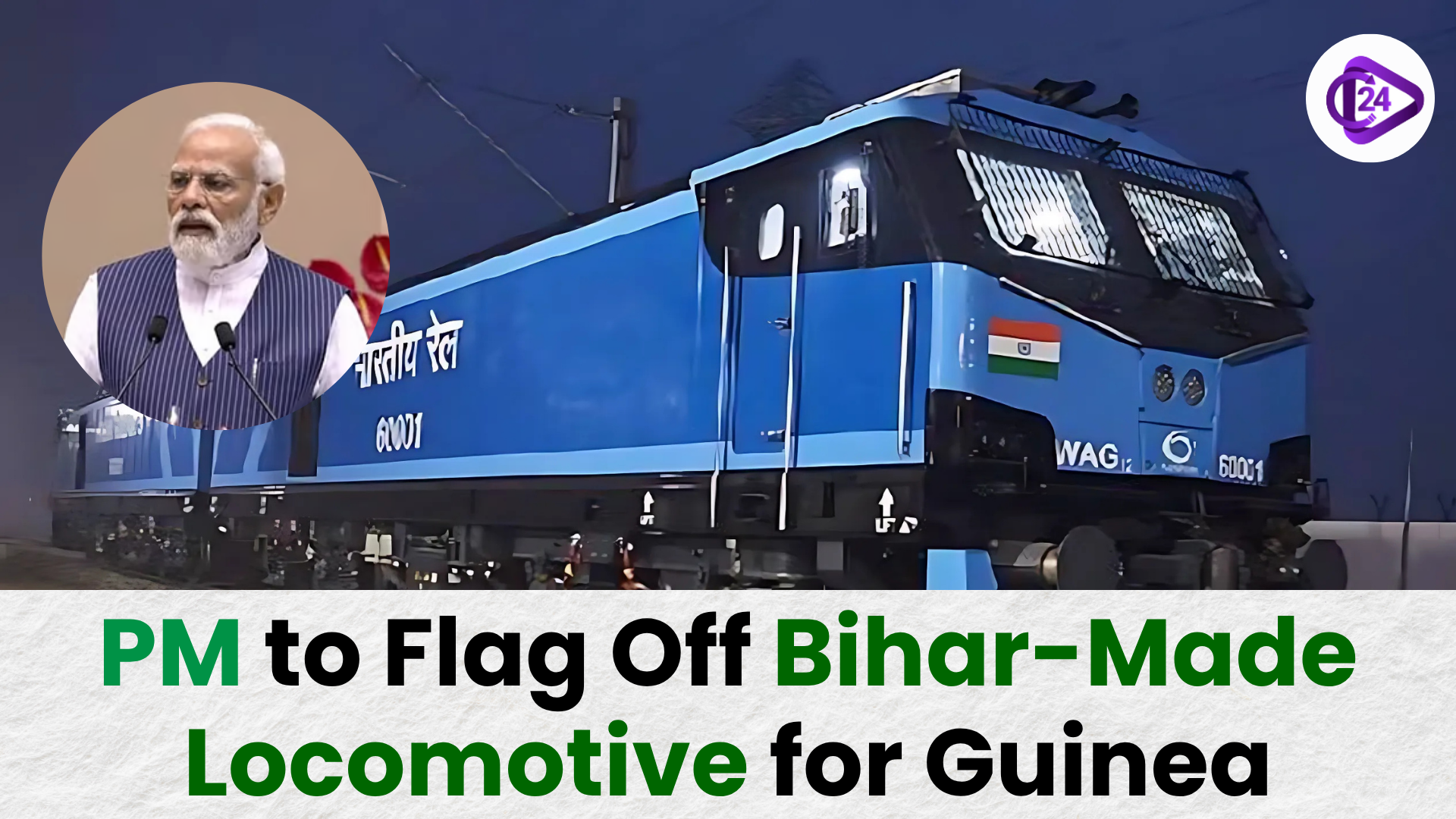
PM to Flag Off First Locomotive for Export from Bihar Factory to Guinea

The Indian Railways will be starting to export the locomotives to Guinea, a West African nation, and Prime Minister Narendra Modi will be flagging off the first inventory of locomotives to Guinea based on the topography of the areas. India will directly Indian Railways exports locomotives to Guinea as the country will supply the latter with 150 locomotives in the next three years. The locomotives will be employed in the transportation of freight at the mines of Guinea iron ore. This is a move by India to strengthen its exports and stand better in the railway industry globally. 

Context

  • The Indian Railways will be starting to export the locomotives to Guinea, a West African nation, and Prime Minister Narendra Modi will be flagging off the first inventory of locomotives to Guinea based on Bihar

  • It is an export operation of locomotives on behalf of the Public-private partnership (PPP) model, and it is a milestone moment in the export of Indian Railways.

Key Points

Send-off of the First Export:

  • On June 20, 2025, PM Modi will launch the initial locomotive to Guinea at the Marhowrah factory in the state of Bihar.

  • In addition, Modi will flag off a Vande Bharat train between Patliputra and Gorakhpur along with the locomotive.

Export Details:

  • This is in the form of supplying 150 locomotives to Guinea in the next three years.

  • These locomotives that are priced at 2.74 million dollars each are to be made available to ferry freight in the iron ore mines of Guinea.

Public-Private Partnership:

  • The Marhowrah plant is the model of PPP, and the established joint venture is between GE Transportation (Wabtec) and Indian Railways.

  • Guinea gave the contract to global tender on supply of 4,500 HP locomotives.

Economic Impact:

  • The overall cost of the contract is 411 million dollars (roughly 23,533 crore).

  • The project also boosts India's chances in exporting railways making its partnership strategy a success.

Fine milestone of Indian Railways:

  • It is a first occasion that Indian Railways exports locomotives to Guinea directly, which is one step further as compared to the exports of previous times where the exports were done under a credit agreement and countries released, such as Bangladesh and Mozambique.

Future Exports:

  • The initial 37 locomotives will be delivered in FY26, 82 in FY27 and 31 in FY28.

  • This international tender that the Marhowrah factory has won highlights the growing level of competitiveness that the nation has in the international rail market.

Strategic Significance:

  • Export of these locomotives forms part of the larger action plan by India to enhance its exports in infrastructure and transportation which will improve the economic links between India and West Africa.

Conclusion

The successful Indian Railways exports locomotives to Guinea is the first direct export of the locomotives manufactured at the Marhowrah factory to Guinea and this can only be identified as a milestone in the country where India is in the making in terms of locomotive export. The project highlights India, who is focusing even more on the development of international partnerships and the advancement of its export-based operational infrastructure.

CAMS Survey: Internet Access & Digital Skills in India

The initial Comprehensive Annual Modular Survey (CAMS) of India gives meaningful clues about Internet accessibility and digital literacy in India. The penetration of broadband is now at 76.3 but there are significant differences between rural and urban, caste, and income level. The survey also presents obstacles of digital literacy, as rural regions and lower-income societies experience huge lacks in Internet usage and computer literacy, including emailing, spreadsheets, and online transactions of funds.

Context

  • The CAMS survey, carried out by the National Sample Survey Office (NSSO) provides an end-to-end view of digital infrastructure and digital skills in India

  • It highlights inequalities in access to broadband internet and digital literacy in India, which might potentially result in the failure to reach an SDG4 goal of inclusive and equitable education.

Key Points

Broadband Access

  • National Coverage: Broadband penetration in Indian households is 76.3%

  • Urban v Rural: Urban access is 86.5 percent rural is 71.2%

  • Best States: Above 90% access is in Delhi, Goa and Sikkim.

  • Lagging States: West Bengal, Andhra Pradesh and some states being less than 70%.

The Economic Inequality and Caster Disparities

  • Caste-wise Access:

    • General: 84.1%

    • OBC: 77.5%

    • SC: 69.1%

    • ST: 64.8%

Income Impact:

  • 71.6% of the poorest households do not have access to broadband.

  • Access is lacking only in 1.9% of the richest households.

Mobile phones and 4G connectivity

  • Mobile Ownership:

    • Rural: 94.2%

    • Urban: 97.1%

    • Gender and Social Gap: Less use of mobile phones is made by women and other disadvantaged groups.

  • 4G Usage:
    • Rural: 53.6%

    • Urban: 74%

    • Obsolete Technology: 40.4% of the respondents use the older technology in mobiles; there is low usage of 5G.

Digital Skills and Literacy

  • Internet Use:
    • Rural: 53.6%
    • Urban: 74%
  • Simple Digital Task:
    • Users of email: 20% (rural), 40% (urban)
    • Online banking: It is used by only 37.8%
    • Advanced Skills: Few have the ability to operate on spread stones, or other productivity tools.

Government Initiatives:

  • BharatNet Project

    • Goal: To give high-velocity broadband availability to every 2.5 lakh gram panchayats.

    • Coverage: Emphasizes optical fiber coverage on the rural and remote locations.

    • Status: The largest rural broadband project in the world (a project still in phases).

  • Digital India Programme

    • Launched: 2015

    • Vision: To make India a digitally enabling nation.

    • Major pillars: digital infrastructure, digital governance and services on demand, digital literacy.

  • Wi-Fi Access Network Interface- PM-WANI

    • To install a system of public Wi-Fi hotspots by means of PDOs (Public Data Offices).

    • Advantage: Low cost of wide-spread internet access without any license fee to the operators.

  • National Digital Literacy Mission ( NDLM ) / PMGDISHA

    • Other name: Pradhan Mantri Gramin Digital Saksharta Abhiyan

    • Target: To digitally literate 6 crore rural households.

    • Digital Skills in India: Elementary computer and internet knowledge.

  • Common Service Centres (CSCs)

    • Roles: Offer e-governance services in the countryside (banking services, education services).

    • Internet Use: Serve as the source of the internet in unserved areas.

  • National Broadband Mission

    • Aim: Access to every village via universal broadband, by 2025.

    • Infrastructure: Works on fiber, mobile towers and promotes private investment.

  • Spectrum Allocation & Telecom Changes

    • Focus: Catalyze 4G/5G roll.

    • Support: The spectrum auctions, sharing infrastructure and de-regulation.

  • Google & Tata Trusts Internet Saathi

    • Digital India supported it although it was not a government run initiative.

    • Goal: The rural women should be trained in digital skills in India and the use of the internet.

Effect of Education and Employment:

  • In accordance with SDG 4 ( Education ) quality education is connected with digital skills in India. 

  • Digital illiteracy limits access to online education/career opportunities especially to the rural and poor communities.

Digital Divide:

  • Based on the data, it is apparent that although India is progressing on the path of digital inclusion, the gap is still large especially in rural parts of India, among women, and at the bottom of society. 

  • These disparities are of essence when it comes to inclusive development.

Conclusion

On the one hand, the CAMS survey shows that in India the improvement of provision of broadband has been maintained, but there is still a high level of inequality in access and digital literacy in India. In particular, inequality is observed among rural populations, the poor castes, and the poorer households. To reach this objective, specific measures will have to be implemented: subsidizing the access to broadband as well as enhancing digital literacy. Digital skills in India and infrastructure should also be a priority among the policymakers in order to have equal and inclusive development, particularly within education and labor.

UPSC Prelims Practice Question

Q.1 Which of the following is/are the key findings from the Comprehensive Annual Modular Survey (CAMS) 2025 regarding digital literacy and broadband access in India?

  1. Broadband penetration in India is 76.3%, with a higher penetration in urban areas (86.5%) compared to rural areas (71.2%).

  2. 71.6% of the poorest households in India lack access to broadband.

  3. Women and disadvantaged social groups make significantly higher use of mobile phones than urban populations.

  4. The BharatNet Project aims to provide high-velocity broadband to every 2.5 lakh urban areas.

Select the correct answer using the code below:

(a) 1 and 2 only
(b) 1, 2, and 4 only
(c) 1, 2, and 3 only
(d) 3 and 4 only

UPSC Mains Practice Question

Q.1 Discuss the implications of the findings from the Comprehensive Annual Modular Survey (CAMS) 2025 on India’s digital infrastructure and literacy. What measures should the government take to address the existing inequalities in broadband access and digital skills, especially in rural and disadvantaged regions, in the context of SDG 4 (Quality Education)?

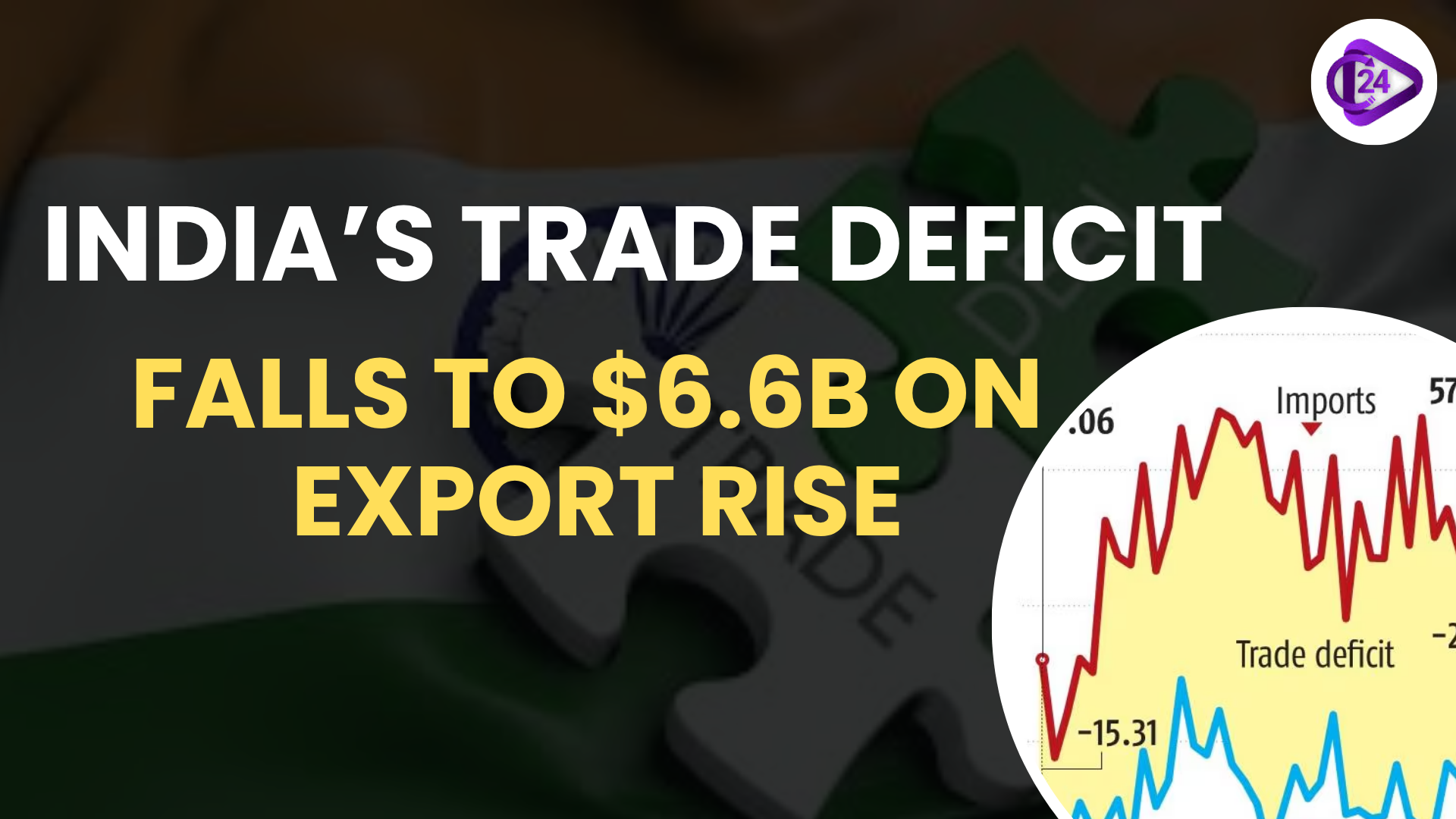
India’s Trade Deficit Narrows to $6.6 Billion Amid Export Growth

The decrease in trade deficit in India is attributed to fall in oil prices and excellent output in the services export sector. The development has consequences to the economic capabilities of the country and trade policy. The positive growth of exports by 2.8 and a negative change of total imports by 1 was conducive in contributing to the improvement in the balance of trade. There is a drop in merchandise exports but growth in non-petroleum exports indicating that the export sector has some strength. The decline in oil prices significantly contributed to a decline in imports. The move is part of the Indian move towards economic stability and lessening the reliance of imports elsewhere.

Context

  • The trade deficit in India is reduced by a large margin of $6.6 billion in May 2025, giving an increase in the total exports and particularly the services sector. 

Key Points

  • Trade Deficit:

    • Trade deficit was reduced to 6.6 billion which was 30 % in May 2024.

  • Export Growth:

    • Export sector rose by 2.8% to 71.1 billion dollars.

    • Export of services gained by 9.4% or to 32.4 billion.

  • Merchandise Exports:

    • Exports of merchandise also declined with a setback of 2.2 % to reach 38.7 billion.

    • There was an increase of 5.1% in non-petroleum exports.

  • Imports:

    • Merchandise imports went down by 1.7%.

    • The imports of non-petroleum increased by 10%

    • There was an increment in services imports by 1.5%.

    • The number of imports declined over 1%.

  • Effect of Oil Price:

    • Declining oil prices were also key factors to the dropping of the merchandise imports.

    • The dynamic price of oil in the international markets influenced export of merchandise.

About Trade Deficit

What is the trade deficit?

  • When imports of goods and services are more than exports  by a nation is known as the trade deficit. 

  • It is the opposite of the value that a country imports to a country and exports during a given time period. 

  • Bad balance in trade occurs when the value of the imports are bigger than the value of exports. 

  • This may be considered as an indicator that the nation is living beyond its means, which is financed either through borrowing or external investment. 

Importance of trade deficit

  • Services Strengths:

    • India is in the lead on IT and pharmaceuticals making it possible to have a trade deficiency on goods.

    • Service export surplus facilitates increment of imports without undermining the economy.

  • Investment Destination:

    • The number of foreign investments translates into a surplus in the capital account which offsets the deficit in the current account.

    • It is only logical that a surplus accompanies an investment strategy of India.

  • Competitive Exports:

    • Trade deficit exerts downward pressure on the currency thus helping in making exports cheaper and thus competitive.

  • Positive Current Account Deficit:

    • Current account balance of about 2 % of gross domestic product is manageable in India.

  • Comparative Advantage:

    • India exports services and imports those goods in which it develops lower production advantage.

  • Manufacturing Growth:

    • Manufacturing is boosted through imports of items such as machinery to help in the Make India initiative.

  • Increased Demand Ability:

    • Imports equalize the living standards by giving a wide range of goods.

  • Economic Flexibility:

    • When the national production finds itself in a short brand, imports step in to avoid the inconvenience.

  • Economic Integration:

    • Trade deficits are an indication of international integration which makes them available to essential imports.

Disadvantages of trade deficit

  • Economic Sovereignty loss:

    • Repeated losses can result in losing control over national resources to foreign acquisition.

  • Higher Unemployment:

    • Trade deficits can lead to loss of employment as local industries cannot cope with imported cheap goods.

  • Hypothesis Twin Deficits:

    • Trade deficit being associated with the budget deficit involves taking loans to fill the gap.

  • Deindustrialization:

    • Foreign competition could reduce domestic manufacturing because long-term deficits are experienced.

  • Crisis in Balance of Payments:

    • When the government exorbitantly borrows money in an effort to fund its deficit, this may precipitate a Balance of Payments crisis.

What is Required to Achieve Balanced Trade?

  • Export Credit Support:

    • Promote low cost export credit to MSME so as to enhance competitiveness.

  • Logistics Infrastructure:

    • Enhance the efficiency of logistics such as PM GatiShakti and National Logistics Policy.

  • Free Trade agreements (FTAs):

    • Make sure that FTA offers favorable conditions to key imports to satisfy the demand.

  • Participation in Global Value Chain (GVC):

    • Promote GVCs to make Indian firms to be exposed to a wider sector where production can be exported more.

  • Domestic Manufacturing:

    • In order to increase manufacturing in the country, start up PLI programs and reinforce Districts as Export Hubs.

  • High-Value Trade:

    • Export high value products such as EVs, renewable energy and defense equipment.

  • Export Basket Diversification:

    • Increase sales of defense, aerospace and renewable energy to narrow the trade deficit.

  • Moving in Sanitary and Phytosanitary Barriers:

    • Reach customers in new markets by breaking the trade barriers in the high-income economies such as the US.

Conclusion

The positive aspect of the growing service exports and the declining oil prices is seen in the decreased trade deficit in India as part of the overall attempt to get the trade balance. Although this contraction of merchandise exports is a challenge, the increased non-petroleum exports and services sector will give a stronger basis of trade policy in the future. India's long-term trade strategy and economic stability will be based on strengthening its own manufacturing sector and minimizing its own oil importation dependency.

UPSC Prelims Practice Question

Q.1  What was the main factor that could have led to a lower trade deficit in India in the month of May in India in 2025?

  1. This is due to the decrease in oil prices.

  2. 19.4% growth in the export of services

  3. Fall in exports of merchandises by 2.2%

  4. 10% more imports of non petroleum products

Select the correct answer using the code below:

(a) 1, 2, and 3 only
(b) 1, 2, and 4 only
(c) 1, 3, and 4 only
(d) 2 and 3 only

UPSC Mains Practice Question

Q.1 Discuss the effect of the reducing trade deficit in India in May 2025 on the Indian economy, its trade policy specifically on export credit and infrastructure in logistics and the input of the service-rich industry in balancing the trade. Outline the possible challenges and benefits of closing the trade gap and steps to be taken in policy in order to maintain the same.

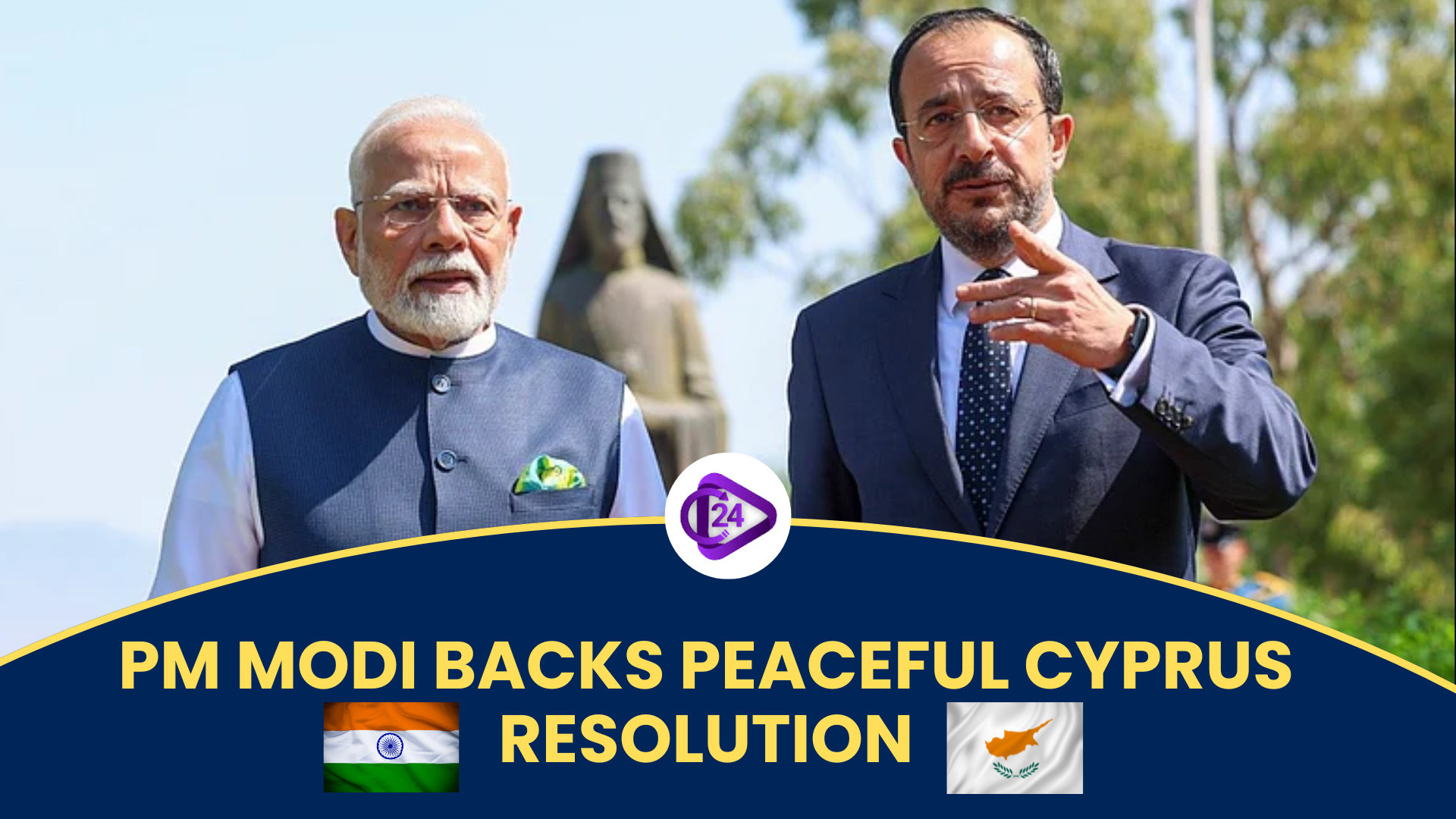
India Supports ‘Peaceful Resolution’ of Cyprus Issue: PM Modi’s visit to Cyprus

Prime Minister Narendra Modi's visit to Cyprus reaffirmed India's support in the peaceful solution of the Cyprus issue. He reiterated the unconditional support of India to the territorial integrity and unity of Cyprus which was a roundabout way of referring to the implication of Turkey in the Cyprus conflict. It was also under the leadership of Modi that India renewed its stand on international conflicts emphasizing on dialogue and diplomacy especially in the context of Israel-Iran and Russia-Ukraine confrontation. His tour is a sign of a stronger India-Cyprus relations, before Cyprus takes over becoming the President of the European Union in 2026.

Context

  • The visit of the prime minister of Modi's visit to Cyprus is an indication of how India has always supported the unity and sovereignty of Cyprus. 

  • It is also a politically tactful overture to Turkey that has been supportive of Northern Cyprus since its separation in 1974.

Key Points

The Indian aid in Unification of Cyprus:

  • PM Modi said that India stands firm with the independence, sovereignty and territorial integrity of the country of Cyprus.

  • An everlasting solution on the Cyprus problem was marked in the same statement, as well as resolution to the conflict by peaceful means, which can be achieved through negotiations supported by the UN.

Message to Turkey

  • The attitude that India has adopted towards Cyprus is a sort of message delivery to Turkey, which supports Northern Cyprus.

  • The common declaration mentioned the necessity to refrain from unilateral measures, an indication that dialogue is more preferable to war.

The Cyprus Question

  • The country has been divided into the Turkish-supported North Cyprus and the internationally recognized Republic of Cyprus since the year 1974.

  • According to the resolutions of the United Nations Security Council, the resolution targets a bizonal and bicommunal federation comprising political equality.

Enhancing the India-Cyprus Relations:

  • The visit also involved further strengthening of political alliances in preparation towards the Cyprus Presidency of the European Union in 2026.

  • Cyprus has been in favour of permanent UN Security Council positions in India.

Honour to PM Modi:

  • Cyprus has ranked the highest grant to Prime Minister Modi because of “the Grand Cross of the Order of Makarios III.”

  • Modi attributed the honor made to the cordial relations and common values of India and Cyprus.

The Diplomatic Strategy of India:

  • India traditionally voted in favor of the independence of Cyprus, promoting its sovereignty since the 1950s.

  • India cooperates with Cyprus in the European Union, where the latter is a strategic partner particularly in dealing with issues to do with strategic interests such as security and world politics.

Cyprus in UN:

  • Cyprus has been in Agreement regarding the stand of India in the Kashmir problem and it has been a strong critic of cross-border terrorism by Pakistan.

  • The convergence of the two countries in world-changing affairs can be said to be a sign of adherence to regional stability and international law.

Geopolitical Strategic Implications:

  • The visit by PM Modi, which follows the Operation Sindoor against Pak, emphasizes the Indian interest of strengthening the diplomatic connection in the region and positioning itself in European and world geopolitics.

Conclusion

Prime Minister Modi's visit to Cyprus is a landmark initiative towards the strengthening of bilateral relations, especially in the matters of territory integrity of Cyprus and the peaceful settlements to international conflicts which are promoted by the Indian side. In the process of India Cyprus relations with each other, the direction is to ensure that there is progress in terms of mutual interest in the areas of diplomacy, security, and international relations. The way in which India has maintained its assistance to Cyprus, particularly in the UN and in EU, still brings to the fore the determination of the nation to support the sanctity of sovereignty and peace in the international platform.

UPSC Prelims Practice Question

Q.1 Which of the following statements is/are correct regarding Prime Minister Narendra Modi’s visit to Cyprus in 2025?

  1. Modi reaffirmed India's support for the territorial integrity and unity of Cyprus.

  2. The visit was a direct message to Turkey, urging it to refrain from unilateral measures in Cyprus.

  3. Modi’s visit was aimed at improving trade relations between India and Cyprus.

  4. Cyprus expressed support for India’s stand on the Kashmir issue.

Select the correct answer using the code below:

(a) 1 and 2 only
(b) 1, 2, and 4 only
(c) 2 and 3 only
(d) 1, 3, and 4 only

UPSC Mains Practice Question

Q.1 Discuss the diplomatic significance of Prime Minister Narendra Modi's visit to Cyprus in 2025. How does this visit reflect India's broader approach towards international conflicts, especially in the context of Cyprus, Turkey, and the ongoing global geopolitical shifts?

Frequently Asked Questions (FAQs)

The current affairs cover recent national and international events related to UPSC, SSC, Banking, Railways, and State PCS.

You need to read about the current affairs daily, and revise them every week and every month to keep them longer in your memory.

Yes, Class24 provides free downloadable Daily Current Affairs PDFs for easy revision.

Yes, you can practice MCQs and quizzes to boost your exam preparation.

Absolutely. The content is written in simple, easy-to-understand bilingual language suitable for beginners.

Go to class24.com and click on the current affairs section directly, where you find everything that you need.

ssc-toppers

Start Learning Today with Class24

Related current affairs

Class24 offers free video lectures for smart preparation, covering CGL, CPO, CHSL, MTS, and GD exams. Learn from expert faculty, revise concepts easily, practice with PYQs, and improve speed and accuracy through high-quality, exam-focused video lessons anytime, anywhere.

Get success in your hand. Start study anytime anywhere.

The journey becomes simple and enjoyable when you start taking interest in it. And through our app “Class24”, we will be your trusted partners in developing that interest.

Daily Quizzes
Mock Tests
Ongoing

No ongoing tests right now.