
Day: June 4, 2025

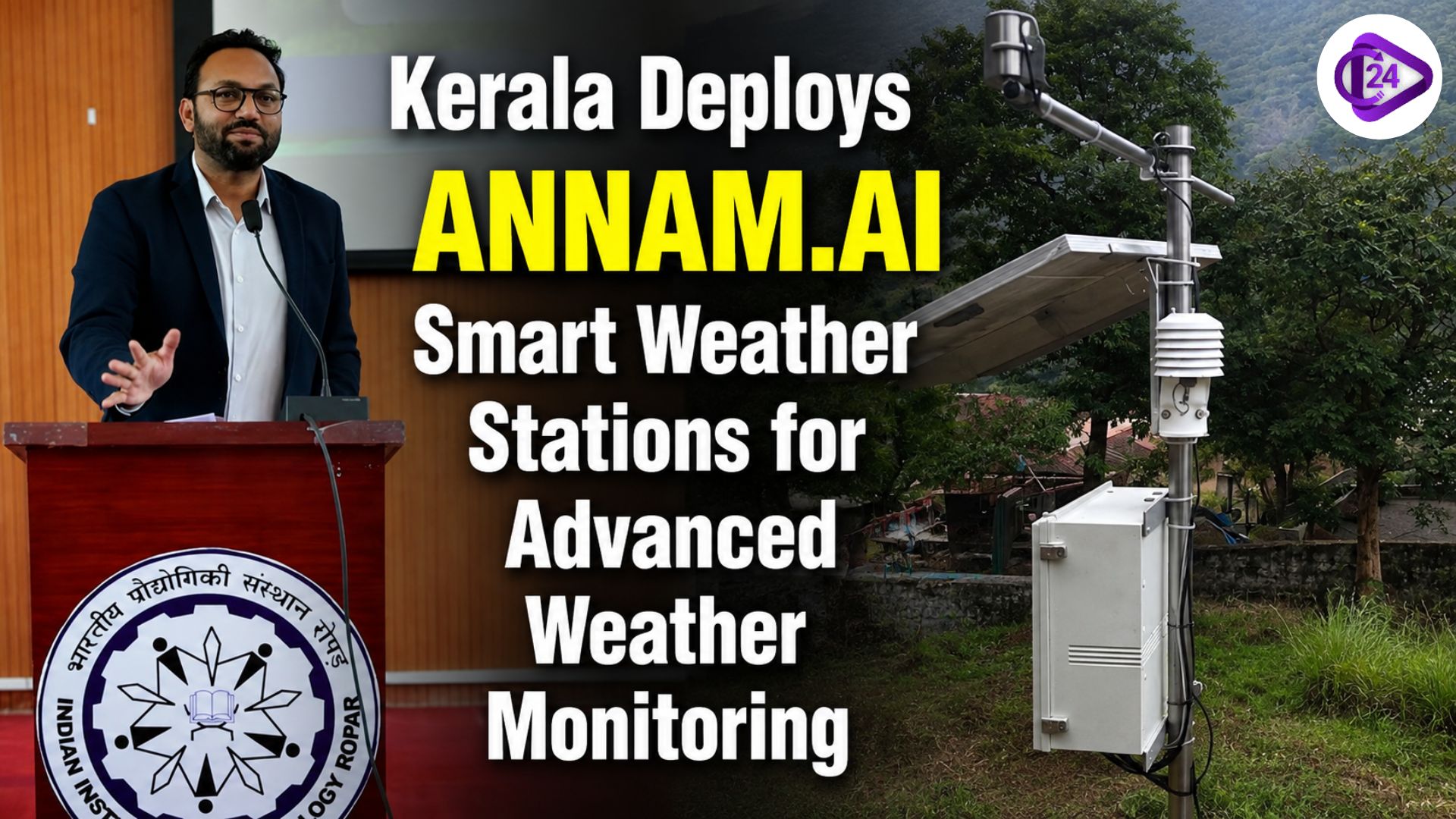
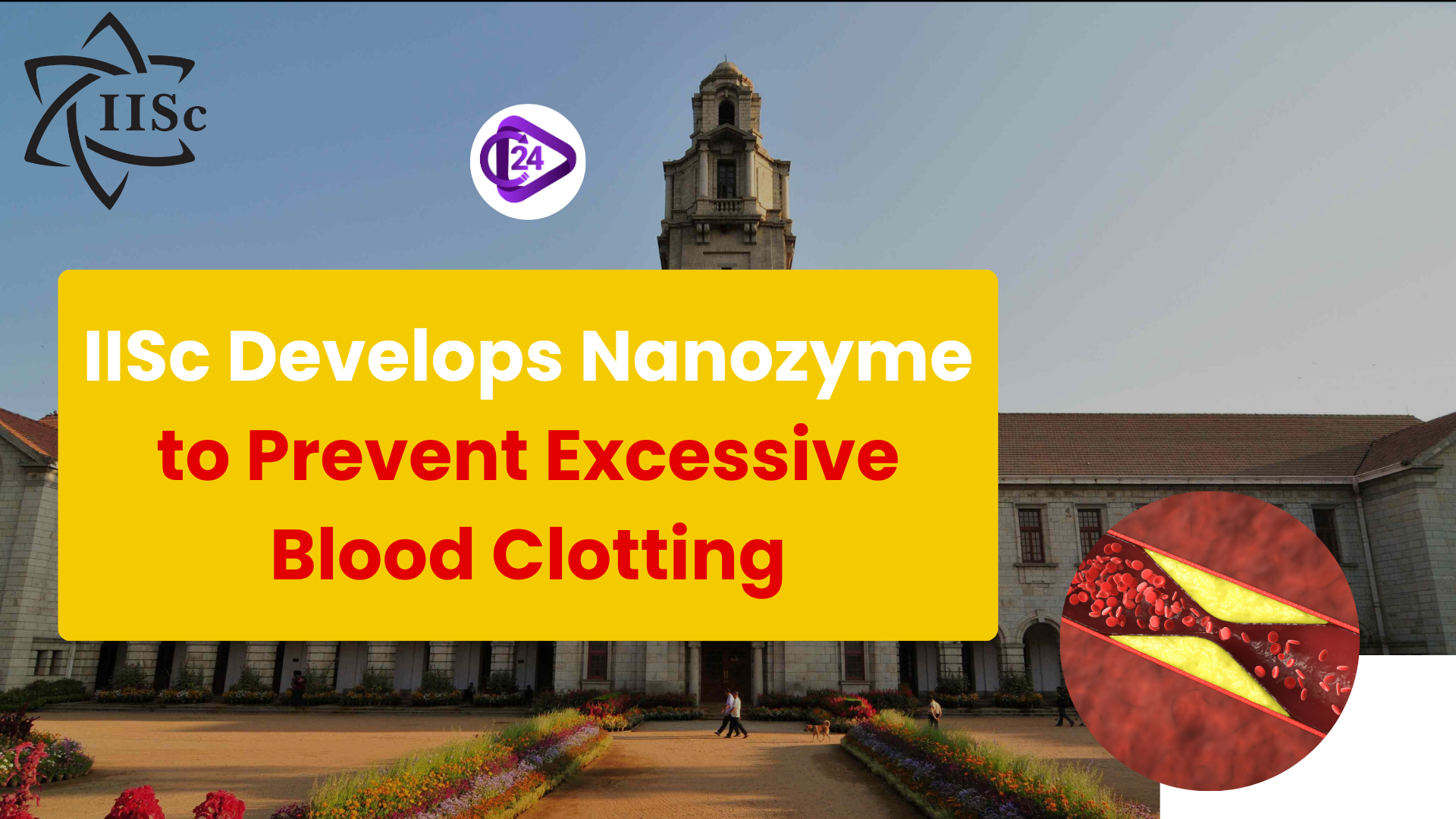
IISc Develops Nanozyme to Prevent Blood Clotting

A metal-based nanozyme for preventing rare blood clotting, helpful in PTE and stroke, is being developed at the Indian Institute of Science (IISc) in Bengaluru. Too many blood clots can form in people with PTE, COVID-19 or oxidative stress because this protective process of clotting sometimes fails. They have made nanozymes that behave like natural antioxidant enzymes to manage Reactive Oxygen Species (ROS) and stop platelets from joining to form a blood clot. Countless experiments have pointed out that spherical-shaped vanadium pentoxide (V2O5) is the best nanozyme. Researchers are planning more studies to see how it affects ischemic stroke.

Context

  • At IISc researchers have formulated a metal-based nanozyme that stops excessive blood clotting that may happen in diseases such as Pulmonary Thromboembolism and ischemic stroke. 

  • Innovations target both regulating the amount of Reactive Oxygen Species and preventing platelet aggregation which helps with antithrombotic therapy.

Key Points

Scientific Development:

  • A metal-based nanozyme invented at IISc to control unhealthy blood clotting.

  • Used to help manage patients suffering from pulmonary thromboembolism (PTE) or ischemic stroke.

Biological Context:

  • In effect, proteins called collagen and thrombin help activate platelets, leading to blood vessels to form blood clots.

  • As a result of conditions like PTE or COVID-19, there is overproduction of ROS that increases platelet activation which in turn raises the chance of clot formation and can be seriously harmful or lethal.

Nanozyme Innovation:

  • With the help of Prof. G. Mugesh, researchers came up with redox-active nanozymes that can replace natural antioxidant enzymes.

  • In the body, nanozymes protect against oxidative stress, stop extra platelets from sticking together and stop unnecessary clotting in blood vessels.

  • The shape of spherical vanadium pentoxide (V2O5) was found to be the most efficient.

Steps Taken to Conduct Research and Outcomes 

  • To test them, a group of platelets was separated from human blood and treated with different nanosystems to check if they could stop platelet aggregation.

  • The following step is to study the ability of the nanozyme in preventing ischemic stroke.

Conclusion 

Using IISc researchers, creating a nanozyme from metal marks a new achievement for dealing with excessive blood clotting disorders. With the advancement of clot management, there is the chance to lower the chances of thromboembolism and ischemic stroke. Working on new uses of statins could bring about new treatments for cardiovascular and neurological diseases.

UPSC Prelims Practice Question

1. From among these which is accurate about the research on nanozymes being conducted at the Indian Institute of Science (IISc)?

a) This nanozyme manufactured at IISc falls under metals and it ceases unnecessary platelet gathering that can occur with diseases like COVID-19.
b) The nanozyme has only been found to help fight against pulmonary thromboembolism (PTE), but not ischemic stroke.
c)  Among the nanozymes tested, researchers found that vanadium pentoxide (V2O5) was least efficient.
d) The nanozyme works by releasing Reactive Oxygen Species (ROS) to keep blood from clotting.

UPSC Mains Practice Question

Q.1 "Study how the metal-based nanozyme produced at IISc helps treat too many blood clots." Look at the ways it may help with diseases like Pulmonary Thromboembolism (PTE) and ischemic stroke.

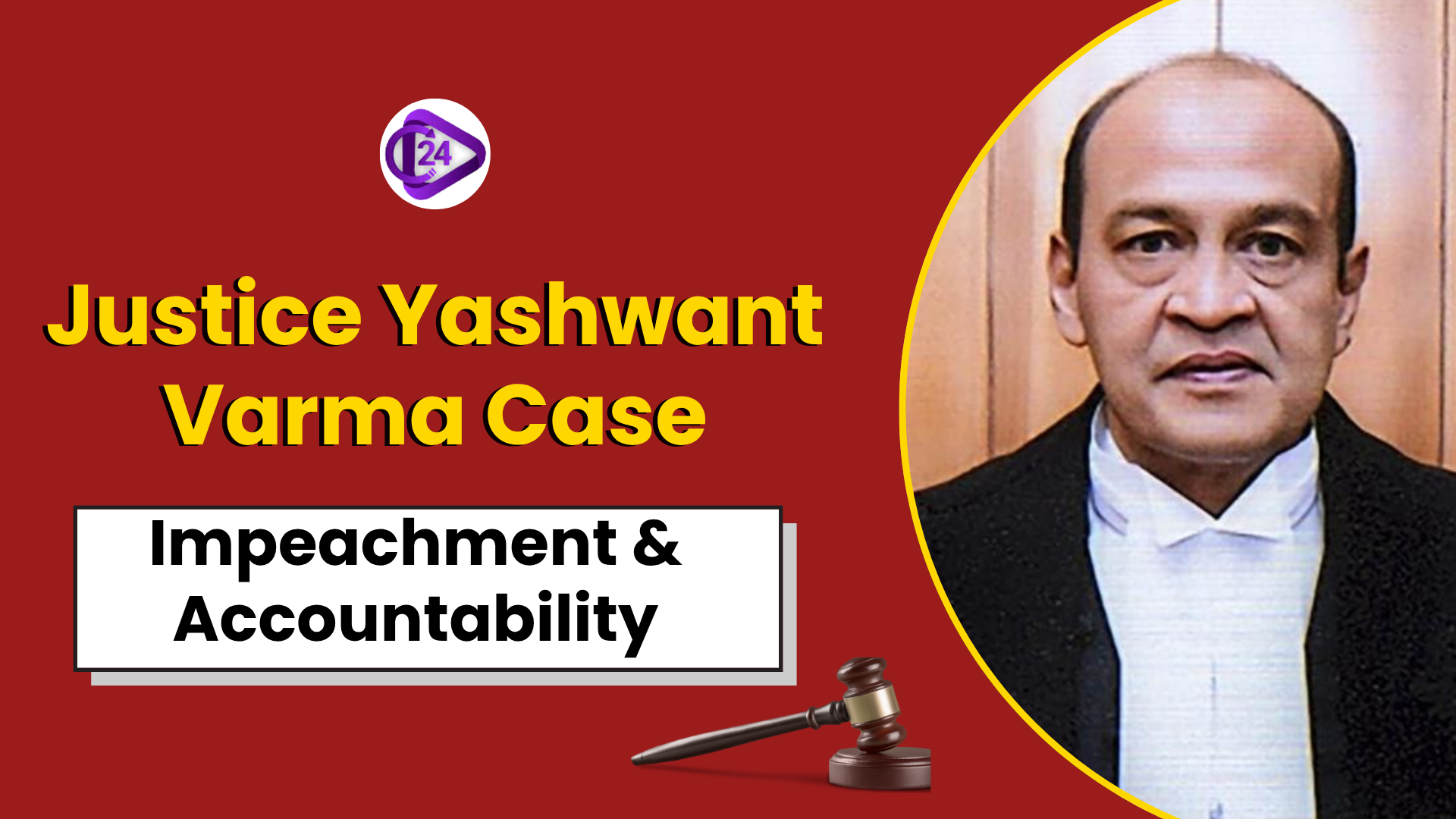
Impeachment Process of Justice Yashwant Varma

Following a major fire incident at his home in March, a 3-member panel suggested indicting Justice Yashwant Varma, from the Delhi High Court now serving at the Allahabad High Court. Later on, cash was found in his outhouse and this triggered demands from others for him to resign, but he did not do so. An impeachment of a judge in India is governed by Article 124(4) and Article 217 which say the judge must lose the support of two-thirds of MPs and the approval of both Houses. A judge can also be removed under the law by first going through an Inquiry process known as the Judges (Inquiry) Act, 1968. The case now going on highlights the importance of how accountable and transparent our judges are.

Context 

  • Yashwant Varma was indicted because unaccounted money was found after a fire at his residence. 

  • Although many demanded he step down, he refused which then led authorities to apply Articles 124(4) and 217 of the Indian Constitution.

  • It illustrates difficulties in ensuring fairness and openness in courts.

Key Points

Background:

  • A committee formed by the Supreme Court found Justice Yashwant Varma (previously of Delhi High Court, presently at Allahabad High Court) to be indicted.

  • Cash not linked to his accounts was found in the outhouse after a fire at his Delhi house in March.

  • Justice Varma rejected the request to resign which prompted the next steps.

Legal Procedure: Impeachment of a Judge:

  • Gets its authority from Articles 124(4) and 217 of the Indian Constitution.

  • Requires:

    • 50 members of Rajya Sabha or 100 in Lok Sabha can initiate a motion.

    • An investigation was carried out by a committee of 3 people.

  • Removal only occurs when both Houses approve it with a supermajority of 2/3 (present and voting + total membership).

  • The present stage: A report has been submitted by the committee to Chief Justice of India D.Y. Chandrachud (previously Chief Justice Sanjiv Khanna).

Impacts

  • All-party consensus: To prevent the appearance that the case is being politically motivated.

  • Judicial accountability: Keeps judges and the justice system in check by requiring accountability.

  • Bipartisanship: It was necessary for both political parties to cooperate to get the 2/3rd majority in each House.

  • Public perception: Talks about judicial ethics, independence and connections between the executive and the judiciary.

Provision and Explanation:

  • Article 124(4): Methods for removing Supreme Court judges also apply to High Court judges according to Article 217.

  • Judges (Inquiry) Act, 1968 outlines the rules for inquiry, the production of a report and how removal may happen.

  • Grounds of removal: Proved misbehaviour or incapacity

Historical Context:

  • Among all the impeachment proceedings, only one reached the point of voting in Parliament (Justice V. Ramaswami, in 1993).

  • Support from the ruling party was missing which is why the motion did not succeed, showing how difficult it can be.

Problems Related to Ethics and Administration:

  • Deciding on the proper balance between judicial independence and accountability is a major issue for constitutions.

  • Internal transparency is very important for the judicial process.

  • Recovering money after a warehouse fire raises questions about trust and ethics.

Conclusion

This process for judges requires considering both the need for independence and the need for judges to be accountable. The experience of Justice Varma illustrates the issues judges face when their actions are reviewed.

UPSC Prelims Practice Questions

1. Which statement below describes how a judge can be impeached in India?

a) To trigger an impeachment motion, the President must agree and two-thirds of both Houses of Parliament must back it.
b) The Judges (Inquiry) Act, 1968, describes the steps needed for inquiring into and removing judges.
c) The Supreme Court is the only body that can start the impeachment process for a judge.
d) Removal of a judge can occur if the inquiry committee decides they have made a minor administrative mistake.

UPSC Mains Practice Questions

Q.1 Look at the legal and ethical aspects of impeaching judges in India based on the case of Justice Yashwant Varma as an illustration. How do the legal systems address the need for both independence and accountability of the courts?

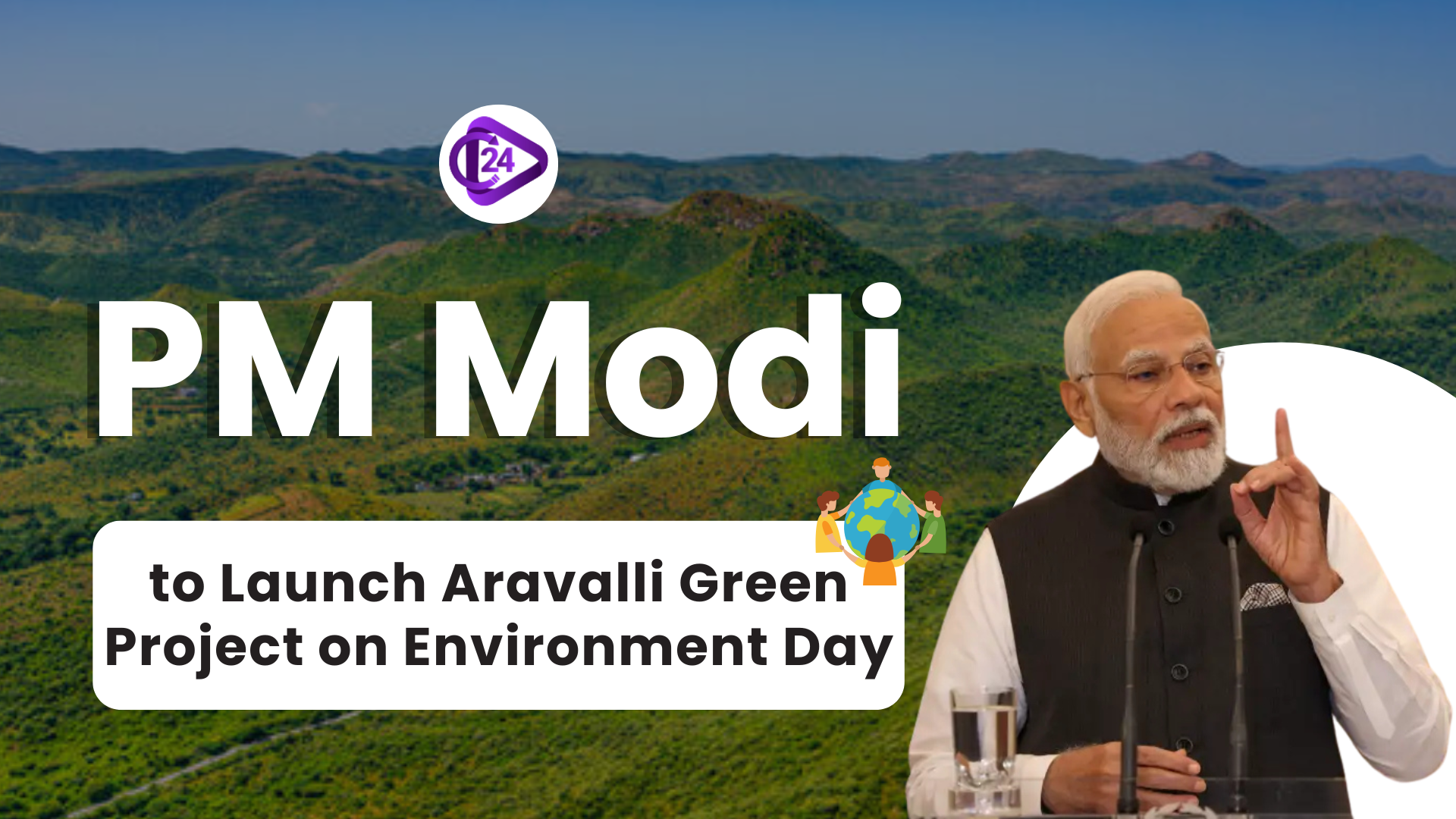
PM Modi to Launch Aravali Green Wall Project 2025

The Aravalli Green Wall project against desertification and to restore damaged land in four states will be launched by Prime Minister Narendra Modi on June 5, 2025. It is planned for 2023 that the project will establish a 5-km buffer zone near the Aravalli mountain range. Natural map II covers 6.45 million hectares and the estimated cost is ₹16,053 crore. The initiative contributes to India’s climate goals such as strengthening the ability to store carbon and restoring damaged land. Planting trees is also on the schedule of Chief Ministers of Haryana, Rajasthan and Gujarat for the day.

Context

  • On June 5, PM Modi will launch the Aravalli Green Wall project as part of World Environment Day to save land and fight against desertification in four states. 

  • The project will try to increase the number of trees and forests on 6.45 million hectares.

Key Points:

Project Overview:

  • Objective: Keep desertification down and help restore areas destroyed around the Aravalli mountains.

  • Cost of the project: ₹16,053 crore.

  • Area: 6.45 million hectares which is found in Gujarat, Rajasthan, Haryana and Delhi.

  • Buffer zone: 5 km wide around the entire Aravalli range.

Environmental Goals:

  • Under Climate Commitment, Industries will take up initiatives to sequester an additional 2.5 to 3 billion tonnes of CO₂ equivalent for India.

  • A goal within India’s aim to restore 26 million hectares of land that is damaged by 2030.

Aravalli Mountain Range

  • The Aravalli range stretches for 700 km from Champaner in Gujarat to areas around north east Delhi and Haryana.

  • It helps stop land desertification and supports the rivers Luni, Banas and Sabarmati, including many wildlife species.

  • Threatened by changes from deforestation, mining, urbanization, farming and development.

Conclusion

The Aravalli Green Wall project moves toward healthier surroundings and supports India’s climate agreements and protection of the regional environment. Because it tackles desertification and works to promote biodiversity, it meets both national and global environmental goals. Local leaders join in the effort to address climate change, yet problems such as deforestation and city expansion continue to concern people for a sustainable future.

UPSC Prelims Practice Question

Q.1 Read about the Aravalli Green Wall project and consider the following statements:

  • Its goal is to set up a zone of at least 10 km between the Aravallis and towns around them.
  • The project extends to some parts of Gujarat, Rajasthan, Haryana and Delhi.
  • It is helping India meet its aim of restoring 26 million hectares of damaged land by 2030.

Which of the statements given above is/are correct?
a) 1 and 2 only
b) 2 and 3 only
c) 1 and 3 only
d) 1, 2 and 3

UPSC Mains Practice Question

Q.1 Address how Aravalli Green Wall Project fits into India’s strategies for stopping desertification and fulfilling climate goals. What possible environmental issues and rules are related to the implementation of this approach?

New Domicile, Reservation & Language Policies Notified for Ladakh

After abrogating Article 370 in 2019, the Union government made new laws for Ladakh that address requests for protection under the constitution. Among the policies are changes to where people can vote, more job opportunities for Nepalis, several recognized official languages and seats for women in hill councils. Such changes are happening as people in civil society press for the land, jobs and identity of the Ladakhis to be protected. The policies change the rules for deciding who from other regions can move to the Semester at Sea program. Notifications indicate a major change in the way the Union Territory is run and governed.

Context

  • Ladakh gets new policies for domicile and reservations, where locals are given a 85% share of jobs and an official language is set for the area. 

  • One-third of hill council seats will be reserved for women, and the region's job, language, and representation structure has been overhauled.

Key Points

Domicile Criteria:

  • Non-Ladakhis need to have been continuously living in Ladakh for 15 years (since October 31, 2019) to become domiciles.

  • Benefits extend to the children of people working for the Central government.

Reservation in Jobs

  • The Ladakhi people make up 85% of government employees in Ladakh.

  • Scheduled Tribes (STs) could get a share of about 80% in these reservations.

  • Extra slots are given to residents of Line of Actual Control/Line of Control (4%). SCs are provided 1% additional quotas and 10% seats are set aside for EWS students.

  • Reserving jobs for restricted categories accounts for 95% (out of total, except EWS), representing one of the highest percentages in India.

Women’s Representation:

  • 33% of the seats in the Ladakh Autonomous Hill Development Councils (LAHDC) are reserved for women and these seats are given to them every three years in rotation.

Official Languages:

  • English, Hindi, Urdu, Bhoti and Purgi are given the status of official languages.

  • Municipal help for amplifying other native tongues was also included.

Key Regulations 

  • The Ladakh Reservation (Amendment) Regulation was passed in 2025.

  • The Ladakh Official Languages Regulation was released in 2025.

  • In 2025, the Civil Services Decentralisation and Recruitment (Amendment) Regulation was passed.

  • The Autonomous Hill Development Councils (Amendment) Regulation was issued in 2025.

Conclusion

The new policies in Ladakh are designed by the Centre to support local people and ensure they are not marginalized, their cultural heritage is saved and more opportunities and rights are given to women. Still, civil society continues calling for more protection in the Constitution such as Statehood and placing their regions under the Sixth Schedule. Such growth affects the way federal power is used, tribal rights are upheld and border policies are managed in India.

UPSC Prelims Practice Question

1. What is true about the government’s new policies in Ladakh which came about after Article 370 was mediatized in 2019?

a) Reserving government jobs in Ladakh, 85% have been set aside for Scheduled Tribes (STs).
b) Domestic status can be granted to people from outside Ladakh who have lived there for at least 10 years since October 31, 2019.
c) Women are guaranteed one-third of the seats in Ladakh Autonomous Hill Development Councils (LAHDC) in rotation every five years.
d) Both English and Hindi are the only official languages in Ladakh.

UPSC Mains Practice Question

Q.1 "Evaluate the changes in policies for Ladakh brought by the Union government following the abrogation of Article 370 in 2019." What actions are taken in these policies to fix problems involving identity, being represented and getting jobs locally?

Frequently Asked Questions (FAQs)

The current affairs cover recent national and international events related to UPSC, SSC, Banking, Railways, and State PCS.

You need to read about the current affairs daily, and revise them every week and every month to keep them longer in your memory.

Yes, Class24 provides free downloadable Daily Current Affairs PDFs for easy revision.

Yes, you can practice MCQs and quizzes to boost your exam preparation.

Absolutely. The content is written in simple, easy-to-understand bilingual language suitable for beginners.

Go to class24.com and click on the current affairs section directly, where you find everything that you need.

ssc-toppers

Start Learning Today with Class24

Related current affairs

Class24 offers free video lectures for smart preparation, covering CGL, CPO, CHSL, MTS, and GD exams. Learn from expert faculty, revise concepts easily, practice with PYQs, and improve speed and accuracy through high-quality, exam-focused video lessons anytime, anywhere.

Get success in your hand. Start study anytime anywhere.

The journey becomes simple and enjoyable when you start taking interest in it. And through our app “Class24”, we will be your trusted partners in developing that interest.

Daily Quizzes
Mock Tests
Ongoing

No ongoing tests right now.