
Day: June 3, 2025

Bharat Gen: India’s First AI LLM in Indian Languages

Dr. Jitendra Singh, Union Minister of State for Science & Technology, introduced ‘Bharat Gen,’ a government AI-based LLM that functions in Indian languages, at the BharatGen Summit. The idea is to create fair, diverse and numerous AI solutions in areas like healthcare, education, agriculture and the government using support from IIT Bombay and the DST. Integrating text, speech and image processing in 22 Indian languages, BharatGen supports regions and follows India’s aim to innovate based on its cultural values.

Context

  • ‘Bharat Gen’ is an AI-powered LLM in Indian languages created to change major industries by giving solutions relevant to different areas. 

  • The start of this program greatly contributed to the development of India’s AI ecosystem by encouraging inclusive innovation that followed the nation’s culture and development.

Key Points

Features of Bharat Gen

  • Focusing on making ethical AI that respects Indian values.

  • Platform for AI that uses text, speech and images in 22 Indian languages.

  • The project originated as part of the National Mission on Interdisciplinary Cyber-Physical Systems (NM-ICPS).

Sectoral Impact:

  • Lets doctors use AI to provide telehealth services in their native tongues which makes healthcare easier to access in remote regions.

  • Helps education, agriculture and governance improve using AI designed for different regions.

  • Makes it possible for people to be involved at the local level and openly communicate with leaders by using multilingual feedback tools, for example in CPGRAMS.

Innovation and Collaboration

  • The government has established 25 Technology Innovation Hubs (TIHs) and four upgraded Technology Translational Research Parks (TTRPs) to carry out these activities.

  • During the Summit, there was cooperation among experts from universities, government, industry and young innovators.

  • In 2025, organized the Generative AI Hackathon to help students apply their knowledge to practical problems.

Following the Vision of the Nation:

  • Endorses PM Narendra Modi’s plan “India’s Techade,” by encouraging innovation and inclusion.

  • Supports the focus on learning from many fields in the NEP 2020, joining humanities with technology.

  • Showcases India becoming a leader in AI and digitally run government.

Notable Highlights:

  • 3,000 agri-tech startups demonstrate that innovation can be found outside the major cities.

  • During the summit, signing MoUs is meant to increase cooperation between government and research groups in AI.

  • Top officials from DST, DARPG and MEITY joined by industry leaders like Kris Gopalakrishnan were present.

Conclusion

The start of Bharat Gen has changed India’s AI scene, weaving original technology and cultural awareness to change several sectors. With its focus on innovation, employee training and teaming up with the world, Bharat Gen intends to drive India’s push to lead in AI and guide the development of ethical and accessible technology for all citizens.

UPSC Prelims Practice Question

Q.1 Bharat Gen, a company created by the Government of India, is:

  • A) Malaysia now has a new digital payment platform.

  • B) The model is the first Indian-made large language model for many natural Indian languages.

  • C) An earth observation satellite made by ISRO

  • D) Program providing electricity to rural areas

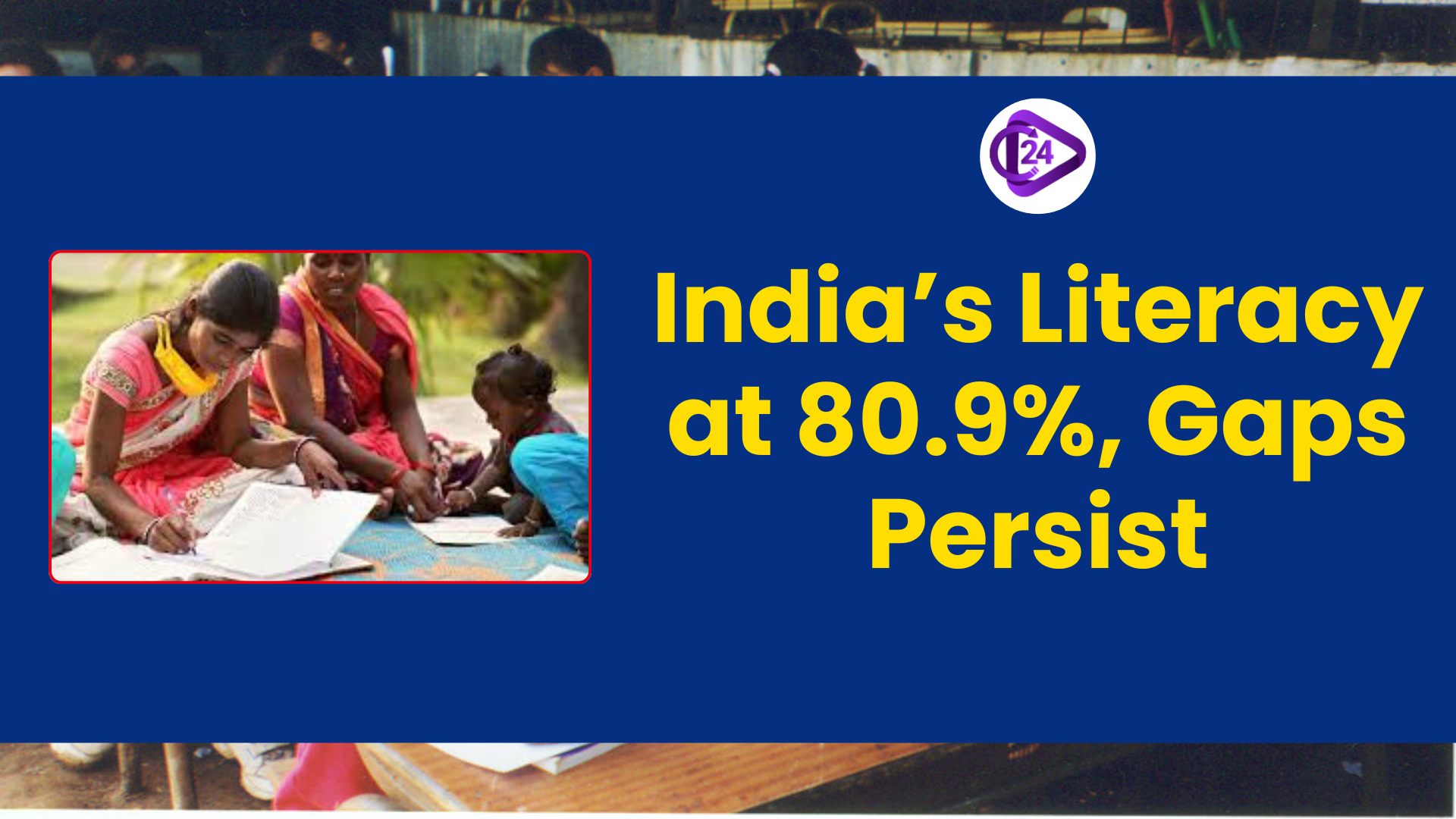
India’s Literacy Rises to 80.9%, Gaps Remain: PLFS 2024

The latest Periodic Labour Force Survey (PLFS) by the National Sample Survey Office shows that the overall literacy rate among persons aged seven and higher is 80.9%. While the results show progress, large differences between men and women and cities versus rural areas, still exist. Mizoram, Lakshadweep and Kerala lead in literacy, but the rates in Bihar, Madhya Pradesh and Rajasthan are below average. Male literacy is greater at 87.2% which is over 10 percentage points more than the figure for female literacy at 74.6%, showing the need to address challenges in equitable education. Compared to rural areas, cities thrive a lot better, meaning focused help is critical.

Context:

  • India saw its literacy improve to almost 81%, nevertheless, there are still big differences by gender and place of residence. 

  • There is a larger gap between regions in the north and center, while states in the south and northeast are top for literacy.

Key Points

Literacy according to the Periodic Labour Force Survey (PLFS) 2023–24

  • Overall Literacy Rate

    • All-India literacy rate (age 7+): 80.9%

  • Highest Literacy States (age 7+)

    • Mizoram: 98.2%

    • Lakshadweep: 97.3%

    • Kerala: 95.3%

  • Lowest Literacy States (age 7+)

    • Bihar: 74.3%

    • Madhya Pradesh: 75.2%

    • Rajasthan: 75.8%

    • For the 5+ age group: Bihar has the lowest literacy at 73.2%

  • Gender Literacy Gap

    • Male literacy (India): 87.2%

    • Female literacy (India): 74.6%

    • National gender gap: 12.6 percentage points

    • Largest gender gaps:

      • Rajasthan: 20.1%

      • Bihar: 16.2%

      • Madhya Pradesh: 16.1%

    • Narrowest gender gaps:

      • Mizoram: 2.2%

      • Tripura: 4.1%

      • Kerala: 2.7%

  • Urban–Rural Literacy Gap

    • Urban literacy: 88.9%

    • Rural literacy: 77.5%

    • Urban–rural gap: 11.4 percentage points

    • States with highest urban–rural literacy gap:

      • Madhya Pradesh: 14.1% (Rural 71.6%, Urban 85.7%)

      • Uttar Pradesh: 13.6%

      • Bihar: 11.1%

    • States with lowest urban–rural literacy gap:

      • Kerala: 2.2%

      • Tripura: 2.0%

      • Mizoram: 0.1%

  • Regional Trends:

    • North and Central States: There are greater differences between urban areas and rural areas and between genders, in the northern and central states.

    • Southern and North-eastern States: Gender literacy rates are more even in southern and northeastern states than in other locations.

  • Educational Access and outcome

    • Disparities in literacy often occur in regions with big rural and tribal populations.

    • They show that getting an adequate and inclusive education is still difficult for many.

Literacy according to Census 2011 

What is literacy?

  • According to, UN Population Commission: Someone is considered literate when they have the skill to read and write simple messages.

  • According to the Census of India: If someone seven years old or more can both read and write and those words make sense, they are counted as literate, regardless of the language they do so in.

    • Since 1991, following the Census, children below the age of six are known as “illiterate” and only children seven and above are either “literate” or “illiterate.”

    • Being literate does not always mean having gone to school, a person who can read and write is considered literate.

Literacy in India, Census 2011

  • Overall Literacy

    • Effective literacy rate (2011 Census): 74.04%

    • Male literacy: 82.14%

    • Female literacy: 65.46%

    • Urban literacy: 87.7%

    • Rural literacy: 73.5%

  • Decadal Improvement (2001–2011)

    • Overall literacy increased by 9.21 percentage points

    • Female literacy improved by 11.79 percentage points

    • Females outnumbered males in total literates added during this decade

  • Literacy Growth (2001–2011)

    • Female literacy increased by 49.1%

    • Male literacy increased by 31.98%

  • Male Literacy – Extremes

    • Highest male literacy:

      • Lakshadweep – 96.11%

      • Kerala – 96.02%

    • Lowest male literacy:

      • Bihar – 73.39%

  • Female Literacy – Extremes

    • Highest female literacy:

      • Kerala – 91.98%

    • Lowest female literacy:

      • Rajasthan – 52.66%

  • Regional Variations – Overall Literacy

    • Highest literacy states:

      • Kerala – 93.91%

      • Lakshadweep – 92.28%

      • Mizoram – 91.58%

    • Lowest literacy states:

      • Bihar – 63.82%

      • Arunachal Pradesh – 66.95%

      • Rajasthan – 67.06%

  • Gender Gap in Literacy

    • Lowest gender gap:

      • Meghalaya – 3.1 percentage points

      • Kerala and Mizoram – below 5 percentage points

    • Highest gender gap:

      • Rajasthan – 27.1 percentage points

Government Initiatives:

  • The constitution gives all individuals the right to free and compulsory education (Articles 30, 41, 45, 46).

  • Through Sarva Shiksha Abhiyan (2001), the government seeks to offer education to all social groups.

  • The release of Midday Meal Scheme (1995) encouraged children to attend classes by offering meals.

  • Free education for children aged between 6 and 14 is required by the Right to Education (RTE) Act (2009).

  • NEP 2020 is working toward education for everyone, involving youth and adults.

Way Forward:

  • Change how teachers are taught and trained to include up-to-date innovative strategies.

  • Work toward better quality school leadership to help positively influence school life, teacher spirits and community involvement.

  • Shift priorities in education so that students can think for themselves and use a range of intelligences.

  • Erase the age limit in the Right to Education Act so that pre-primary students can also benefit.

Conclusion

Although most people in India can now read and write, the persistent differences between men and women and between rural and urban areas, prove that several inequalities remain and need attention from the government. It is very important to continue making efforts to ensure all states and disadvantaged groups have the same opportunities in education.

UPSC Prelims Practice Question

Which statement(s) best reflect the truth about literacy in India?

  • The Census of India considers someone aged seven or more who is able to read and write in any language with understanding to be literate.

  • According to the Periodic Labour Force Survey for 2023–24, around 81% of Indians can read and write effectively.

  • Literacy rates between men and women are lowest in Kerala.

  • The Right to Education Act requires every child aged 6 to 14 years to get free and compulsory education.

Select the correct answer using the code below:

A) 1, 2, and 4 only

B) 1 and 3 only

C) 2 and 4 only

D) All of the above

UPSC Mains Practice Question

Q.1  “While literacy in India has risen a lot, it still deals with challenges related to being in rural areas or being a woman.”

Look into the major reasons for these inequalities and judge how well programs like Sarva Shiksha Abhiyan and Right to Education Act are dealing with them. Recommend new actions to improve literary equity in different regions.

Gukesh Defeats Carlsen in Classical Chess at Norway 2025

Gukesh defeated the World Champion Magnus Carlsen in the sixth round of the Norway Chess championship in Stavanger. Even though Carlsen had led for much of the match, a mistake by the world champion at the end allowed Gukesh to beat him and gain his first classical win. Because of this, Gukesh took third place in the event, closing in on leaders Carlsen and Fabiano Caruana with one point left to the end.

Context

  • Gukesh won his first classical match against Carlsen, putting him in 3rd position in the Norway Chess standings.

Key Points

Gukesh Made Headlines with His Victory:

  • The Indian player turned the tide in the game when Carlsen made a risky knight move in a tough scramble.

  • He said he faced a lucky break in the game, yet also recognised that tricky moves played a big role in distracting Carlsen.

Tournament Standings:

  • Gukesh has 8.5 points, only one point lower than the leaders Carlsen and Caruana (9.5 points each).

  • Both Arjun Erigaisi and Hikaru Nakamura have 7.5 points and are tied for fourth place.

Women participants

  • An intense Armageddon tie-breaker saw Koneru Humpy lose to R. Vaishali, revealing fresh talent in the women’s group.

Additional Results:

  • Arjun Erigaisi won a deciding Armageddon match against Wei Yi.

  • Fabiano Caruana was the winner when they had an Armageddon tie-break against Hikaru Nakamura.

  • Ju Wenjun and Anna Myzychuk were able to win their Armageddon tie-break matches.

Conclusion

Gukesh making his debut in winning a classical game against Carlsen was a major achievement and meant he was moving up in the chess world. Participants in this tournament are extremely skilled and up-and-coming players always compete well against established champions. Gukesh is happier after this victory and with this win, India is taking a leading role in chess worldwide.

UPSC Prelims Question 

Q: Who did Indian chess prodigy D. Gukesh defeat for his first classical win at the Norway Chess tournament 2025?
A) Fabiano Caruana
B) Magnus Carlsen
C) Hikaru Nakamura
D) Wei Yi

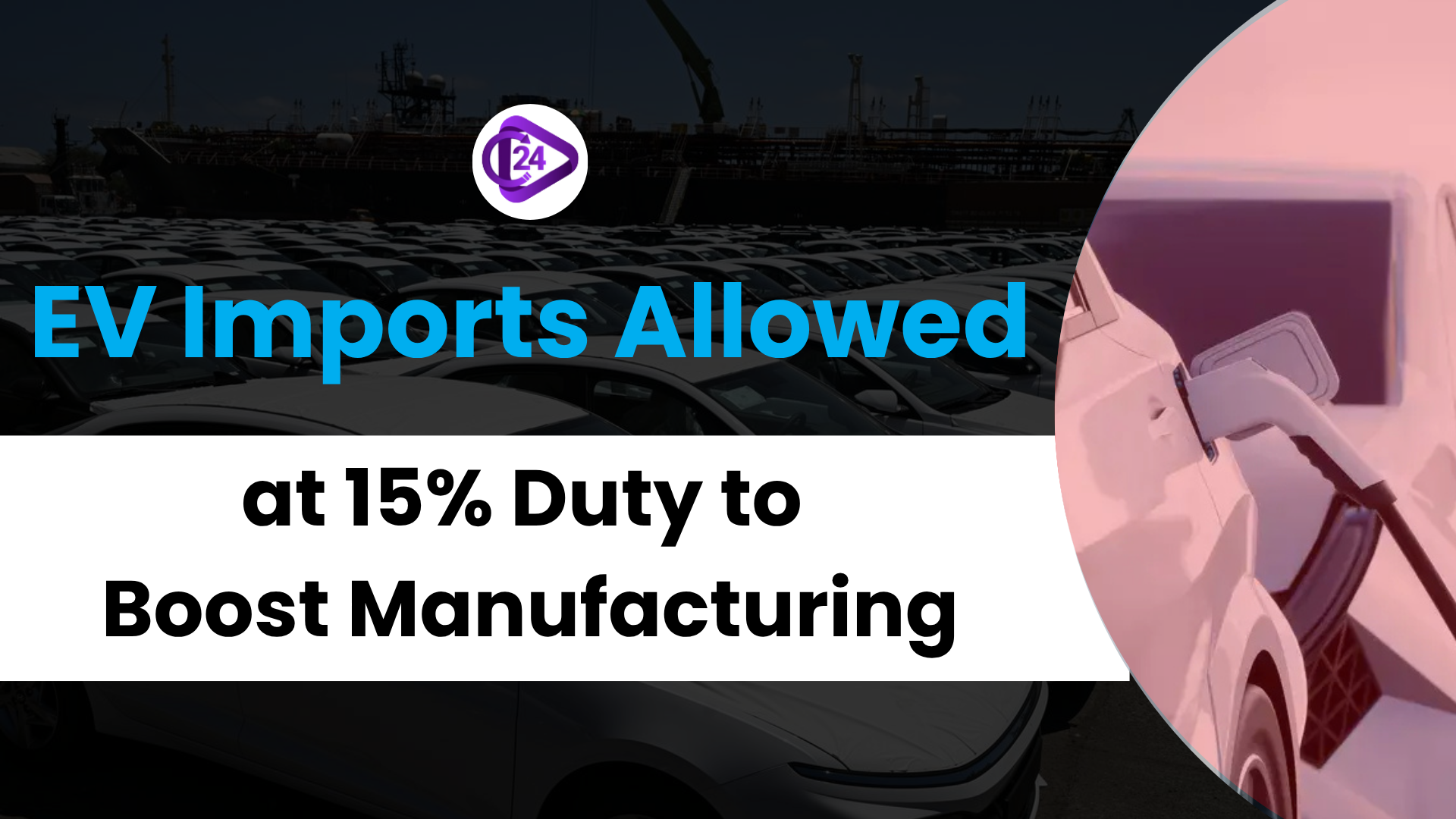
EV Imports Allowed at 15% Duty to Boost Local Production

The Indian government has introduced new rules to help domestic manufacturing of electric vehicles (EVs) by reducing the import tax for foreign producers. Carmakers investing at least ₹4,150 crore in electric vehicle manufacturing are allowed to import up to 8,000 electric vehicles at a discounted duty of only 15%, compared to today’s rates of 70-100%. EV policy seeks to greatly increase production of EVs in India, bring in more foreign investors and meet local content rules. The guidelines appeared 15 months after the import policy was announced, they cover both greenfield and brownfield investments. Tesla has apparently not expressed any wish to manufacture in India.

Context

  • The government has introduced an EV import policy, so manufacturers who contribute to local automotive production now only have to pay 15% customs duty and can import as many as 8,000 EVs per year. 

  • It tries to increase India’s own EV manufacturing and attract more investors, but those investors must meet local content rules.

Key Points

Concessional Import Duties

  • Products imported from EV companies are taxed at a rate of 15% for five years, reduced from the earlier 70-100%.

  • It is for electric cars that are fully assembled and whose minimum CIF (cost-insurance-freight) value is $35,000 or higher.

Investment and Production Requirements:

  • At least ₹4,150 crore must be invested in making electric cars in India by multinationals.

  • Within 3 years from approval, the operations should begin.

  • The local authority sets standards for the amount of content a foreign service provider should produce in the local area.

Import Volume Cap:

  • No more than 8,000 electric vehicles can come into the country annually with discounted tax.

Policy Evolution and Industry Feedback:

  • Now, brownfield investments can take place which satisfies concerns from major carmakers in India such as Maruti Suzuki and Tata Motors.

  • It seems that Tesla has favored having a showroom in India over building vehicles in the country.

About 

Greenfield Investment

  • Meaning: 

    • Investment in which a company starts from zero at a totally new location, making its own facilities, infrastructure and factories.

  • Characteristics:

    • Method of making new manufacturing plants, offices or factories.

    • Takes a lot of time and substantial money to get started.

    • Ensures activities are carried out and designed according to the company’s set rules.

  • Examples:

    • Setting up a new automobile manufacturing plant in a developing country by a foreign firm.

Brownfield Investment

  • Meaning

    • It is when a company takes over or leases current facilities, assets or operations and either enhances or expands them.

  • Characteristics:

    • Requires buying or merging with a current company or plant.

    • It takes less time to bring the application online since infrastructure is set up.

    • Often covers projects to improve or expand the company’s current structures.

  • Example:

    • A private equity firm selecting an existing textile mill where it is able to update the technology for greater efficiency.

Impact in India of allowing EV at concessional rates

  • EV manufacturing within the country increases because of commitments by foreign investors.

  • Provides consumers more choices and encourages companies to compete.

  • Creates jobs and encourages people to gain skills.

  • Boosts the environment by making transportation cleaner.

  • May lead to a higher balance of trade deficit because of increased imports.

  • Helps local battery and component industries become more robust.

Way Forward

  • Work on strong local networks for EVs and micro, small and medium enterprises.

  • Keep policies stable by having well-defined, long-term goals.

  • Support projects that build research and international technology alliances.

  • Develop more EV charging points 

  • Focus on providing specific skill training for people seeking EV sector jobs.

  • Create battery recycling and support use of environment-friendly resources.

  • Consume less imported goods and increase the numbers of goods we export.

Conclusion

By allowing EV imports at a discount, the Indian government can draw foreign money while also raising domestic manufacturing. By cutting import tariffs if companies invest substantially in India and make EVs locally, the government seeks to grow an EV system and rely less on imports for clean transport and industrial progress.

Frequently Asked Questions (FAQs)

The current affairs cover recent national and international events related to UPSC, SSC, Banking, Railways, and State PCS.

You need to read about the current affairs daily, and revise them every week and every month to keep them longer in your memory.

Yes, Class24 provides free downloadable Daily Current Affairs PDFs for easy revision.

Yes, you can practice MCQs and quizzes to boost your exam preparation.

Absolutely. The content is written in simple, easy-to-understand bilingual language suitable for beginners.

Go to class24.com and click on the current affairs section directly, where you find everything that you need.

ssc-toppers

Start Learning Today with Class24

Related current affairs

Class24 offers free video lectures for smart preparation, covering CGL, CPO, CHSL, MTS, and GD exams. Learn from expert faculty, revise concepts easily, practice with PYQs, and improve speed and accuracy through high-quality, exam-focused video lessons anytime, anywhere.

Get success in your hand. Start study anytime anywhere.

The journey becomes simple and enjoyable when you start taking interest in it. And through our app “Class24”, we will be your trusted partners in developing that interest.

Daily Quizzes
Mock Tests
Ongoing

No ongoing tests right now.