Day: May 29, 2025

NEP 2020: Paving the Way for Practical, Pragmatic, and Innovative Education to Enhance Employability

The New Education Policy (NEP) 2020 is designed to change India's education system in line with global standards and to improve students’ chances of getting work after education. The NEP sees the need for new ideas, teamwork and flexible ways to learn, so it promotes training, skill growth and research. It looks into issues about whether education is valuable and if it creates good job opportunities. Since that time, higher education, research and employment results for educated youth have all improved, demonstrating a shift toward stronger and fairer economic growth for everyone.

Context

  • NEP 2020 seeks to grow employability by supporting flexible learning, various areas of study, vocational training and internships with companies.

  • Since the NEP, Indian universities have seen better results in rankings, patent numbers and innovation.

  • Data on jobs shows that educated youth are increasingly working in regular and lasting jobs, a trend that indicates good changes in the economy.

Key Details:

A New Model of Education has been proposed by NEP 2020

  • By following a flexible four-year undergraduate program, students can gain credentials as they go and enjoy many different job opportunities.

  • Training in the workplace is bundled with learning so students can gain hands-on experience and learn about the industry.

  • If someone stops their education after a diploma or leaves school early, they have the opportunity to enter apprenticeships and rejoin workshops.

  • Working in research internships and R&D cells encourages academic institutions to develop innovative ideas.

How Competitive Is Indian Education Globally

  • Eleven Indian institutions were included in the world’s top 500 as ranked by QS.

  • The QS Asia Rankings 2025 finds India at the top with 163 universities featured.

  • Submissions for patents increased by 158% between 2021-22 and 2022-23.

  • India went up from the 76th spot to the 39th position in the Global Innovation Index in just ten years.

  • Many joint research activities were made possible through ANRF, AICTE IDEA labs and SPARC.

Focus on Indigenous Knowledge and Grassroots Innovation

  • Indian knowledge is now included in every level of the learning process.

  • Smart India Hackathon has helped over 13.9 lakh students to drive innovation at the start of their careers.

Current trends in employment and growth

  • Between 2004-05 and 2017-18, the number of educated youth (15-29 years) employed dropped, but it started to improve steadily after that.

  • As of 2023-24, male educated youth employment was at 53.4%, with female employment rising to 22.7%, very close to earlier peak values.

  • In total, employment rose to 38.6% and female employment growth since 2017-18 has reached 30.7%.

  • A move from occasional to regular work shows that people’s financial security has improved.

  • They reveal the importance of practical and creative training for both the economy and the benefits of workers.

Conclusion:

In the NEP 2020, education is planned with flexibility, new methods, skill training and research to bring together education and the needs of industry. Because it was introduced in stages, India’s reputation in both education and innovation has risen and students now have greater job opportunities. Higher employment and improvements in job quality demonstrate a good process of becoming more inclusive. It will be important for India to innovation, learn new skills and stay adaptable to protect its competitiveness and give its youth new opportunities.

UPSC Prelims Practice Questions

Q.1 With reference to the New Education Policy (NEP) 2020, consider the following statements:

  • NEP 2020 suggests allowing students to enroll in the undergraduate program at several points and drop out whenever they want.
  • The amount of patent submissions in India went down after NEP 2020 was implemented.
  • NEP 2020 supports vocational training and learning at the workplace.

Which of the statements given above is/are correct?
A) 1 and 2 only
B) 1 and 3 only
C) 2 and 3 only
D) 1, 2 and 3

UPSC Mains Practice Question (GS Paper II / GS Paper III)

Q.1 "The NEP 2020 is not just about changing policies; it helps prepare India to become a knowledge economy."
Evaluate how NEP 2020 is working to improve the chances of employment, research and innovation. What problems might stand in the way of its complete implementation?

FAQs About NEP 2020 UPSC

The NEP 2020 goal is to help students become more employable by giving them skills, opportunities for flexible learning, internships and vocational training.

Now, India has 11 schools listed in the QS World Top 500 and stands first in Asia for having 163 universities appear in the QS Asia Rankings 2025.

An adaptable four-year program with various ways for students to finish, get graduate qualifications or restart their studies.

Smart India Hackathon and drawing from indigenous knowledge in curriculums fuel innovation in India.

After the NEP, the share of male youth with jobs has increased to 53.4% and female youth employment is now 22.7%.

UN Warns of 70% Chance of Breaching 1.5°C Global Warming Threshold by 2029

According to the World Meteorological Organization (WMO) as part of the United Nations warns of the increasingly serious climate crisis. With a 70% likelihood, according to the WMO, the world’s average temperature from 2025 to 2029 will be over the critical 1.5°C limit set by the Paris Agreement. The warning came after the world saw both years 2023 and 2024 with record temperatures and because scientists are concerned global efforts are not working. Growing levels of carbon dioxide and a strong dependence on fossil fuels are saw the main cause of this trend. Both rises in extreme weather, droughts and melting ice are happening at a quicker rate than expected, says the report.

Context:

  • The UN believes that there is up to a 70% chance that the planet’s temperature will rise by more than 1.5°C from 2025 to 2029.

  • Top scientists say it is unlikely that the 1.5°C target will be met because CO2 emissions are rising.

Key Points 

70% possibility the planet will reach 1.5°C

  • The World Meteorological Organization (WMO) says there is a 70% likelihood that global average temperatures from 2025 to 2029 will be more than 1.5°C higher than the pre-industrial levels.

  • 2023 and 2024 saw the two greatest global temperatures ever recorded, continuing a pattern of warming.

  • The 10 warmest years on record have occurred recently, indicating a consistent upward trajectory

The agreements and targets under climate change

  • In 2015, the Paris Climate Agreement looked to keep the rise in temperatures to less than 2°C if possible and as low as 1.5°C.

  • The target is designed according to what the world’s temperature was during the 1850–1900 pre-industrial period.

Temperature Range Expected for 2025-2029

  • Near-surface temperatures are projected to reach between 1.2°C and 1.9°C higher than their pre-industrial levels.

  • Eight out of ten experts agree it is likely to be the hottest year recorded.

80% Chance of Warmest Year Breaking Record

  • WMO says there's an 80% chance that at least one year between 2025–2029 will be warmer than 2024, the current warmest year on record.

  • It is not agreed upon how to monitor warming as it develops.

  • Certain experts predict that we will reach 1.5°C globally in the next 2–3 years.

About Global Warming

What is global warming?

Long-term rise in Earth's average temperature due to GHG accumulation from human activities.

Mechanism:

  • Earth catches and harnesses solar energy

  • Infrared heating

  • GHGs work to trap heat which causes the planet’s temperature to rise.-

  • The changes in the environment such as melting polar ice, make the warming stronger.

Data Points 2024

  • Temperature is 1.55°C warmer than temperatures before the industrial revolution.

  • More than 200 days above 1.5°C have been recorded this year (173 in 2023).

  • Polar melt is speeding up the rise in sea levels.

  • In 2024, emission reduction worldwide will be 2%, far below the 43% set for 2030

How the Government Works to Combat Global Warming

Global Initiatives:

  • Paris Agreement (2015): Keep warming at 2°C or less.

  • Green Climate Fund: Money for climate action in developing states

  • The UNFCCC & Kyoto Protocol are designed to help the world reduce its emissions.

Indian Initiatives:

  • NAPCC has set missions focused on solar, water and energy efficiency.

  • FAME Scheme helps to increase the use of electric vehicles.

  • Green Hydrogen Mission: Helps create clean energy

  • Through NAPCC, states are carrying out SAPCCs.

  • Targets applied to industries on energy efficiency.

Effects of Global Warming:

  • Human Impact:

    • Heat stress and those caused by vectors

    • A lack of food because crops have been wiped out

    • Climate migration

    • Economic disruption

    • Unfairness among regions and people

  • Environmental Impact:

    • Biodiversity loss

    • Polar ice and glaciers are melting.

    • Ocean acidification

    • Heatwaves, droughts and cyclones etc

    • Land becoming deserted and damaged

 Way Ahead:

  • Speed Up Reducing Emissions: Increase solar and wind and stop using fossil fuels

  • Building strong infrastructure and early notice of disasters

  • Carbon capture and AI’s help in making things more efficient

  • Cooperation at a Global Scale: Keeps promises made under the Paris Agreement and helps vulnerable countries.

  • Region-Specific: Sustainable farming, improving cities with plants and afforestation

Conclusion

According to the UN, time is of the essence for the world to act decisively on climate change by immediately cutting greenhouse gas emissions and adopting renewable sources of power. The consequences of exceeding the 1.5°C limit would be especially harmful for the economy and nature in India and all over the world, customers said they have experienced. It is now necessary for policy leaders to make plans, embrace technological advances and choose sustainable approaches to handle these problems. The report invites us to maintain multilateral climate commitments under the Paris Agreement and demand justice for all nations during global COP summits.

UPSC Prelims Practice Question

Read the following statements concerning the recent WMO report on global warming:

  • The WMO says that there is a 70% chance that average global temperatures from 2025 to 2029 will be higher than 1.5°C, as set by the Paris Agreement.
  • The purpose of the Paris Agreement is to restrict global warming so it stays much lower than 3°C over pre-industrial times.
  • Since 2010, every one of the 10 warmest years has been recorded.

Which of the above statements is/are correct?

  • A) 1 and 3 only
  • B) 2 only
  • C) 1 and 2 only
  • D) 1, 2 and 3

UPSC Mains Practice Question (GS Paper III – Environment)

Q.1 “It is forecast that the world will pass the 1.5°C barrier by 2029, leading to major troubles for humans, their economies and nature.” Assess what it would mean for Indian society if the 1.5°C degree threshold is crossed and showcase major national and global actions aimed at climate change and offer new ideas for progress. (250 words)

FAQs

A: To prevent some of the worst effects of climate change, including droughts, higher sea levels and losses in biodiversity, this is the number the Paris Agreement sets.

Chances are 7 out of 10 that global temperatures will break the 1.5°C threshold and that one out of 5 of those cases will set a record as the hottest year ever on our planet.

Answers: Warmer temperatures, crop failures, less water, sea-level rise, economic troubles and more climate refugees.

Some of the initiatives are the National Action Plan on Climate Change, the Green Hydrogen Mission, the FAME scheme and SAPCCs set up by states.

The answer is to make quick emissions reductions, help the Paris Agreement, expand the use of clean energy and support nations at risk.

Menstrual Hygiene Issues and Period Stigma: A Barrier to Girls’ Education in India

Managing menstruation and the negative feelings about it mostly impact schoolgirls all around India. Despite efforts to educate the public, large numbers of adolescent girls are regularly absent from school because of existing cultural taboos and weaknesses in sanitation systems. Considering menstruation to be difficult normalizes the exclusion of girls from many aspects of public and school life. Young girls need access to hygiene products, clean washrooms and an atmosphere where stigma does not exist to protect their health, rights and education.

Context:

  • One in four Indian girls stays home during menstruation for the same reasons.

  • A lack of good sanitation for women, inadequate availability of needed products and social disapproval prevent girls from receiving proper health care and education.

  • To address this concern as a human rights situation can improve a student’s school attendance and wellness.

Key Details:

Impact of Menstrual Problems in Girls Education

  • Social Pressure and Culture Rules
    • People commonly think menstruation is impure which causes girls to be kept from cooking, praying and sleeping with the rest of their family.

    • Not talking about menstruation makes it hard for people to share knowledge and learn the right ways to manage it.

    • Older siblings sometimes try to arrange marriages for young girls, hurting both their education and health.

  • Absence from the Classroom
    • A 2024 report stated that a quarter of Indian schoolgirls miss school because they are on their periods.

    • Many girls avoid talking about their period and because of that, family expectations often make them feel lonely when they are menstruating.

    • In cases where menstrual agency and help are missing, absenteeism increases and girls tend to be left behind in school.

  • Successful access to clean and nutritious products
    • Many schools have no clean, private washrooms with doors, flowing water or anywhere to get rid of waste.

    • There are many rural areas in India where just 42% of girls their age can use clean menstrual products (BMC Public Health, 2022).

    • At times, social judgment can result in embarrassing replies to sanitary product requests, as happened with the senior official in Bihar.

  • Issues and Lack of Information
    • Because women do not get proper health information and assistance, they often live with unmanaged menstrual pains and illnesses.

    • As a result of what mothers and elders repeat to us, people continue to stay silent and do not receive factual information.

    • There are menstrual awareness campaigns happening, but they are not always accepted in very conservative societies.

Current Scenario:

  • NFHS-5 reveals that more than a quarter of rural young women and less than one in ten urban young women use dirty methods to manage menstruation.

  • Hygienic menstrual products are being used in more than 90 percent of women in just 16 states and UTs.

  • The states Bihar (59%), Madhya Pradesh (61%) and Meghalaya (65%) report a low adoption of hygienic products.

Consequences of Poor Menstrual Hygiene:

  • Health:

    • May cause infections, lead to irritation, develop dermatitis, alter the pH and rise cervical cancer risk.

    • Causes stress, anxiety, low self-esteem due to stigma and shame.

  • Education:

    • Causes girls and transgender students to be absent more often, work less well and stop attending school.

    • Let participation in sports and after-school events become a challenge.

  • Marriage

    • Inadequate menstrual health is linked to early marriages, experiencing abusive situations, getting sick during childbirth and malnutrition.

  • Employment:

    • Led to situations where staff are held back from schools and their job, discomforted, treated unfairly and harassed at work.

    • Denies many people the right to decent employment and protection.

Barriers to Menstrual Hygiene:

  • Many girls do not have all the needed information to deal with their period hygiene and menstrual management well; about 44.5% girls make whatever they can to absorb menstrual flow.

  • Because menstruation is looked down upon, women feel ashamed and rarely talk about it; 61.4% girls agree there is a social feeling of embarrassment around menstruation.

  • Many women struggle to pay for pads and so use improper items like cloth or ash.

  • The lack of proper sanitation: Schools and many workplaces are missing clean toilets, clean water and trash bins.

  • Not Enough Support: Lack of specialists in menstrual health, mainly in remote communities.

  • Limiting Behaviors: Some societies keep women who menstruate separate from others, sometimes sending them to special huts.

  • There are no menstrual leave policies outside of Kerala and Bihar, as the country awaits national legislative action.

What Needs to be Done?

  • Inclusive Approach:

    • Ensure all menstrual needs are met for people with disabilities and transgender people.

  • Better the Quality of All Sanitary Products:

    • Make certain that people can afford high-quality items.

  • Promote Alternatives:

    • Let girls and women know that menstrual cups are better for the environment.

    • Operations often depend on Telemedicine and Teleconsultation.

    • Make it possible for people in rural areas to reach menstrual health experts from a distance.

  • Educating people by community members.

    • Motivate a group of women and girls to educate others about proper menstrual hygiene.

  • Strong Ways of Handling Wastes.

    • Make improvements in both smart toilets and waste disposal systems supported by Internet of Things technology.

  • Awareness can be created using technology.

    • Explore menstrual health information with the help of AR/VR tools on your phone.

  • Policy Measures:

    • Cuts in taxes for sanitary products will help.

    • Plan rules for period goods and create female-friendly facilities in your community.

    • Make the ‘Right of Women to Menstrual Leave and Free Access to Menstrual Health Products Bill’ apply in all parts of India.

Conclusion:

There is a big link between problems with menstrual hygiene and period stigma in India and gender equality issues in both education and health. We must find ways to strengthen schools, provide more sanitary products at an affordable level and consider menstrual hygiene a public and human rights issue. Giving girls information and addressing taboos inside communities is vital for their education and health. We need government and local communities to act together to ensure a place where girls can attend school reassured and without fear of judgment.

UPSC Prelims Question on Practice (MCQ)

Q.1 Among the given statements which correctly identify a menstrual hygiene issue in India?

  • NFHS-5 found that more than 90% of women in all Indian states use hygienic products for menstruation.
  • Unhealthy menstrual care can increase the risk of cervical cancer, make young women anxious and cause them to miss or drop out of school.
  • Women in Bihar, Madhya Pradesh and Meghalaya reported high usage of menstrual hygiene products.

Select the correct answer using the code below:

  • A) 1 and 2 only
  • B) 2 only
  • C) 2 and 3 only
  • D) 1, 2, and 3

UPSC Mains Question on Practice

GS Paper II / GS Paper I – Society

Q.1 “Dealing with menstruation and its unfair reputation is important for a person’s rights and justice.”

Examine the obstacles that adolescent girls in India must overcome in society, school and government due to menstrual taboos. Which initiatives may help make menstruation easier for all? (250 words)

FAQs about Menstrual Health and School Girls in India

A: As a result of access issues, suffering from poor sanitation and being surrounded by cultural stigma on menstruation.

It might cause infections, make the skin uncomfortable, change the pH of the vagina, increase the risk of cervical cancer, add to stress and lead to lower self-esteem.

Personal hygiene during menstruation can be managed well if toilets are available, they have doors, running water and waste disposal bins.

A: Menstrual leave should be recognized nationwide, there should be tax breaks on sanitary products and informative campaigns should use community efforts and technology tools.

Assam OKs Arms Licences for Indigenous Border Dwellers

A special scheme has been sanctioned by the Assam Cabinet to provide arms licences to residents of vulnerable remote areas near Bangladesh’s border. Many Bangladeshi-origin immigrant Muslims live in these areas. The goal is to help native communities overcome threats and attacks from across the boundary happening due to recent happenings. The intention is to improve personal security, discourage violence and give vulnerable people in Dhubri, Nagaon, Morigaon, Barpeta, South Salmara-Mankachar and Goalpara confidence.

Context:

  • The new scheme allows indigenous people in Muslim-majority immigrant border areas to apply for arms licences.

  • The plan is intended to shield people from illicit threats and increase personal security.

  • Guiding regulations are drawn from the 1959 Arms Act which have clear standards for each class of firearms.

Key Details:

Objective

  • Cover all attempts to unlawfully threaten or harm indigenous communities.

  • Build personal safety measures for places where crimes are likely.

  • Increase the confidence of those who lived here before.

Target Areas

  • Those districts in the southern part of India that border Bangladesh are made up of mostly Muslim people brought there by immigrants: 

    • Dhubri, Nagaon, Morigaon, Barpeta, South Salmara-Mankachar, Goalpara.

Rules of the 1959 Arms Act

  • Licences that are issued for Prohibited Bore (PB) and Non-Prohibited Bore (NPB) firearms.

  • Automatic and semi-automatic gun PB licences (licence for private possession) are provided by the Ministry of Home Affairs (MHA).

  • A licence from the DM or state government is needed for NPB firearms which are not self-loading.

  • Individuals in grave danger from terrorism are the only ones who may receive a PB licence.

  • Licenses used by NPB are designed for self-defense, protecting homes, sports and farming.

Eligibility Criteria

  • The minimum age should be 21 years.

  • Has not been found guilty of violent or immoral offences.

  • No court order required me to remain peaceful.

  • Should be of stable physical and mental condition.

Government Initiative

  • CM Himanta Biswa Sarma said the move was necessary because it addresses security matters.

  • I have described recent transnational concerns and how neglected this issue has been since 1985.

  • Said that if the law came into effect sooner, it might have stopped sellers from sending people away from their houses.

Conclusion:

The special arms licence campaign from the Assam government aims to provide security and peace to communities close to the borders. This policy makes sure that vulnerable people are safe and that guidelines under the Arms Act are obeyed. In addition to diplomacy and economic development such measures can decrease trouble between countries and help communities feel more secure. Peace and development will only be possible if the scheme is continuously followed and implemented properly.

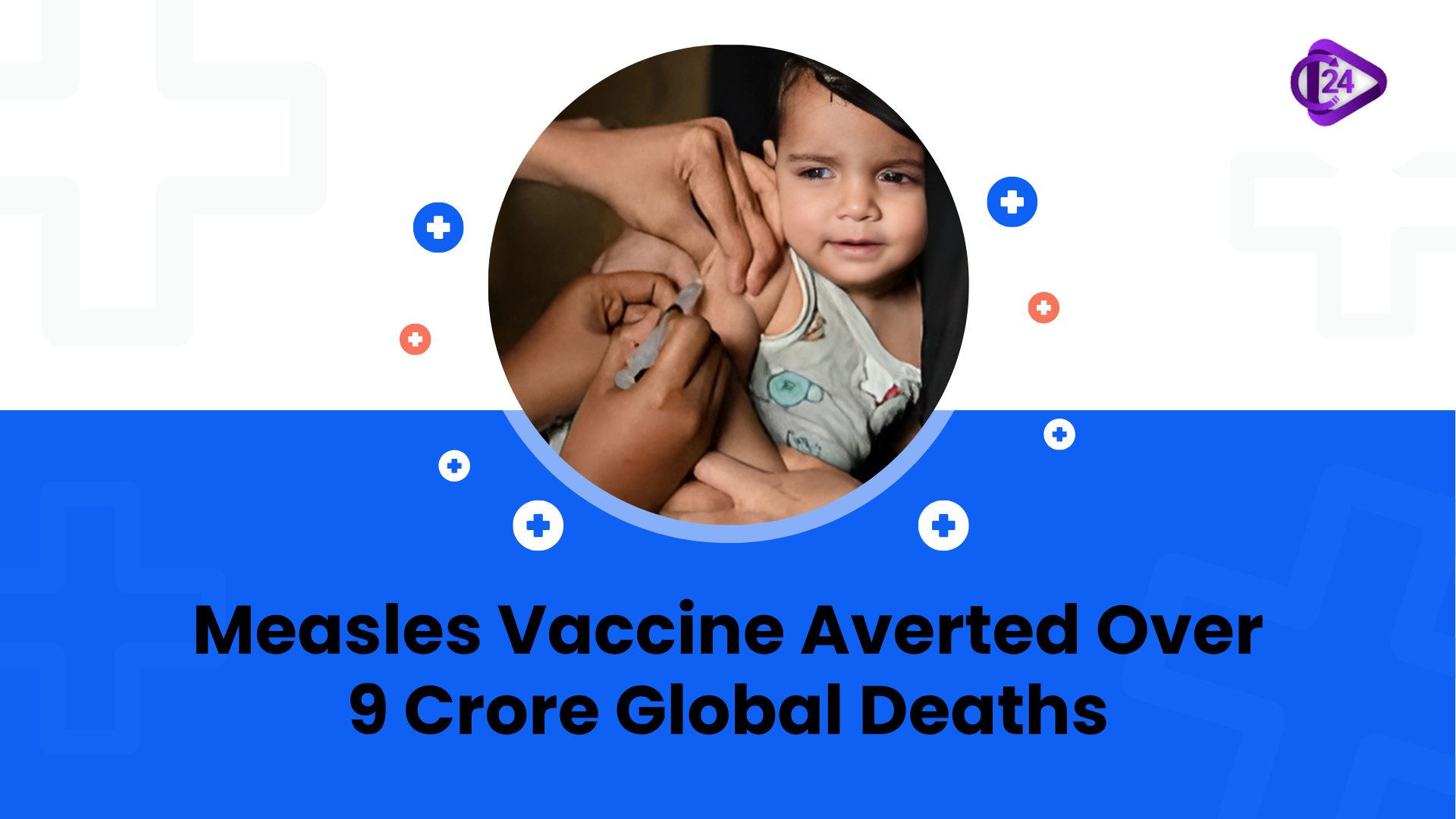
Measles Vaccine prevented over 9 crore deaths across the globe: Health experts

Before vaccines were available, nearly everyone got measles as a child and, as a result, millions worldwide died, mainly in developing and emerging nations. There were many cases of measles and many deaths because a vaccine did not exist. Up to 90% of all children living in less-developed areas were infected before 1963. For the past six decades, there has been a major decline in measles deaths thanks to many vaccination initiatives around the world. It reduced the number of new infections and stopped damage to the immune system, saving the lives of an estimated 9 crore people worldwide.

Context:

  • There have been about 9 crore less deaths due to measles since the first vaccinations in 1963.

  • Most of the lives saved come from Africa (2.9 crore) and Southeast Asia (2 crore).

  • A lot more newborns are being protected from disease thanks to increased vaccination around the world.

Key Details:

Before Vaccination for Measles

  • The majority (over 90%) of children were infected without vaccination.

  • More than a quarter of sick children needed hospitalization and case fatality was much higher in low-income countries during the 1980s.

  • Boosting hygiene and nutrition led to fewer deaths from these diseases, but as measles can be caught by breathing infected air, it could not be stopped.

Effects of getting vaccinated against measles

  • The first vaccine proved to be effective was created by John Enders in 1963.

  • Starting in the 1960s, vaccination programs advanced quickly in developed countries and, from the 1970s through the 1980s, worldwide.

  • A person’s risk of measles infection is greatly reduced by having a vaccine.

  • Millions of lives were spared when extensive immunization prevented many disastrous epidemics.

Global and Regional Vaccination Efforts

  • Since the World Health Assembly’s Expanded Programme on Immunisation began in the 1970s, vaccination coverage has improved.

  • Gavi Vaccine Alliance (created in 2000) worked to give vaccines to poor regions where they were not available.

  • At the turn of the millennium, about 60% of babies globally had been vaccinated against measles and currently more than 80% are vaccinated in many regions.

Consequence of Vaccination Across Regions

  • In Africa, measles contributed to the most child deaths until not too long ago; already, it has saved 2.9 crore lives.

  • In Southeast Asia, two million lives have been saved and very similar large drops in deaths have occurred.

  • More has to be done to inoculate children from at-risk groups who have not yet received the vaccine.

About Measles

What is Measles?

  • Between 2014 and 2016, measles was reported in many new states in the United States.

  • Over 90% of close contacts who are unprotected can catch the virus from an infected person.

  • First, the virus affects the respiratory system and after that, it is spread throughout the body.

  • Measles only affects humans; animals can’t become infected with it.

  • No new cases have appeared in countries where everyone is vaccinated with the two doses and this illness has been eliminated there.

Treatment:

  • No exact antiviral can treat measles.

  • You can help by taking a healthy diet, providing plenty of water and treating dehydration.

Prevention:

  • All children should be safely vaccinated against measles.

  • In areas where many people get COVID-19, special efforts are made to provide immunizations.

  • They play a vital role in trying to decrease the number of deaths worldwide due to measles.

Measles cases in India:

  • In the period between 2017 and 2021, the number of measles cases fell by 62%, down from 10.4 to 4 cases per million population.

Measures to Fight against Measles

  • The Measles & Rubella Initiative brings action to this cause.

  • The U.S. Fund for UNICEF, along with the American Red Cross, UN Foundation, CDC, UNICEF and WHO, started the partnership in 2001.

  • Dedicated to preventing any child’s death from measles and the development of congenital rubella syndrome.

  • Supports nations in their plans to address, finance and evaluate activities related to ending measles and rubella.

Measles-Rubella (MR) Vaccination

  • The scheme is designed for 41 crore children in India between 9 months and less than 15 years old.

  • Provides a single MR vaccine shot, disregarding whether the person has ever been infected or has had previous MR vaccination.

Other Initiatives:

  • Universal Immunization Programme for vaccinating all children and adults.

  • Mission Indradhanush

  • Intensified Mission Indradhanush.

Conclusion 

Between 1960 and the present, the global response to measles saved an estimated 9 crore lives by introducing vaccines. While cleaner water and better diets have helped, it is largely the vaccine that has stopped the rise in polio cases. Global vaccination is needed to both achieve universal health coverage and sustainable development goals in all countries, but it is particularly urgent in low-income areas. Still investing in immunization systems and teaming up globally are necessary to prevent measles and protect children from more outbreaks that cost lives.

Frequently Asked Questions (FAQs)

The current affairs cover recent national and international events related to UPSC, SSC, Banking, Railways, and State PCS.

You need to read about the current affairs daily, and revise them every week and every month to keep them longer in your memory.

Yes, Class24 provides free downloadable Daily Current Affairs PDFs for easy revision.

Yes, you can practice MCQs and quizzes to boost your exam preparation.

Absolutely. The content is written in simple, easy-to-understand bilingual language suitable for beginners.

Go to class24.com and click on the current affairs section directly, where you find everything that you need.

ssc-toppers

Start Learning Today with Class24

Related current affairs

Class24 offers free video lectures for smart preparation, covering CGL, CPO, CHSL, MTS, and GD exams. Learn from expert faculty, revise concepts easily, practice with PYQs, and improve speed and accuracy through high-quality, exam-focused video lessons anytime, anywhere.

Get success in your hand. Start study anytime anywhere.

The journey becomes simple and enjoyable when you start taking interest in it. And through our app “Class24”, we will be your trusted partners in developing that interest.

Daily Quizzes
Mock Tests
Ongoing

No ongoing tests right now.