Day: May 23, 2025

Shirui Lily Festival 2025 Returns, Marks 75 Years of State Flower

It had been two years since the Shirui Lily Festival took place, from May 20 to 24 in 2025, in the Ukhrul district, after ethnic violence in Manipur. It brings together unique ecological and cultural activities to focus on the unique Shirui Lil,y which is found only on the Shirui Hills. At the festival, both ancient traditions and modern festivities are mixed, helping to maintain sustainable tourism in the area and save the lily. The 75th anniversary of the flower’s discovery is being celebrated in 202,5 and this edition aims to increase awareness about protecting the environment and Manipur’s culture.

Context

  • Conservation and responsible tourism were encouraged in Manipur when the Shirui Lily Festival 2025 resumed after two years to mark the 75th anniversary of the flower’s discovery. 

  • This event brings together the traditions of the area with environmental consciousness and risky fun.

Key Points

What is Shirui Lily?

  • Shirui Hills in Ukhrul district are where this species is found.

  • It was Frank Kingdon-Ward’s wife, Jean Macklin, who found the plant in 1946.

  • Since 1989, Manipur’s state flower, but now at risk from tourism and species introduced into the wild.

Festival Significance:

  • Commemorates the ecological and cultural heritage of the Tangkhul Naga tribe.

  • Supports sustainable tourism and protects the diversity of life.

  • Celebrates 75 years since the flower was found.

Key Venues:

  • The opening ceremony will be at Shirui Village, TNL Ground in Phangrei and Bakshi Ground.

  • A major closing ceremony was held on May 24.

Tourism and Accessibility

  • The 83 km away hill station of Ukhrul is the center of all the festivities.

  • The area offers visitors Kangkhui Lime Caves and the chance to explore black pottery at Longpi Village.

  • The place is accessible by NH 150 and the Imphal airport.

Effects on the Environment and the Economy:

  • The festival is consistent with India’s ambition for sustainable tourism and protecting natural resources.

  • Invites people from the area to join, enables local business growth and shares information about plants.

Conclusion:

The festival again proves the close relationship between conserving the environment and cultural heritage by featuring Manipur’s unique nature and traditions. The festival encourages responsible tourism, allowing people to interact with the community and protect the Shirui Lily.

Autism Care in India: A Call for Evidence-Based, Inclusive, and Early Intervention

Autism Spectrum Disorder (ASD) is now a significant problem for public health, partly because of its increasing numbers and also because early recognition, understanding and help are lacking. As more people discuss autism publicly, including leaders from all over the world, India needs to handle autism policy using science, inclusion and a whole-person approach.

Key Points

What does Autism mean?

  • People with ASD have challenges with communication, socializing and how they act.

  • It is a difference in development, not a disease and the severity may change from mild to severe.

Why Do Children Get Autism?

  • The disease results from both genetics (up to 91% heritability) and environmental factors.

  • Eco-risks to a pregnancy are advanced maternal age and fetal exposure to contaminants.

  • Evidence has shown vaccines do not cause autism.

Can Autism Be Avoided?

  • Because the cause of Alzheimer’s is still not certain, primary prevention is currently difficult.

  • The main point to watch is:

  • Secondary prevention involves finding problems as early as possible.

  • When tertiary prevention is used, significant support is given early on.

Rising Prevalence

  • Records in both global and Indian data show that instances are getting higher.

  • New ways of making people aware and checking for cancer early.

  • New guidelines now cover mild and moderate cases in addition to severe ones.

  • Increasing numbers of people and better healthcare reach.

Today’s Problems in India

  • The problem is often missed because parents and healthcare workers are not aware enough.

  • Services are mostly designed for cities, but reach few or no rural areas.

  • Fear and false ideas have linked vaccines to autism.

  • There are not enough specialized workers in developmental paediatrics and therapy.

Rules and Guidelines

  • The Rights of Persons with Disabilities Act, 2016 lists ASD as a disability and directs that education, health and employment be available for everyone on the spectrum.

  • National Trust Act, 1999: Autism is included and the law offers protection and support.

  • Problems at ground level with how programs are put into practice and supervised

Current Situation(As of May 2025)

  • The sooner a diagnosis is made and early treatment is given, the better for the brain’s development.

  • Offering parents education and counseling.

  • Community education efforts that challenge beliefs about myths.

  • The main emphasis in maternal and child health is on prenatal and perinatal care.

The Future Strategy: What We Can Do

  • Add autism screening to the National Health Mission and the Reproductive and Child Health Services scheme.

  • Teach ASHA, Anganwadi and school staff what to watch for in young children.

  • Help students with special needs by developing and using special educational materials.

  • Using corporate social responsibility to help therapy and vocational centres in the countryside.

  • Large-scale media efforts can help to lessen the stigma of autism.

  • Offer mental health support and give families brief periods of relief.

Conclusion

Indian autism care is now facing an important turning point. Although research has disproved harmful myths and explained the disorder in many ways, society and service providers have not kept up. At this time, it is essential to swap fear for facts, stigma for help and put off early intervention. At that point, no child with autism or similar conditions will be excluded from India’s efforts for inclusive growth.

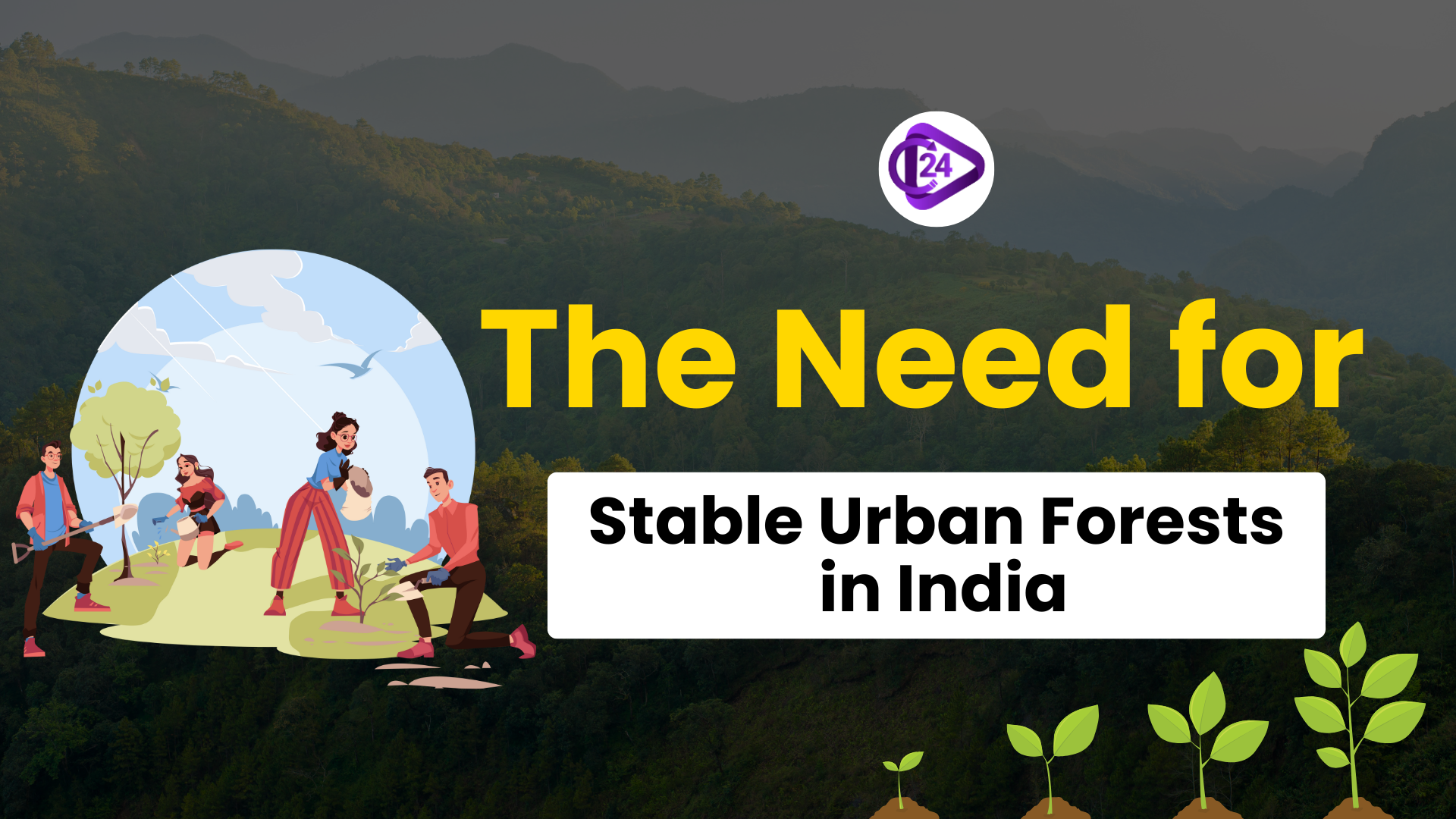
Why Urban Forests Are Crucial for India’s Sustainable Future

Due to fast urbanisation and careless development, urban forests which purify our air and bring greenery, are facing tremendous risks. What happened recently at Kancha Gachibowli in Hyderabad highlights how rapidly we should act to preserve such sites. It covers how urban forests play a role, when the law is involved, what policies exist to protect them and why public involvement matters.

What Makes Urban Forests Important?

The USDA found in a 2006 study that one hectare of forest can clean one ton of pollutants each year.

  • These urban forests in Hyderabad, Mumbai and Delhi support a variety of ecological, health and social purposes.

  • Climate Control: They keep towns from becoming hotter and reduce the negative effects of the urban heat island.

  • Trees reduce the amount of pollutants like PM 2.5 and PM 10 in city air which is good to know for places like Delhi and Chennai.

  • Forests can store carbon and control greenhouse gases.

  • They handle heavy stormwater so it doesn’t flood and so soil is preserved.

  • Endangered Species: Urban forests give these species a safe place to live.

  • Taking time in nature is good for your mind and social life, as it gives a break from busy city activities.

What are the concerns?

  • India’s cities are experiencing fast growth. While the economy develops, it can ignore the needs of the environment. For example:

  • About 100 acres of forest in Kancha Gachibowli were taken away for industrial use in Hyderabad.

  • Courts got involved after tree felling occurred in Bhopal and Allahabad.

  • The AQI in Delhi went up to 494 in 2024.

  • They indicate that urban planning is not sustainable and that urban ecosystems are poorly protected.

What roles does the court play?

Conservation of forests is regularly supported by the judiciary.

  • Godavarman Case (1996): Urban forest areas were brought into the definition of forests.

  • In 2015, the Delhi High Court prevented any harm to the Delhi Ridge forest.

  • In 2020, the Supreme Court stopped the process of tree cutting because of public protests.

  • Rajasthan HC (2024) acted by itself to defend the biodiversity of Baran.

What is Nagar Van Yojana?

  • The initiative was kicked off by the Ministry of Environment, Forest and Climate Change in 2020.

  • It intends to create 1,000 urban forests by the year 2027.

  • Tree cover has expanded by 1,445.81 sq. km, as the report from the Ministry of Environment, Forest and Climate Change in 2023 shows.

  • Such an approach fits India’s goals on climate and supports people in forest conservation.

Legal Provision Related to Forests

  • The Indian Forest Act, 1927

    • Gives forests three statuses: Reserved Forests, Protected Forests and Village Forests.

    • Gives the government authority to oversee forest use and name certain areas as forest land.

  • The Forest (Conservation) Act, 1980

    • Forest land can be used for purposes other than forests only with the government’s permission.

    • Strives to stop deforestation and ensure an unchanged balance in nature.

  • Wildlife (Protection) Act, 1972.

    • Protects the habitats of wildlife living in forest areas under law.

    • Forbids the killing and selling of threatened species.

  • Environment (Protection) Act, 1986

    • Helps the government act in protecting the environment and this includes forests.

    • The use of forest land is only permitted after assessment through an EIA framework.

  • The Scheduled Tribes and Other Traditional Forest Dwellers (Recognition of Forest Rights) Act, 2006, is known as the FRA.

    • Supports the rights that tribals and forest residents have to use the forest.

    • It gives local Gram Sabhas the power to deal with community forest resources.

Policy Related to Forest

  • National Forest Policy, 1988

    • Tries to maintain environmental stability, protect nature and involve all citizens.

    • Sets a goal of coverage of 33% of total land area by forest.

  • National Mission for Green India, 2014.

    • An element of the National Action Plan on Climate Change (NAPCC).

    • Tries to increase the number of trees and forests to support essential environmental process.

  • Nagar Van Yojana 2020

    • Works towards planting 1,000 urban forests in urban and nearby cities by 2027.

    • Enhances different kinds of living species, makes air cleaner and fosters interest from locals.

  • National Biodiversity Action Plan (NBAP)

    • Brings together forest conservation, the protection of biodiversity and sustainable use.

Constitutional Provisions related to forests

  • Under Article 21: Right to life.

    • The Supreme Court has decided that the right to a healthy environment includes forests.

  • Article 48A is a Directive Principle of State Policy.

    • Requires the State to preserve and improve the environment and guard forests and wildlife.

  • Article 51A(g) is entitled Fundamental Duties

    • Requires every citizen to help save and enhance forests, lakes and wildlife.

  • The 42nd Constitutional Amendment Act of 1976

    • 7th Schedule of the Constitution, the Concurrent List includes what was formerly on the State List for shifted forests.

    • The Centre and the State can both make laws concerning forests.

Way Forward

  • Policy Guidance: Booming towns should incorporate green spaces into their infrastructure.

  • Urban residents should take part in caring for and overseeing nearby forests.

  • All States must legally notify and map every urban forest.

  • It is important to inform students, residents and developers.

  • Research shows that urban forests should be regularly looked after, preserved with data and planted with native species.

Conclusion

Going beyond looking pretty, urban forests actually help us live and feel sane in the midst of city life. Since India’s urban growth is rapid, saving these open greenlands is a requirement. Although judicial action is encouraging, real change needs citizens, policymakers and the courts to join forces. A healthy and aesthetically pleasing way of life for India needs to maintain our forests.

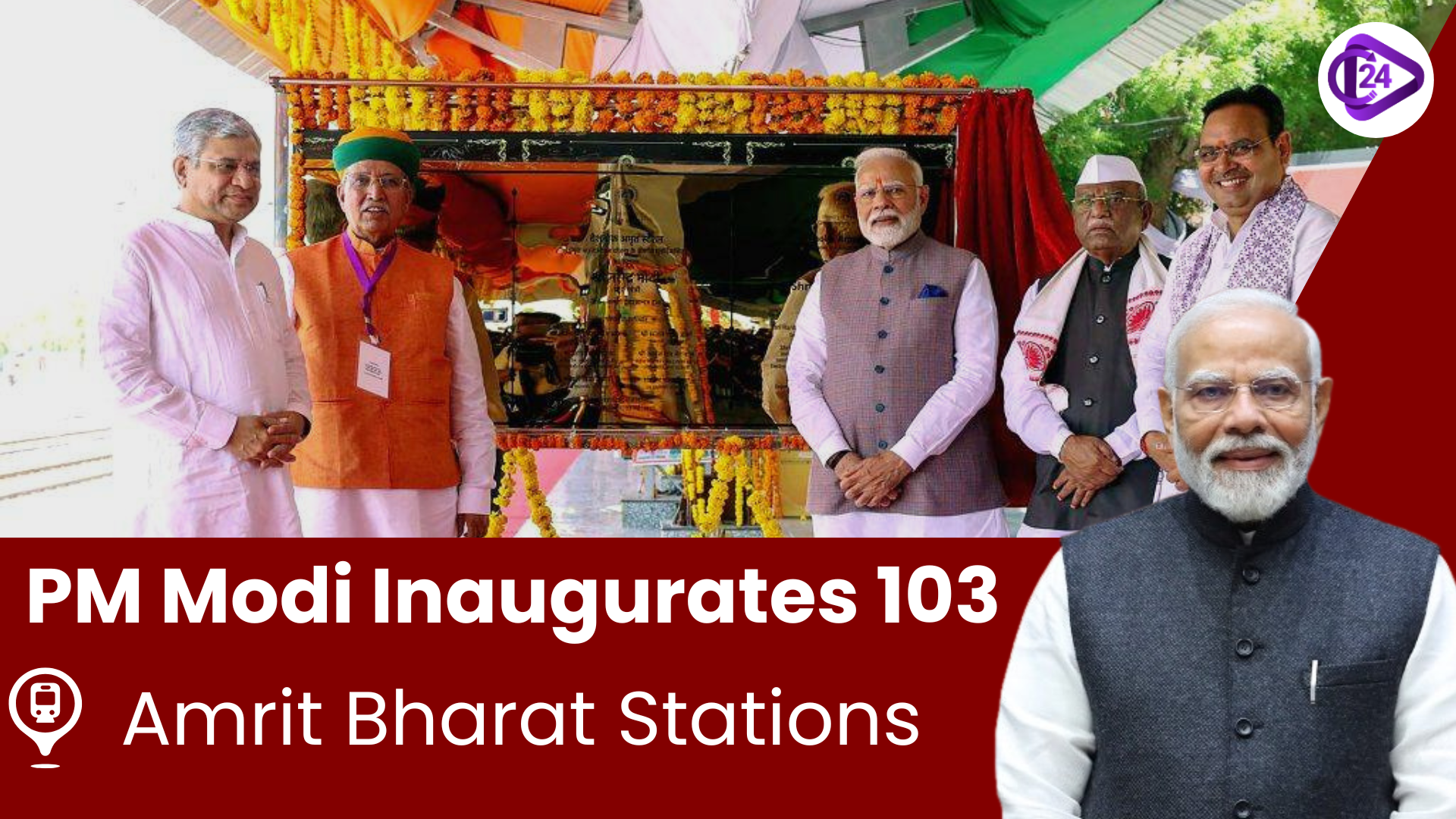
Prime Minister Modi has introduced 103 refurbished railway stations in Amrit Bharat

Prime Minister Modi has introduced 103 refurbished railway stations in Amrit Bharat, uniting traditions with advanced designs. It is one of several actions taken to modernize India’s railway network. Modi pointed out how stations help to conserve India’s heritage, encourage tourism and create jobs for young people. Crew members also celebrated the launch of a new train that will serve the link between Bikaner and Mumbai and he outlined various important rail infrastructure growths from the past decade.

Context:

  • From Bikaner, Rajasthan, Prime Minister Narendra Modi inaugurated the 103 new Amrit Bharat railway stations in 18 States and Union Territories using a video conference. 

  • Funded with over ₹1,100 crore, these stations are added as part of the Amrit Bharat Station Scheme, designed to upgrade 1,300 stations across India for passengers.

Key Points

About Amrit Bharat Station Scheme (ABSS).

  • 86 districts in 18 States/UTs received 103 new stations during the year.

  • Modernising the railway has cost more than ₹1,100 crore, as part of a wider effort to improve over 1,300 stations.

  • Pay attention to improving how people feel and what they have on trains.

The promotion of heritage and tourism

  • Stations created with local culture, artwork and history in mind.

  • You could learn from places such as Mandalgarh (Rajput traditions), Thawe (Maa Thawewali and Madhubani art), Orchha (Lord Ram), Srirangam (Ranganathaswamy temple), Dakor (Ranchhodrai ji), Tiruvannamalai (Dravidian architecture), Begumpet (Kakatiya dynasty).

  • Stations help draw tourism and create jobs for young people.

Infrastructure Development 

  • Prime Minister flagged off the Mumbai-Bikaner train to boost links between regions.

  • The government has placed nearly ₹10,000 crore in the railway sector in Rajasthan for this financial year.

  • In 11 years, the company built over 34,000 more kilometers of tracks and built numerous road bridges.

The Latest Trains and their Routes:

  • Development of trains named Vande Bharat, Amrit Bharat, and Namo Bharat.

  • So far, around 70 routes have added Vande Bharat trains, providing rail service to more distant places.

Conclusion:

Building 103 Amrit Bharat stations is an example of India’s dedication to keeping its heritage alive while creating new infrastructure. With this initiative, the railway aims to enhance the journeys of its passengers, grow regional tourism, and provide jobs, continuing the vision for an inclusive modern railway that supports the economy.

In FY25, net FDI fell sharply by 96%, despite a strong year for total investment inflows.

The Reserve Bank of India reports that FDI coming into India has dropped by a huge margin, dropping almost 96%, to $353 million in the financial year 2024-25. Even though foreign investment into India was substantial, the reason for net FDI’s big decrease is that foreign businesses took out more money and Indian companies made more investments in other countries. Before the pandemic, FDI was increasing, but this has reversed since 2020 due to a change in where capital is sent, rather than a drop in interest from foreigners.

Context:

  • FDI into India fell by 96% to $353 million in FY25, mainly due to increased repatriation and Indian firms investing their profits overseas. 

  • Strong figures for gross FDI show that interest remains among foreign investors.

Key Points

  • Net FDI means:

    • Net FDI results from the difference between gross FDI received and the money Indians send overseas, as well as what foreign companies invest at home.

  • Major decrease in foreign direct investment (FDI).

    • Moved from $44 billion in 2020-21 to just $0.35 billion in 2024-25.

    • Other than last year’s record, FY25 is down by almost 96% from the prior year’s total.

  • Factors Behind the Decline:

    • An expansion of money sent by foreign companies to their home countries.

    • More investments are being made abroad by Indian companies.

  • How Is FDI Gross?

    • Still going strong with interest in foreign investment remaining in India.

    • Lower net FDI is because of alterations in financial flows, not because foreigners have less confidence.

  • Between Now and the Pandemic:

    • Since 2020-21, net FDI has been on the decline because of changing global patterns in investment and transfer of profits to parent countries.

About FDI in India

What is Foreign Direct Investment?

  • FDI includes foreign companies entering a country to invest money, provide new technology, and share skills.

  • Organizations can begin new ventures, called Greenfield, or focus on acquisitions and expansions, known as Brownfield.

  • Employment of public procurement is regulated by the  'Guidelines for Procurement by Government of India', issued by DPIIT.

  • Existing pathways: automatic for most people and government-to-government for travel with the needed approvals.

  • Transferring FDI is restricted to the atomic energy, gambling, and real estate sectors.

How to Increase FDI:

  • India and the UAE sign a BIT to boost investor trust in both countries.

  • The Production Linked Incentive (PLI) scheme is helping to attract more FDI in the sector of white goods.

  • Making in India raised manufacturing FDI by more than half (57%) from 2014 until 2022.

  • Using the FIFP, FDI approvals are processed more smoothly.

  • PM Gati Shakti has resulted in better infrastructure, which draws more FDI.

Key Sectors of FBI Liberisation

  • The space sector can receive up to 100% foreign direct investment.

  • 74% of defence-related FDI is the path route, and 100% is covered by the government route.

  • FDI was opened up in the pharmaceutical, commercial aviation, retail, insurance and telecom sectors.

  • The textile industry is helped by the National Technical Textiles scheme and the PLI support.

Top FDI Countries

  • Most of the FDI in Hong Kong comes from Singapore, Mauritius, USA, Netherlands and Japan.

  • After COVID, all investments from China and Pakistan to Sri Lanka are now handled only by the Government.

Benefits of FDI.

  • Helps create more jobs, improve the economy and build infrastructure.

  • Develops people’s work skills and encourages regional improvement.

  • Increases the amount of products sent out and maintains a predictable exchange rate.

  • Monopolies prevent competition and hold back new ideas which helps produce better results for consumers.

Concerns About Foreign Direct Investment:

  • Risks to the nation’s security in important industries.

  • The country is partly supported by foreign considerations.

  • Taking profits back abroad decreases the local economy’s gain.

  • Growing problems for local companies and mistreatment of employees.

  • The environment could suffer damage from some investments made by foreign businesses.

Way Forward:

  • Remove any unnecessary hurdles for starting a business and make rules easier to understand.

  • Support the growth of sustainable and green investments.

  • Help people improve their skills and get jobs.

  • Welcome FDI that brings new and innovative ideas to the country.

  • Work on infrastructure projects to help improve the environment for investors.

  • Make reforms in defence, space and renewable energy that are suitable for each sector.

Conclusion:

Most of the decline in FDI in the last fiscal year is due to more repatriation and foreign investments from India, rather than lower investment from overseas. Because of this trend, it’s clear how complicated capital movements can be, so more work is needed to maintain India’s appeal to foreign investors.

Frequently Asked Questions (FAQs)

The current affairs cover recent national and international events related to UPSC, SSC, Banking, Railways, and State PCS.

You need to read about the current affairs daily, and revise them every week and every month to keep them longer in your memory.

Yes, Class24 provides free downloadable Daily Current Affairs PDFs for easy revision.

Yes, you can practice MCQs and quizzes to boost your exam preparation.

Absolutely. The content is written in simple, easy-to-understand bilingual language suitable for beginners.

Go to class24.com and click on the current affairs section directly, where you find everything that you need.

ssc-toppers

Start Learning Today with Class24

Related current affairs

Class24 offers free video lectures for smart preparation, covering CGL, CPO, CHSL, MTS, and GD exams. Learn from expert faculty, revise concepts easily, practice with PYQs, and improve speed and accuracy through high-quality, exam-focused video lessons anytime, anywhere.

Get success in your hand. Start study anytime anywhere.

The journey becomes simple and enjoyable when you start taking interest in it. And through our app “Class24”, we will be your trusted partners in developing that interest.

Daily Quizzes
Mock Tests
Ongoing

No ongoing tests right now.