
Day: May 16, 2025

India’s Trade Deficit Widens to $8.65 Billion in April Amid Surge in Merchandise Imports

India’s total trade deficit went up to $8.65 billion in April 2025, compared to $ 5.77 billion it was a year before. This rise was thanks to merchandise imports growing 19.1%, up to $64.91 billion, while exports only increased by 9% to $38.49 billion. Key export products such as tobacco, coffee, electronics, and minerals all showed strong increases. Meanwhile, the services sector saw exports go up by 17%, which helped keep the country running a trade surplus of $17.77 billion for services. Overall exports in 2024-25 were at their highest ever, coming in at $824.9 billion and rising 6% from the year before.

India’s Trade Deficit in April 2025

Context:

  • India’s expanding trade deficit in April 2025 shows that more goods are being brought in from other countries as India’s exports keep growing steadily. 

  • This data shows that both goods and services play a big part in how a country trades with other countries.

Key Details

  • Trade Deficit:

    • The total trade deficit widened from $5.77 billion last April to $8.65 billion in April of this year.

  • Merchandise Trade:

    • Merchandise exports increased by 9% to $38.49 billion.

    • Merchandise imports surged 19.1% to $64.91 billion.

    • Merchandise trade deficit went up from $19.19 billion to $26.4 billion compared to last year.

  • Export Growth by Sector:

    • Tobacco exports rose by 66.43%.

    • Coffee exports increased by 47.85%.

    • Electronic goods exports grew by 39.51%.

    • Mineral exports like mica, coal, and ores increased by 34.43% from last year.

    • Fruits and vegetables exports went up by 30.72% this year.

    • Marine products exports rose by 17.81%.

  • Services Trade:

    • Services exports went up by 17% and reached $35.31 billion.

    • Services imports went up by 4.6% to $17.54 billion.

    • Increasing to $17.77 billion in services trade in April 2025.

  • Overall Exports:

    • India’s total exports (both goods and services) in 2024-25 reached $824.9 billion, which is 6% more than what they were for 2023-24.

Conclusion:

 While India’s merchandise imports have grown quickly, causing the trade deficit to widen, the strong increase in exports, especially in areas like services, shows that India is doing a good job keeping up in trade with other countries. Managing the merchandise trade gap while keeping up the strength of India’s exports will be really important for keeping its economy steady in the future.

Neeraj Chopra was given the honorary rank of Lieutenant Colonel in the Territorial Army.

Olympic gold medallist Neeraj Chopra has now been given the honorary rank of Lieutenant Colonel in the Territorial Army by the Indian government, starting from April 16, 2025. This honour is given to him for all the great things he has done for Indian athletics and because he has made the country proud. Neeraj, who is from Haryana, has already won an Olympic gold medal at the 2020 Olympics, a World Championship title in 2023, and got a silver medal at the 2024 Olympics in Paris. Previously a Subedar Major in the Indian Army, this honorary rank is given to show how the government wants to thank Notable figures like cricketer M.S. Dhoni have also been given the same awards.

Context

  • Neeraj Chopra was given the honorary rank of Lieutenant Colonel according to the Territorial Army Regulations, 1948 (Para-31).

  • The received honour reflects his success in sports and his service to his country.

Key Points

  • The received honour reflects his success in sports and his service to his country.

  • The Territorial Army is made up of volunteers who help the Indian Army in times of war, offer emergency relief, and aid in nation-building.

    • Neeraj’s key achievements include:

    • Olympic Gold Medal at Tokyo 2020

    • World Championship Title in Budapest, 2023

    • Olympic Silver Medal at Paris 2024

  • Before his promotion, he served in the Indian Army as a Subedar Major.

  • Being in an honorary rank, Neeraj can take part in ceremonies held within the military.

  • Lt. General Sadhu Pahari, the Permanent Secretary to the Ministry of Defence, officially declared the news on May 13, 2025.

  • In 2011, cricketer M.S. Dhoni was given the honorary rank of Lieutenant Colonel by the Indian army.

  • By receiving this honour, the relations among civil and armed forces improve, inspiring youth and those who dream of becoming athletes.

Conclusion

Giving Neeraj Chopra the rank of Lieutenant Colonel is a way to honor everything he has accomplished. By this, India shows respect for excellence in various areas and links sports, national pride, and serving in the military.

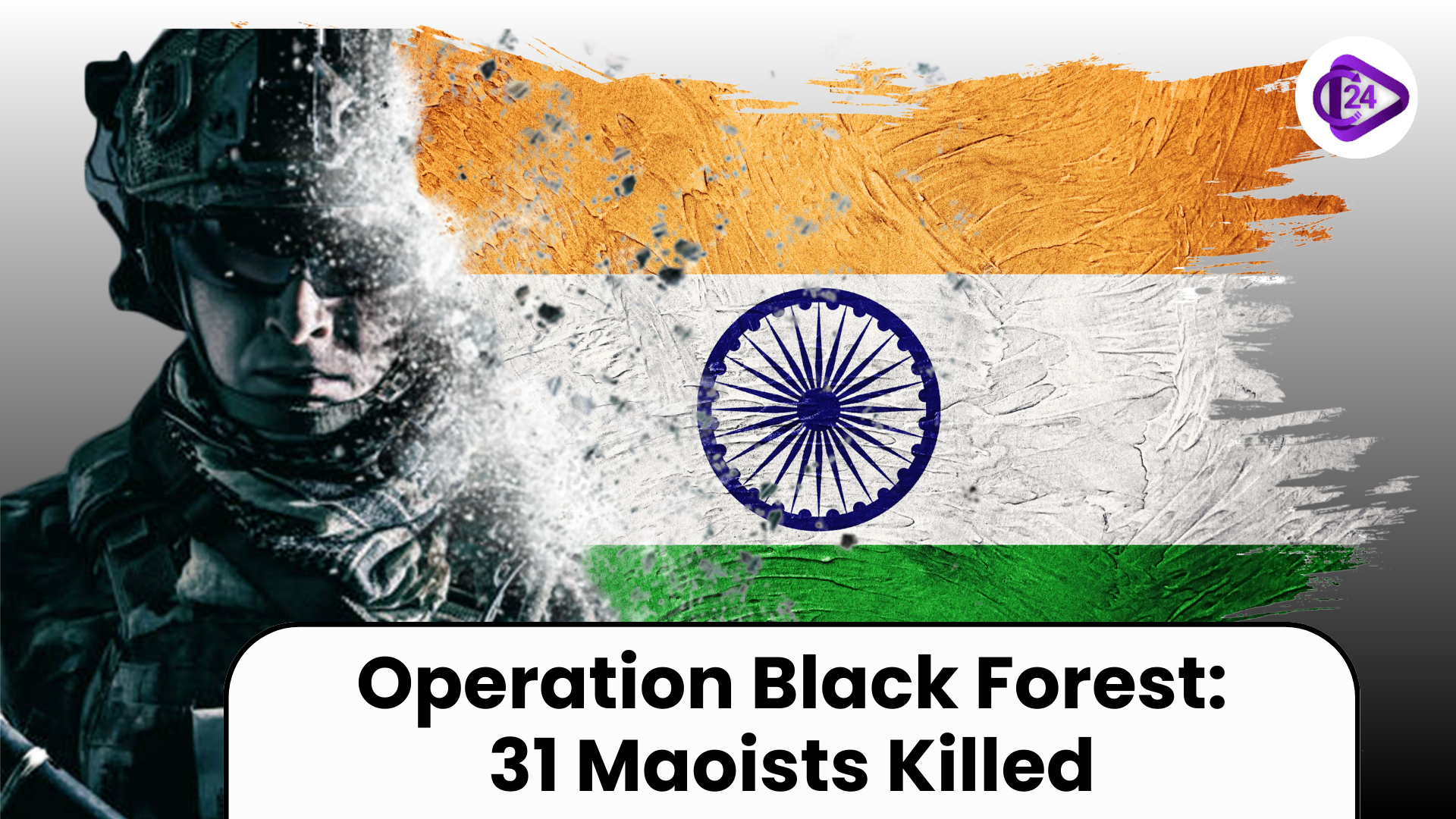
India’s Largest Anti-Naxal Operation: 31 Maoists Killed in Operation Black Forest

During Operation Black Forest, lasting 21 days, security forces managed to kill 31 Maoist insurgents as they targeted Maoist camps inside Kurraguttalu Hills across the Chhattisgarh–Telangana border. The government wanted to destroy Naxal structures and remove the main leaders to restore control in the area. CRPF’s CoBRA, along with the Chhattisgarh Police, STF, and DRG were all involved in the operation. Being full of thick forests and high hills, the region has a long history as a stronghold for Maoists. The task supports India’s plan to end Left Wing Extremism by 2026 as laid out by the government.

Context:

  • Operation Black Forest forms a key part of India’s continual battle against Left Wing Extremism, with the aim of regaining territories scattered in the central and eastern forests of India.

What is Operation Black Forest?

  • Operation Black Forest lasted for 21 days and aimed at eliminating Maoist activity in the remote mountainous area of the Kurraguttalu Hills, which is about 1,200 square kilometers wide between Chhattisgarh and Telangana. 

  • It adds to India’s continuous efforts to curb Left Wing extremism and gain back places held by insurgents.

Details of Operation Black Forest

  • Duration: 21 days

  • Location: Kurraguttalu Hills (with an area of ~1,200 sq km) are found along the common border of Chhattisgarh and Telangana

Objective:

  • Neutralize top Maoist leadership

  • Remove Maoist headquarters and the infrastructure they depend on

  • Use force to gain authority in insurgent areas.

  • Assist India in reaching its objective of ending Left Wing Extremism by March 31, 2026

Forces Involved:

  • The Central Reserve Police Force (CRPF) & CoBRA groups

  • Chhattisgarh Police

  • Special Task Force (STF)

  • District Reserve Guard (DRG)

Terrain and Geography:

  • Steep hills, caves, dense forests

  • Elevation nearly 5,000 feet

  • Hard to traverse terrain, great for guerrilla warfare

Local Population:

  • Inhabited by tribal communities: Koya, Gond, and Chenchu

  • Tribes are still often threatened by long-lasting insurgency.

Other Maoist Hotspots:

  • Abujhmad (Chhattisgarh)

  • Malkangiri (Odisha)

  • Gadchiroli (Maharashtra)

Conclusion:

With Operation Black Forest, India greatly improved its approach to fighting insurgencies in difficult areas. Such operations must be carried out permanently to restore peace and growth for regions colonized by Maoists as well as to assure the security of tribal groups involved in civil unrest.

Khelo India Youth Games and Para Games to be Held in Bihar in April 2025

The Khelo India Youth Games (KIYG) and the Para Games will happen in Bihar in April 2025, with about a week to 10 days in between the two, according to Union Sports Minister Mansukh Mandaviya. KIYG is a big event for schools and colleges where students from around South Africa can join different sports competitions to help support grassroots sports across the country. The games, which started in 2018, have so far been held in different states like Tamil Nadu, Delhi, and Pune. Maharashtra and Haryana have done the best out of all the states, winning the most championships.

Context

  • KIYG and Para Games are important parts of the Khelo India program run by the Government of India, which help find and support young people who are good at sports all over the country.

Descriptive Points:

  • KIYG and Para Games will happen in Bihar in April 2025, with at least 10 to 15 days in between each event.

  • KIYG is a big sports event in Nigeria where high school and college students from all over the country can compete in different sports.

  • Initiated in 2018 as Khelo India School Games, they changed the name to Khelo India Youth Games in 2019.

  • Held every year in January or February. The 2023 edition was in Tamil Nadu.

  • The Paralympic Games were last held in Delhi earlier this year.

  • Past KIYG host cities: Delhi, Pune, Guwahati, Panchkula, Bhopal, and Tamil Nadu are some of the places that will soon have apps for online polling.

  • Only the teams from Maharashtra and Haryana have won the KIYG championship so far.

  • Winners history: Haryana (2018, 2021), Maharashtra (2019, 2020, 2022).

Khelo India Youth Games (KIYG)

  • What is it?

    • An annual national-level multi-sport event as part of the Khelo India program to help find, support, and grow the skills of young sports players in India.

  • Launch and Governance:

    • Launched in 2018 and run by the Ministry of Youth Affairs and Sports.

  • Primary Objectives:

    • Encourage mass participation in sports.

    • Foster sporting excellence and help athletes get ready for big competitions all around the world.

  • Target Group

    • Youth athletes who are between the ages of 17 and 21.

  • Key Features:

    • Includes 27 medal sports disciplines; Sepaktakraw was added recently.

    • Introduced Esports as a one-off event to help showcase this new type of sport in the digital age.

    • Winners can get scholarships from the Khelo India Scheme.

Conclusion:

Hosting the Khelo India Youth and Para Games in Bihar in 2025 will help bring more sports and activities to people in the east of India and will also support the government’s goal of helping kids learn and practice different sports all over the country. These games give youth athletes and para-athletes from all over the country the chance to show what they can do and get more people to notice them.

Periodic Labour Force Survey (PLFS) Revamped from 2025 for High-Frequency Labour Market Data

Starting in January 2025, key revamps are planned for the PLFS to make labour market statistics available more frequently, to a larger group, and more reliably. Every month, national data on LFPR, WPR, and UR will be announced by CSO. Data will be produced for both rural and urban areas, as opposed to being limited to just urban places before. Also, results for the fourth quarter will align with the calendar year (from January to December) to meet the standards of other countries. The survey was made more effective by raising the number of surveyed households to over 2.7 lakh, ensuring better representation of all districts, and introducing a new way to collect data on labour markets.

Context:

  • MOSPI is updating the PLFS, through its National Statistics Office (NSO), to deliver up-to-date, diverse results to aid policies and match India’s labour statistics with global standards.

Key Points:

  • From April 2025, monthly estimates of LFPR, WPR, and UR will be made for the entire country.

  • The first quarterly estimates will be provided for rural and urban areas to cover the entire nation and will come out in August 2025.

  • Those reports are planned to follow the calendar year (Jan-Dec) pattern starting from 2025.

  • Earlier, 1,02,400 households were surveyed each year, but it is now 2,72,304 (12 households in every 22,692 First Stage Units in Varieties).

  • To ensure data represent the entire community, a district-level division was developed.

  • Every month for four consecutive months, households get a new survey.

  • When the schedule or questionnaire changes, it is crucial to compare the new findings with previous PLFS information.

  • Since 2017, PLFS has delivered quarterly statistics on urban life and annual statistics on rural-urban life.

What is Periodic Labour Force Survey (PLFS)?

Background:

  • Since 2017, surveys within this framework have been carried out by the National Sample Survey Office of the Ministry of Statistics and Programme Implementation.

  • Works to record and supply regular information on the employment situation in India.

Objectives:

To find out the numbers on important labour market indicators, such as:

  • Worker Population Ratio (WPR)

  • Labour Force Participation Rate (LFPR)

  • Unemployment Rate (UR)

  • At first, URBES projected quarterly figures only for cities using statistics from the Current Weekly Status report.

  • Provides statistics every year on employment and unemployment levels, both in rural and urban areas, by Usual Status (ps+ss) and Current Weekly Status (CWS) methods.

Concerns Regarding India’s Labour Force

  • Gender Gaps:

    • Women have a lower ratio of workers in the labor force compared to men.

    • Eight percent of urban women are unemployed.

    • Only 3 percent of working women over 25 have advanced education degrees—this demonstrates that many well-educated women in Turkey are not being used as skillfully as they should.

  • Stagnation in Employment:

    • The fact that WPR and LFPR are rising only slightly from year to year suggests that job growth is slow.

    • Job growth does not mirror economic growth, so the economy may see more people out of work or working in low-quality jobs.

  • Youth Unemployment:

    • The majority of unemployed people who have higher or secondary education belong to the youth group.

    • India’s youth unemployment rate is 10.2%, only slightly higher than the world average of 13.3%.

  • Low Productivity:

    • Indians work the second-longest number of hours each week globally (46.7 hours).

    • 51% work more than 49 hours weekly.

    • Still, labor productivity in India is low, with each worker making just USD 8 per hour on average and placing India 133rd in the world.

  • Rural Employment Dependence:

    • The vast majority of people in rural areas find work that is low in output or not recognized by the government.

    • High underemployment and prevalence of insecure jobs over quality, skill-based employment.

India’s Initiatives Related to Employment

  • Support for Marginalised Individuals for Livelihood and Enterprise (SMILE)

  • PM-DAKSH is an initiative created for skilled and competent workers (Pradhan Mantri Dakshta Aur Kushalta Sampann Hitgrahi).

  • MGNREGA, which stands for Mahatma Gandhi National Rural Employment Guarantee Act

  • The Pradhan Mantri Kaushal Vikas Yojana (PMKVY)

  • Start Up India Scheme

  • Rozgar Mela (Employment Fairs)

  • Urban Employment Guarantee Scheme of Indira Gandhi (Rajasthan)

Suggestions for Developing India’s Labour Force

  • Bridge Skill-Industry Mismatch:

    • Support the approach of outcome-based skilling by teaming up with NSDC and private organizations.

    • Use AI, data analytics, and cybersecurity through the Future Skills Prime ecosystem.

  • Drive Formalization with Inclusivity:

    • Ensure that casual workers can sign up in e-Shram using their Aadhaar and UPI options.

    • Enable MSMEs to get online and access micro-credit through PM Vishwakarma and Udyam Portal.

  • Institutionalize Urban Employment and Mobility:

    • “Kerala’s Ayyankali Urban Employment Scheme for instance ensures workers 100 days of paid work.”

    • Set up routes where migrant employees can travel between states, with ready access to housing and insurance.

  • Focus Climate Transition on Creating Jobs for Society:

    • Put money into green industries like solar, electric vehicles, and waste-to-energy to help create environmentally friendly jobs.

    • Use ‘just transition’ practices to help high-carbon workers find new jobs.

  • Design Gendered Labour Reforms:

    • The Pilot Women Workforce Participation Indices are used to detect the main challenges that women in the district face (transport, care work, and individual habits in the family).

    • Ensure that policies for corporate social responsibility also support skilling and mentoring women, as well as helping them rejoin the workforce.

  • Incentivize Employers:

    • Give company owners a break on their taxes if they hire new workers legally.

    • Incentivize companies that hire women, persons with disabilities, the elderly, and transgender individuals.

Conclusion:

Because of the upgraded PLFS, India now gets higher-frequency, detailed, and nationally representative statistics on labour. This will help decision-makers address changes in the labour market and better understand how jobs are changing in rural and urban areas.

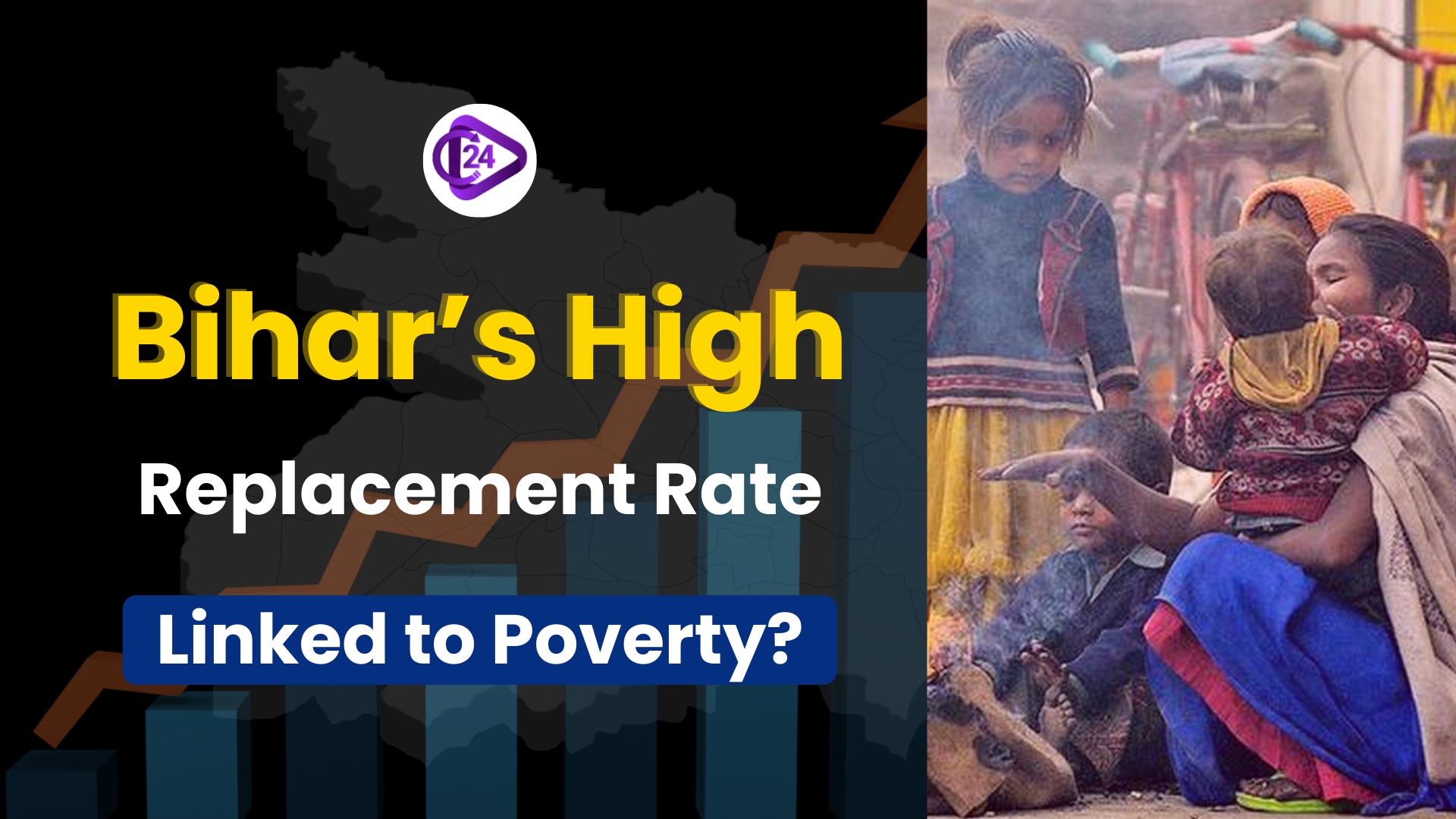
Is Bihar’s High Replacement Rate a Consequence of Poverty?

The latest SRS data shows that India is experiencing significant demographic change. While the average number of children per woman in India is now at the replacement level (2.0), Bihar’s rate is much higher at 3.0. The high rate of population growth in Bihar makes one ask, is the issue just poverty-related, or are there other forces, both cultural and economic, affecting it?

Introduction:

  • People in Bihar have an average of 3.0 kids each (TFR for 2021), which is much higher compared to India’s average (2.0), as well as to Delhi and West Bengal (both ~1.4).

  • It brings into question whether the high fertility rates of Bihar can be tied solely to poverty.

Key Points and Analysis

High and Persistent Fertility Rate:

  • There has been little movement in TFR in Bihar, which has remained close to 3.0, and replacement fertility of 2.1 will only be reached by Bihar around the year 2039.

  • The number of infant deaths has gone down (from 42 to 27 out of 1,000 births), women now finish more years at school, but the total fertility rate stays high.

Poverty Linkage is Partial:

  • Even though, in general, more poverty means more children, the area of Bihar has seen its poverty drop but not much change in fertility, according to NITI Aayog’s Multidimensional Poverty Index.

  • It is not only poverty that determines how many children a family has. Culture and the accepted social standards have a major effect on a person’s choice to have children.

Cultural Preferences and Fertility:

  • In Bihar, 50% of women consider an ideal family to be two children, less than the 67% of women who think this elsewhere in India.

  • Many families in farming and landholding professions still prefer having sons and a large family since they are able to provide labor and care for property.

  • Women usually make fertility decisions willfully, influenced by the local culture.

Urban-Rural Disparity and Puzzling Urban High Fertility

  • Bihar’s TFR in urban areas is 2.3, which is much higher than India’s urban average of 1.6, meaning families that live in cities and have more education and income like to have large families.

  • This runs against the common view that urbanization leads to lower fertility.

Role of female education and employment

  • In the year 2011, the figure of female literacy in Bihar was 53%.

  • Learning increases the number of years between births; even so, many women do not freely decide about childbirth.

  • Certain studies have found that many families with a mother-in-law authority often control the access women have to family planning.

Economic and Employment Factors:

  • With so many people looking for jobs and not much industry, Bihar has fewer opportunities for people to make a living.

  • When families are financially unsure, many prefer to have more children as backup support and help.

Political and Demographic Implications:

  • High fertility has resulted in UP, MP, and Bihar making up a bigger share of India’s population than expected.

  • This change in demography will affect how much population each parliamentary constituency has and the amount of resources each state gets after delimitation, potentially causing those with fewer people and families to get less representation and financial support.

  • To correct inequalities among different parts of the population, it is necessary to adjust policies and strengthen democratic equality.

Conclusion:

People in Bihar have more children for several reasons linked to the economy, culture, and society, not just because of poverty. It is important to have policies that support female education, improving their lives, helping them gain different work skills, and reforming society. It is very important to tackle demographic inequality to ensure democracy is open and fair for all.

Frequently Asked Questions (FAQs)

The current affairs cover recent national and international events related to UPSC, SSC, Banking, Railways, and State PCS.

You need to read about the current affairs daily, and revise them every week and every month to keep them longer in your memory.

Yes, Class24 provides free downloadable Daily Current Affairs PDFs for easy revision.

Yes, you can practice MCQs and quizzes to boost your exam preparation.

Absolutely. The content is written in simple, easy-to-understand bilingual language suitable for beginners.

Go to class24.com and click on the current affairs section directly, where you find everything that you need.

ssc-toppers

Start Learning Today with Class24

Related current affairs

Class24 offers free video lectures for smart preparation, covering CGL, CPO, CHSL, MTS, and GD exams. Learn from expert faculty, revise concepts easily, practice with PYQs, and improve speed and accuracy through high-quality, exam-focused video lessons anytime, anywhere.

Get success in your hand. Start study anytime anywhere.

The journey becomes simple and enjoyable when you start taking interest in it. And through our app “Class24”, we will be your trusted partners in developing that interest.

Daily Quizzes
Mock Tests
Ongoing

No ongoing tests right now.