
Day: May 6, 2025

India Restricts Chenab River Flow Amid Rising Pakistan Tensions

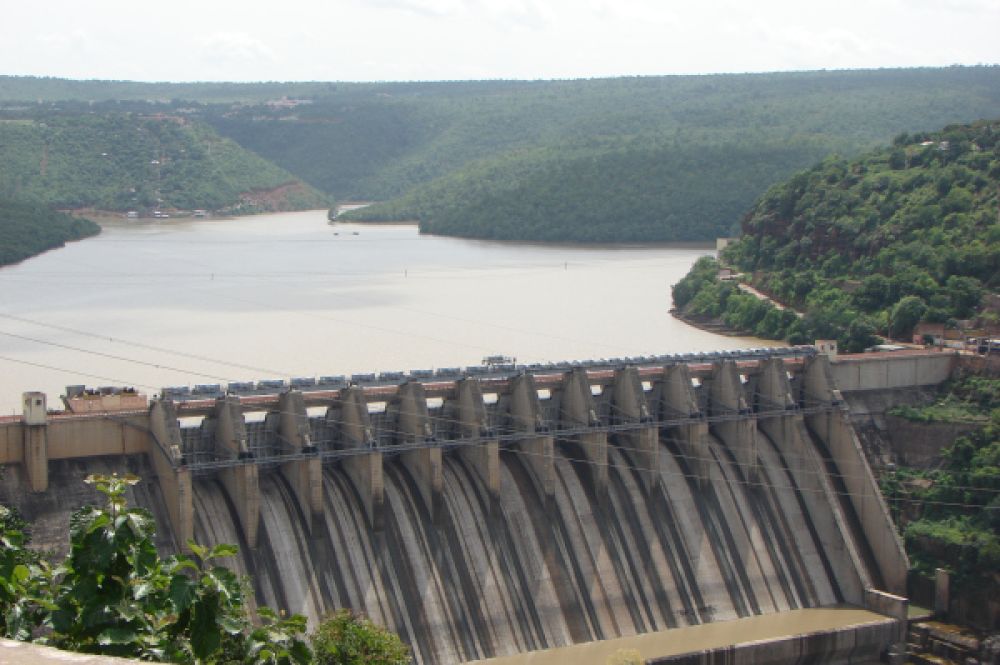
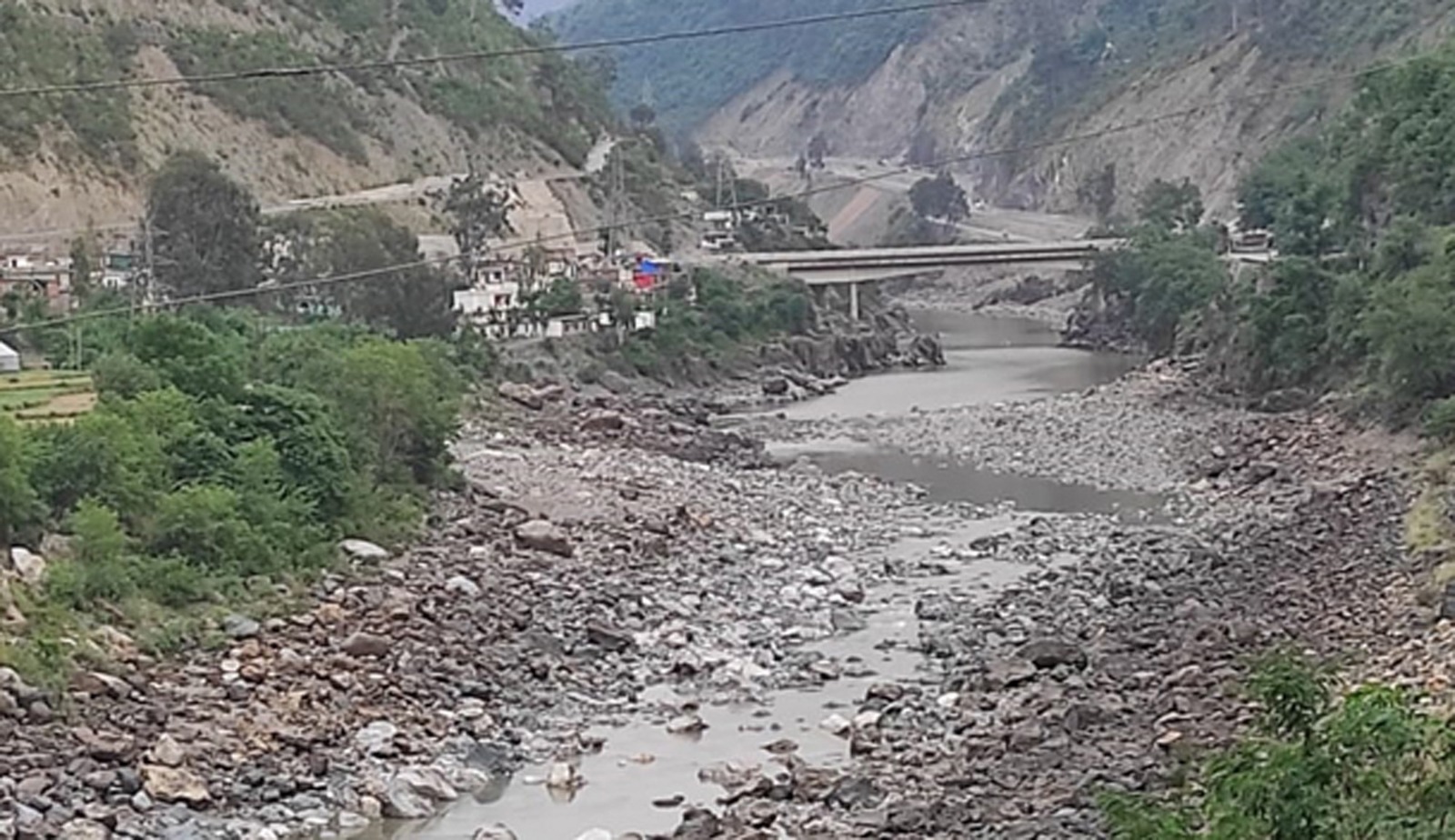
Water releases through the Chenab River became restricted at the Baglihar and Salal hydro-electric dam facilities within Jammu and Kashmir due to the Indus Waters Treaty suspension by India. The Chenab River belongs to the Indus river system and begins with the union of two rivers named Chandra and Bhaga in Himachal Pradesh before it moves through Jammu and Kashmir until it reaches its junction with the Sutlej River in Pakistan. 

Context:

Chenab River Dispute and Water Restriction:

  • Indian authorities restricted Chenab river waters at both Baglihar and Salal hydro-electric facilities in Jammu and Kashmir territory following the Indus Waters Treaty suspension. 

  • The Chenab River belongs to the Indus river system before it enters the Pakistani territory.

About Chenab River:

  • Origin: Formed by the confluence of two rivers, Chandra and Bhaga, at Tandi in the Lahaul and Spiti district of Himachal Pradesh.

  • Flow: From its upstream section as Chandra-Bhaga the watercourse continues as Chenab into the river channel.

  • Course: The Jammu region of Kashmir receives water from the river which unites with Sutlej River to stream as Panjnad before ending at Mithankot in Pakistan.

  • Tributaries:

    • Right Bank: Marusudar (largest tributary), Miyar Nalla, Bhut Nalla, and Kalnai.

    • Left Bank: Niru, Tawi, Neeru, and Lidrar.

  • Major Hydroelectric Projects on Chenab River:

    • Salal Hydroelectric Project (at Reasi),

    • Baglihar Hydroelectric Power Project (at Ramban),

    • Dul Hasti Hydroelectric Plant (Kishtwar district),

    • Ratle Hydroelectric Plant (Drabshalla in the Kishtwar district).

Conclusion

Under current tensions related to treaty cancellation the administration of Chenab River water flow stands as a major development in India's continuous dispute with Pakistan. The strategic value and economic significance of the Chenab River for both countries demonstrates why this action reveals intricate dimensions of how water management affects relations between nations.

FAQs


India restricted water at Baglihar and Salal dams following the suspension of the Indus Waters Treaty amid tensions with Pakistan.


The Chenab River originates at Tandi in Himachal Pradesh from the confluence of the Chandra and Bhaga rivers.


Chenab is part of the Indus system and crucial for irrigation, hydropower, and strategic water control in Jammu & Kashmir and Pakistan.


Salal, Baglihar, Dul Hasti, and Ratle are the key hydroelectric projects on the Chenab River.


The Chenab merges with the Sutlej to form the Panjnad River, which eventually joins the Indus at Mithankot in Pakistan.

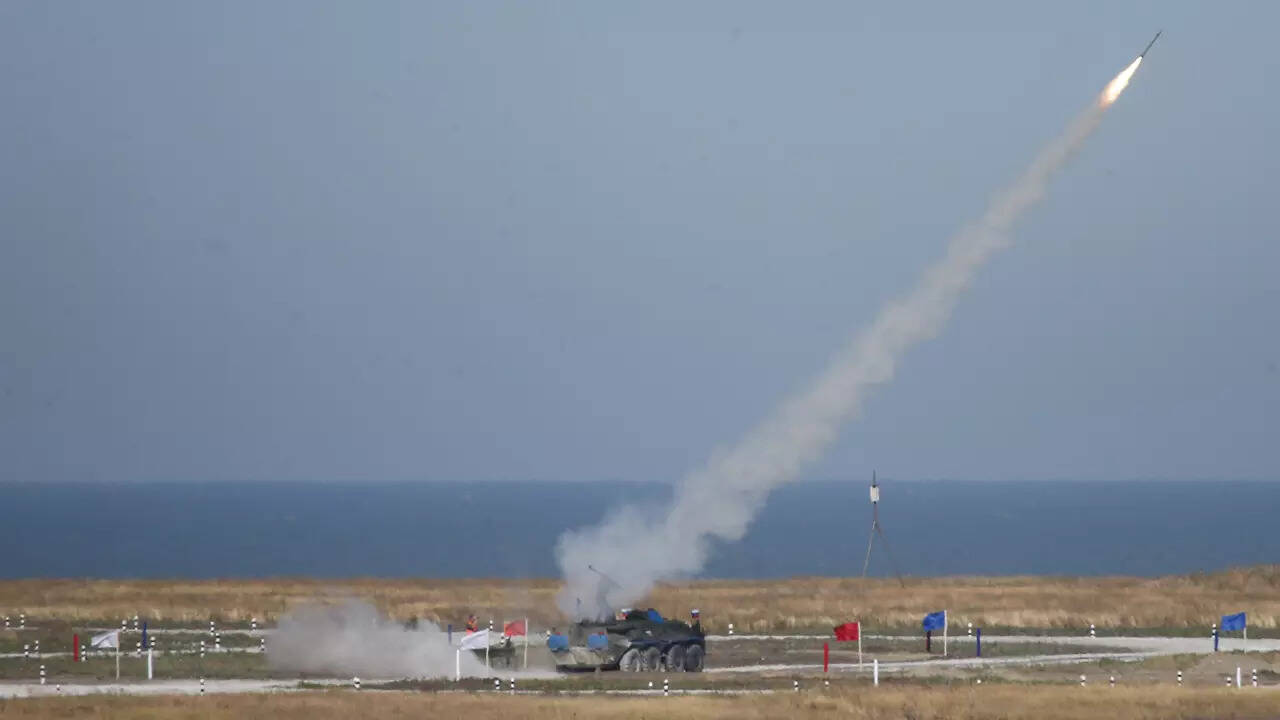
Indian Army Inducts Russian Igla-S Missiles: Enhancing Air Defence Amid Rising India-Pakistan Tensions

The Pahalgam terrorist attack from April 22 2025 escalated India-Pakistan tensions causing the Indian Army to enhance western border air-defense capabilities using Igla-S Very Short Range Air Defence Systems (VSHORADS). This emergency procurement agreement valued at ₹260 crores enabled India to acquire the Russian-Russian man-portable missiles for rapid independent ground-based defense. Security in a volatile region will gain strength through the deployment of Igla-S systems which successfully detects and engages fighter jets and attack helicopters and drones.

Summary:

  • The Indian Army has established Igla-S man-portable air defence missiles as a part of its ₹260-crore emergency procurement on the western border to protect its frontlines against aerial threats which include drones.

  • Integration between fast response capabilities and India's Integrated Drone Detection and Interdiction Systems enables immediate deadly ground-based responses to aerial and drone threats thus strengthening the nation's retaliatory and defensive force.

Key Points:

Overview of Igla-S System:

  • Igla-S VSHORADS serves as a man-portable infrared weapon which can fight aerial battles against fighter jets helicopters and unmanned aerial vehicles with its quick self-directed defense capabilities.

  • These systems operate from India's western border areas to speed up ground-based defense capabilities independently from the need of air support thereby enhancing national security against potential threats.

Tactical Flexibility and Efficiency:

  • Quick reaction System: When activated through the Igla-S systems users can initiate launch operations in seconds which ensures infantry troops and static posts can protect themselves by interrupting targeting hostile aircraft or drones alone and independently of air force assistance.

  • Collab with local defense system: The Igla-S missiles operate as part of the Indian Integrated Drone Detection and Interdiction Systems which defend against aerial threats at ranges up to 8 km. All defense components must use jammers and spoofers alongside lasers and rocket-powered VSHORADS to form a protective aerial defense system that protects a 8 km area.

Strategic Significance:

  • Retaliation: The missiles' deployment establishes India as a defender who will counters hostile aerial threats thus creating a security deterrent for future air and unmanned weapon system operations. By adopting this strategy India enhances its strategic approach through responsive retaliation capabilities that avoid a broad air force escalation.

  • Operational Benefits: The deployment of Igla-S sensors at forward locations gives Indian military commanders strategic operational benefits which include fast airspace interdiction and enhanced availability of airborne assets.

Ongoing Modernization Efforts:

  • Expansion Plan: Indian military modernization efforts include a rapid procurement process for additional 48 Igla-S launchers together with 90 more missiles which will speed up expansion plans. The Indian military continues to investigate the development of laser-guided VSHORAD systems which would contain improved counter-jamming technology.

  • Make in India: The government runs Igla system refurbishment efforts under Make in India as part of their national objective to boost homegrown air defense technology while extending equipment lifespan.

Escalating India-Pakistan Tensions:

  • Pahalgam Attack: The Pahalgam attack which resulted in 26 fatalities caused Indian forces to heighten border security while pledging a “befitting response” to the incident. India implements Igla-S missile deployments as a part of its defensive plans intended to safeguard vulnerable areas exposed to cross-border violations.

  • Strategic Plan: These air defense systems join diplomatic measures like Indus Waters Treaty suspension to communicate India's active defensive position toward Pakistani provocations.

Conclusion:

Igla-S missiles operated by the Indian Army serve as a vital defense enhancement for both air security and strategic preparedness on the western frontier during Pakistan-Indialodged tensions. This weapon system provides India with quick ground-based aerial protection against multiple threats and strengthens its retaliatory capacity in maintaining stability during military confrontations. Defense modernization in India still progresses as the Igla-S induction demonstrates India's strategic preference for layered systems designed to address drone threats in combination with other defense assets for improving national security.

FAQs


The Igla-S is a Russian-made man-portable air defense missile used to shoot down aircraft, helicopters, and drones.


India deployed them in response to the Pahalgam terrorist attack to boost western border air defense.


It enables rapid, ground-based interception of aerial threats without needing air force support.


The Igla-S can engage targets up to 8 km away using infrared tracking.


Yes, it integrates with India’s Drone Detection and Interdiction Systems for multi-layered air defense.

Bhakra Nangal Water dispute escalates between Punjab and Haryana

The water sharing disagreement between Punjab and Haryana has grown critical after the Bhakra Beas Management Board announced on April 23, 2025, that it would provide Haryana with 8,500 cusecs of extra water, even though Punjab strongly opposes this measure. The disagreement between Punjab and Haryana originated because Punjab says it distributed enough water, but Haryana insists it lacks a sufficient water supply. A dispute exists between Punjab and Haryana that affects legal matters, environmental resources and politics, leading both states to contemplate court action as a solution. The Bhakra-Nangal water management system is the main control point for the complicated water distribution dispute.

Context:

  • The issue emerged when the Bhakra Beas Management Board decided to provide Haryana with additional water allocation of 8,500 cusecs, triggering protests from Punjab due to its water shortage.

  • The legal and political dispute between Punjab and Haryana has reached a critical point because the first state continues to block water releases while the second requests Supreme Court involvement for equal water distribution.

Key Points:

Background of the Dispute:

  • Bhakra-Nangal Project: The Bhakra-Nangal Project is a vital river valley development scheme that functions under the Bhakra Beas Management Board (BBMB) as a joint operation between Punjab and Haryana and Himachal Pradesh. The Sutlej river management depends heavily on this project as its main function.

  • Water Allocation: BBMB allocates water to Punjab, Haryana, Rajasthan, and Himachal Pradesh at the start of each year. Water officials have established the 2025 water distribution to be 5.512 million acre-feet for Punjab and 2.987 million acre-feet for Haryana along with 3.318 million acre-feet for Rajasthan.

Current Crisis:

  • Haryana requested another 4.500 cusecs beyond their regular water supply allocation (8.500 cusecs total) on April 23, 2025, because three districts Hisar, Sirsa, and Fatehabad, needed water quickly for drinking purposes.

  • Punjab denies it has exceeded its water distribution limits while stating that decreased Himalayan snowfall led to vital dam water shortages.

About Bhakra Nangal Dam:

  • Location: Spanning the Sutlej River, near the border of Punjab and Himachal Pradesh.

  • Height: At 225.55 meters, it ranks as the second-tallest structure of its kind in India, following the Tehri Dam.

  • Reservoir: The water-storage capacity of Gobind Sagar amounts to 9.34 billion cubic meters.

  • Function:

    • Primarily for irrigation, hydroelectric power generation, and flood control.

    • Downstream from Nangal Dam, operators use water to produce hydroelectric power while they also provide water for agricultural purposes throughout the area.

Pong Dam:

  • Location: The Beas River runs through Himachal Pradesh where the dam was established under its official name Maharana Pratap Sagar.

  • Completion: The completion occurred in 1975 which established this water reservoir for irrigation purposes and power generation operations.

  • Ecological Importance:

    • The Pong Dam Reservoir received protection status as a Wildlife Sanctuary due to the Himachal Pradesh government in 1983.

    • The Government of India gave Pong Dam status as a Wetland of National Importance during 1994.

    • Ramsar Site recognition surfaced in November 2002 because the site meets international standards for a wetland ecosystem.

About Inter-State Water Dispute

What is Inter-State Water Dispute?

  • Two or more states face conflicts and disagreements about water resources control and utilization, as well as the distribution of rivers and their valleys that span state borders.

Reason for the dispute of interstate water dispute

  • Unequal Water availability: Several Indian states hold different levels of rainfall and river resources.

  • Agriculture and industrial needs: Agricultural sectors along with industries, compete against each other to obtain irrigation water and drinking water and industrial needs.

  • Upstream and downstream states: States located above other states possess the ability to construct dams or extract excess water which leads to downstream river flow interruptions.

  • Rising population, together with urbanization, leads to conflicts between states regarding their shared water resources.

  • Delay in decision: Legal delays in settlements together with tribunals result in protracted conflicts between parties.

Constitutional Provision for Inter-State Water Dispute

Provision

Details

Article 262

Empowers Parliament to adjudicate inter-state water disputes.

Inter-State River Water Disputes Act, 1956

Main law to resolve such disputes by forming tribunals.

Entry 17 of State List

States can legislate on water, subject to the provisions of Entry 56.

Entry 56 of Union List

Centre can regulate inter-state rivers and river valleys.

Inter-State Water Dispute Between States

Dispute

States Involved

River

Cauvery

Karnataka vs Tamil Nadu (also Kerala, Puducherry)

Cauvery

Krishna

Maharashtra, Karnataka, Telangana, Andhra Pradesh

Krishna

Godavari

Maharashtra, Telangana, Andhra Pradesh, Odisha

Godavari

Yamuna

Himachal Pradesh, Uttarakhand, Haryana, Uttar Pradesh, Delhi

Yamuna

Ravi-Beas

Punjab vs Haryana

Ravi & Beas

Mechanisms for Dispute Resolution:

  • The River Board Act, 1956 grants power to the Centre to create river boards but they have not been established thus far.

  • Under the provisions of Inter-State Water Dispute Act, 1956 states may petition tribunal formation when consultation between states fails to resolve conflicts. Since 2002 the Act received amendments which incorporated Sarkaria Commission recommendations for setting up the tribunal within one year while the tribunal must issue its decision within three years

Measures for Resolution:

  • Inter-State Council: The Inter-State Council should assume authority to resolve water disputes by acting as per Article 263 so states can make decisions through consensus.

  • Water Efficiency: Water efficiency programs and water harvesting techniques along with water recharge programs need support to decrease dependency on river water supplies.

  • Unified Water Management Agency: The Unified Water Management Agency should create one organization with authority to research surface water alongside ground water at union and state and district levels.

  • Fast-Track Tribunals: The Fast-Track Tribunals should provide quick verdicts that become legally binding court decisions.

  • Centralized Data Repository: Create a centralized water data repository for informed decision-making and transparency in dispute resolution.

Conclusion

A water-sharing conflict exists between Haryana and Punjab due to issues in managing natural resources across geographical boundaries. This case shows why states require cooperative federalism together with strong legal frameworks which enable climate-resistant water management approaches. Indian Supreme Court's handling of this legal case will challenge the nation's approach toward resolving interstate disputes regarding water resources along with its ability to balance competing political interests and resource distribution fairness.

FAQs


It is a joint river valley development scheme on the Sutlej River managed by BBMB to provide irrigation, power, and flood control.


Haryana demanded extra water due to urgent drinking needs, but Punjab cited water shortages from reduced Himalayan snowfall.


The Bhakra Beas Management Board annually allocates water among Punjab, Haryana, Rajasthan, and Himachal Pradesh.


Article 262 and the Inter-State Water Disputes Act, 1956, empower Parliament to resolve such disputes through tribunals.


Pong Dam is a Ramsar-designated wetland and wildlife sanctuary vital for ecological conservation.

Analysis of the Civil Defence Drills Directive by the Union Home Ministry: National Security and Federal Governance

The Pahalgam terrorist attack on April 22, 2025 triggered increasing tensions between India and Pakistan leading the Home Ministry to demand that states organize civil defence drills in their 244 vulnerable districts between May 7 to 9, 2025. The mock exercises implement measures such as air-raid sirens and evacuation plans with a focus on protecting vital installations for better hostile attack preparedness in India. This initiative serves to improve coordination between government levels and security forces as well as civilians because India places special importance on national security and emergency preparedness.

Summary:

  • The Union Home Ministry required all Indian states to execute nation-wide civil defense simulations of air-raid alerts together with evacuation strategies and blackout protocols for boosting security readiness across the country.

  • The national defense coordination needs improvement through this drill which involves more than four lakh participants because of heightened India-Pakistan tensions after the Pahalgam terrorist attack occurred.

Key Points:

Government Directives and Mechanisms:

  • The Union Home Ministry provided DGDC with orders to conduct mock drills throughout 244 districts which focus especially on border regions including Jammu and Kashmir for improving civilian defense plans.

  • Air-raid warnings as well as vital installation concealment procedures and blackouts form the basis of training to equip both civilian and government workers with proper hostile attack responses during the drills.

Volunteer Mobilization and Implementation:

  • Civil Defence together with police and National Cadet Corps (NCC) volunteers along with Nehru Yuva Kendra Sangathan (NYKS) members will conduct a mass participation of over 4 lakh people during the exercise.

  • Training programs at the exercise will equip volunteers with necessary disaster response skills and defense expertise which includes firefighting methods alongside emergency communication practices and control room operation knowledge.


Context of Escalating Security Threats:

  • The Indian government has increased its civil defense readiness following the Pahalgam violence that killed 26 people on April 22 because the security situation shows signs of becoming worse because of border terrorism and unstable regional conditions.

  • Early May brought forth another blackout drill in Ferozepur (Punjab) to show how preparedness strengthens civil defense during border conflicts with Pakistan.

Institutional Coordination and Leadership:

  • The drills train public safety celebrities to function together through combined operations between police services and local authorities.

  • The organization maintains cooperation with the Indian Air Force by establishing emergency contact systems through hotlines for rapid communication needs.

Focus on National security and preparedness

  • Apart from being a passive defense element these drills expand the ability to maintain public security and control threats that require no direct military intervention.

  • Defense prevention elements and community participation join forces with India's overall military and security designs to reduce unconventional threats such as terrorist operations.

Conclusion:

The Union Home Ministry’s implementation of civil defense drills represents a thorough plan to increase India’s readiness against security threats specifically in exposed border areas. The training programs activate civilian volunteers in addition to developing superior inter-agency teamwork with the goal to boost emergency response results and minimize security weaknesses. Developing resilience against foreign threats becomes crucial because of escalating tensions between India and its neighboring nations.

Election Commission of India to Launch ECINET: A Unified Digital Platform for Electoral Services

The Election Commission of India (ECI) plans to introduce ECINET which combines over 40 current mobile and web applications through an easy-to-use platform for digital governance. The platform aims to increase electoral service options for 100 crore electors and election officials and political parties and civil society stakeholders through its streamlined approach to electoral processes. Gyanesh Kumar who is the Chief Election Commissioner introduced the concept of ECINET during the March 2025 Conference of Chief Electoral Officers. 

Summary:

  • ECINET merges seven important applications including Voter Helpline, Voter Turnout, cVIGIL, Suvidha 2.0 along with ESMS, Saksham, and KYC App that have achieved more than 5.5 crore downloads. 

  • The platform delivers a simple accessible user screen which combines multiple app login processes into one system while optimizing electoral service protocols. 

Key Points:

  • Users will find all electoral services accessible from a single platform through ECINET eliminating the need for installing different programs so they can have an easier time navigating electoral services.

  • The statistical functions within ECINET will observe both the Representation of the People Acts from 1950 and 1951 and security regulations established by the Election Commission through its most current directives. 

  • The multipurpose platform serves 100 crore electors for the electoral system to conduct legal operations while guaranteeing data reliability and secure cybersecurity measures. 

Conclusion:

Mainstream implementation of ECINET brings India's electoral system into the modern era of infrastructure development. The ECI platform serves to bring together numerous electoral applications into one system thus improving both efficiency and transparency and accessibility of polling procedures. EcINET provides both voters with easy election participation and protects electoral data security as part of India's digital governance and electoral reform objectives.

Frequently Asked Questions (FAQs)

The current affairs cover recent national and international events related to UPSC, SSC, Banking, Railways, and State PCS.

You need to read about the current affairs daily, and revise them every week and every month to keep them longer in your memory.

Yes, Class24 provides free downloadable Daily Current Affairs PDFs for easy revision.

Yes, you can practice MCQs and quizzes to boost your exam preparation.

Absolutely. The content is written in simple, easy-to-understand bilingual language suitable for beginners.

Go to class24.com and click on the current affairs section directly, where you find everything that you need.

ssc-toppers

Start Learning Today with Class24

Related current affairs

Class24 offers free video lectures for smart preparation, covering CGL, CPO, CHSL, MTS, and GD exams. Learn from expert faculty, revise concepts easily, practice with PYQs, and improve speed and accuracy through high-quality, exam-focused video lessons anytime, anywhere.

Get success in your hand. Start study anytime anywhere.

The journey becomes simple and enjoyable when you start taking interest in it. And through our app “Class24”, we will be your trusted partners in developing that interest.

Daily Quizzes
Mock Tests
Ongoing

No ongoing tests right now.