

Day: May 3, 2025

India remains the 4th largest Economy globally, predicted by the IMF

India maintains its position among the 4 biggest economies in the world while holding the top spot as the fastest-developing significant economy with its current GDP of $4.39 trillion. The April 2025 World Economic Outlook from the IMF predicts that India will have a 6.2% economic growth rate despite general economic stagnation. By 2030, India will secure the position as the world's third-largest economic power through its healthy private consumption expansion focused on rural communities.

Context:

  • India stands out for its solid economic success, which continues during times of international problems such as trade struggles and policy ambiguity. 

  • Due to its solid economic expansion standing Indian stands out as a vital component for global financial equilibrium among other countries. 

  • Information about India's place in the global economic order and its anticipated growth potential, and its relation to other powerful economies is presented in this document.

Significance:

  • The fourth-largest economic position of India demonstrates a rising market position in global spheres next to leading nations United States and China.

  • Under forecasted 6.2% growth in 2025, India will continue leading major economies with the highest annual growth rate to strengthen global economic stability.

  • Indian economic dynamics keep moving forward because rural consumption boosts its economic expansion rates even though authorities lowered their initial growth predictions.

Background:

  • The International Monetary Fund now predicts world economic growth at 2.8% for 2025 because of escalating trade warfare and various political policy uncertainties.

  • The World Economic Outlook positions India as one of the leading nations globally since analysts predict its economy will grow at 6.2% during 2025.

Key Facts:

  • Top 10 Economies (2025):

Rank

Country

GDP ($ Trillion)

Growth Rate (%)

1

USA

30.34

2.7

2

China

19.53

4.6

3

Germany

4.92

0.8

4

India

4.39

6.2

5

Japan

4.27

0.65

  • India’s GDP Per Capita: The estimated figure for GDP per Capita in India reached $4.19 thousand which places it at the same level as Japan.

  • Global comparison: India holds a smaller GDP amount than China and the United States yet its economic expansion rate for future years is predicted to outpace both nations.

Conclusion:

The Indian economy maintains its position in the world economic map because it shows solid economic performance and is expected to have robust growth until 2025. India stands as the fourth-largest economy in the world because of its major private consumption expansion, which focuses primarily on rural areas. Statistics indicate that India will rise to the position of the world's third-largest economic power during the decade beginning 2030, thus solidifying its position as an energetic economic leader.

World Press Freedom Day theme, 2025: The Impact of Artificial Intelligence on Press Freedom

On May 3rd yearly World Press Freedom Day uses its annual celebration to emphasize that a free press serves as a fundamental support for democratic institutions and clear governance and individual rights protection. In 2025, the celebration will focus on safeguarding media professionals against threats related to censorship, violence and harassment, and other threats to their safety. The event demands protective actions for ethical journalism while combating false information, while recognizing journalists who risk their lives for the truth.

Context:

  • World Press Freedom Day is annually celebrated on May 3rd, since 1993. 

  • World Press Freedom Day theme, 2025:  focuses on “Reporting in the Brave New World – The Impact of Artificial Intelligence on Press Freedom and the Media” as its central theme.

Significance:

  • The observance underlines the necessity of free media as it stands as a basic human freedom requirement.

  • The initiative protects journalists by drawing attention to their dangerous situations including censorship violence and imprisonment and works for journalist security.

  • Ethical Journalism and Misinformation: The day underlines both the significance of proper ethical journalism techniques alongside misinformation prevention procedures for modern-day news dissemination.

  • This milestone commemorates reporters who faced death threats and death while spreading truthful messages through media, while celebrating the democracy and human rights achievements of news professionals.

India’s Press Freedom Index Ranking

Year

Rank

2019

140

2020

142

2021

142

2022

150

2023

161

2024

151

Origins of World Press Freedom Day:

  • The UN General Assembly passed World Press Freedom Day through a measure initiated by the recommendation of the UNESCO General Conference in December 1993. 

  • The date marks the anniversary of the 1991 Windhoek Declaration through which African journalists in Namibia adopted these press freedom principles. 

  • The declaration underlined that citizens require an uninhibited independent multipolar media ecosystem because media stands essential for democratic systems and societal growth.

  • Since its establishment, the day remains present to promote press freedom while supporting the rights of journalists. 

  • The yearly commemoration selects a distinctive theme that matches the present-day communication industry trends and active global media conditions.

Key Objectives:

  • Wednesdays matter because they serve to protect both press liberties and ensure safety for journalists across all borders.

  • The awareness campaign focuses on bringing attention to journalistic difficulties which include hostile attacks and harassment and detention of journalists.

  • Ethical Journalism promotion alongside misinformation fighting is a key goal for creating ethical journalism.

  • Increasing Transparency: Supporting transparency, accountability, and public discourse in democratic societies.

Importance of Press Freedom:

  • A democratic governance must include the press because this foundation ensures government accountability while promoting active citizenry.

  • Security of media professionals honors those who dare risk death for truth disclosures.

  • Public access to information represents the fundamental requirement to provide citizens with authenticated and legitimate information.

  • Worldwide recognition exists for expressing opinions freely as per Article 19 within the Universal Declaration of Human Rights (UDHR).

Way Forward:

  • Strengthening legal protections for journalists.

  • Media literacy education aims to teach people how to recognize inaccurate information to fight against false data.

  • Journalists who operate in hostile digital environments must receive adequate security measures throughout their work.

  • The world must create joint efforts of governments, ships media institutions, and civil society organizations that support press freedom.

Conclusion:

 World Press Freedom Day 2025 functions as an essential checkpoint to demonstrate why uninhibited free media operates as vital for maintaining democratic systems, along with holding governments accountable, as well as preserving human rights. The day demands that worldwide institutions protect reporters and combat deception so people can obtain factual, dependable news. News freedom defenders celebrate courageous journalists while pressing ahead with protecting media freedom together with ethical journalism across the entire world.

Depot Darpan: Modernization of India’s food storage infrastructure

Through the Ministry of Consumer Affairs, Food & Public Distribution India will introduce Depot Darpan which functions as an online platform to boost food storage depot monitoring and management nationally. Depot Darpan relies on geo-tagging along with IoT and AI and CCTV surveillance to deliver real-time monitoring services that raise transparency levels and food distribution efficiency and safety in India's food system.

Context:

  • The modernization of India’s food storage infrastructure progresses through the initiative known as Depot Darpan. 

  • The portal provides real-time performance evaluations and storage facility monitoring through its integrated smart technology system.

  •  India can accomplish food security goals and optimize its public distribution system performance.

Key Points:

  • About: Real-time depot monitoring occurs through Depot Darpan which combines geo-tagged data along with IoT technology and AI functionalities within its digital portal and mobile application system.

  • Launched by: The Ministry of Consumer Affairs Food and Public Distribution established this initiative.

  • Objective: The portal functions to update India's food storage infrastructure by providing better efficiency alongside transparency together with food safety measures.

Key Features:

  • Real-time monitoring system: The system conducts real-time observation by deploying IoT sensors together with CCTV surveillance to track operations and infrastructure elements and financial performance indicators.

  • geo-tagged infrastructure: The food storage depot managers submit geo-tagged infrastructure information to the system, which officers and independent auditors approve.

  • Automated rating: Food storage facilities receive automated ratings through composite evaluation models based on their operational performance and structural quality ratings.

  • Smart Tech Integration: Includes monitoring of CO₂ and phosphine gas levels, humidity, temperature, and fire hazards.

  • AI Tools: Programs that count bags, perform face recognition, and perform automatic number plate recognition for tracking both vehicles and personnel movements.

  • Monitoring: Through the system, there is monitoring of 2,278 warehouses, which belong to FCI and CWC and state/private agencies.

  • Mobile App: Through its mobile application supervisory officials have the ability to perform assessments and create documentation while stationed anywhere.

Significance:

  • Enhances food security: Through quality storage procedures, the portal provides safe storage of NFSA-distributed food grains to the entire 80 crore beneficiaries.

  • Boosts efficiency: The system raises efficiency through lower food losses as well as better management of warehouse space and workforce organization.

  • Good governance: The system implements digital governance by enhancing storage facilities in logistics as well as the distribution sector of India.

Conclusion:

Depot Darpan portal introduces a major breakthrough to how India handles its food storage needs. Through real-time monitoring and combination of smart technology and AI the portal achieves better storage conditions against food wastage while assisting the government's effort to ensure food security. The depot management system is an essential step forward that will modernize the way India distributes its food products and enhance both operational efficiency and system transparency in the public distribution network.

Operation Kagar: A comprehensive way to fight Left-Wing Extremism (LWE)

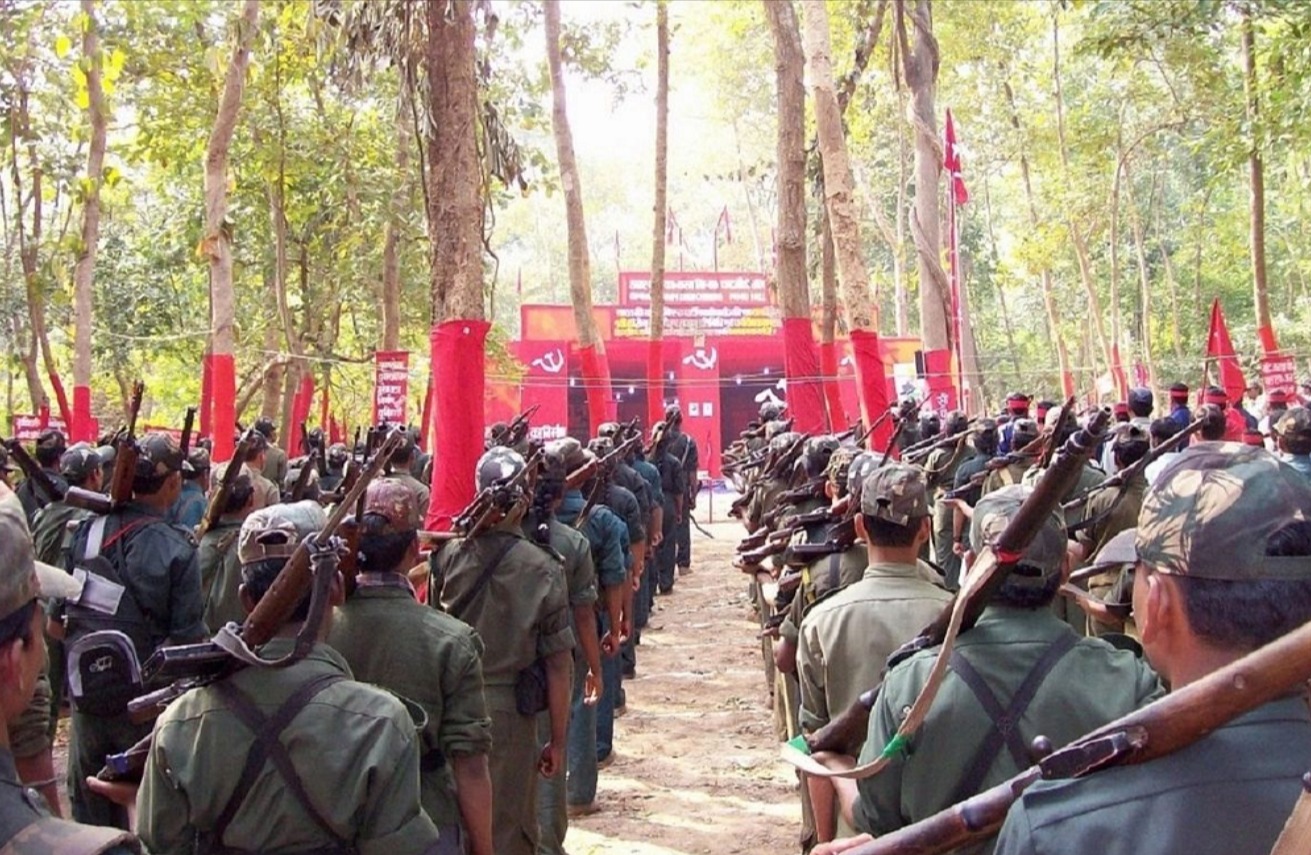
Operation Kagar, as the Union Government launched it in January 2024, functions as a major counterinsurgency program that intends to eliminate Naxal bases throughout India. The operation combines defense security operations with modern surveillance technology, with development programs to fight Left-Wing Extremism (LWE). Operation Kagar conducts its operations across Chhattisgarh, Maharashtra, and Jharkhand through a multifaceted strategy, which achieves substantial successes in removing insurgents while bringing down the territory controlled by Naxal groups.

Context:

  • Operation Kagar features a dual purpose to eliminate Naxal influence inside three essential areas encompassing Bastar (Chhattisgarh) Gadchiroli (Maharashtra) and West Singhbhum (Jharkhand). 

  • In January 2024, the Union Government launched Operation Kagar as its major counterinsurgency plan to eliminate Naxal structures in various parts of India.

  • As part of its fundamental approach to manage Left-Wing Extremism and achieve tribal area development the central government believes this initiative is essential.

Key Points:

  • Launch and Objective: 

    • Operation Kagar became operational in January 2024 with the main goal to combat increased Naxalism activities in Indian border areas. 

    • State control restoration serves as an operation objective with twin objectives of disrupting Naxal activity and protecting tribal communities.

  • Personnel Involved: Around 1 Lakh officers from CRPF together with CoBRA (Commando Battalion for Resolute Action) as well as DRG (District Reserve Guard) and STF (Special Task Force) and state police forces operate within India.

  • Modern surveillance tools consisting of drone aircraft along with artificial intelligence platforms and satellite imagery enable monitoring and capture of Naxal armies during operations.

  • Operation Green Hunt focuses its major activities within the regions of Bastar in Chhattisgarh and Gadchiroli in Maharashtra together with West Singhbhum in Jharkhand where Naxal activity remains significant.

  • The operation achieved considerable success as the number of Naxal-affected districts decreased from 106 districts in 2015 to six districts in 2025.

What is Naxalism?

  • Definition: Naxalism represents an aggressive movement of Left-Wing Extremism (LWE) that draws from Maoist concepts to achieve the establishment of a People's Democratic Republic through wanting to topple established state institutions.

  • Origin: The peasant rebellion that launched Naxalism started in 1967 at the Naxalbari village of West Bengal through the efforts of Charu Majumdar and Kanu Sanyal.

  • Ideology: Naxalism adheres to Marxist-Leninist doctrine, which promotes land reform, besides combating exploitation and economic disparities.

  • Objective: The goal of the insurgency headed by the state's opposition was to form a People’s Democratic Republic against the state government through violent rebel action.

  • Affected Regions: These areas have experienced the most Naxalism activity within the Red Corridor that includes states Chhattisgarh, Jharkhand, Odisha, Bihar, and Andhra Pradesh, along with spreading its influence into urban regions.

Evolution of Naxalism in India:

  • 1967: The Naxalbari uprising initiated the movement in 1967, during which Charu Majumdar, Kanu Sanyal and Jangal Santhal led the uprising in West Bengal.

  • 1975-2004: During 1975-2004, Naxalism split into two dominant factions: PWG in Andhra Pradesh established itself, as did MCCI in Bihar.

  • After 2004, PWG united with MCCI to create the CPI (Maoist) which strengthened the Naxal movement allowing its spread from the Red Corridor to various other Indian regions.

  • Expansion of Red Corridor: The Naxalite movement carried its spread throughout Chhattisgarh and Jharkhand, Odisha and southern states while targeting infrastructure alongside security force personnel.

  • Current Status: The persistence of Naxal violence decreased by 47% between 2015-2020 but continues to affect primarily core Naxal hotspots. Interference remains a challenge in this area.

Types of Naxalism:

  • Rural Naxalism: The main targets of rural Naxal groups are government symbols and infrastructure, as well as security forces who operate within forested and tribal regions.

  • Urban Naxalism: The Maoist ideology has made its way into urban society thus transforming students along with intellectuals and labor members into radical supporters of the movement.

Reasons Behind Naxalism:

  • Economic Imbalance: Unequal distribution of resources, lack of employment, limited education for tribal youth living in remote areas, government exploiting the forest land for mining. 

  • Exploitation of tribals: The tribal population faces multiple issues because mining operations combine with deforestation activities, along with the restriction of tribal forest rights.

  • Development Deficit: It exists because remote areas stay without essential infrastructure such as roads, schools, healthcare and clean water access.

  • Governance Deficit: Weak local governance, corruption, and ineffective implementation of welfare schemes.

  • Political Marginalization: Exclusion of Dalits, Adivasis, and landless peasants from political participation and decision-making processes.

Government Initiatives to Counter Naxalism

  • Security operations: The Indian government deploys Central Armed Police Forces (CAPFs) together with anti-Naxal specialized units, including Greyhounds and Bastariya Battalion, for security operations.

  • Development programs: The government implements three key development initiatives known as Road Connectivity Projects and the Aspirational Districts Program combined with the ROSHNI Scheme which focus on improving socioeconomic conditions of Naxal-affected regions.

  • Rehabilitation policies: Surrendered Naxals benefit from rehabilitation policies, which supply them with rehabilitation programming that combines skills education and employment possibilities.

  • Intelligence Strengthening: Consists of two key components namely Multi-Agency Centers (MACs) and UAV surveillance which promotes real-time intelligence exchange.

  • Skill Development: The Pradhan Mantri Kaushal Vikas Yojana (PMKVY) program under Skill Development aims to establish employment prospects for young individuals who inhabit such affected areas.

SAMADHAN STRATEGY (for Countering Naxalism)

  • S – Smart Leadership: Effective and informed leadership at all levels.

  • A – Aggressive Approach: to interrupt Naxalite group actions.

  • M – Motivation and Training: Ensuring the morale and skills of security forces.

  • A- Actionable Intelligence: Duty-focused intelligence efforts to accomplish more specific operational objectives.

  • D – Dashboard-Based KPIs and KRAs: Monitoring performance through key performance indicators.

  • H – Harnessing Technology: Utilizing modern technologies like drones and surveillance tools.

  • A – Action Plan for Each Theatre: Tailored strategies for different regions.

  • N – No Financial Access: Naxals will lose their funding sources by denying them access to money.

Challenges to Counter Naxalism:

  • Terrain complexity: The Naxals use thousands of kilometers of forested terrain to run guerrilla operations which prevents military operations from being successful.

  • Inadequate Coordination: The lack of proper coordination between national security forces as well as between regional states creates operational challenges.

  • Lack of intelligence: Maoist insurgencies struggle because existing intelligence tools are outdated while operational information remains elusive.

  • Social support base: The marginalized tribal communities and farm workers provide complete backing to Naxals because they consider them defenders against exploitative practices.

  • Urban Maoism: The Maoist revolutionary theory penetrates intellectual spaces of urban areas which complicates defensive measures taken against Maoist ideology.

Way Forward to Tackle Naxalism:

  • Holistic development: The whole development approach demands basic infrastructure development including roads alongside educational institutions and healthcare systems and livelihood generation across targeted areas.

  • Better Governance: requires delivering welfare schemes effectively together with honest governmental practices.

  • Community engagement: Tribals should play an active role in decision-making through empowerment and recognition of their forest rights and the establishment of equitable policies.

  • Modernized Security forces: The defense establishment should adopt modern technology while training security forces to achieve operational excellence through better coordination systems.

Conclusion:

India has reached an important strategic point in its counterterrorism operations through Operation Kagar. Military operations that unite state surveillance capabilities and targetted community outreach have produced positive effects in both reducing Naxalism influence and reinstating central government management across vital areas. Operating at success enables the development of lasting peace and sustainable progress for tribal zones and stops resident communities from Maoist exploitation.

FAQs

Launched in January 2024, Operation Kagar is a major counterinsurgency mission to eliminate Naxal strongholds using advanced surveillance and coordinated security operations in Chhattisgarh, Maharashtra, and Jharkhand.

To dismantle Naxal infrastructure, reduce LWE influence, restore state control, and ensure safety and development in tribal-dominated conflict zones.

Around 1 lakh personnel from CRPF, CoBRA, DRG, STF, and state police, supported by drones, AI surveillance, and satellite monitoring.

Bastar (Chhattisgarh), Gadchiroli (Maharashtra), and West Singhbhum (Jharkhand) — all high-intensity zones within the Red Corridor.

LWE violence has dropped significantly; Naxal-affected districts reduced from 106 in 2015 to just 6 in 2025 due to combined security and development efforts.

Relocation of Jaigir Village and the conservation efforts at Palamu Tiger Reserve

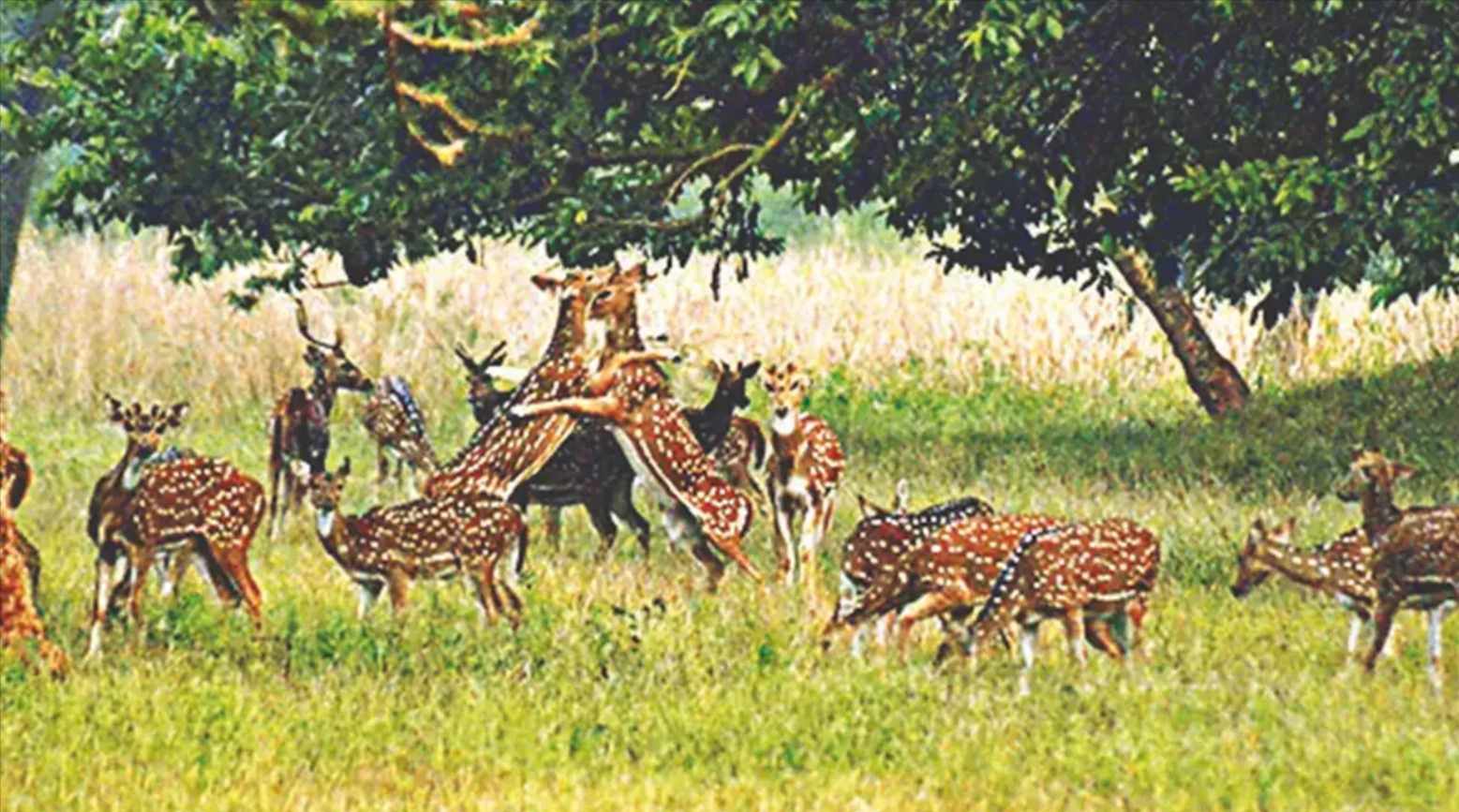
Jaigir village relocation is a key initiative that aims to reduce wild animal conflicts while protecting endangered species living inside Palamu Tiger Reserve. The authorities continue to protect the reserve by concentrating their efforts on defending both the tigers and other critical species, besides maintaining the distinctive ecosystem. By this initiative, it will help to protect both the biodiversity and historical status as the first Project Tiger project in India.

Context:

  • Palamu Tiger Reserve (PTR) in Jharkhand accomplished substantial progress when Jaigir village became the first complete village to relocate out of its core area. 

  • The relocation of Jaigir village serves two main purposes: 

    • To limit human activity and 

    • To enable stronger wildlife conservation activities 

Key Points about Palamu Tiger Reserve:

  • The Palamu Tiger Reserve spreads across 93 sq km territory in the Jharkhand region that belongs to Latehar district.

  • Palamu Tiger Reserve stands among the original nine Project Tiger projects that started in 1974 while serving as Jharkhand's exclusive protected area.

  • The Betla National Park and its parts form part of the PTR and maintain a notable diversity of species.

  • The five essential keystone species of the reserve consist of the tiger, together with the Asiatic elephant, leopard, and sloth bear, with the grey wolf included.

  • Northern tropical dry deciduous forests prevail in the reserve territory, and Sal trees stand as its most abundant plants.

  • Three primary rivers, namely North Koel, together with Burha and Auranga, conduct water drainage in the region, while geology reveals gneiss, quartzite, amphibolite, and laterite rocks.

  • J.W. Nicholson performed the historical tiger pugmark-based census, which took place in 1932.

Jaigir Village Relocation: Key Points

  • First Village Relocated:

    • Jaigir Village represents the initial complete village relocation project from the core zone area of the Palamu Tiger Reserve that exists within Jharkhand.

  • Aim of Relocation:

    • The relocation project moves settlements outside critical wildlife areas because it seeks to decrease human-wildlife conflicts.

    • The relocation project intends to improve wildlife conservation through creating safer environments for tigers along with other protected species inside the core zone.

  • Significance of the Relocation:

    • The habitat of critical importance to tigers becomes more accessible after clearing human settlements from these areas so wildlife can live interference-free.

    • The relocation of Aigir Village functions as a guide for different Indian tiger reserves to show how human settlements can be effectively shifted toward wildlife preservation goals.

    • The relocation strengthens the role of Palamu Tiger Reserve in Project Tiger through improved protection of tiger conservation areas.

  • Broader Impact:

    • By relocating Aigir Village the wider conservation efforts will be supported while PTR aims to increase tiger numbers and maintain biodiversity levels at the reserve.

About Tiger Reserve:

  • According to historical records India contained 40,000 tigers at the beginning of 1900. 

    • A decline in the number of remaining tigers occurred between 1973 and 1972 when scientists counted only 1,800 of these animals in the entire country.

  • The government initiated Project Tiger through its establishment of 9 tiger reserves in 1973 for tiger conservation purposes.

  • The current situation shows that Project Tiger works with 54 tiger reserves distributed over 18 Indian states which make up the tiger range areas.

  • Tiger reserves and core-buffer model:

    • Core Areas function as legally protected natural spaces which include national parks and sanctuaries that bar all human activities particularly grazing and minor forest resource collection to maintain wildlife peace.

    • Buffer Zones establish a protected area that incorporates forested areas together with allocated non-forest zones where regulated human activities assist local communities in their survival while protecting tiger populations.

Conclusion

Moving the Jaigir village represents an essential initiative to boost wildlife defense measures in the Palamu Tiger Reserve. The reduction of human presence within the reserve will lead to improved conservation results for animals and plants, particularly affecting the primary species known as the tiger. The initiative strengthens both human well-being and wildlife protection through its role as a breakthrough hub for biodiversity conservation under Project Tiger.

FAQs

To reduce human-wildlife conflict and support tiger conservation by easing pressure on the core area.

It’s one of India’s first nine tiger reserves (1973) and hosted the first tiger pugmark census in 1932.

It removes disturbances like grazing and poaching, allowing safer habitats and better wildlife movement.

Tigers, Asiatic elephants, leopards, sloth bears, and grey wolves, among others.

Core zones are strictly protected; buffer zones allow limited human activity to balance conservation and livelihoods.

Frequently Asked Questions (FAQs)

The current affairs cover recent national and international events related to UPSC, SSC, Banking, Railways, and State PCS.

You need to read about the current affairs daily, and revise them every week and every month to keep them longer in your memory.

Yes, Class24 provides free downloadable Daily Current Affairs PDFs for easy revision.

Yes, you can practice MCQs and quizzes to boost your exam preparation.

Absolutely. The content is written in simple, easy-to-understand bilingual language suitable for beginners.

Go to class24.com and click on the current affairs section directly, where you find everything that you need.

ssc-toppers

Start Learning Today with Class24

Related current affairs

Class24 offers free video lectures for smart preparation, covering CGL, CPO, CHSL, MTS, and GD exams. Learn from expert faculty, revise concepts easily, practice with PYQs, and improve speed and accuracy through high-quality, exam-focused video lessons anytime, anywhere.

Get success in your hand. Start study anytime anywhere.

The journey becomes simple and enjoyable when you start taking interest in it. And through our app “Class24”, we will be your trusted partners in developing that interest.

Daily Quizzes
Mock Tests
Ongoing

No ongoing tests right now.