

Day: April 23, 2025

A Legal Analysis of Section 69 of the Bharatiya Nyaya Sanhita 2023

Section 69 of the Bharatiya Nyaya Sanhita (BNS) 2023 establishes legal grounds for sexual intercourse when someone undertakes deceitful marriage commitments. People have started debating this clause for two reasons: first it questions whether it follows the terminology of Section 63 rape in BNS and second it doubts its necessity. Section 69 from the BNS faces evaluation against prevalent rape laws existing under the BNS and under Indian Penal Code (IPC) standards.

Sexual offences under Bhartiya Nyay Samhita (BNS),2023

Sexual offences are addressed completely in Chapters V (Sections 63–73) of BNS, 2023.

Offences of Rape (Section 63–66, 70–71)

  • Section 63: The law defines rape through several specified criteria.

  • Section 64–66, 70–71: The prescribed legal punishments range from 10 years minimum imprisonment to life sentence or death according to whether the victim is underage or non-able or nature of crime like Gang rape etc.

  • Through its protective measures the law shields minor victims from sexual assault procedures and it protects vegetative state patients along with establishing harsher punishments for gang rape incidents and serial sexual offenders and first-time offenders.

Offences Arising Out of Sexual Intercourse (Section 67–69)

  • Section 67: of the law it becomes illegal for a legally divorced spouse to perform sexual intercourse against the consent of the partner.

  • Section 68: Targets abuse of authority — by public servants, custodians, or hospital staff.

  • Section 69: stands alone as a new law to combat deceitful sexual acts which include both promises of marriage and employment.

Offences Related to Disclosure of Identity (Section 72–73)

  • Sections 72–73: stipulate that public or media exposure of victim identities in sexual offenses is prohibited unless approved authorities deem it essential.

  • Punishment: Up to 2 years imprisonment and fine.

Key Issues with Section 69

Limitation Set by Courts in False Promise of Marriage Cases

Supreme Court justices have defined which situations qualify for false marriage promises to trigger rape charges.

  • Anurag Soni v. The State of Chhattisgarh (2019):

    • The act of sexual intercourse that stems from a promise of marriage will constitute as rape only when the promised marriage was never genuine. 

    • The purpose with which someone makes a promise to marry establishes its validity. Fear of rape cases emerges if a person makes empty marriage promises without genuine intent to wed the person.

  • Rajnish Singh @ Soni v. State of U.P. (2025):

    • A man remains protected from rape charges when he has normal sexual relations with his consenting long-term partner throughout an agreeable relationship although it ends later. 

    • The existence of agreement alongside truthful promises enables people to escape rape prosecution.

  • Abhishek Arjariya v. The State of Madhya Pradesh (2025):

    • Rape becomes unlawful only when both parties provide their consent during consensual sexual interaction which does not include deceptive or misleading situations. 

    • No rape charge will arise when a person engages in sexual activity despite having a marital commitment as long as they did not use deception to achieve it.

Redundancy of Section 69

  • The separate offense for sexual intercourse under false promises of marriage defined in Section 69 does not fit within the rape definition of Section 63.

  • Section 63 of the BNS includes rape when misunderstandings about facts exist such as promises to marry as explained by Section 28.

  • Section 69 becomes unnecessary unless it explicitly exempts an instance from the general provisions of rape that appear in Section 63.

Analysis of Section 69

Section 69:

  • The law states that following deceitful methods or promising marriage to a woman without intending marriage results in imprisonment for up to 10 years with an attached fine.

  • Explanation:

    • "Deceitful means" include:

      • False promise of employment, marriage, or promotion.

      • Suppressing one’s identity.

Limitations of Section 69:

  • The law considers an act as rape if committed through factual misconception which prevents the court from applying a lesser Section 69 punishment.

  • Section 69 of the BNS introduces a smaller offense which duplicates Section 63 rape cases including false marriage promises that fall under misconception of fact.

Constitutional Concerns

  • Article 14: The introduction of Section 69 as a lesser offense fails to respect the constitutional equality standard mandated by Article 14 because it does not set apart the penalties for Section 69 from those of Section 63 regarding rape.

  • Lack of non-obstante clause: Section 69 faces legal dangers because it lacks an explicit non-obstante clause. The absence of distinction in Section 69 might lead to the unconstitutionality of this section unless it creates specific exclusions from Section 63 of the BNS.

Recommendations

  • When a defendant uses false marital promises to allegedly commit a crime the police should perform an initial check to determine if any actual violations exist. Proper preliminary reviews should be conducted to stop police agencies from filing cases which would fail to match BNS or IPC definitions of rape.

  • The laws need reform under Section 69 to clarify its boundaries ensuring they do not cover Section 63 (rape) cases. To eliminate redundancy a specific provision regarding exceptions should be implemented.

Conclusion

The sexual intercourse based on false marriage promises provision in Section 69 of Bharatiya Nyaya Sanhita 2023 shows redundancy in regard to already established rape laws. Section 69 risks obtaining constitutional invalidity while creating confusion in legal practices because of its lack of distinction or exceptions.

Pahalgam Terror Attack: What happened and way ahead

The terrorist assault at Pahalgam demonstrated a vulnerability among Kashmir's tourism sector despite India's post-370 constitutional measure. During the strike two major diplomatic events occurred when PM Modi visited Saudi Arabia while US Vice President JD Vance arrived in India which the attackers used to send their political message across. Terrorist organizations remain threatening to civilians as they amplify their tactics through strikes that specifically target non-military personnel during prominent diplomatic affairs.

Context:

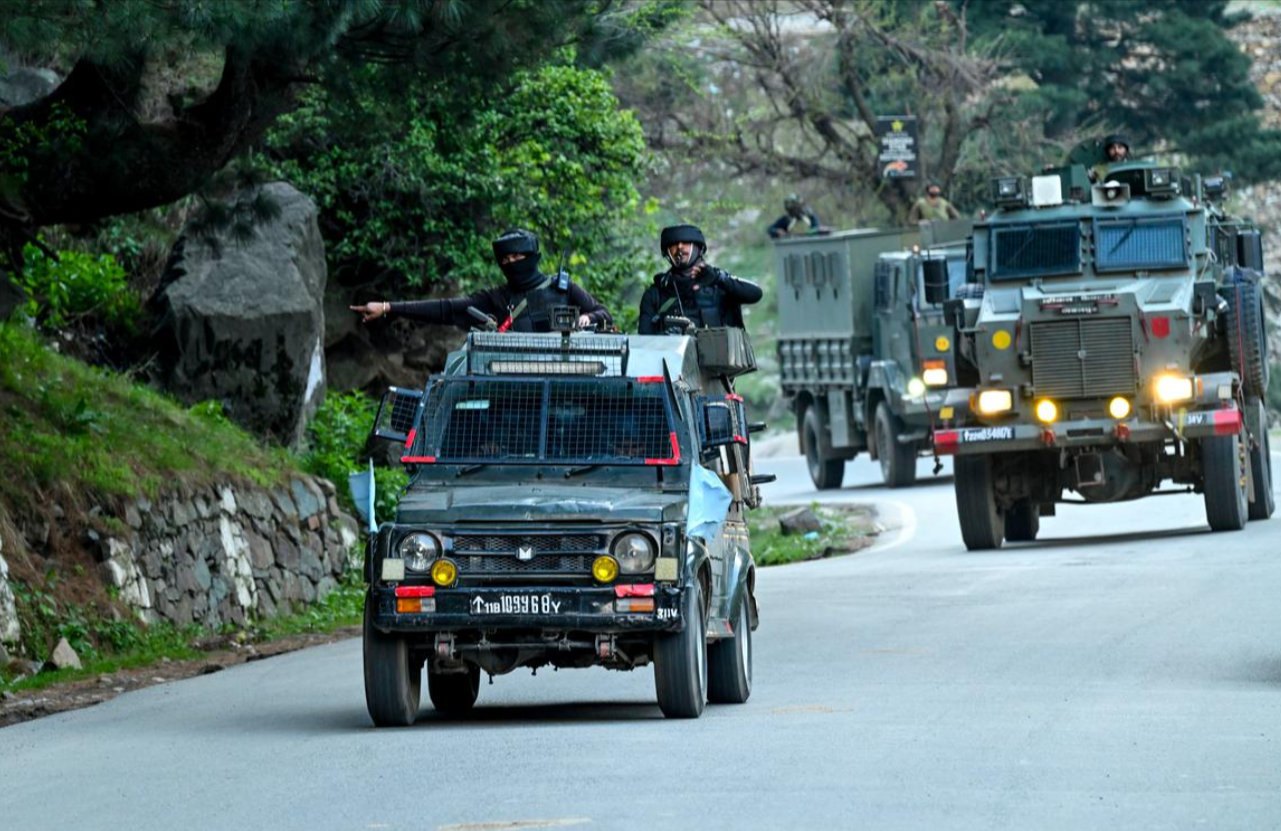
Over 26 civilians including tourists fell victim to a terror attack on the group of tourists in Pahalgam, Anantnag (Jammu and Kashmir) that marked the deadliest such incident since 2019. 

Key Points:

What Happened:

  • The Baisaran meadow served as the scene where terrorists ambushed about 40 tourists while utilizing automatic rifles and small arms.

  • Attackers killed the victims after confirming their names along with religion-based identification.

  • Members of the Indian Army employed helicopters to transport wounded tourists between the attack site and military hospital facilities.

Historical Parallels:

  • Attacks resembling this one occurred during significant visits like the 2000 Chittisinghpora massacre where 36 Sikhs died when Clinton stopped over and the 2002 Kaluchak attack that killed 23 civilians when a U.S. diplomat visited.

  • Responsibility Front (TRF) took responsibility through its connection to Lashkar-e-Taiba.

  • The group declared its opposition to "demographic changes" which it called for by using domicile certificates.

  • The attack took place at a critical time while PM Modi met in Saudi Arabia and US Vice President JD Vance made his visit to India suggesting terrorists wanted to deliver a geopolitical message.

Impact:

  • Security conditions deteriorated following the nullification of Article 370 thus contradicting peace promises.

  • Devastating for Pahalgam’s economy amid peak tourist season.

  • The incident may harm India's reputation on the international stage by giving credibility to Pakistan-supported propaganda.

  • The intentional physical assault of religious communities threatens to create social division as terrorists actively try to fuel animosity between different groups.

Way Ahead:

  • Swift intelligence-based operations should unite commands from the CRPF with forces from the Army and J&K Police for eradicating offenders.

  • The government should use strategic communication to create unity between public groups and maintain public assurance against terrorist objectives.

  • The tourism sector needs reassurance through financial compensation and guaranteed security while tourism stakeholders must be included to prevent economic decline in the Valley.

  • The deployment of UAVs should include facial recognition and terrain mapping within the surveillance of sensitive non-motorable high-altitude regions.

  • The country should utilize UN and G20 and bilateral diplomacy platforms to showcase the border terrorism threat while pursuing international backing.

Conclusion:

The Pahalgam attack exposes Kashmir's turbulent history and confirms that terrorism in the area continues transforming into new dangerous forms. For addressing this crisis it is necessary to combine firm security measures with diplomatic action alongside community peace efforts. The nation requires national unity to fight off terrorist organizations while sustaining its territorial sovereignty.

TERI’s Nano Sulphur Breakthrough in Mustard Cultivation

The mustard oilseed production in India deals with low productivity that stands as a major obstacle. Nano sulphur provides TERI with the tools to boost agricultural productivity while creating sustainable farming practices that enhance essential soil nutrients in Indian farming land. Using nano sulphur scientists from TERI have created a revolutionary development that increases mustard farms up to 30-40% more successfully. The innovative solution provides India with a lasting approach to raise its oilseed production levels which persist at low levels.

Context of the News:

  • TERI scientists created a nano-sulphur formulation which grows mustard crops both in quantity and oil production levels thus providing India with a new solution to its low oilseed output issues.

Key Points:

What is Nano Sulphur?

  • The nano-based Sulphur formulation which can be applied through leaf spraying boosts both the nutrient absorption rate and agricultural production.

  • Plants develop their nutrients through the natural functions of plant-growth promoting bacteria as an eco-friendly enzymatic nutrient transportation method.

  • Nano-sulphur received development through The Energy and Resources Institute (TERI).

Key Features:

  • The application of Nano Sulphur leads to enhanced mustard production levels reaching 30–40% (3.7 tonnes/ha).

  • The treatment increases the percent of oil found in the crop by 28–30%.

  • The product saves farmers 50% of their typical sulphur fertilizer costs by serving as an alternative to bulky sulphur feeds.

  • The method of leaf application provides 90-100% absorption efficiency which exceeds the 10-15% availability of regular nutrient delivery systems.

  • The chemical stays within the soil preventing its loss from sandy or densely packed soil types.

Significance:

  • Farmer income from this practice reaches up to ₹12000 per acre through extra earnings.

  • Addresses sulphur deficiency in 41–45% of Indian soils, particularly in key oilseed-producing states like MP, Gujarat, Maharashtra, and Andhra Pradesh.

  • The product offers complete sustainability since it relies solely on biological elements in contrast to chemical-based nano urea formulations.

  • The sustainable technology serves as an alternative to GM crop DMH-11 by bypassing regulatory barriers for self-sufficiency.

Conclusion:

The nano sulphur production by TERI creates an ecological and cost-efficient answer to India's difficulties with oilseed output. The candidate solution shows promise as an agricultural self-sufficiency advance by elevating mustard production and enhancing soil conditions and minimizing conventional fertilizer requirements.

Extension of Mission Anveshan: Boosting India’s Energy Security

The Government of India plans to expand its Mission Anveshan initiative for conducting seismic surveys to identify new oil and gas deposits in order to boost energy security. The government launched Mission Anveshan during fiscal year 2025 for a 2026 deadline although the timeframe may stretch to 2027 to enhance exploration of new hydrocarbon deposits. The government started Mission Anveshan together with other such programs that aim to decrease oil imports through increasing domestic oil and gas research activities. The main objective of this mission concerns mineral reserve exploration within sedimentary basins by implementing state-of-the-art seismic surveying systems to enhance exploration precision.

Context:

  • Energy security in India improves through Mission Anveshan and identifying new hydrocarbon discoveries.

  • Through its incentive scheme the program encourages state-controlled oil enterprises ONGC and Oil India Ltd to execute seismic surveys that produce data about oil and gas reservoirs.

  • The main target areas within this exploration program are sedimentary basins because they exhibit notable hydrocarbon reserves.

Key Points:

Objectives of Mission Anveshan:

  • A central government initiative launched during FY 2025 aims to increase India’s energy security through planned incentives for seismic survey operations that focus on identifying oil and gas locations. 

  • The program collects 2D seismic information along 20,275 line-kilometers from seven onshore sedimentary basins through its data acquisition activities.

    • Ganga-Punjab

    • Rajasthan

    • Saurashtra

    • Deccan Syncline

    • Cuddapah

    • Krishna-Godavari

    • Chhattisgarh

Key Features:

  • Budget: ₹720 crore over FY 2025 and 2026

  • Stakeholders: The stakeholders involved in this project are Oil India Ltd together with ONGC.

  • Technological Shift: Increasing focus on 3D seismic surveys for more accurate exploration

Progress:

  • The seismic operations of Oil India reached 1683 line kilometers within Ganga-Punjab and Rajasthan territories.

  • The ongoing work in Cuddapah continues as ONGC faces obstacles because of legal proceedings.

  • Critical due to India's 85% dependence on imported energy

  • The duration of this program may extend up to FY 2027 because of rising demand and unfinished targets.

Future Prospects:

  • Over the next few years India is projected to lead global energy demand growth since they will contribute 25% to total global increases.

  • The governmental initiative to find India's unrealized energy resources worth 42 billion tonnes of oil and gas equivalent serves as an essential method for handling the nation's expanding energy needs.

Conclusion:

The expansion of Mission Anveshan positions itself as a major stride to boost energy security for India. The government directs its energy independence efforts through seismic survey initiatives which use advanced technology like 3D surveys. Through this initiative the country will achieve higher self-sustainability in energy while making it possible to extract currently untapped hydrocarbon reserves. The required efforts will need to remain consistent because India faces rapid growth in its energy use during the next few decades.

India’s Aviation Revolution: From Regional Runways to Global Routes

The aviation industry in India shows a revolutionary transformation because of critical regulatory changes together with expanding passenger numbers coupled with facility development and a strategic plan for universal access and sustainability and worldwide advancement. The nation will establish itself as an elite global aviation center through digital progress and connectivity programs and regulatory changes according to Viksit Bharat @2047.

Context:

  • The Indian aviation sector serves as a representation of national economic growth priorities while advancing international connections and enhanced connectivity.

  • The nation will establish itself as an elite global aviation center through digital progress and connectivity programs and regulatory changes according to Viksit Bharat @2047.

Key Points India’s Aviation Revolution:

Legislative Reforms:

  • Protection of Interest in Aircraft Objects Bill 2025 establishes Cape Town Convention standards in India to decrease aircraft leasing expenses and develop investor trust.

  • Bharatiya Vayuyan Adhiniyam, 2024 adopts updated colonial laws to enable Make in India while reducing aviation regulatory complexities.

Infrastructure Expansion:

  • Since 2014, 12 brand-new greenfield airports have started their operations and extensive development continues in Noida (Jewar) as well as Navi Mumbai Airports.

  • The Indian government plans to invest more than ₹ 91,000 crore in infrastructure projects as per the National Infrastructure Pipeline while targeting an expansion of 50 new airports alongside 120 new destinations.

  • New terminals under development at strategic cities like Varanasi and Agra.

Regional Connectivity (RCS-UDAN):

  • A total of 619 new routes together with 88 airports have become operational since 2014 while another 102 new routes are scheduled to start in 2024.

  • The UDAN Yatri Cafés serve as airports across India to provide both affordable fares and comfortable passenger travel.

  • The Scheme works towards enabling air connectivity between remote as well as aspirational districts.

Passenger Traffic and Market Growth:

  • The number of domestic air passengers who flew exceeded 5 lakhs in a single day while total annual traffic reached more than 350 million.

  • The increase in international travel reached 11.4% during 2024 which made India capture the third position among global aviation markets.

Safety, Technology, and Seamless Travel:

  • A new facility for analyzing DFDR & CVR equipment was inaugurated to advance aviation accident investigation capabilities.

  • As Digi Yatra continues its expansion only 24 airports received this system while more than 4 crore passengers completed their journeys through this platform.

  • It launched operational guidelines for seaplane transportation facilities within UDAN Round 5.5.

Sustainability and Capacity Building:

  • Airports across the world have achieved complete integration with green energy sources and major flight terminals received top distinctions for their carbon footprint initiatives.

  • A campaign has started to recruit new pilots between 30,000 and 34,000 members who will work during the following ten to fifteen years.

  • The aviation sector has started career guidance initiatives to recruit young people into aviation jobs.

Other Milestones:

  • The introduction of 5% IGST on aircraft parts will help enhance the MRO industry.

  • The current female pilot population represents between 13–18% of the aviation field but DGCA plans to achieve women holding 25 percent of all aviation positions by 2025.

  • India welcomed participants to its 2nd Asia-Pacific Ministerial Conference which resulted in the Delhi Declaration.

  • The aviation industry increased its cargo facilities to 8 million MT while placing special attention on perishable goods transportation and custom clearance simplicity.

Conclusion:

The transportation sector of India serves to lift air passengers as it advances national objectives at the same time. The aviation industry follows the national vision of Viksit Bharat @2047 through its path of innovation along with connectivity expansion and its drive for sustainable international competitiveness. Present-day aviation gains momentum from the combined power of policy and infrastructure and technology along with inclusivity to create a global leadership position and economic empowerment for India.

Frequently Asked Questions (FAQs)

The current affairs cover recent national and international events related to UPSC, SSC, Banking, Railways, and State PCS.

You need to read about the current affairs daily, and revise them every week and every month to keep them longer in your memory.

Yes, Class24 provides free downloadable Daily Current Affairs PDFs for easy revision.

Yes, you can practice MCQs and quizzes to boost your exam preparation.

Absolutely. The content is written in simple, easy-to-understand bilingual language suitable for beginners.

Go to class24.com and click on the current affairs section directly, where you find everything that you need.

ssc-toppers

Start Learning Today with Class24

Related current affairs

Class24 offers free video lectures for smart preparation, covering CGL, CPO, CHSL, MTS, and GD exams. Learn from expert faculty, revise concepts easily, practice with PYQs, and improve speed and accuracy through high-quality, exam-focused video lessons anytime, anywhere.

Get success in your hand. Start study anytime anywhere.

The journey becomes simple and enjoyable when you start taking interest in it. And through our app “Class24”, we will be your trusted partners in developing that interest.

Daily Quizzes
Mock Tests
Ongoing

No ongoing tests right now.