
Day: April 3, 2025

ChaSTE: First In-Situ Measurement of Surface Temperature

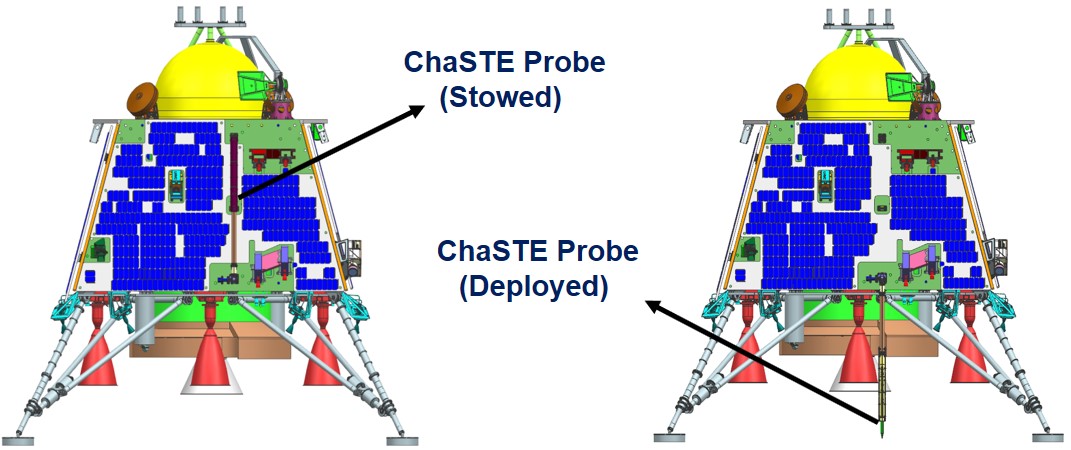
The Chandra’s Surface Thermophysical Experiment (ChaSTE) component of Chandrayaan-3 has successfully collected crucial thermal data about high-latitude lunar surfaces. The latest achievement enables researchers to understand lunar surface features and ice moisture distribution which are fundamental for human operations on the moon. The Vikram lander’s instruments including ChaSTE helps researchers measure ambient temperatures of lunar surface locations near the Moon’s southern region.

  • This mission conducted the first ever subsurface soil penetration of celestial matter followed by the deployment of an in-situ thermal probe for temperature measurements.

  • The probe contains 10 distributed temperature sensors that extend 1 cm apart on its entire length.

  • The probe entered lunar soil through a deployment system that relied on rotating movements.

  • Throughout Chandrayaan-3 mission duration (1 lunar day) the probe descended to its bottom limit of 10 cm to gather scientific data.

Key Observations

  • The Shiv Shakti landing site measured 355 K (82°C) surface temperature as the maximum value which exceeded earlier predictions of 330 K by 25 K.

  • The study discovered that temperatures in polar lunar areas display substantial spatial variations unlike the steady conditions prevailing at equatorial areas.

  • The collected data from the ChaSTE instrument provides evidence that lunar water-ice deposits exist in higher concentrations than scientists had earlier estimated.

  • The discovery of water-ice stands as essential for lunar resource utilization throughout human settlement and additional space exploration operations.

Conclusion

The ability of ChaSTE to directly measure lunar surface temperatures represents a major achievement in lunar research development. The recorded observations will enhance lunar thermophysical property knowledge as well as guide programs aiming to establish human settlements and utilize lunar resources. The successful accomplishment of Chandrayaan-3 enables scientists to develop advanced methods for future lunar exploration as well as(resource) management on the Moon.

Make in India and the Capital Goods Revolution

Through the 'Make in India' initiative India has achieved significant transformations of its capital goods sector while promoting domestic manufacturing and technology progress and reducing foreign import reliance. As part of its development strategy India implements the National Capital Goods Policy from 2016 along with the Enhancement of Competitiveness in the Capital Goods Sector to increase manufacturing levels and boost exports and research activities. The Indian government strengthens its status as the global leader in capital goods manufacturing through two initiatives including tax exemptions for EV battery makers and broad academic-industrial partnerships.

Overview of Heavy Industries and Engineering Sector

  • Businesses that manufacture capital goods account for 1.9% of the overall Gross Domestic Product of India.

  • Planet and mining equipment along with textile machine devices and food machinery and process plants constitute the principal sub sectors within this sector.

  • From 2014-15 to 2023-24 capital goods production experienced remarkable development by expanding from ₹2,29,533 crore to ₹4,29,001 crore.

  • The government has developed policies that support business operations by permitting 100% foreign investment alongside abolishing industrial licensing requirements.

National Capital Goods Policy (2016)

  • The policy seeks to boost manufacturing performance to reach 20% of GDP by 2025 from its current level of 12%.

  • The policy supports research and development activities while developing skills and implementing modern manufacturing technology.

  • A new Technology Development Fund is recommended for the purchase of new technologies and patents.

  • Establishment of regional Centres of Excellence for skill development and industry modernization.

Scheme for Enhancement of Competitiveness in the Capital Goods Sector

  • Phase I (2014-2021):

    • Focused on fostering industry-academia partnerships.

    • 8 Centres of Excellence (CoEs) have been set up which led to the development of 30 domestic technologies.

    • Fifteen Common Engineering Facility Centres (CEFCs) have been established with SAMARTH Industry 4.0 centers among them.

    • The 530-acre Exclusive Machine Tools Park was established in Tumakuru, Karnataka.

  • Phase II (2022-Present):

    • Financial outlay of ₹1207 crore with ₹975 crore as government support.

    • The plan invests in developing research facilities and testing capabilities while developing industrial work skills.

    • The government sanctioned nine new advanced CoEs and decided to augment existing CoEs.

    • The establishment of new CEFCs received approval through five projects totaling ₹357.07 crore in funding.

    • The organization established six online Technology Innovation Portals that enable business collaborations between organizations.

Recent Achievements in the Capital Goods Sector

  • Local technicians have independently developed energy-efficient BLDC submersible pumps which reduce foreign imports by 80 percent.

  • The high-speed rapier loom machine made its debut appearance at ITMA 2023 during the exhibition in Milan.

  • The Toyota Engine Manufacturing facility introduced Industry 4.0 solutions for carrying out predictive maintenance operations.

  • Establishment of India’s first battery and Battery Management System (BMS) testing facility at ARAI, Pune.

  • Bharat Heavy Electricals Limited (BHEL) implements state-of-the-art facilities to test industry processes and develop welding technology skill centers.

Conclusion

Through its 'Make in India' program the capital goods sector of India experienced advancements because it boosted domestic industrial output and job creation and promoted technological independence. Sustained policy support together with more research and development investments will transform India into a leading capital goods production center at the global scale. Through innovation combined with industrial modernization practices India will increase its competitive strength which will stimulate economic development through the next few years.

Digital Child Abuse and the Dangers of AI-Based Exploitation

Artificial Intelligence (AI) has developed rapidly which created new difficulties for fighting child sexual abuse material (CSAM). The UK's AI Safety Institute identified immediate threats from artificial intelligence-generated CSAM so the government started new legislation against AI tools which expose children to sexual abuse. The increasing cyber threats against children force India to amend its computer laws because they require new regulation to combat threats coming from AI technology. India needs to analyze its existing laws in combination with regulatory voids to develop plans that will fight AI-created child sexual exploitation material effectively.

International Developments in AI and CSAM

  • The United Kingdom has planned to pass laws which will make it illegal to hold AI programs generating CSAM together with their creation and distribution.

  • The new legal approach shifts attention away from defending individuals to enforcing specific tools that generate Computer Sexually Assault Material.

  • Legislation forbids the distribution of paedophile instructional manuals to enhance law enforcement capability.

Current Legal Framework in India and its Shortcomings

  • Cybercrime statistics from the National Crime Records Bureau in April 2024 confirmed a major increase in incidents of child pornography reaching 1.94 lakh registered reports.

  • The IT Act of India contains Section 67B which criminalizes CSAM together with provisions under the POCSO Act yet these laws do not specify effective ways to combat AI-generated content.

  • Present laws only cover genuine child pornographic content while incompetently managing AI-created images that mimic real children with accuracy.

The Need for Legislative Amendments

  • A legal change should replace 'child pornography' with 'CSAM' in order to establish an updated common system.

  • Section 67B of the IT Act requires an explicit definition of sexually explicit content in order to enhance real-time child sexual abuse material detection.

  • The definition of intermediary needs expansion to cover Virtual Private Servers, Cloud Services and VPNs for improved enforcement capabilities.

  • India needs to endorse the draft UN Convention that addresses the utilization of Information Technology and Communication for criminal activities.

  • The future Digital India Act should adopt provisions based on UK AI legislation to address AI-generated child sexual abuse materials comprehensively.

Definition of Child Abuse

  • The term child abuse refers to injuries and sexual abuse and exploitation together with acts of neglect and maltreatment directed toward children.

  • Physical, mental, emotional and psychological abuse are identified as child abuse by the World Health Organisation (WHO).

  • Child abuse appears in residential areas and educational institutes from homes into public streets and workplaces.

Constitutional and Legal Provisions

  • The laws of Articles 14, 15, 15(3), 19(1)(a), 21, 21(A), 23, 24, 39(e), and 39(f) within the Indian Constitution serve to protect children.

  • Special legislation as well as policies under the authority of the legislature aim to protect children's rights.

Prevalence and Challenges

  • Family members who carry out abuse tend to prevent their victims from reporting the abuse.

  • Research evidence indicates known associates commit 80 to 85% of the child rape incidents.

  • Many victims keep abuse secrets to prevent receiving social judgment.

  • The combination of severe law enforcement approaches and tough legislative structure fails to stop sexual violence that happens to children.

  • Traumatized victims experience additional suffering because legal proceedings drag out long periods of time.

Effects of Child Abuse

  • Leads to long-term physical and psychological trauma.

  • Impacts families and society as a whole.

  • Childhood abuse creates future susceptibility to mental health issues which adults will develop.

  • Academic-related emotional stress which creates mental strain counts as an abusive practice.

Government Measures and Policies

  • POCSO Act, 2012: Addresses sexual abuse and exploitation of children with stringent legal provisions.

  • POCSO e-Box: Online platform for direct reporting of sexual offences against children.

  • As a government organization National Commission for Protection of Child Rights (NCPCR) functions to synchronize all child rights-related laws and policies.

  • The Integrated Child Protection Scheme makes it a priority to establish protective environments by joining forces between Government institutions and Civil Society groups.

  • Operation Smile (Operation MUSKAAN) operates as both an initiative that saves children who have gone missing and provides rehabilitation services to them.

  • Right to Education (RTE) Act: Ensures free and compulsory education for children.

  • Beti Bachao, Beti Padhao Programme: Focuses on gender equality and the welfare of the girl child.

Conclusion

The advancement of AI technologies results in parallel development of new security threats. The legal foundation of India should be modified to actively combat AI-generated child sexual abuse materials with protective measures for children who operate online. India can protect its children from AI-based abuse through global best practice adoption alongside strengthened laws and improved time-sensitive monitoring to defend children's rights for safe online existence.

Discovery of New Damselfly Species in Kerala

The exploration team discovered Euphaea wayanadensis as a fresh damselfly species at Wayanad landscape inside the Western Ghats area of Kerala. The discovery of this new damselfly species adds to Kerala's growing odonate diversity thus becoming the 191st recorded species in the state along with being the 223rd in the Western Ghats. The ENTOMON journal released research which demonstrated this species' stream habitat preference for water plants and the significance of forested riverbank areas thus requiring ecologically sensitive area conservation strategies.

  • The scientific community identified the new damselfly species Euphaea wayanadensis within the Western Ghats' Wayanad landscape region of Kerala. 

  • The discovery establishes Kerala as home to the 223rd odonate species in the Western Ghats and the 191st species of odonate in the state. 

Research and Discovery

  • A group of Kerala Agricultural University researchers and members from Warblers and Waders as well as Travancore Nature History Society and Alphonsa College and contributors from Maharashtra conducted this study.

  • The scientists detected this new species at the Kalindi River near Thirunelli within Wayanad district in 2013.

  • Identified using integrated taxonomy methods.

Species Characteristics

  • Belongs to the family Euphaeidae.

  • This species prefers water courses that maintain quick movement and have stones forming the bottom substrate plus underwater plants.

  • This species succeeds best in locations having both evergreen forest and semi-evergreen woodland.

  • Active throughout the year except during the dry seasons of March and April.

Ecological Significance

  • The study helps increase knowledge about odonate species distribution within Kerala and the Western Ghats.

  • Indicator of healthy aquatic ecosystems and biodiversity in the region.

  • The study demonstrates why protecting aquatic invertebrates matters for protected regions with limited ecological resilience.

Conservation Recommendations

  • Population assessment and distribution research needs specific surveys to be conducted.

  • Organizations need to establish conservation programs that defend the natural habitat from destructive forces and environmental contamination.

  • The surrounding ecosystems need encouragement to implement sustainable methods for species survival.

Conclusion

Euphaea wayanadensis discovery proves both the abundant biodiversity found in Western Ghats and the critical importance of current scientific study in this area. The newly discovered species needs immediate conservation action because it shows restricted distribution patterns and distinct habitat needs that require targeted protection of fresh water environments in Kerala.

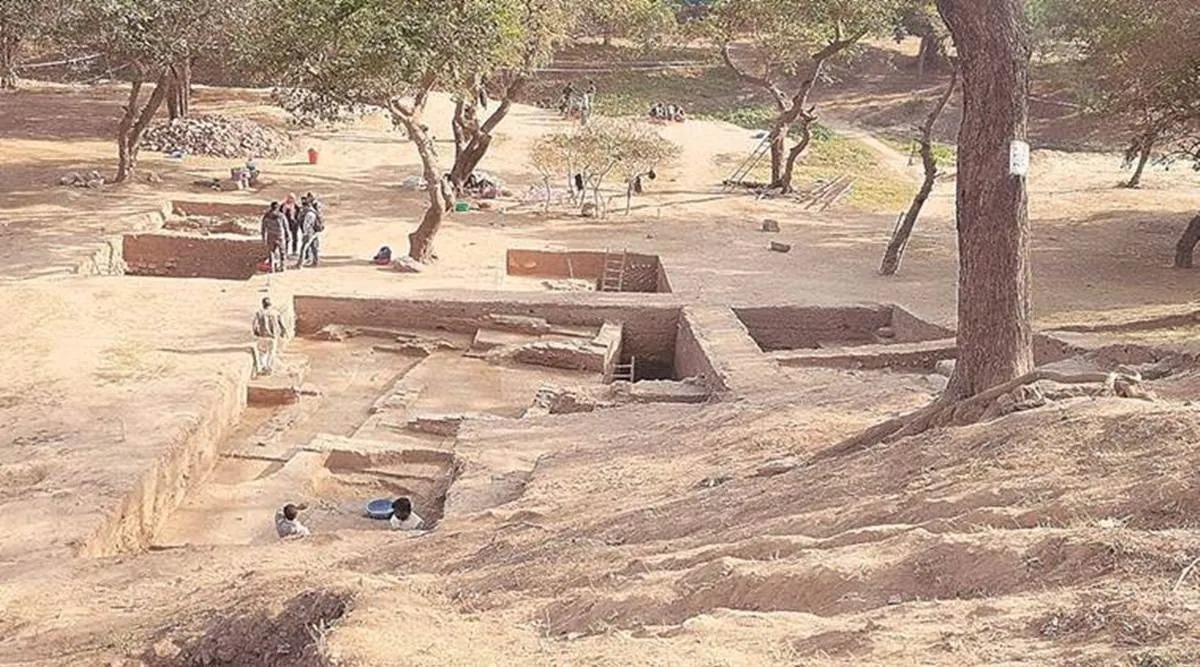
Haryana Declares Two Harappan Sites as Protected Archaeological Monuments: Mitathal and Tighrana

The Haryana administration provided official protected archaeological site status to two sites in Bhiwani district which belonged to the Harappan civilisation; the locations are Mitathal and Tighrana. The official decision seeks to safeguard settlements that have existed since more than 4,400 years ago. Archaeological investigations expose significant findings regarding ancient settlements by humans and their town design as well as artistic and crafted elements and trading strategies. Security personnel together with fencing structures will protect the sites from further destruction and unauthorized entry.

  • Haryana government enacted a law to turn the prehistoric Harappan sites in Bhiwani district including Mitathal and Tighrana into official archaeological sites. 

  • The authorities undertook this action to safeguard settlements from the Pre-Indus Valley Civilization which existed for more than 4,400 years.

Protection and Preservation

  • An official notification based on Haryana Ancient and Historical Monuments and Archaeological Sites and Remains Act, 1964 was issued.

  • The protection strategy combines fencing with security deployment along with controlled excavation.

Historical and Archaeological Significance of Mitathal

  • Archeological probes starting in 1968 have uncovered a cultural complex from the Copper-Bronze Age period.

  • Two sets of discoveries emerged from Mitathal in 1913 with Samudra Gupta coins and from 1965 to 1968 with beads and copper tools.

  • Harappan town planning, architecture, and painted pottery with geometric and nature-inspired motifs.

Significance of Tighrana

  • Archaeological evidence demonstrates that people continued living at this spot after the end of the Harappan civilization.

  • Agricultural Chalcolithic people settled this area for the first time during 2,400 BCE.

  • The archaeological record confirms that people during this period started making stone tools and bronze tools and copper tools together with bead-production and jewelry-making.

Archaeological Insights

  • Excavation results from the sequential periods of pre-Siswal, pre-Harappan and post-Harappan phases.

  • Houses at Tighrana are built using mud-bricks with thatched roofing material.

  • Evidence of agriculture, domestication of animals, and wheel-made pottery.

Call for Preservation Efforts

  • Current research by archaeologists and historians calls for immediate protective measures to stop any destruction.

  • Before notification systems were established encroachment and agricultural activities started taking place on the land.

  • The status of a protected site will help researchers maintain conservation for long-term preservation.

About Harappan Civilization

  • During 2500 BCE the Harappan Civilization which is also called the Indus Valley Civilization functioned in the river basin areas of the Indus and Ghaggar-Hakra rivers.

  • The Indus Valley Civilization ranks among the first urban cultures of the world existing during the same period as Mesopotamia and Egypt.

  • The civilization distinguished itself through its city planning together with sophisticated drainage systems along with extensive architectural accomplishments while actively developing trade routes to Mesopotamia and Central Asia.

  • The civilization which received historical praise for its remarkable metropolis designs and extensive trading networks and superior handiwork existed across India Pakistan along with Afghanistan. 

  • The settlements of Mohenjodaro and Harappa along with Banawali and Rakhigarhi helped researchers understand the lifestyle of these prepared settlements.

Geographical Spread

  • The ancient civilization stretched across present-day northeast Afghanistan through Pakistan up to northwest India.

  • Population centers existed throughout the territories of the Indus river basin alongside areas along the Ghaggar-Hakra river as well as its tributaries.

Harappan Sites in Haryana

  • Banawali:

    • Location: Situated near the dry bed of the Rangoi River in the Hissar district of Haryana.

    • Historical Significance: Exhibits all three phases of Harappan civilization—Early, Mature, and Late Harappan.

    • Urban Structure:

      • The urban plan of Banawali comprised two sections following a wall construction: the citadel and the lower town.

      • The city builders constructed wells along with bathing pavements and drainage systems using baked bricks during the Harappan period yet residential sections were created with mud bricks.

    • Excavations:

      • The discovery of this structure consisting of such elaborate facilities including multiple rooms, kitchen, toilet and wash basin jar indicated sophisticated urban development.

      • Archaeological evidence demonstrates that Banawali operated as an important trading hub because numerous seals and weights were discovered.

      • Research of terracotta plow models combined with multiple stone weights demonstrates both farming and trading activities occurred at this location.

  • Rakhigarhi:

    • Location

      • Rakhigarhi stands as the greatest Harappan settlement found within Indian territory in Hissar district Haryana.

    • Urban Structure:

      • This site featured two sections where the upper section of citadel existed beneath the lower town and included platforms and fire altars and drainage systems that operated effectively.

    • Excavations:

      • Archaeological investigations showed a gemstone workshop which produced uncompleted beads from carnelian, chalcedony, jasper and agate stones.

      • Evidence of bone and ivory craftsmanship, with finished and unfinished tools.

      • A dug-up wooden coffin appeared as a singular burial element in Harappan tradition.

Major Cities and Settlements

  • Harappa: Harappa represents the oldest known excavation site that exhibits governmental structures and storage facilities along with uniform building materials.

  • Mohenjodaro: Among all settlements Mohenjodaro displays the most significant features that include a large bathing establishment alongside a properly structured road network and intricate drainage system.

  • Dholavira: Unique water conservation structures and reservoirs.

Economic and Social Life

  • The farmers of this region grew wheat together with barley peas and cotton.

  • The site enjoyed a comprehensive network of trade relations with Mesopotamia as well as Central Asia and other key points throughout the Indian subcontinent.

  • Industrial sophistication reached a remarkable level in bead-making and pottery production along with metalworking.

Decline of the Civilization

  • The decline of this civilization remains a mystery to scholars who consider environmental changes alongside river droughts and potential military attacks among the explanations.

  • A gradual process of urban decline made rural communities replace the dominant role of major urban settlements.

Conclusion

The Haryana government advanced protecting Mitathal and Tighrana by making them marked archaeological sites as a vital move in safeguarding India's diverse Harappan heritage. The sites allow researchers to explore diverse information about early city development whereas they also show economic processes and technical progress of past societies. Archeological research and conservation processes will providing key insights into the civilizations that existed in the Indian subcontinent during antiquity.

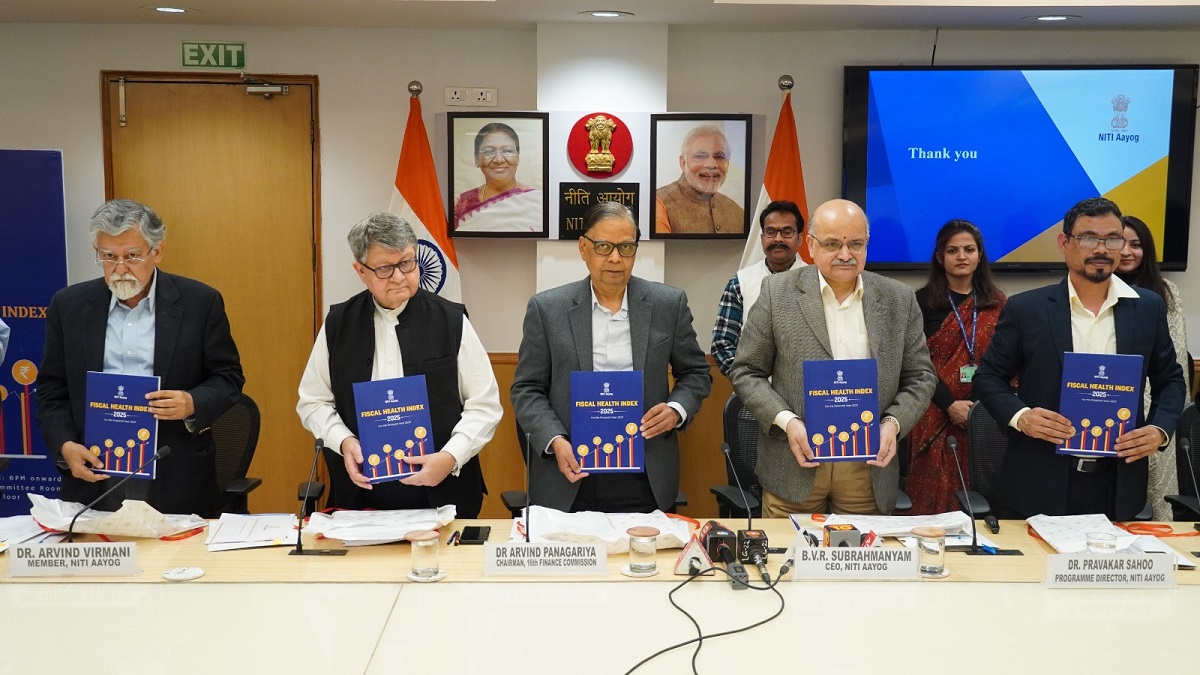
Fiscal Health Index 2025: Mapping India’s State-Level Economic Resilience

Through its Fiscal Health Index (FHI) 2025 NITI Aayog produces a fiscal stability rank of 18 major Indian states considering three factors related to GDP contributions and revenue creation and public expenditure levels. Among all states Odisha ranks first with Chhattisgarh behind it then comes Goa and Jharkhand whereas Gujarat takes the fifth position. The research discovers states' financial conditions by discussing the essential role effective fiscal resource management plays to establish a sound economy. The evaluation of tax buoyancy together with debt-to-GSDP ratio and expenditure efficiency and deficit control aims to provide best practice recommendations for sustainable fiscal governance to policymakers.

  • NITI Aayog developed the Fiscal Health Index (FHI) 2025 as an assessment tool for measuring the financial stability of 18 major states of India through their GDP contributions and tax revenues and public spending performance. 

  • Odisha leads the rankings, followed by Chhattisgarh, Goa, Jharkhand, and Gujarat. 

Objectives of the Fiscal Health Index

  • The system enables a standardized assessment of state fiscal conditions to be compared between one another.

  • The evaluation system detects favorable and unsatisfactory qualities of state-level fiscal control operations.

  • Transparency together with accountability champions the establishment of good fiscal policies.

  • The tool serves as a way to help policy advisors develop better fiscal systems that remain sustainable over time.

Key Indicators Evaluated

  • Tax Buoyancy tracks how tax income responds to economic expansion rates.

  • This area provides evaluation of state revenue collection through tax systems and independent non-tax streams of income.

  • States can determine their debt payment stability and ability to manage debt through the Debt-to-GSDP Ratio indicator.

  • The analysis of capital spending along with fiscal discipline makes up Expenditure Management.

  • The measurement of fiscal deficit as an indicator focuses on its percentage relation to GSDP.

  • Long-term institutional stability gets determined through the combination of revenue data with expenditure figures and deficit statistics together with debt performance indicators.

Key Findings

  • Overall debt performance and revenue collection excellence emerges from Odisha with 67.8 followed by Chhattisgarh with 55.2 and Goa with 53.6.

  • The states of Odisha along with Jharkhand and Goa together with Chhattisgarh demonstrate exceptional capabilities in non-tax revenue collection which amounts to an average of 21% of their total revenue base.

  • The states of Punjab and Andhra Pradesh together with West Bengal and Kerala struggle to manage their finances because their deficits run high and their debt sustainability is weak.

  • Capital Expenditure: High allocation (~27%) in Madhya Pradesh, Odisha, Goa, Karnataka, and Uttar Pradesh; Low allocation (~10%) in West Bengal, Andhra Pradesh, Punjab, and Rajasthan.

  • The debt situation in West Bengal and Punjab continues to worsen as both states accumulate increasing debt leading to financial instability in the long term.

Sustainability of Debt Portfolios

  • A test to determine if states can fulfill debt payments independently.

  • The debt portfolio of Odisha together with Chhattisgarh and Goa stands as sustainable.

  • Certain state economies show signs of financial distress because their debt-to-GSDP ratio continues to rise.

Conclusion

The Fiscal Health Index 2025 represents an essential instrument for state financial evaluation through which policymakers can trace policy needs. Financial sustainability requires permanent monitoring alongside strategic reforms that should include prudent fiscal management practices. States achieve long-term fiscal resilience through improved revenue generation and optimized expenditure as well as maintained debt control. The report now exists as a shared document between all States/UTs for promoting policy changes that use data to support continuing economic growth in India.

Frequently Asked Questions (FAQs)

The current affairs cover recent national and international events related to UPSC, SSC, Banking, Railways, and State PCS.

You need to read about the current affairs daily, and revise them every week and every month to keep them longer in your memory.

Yes, Class24 provides free downloadable Daily Current Affairs PDFs for easy revision.

Yes, you can practice MCQs and quizzes to boost your exam preparation.

Absolutely. The content is written in simple, easy-to-understand bilingual language suitable for beginners.

Go to class24.com and click on the current affairs section directly, where you find everything that you need.

ssc-toppers

Start Learning Today with Class24

Related current affairs

Class24 offers free video lectures for smart preparation, covering CGL, CPO, CHSL, MTS, and GD exams. Learn from expert faculty, revise concepts easily, practice with PYQs, and improve speed and accuracy through high-quality, exam-focused video lessons anytime, anywhere.

Get success in your hand. Start study anytime anywhere.

The journey becomes simple and enjoyable when you start taking interest in it. And through our app “Class24”, we will be your trusted partners in developing that interest.

Daily Quizzes
Mock Tests
Ongoing

No ongoing tests right now.