
Day: March 22, 2025

India’s Roadmap to Becoming More Disaster-Resilient Against Earthquakes

Earthquakes strike India with special frequency due to the fact that 59% of its surface area shows seismic sensitivity. The country experienced 159 earthquakes during November 2024 through February 2025 resulting in a magnitude 4.0 earthquake that hit Delhi on 17th February 2025. The Indian government established NDMA along with NDRF and SDMAs through proactive measures under the Disaster Management Act of 2005. The development of the BhooKamp app and the enhancement of the EDRI project and addition of seismic observatories make up the central strategies for earthquake preparedness in India.

Introduction:

  • The recent earthquake occurrences have proved India needs enhanced disaster readiness protocols. 

  • The crustal stress accumulation inside the Earth produces earthquakes that lead to massive destruction of human settlements when they impact residential areas. 

  • The seismic mapping of India by the Bureau of Indian Standards (BIS) identifies four zones which include Zone V as the most dangerous area extending into areas near the Himalayas. 

  • The number of catastrophic earthquakes throughout India during previous years demonstrates why better safety protocols must be put in place.

Earthquake Vulnerability and Risk in India

  • About 59% of the Indian landmass shows signs of being susceptible to moderate and severe earthquakes as it stands at or above MSK (Medvedev–Sponheuer–Karnik scale) Intensity VII.

Tectonic Sub-regions

  • The tectonic sub-regions of India include three main domains.

    • The Himalayas to the north

    • The Ganges and other river plains

    • The Peninsula

  • Earthquake experts classify the entire Himalayan Region as a high-risk zone because Indian Plate subduction underneath Eurasian Plate results in earthquakes exceeding 8.0 on the Richter Scale.

  • Some historically intense earthquakes:

    • Shillong, 1897 (M 8.7)

    • Kangra, 1905 (M 8.0)

    • Bihar–Nepal, 1934 (M 8.3)

    • Assam–Tibet, 1950 (M 8.6)

  • The existence of seismic gaps throughout the Himalayan axis became known to researchers because strain builds up towards future major earthquakes in these regions.

  • Earthquakes happen frequently in the peninsular region because of its intra-plate faults together with internal deformation of the Indian Plate.

Aggravated Risk Factors

  • Urbanization and infrastructure expansion in high-risk areas

  • Mining activities

  • Inadequate earthquake-resistant construction

Earthquake Zones in India

  • The Bureau of Indian Standards (BIS) has systematically organized India into four seismic zones to identify different levels of seismic hazard conditions.

Seismic Zones of India

  • Zone V (Very High Damage Risk Zone)

    • Sections of Jammu & Kashmir along with Himachal Pradesh, Uttarakhand and Northern Bihar as well as Northeastern states and Andaman & Nicobar Islands fall under this category.

  • Zone IV (High Damage Risk Zone)

    • Includes: Parts of Jammu & Kashmir, Ladakh, Himachal Pradesh, Uttarakhand, Punjab, Delhi, Sikkim, parts of Bihar, West Bengal, Gujarat, Maharashtra, and Rajasthan.

  • Zone III (Moderate Damage Risk Zone)

    • Includes: Kerala, Goa, Lakshadweep, parts of Uttar Pradesh, Haryana, Bihar, Jharkhand, Chhattisgarh, Maharashtra, Odisha, Andhra Pradesh, Telangana, Tamil Nadu, and Karnataka.

  • Zone II (Low Damage Risk Zone)

    • Includes: Remaining parts of Rajasthan, Haryana, Madhya Pradesh, Maharashtra, Odisha, Andhra Pradesh, Telangana, Karnataka, and Tamil Nadu.

Impacts of Earthquakes

  • Economic impact in earthquake events relates to three essential components namely residential population distribution and state of local infrastructures together with emergency preparedness strategies. Some common effects include:

  • Most Indian earthquake deaths from the previous decades stemmed from collapses of buildings.

  • Surface rupture combined with ground displacement leads to serious damage of roads, pipelines and railways.

  • Undersea earthquakes create destructive tsunamis as a result.

  • Infrastructure destruction occurs due to liquefaction processes that reduce soil strength.

  • Earthquakes lead to extensive fires because of gas leakages combined with electrical systems failures.

  • Livelihood disruption: Economic setbacks due to business closures and job losses.

Major Earthquakes in India:

  • 1905 Kangra Earthquake (Magnitude 8.0): Resulted in 19,800 fatalities in Himachal Pradesh.

  • 2001 Bhuj Earthquake (Magnitude 7.9): Led to 12,932 deaths and destruction in 890 villages.

  • 2025 Delhi Earthquake (Magnitude 4.0): Highlighted the need for ongoing preparedness and mitigation.

Government Initiatives for Earthquake Safety:

  • Increased Seismic Observatories: Expanded from 80 in 2014 to 168 by February 2025.

  • BhooKamp App delivers instantaneous notifications during seismic events including seismic updates.

  • Program EDRI (Earthquake Risk Indexing) evaluates earthquake danger zones across 50 cities and aims to add 16 more cities to its evaluation framework.

  • National Policy on Disaster Management: Focuses on preparedness, mitigation, and response strategies.

  • Humanitarian Assistance & Disaster Relief (HADR) functions as an operational arm of India because the nation provided support to Turkiye and Syria after earthquakes struck these countries during 2023.

Key Government Agencies for Earthquake Preparedness

  • Since 2005 when the Disaster Management Act passed the National Disaster Response Force (NDRF) expanded its operations through the creation of 16 additional battalions prepared for disaster rescue missions.

  • The National Centre for Seismology has maintained its operations since 1898 to track seismic disturbances and continues developing earthquake alert systems.

  • NDMA operates under Prime Ministerial leadership to create disaster management guidelines which the government collaborates with State Disaster Management Authorities (SDMAs).

  • The National Institute of Disaster Management (NIDM) establishes disaster preparedness through training people and conducting research while developing policy frameworks.

Key Earthquake Safety Measures and Research Initiatives:

  • Guidelines for Earthquake Safety: Includes the 2019 Home Owner’s Guide and 2021 Simplified Guidelines for constructing resilient buildings.

  • The development of Earthquake Early Warning systems remains active for the Himalayan region but no specific details are provided regarding progress.

  • Earthquake Risk Indexing (EDRI) evaluates different metrics including hazard level and vulnerability and exposure to provide guidance for Indian city risk reduction programs.

Conclusion

To enhance earthquake preparedness India directs its efforts toward developing government policies and safety guidelines alongside conducting studies for early warning systems. Public safety depends heavily on joint work between organizations and community education programs to both lower hazards and protect people from harm. People need to stay both informed and prepared along with essential infrastructural improvements. A combination of population awareness and infrastructure resistance creates the base needed to minimize earthquake damage and create safer conditions for the future.

India’s Bio-Economy: A 16-Fold Growth in a Decade

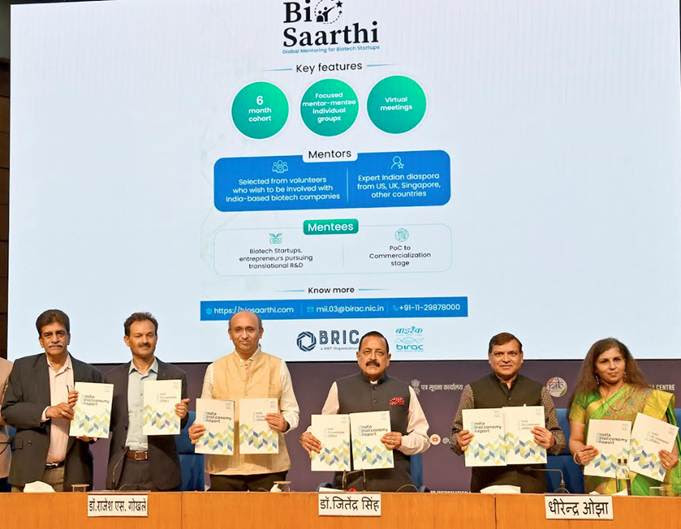
Union Minister Dr. Jitendra Singh Releases "India Bioeconomy Report 2025" and BioSaarthi Mentorship Initiative for Biotech Startups. The Indian bio-economy witnessed remarkable growth during the past decade because it expanded from its original $10 billion value in 2014 to reach an impressive $165.7 billion in 2024. The Union Minister Dr. Jitendra Singh made this announcement when he released the "India Bioeconomy Report 2025" (IBER 2025) at the BIRAC Foundation Day celebration which happened at the National Media Centre.

Key Highlights from IBER 2025

  • The bio-economy in India has exceeded its original projected value of $150 billion which was established for 2025.

  • The biotechnology sector presently adds 4.25% to the national GDP measurements.

  • A 17.9% annual rate of growth during the last four years has elevated India to a status of leading biotech power in the world.

Launch of BioSaarthi: A Global Mentorship Initiative for Startups

  • Dr. Jitendra Singh introduced BioSaarthi as a ground-breaking program which mentors biotech startups through structured activities. 

  • The six-month cohort BioSaarthi serves as a mentor-mentee engagement program which provides specific guidance to new biotech entrepreneurs through its organized framework.

  • This initiative will:

    • Foster innovation in India's biotech ecosystem.

    • Enhance industry-academia collaboration.

    • Indian startup organizations will gain better prospects to succeed internationally.

  • The program should enlist foreign experts together with professionals from the Indian diaspora to function as international mentors.

Policy Support and Expansion

  • Government launched the BIO-E3 Policy (Biotechnology for Economy and Employment and Environment) to accelerate research and entrepreneurship in biotechnology.

  • This policy features major initiatives that include:

    • Bio-AI Hubs and Biofoundries with Bio-enabler hubs must be created to unite advanced technologies with biomanufacturing operations.

    • Assam leads the country by becoming the initial state to use the BioE3 framework and thus launches nationwide deployment.

What is Bioeconomy?

  • A bioeconomy refers to an economic framework which uses sustainable biological resources to generate products ranging from materials to chemicals to food together with energy.

  • The UN FAO defines the bioeconomy as "knowledge-based production and the sustainable use of biological resources and their methods and processes for creating goods and services in all economic sectors."

Key Components:

  • Renewable biological resources (plants, animals, microorganisms, organic waste).

  • Biotechnology and life sciences innovation.

  • Sustainable production and circular economy principles.

Importance:

  • Reduces dependence on fossil fuels.

  • Promotes environmental sustainability.

  • Supports economic growth through green and biotech industries.

Biotech Startups: A Tenfold Increase

  • During the last decade the biotech startup environment in India expanded dramatically from an initial 50 businesses to reach over 10.075 current companies. The impressive growth had its origins in the following factors: 

    • Strong public-private partnerships.

    • The approach stems from policy initiatives which motivate innovation.

    • Increased investment in research and infrastructure.

Groundbreaking Biotech Achievements

  • India has achieved several important biotechnology milestones during the recent years.

  • Scientists developed Nafithromycin which became the first anti-respiratory medicine made in India.

  • A successful gene therapy trial for hemophilia.

  • The Whole Genome Sequencing Project examines the DNA profiles of 10,074 individuals residing in 99 Indian communities while preparing to transform healthcare delivery in the country.

  • ISRO joins forces with the Department of Biotechnology to create new opportunities for studying space biology and Space Medicine.

  • biotechnology is a future essential component of Indian space missions where medical solutions and astronaut health maintenance will be essential.

Increasing Investment in Research and Development

  • The Gross Expenditure on Research and Development of India (GERD) has experienced doubling growth from ₹60,196 crore in 2013-14 to ₹1,27,381 crore in 2024. 

  • The substantial growth in funding indicates how seriously the government views scientific research along with innovation.

Conclusion

In his anniversary message to BIRAC Dr. Singh highlighted the need for industry leaders and research experts and policymakers to use biotechnology momentum for developing a bio-powered Indian economy. India shows promising signs to become an international leader in biotechnology during the next several years.

Mount Lewotobi Laki-Laki Volcano Eruption in Indonesia – Details & Impact

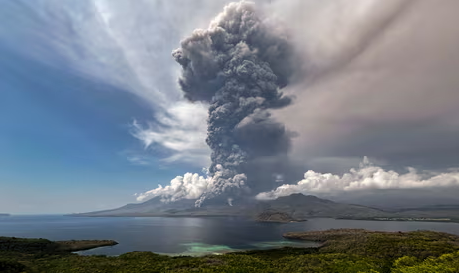
The three eruptions of Mount Lewotobi Laki-Laki volcano in Indonesia reached 8,200 meters high in the air forcing authorities to increase the danger zone restrictions. Studies show that the volcano displays growing volcanic activity because previous eruptions produced casualties. Blocked material from beneath the surface erupts as molten substance during volcanism and produces diverse geological features. Viewing volcanoes requires identification as either active, dormant or extinct while their appearance can be shield, composite or caldera. Earth's volcanic activities shape climate patterns as well as establish new landforms which simultaneously destroy ecosystems but also facilitate soil production among fresh landscape development. By studying volcanoes scientists can determine eruption patterns to safeguard people and properties alongside their study of volcanoes in geological record building.

Recent Eruption Event

  • Mount Lewotobi Laki-Laki in Flores Island on East Nusa Tenggara Province of Indonesia represents the eruption location.

  • Date: 21 March 2025.

  • Eruption Details:

  • Erupted three times.

  • Smoke from the volcanic eruption rose all the way up 8,200 meters.

Impact:

  • The volcanic danger area received increased boundaries from authorities.

  • No public information exists about the upcoming evacuation plan.

Background:

  • There was a volcanic eruption in November 2024 that claimed nine lives together with significant injuries to many persons.

  • The volcano region experienced hundreds of seismic waves during the previous seven days.

Indonesia and Volcanic Activity

  • Geological Setting:

    • Part of the Pacific Ring of Fire.

    • 120 active volcanoes due to tectonic movements.

    • Frequent seismic activities and earthquakes.

  • Vulnerability:

    • High population density increases risk.

    • Economic losses due to infrastructure damage and agricultural disruptions.

Understanding Volcanism

Definition

  • The term volcanism describes occurrences where solid, liquid, gases or mixtures of them expel from Earth's subsurface.

  • Natural thermal energy sources that heat solids and transform materials into magma constitute the volcanic formation process.

What is a Volcano?

  • A volcano functions as an opening in Earth's surface layer that emits lava alongside volcanic gases and ash combined with steam emissions.

  • Relation to Endogenic Processes:

    • Results in formation of extrusive (surface) and intrusive (subsurface) landforms.

  • Magma vs Lava:

    • Magma: Molten rock beneath the Earth's surface.

    • Magma becomes lava through the process of eruption onto the surface of the Earth.

Types of Volcanoes

Based on Frequency of Eruption

  • Active Volcanoes: Erupt frequently (e.g., Kilauea, Hawaii).

  • Volatile Geological Sites Remain Quiet But They Contain Potentially Active Seismic Activities (An Example Is Mount Kilimanjaro Located In Tanzania).

  • Extinct Volcanoes: No eruptions in recorded history (e.g., Dhinodhar Hill, Gujarat).

Based on Nature of Eruption

  • Shield Volcanoes appear as broad and dome-like structures that develop from low-explosive lava flows like the Hawaiian volcanoes.

  • Composite Volcanoes show multiple layers through their steep shape because they are built from successive explosive eruptions (Mount Fuji serves as a prime example).

  • Calderas: An eruption of a caldera produces massive circular depressions when magma chambers collapse after explosive eruptions.

  • Flood Basalt Provinces release extremely fluid lava that spreads across broad regions of land (such as observed in the Deccan Traps located in India).

  • Mid-Ocean Ridge Volcanoes: Underwater volcanoes along tectonic ridges.

Volcanic Landforms

Intrusive Landforms (Formed Inside the Earth)

  • Batholiths: Large, deep-seated rock masses.

  • Laccoliths: Dome-shaped intrusions.

  • The two intrusion types include sills which are horizontal formations and dikes which appear as vertical structures.

  • Phacoliths represent lens-shaped elements which form inside folded rocks.

  • The geologic process of erosion creates Monadnocks (Inselbergs) as isolated rock formations.

Extrusive Landforms (Formed on the Surface)

  • The fusional features of Volcanism include networks of constantly spewing volcanic magma through open cracks.

  • Conical Volcanoes: Classic volcanic shape.

  • Mid-Ocean Ridges: Underwater volcanic mountain chains.

  • The Deccan Plateau in India and other massive flat lava formations belong to Lava Plateaus which originate from fluid lava.

  • Calderas: Depression due to collapsed magma chambers.

  • Slow-moving lava outpouring produces the volcanic structures known as Lava Domes.

Tools & Methods to Predict Volcanic Eruptions

  • Seismic Data: Earthquakes and tremors as precursors.

  • Surface changes observed across the ground serve as indicators of moving magma beneath the earth.

  • Scientists study both volcanic gaseous emissions together with modifications in gravity and magnetic field strength.

Impact of Volcanic Eruptions

Destructive Effects

  • Magma movement causes earthquakes along with tsunamis to occur.

  • Atmospheric SO2 emissions lead to global changes in the climate system.

  • Hot ash and gas pillars that march at breakneck speeds cause complete obliteration of everything around them.

  • Ash Fall: Affects respiratory health, agriculture, and aviation.

Constructive Effects

  • Agricultural soil receives a beneficial enrichment from the volcanic ash that falls to the ground.

  • Time brings forth the emergence of new islands together with new mountain ranges.

  • Geothermal Energy: Harnessed for electricity generation.

  • Crater Lakes & Hot Springs: Important for tourism and biodiversity.

Conclusion

  • Volcanism has two distinct roles because it displays destructive results while simultaneously having constructive effects.

  • The knowledge of volcanic activity remains essential to create safe measures against disasters and minimize potential threats.

  • Advanced scientific monitoring systems reduce the number of casualties and preserved property during volcanic eruptions.

India Successfully Concludes Participation in Sea Dragon 2025

India accomplished its two-week participation in Sea Dragon 2025 which took place at Andersen Air Force Base Guam for an anti-submarine warfare (ASW) exercise. 7th Fleet of the United States Navy organized Sea Dragon 2025 as a training event to develop better operational coordination and tactical capabilities and shared operational procedures between Indo-Pacific partners. India’s participation in this event represented its strategic backing of maritime security alongside defense stability for the region.

About Exercise Sea Dragon 2025:

  • An annual multinational ASW exercise known as Sea Dragon 2025 (SD25) exists for the purpose of defense collaboration enhancement and optimization of submarine detection together with tracking and neutralization capabilities.

  • The platform enables Indo-Pacific countries to develop better maritime security approaches by performing actual drills with progressive educational modules.

Host and Location:

  • The United States Navy’s 7th Fleet provided the host resources for this activity.

  • Location: Andersen Air Force Base, Guam, Western Pacific.

Aim of the Exercise:

  • Defense and maritime security alliances get strengthened through this initiative.

  • The operation seeks to advance abilities for submarine identification detection and tracking and neutralization methods.

  • The objective of this goal involves enhancing a free, open and secure Indo-Pacific maritime space.

Key Features:

  • The exercise used actual U.S. Navy submarines to perform ASW exercises.

  • Different surface forces participate in mobile training exercises which use MK-30 ‘SLED’ target systems.

  • The exercise includes a competitive evaluation process to determine ASW effectiveness standards.

  • The deployment of advanced Maritime Patrol and Reconnaissance Aircraft (MPRA) represents a key feature of this exercise because they come from different nations.

Participating Nations & Assets:

  • India: P-8I Neptune aircraft (participating since 2021).

  • Australia: RAAF P-8A Poseidon.

  • Japan: JMSDF Kawasaki P-1 aircraft.

  • South Korea: ROKN P-3 Orion.

  • VP-16 and VP-47 Patrol Squadrons of the United States operate P-8A Poseidon aircraft.

Conclusion

India proved its dedication to regional maritime security enhancement and international defense cooperation through its successful participation in Sea Dragon 2025. ASW tactical training through this exercise brought operational experience to India’s navy while building improved alliances between nations. India will continue its dedication to joint maritime cooperation which aims to build a stable and secure Indo-Pacific region.

Nanoparticle-Based Security Ink: A Breakthrough in Anti-Counterfeiting

Nanotechnology experts created a security ink using nanoparticles to improve authentication capabilities in banknotes together with official documents. Strontium bismuth fluoride (Sr₂BiF₇) nanoparticles with erbium and ytterbium ion doping establish a secure ink system which shows multi-wavelength fluorescence properties. The innovative security ink solution maintains low production costs and scale-up potential along with sustainability characteristics that researchers plan to simplify throughout further development stages.

Nanoparticle-Based Security Ink:

Composition:

  • The nanoparticles used to make the ink consist of strontium bismuth fluoride (Sr₂BiF₇).

  • The nanoparticle solution contains erbium and ytterbium ions as dopants.

  • Manufacturers produce this material through an economical precipitate synthesis process.

Synthesis Process:

  • Dissolution of metal salts.

  • Addition of a precipitating agent (e.g., NaOH or ammonia).

  • The process of separation and purification along with drying completes uniform nanoparticle mixing.

Unique Properties:

  • Exhibits fluorescence under multiple wavelengths:

    • Blue (365 nm UV)

    • Magenta (395 nm UV)

    • Orange-red (980 nm near-infrared)

  • The security system based on these materials effectively prevents counterfeits.

Advantages:

  • Cost-effective and scalable.

  • Environmentally stable.

  • Screen printing represents the current use for the substance although offset printing applications remain possible for the future.

Challenges & Future Scope:

  • The security ink has recently been evaluated exclusively for screen printing procedures.

  • Scientists are presently investigating how to apply this technology to offset printing methods for banknotes and passport security improvements.

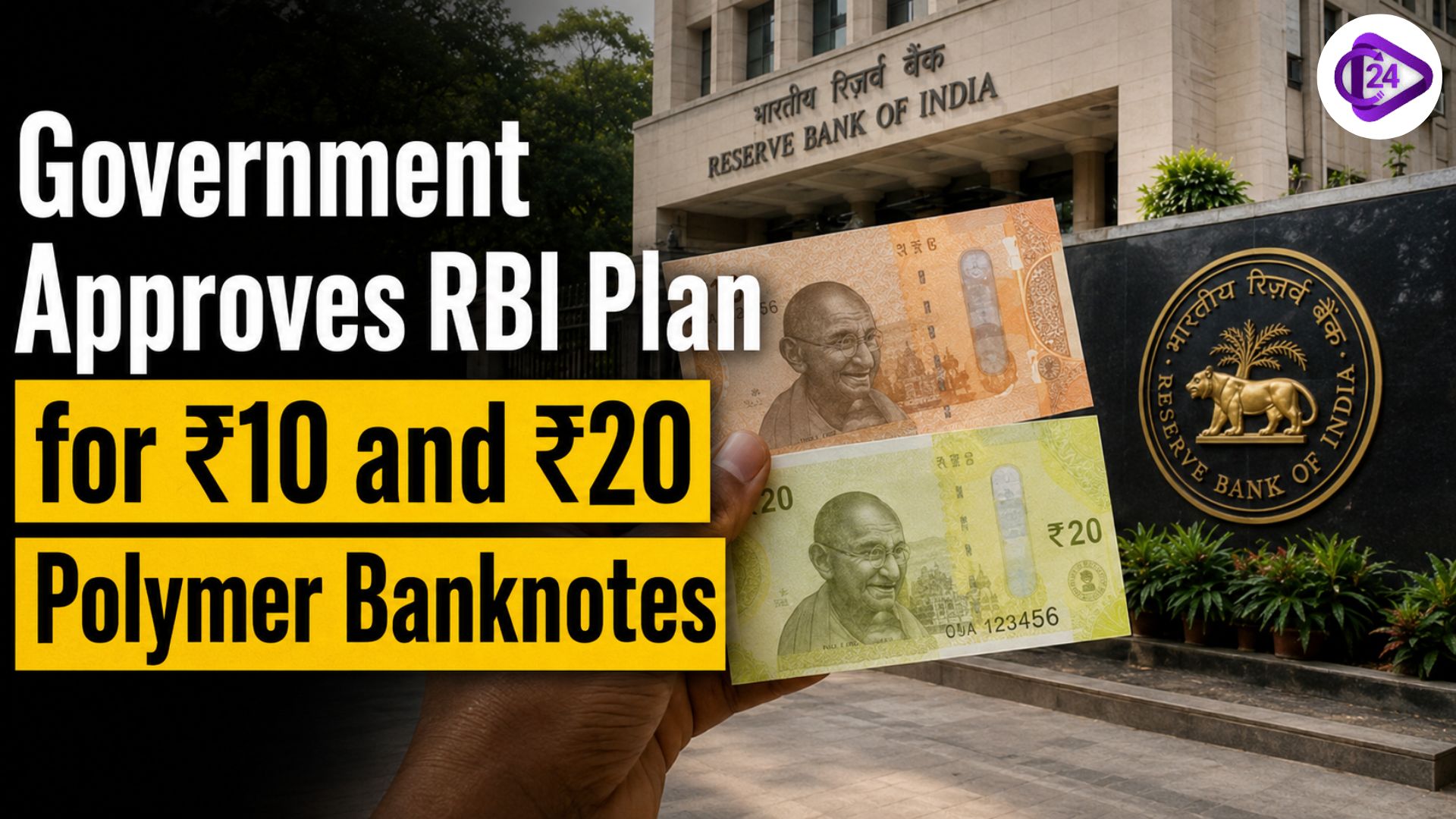
Currency Notes Printing in India:

  • Four currency presses operate to print banknotes which are under the authority of India.

    • SPMCIL (Central Government): Nasik and Dewas.

    • BRBNMPL (RBI Subsidiary): Mysuru and Salboni.

Conclusion

Security ink development through nanoparticle technology represents a vital advance that improves the protection of banknotes along with sensitive documentation. The fluorescence characteristics coupled with economical manufacturing processes of this solution make it a promising method for counterfeiting prevention. This innovative technology continues to undergo research which will bring revolutionary security improvements to currency protection systems in forthcoming years.

Frequently Asked Questions (FAQs)

The current affairs cover recent national and international events related to UPSC, SSC, Banking, Railways, and State PCS.

You need to read about the current affairs daily, and revise them every week and every month to keep them longer in your memory.

Yes, Class24 provides free downloadable Daily Current Affairs PDFs for easy revision.

Yes, you can practice MCQs and quizzes to boost your exam preparation.

Absolutely. The content is written in simple, easy-to-understand bilingual language suitable for beginners.

Go to class24.com and click on the current affairs section directly, where you find everything that you need.

ssc-toppers

Start Learning Today with Class24

Related current affairs

Class24 offers free video lectures for smart preparation, covering CGL, CPO, CHSL, MTS, and GD exams. Learn from expert faculty, revise concepts easily, practice with PYQs, and improve speed and accuracy through high-quality, exam-focused video lessons anytime, anywhere.

Get success in your hand. Start study anytime anywhere.

The journey becomes simple and enjoyable when you start taking interest in it. And through our app “Class24”, we will be your trusted partners in developing that interest.

Daily Quizzes
Mock Tests
Ongoing

No ongoing tests right now.