
Day: March 15, 2025

Tamil Nadu Budget Logo Debate: ‘ரூ’ Symbol vs ₹ National Identity

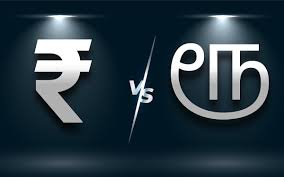
A national debate occurred when the Tamil Nadu government opted to use the Tamil letter 'Roo' ('ரூ') instead of the Indian currency symbol '₹' in the promotional logo for the State Budget. The government's substitution of the Tamil letter 'Roo' for the Indian currency symbol '₹' may display Tamil historical roots instead of expressing opposition to India's national expressions. The Tamil Nadu Economic Survey offers essential information about economic developments alongside population transformations and analyzes both the climate threats and industrial development concerns affecting the state.

The State Budget Logo features ‘ரூ’ as part of its design.

Symbolic Representation vs. Political Statement

  • Under the leadership of the DMK government in Tamil Nadu the financial promotion material for the budget featured 'ரூ'.

  • This decision receives criticism because it apparently chooses to favor local identity over Indian national unity.

  • The official documents from Tamil Nadu combine the monetary symbols of ‘Rs’ and ‘₹’ and ‘ரூ’ to support linguistic inclusiveness in the state while discarding political interpretations.

Cultural and Linguistic Significance

  • The people of Tamil Nadu actively defend Tamil language rights while declining any Hindi language interventions.

  • The Tamil script as material for financial text displays the state's extensive linguistic historical background.

  • Under Article 29 of the Indian Constitution states get freedom to protect both cultural elements and spoken languages together with their roles in building national unity.

National Integration vs. Regional Identity

  • This ongoing discussion highlights how state pride must coexist with the unity of the Indian nation.

  • The adoption of Tamil identity through this change does not affect the use of national currency symbols during official financial operations.

Overview of Tamil Nadu’s Economic Survey 

  • Economic Growth and Industrial Trends

    • Expert projections indicate that Tamil Nadu will maintain an above 8% economic expansion rate starting from the financial year 2024-25.

    • The state depends heavily on its export-driven sectors consisting of automobiles along with textiles and IT and the leather industry.

    • The state of Tamil Nadu holds a leading economic position among all the states in India by providing major financial support to India's GDP.

  • Climate Vulnerabilities and Sustainable Development

    • The Economic Survey warns about climate-related risks that affect coastal districts facing increased sea water elevation alongside severe climate events.

    • The policy places sustainable water management together with disaster resilience at the center of its focus.

    • Future economic sustainability depends strongly on renewable energy adoption because of its recognized essential role.

  • Demographic and Socio-economic Challenges

    • The state’s slowing population growth poses long-term concerns for workforce availability and economic sustainability.

    • The Economic Survey fails to undertake thorough research regarding the socio-economic standing of Scheduled Castes (SCs) and Scheduled Tribes (STs) who represent more than twenty percent of the population.

    • Strategy for economic inclusivity needs to focus on solving existing gaps between different population groups in terms of school access and job prospects and income equality.

Comparative Economic Assessments

  • Inter-state Economic Comparisons

    • Several states together with Union Territories such as Jammu and Kashmir now publish their Economic Surveys.

    • Public policy makes better decisions through state economic performance analysis compared to general economic planning.

    • India's economic diversity enables us to recognize successful methods along with appropriate policy action for growth development.

Way Forward

  • Future Economic Surveys should use detailed socio-economic information especially directed toward specific marginalized member groups.

  • The state of Tamil Nadu should prioritize sustainability initiatives which combine green power generation with water preservation programs and disaster protection strategies because of its vulnerability to climate change.

  • The identity politics should have a balance between regional linguistic pride as well as national unity to create inclusive governance structures which respect diversity but promote integration.

  • States should form collaborative partnerships to develop innovative economic policies which boost the Indian economic system through industrial developments whereas sustaining climate resilience becomes the dominant objective.

Conclusion

When considering currency representation in the Tamil script the ongoing discussion extends to the basic conflict between regional identities versus nation-building ideology. India’s cultural markers represent components of linguistic diversity instead of posing any threat towards national unity. The Economic Survey of Tamil Nadu delivers important economic analysis of the state however it needs to provide additional scrutiny to financial problems together with socio-economic inequalities. The growing number of states using economic surveys will merge their information into an improved picture of India's development process.

PM Surya Ghar Yojana: 10 Lakh Solar Installations Achieved

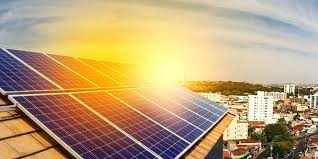
The PM Surya Ghar: Muft Bijli Yojana (PMSGMBY) reached a significant achievement in March 2025 by completing its 10 lakh rooftop solar installation projects launched on 13th February 2024. The scheme has achieved success by processing 47.3 lakh applications followed by ₹4,770 crore in subsidy distributions as it works to provide solar energy access to millions of people. Under this program beneficiaries receive interest-free loans alongside simple subsidy procedures which create zero electric bills for them. This program drives down carbon emissions and grows the economy and sustainable clean power deployment while giving people access to sustainable energy solutions.

Key Points

Scheme Progress & Implementation

  • 10 lakh homes across India have rooftop solar systems installed at present.

  • The beneficiaries receiving ₹4,770 crore in subsidies numbered 6.13 lakh people.

  • An amount of 3.10 lakh loan applications was received yet only 1.28 lakh recipients got their loans disbursed.

  • 15-day average subsidy transfer process.

  • Target: 1 crore households by 2026-27.

State-Wise Achievements

  • The states of Chandigarh and Daman and Diu reached complete success in meeting their government rooftop solar targets.

  • Rajasthan and Maharashtra together with Gujarat and Tamil Nadu show high levels of adoption under the scheme.

  • The central government implements active monitoring of all projects to guarantee proper implementation.

Key Benefits of the Scheme

  • Many households now get free power because the rooftop solar panel program has its costs covered through state subsidies.

  • Reduced Government Expenditure: Estimated savings of ₹75,000 crore annually.

  • Increased Renewable Energy Usage: Boosts sustainable power generation.

  • The installation process creates carbon emission reductions which match the planting of one hundred trees.

Subsidy Structure

Monthly Electricity Use

Rooftop Solar Capacity

Subsidy Amount

0-150 units

1-2 kW

₹30,000 – ₹60,000

150-300 units

2-3 kW

₹60,000 – ₹78,000

Above 300 units

Above 3kW

₹78,000

  • Households can submit applications through the National Portal which also provides vendor selection help.

  • Average 15-day processing time for subsidy disbursement.

  • The scheme provides loans without collateral requirements for solar photovoltaic systems up to 3 kW at a 7% interest rate.

Expected Impact

  • Rooftop customers have dual advantages which include reduced electricity expenses and the option to sell excess power to DISCOMs.

  • The goal is to establish 30 GW in the targeted installation capacity of rooftop solar systems.

  • The program enables the generation of 1000 BUs of electricity while reducing 720 million tonnes of CO2 emissions throughout twenty-five years.

  • The program generates 17 lakh jobs directly through its activities in manufacturing along with logistics operations and installation procedures and maintenance functions.

Make in India & Energy Self-Reliance

  • The government promotes the domestic production of solar modules and inverters and all Balance of Plant (BoP) equipment.

  • A total of 3 Giga Watt (GW) installations reached in March 2025 while targeting 27 GW by 2027.

Model Solar Village Initiative

  • Each district should implement one Model Solar Village as a solar adoption model.

  • The financial resources of ₹800 crore will be used to support the selected village initiative at ₹1 crore per village.

  • Renewable energy capacity stands as the main criterion for selecting villages.

Conclusion

The PM Surya Ghar: Muft Bijli Yojana acts as a transformative vehicle for clean energy advancement through affordable solar power adoption for large-scale household consumption in India. The scheme's accomplishments include delivering 10 lakh installations and its upcoming growth strategy supports sustainability as well as energy security and social empowerment. The government supports domestic production and financial assistance which leads India to move toward renewable independence and protect its environment while expanding solar technology usage nationwide.

World Consumer Rights Day 2025: Strengthening Consumer Protection

World Consumer Rights Day annually celebrates consumer rights through its March 15th observance. The theme of 2025 acknowledges that sustainable consumption requires a just transition toward different lifestyles which respects consumer rights. A series of consumer protections in India such as upgraded complaint resolution systems as well as electronic consumer safety measures and better e-commerce standards work to protect consumers' rights while building a fair marketplace.

Key Points:

Introduction to World Consumer Rights Day

  • The initiative began in 1983 to honor President John F. Kennedy’s 1962 speech about consumer rights.

  • The event seeks to support consumer rights through educational programs while advocating for realistic business conduct.

  • In 2025 the global theme stands for accessible sustainable lifestyles that every consumer should experience at reasonable prices.

Strengthening Consumer Protection in India

  • Consumer Protection Act, 2019

    • Parliament repealed the Consumer Protection Act of 1986 to create modern consumer rights law that handles contemporary needs of e-commerce and worldwide business changes.

    • The fast separation of customer disputes operates under a three-tier structure of quasi-judicial institutions.

    • The proposed time frame for complaint resolutions under the law falls between three to five months to guarantee efficient and timely legal procedures.

  • Consumer Welfare Fund

    • Consumer welfare projects benefit from financial support through the system.

    • The States/UTs received ₹32.68 crore from the government during FY 2024-25 to support their Consumer Welfare Funds.

    • All together twenty-four states together with one Union Territory have built Consumer Welfare Corpus Funds.

Enhancing Consumer Grievance Redressal

  • E-Daakhil and e-Jagriti

    • The 2020 introduction of E-Daakhil brought an online complaint submission system where customers no longer need to appear in person.

    • The establishment of e-Jagriti represents a modern approach which automates case tracking and dispute resolution procedures.

  • National Consumer Helpline (NCH) 2.0

    • The system received AI speech detection skills alongside multilingual chatbot capabilities and language translation features.

    • The number of calls to NCH increased to 1.55 lakh during December 2024 from the former total of 12,553 calls in December 2015.

    • The system stays connected to BIS and FSSAI and BIS for quick complaint resolution cycles.

  • Jaago Grahak Jaago Portal & Mobile App

    • The platform warns users regarding dangerous online domains and deceptive advertising campaigns.

    • The platform enables consumers to find reliable information for purchase choice-making.

Consumer Protection in E-Commerce and Digital Transactions

  • Consumer Protection (E-Commerce) Rules, 2020

    • Outlines responsibilities of online marketplaces and inventory-based e-commerce platforms.

    • The system establishes complete product price visibility and disclosure requirements and consumer complaint management systems.

  • Guidelines for Prevention of Dark Patterns (2023)

    • The guidelines stop deceptive e-commerce behavior through the prohibition of false time-pressured themes and covered expenses along with deceptive advertising messages.

  • BIS Draft Standard on E-Commerce Self-Governance

    • Online transactions become transparent because the regulations provide complete product pricing information together with return policies and data privacy guidelines.

    • The legislation works to safeguard consumers by stopping dubious trade operations while developing trust between e-commerce providers and their customers.

Conclusion

India continues to concentrate on developing markets that are both safer and transparent and friendly to consumers while commemorating World Consumer Rights Day 2025. The government demonstrates its dedication to consumer welfare through its dedicated efforts to develop better grievance systems and strict e-business rules and consumer education initiatives. India advances toward a sustainable consumer ecosystem which depends on effective legal structures as well as digital platforms together with enhanced consumer self-empowerment.

Amazon, Google Sign Pledge to Support Tripling of Nuclear Energy Capacity by 2050

Major companies Amazon and Google became part of the initiative by endorsing the plan to expand nuclear energy capacity by three times by year 2050. The announcement originated from the CERAWeek conference in Houston as an initiative that supports country-level commitments set in 2023. The electricity sector draws 9% of its power from nuclear energy while experts recognize it as a sustainable power source that promises advantages for data center operations. Uranium production difficulties create obstacles in supplying the necessary materials. Big Tech companies research next-generation nuclear technology with specific attention to small modular reactors to supply power in upcoming decades.

Key Points:

Pledge for Nuclear Expansion:

  • Four companies including Amazon and Google along with Occidental and IHI Corp joined forces to raise nuclear capacity levels three times by 2050.

  • The initiative, backed by the World Nuclear Association (WNA), is expected to gain further support from industries like maritime, aviation, and oil and gas.

  • More than 30 countries had established this objective when they endorsed it in 2023.

Current Nuclear Energy Landscape:

  • Today nuclear power stations supply 9% of the global electricity energy output through 439 operating plants worldwide.

  • In early 2025 only 411 operating nuclear reactors existed along with 371 gigawatt power capacity.

  • The market for uranium oxide rose after 2021 because nuclear technology interests increased at the same time as delivery systems faced disruptions.

Big Tech’s Growing Interest in Nuclear Power:

  • The expansion of Big Tech data centers depends on acquiring reliable clean energy sources because their operations require substantial energy consumption.

  • The technological expansion of Amazon includes over $1 billion worth of nuclear initiatives and assessments of mini modular reactor technology.

  • The organizations of Meta and Google are conducting research into sophisticated nuclear technologies to achieve permanent energy sustainability.

Challenges in Nuclear Expansion:

  • The central production locations for uranium exist in Kazakhstan alongside Canada and Australia which control approximately 67 percent of global uranium output.

  • The expansion of nuclear energy encounters multiple obstacles which consist of financial hurdles and technological limitations and technical administrative hurdles.

Understanding Nuclear Energy:

  • Nuclear energy originates from atomic reactions which produce a dense energy output. The two fundamental methods direct the harnessing process.

  • The release of energy happens through atomic splitting of uranium-235 or plutonium-239 nuclei within nuclear fission processes. Nuclear power plants operate through this method.

  • Nuclear Fusion enables energy generation through atomic nucleus unification just as the sun does. The current technological difficulties prevent the controlled implementation of this method on Earth.

Status of Nuclear Energy in India

  • Nuclear power provides only 2% of the electricity produced in India.

  • The 7 Indian nuclear power plants operate 22 reactors which produce 6,780 MW of electricity.

  • The present Indian nuclear power production operates through 18 PHWRs and 4 LWRs.

  • The initial Indian home-built 700 MWe PHWR (Kakrapar Atomic Power Project) commenced power transmission to the grid during 2021.

  • NPCIL collaborates with India's PSU companies through joint ventures that enhance development of nuclear energy facilities.

  • Two upcoming nuclear power projects will be established in Gorakhpur, Haryana and an indigenous Bhavni thorium-based reactor.

Why India Needs Nuclear Energy

  • India decreases its dependence on imported coal oil and gas supplies through limited fossil fuel stores.

  • Clean Energy Source: Carbon-free, aiding in climate change mitigation.

  • Cost-Effective: Lower operational costs than coal and gas plants.

  • Reliable Power Supply: Provides continuous base-load power, unlike intermittent renewables.

  • The net zero target serves as an essential requirement to reach carbon neutrality throughout the coming seventy years.

  • The development of jobs and economic activities depends on high energy needs which nuclear power supports.

  • The large quantities of thorium that exist in India serve to create sustainable energy supplies over long periods.

Challenges in Scaling Nuclear Energy

  • The high capital costs to construct nuclear facilities become more expensive because construction typically leads to increased budget overruns.

  • The existing power generation facilities produce only 6.78 GW of power while the future requirement estimates demand 650 GW by 2050.

  • Nuclear Liability Concerns: India’s Civil Liability for Nuclear Damage Act (2010) deters foreign suppliers.

  • Safety & Waste Disposal: Nuclear accidents and radioactive waste management pose risks.

  • The closed nuclear fuel cycle needs advanced technology development for its realization.

  • The Nuclear Suppliers Group membership status acts as a barrier since it restricts India from acquiring cutting-edge nuclear technology.

National Strategy for Rapid Nuclear Energy Expansion

  • Indian public sector undertakings will expand the production of 700 MWe PHWR reactors.

  • The deployment of Small Modular Reactors (SMRs) should occur at locations where coal power facilities become obsolete.

  • Energy plants in industries can access 220 MWe PHWRs along with Advanced Heavy Water Reactors (AHWR300-LEU) as manufacturing units produce power as well as hydrogen.

  • Research should create High-Temperature Reactors designed for direct production of hydrogen to lower the costs of green hydrogen.

  • Thorium Energy Development: Accelerate the transition to thorium-based reactors for long-term sustainability.

  • International Cooperation: Leverage India’s competitive PHWR technology for global partnerships in climate action.

Conclusion

Huge corporations investing in nuclear power demonstrates the ascending role of sustainable power generation through nuclear technology. Future energy needs can be met effectively through advanced nuclear technology development despite current supply restrictions and regulatory barriers. The expansion of nuclear power infrastructure by industries drives forward the movement toward a greener and fortified energy network.

Frequently Asked Questions (FAQs)

The current affairs cover recent national and international events related to UPSC, SSC, Banking, Railways, and State PCS.

You need to read about the current affairs daily, and revise them every week and every month to keep them longer in your memory.

Yes, Class24 provides free downloadable Daily Current Affairs PDFs for easy revision.

Yes, you can practice MCQs and quizzes to boost your exam preparation.

Absolutely. The content is written in simple, easy-to-understand bilingual language suitable for beginners.

Go to class24.com and click on the current affairs section directly, where you find everything that you need.

ssc-toppers

Start Learning Today with Class24

Related current affairs

Class24 offers free video lectures for smart preparation, covering CGL, CPO, CHSL, MTS, and GD exams. Learn from expert faculty, revise concepts easily, practice with PYQs, and improve speed and accuracy through high-quality, exam-focused video lessons anytime, anywhere.

Get success in your hand. Start study anytime anywhere.

The journey becomes simple and enjoyable when you start taking interest in it. And through our app “Class24”, we will be your trusted partners in developing that interest.

Daily Quizzes
Mock Tests
Ongoing

No ongoing tests right now.