Day: March 8, 2025

Govt Approves Multi-Feedstock Ethanol Plants for Sugar Mills

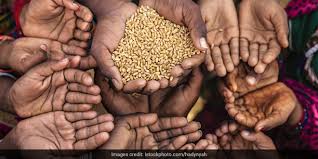
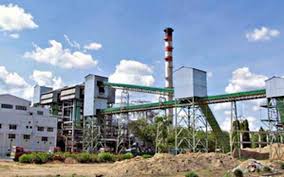
The Government of India seeks to improve both the financial stability along with cash flow in Cooperative Sugar Mills. Through economic assistance Cooperative Sugar Mills (CSMs) receive from the Indian government they can convert their ethanol plants into multi-feedstock units. CSMs now have the ability to produce ethanol year-round through the conversion process which enables their utilization of maize combined with damaged food grains (DFG). The initiative supports the Ethanol Blended Petrol (EBP) Programme because it works toward achieving 20% ethanol mixing with petrol by 2025.

The program strives to boost both sustainability and financial solidity of Cooperative Sugar Mills through its implementation.

  • Through the modified Ethanol Interest Subvention Scheme the Department of Food & Public Distribution within Government of India creates a scheme to help Cooperative Sugar Mills convert their present sugarcane-based feedstock ethanol plants to operate as multi-feedstock-based facilities.

  • Equipment within these plants will allow maize use along with damaged food grains (DFG) to boost ethanol productivity.

  • The modified Ethanol Interest Subvention Scheme of the Government provides financial support through an interest discount equal to 6% annually or 50% of actual bank interests. 

  • A period of financial assistance extending to five years along with one year of moratorium relief will benefit sugar mills across this period.

Year-Round Operation for Increased Efficiency

As things stand today the sugarcane crushing period in India extends to only four or five months in each year thus decreasing sugar mill operational efficiency. Through this scheme Cooperative Sugar Mills (CSMs) can function throughout 12 months since they can utilize various materials for their processing activities. These ethanol facilities' conversion process will guarantee three key outcomes.

  • Increased operational efficiency and productivity

  • Sustainable financial viability

  • Generate better financial returns through increased cash flow.

Ethanol Blending Program of India

  • The Government of India continues working through the Ethanol Blended Petrol (EBP) Programme to decrease fossil fuel dependence while advocating for biofuel adoption. 

  • The EBP Programme strives to introduce 20% ethanol merged with petrol throughout the country by the year 2025. 

  • In July 2018 the government introduced various ethanol interest subvention schemes aimed at increasing the capacity for ethanol manufacturing.

  • The initiative serves a dual purpose of reaching the ambitious blending targets together with job creation for rural areas and increased demand for maize and damaged food grains for farmers. 

  • The scheme demonstrates the government’s dedication to developing sustainable energy systems combined with economic expansion.

The Cooperative Sugar Industry and its expected trends for development

  • The revised Ethanol Interest Subvention Scheme will bring these following effects:

    • The cooperative sugar sector will benefit from long-term round-the-year ethanol production operations.

    • Expanding diverse raw materials usage will boost the operational success of cooperative sugar mills.

Benefits for India:

  • Energy independence in India becomes possible through multi-feedstock ethanol production which decreases national dependence on imported fossil fuels while creating domestic energy security.

  • The initiative activates new rural job opportunities which support farmers and expand the agricultural economy of rural areas.

Food Wastage Stats in India and Across the World:

  • Each year India squanders 50 kilograms of food per person, which totals to approximately 68 million tons for its population.

  • The annual worldwide food waste reaches 1.3 billion tons while causing substantial environmental and economical issues.

  • Using damaged food grains to create ethanol helps control food losses by generating sustainable biofuels.

Conclusion

India's commitment to carbon emission reduction along with circular economic development will receive your contributions. The Government of India's strategic strategy will change ethanol production dynamics by maximizing resource use and boosting cooperative sugar mills' financial stability.

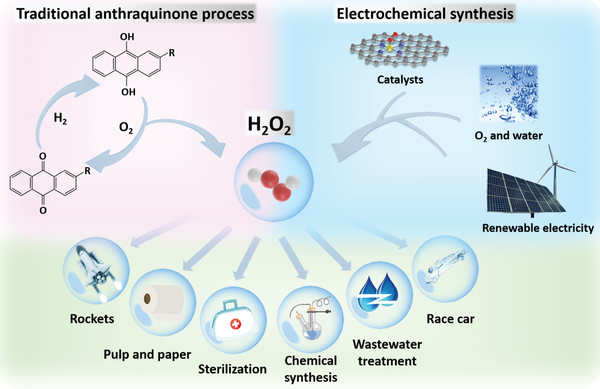
Green and Efficient Synthesis of Hydrogen Peroxide Under Sunlight Could Benefit the Industry

Indian researchers have developed an eco-friendly and energy-efficient method to produce hydrogen peroxide (H₂O₂) using sunlight. This innovative approach utilizes Covalent Organic Frameworks (COFs) as photocatalysts, enabling sustainable production without harmful by-products. The new method significantly reduces energy costs and enhances industrial efficiency. With applications in disinfection, paper bleaching, and chemical synthesis, this breakthrough could revolutionize multiple industries. The research marks a major step toward greener and more sustainable chemical manufacturing.

Research teams have developed an energy-saving sustainable approach to manufacture hydrogen peroxide (H₂O₂) which serves as a fundamental chemical throughout various industries such as disinfection together with paper bleaching and chemical synthesis.

Key Highlights of the Research:

Significance of Hydrogen Peroxide (H₂O₂):

  • The synthetic product serves environmental disinfection needs and supports chemical synthesis as well as paper bleaching and fuel cell operations.

  • Economic interest in hydrogen peroxide continues to grow owing to public health concerns about disinfection and the escalating surgical procedures alongside hospital infections.

Limitations of Existing Industrial Methods:

  • Industrial manufacturing of H₂O₂ through anthraquinone oxidation produces more than 95% of the entire H₂O₂ created globally.

  • Hydrogen Peroxide production requires excessive energy at high expense which leads to dangerous by-products.

New Eco-Friendly Approach:

  • Scientists work to create financially viable sustainable systems that use renewable resources.

  • The recent emergence of Covalent Organic Frameworks (COFs) as photocatalysts brings potential because of three important features.

    • Modifiable catalytic sites.

    • Efficient light-harvesting in the visible range.

    • Good water affinity.

Research team at S. N. Bose National Centre for Basic Sciences in Kolkata:

  • Scientists designed hydrazone-linked COFs which demonstrated improved water reacting properties.

  • These COFs promote key reactions:

    • Water Oxidation Reaction (WOR).

    • Oxygen Reduction Reaction (ORR).

    • The photocatalytic system effectively produced H₂O₂ through sunlight activation.

Key Achievements:

  • H₂O₂ production quantities exceeding 550 μmol g⁻¹ h⁻¹ were achieved by this photocatalyst under sunlight illumination which surpassed most organic photocatalysts.

  • The combination of water-benzyl alcohol solution at 90:10 produced H₂O₂ production of 21,641 μmol g⁻¹ h⁻¹.

  • The material shows readiness to be used in continuous flow reactors which can enhance industrial production capabilities.

Conclusion:

  • The renewable H₂O₂ synthesis method holds promise as an environmentally friendly method for industrial production.

  • This development enables the transfer of lab-based technologies into industrial operation which yields advantages across different business sectors.

  • The method has potential to develop a sustainable H₂O₂ production system which decreases environmental impact in comparison to existing H₂O₂ manufacturing processes.

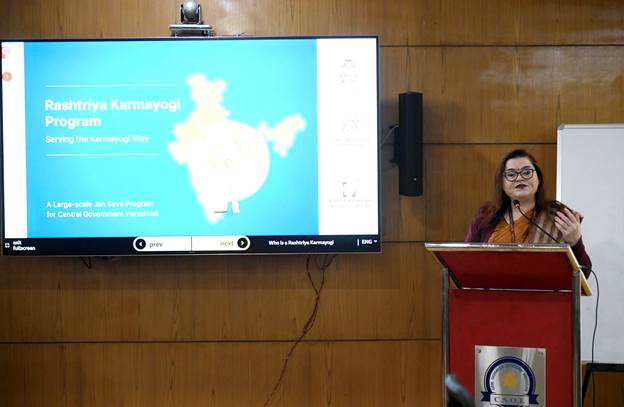
Rashtriya Karmayogi Jan Seva Programme: A Step Towards Ethical Governance

Social Justice and Empowerment Department (DoSJE) carried out the first implementation of Rashtriya Karmayogi Jan Seva Programme under Capacity Building Commission management. Through this program DoSJE works to develop Seva Bhav (service spirit) within public officials who will practice solution-based services and citizen-focused approaches. The program matches standards of ethical governance because it establishes public administration based on values including integrity and transparency and empathy.

Ethical Governance: A Cornerstone of Public Administration

What is Ethical Governance?

  • The integration of ethical standards based on moral principles creates a system for public administration to become ethical governance. 

  • The system creates fair approaches and transparent work procedures for public institutions which builds strong bonds of confidence between citizens and government functionaries.

For example:

  • Under ethical governance principles a bureaucrat must perform their public service responsibility yet their obligations extend further than standard duties. Providing water to waiting elderly people demonstrates the combination of public service ethics together with altruistic behavior.

  • Public Distribution System (PDS) rations must be distributed to recipients even in situations where Aadhaar authentication fails so that human dignity along with compassion takes precedence over strict procedural requirements.

  • Public servants need ethical governance to build trust with citizens which creates collaborative relationships in public service.

Key Elements of Ethical Governance

  • Ethical governance relies on three core values including social justice plus integrity together with responsibility. 

  • Key elements include:

  • Probity: The foundation of ethical public service requires public administration to protect the common well-being by preventing every form of misconduct.

  • Responsibility: Internal accountability initiatives stemming from responsibility lead to reduced corruption and inefficiency patterns.

  • Rule of Law: The application of the Rule of Law eliminates random actions from public servants while battling administrative corruption through procedure simplification.

  • Compassion & Empathy: Encourages humane decision-making in public service.

  • Transparency: Openness in decision-making processes through transparency allows public institutions to maintain trust with citizens.

Ethical Issues in Indian Governance

  • Various ethical problems continue to affect Indian administration even though authorities have tried to establish ethical governance systems.

  • Civil servants exceed their authority through improper use of their powers which damages the welfare of public citizens.

  • Public welfare withers alongside governance performance because duty neglect becomes rampant in political offices.

  • Organized bribery throughout governance functions as a significant threat against fairness and justice.

  • Many personnel in office give preference to acquiring personal advantages instead of serving public interests which causes inefficiency.

  • After retirement administrators give their positions to unqualified people through non-merit-based means.

  • Valuable information that remains hidden through administrative secrecy policies allows dishonest practices to occur.

  • When public servants hire their family members and acquaintances through nepotism it reduces the principles of merit-based appointments.

  • Traditional bureaucratic operation displays insufficient compassion toward unique human needs and specific situations that individuals face.

Rashtriya Karmayogi Jan Seva Programme: A Solution to Ethical Challenges?

  • The Rashtriya Karmayogi Jan Seva Programme has been established to combat ethical challenges through government official training that fosters citizen-centered public service. The program centers its training on service excellence while building solutions for better governance as well as understanding public needs. Capacity building combined with ethical training creates a connection that minimizes the differences between policy execution and benefits meant for citizens.

  • This initiative directly addresses:

    • The initiative works to eliminate complacency through its campaigns for service-oriented behavior.

    • Official training programs focus on developing accountability and responsibility among government personnel.

    • The organization strengthens ethical standards along with public service integrity.

    • Public administrators should develop compassionate policies through proper governance education.

Way Forward: Strengthening Ethical Governance

Excelling ethical governance requires these necessary steps to be put into action:

  • Explanation of effective laws requires all civil servants to demonstrate decision justification processes for improved transparency purposes.

  • A new approach to management will motivate officials to work actively against unethical practices and corruption.

  • The government should enforce robust protection laws for people who reveal public wrongdoings.

  • An ethics audit system helps organizations identify potential threats concerning governance system integrity.

  • Second Administrative Reforms Commission (ARC) Recommendations:

    • States contributing funds for campaigning will cut down on political corruption across the nation.

    • The implementation of stronger anti-defection legislation should protect public accountability in political settings.

    • Code of ethics for ministers, legislators, judiciary, and civil servants.

    • Present regulatory authorities need to enhance provisions of the Prevention of Corruption Act 1988 to include destructive asset confiscation measures.

    • Speedy trials for corruption cases.

Conclusion

The Rashtriya Karmayogi Jan Seva Programme serves as an advancement for ethical governance through its mechanisms which make government officials maintain standards of service combined with integrity as well as transparency. An administrative system that functions properly requires ethical governance to be in place for both justice and accountability. The Indian governance framework will become stronger due to higher levels of transparency and institutional trust when probity and empathy are promoted together with administrative integrity and openness. Ethics in public service practice serves as a fundamental requirement for achieving citizen welfare results and diminution of government corruption and improved governmental response.

India’s Spice Industry Needs Value Addition to Boost Global Market Share

India remains the leading spice producer yet ranks last in the $14 billion seasoning market since it controls only 0.7% of the global spice market behind China (12%) and the U.S. (11%). The experts have pointed out that raising production volumes and exporting more goods and creating additional value in spices remain essential for India to meet its $10 billion export target by 2030. WSO endorses three strategic market advances including: value-added spice development, nutraceutical and pharmaceutical pursuits and supports investment in resistant climate spices and environmentally friendly agricultural approaches.

The Spice Export Market of India faces multiple obstacles alongside several new business opportunities

India’s Low Share in Global Seasoning Market:

  • Spices form India's primary exports together with being its leading producer yet this production employs just 0.7 percent of India's global seasoning market which China possesses 12 percent and the U.S. holds 11 percent.

  • The establishment produces $20 billion from global spice trade while Indian seasoning exports reach $14 billion.

  • The spice industry in India generates $4.5 billion through exporting 1.5 million metric tons thus commanding 25% of the worldwide spice market.

Need for Value Addition

  • The Indian spice export sector consists of 48% value-added products alongside 52% whole raw spices being exported.

  • The achievement of $10 billion exports by 2030 demands that value-added spice exports expand to reach 70% of the total.

  • The process of value addition in the spice industry consists of spice blends extraction of essential oils as well as nutraceutical and pharmaceutical applications.

Expanding Spice Production in Emerging Regions

  • New spice production areas in North East India together with Odisha and Jharkhand regions have started demonstrating significant increases in their production figures.

  • The 15 agro-climatic zones in India provide suitable conditions to grow diverse spices throughout its different states.

  • Even though India possesses favorable conditions for spice production it fails to reach export levels so production must increase.

Cost, Quality, and Sustainability Challenges

  • Indian market competitiveness suffers from both expensive production expenses and poor quality management in global marketplaces.

  • FPOs (Farmer Producer Organizations) receive training on pesticide management as well as sustainable farming practices and water resource control.

  • The long-term development of the spice industry needs the implementation of high-yielding varieties resistant to changing climates.

Exploring New Market Segments

  • Indian spices hold wide opportunities within both the pharmaceutical and nutraceutical business sectors.

  • Modern medical practices along with Ayurvedic traditions currently employ multiple Indian spices for both health-related and medicinal purposes.

  • The expansion of functional food applications through research and development work will probably drive export growth.

Conclusion

The global seasoning market together with the value-added spice markets represent major undeveloped opportunities for India's spice sector. The achievement of India's $10 billion export target requires increased production rates alongside lowered costs combined with product quality improvements coupled with product diversification to advanced products. Sustainable farming investment alongside climate-resistant variety research combined with farmer training programs will create the most effective pathway for India to secure large global market share positions. India will establish its position as a worldwide leader in seasoning and nutraceuticals and pharmaceuticals by successfully overcoming its present obstacles.

Amit Shah’s Call for Tamil Medium in Professional Education: Ground Reality and Challenges

During his recent visit to Tamil Nadu Amit Shah requested the state to provide medical and engineering education through Tamil language by referring to current educational models from across India. The government of Tamil Nadu launched Tamil medium engineering programs in 2010 but stopped them in 2023 before bringing them back. The introduction of medical education through Tamil has been discussed within the state early on but its actual implementation has remained minimal. The inclusion of local languages in paramilitary recruitment tests received positive changes after M.K. Stalin's direction as Tamil Nadu Chief Minister. The study analyzes the developmental background combined with barriers and present-day aspects regarding Tamil professional learning across the state.

Tamil Medium in Professional Education

Tamil as a Classical and Administrative Language

  • In 2004 the government acknowledged Tamil as one of the Classical Languages of India since ancient times.

  • The British administration removed Tamil from educational use and professional training through their rule while promoting the adoption of English.

  • After independence Tamil Nadu established both language pride and Tamil linguistic education which resulted in a policy for making Tamil the main instructional language across all public schools.

Early Efforts to Introduce Tamil in Higher Education

  • The mid-20th century Dravidian movement fought for Tamil identity while pursuing linguistic self-respect thus affecting education policy decisions.

  • During the 1950s-1960s the Tamil Nadu government promoted Tamil as the main teaching language in education but higher learning institutions continued teaching in English.

  • During the 1970s through 1980s the government established Tamil as an essential academic subject in universities though it did not replace English as the primary language for studying science-based majors because industry leaders favored English to stay connected globally.

Challenges and Decline in Popularity

The early student interest in engineering programs conducted in Tamil declined throughout succeeding years.

  • Key reasons for decline:

  • Job opportunities available only through English education made students pick English as their preferred Engineering medium.

  • The availability of restricted Tamil technical educational resources (terms and books) presented a challenge when learning complex subjects.

  • Most industry corporations and business organizations showed a preference for graduates who spoke English.

  • The Tamil medium engineering programs faced closure in 2023 because of low enrollment until student resistance forced their restoration.

Role of Central and State Governments

  • Engineering education in Tamil and other regional languages gets support from AICTE (All India Council for Technical Education) as part of their efforts.

  • Through the National Education Policy 2020 the government supports mother tongue education as a higher learning approach that corresponds to previous Tamil Nadu education policies.

  • Tamil Nadu maintains robust resistance against NEET (National Eligibility cum Entrance Test) because the state battles with educational guidelines from the center versus its own cultural abiding traditions.

Conclusion

The introduction of professional education through Tamil medium in Tamil Nadu has encountered difficulties in maintaining steady enrollment while developing new curriculums and receiving approval from industries. Amit Shah supports Tamil medium education in engineering and medicine despite face-to-face evidence suggesting limited progress. Regional professional education degrees taught through local languages will succeed based on student interest and translation quality and through trained faculty members and industry connections. The discussion regarding language inclusivity maintains its present state of disagreement with global business competitiveness requirements.

Surat Food Security Saturation Campaign: A Step Towards Hunger-Free India

Prime Minister Shri Narendra Modi launched the Surat Food Security Saturation Campaign Programme during its inaugural event in Limbayat Surat to demonstrate government dedication toward ensuring food security for everyone. Through this initiative the government intends to connect disadvantaged population groups with basic food and nutritional provisions. The National Food Security Act incorporated more than 2.3 lakh beneficiaries because of this campaign. This program serves as a blueprint for other districts to achieve 'Viksit Bharat' through its hunger prevention mechanism. Various existing government schemes support the campaign by focusing on food security as well as providing nutrition and complete well-being for disadvantaged populations.

Introduction: 

  • Prime Minister Shri Narendra Modi launched the Surat Food Security Saturation Campaign Programme during its inaugural event in Limbayat Surat to demonstrate government dedication toward ensuring food security.

Key Points:

1. Vision and Objectives

  • As part of the Surat Food Security Saturation Campaign officials work to provide nutritional food to every resident of the town.

  • The initiative works for two purposes which are removing discrimination and optimally improving food distribution processes.

  • The district acts as a model example that helps other districts in India establish comparable initiatives.

2. Government’s Commitment to Food Security

  • Through their initiatives the government identified 2.5 lakh beneficiaries which primarily consists of widows and differently-abled persons together with elderly citizens.

  • Food security initiatives in the annual budget receive funds which total ₹2.25 lakh crore.

  • Through its Pradhan Mantri Garib Kalyan Yojana initiative the government provides complimentary food grains to large numbers of domestic households.

  • The people of Gujarat now receive enhanced benefits from their government because it raised income thresholds for additional assistance.

3. Nutritional Initiatives and Health Benefits

  • Through the PM Poshan Scheme the government provides daily meals to school children across a 12 crore-strong student population.

  • Through Saksham Anganwadi programme authorities provide regular nutrition to pregnant women and children as well as their mothers.

  • PM Matru Vandana Yojana provides financial assistance to pregnant females for improving both their health and nutritional needs.

  • The combined effect of these initiatives works toward lowering health deficiencies and addressing both anemia problems and child malnutrition.

4. The food distribution program works to maintain transparent operations while 

boosting efficiency.

  • The removal of 5 crore fake ration cards from the system has enabled better management of food distribution through leak prevention measures.

  • The ‘One Nation, One Ration Card’ system enables migrant workers to obtain their ration card benefits no matter which part of India they find themselves in.

  • Aadhaar-linking technology for ration cards with the help of technology integration ensures the proper recipients receive program benefits.

5. Role of Cleanliness and Hygiene in Nutrition

  • Clean Up India Mission has successfully minimized medical conditions throughout rural regions of India.

  • The 'Har Ghar Jal' initiative provides each household with safe drinking water while lowering disease rates that come from impure water.

  • Surat stands as a premier example of urban cleanliness and thus achieves national standards for health and hygiene.

6. Economic Empowerment and Poverty Alleviation

  • The Mudra Yojana achieved nearly ₹32 lakh crore worth of disbursement to fund small business careers.

  • The PM SVANidhi Yojana enables street vendors to connect with institutional finances through its benefits.

  • Under PM Vishwakarma Yojana traditional craftsmen gain accessibility to monetary help along with skill upgrading resources.

  • The government has succeeded in lifting poverty from 25 crore people during a ten-year period by implementing various intervention programs.

7. The Middle-Class and MSME Sector Obtains Government Support

  • The government supports middle-class families through zero tax policy for incomes up to ₹12 lakh.

  • The government established loan programs particularly designed for small businesses owned by SC/ST communities and women entrepreneurs.

  • From a regional perspective Surat serves as a vital contributor for both employment creation and economic development of India across all sectors.

8. Infrastructure Development in Surat

  • The Surat Metro along with the Western Dedicated Freight Corridor and Delhi-Mumbai Expressway produce beneficial outcomes for the city.

  • The construction of both Bullet Train and the new terminal at Surat Airport will generate better connectivity which will drive economic development.

9. Women Empowerment and Social Development

  • The government established multiple programs to enhance women's status by providing money assistance and enterprise support programs.

  • The Prime Minister will showcase women entrepreneurs and social leaders at the upcoming International Women's Day program.

Conclusion

India's food security agenda reached a significant point through the Surat Food Security Saturation Campaign. The initiative provides necessary food to underprivileged people while integrating health initiatives and service development and economic empowerment initiatives and cleanliness efforts. The government works to create a transparent and efficient system of governance because it wants to establish India as both a hunger-free society and a prosperous land. The campaign serves as a model for other districts to follow which strengthens India’s vision of ‘Sabka Saath, Sabka Vikas.’

Namami Gange Programme: A Holistic Approach to Clean Ganga

The Namami Gange Programme (NGP) emerged as a principal Indian government initiative in 2014 to conserve and improve the Ganga River status. The program receives major financial investments to carry out pollution reduction measures and restore ecological systems for sustainable water management practices. The Namami Gange Programme executed multiple important restorative strategies starting from sewage treatment into biodiversity conservation alongside forest development alongside public outreach programs. Namami Gange Programme holds a widespread mission that aims to maintain clean and flowing water within the Ganga River alongside the preservation of its cultural heritage and environmental value.

Key Points:

Namami Gange Programme (NGP):

  • The Namami Gange Programme began operation in 2014 using ₹20,000 crore before extending its funding objective to ₹22,500 crore through 2026.

  • Focuses on pollution control, ecological restoration, and sustainable water management.

Ganga River Basin:

  • The region spans across 27% of India’s land territory and sustains 47% of its human population.

  • The river faces multiple difficulties because of heavy water extraction and environmental contamination.

Vision for Ganga Rejuvenation:

  • Aviral Dhara (Continuous Flow) and Nirmal Dhara (Unpolluted Flow).

  • Emphasis on Integrated River Basin Management (IRBM) through scientific research and multi-sectoral interventions.

Key Interventions:

  • Pollution Abatement as part of Nirmal Ganga involves creating sewage treatment plants (STPs) and implementing effluent control programs and waste management practices.

  • Through Ecology and Flow Improvement (Aviral Ganga) the project works to improve the natural river ecosystem together with steady water sources.

  • Community Engagement (Jan Ganga): Awareness campaigns and active participation of local communities.

  • The department of Gyan Ganga focuses on developing scientific studies and mapping processes and formulating policies for sustainable water governance.

Progress Overview (As of January 2025):

  • The authority launched 492 projects which received a total funding of ₹40,121.48 crore.

  • The Ganga project team successfully finished 307 tasks while obtaining completion of 127 sewage treatment projects.

  • As part of their initiatives the government authorized 56 biodiversity and afforestation projects that help maintain a sustainable balance between nature in the Ganga basin.

Recent Government Initiatives:

  • Major sewage treatment projects received approvals from the government as hybrid annuity and DBOT models for Varanasi and Bhadohi.

  • Implementation of a National Framework for Safe Reuse of Treated Water.

  • Seven biodiversity parks together with afforestation activities are being implemented across 33,024 hectares of land.

  • A program has been established to ranch 143.8 lakh Indian Major Carp (IMC) fingerlings for the conservation of fish biodiversity and river dolphins.

  • Industrial pollution prevention requires the development of Common Effluent Treatment Plants (CETPs).

The Ganges-Brahmaputra-Meghna (GBM) River Basin

  • This enormous river system receives its source from Himalayan glaciers and rainfall plus tributary streams and precipitation.

  • From the Himalayas the Ganges River streams toward the south and east and creates a wide chasm.

Ganga River System

  • The rivers Bhagirathi and Alaknanda give birth to this water system.

  • Origin: It starts at Gaumukh (3700m) where gangotri glacier resides in Uttarkashi district of Uttarakhand state.

  • Merges: The Ganga receives the Alaknanda stream at Devprayag before it attains its namesake status as the Ganga.

  • Total length in India: The Ganga River runs for 2,525 kilometers across four Indian territories which start in Uttarakhand then extend to Uttar Pradesh and continue to Bihar and terminate in West Bengal.

  • Basin area in India: 8.6 lakh sq km.

Major Tributaries of Ganga

Right Bank Tributaries

  • Yamuna: Yamuna stands as the longest tributary because it springs from Yamunotri Glacier and converges with Ganga at Prayagraj.

  • Son: Son originates from the Amarkantak Plateau before it joins Ganga near Patna.

  • Damodar: The Hugli River receives Damodar's tributary stream which creates the sorrowful condition known as "Sorrow of Bengal."

  • Punpun: Punpun originates in Jharkhand then passes through Bihar before entering its stream.

Left Bank Tributaries: Gomati, Gandak, Ramganga, Kosi, Ghaghara, Mahananda.

  • Gandak: Gandak starts in Nepal Himalayas before uniting with the Ganga near the city of Patna.

  • Ghaghara: Ghaghara commences its course in Tibet before joining the Ganga near Chhapra in Bihar.

  • Kosi: Coming from Mt. Everest vicinity the Kosi River acquires its local name as "Sorrow of Bihar".

  • Ramganga: Ramganga comes from the Garhwal Himalayas and reaches Ganga near Kannauj.

  • Mahananda: Mahananda begins in Darjeeling while being the westernmost left-bank tributary in West Bengal.

Key Confluences (Prayags) of Alaknanda

  • Vishnu Prayag – Dhauli & Vishnu Ganga meet.

  • Karna Prayag – Pindar meets Alaknanda.

  • Rudra Prayag – Mandakini joins Alaknanda.

Importance of the Ganga River in the Indian Context

The Ganga River stands amongst the most important rivers in India since it supports essential functions for agriculture while also driving the economy and protecting the environment and maintaining cultural and religious traditions. The Ganga River begins its passage at the Gangotri Glacier in Uttarakhand and then traverses various states before discharging into the Bay of Bengal while supporting the justified needs of millions of inhabitants and local biodiversity.

1. Agricultural Importance

  • The world's largest granary region constitutes the Indo-Gangetic plain which exists as one of the most productive farming areas because The Ganga River along with its tributaries provides irrigation support.

  • The river's alluvial soil sediments support the growth of four basic crops which include rice alongside wheat together with sugarcane and pulses.

  • The Ganga Canal alongside its expansion systems convey irrigation benefits to Uttar Pradesh and West Bengal as well as Bihar.

2. Economic and Industrial Significance

  • The river sustains water supply to textile production facilities and tanneries together with paper-making plants and sugar refinement centers.

  • As a main waterway of India National Waterway 1 (NW-1) which includes the Ganga stream improves trading activities and lowers freight expenses.

  • Hydropower Generation and renewable energy objectives in India receive support from numerous hydroelectric projects situated along the river.

3. Cultural and Religious Importance

  • The Indian waterway Ganga serves as a goddess to followers of Hinduism and provokes millions to visit sites like Varanasi along with Haridwar and Prayagraj.

  • The Ganga Aarti ceremonies along with ash immersion and river bathing rituals are seen to cleanse the sins of the performers.

  • Kumbh Mela and Ganga Dussehra are important religious events that center on the river which drives cultural tourism.

4. Ecological and Environmental Significance

  • The river exists as a biodiversity hotspot because it serves as a home for numerous animal and plant species while protecting the endangered Gangetic dolphins which inhabit its waters.

  • Wetlands that thrive in the area receive support from the river which additionally enables fishermen to practice inland fisheries for their subsistence.

  • Strict pollution problems including industrial waste and sewage discharge and plastic contaminants endanger the river's ecological health so Namami Gange Mission was initiated to advance river rejuvenation.

5. Social and Human Development Role

  • Drinking water sustainability along the Ganges is essential because millions of people extract their water supply from the river thus safeguarding public health remains vital.

  • Various economic activities such as agriculture, fisheries, tourism and small-scale industries derive employment opportunities from the river throughout the region.

  • The river’s water flow undergoes changes because of climate change alongside glacial melting and unpredictable monsoon occurrences which in turn affects both drinking water access and agricultural practices.

Conclusion:

The National Mission for Clean Ganga (NMCG) continues to pursue worldwide leading methods and scientific strategies for preserving the river. Continuous governmental work alongside communal support is turning the future dream of maintaining both Ganga's cleanliness and thriving state into reality

Frequently Asked Questions (FAQs)

The current affairs cover recent national and international events related to UPSC, SSC, Banking, Railways, and State PCS.

You need to read about the current affairs daily, and revise them every week and every month to keep them longer in your memory.

Yes, Class24 provides free downloadable Daily Current Affairs PDFs for easy revision.

Yes, you can practice MCQs and quizzes to boost your exam preparation.

Absolutely. The content is written in simple, easy-to-understand bilingual language suitable for beginners.

Go to class24.com and click on the current affairs section directly, where you find everything that you need.

ssc-toppers

Start Learning Today with Class24

Related current affairs

Class24 offers free video lectures for smart preparation, covering CGL, CPO, CHSL, MTS, and GD exams. Learn from expert faculty, revise concepts easily, practice with PYQs, and improve speed and accuracy through high-quality, exam-focused video lessons anytime, anywhere.

Get success in your hand. Start study anytime anywhere.

The journey becomes simple and enjoyable when you start taking interest in it. And through our app “Class24”, we will be your trusted partners in developing that interest.

Daily Quizzes
Mock Tests
Ongoing

No ongoing tests right now.