
Day: March 5, 2025

Pradhan Mantri Shram Yogi Maandhan Yojana 2025: Pension Scheme for Unorganised Workers

The Government of India launched the Pradhan Mantri Shram Yogi Maandhan (PM-SYM) scheme, which serves as a voluntary pension scheme aimed at providing social protection to unorganised workers. This initiative ensures financial stability for workers engaged in informal sectors by offering them a secure pension plan. The program provides a minimum pension of ₹3,000 per month to eligible workers who meet the income requirement, with their monthly earnings being below ₹15,000. Upon reaching the age of 60, beneficiaries start receiving this pension, helping them maintain a dignified livelihood in their retirement years.

Who are Unorganised Workers?

  • The total GDP contribution from unorganised workers reaches about 50% while they encompass:

    • Street vendors, rag pickers, rickshaw pullers

    • Construction workers, daily wage labourers

    • Agricultural workers, beedi workers, handloom workers

    • Domestic workers, weavers, artisans, fishermen, cobblers, etc.

  • More than 30.51 crores of unorganised workers applied for registration on the e-Shram portal as of 31 December 2024.

Scheme Administration

The Interim Budget 2019 established PM-SYM as a scheme which receives administration from:

  • Ministry of Labour and Employment (Nodal Authority)

  • Life Insurance Corporation of India (LIC) (Pension Fund Manager)

  • The Enrollment and Implementation services of the PM-SYM scheme are managed through Common Service Centres (CSCs).

  • PM-SYM serves as an essential element of the government initiative to secure pensions for every worker in unorganized sectors across the country.

Key Features of PM-SYM

  • Minimum Assured Pension: ₹3,000 per month after the age of 60.

  • Government Contribution: Matches worker’s contribution on a 1:1 basis.

  • Workers participate in PM-SYM by making contributions that correspond to their age and their ability to afford schemes.

  • Family Pension: The spouse of the customer who passed away receives 50% of the total pension amount.

  • Easy Enrollment: Registration via Common Service Centres (CSCs) or the Maandhan portal.

  • LIC manages the funds responsible for steady financial management of the program.

Eligibility Criteria

Workers must satisfy several requirements before joining the PM-SYM program.

  • Age Requirement: 18 to 40 years at the time of enrollment.

  • Income Limit: The pensioner receives this program only if their monthly salary ranges below ₹15000.

  • Employment in Unorganised Sector

    • People who perform street vending along with rag picking and rickshaw pulling activities qualify for this program.

    • Construction, daily wage labour, agriculture

    • Individuals who produce beedis along with handloom makers and who do domestic labor qualify for PM-SYM benefits.

Exclusions

  • This scheme should not be included in the coverage of EPF, ESIC or NPS.

  • The pension scheme excludes applicants who earn income from any source.

  • A person enrolled in PM-SYM cannot get pension benefits from any other government pension programs.

Contribution Structure

Enrolment age determines what type of contribution amount workers need to pay. Workers who join early during their working life will pay smaller monthly amounts.

Age

Monthly Contribution (Worker)

Equal Contribution (Govt)

18 Years

₹55

₹55

20 Years

₹65

₹65

25 Years

₹80

₹80

30 Years

₹105

₹105

35 Years

₹150

₹150

40 Years

₹200

₹200

After aging to 60 years old the program begins paying ₹3,000 every month until eternity.

Implementation & Current Status

Implementation and Current Status

The government continues taking active measures to expand pension coverage across the nation.

  • Regular review meetings with States/UTs.

  • Two-way integration of PM-SYM and e-Shram.

  • Introduction of new features:

  • The system features Voluntary Exit, Revival Module and Claim Status with Account Statement functions.

  • Extension of revival period for dormant accounts (from 1 year to 3 years).

  • The organization conducts SMS marketing campaigns combined with public awareness drives to promote the initiative.

  • Due to the Donate-a-Pension Module employers can now make pension contributions on behalf of their employees.

Exit & Withdrawal Provisions

Unorganised workers receive flexible withdrawal options to accommodate their unpredictable work conditions since their employment status remains unstable.

  • Exit Before 10 Years

    • The fund will return worker financial resources to them at a rate matching savings bank rate of interest.

  • Members who exit between 10 and 60 years of age can receive their funds.

    • Worker contributions will be refunded with high earnings interest or savings bank interest from the day of joining whichever is the higher amount.

  • Death Before 60 Years / Permanent Disability

    • Spouse can either:

      • Continue the scheme or

      • Withdraw the amount with interest.

  • Death After 60 Years

    • The spouse of a pensioner can receive 50% of the pension amount as family pension benefits.

    • The fund remains within the scheme after both the subscriber and their spouse pass away.

  • Default in Contribution

    • The system allows subscribers to pay overdue amounts including penalties when they need to regularize their payments.

Conclusion

The Pradhan Mantri Shram Yogi Maandhan Yojana (PM-SYM) presents itself as a significant social security scheme which focuses on securing financial stability for unorganized sector workers in India.

  • Recipients receive ₹3,000 each month to maintain a respectable retirement standard.

  • The PM-SYM funding structure remains affordable which motivates unorganized workers to join the program early.

  • Promotional campaigns running continuously help more people from various parts of India to become part of this initiative.

The expansion of pension coverage under PM-SYM strengthens both India's social security system and enables the economic core which comprises the workforce.

Carbon Intensity: Key to Sustainable Development & Climate Goals

The assessment of both economic development and greenhouse gas emissions relies on carbon intensity which indicates CO₂ release based on production quantity. The evaluation takes place on various levels including the national scope and different industry sectors from steel manufacturing to medical insurance and HR service sectors. The measurement of carbon intensity has essential roles to play in the reduction of climate change impacts as well as the evaluation of different policies and fulfillment of global commitments under the Paris Agreement. China decreased its carbon intensity by 3.4% in 2024 although the target for 3.9% reduction was not achieved. Achieving net-zero emissions requires nations to minimize their carbon emissions since these efforts result in sustainable development together with climate responsibility.

Definition of Carbon Intensity

  • Economic output measurement standards depend on the amount of carbon dioxide (CO₂) emissions that accompany unit production in specific industrial or national settings.

  • This metric allows organizations along with nations to determine their economic growth rate while achieving effective carbon emission control.

Sector-Specific Measurement

  • Steel manufacturers measure their operations through steel production that rises with decreasing CO₂ emissions.

  • Success claims processed within medical insurance operations result in specific carbon dioxide emissions.

  • HR Services → Carbon emissions per unit of productivity improvement.

  • The measurement seeks to calculate capita GDP growth against CO2 emissions at the national level.

Global Relevance of Carbon Intensity

  • Measuring carbon intensity represents a vital tool for dealing with climate change and building an economy based on low-carbon operation.

  • The measurement lets authorities monitor emission changes on a national and industrial scale.

  • The tracking of international climate commitment progress occurs through its implementation including the Paris Agreement and Net-Zero targets.

Recent Example: China’s Carbon Intensity

  • The carbon intensity in China decreased by 3.4% in 2024 although the country missed its original 3.9% target.

  • The reduction of 3.4% represents a critical step because China has set a goal to reach carbon emission peak before 2030.

  • Multiple experts warn that reaching this goal faces difficulty because China needs coal for power and continues experiencing quick economic progress.

Conclusion

Carbon intensity functions as a fundamental performance indicator for organizations to strike optimal economic progress and environmental stewardship. Countries together with industries need to work on lowering their carbon intensity levels because it will help achieve worldwide sustainability targets along with minimizing climate change consequences.

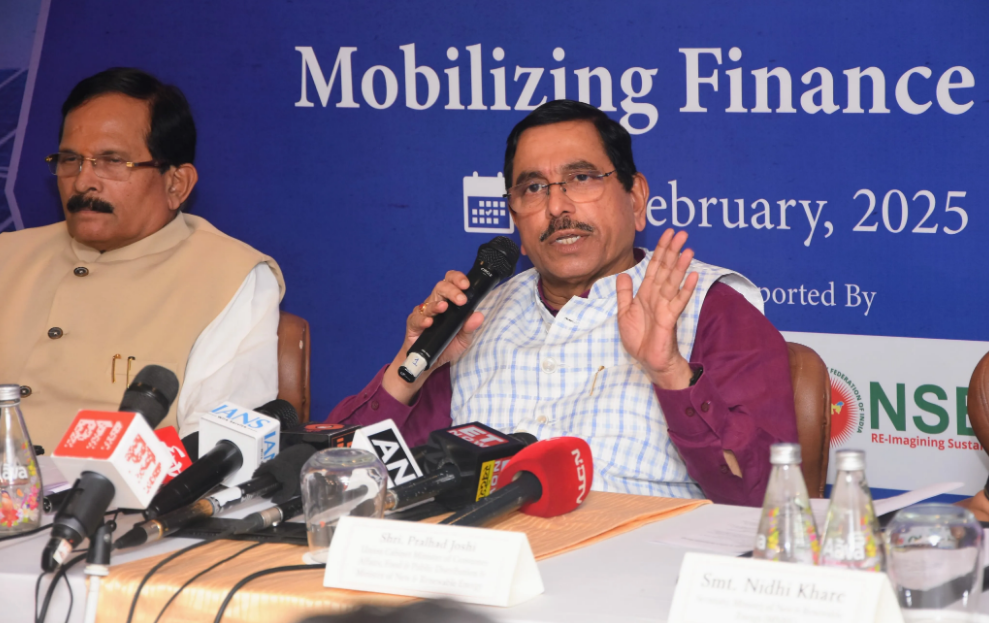
India to Lead the World in Green Hydrogen: Union Minister Shri Pralhad Joshi

Union Minister Shri Pralhad Joshi stressed that India aims to stand among world leaders for green hydrogen manufacturing and utilization. The Minister spoke at New Delhi about India's pioneering first hydrogen truck trials while addressing attendees at the flag-off event for these trucks under the National Green Hydrogen Mission (NGHM) and India's path for energy sustainability.

National Green Hydrogen Mission and India’s Energy Vision

The Prime Minister Shri Narendra Modi leads India to global leadership in sustainable energy transformations according to Union Minister Shri Pralhad Joshi. The National Green Hydrogen Mission obtained ₹19,744 crore funding to turn India into a global leader in hydrogen manufacturing and storage and end use applications throughout different industrial sectors.

Key Achievements:

  • The platform has approved 4,12,000 TPA of facilities to produce Green Hydrogen.

  • Indian officials sanctioned the construction of 3 GW of electrolyser manufacturing operations yearly.

  • Seven initial projects deployed their operations during the implementation stage for transportation, shipping, steel and storage sectors.

  • For the safe implementation of hydrogen technology the authorities issued 88 safety and scalability standards.

India’s Green Hydrogen Goals for 2030

  • The 2030 targets established by the Minister involve that India aims to reach the following milestones:

  • Annual Green Hydrogen production will reach 5 million metric tons (MTT).

  • Installing 60-100 GW of electrolyser capacity.

  • The country aims to connect 125 GW renewable energy to hydrogen manufacturing facilities.

These initiatives are expected to:

  • Yearly reductions of 50 million metric tons of CO₂ emissions will occur through these policies.

  • The country can accumulate savings of ₹1 lakh crore by importing reduced fuel amounts.

  • India anticipates attaining investments worth ₹8 lakh crore.

Hydrogen-Powered Truck Trials and Infrastructure Development

  • India makes a critical step toward its energy independence and alternative fuel adoption through hydrogen-powered truck trials which transform its mobility operations. 

  • Indian energy consumption stands as the third largest worldwide while the country maintains the fourth position for crude oil imports changing this pattern will depend heavily on hydrogen technology advancements.

Key Highlights:

  • Three hydrogen-powered heavy-duty trucks begin their operations between the Faridabad–Delhi NCR and Ahmedabad–Surat–Vadodara routes.

  • Indian Oil Corporation Limited (IOCL) has launched construction plans to build hydrogen refueling stations inside Faridabad along with Vadodara and Balasore as well as Pune to establish nationwide hydrogen support.

Conclusion

Through his remarks Minister Gadkari emphasized the central role that Shri Nitin Gadkari played in stimulating innovative progress for hydrogen-powered mobility.

Shri Joshi made an appeal to stakeholders to join forces with the green energy revolution while stressing that hydrogen will create the backbone for India's energy system of the future. He demanded industrial leaders and innovative parties together with government policymakers should work toward bringing this vision to existence.

India’s development of green hydrogen technology demonstrates a strong national dedication to sustainable power solutions as the country secures its position as an international leader in hydrogen market systems.

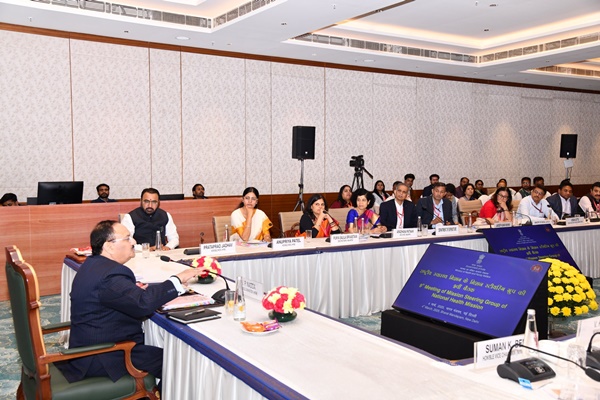
India Achieves 100 MMR Milestone: Maternal Mortality Rate Declines Significantly

The National Health Policy (NHP) target of 100 deaths per one lakh live births has successfully been achieved in India. The decline rate of MMR from 1990 to 2020 reached 83% marking a substantial improvement over global numbers according to Union Health Minister J.P. Nadda. The country experienced significant progress in reducing both Infant Mortality Rate (IMR) and Under-5 Mortality Rate statistics. The Indian government continues its commitment to improve health infrastructure and run health programs to maintain present achievements while simultaneously working on fulfilling United Nations Sustainable Development Goals (SDGs) targets for maternal health care.

What is the Maternal Mortality Ratio (MMR)?

  • The Maternal Mortality Ratio (MMR) counts the number of deaths from pregnancy or childbirth-related causes among 100,000 live born babies.

  • Definition: MMR refers to the number of maternal deaths per 1,00,000 live births due to pregnancy or childbirth-related complications.

Global and National Targets:

  • WHO Global Target: Reduce MMR to less than 70 per 1,00,000 live births by 2030 under the Sustainable Development Goals (SDGs).

  • India’s National Target: Reduce MMR to below 70 by 2030.

Decline in Maternal Mortality Rate

  • During 1990 to 2020 India showed an 83% decrease in MMR which exceeded worldwide decline rates.

  • According to data from the Registrar General of India the MMR decreased from 113 to 103 during the period 2016-18 to 2017-19.

  • The SDG target for MMR below 70 per 100,000 live births has already been reached by Kerala along with Maharashtra, Telangana and Tamil Nadu Andhra Pradesh together with Jharkhand.

  • A 69% decrease of Infant Mortality Rate (IMR) surpassed global declines which reached 55%.

  • The Under-5 Mortality Rate decreased by 75% in a manner exceeding the global decline rate of 58%.

Fertility Rate and Its Impact

  • The Total Fertility Rate (TFR) stands as the measurement which calculates the predicted number of offspring women will have between the ages of 15 to 49 years.

Categories of Fertility Rates:

  • High Fertility: TFR > 2.1 (replacement level); common in many developing nations.

  • The replacement level of fertility corresponds to a TFR of 2.1 which demonstrates a population that has reached equilibrium for stable growth.

  • Low Fertility: TFR < 2.1; results in population decline over time.

Fertility Trends in India and Globally:

  • The national Total Fertility Rate in India stands at 2.0 according to NFHS-5 from 2019-21 thus showing almost-replacement level fertility.

  • Japan with TFR 1.3 and South Korea with TFR 0.81 illustrate the difficulties that arise when population fertility stays low for a prolonged period.

Consequences of Declining Fertility Rates

  • The reduction of live births has an impact on increasing MMR while maternal deaths stay stable.

  • The aging population demographics in Kerala will create strain on both healthcare infrastructure along with public social programs.

  • Lower birth rates decrease the active workforce and diminish economic potential thus affecting development.

  • Social views about marriage, family and childbearing patterns evolve which negatively influences population growth over long periods.

MMR Trends Across Indian States

  • The SDG target has become achievable in seven states beyond the initial five states 

    • Kerala (30), Maharashtra (38), Telangana (56), Tamil Nadu (58), Andhra Pradesh (58), Jharkhand (61) and Gujarat (70).

    • The MMR rate in Kerala stands at 30 which represents the lowest mark ever recorded surpassing the overall national standard of 103.

    • Additional States Achieving NHP MMR Target: Karnataka (83) and Haryana (96).

  • States with MMR between 100-150: 

    • Uttarakhand (101), West Bengal (109), Punjab (114), Bihar (130), Odisha (136), Rajasthan (141).

  • States with MMR above 150: 

    • Chhattisgarh (160), Madhya Pradesh (163), Uttar Pradesh (167), Assam (205).

Major Causes of Maternal Mortality

  • The World Health Organization (WHO) identifies maternal deaths arising from pregnancy or childbirth and post-termination care during the 42-day period as maternal mortality.

Key causes include:

  • Severe bleeding (postpartum hemorrhage)

  • Infections

  • High blood pressure during pregnancy

  • Anemia

  • Unsafe abortions

  • Delivery complications

  • Social cultural factors including child marriages along with early pregnant conditions and financial limitations work as barriers to receiving proper maternal healthcare services.

Government Initiatives to Reduce Maternal Mortality Ratio (MMR)

  • Free antenatal care with complete quality benefits pregnant women through Pradhan Mantri Surakshit Matritva Abhiyan.

  • POSHAN Abhiyaan operates to advance nutritional results for expecting mothers.

  • The Direct Benefit Transfer (DBT) scheme Pradhan Mantri Matru Vandana Yojana (PMMVY) provides monetary assistance to pregnant women.

  • Surakshit Matritva Anushasan (SUMAN) provides pregnant women with dignified healthcare services that are free of any costs.

  • Labour Room & Quality Improvement Initiative (LaQshya): Enhances the quality of care in labor rooms, maternity operation theatres, and obstetrics ICUs.

Rise in Institutional Deliveries

  • The number of births in Indian institutions reached 95.5% during the 2020-21 period.

    • 94% in rural areas

    • 98% in urban regions

  • National births showed an enhanced improvement during 2020-21 since institutions handled 95.5% of deliveries while the 2019-21 total stood at 88.6%.

Strategies to Further Reduce MMR

  • The healthcare infrastructure requires expansion to provide better services across all rural and remote areas.

  • The training programs for healthcare providers include basic obstetric care training alongside comprehensive obstetric care training to improve maternal health services.

  • The implementation of awareness initiatives should promote hospital-based delivery service and actively combat dangerous community norms.

  • Regular monitoring through Maternal Death Surveillance and Response (MDSR): Enables timely interventions and corrective measures.

Conclusion

India accomplished its Maternal Mortality Rate goal because it demonstrated public health commitment through well-designed policy execution. The commitment to public health and effective policy implementation needs to keep going in order to both maintain current achievements and fulfill the UN Sustainable Development Goal of MMR reduction under 70 per 100,000 live births by 2030. Frontline healthcare worker empowerment coupled with healthcare system strengthening and barrier elimination from cultural society will drive enhanced maternal and child health results.

IRCTC and IRFC Attain ‘Navratna’ Status from the Government of India

Indian Railway Catering and Tourism Corporation along with Indian Railway Finance Corporation obtained Navratna status from the Government of India, marking a significant achievement in the railway sector. This prestigious recognition enhances their operational efficiency while granting them financial self-sufficiency, allowing them to make independent strategic decisions. With this status, these entities can undertake sustainable investments exceeding Rs. 1000 crore without prior government approval, enabling faster growth and modernization. This milestone strengthens their role in India’s railway infrastructure development and contributes to the broader vision of economic progress.

Key Points: 

  • The railway development projects of IRFC depend on fund collection through various channels.

  • The ticketing functions together with catering along with tourism activities of Indian Railways are run by IRCTC.

  • IRCTC and IRFC earned the Navratna recognition as the 25th and 26th of Indian Railways becoming the biggest achievement for the railway sector.

What is Navratna Status?

The Government granted Navratna status to select Central Public Sector Enterprises (CPSEs) when they prove excellent operational performance along with strong financial results. The Navratna status grants companies expanded financial control so they can invest substantially without government clearance and boost their market positions at home and abroad.

Central Public Sector Enterprises (CPSE) Classification: Maharatna, Navratna, and Miniratna

CPSEs are divided into Maharatna Navratna Miniratna categories which have been established by the Indian government for improving organizational effectiveness and market competitiveness.

1. Maharatna Companies (Highest Status)

Eligibility Criteria:

  • Navratna companies serve as the sole qualifying requirement for a Maharatna classification status.

  • A Maharatna CPSE must demonstrate ₹5,000 crore average yearly net profit in their three most recent financial years.

  • The company must demonstrate ₹25,000 crores turnover per year through three continuous years of operation.

  • A CPSE must meet the requirements of maintaining an average net worth worth ₹15,000 crore throughout the last three years.

  • To qualify for this status the company must maintain stock exchange listing together with global market penetration.

Benefits of Maharatna Status:

  • The company can make investments exceeding ₹5,000 crore or reaching 15% of net worth in one project without requiring government authorization.

  • Greater autonomy in mergers, acquisitions, and international expansion.

Examples of Maharatna Companies:

  1. Bharat Heavy Electricals Limited (BHEL)

  2. Coal India Limited (CIL)

  3. GAIL (India) Limited

  4. Hindustan Petroleum Corporation Limited (HPCL)

  5. Indian Oil Corporation Limited (IOCL)

  6. NTPC Limited

  7. The national petroleum company Oil & Natural Gas Corporation Limited (ONGC) operates under Maharatna status.

  8. Power Grid Corporation of India Limited stands as one of the esteemed Maharatna companies in India.

  9. Steel Authority of India Limited (SAIL)

2. Navratna Companies (Mid-Level Autonomy)

Eligibility Criteria:

  • The running company needs to hold Miniratna Category-I status.

  • The company requires ₹5,000 crore in net worth and ₹1,000 crore in yearly profit over the past three years.

  • The company should hold either a "Very Good" or "Excellent" status under Memorandum of Understanding (MoU) system ratings.

  • The company requires both international operations and needs to demonstrate competitive capability.

Examples of Navratna Companies:

  1. Bharat Electronics Limited (BEL)

  2. Container Corporation of India Limited (CONCOR)

  3. Engineers India Limited (EIL)

  4. Hindustan Aeronautics Limited (HAL)

  5. Mahanagar Telephone Nigam Limited (MTNL)

  6. National Aluminium Company Limited (NALCO)

  7. NBCC (India) Limited

  8. Oil India Limited (OIL)

  9. Rashtriya Ispat Nigam Limited (RINL)

  10. IRCTC & IRFC (New Entrants)

3. Miniratna Companies (Basic Autonomy)

Divided into Two Categories:

A. Miniratna Category-I

  • A profit during the last three years is required for this category.

  • A pre-tax profit exceeding ₹30 crore needs to appear at least once during the last three years.

  • The Indian Companies Act allows such enterprises to make investments up to ₹500 crore or the value of their net worth until either limit is reached.

Examples:

  1. Airports Authority of India (AAI)

  2. Bharat Coking Coal Limited (BCCL)

  3. Central Warehousing Corporation (CWC)

  4. Prior to getting recognized as Navratna the Indian Railway Catering and Tourism Corporation (IRCTC) operated under this name.

  5. Mazagon Dock Shipbuilders Limited (MDL)

B. Miniratna Category-II

  • The entity needs to maintain continuous profitability throughout the three most recent years.

  • A positive net worth together with profitability in the last three consecutive years remains necessary for classification.

  • A company under this category can make investments that do not exceed ₹300 crore or 50% of their net worth whichever figure is smaller.

Examples:

  1. Bharat Sanchar Nigam Limited (BSNL)

  2. National Small Industries Corporation (NSIC)

  3. MECON Limited

  4. Engineering Projects (India) Limited

Significance of CPSE Categorization

  • Financial independence emerges as a direct outcome which decreases government fund dependency.

  • The decision-making speed becomes more competitive globally through this system.

  • Promotes strategic growth and large-scale investments.

  • Improves efficiency and management within public sector enterprises.

Conclusion

IRCTC alongside IRFC achieved Navratna status as a critical measure to boost both companies' operational effectiveness along with financial independence from the Indian Railways. The Navratna status elevation will enable these companies to enhance their investment speed and operational growth which results in better contributions to India’s economic expansion. Both organizations now have enhanced potential to develop their services while supporting railway infrastructure expansion.

PM Modi Inaugurates Vantara: A Landmark Wildlife Conservation Project in Gujarat

Prime Minister Shri Narendra Modi officially opened Vantara as a distinctive wildlife conservation rescue and rehabilitation project located in Jamnagar Gujarat. Shri Anant Ambani together with his team have received praise from the Prime Minister for their caring actions which created Vantara a sanctuary protecting animals and strengthening natural systems and wildlife welfare.

Vantara: A Model for Wildlife Welfare

Through Vantara India demonstrates its dedication to wildlife defense which exemplifies the nation's traditional way of living in harmony with nature. The continued rescue work along with rehabilitation and eco-efficiency processes create a secure foundation for endangered along with injured animals to thrive during future generations.

India’s progress in wildlife conservation and rescue initiatives reaffirms its role as a global leader in biodiversity conservation and animal welfare.

National Parks and Wildlife Sanctuaries in Gujarat

National Parks in Gujarat

  1. Gir National Park

  2. Blackbuck National Park (Velavadar)

  3. Marine National Park (Gulf of Kutch)

  4. Vansda National Park

Wildlife Sanctuaries in Gujarat

  1. Kutch Desert Wildlife Sanctuary

  2. Wild Ass Sanctuary (Little Rann of Kutch)

  3. Narayan Sarovar Sanctuary

  4. Barda Wildlife Sanctuary

  5. Jessore Sloth Bear Sanctuary

  6. Purna Wildlife Sanctuary

  7. Shoolpaneshwar Wildlife Sanctuary

  8. Mitiyala Wildlife Sanctuary

  9. Hingolgadh Wildlife Sanctuary

  10. Jambughoda Wildlife Sanctuary

  11. Gaga Wildlife Sanctuary

  12. Rampara Wildlife Sanctuary

  13. Khijadiya Bird Sanctuary

  14. Nalsarovar Bird Sanctuary

What is Wildlife Conservation?

  • The protection of untamed plant and animal species along with their environments constitutes wildlife conservation. It aims to:

  • Light needs to stay untainted for the benefit of future planetary generations.

  • Human beings together with other species need to understand wildlife has crucial value.

  • Stability among ecosystems functions while preserving natural processes in their operating state.

  • The main objective of this practice consists in minimizing human actions which harm wildlife species.

  • Habitat disappearance and illegal trades along with environmental alterations threaten numerous unsecured species.

Remark: An endangered species describes the population of living species which faces possible extinction because of falling population sizes or environmental dangers and minimal numbers.

Global Effort for Wildlife Conservation: The World Conservation Strategy (1980) serves as the framework for worldwide conservation initiatives which the International Union for Conservation of Nature (IUCN) developed jointly with UNEP and WWF and FAO and UNESCO.

The Need of Wildlife Conservation Projects in India

  • Wildlife conservation has become necessary because species face a critical threat of extinction.

  • The recent 1970s analysis shows human activities have resulted in the disappearance of 58 percent of all wildlife species.

  • The sixth mass extinction unfolds on Earth because people overuse land, waste energy, degrade water resources and alter climate patterns.

  • A food production expansion has converted three decimals of total land suitable for biodiversity residence.

  • The agriculture sector stands responsible for 80% of global deforestation while using up 70% of freshwater resources through the process of habitat destruction.

Factors Contributing to Biodiversity Loss:

  • Rapid population growth and unsustainable consumer lifestyles.

  • Increased waste production and pollution.

  • Natural regions disappear because urban expansion continues to invade their territory.

  • Between them both climate change and international conflicts produce negative effects on natural ecosystems.

What is Biodiversity?

Biodiversity represents all plant species, animal species, microorganism species together with their living and interactive ecosystems. The conservation of biodiversity requires shielding biological species alongside their living environments to maintain environmental stability along with valuable ecological systems.

Major Wildlife Conservation Projects in India

Various wildlife conservation projects were established by the Indian government together with NGOs and international organizations to fight biodiversity loss. Major wildlife conservation projects in India incorporated several notable programs.

1. Project Tiger (1973)

  • The aim of this project remains to prevent the Bengal tiger species from becoming extinct.

  • Under the National Tiger Conservation Authority (NTCA) Tiger Reserves have become the established conservation measure.

  • The conservation measures resulted in population growth among tigers together with increased habitat protection measures.

2. Project Elephant (1992)

  • The main purpose of this project remains focused on elephant corridor defense and elephant habitat protection.

  • The conservation initiative has established three main approaches for reducing human-elephant conflicts and fighting poachers while protecting elephant habitats.

  • The program generated positive effects for elephant protection alongside the development of migration paths.

3. Project Lion (2020)

  • The main goal is to protect Asiatic Lions from extinction in Gir Forest area.

  • Gir Protected Area received increased support through improved infrastructure while breeding projects and habitat restoration efforts were conducted.

  • Impact: Growth in lion population.

4. Project Snow Leopard (2009)

  • The main goal of this project is to protect Himalayan snow leopards.

  • Through their programs the organization involved communities and conducted research while implementing anti-poaching measures.

  • The program resulted in public education along with protected environments for habitats.

5. Project Cheetah (2022)

  • The project has set its objective to reestablish cheetah populations within Indian territory.

  • The Kuno National Park received Namibian and South African cheetahs through translocation.

  • The program resulted in bringing back an extinct species to Indian territories.

6. Project Hangul (1970s)

  • The goal is to save the critically threatened Kashmir stag (Hangul).

  • The implementation of habitat restoration together with conservation initiatives within Dachigam National Park.

  • Impact: Limited population stabilization.

7. Project Crocodile (1975)

  • The goal of this project remains to safeguard crocodile populations while establishing their reproduction.

  • Breeding programs together with habitat conservation served as the implemented solutions.

  • The project resulted in enhancing wild crocodile populations.

8. Project Great Indian Bustard (2013)

  • The main goal of the project is to safeguard the Great Indian Bustard which faces critical endangerment.

  • Protection of habitats alongside breeding programs served as the implemented strategies.

  • The conservation approach strengthened because of increased public knowledge along with enhanced environmental protection initiatives.

9. Project Dolphin (2020)

  • The project must work toward safeguarding dolphin population within both the Ganges and Indus river systems.

  • Through the implemented measures of pollution control combined with habitat restoration and anti-poaching activities improvements occurred.

  • The measures have led to improved health levels of river dolphins.

Conclusion

The protection of wildlife in India serves two essential purposes which include the support of biodiversity and the preservation of ecological stability. The nation has successfully advanced its efforts to safeguard endangered species together with their habitats through different conservation strategies. The present initiatives need sustained commitment together with improved enforcement together with community involvement to guarantee their success and expansion until upcoming generations.

Frequently Asked Questions (FAQs)

The current affairs cover recent national and international events related to UPSC, SSC, Banking, Railways, and State PCS.

You need to read about the current affairs daily, and revise them every week and every month to keep them longer in your memory.

Yes, Class24 provides free downloadable Daily Current Affairs PDFs for easy revision.

Yes, you can practice MCQs and quizzes to boost your exam preparation.

Absolutely. The content is written in simple, easy-to-understand bilingual language suitable for beginners.

Go to class24.com and click on the current affairs section directly, where you find everything that you need.

ssc-toppers

Start Learning Today with Class24

Related current affairs

Class24 offers free video lectures for smart preparation, covering CGL, CPO, CHSL, MTS, and GD exams. Learn from expert faculty, revise concepts easily, practice with PYQs, and improve speed and accuracy through high-quality, exam-focused video lessons anytime, anywhere.

Get success in your hand. Start study anytime anywhere.

The journey becomes simple and enjoyable when you start taking interest in it. And through our app “Class24”, we will be your trusted partners in developing that interest.

Daily Quizzes
Mock Tests
Ongoing

No ongoing tests right now.