Day: February 17, 2025

NAKSHA Pilot Project: National Geospatial Knowledge-based Land Survey of Urban Habitations

Under the visionary leadership of Union Minister Shri Shivraj Singh Chouhan the National Geospatial Knowledge-based Land Survey of Urban Habitations known as NAKSHA will carry out its operations across 152 Urban Local Bodies throughout 26 states and 3 Union Territories in India. The program targets urban properties to enhance their records and documentation systems in order to produce better urban planning results and reduce property conflicts while making ownership information accessible to those affected.

Key Points about NAKSHA

Purpose and Objectives:

  • Practical Land Record Generation: NAKSHA operates as a system that develops and maintains urban land documentation while producing exact ownership documentation.

  • The initiative functions to resolve property disputes through its system of delivering valid and current records.

  • The precise collection of land data allows municipal administrations to create well-informed plans regarding urban development together with infrastructure development.

  • Land records which are clear provide citizens with power to protect property rights and to receive faster loans among other services.

Implementation and Technology

  • Aerial Surveys: Aerial surveys will be carried out by the Survey of India, and orthorectified imagery (corrected aerial photographs) will be supplied for precise land mapping.

  • Web-GIS Platform: The Madhya Pradesh State Electronic Development Corporation (MPSEDC) will create a Web-GIS platform, which will be utilized for carrying out surveys and capturing data.

  • Ground Truthing: State and UT governments will carry out field surveys and ground verification to authenticate the data collected through aerial surveys.

  • Storage and Access: National Informatics Centre Services Inc. (NICSI) will supply the data storage facility required for the platform.

Collaborative Efforts

  • Technical Partnership: Survey of India is the technical partner of NAKSHA, which offers expertise in aerial surveying and imagery.

  • Government Collaboration: The project shall be implemented with state and Union Territory governments, which will facilitate ground-level data acquisition and ultimate publication of land records.

  • Estimated cost: The cost of the NAKSHA pilot program is estimated at ₹194 crore, which will be entirely funded by the Government of India.

Events and Activities

  • Launch event will involve drone flying, distribution of the SoP booklet, and presentation on the NAKSHA program, including video and flyers.

Significance of NAKSHA

  • Discouraging Darkness: The IT-based systems that will be applied on property records would increase transparency in the land transactions as well as mitigate corruption and raise confidence in the land administration system.

  • Helping Sustainable Development: Accurate land records will enable better urban planning, sustainable development, or improved resource management, to implement the project.

  • Enhancing the Ease of Living: The streamlining of all documentation of lands sets up access for people to lay claim to their property rights thereby improving their quality of life overall.

  • Digital India and E-Governance: NAKSHA is a part of digital governance-focused programs including the Digital India initiative which pushes for technology usage to improve governance and delivery of services.

  • Land Reforms in India: The NAKSHA Mission is one of many missions in the land reform concert. Updating and digitizing land records form part of activities preventing illegal land grabs while improving the management of land.

  • Urbanization with Sustainable Development: NAKSHA thus assures taking sustainable urban development because all these inputs rely on accurate land records for effective urban planning, infrastructure development, and resources management.

  • Geospatial Infrastructure in Governance: The use of geospatial technology applications including GIS and remote sensing makes a modern trend in governance by giving a basis for good decision making, hence improving public administration.

  • Public Projects: These aspects in large state government projects such as NAKSHA are helpful in understanding and analyzing the effectiveness of public sector efforts directed toward infrastructure development and better governance.

Other government projects

  1. Digital India Programme – Aiming at transforming infrastructure and e-governance into a digitally empowered society.

  2. Swamitva Yojana– Drone technology and geospatial tools will be used for property titles for the rural households.

  3. Pradhan Mantri Awas Yojana (PMAY) – Affordable housing for urban or rural poor.

  4. Atal Mission for Rejuvenation and Urban Transformation (AMRUT) – Covers urban amenities involving the improvement of urban infrastructure in water, sewerage, and transport.

  5. Bhoomi (Land Records) Project – Digitization of land records and providing online access to them in Karnataka.

  6. National Land Records Modernization Programme (NLRMP) – aims to modernize land record management in the country.

  7. Smart Cities Mission – Sustainable and inclusive urban development through smart infrastructure.

  8. Make in India – To promote growth and employment by propelling manufacturing and industrial development.

  9. M-Governance (Mobile Governance) – the government has used mobile technology for efficient delivery of services to citizens.

Conclusion

The NAKSHA Pilot Project would mark a big step towards modernizing urban land records and improving governance through technology. It aims to provide citizens with clear, accurate, and up-to-date land data to simplify urban planning, reduce disputes, and empower them toward sustainable development in urban areas.

Kaveri 2.0 DDoS Attack Highlights Cybersecurity Gaps in India

A DDoS (Distributed Denial-of-Service) Attack functions through numerous devices releasing an excessive amount of traffic to make servers or networks unusable for regular access and users. The attack exists for many different objectives and results in substantial system downtimes while simultaneously leading to economic losses and harm to business reputation. The implementation of risk assessment combined with traffic differentiation along with firewalls provides defense against such attacks.

India’s indigenous microprocessor Kaveri 2.0 represents an improved version that was developed by the Centre for Development of Advanced Computing (C-DAC). The technology focuses on enhancing both system performance and security functions to develop Indian independence in semiconductor technology. The project serves as a national effort to establish technologic independence for India.

Context

  • Performance problems occurred on the Kaveri 2.0 portal essential for Karnataka property registrations during December 2024. 

  • Multiple fraudulent user accounts participated in an excessive data input process which resulted in a Distributed Denial of Service (DDoS) attack aimed at the portal. 

  • The attackers initiated their assault by using 62 fake email accounts through 14 distinct IP addresses which confirmed the distributed attack format.

What is DDoS Attack (Distributed Denial-of-Service Attack) ?

The DDoS Attack (Distributed Denial-of-Service Attack) is an internet crime that disrupts system accessibility through massive artificial traffic surges. Through cybercrime attackers execute DDoS attacks by sending numerous fake internet traffic bursts to servers or networks thus blocking authentic user access to systems. A botnet consisting of compromised devices which have malware infections execute this sort of attack.

Types of DDoS Attacks

  • Volume Based: The attack mechanism based on volume sends excessive traffic amounts through DNS amplification.

  • Protocol Based: The attack takes advantage of weaknesses in network protocols through a protocol-based approach with SYN flood as an example.

  • Application-layer: Targets specific applications or web pages (e.g., HTTP flood).

Impact on Web Portals

  • Service Downtime functions as the main objective to disable operational services which results in business interruption alongside financial loss.

  • The victims endure loss of customer trust which threatens their ability to protect themselves from cyber threats since their reputation becomes damaged.

  • Other cyberattack activities can use DDoS to divert attention because the attack produces enough noise to hide their entry point.

Kaveri 2.0 Portal Incident

  • The Kaveri 2.0 system encountered major operational problems between December 2024 and January 2025 which resulted in duplicate account generation along with complete system overload.

  • The High Traffic Surge during January 2025 caused 6.2 lakh requests to overload the portal service for two hours before registration volumes dropped substantially.

Mitigation Strategies for DDoS Attacks

  • Traffic Filtering involves advanced systems which determine between genuine and harmful traffic to block system overload.

  • Rate Limiting functions to limit user requests over time frames thus preventing system saturation.

  • Tools named CAPTCHA and behavioural analysis serve as Bot Detection Technologies which prevent illicit bot activity by recognition methods.

  • Robust Authentication & Regular Audits: Strengthening security through multi-factor authentication and periodic security assessments.

  • Collaboration with Cybersecurity Agencies: Cooperation for investigation and incident management.

  • Web Application Firewalls (WAF) execute traffic filtering operations along with managing incoming web traffic.

Kaveri 2.0 Recovery and Future Outlook

  • Kaveri 2.0 portal operators were able to bring back all services on February 5 2025 following the disruption which exposed existing vulnerabilities in their cybersecurity framework.

  • The breach served as an organizational wake-up call which demonstrated the need to deploy powerful security systems especially around governmental operations of essential services.

  • Organizations need to understand their DDoS risks because this knowledge helps them implement monitoring systems plus rate-limiting and early detection features for prevention efforts.

Global DDoS Attacks

  • The X Platform operated by Elon Musk experienced a massive DDoS attack that took place just before a major political event during August 2024.

  • The China-based botnet attacked GitHub (2015) because the platform hosted tools that bypassed Chinese censorship mechanisms which demonstrated DDoS attacks as a global cybersecurity threat.

Conclusion

  • Digital infrastructure protection requires ongoing vigilance because DDoS attacks happen with increasing frequency worldwide as well as in India.

  • The target to protect critical infrastructure must be an organizational main priority when digital services expand because service availability and user trust become essential for organizations which store sensitive data or provide public services.

Understanding the Old vs. New Income Tax Regimes: A Guide to Choosing the Best Option

The Income Tax Regime of India provides a framework to determine how every taxable income needs to be taxed according to individuals and organizations provided they operate within the country. Indian taxpayers need to choose between the Old Tax Regime and the New Tax Regime because both systems have different standards for tax deductions and exemptions and tax rate divisions.

Old Tax Regime

  • Taxpayers who maintain substantial financial investments or specific expenses can appreciate the inducements provided under the old regime. Key features include:

  • Taxpayers can deduct amount under sections 80C for PPF and EPF investments together with 80D for health insurance payments as well as 24(b) for home loan interest payments.

  • Workers can use tax exemptions covering two benefits known as House Rent Allowance (HRA) and Leave Travel Allowance (LTA).

  • People who want to reduce their taxable income amount can apply for different tax rebates.

New Tax Regime

  • The 2020 launched tax system introduces basic tax bands with reduced rates at the expense of removing all tax exemptions and deductions. Features include:

  • The tax system provides reduced rates of taxation throughout its income sections.

  • No exemptions or deductions available (e.g., no deductions for HRA, insurance, etc.).

  • The structure exists for people who desire tax simplicity and reject tracking numerous deductions in their returns.

  • The tax rate adjustments between the two formats allow taxpayers to make switches except for specific business income limitations. Every person needs to check their financial condition until they choose the scheme that provides maximum tax reduction benefits.

A comparison between both tax regimes:

Aspect

Old Tax regime

New Tax Regime

Exemptions and Deductions

Offers various exemptions and deductions (e.g., PPF, ELSS, insurance premiums) to reduce taxable income.

No exemptions or deductions allowed, simpler system.

Tax rate

Higher tax rates, but potential for reducing tax through exemptions and deductions.

Lower tax rates, but no tax-saving opportunities.

Simplicity

More complex due to the need to track exemptions, deductions, and rebates.

Simpler with no need for deductions, but fewer tax-saving opportunities.

Suitability

Best for individuals with significant investments in tax-saving instruments and those focused on long-term financial planning.

Better for individuals seeking simplicity and immediate tax relief, with fewer tax-saving investments.

Switching Between Regime

Taxpayers can choose this regime every year based on their preference

Salaried individuals can switch every year; business owners can switch only once in their lifetime.

Impact on Disposable Income

Potentially higher disposable income due to tax-saving investments but requires effort.

Immediate tax relief and potentially higher take-home pay for those with fewer tax-saving schemes.

Tax Calculation

Requires detailed calculation of various exemptions and deductions to reduce tax.

Simplified tax calculation with reduced rates but no exemptions or deductions.

Multiple Elements to evaluate Tax System

  • People who spend more money on tax-saving investments should choose the old tax regime yet new tax systems suit individuals with fewer investments due to their basic structure.

  • Individuals who need retirement benefits and long-term savings advantages will find the old tax system better than the new tax system but the new system suits taxpayers who require swift tax benefits.

  • Taxpayers who want cash in hand can use the new regime due to its basic system along with minimal tax rates although managing deductions remains challenging under the old regime when maximize tax savings is your priority.

  • The new tax arrangement strives to increase available money in taxpayers' hands by reducing their tax responsibility thus benefiting individuals who value greater cash on hand.

Conclusion

  • Old Regime: Best for those prioritizing tax-saving investments, long-term financial planning, and higher deductions.

  • New Regime: People who want simplicity together with reduced taxation rates and prompt tax reductions should choose the new tax regime.

Each taxpayer needs to evaluate their personal earnings together with their investment habits with their long-term financial targets to decide properly. By analyzing tax responsibilities under both tax systems one can determine which system is most suitable for their requirements

The Immigration and Foreigners Bill 2025: A Modern Legal Framework for Immigration

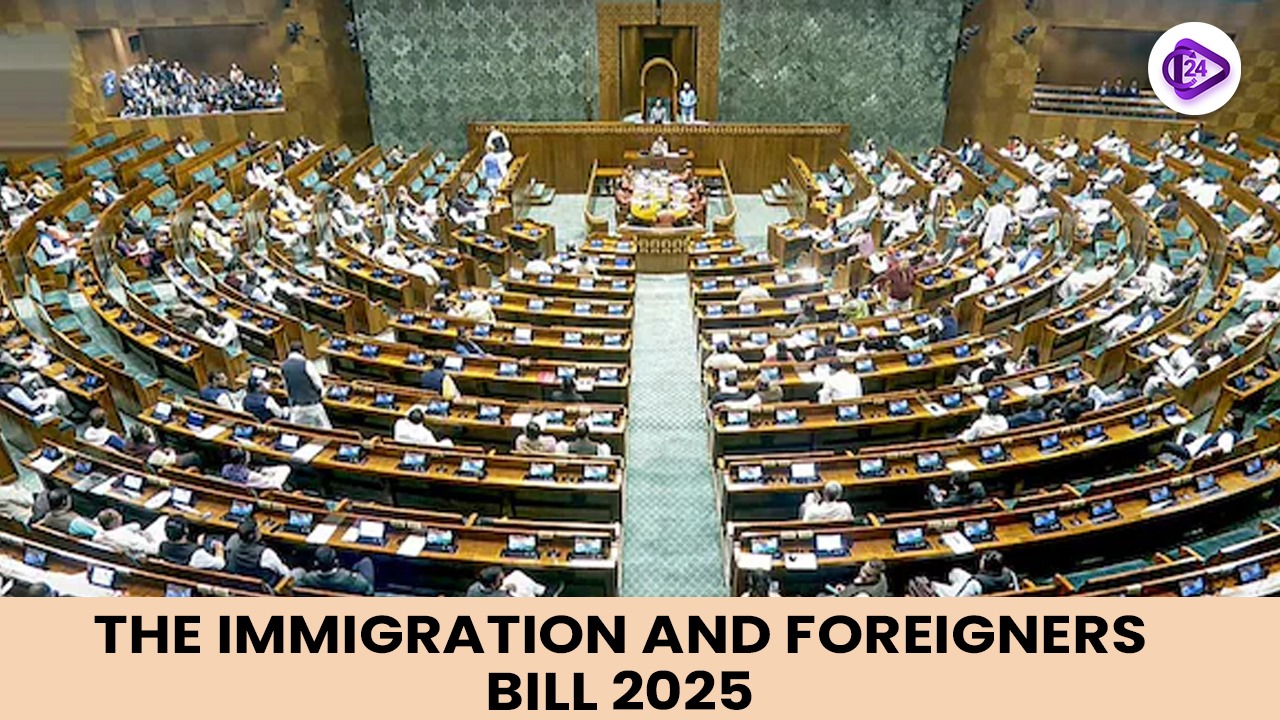
The Immigration and Foreigners Bill 2025 will arrive at the second part of the Budget session for presentation by the Union Ministry of Home Affairs to modernize Indian regulations regarding immigration and foreign movement. The Bill integrates various immigration rules concerning passports together with visa policies as well as foreign registration requirements and immigration protocols under one system. The Immigration and Foreigners Bill 2025 contains three main elements that establish harsher punishments for document falsification, provide authorization to deny entry for national security reasons and public health concerns and mandate educational bodies along with accommodation providers to maintain foreign national registration systems. The immigration system will receive modernization improvements while authorities will receive authority to enforce severe punishment through both fines and prison terms when violations occur.

Context:

  • The Immigration and Foreigners Bill 2025 will be introduced by the Union Ministry of Home Affairs (MHA) during the second part of the Budget session.

  • This bill seeks to replace four outdated immigration laws together with striking movement regulations for foreigners because it intends to modernize the system.

Contours of the Immigration and Foreigners Bill, 2025

  1. Repeal of Existing Laws:

    • The legislative bill seeks to do away with four retroactive laws that include the Foreigners Act, 1946, Passport (Entry into India) Act, 1920, Registration of Foreigners Act, 1939, and Immigration (Carriers’ Liability) Act, 2000.

    • A new contemporary system unifies disparate laws to simplify the processing of immigration and foreign movement.

  2. Streamlining Immigration Procedures:

    • One unified document under the bill unifies multiple sections which address passport oversight and visa management and foreigners’ record keeping and immigration official responsibilities.

    • Such coordination simplifies the immigration process which becomes more efficient by reducing duplicated efforts.

  3. Security and National Interests:

    • Certain particular grounds including protection of national security as well as preservation of sovereignty and protection of public health and foreign relations form the basis for denying entry or residency.

    • Decisions regarding foreigners only proceed from solid legal bases to ensure their validity.

  4. Penal Provisions:

    • The law now imposes 5 years imprisonment and a fine of ₹5 lakh on people whose presence violates the immigration regulations in India.

    • The usage or making of counterfeit travel documents pays up to seven years behind bars with a maximum fine amounting to ₹10 lakh.

  5. Responsibilities of Institutions:

    • Authorities require Educational institutions together with hospitals and accommodation providers such as hotels and guest houses to perform foreign national registration and transfer information to authorities.

    • The system enables better monitoring of foreign nationals who stay in India.

Obligations for Admitting Foreign Nationals

  1. Educational Institutions and Hospitals:

    • Institutions operating universities along with colleges and medical facilities need to accept foreign students then register these students with proper authorities for monitoring purposes.

  2. Accommodation Providers:

    • Hotels alongside guest houses together with accommodation establishments need to obtain passport information from non-Indian visitors for reporting purposes to local authorities.

  3. Compliance with Registration:

    • Registration and reporting standards apply to foreign citizens for staying in the country and fulfilling their purposes of visit.

    • The possession of counterfeit travel documents or their supply to others will result in imprisonment.

Penalizing the Use or Supply of Forged Travel Documents

  1. Imprisonment for Forged Documents:

    • The offense of using forged travel documents carries imprisonment penalties between two to seven years and additional penalties for their supply.

    • The usage of forged passports to cross into India can lead to two to seven years of imprisonment according to the law.

  2. Imposition of Hefty Fines:

    • Public officials responsible for travel document violations will receive penalties of ₹1 lakh minimum and may reach up to ₹10 lakh based on the offense severity.

    • A travel agent operating without proper authorization will be subject to maximum possible fines reaching ₹10 lakh.

  3. Criminalizing Fraudulent Use:

    • The use of passports or visas in fraudulent entry attempts into India will result in severe punishment.

    • A person who enters India with false visa documentation may receive up to seven years of prison term combined with financial penalties.

  4. Severe Penalties for Large-Scale Document Fraud:

    • Forces that create forged documents on a large scale will endure multiple years behind bars while also paying extreme financial penalties.

    • The production of fake tourist visas for illegal immigration purposes will result in severe penalties for the entire network.

  5. Deterrence for Document Fraud:

    • The proposed document fraud legislation uses serious prison time combined with heavy financial penalties in order to create a strong warning against unlawful methods.

Way Forward

  • Enhance Enforcement and Training:

    • The detection of counterfeit documents and effective enforcement of registration needs require special training for immigration authorities together with law enforcement staff.

    • All educational settings together with accommodation providers need specialized training to verify compliance with this legislation.

  • Promote Public Awareness and International Cooperation:

    • Awareness campaigns focused on foreign nationals and travel agents about the penalties from document forgery should start to prevent illegal activity.

    • The exchange of vital information between international entities will serve as an essential method to block fraudulent document issue practices

Aadi Mahotsav 2025 – A Grand Celebration of Tribal Heritage

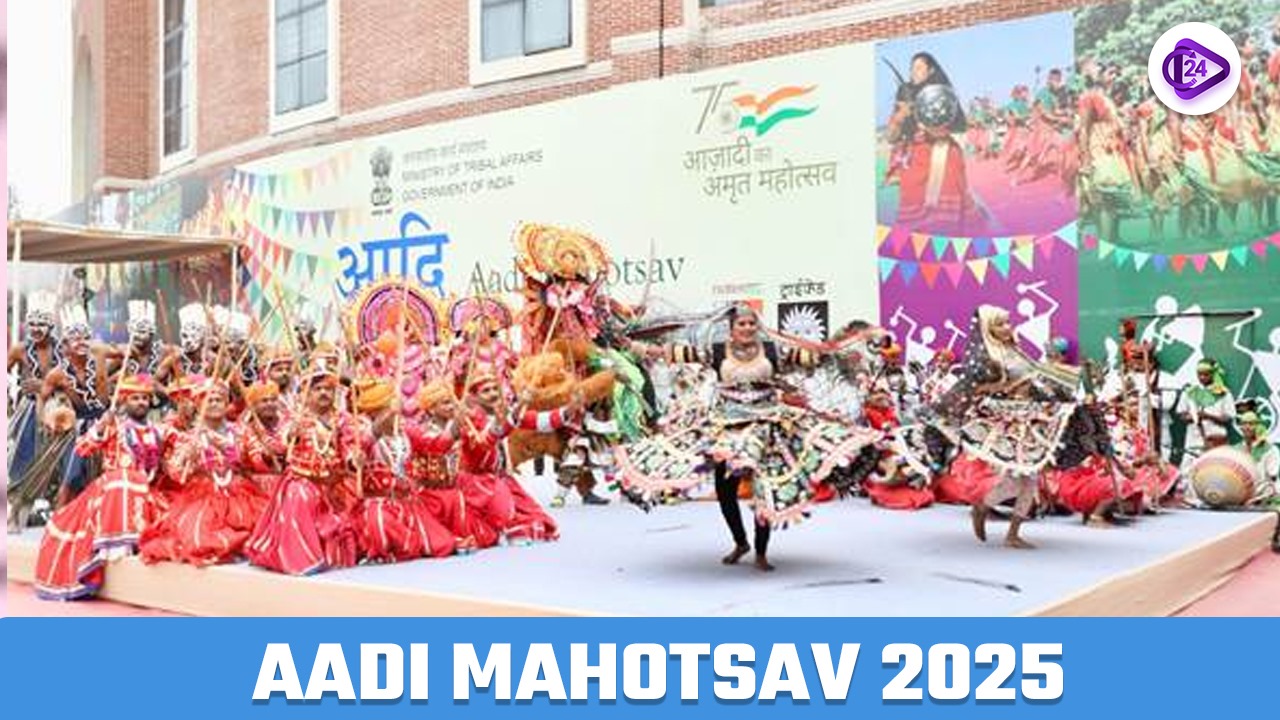
On February 16, 2025 the President of India Smt. Droupadi Murmu launched the 2025 edition of Aadi Mahotsav at Major Dhyan Chand National Stadium located in New Delhi. Aadi Mahotsav will be held across eight days from February 16 to February 24 during the year 2025. The goal of Aadi Mahotsav is to exhibit India's abundant tribal culture through its arts, crafts, business aspects and dining traditions as well as cultural events.

Participants and Highlights

  • The tribal artisans participation includes more than 600 individuals representing 30 separate States and Union Territories.

  • More than 500 performing artists dedicate their performances to tribal dance forms including the Jharkhand representation of Chhau Dance together with Kalbelia Dance from Rajasthan and Gaur Mariya Dance from Chhattisgarh.

  • The stall exhibition features 25 food vendors who showcase traditional tribal recipes of diverse Indian regions.

Inaugural Ceremony Performances

  • Tribal Dance: The inaugural ceremony featured mesmerizing dance performances including:

    • Chhau Dance (Jharkhand)

    • Kalbelia Dance (Rajasthan)

    • Gaur Mariya Dance (Chhattisgarh)

    • Siddhi Dhamal Dance (Gujarat)

Empowering Tribal Artisans and Entrepreneurs

  • The program emphasized the role of education for tribal advancement by providing schooling to 1.25 lakh children through the 470 Eklavya Model Residential Schools.

Transformative Tribal Welfare Initiatives

  • PM-JANMAN Abhiyan (2023) stands as a ₹24,000 crore initiative for ensuring essential service delivery to tribal communities at their local settlements.

  • Dharti Aba Janjati Gram Utkarsh Abhiyan (2024) focuses on creating permanent residences and mobile connectivity for 63,000 tribal villages as well as welfare scheme access for tribal citizens.

Collaborations and MoUs

  • The initiative collaborates with 20 PSUs including 35 training institutes from the public sector and corporate industry.

  • Over 25 Memorandums of Understanding were established with design institutions as well as corporate entities and stakeholder groups to develop tribal empowerment and increase capacity development.

  • Digital Onboarding of Tribal Culinary Items: MoU with IFCA for digital integration of tribal culinary products.

International Engagement

  • The conference brought together delegation teams from Sri Lanka and Indonesia for developing cultural ties between nations.

  • The tribal crafts received extensive market reach through their integration on eight prominent e-commerce platforms.

Economic Impact

  • The festival leads to stronger tribal livelihoods because it connects them to national and international markets according to Minister of State for Tribal Affairs Shri Durga Das Uikey.

Key Contributions

  • Through its platform the festival promotes tribal crafts and jewelry together with clothing and household items and sports products that demonstrate tribal cultural practices which respect sustainable natural relationships.

  • Tribal Development Budget received substantial financial growth during the last 10 years because the government demonstrates its dedication to raise tribal community economic standards.

Conclusion

The President declared tribal welfare important while setting a goal to eliminate sickle cell anemia from tribal communities by 2047. Aadi Mahotsav functions beyond its status as a festival because it represents a movement dedicated to empowering tribal communities along with preserving their traditions while promoting new developments for worldwide acknowledgment of their cultural value.

PM Modi’s Address at Bharat Tex 2025, A Global Textile Platform

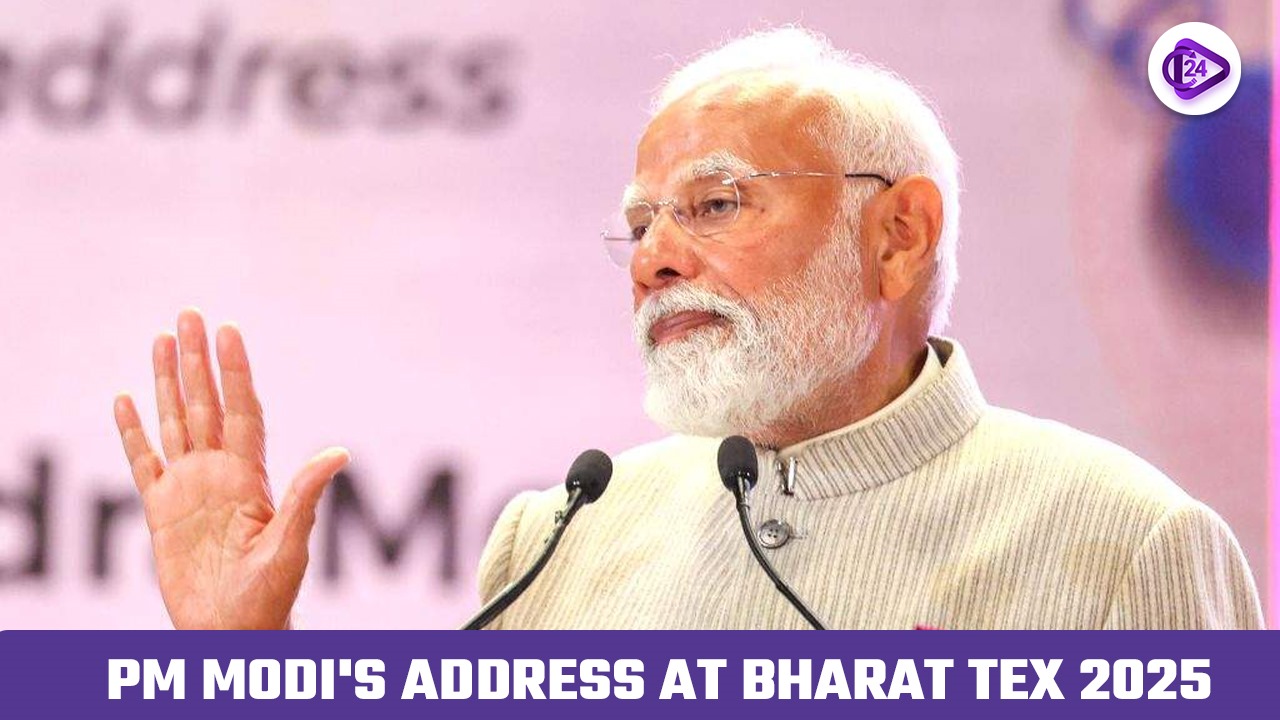
Bharat Tex 2025 at Bharat Mandapam has developed into a top international event which demonstrates India's rising dominance in worldwide textile markets. This platform functions as a necessary environment for policy discussions between more than 120 countries' leadership and industry directors together with their heads of state. Through its exhibition of rich textile traditions India establishes itself as a dominant force in global textile markets. The exhibition has delivered new market opportunities for exhibitors so they can initiate worldwide business development.

Through its activities Bharat Tex enables textile manufacturers to develop connecting partnerships which lead to increased export opportunities and investment. India’s textile sector aims to achieve global leadership status through this initiative.

Promotion of India’s Rich Textile Heritage:

  • During his address PM Modi showcased a selection of traditional Indian fabrics while noting their cultural significance: Lucknowi chikankari, Bandhani, Patola, Banarasi silk and Kanjivaram silk. These showcase India’s traditional craftsmanship.

  • International textile exhibitions that promote traditional Indian textiles help establish India as an elite sustainable fashion center of the world.

Textile Export Growth and Economic Contribution:

  • Textiles and apparel exports from India experienced a 7% increase during the past year which secured India the position of the sixth-largest textile exporter worldwide. The federal government predicts textile exports to expand from the present-level of ₹3 lakh crore to reach ₹9 lakh crore by 2030.

  • The textile sector remains central in India’s economic framework because it supplies 11% to manufacturing operations and generates numerous employment opportunities.

Skilling and Workforce Development:

  • Through his remarks PM Modi emphasized skill development as an essential factor to improve India's textile industry competitiveness. MSMEs wield the textile sector as its primary employment sector because they make up 80% of its workforce.

  • Through Samarth scheme and National Centres of Excellence initiatives workers receive training to fulfill changing industrial requirements.

  • The industry growth will sustain through productive workforces who bring enhanced innovation ability along with better global competitiveness that produces sustainable progress.

Handloom Craftsmanship and Technological Integration:

  • Handloom craftsmanship requires protection from the effects of modern technological development. The government organizes more than 2400 promotional events dedicated to handloom products which seek to improve handloom recognition.

  • India-hand-made e-commerce and GI tagging platforms enable handloom artisans to extend their market opportunities including both domestic and foreign customers.

Sustainability and Fashion for Environment and Empowerment:

  • During his speech the Prime Minister highlighted that India should guide the world toward sustainable fashion through its traditional practices using khadi and natural dye techniques.

  • India should use its historical textile methods to support the growing market for sustainable fashion products within the international industry.

  • The sustainable fashion leadership position for India’s textile sector will emerge from uniting traditional practices with modern creative methods to advance environmental sustainability while supporting economic growth.

Addressing ‘Fast Fashion Waste’ and Recycling Opportunities:

  • PM Modi identified fast fashion waste as an escalating environmental problem indicating that it will generate 148 million tons by 2030. Traditional recycling expertise of the Indian textile industry transforms waste management problems into new business prospects.

  • The large informal textile sector of India should exploit its expertise in waste management to dominate the worldwide recycled textile industry which shows $7.5 billion market potential.

  • Through partnering with e-Marketplace to promote recycling ventures and implementing demonstration programs at Navi Mumbai and Bangalore the sector will gain innovative approaches that create new business prospects.

Innovation and Startups in the Textile Sector:

  • Young innovators together with startups received Prime Ministerial support for their role in modernizing the textile sector. The Textiles Startup Grand Challenge along with academic partnerships between Textiles and IITs enables innovation development for industrial applications.

  • A startup culture development will bring new technology advances which will empower productivity growth with sustainable practices for the sector.

  • The support of innovative startups enables India to expand its textile business while delivering better resilience to changing international market directions.

Conclusion

Bharat Tex 2025 serves as a national initiative to revitalize Indian textiles while supporting the “Viksit Bharat” framework targeting 2030. Through its focus on boosting textile exports as well as the sector’s growth through traditional techniques and modern technology integration and artist empowerment while promoting sustainability the event advances India’s textile sector. The textile sector benefits from Bharat Tex 2025 because it drives economic change and generates employment opportunities and enhances worldwide market competitiveness which establishes India as a prominent force in global business.

Strengthening Maritime Cooperation & Sustainability: Key Takeaways from IOC 2025

The Eighth Indian Ocean Conference (IOC) assembled in Muscat, Oman on February 16th 2025 to explore “Voyage to New Horizons of Maritime Partnership” as its main subject. Through virtual attendance Dr. Balakrishnan the Minister for Foreign Affairs of Singapore demanded conference participants to establish maritime rules with sustainability goals while intensifying international alliances.

The Indian Ocean stands as a vital economic zone since global trade routes transport 80% of all commercial activity. The minister warned about escalating worldwide political conflicts and the strengthening of trade limitations that attempted to block shipping lanes. Dr. Singapore sustains its pledge to agree with UNCLOS and Dr. Balakrishnan values the Biodiversity Beyond National Jurisdiction (BBNJ) Agreement while promoting marine conservation.

The rising severity of sea temperatures and extreme weather events required immediate attention according to him. The maritime sector of Singapore makes progress toward sustainability by implementing green shipping programs and decarbonization programs. Through this conference Singapore worked to develop partnership relationships which would guarantee a steady sustainable future for the Indian Ocean region.

Context 

  • The 8th Indian Ocean Conference (IOC) organized its sessions in Muscat, Oman during 16 February 2025.

  • “Voyage to New Horizons of Maritime Partnership” served as the conference theme focused on maritime cooperation and sustainable trade along with resource management strategies.

  • The representatives from Singapore presented at the Eighth Indian Ocean Conference through Ambassador-At-Large Ong Keng Yong together with officials from the Ministry of Foreign Affairs.

  • Dr. Vivian Balakrishnan connected to the conference virtually in his role as Singapore’s Minister for Foreign Affairs.

Key Themes of the Address

A. Importance of the Indian Ocean

  • The Indian Ocean functions as an essential shipping lane that links North Atlantic region with the Asia-Pacific.

  • 80% of global maritime oil trade and 9.48 billion tonnes of cargo pass through the Indian Ocean.

  • Transporting goods by sea remains the most efficient approach in modern times.

B. Challenges to the Global Maritime Order

  • Ongoing geopolitical conflicts in Middle East, Africa, and Ukraine pose threats to maritime security.

  • The global shipping operations face threats that include rockets proliferating through weapon developments and AI military systems and the impacts of non-state entities interfering with maritime passages.

  • Multilateralism is eroding because protectionism increases and international law passes unobserved.

C. Upholding International Maritime Law

  • The United Nations Convention on the Law of the Sea (UNCLOS) from 1982 places emphasis on:

    • Freedom of navigation across national and international waters.

    • No unjustified fees or restrictions on maritime passage.

    • Economic growth for littoral states like Singapore and Oman.

    • The Biodiversity Beyond National Jurisdiction (BBNJ) Agreement will achieve success in protecting marine ecosystems when finalized in 2023.

D. Sustainable Development of Oceans

  • Coral bleaching alongside extreme weather events and shipping disruptions occur as a result of +1°C temperature increase in Indian Ocean sea surfaces.

  • The government of Singapore actively supports Maricon Protected Areas as a reliable approach to maintain vital habitats alongside carbon storage systems.

  • Shipping makes up 3% of global emissions so the International Maritime Organization (IMO) established its goal to achieve net-zero emissions by 2050.

E. Singapore’s Green Maritime Initiatives

  • Maritime Singapore Green Initiative: Incentives for clean energy ships.

  • The Global Centre for Maritime Decarbonisation accomplished a 28% reduction of emissions by implementing biofuel programs.

  • Green and Digital Shipping Corridors: Strengthening bilateral partnerships for maritime sustainability.

Geopolitical and Strategic Implications

  • India aims to establish free oceanic connections in the Indo-Pacific region through maritime regulations.

  • Singapore should develop enhanced strategic alliances with India and Oman and other countries in the Indian Ocean region.

  • The maintenance of long-term maritime stability requires solving the climate change problems.

Conclusion

  • Stable maritime relations require all countries to work together under established maritime rules.

  • Different countries must unite their efforts toward fighting climate change while establishing sustainable Indian Ocean development.

  • International connections and policy discussions happen through the leadership of theIOC.

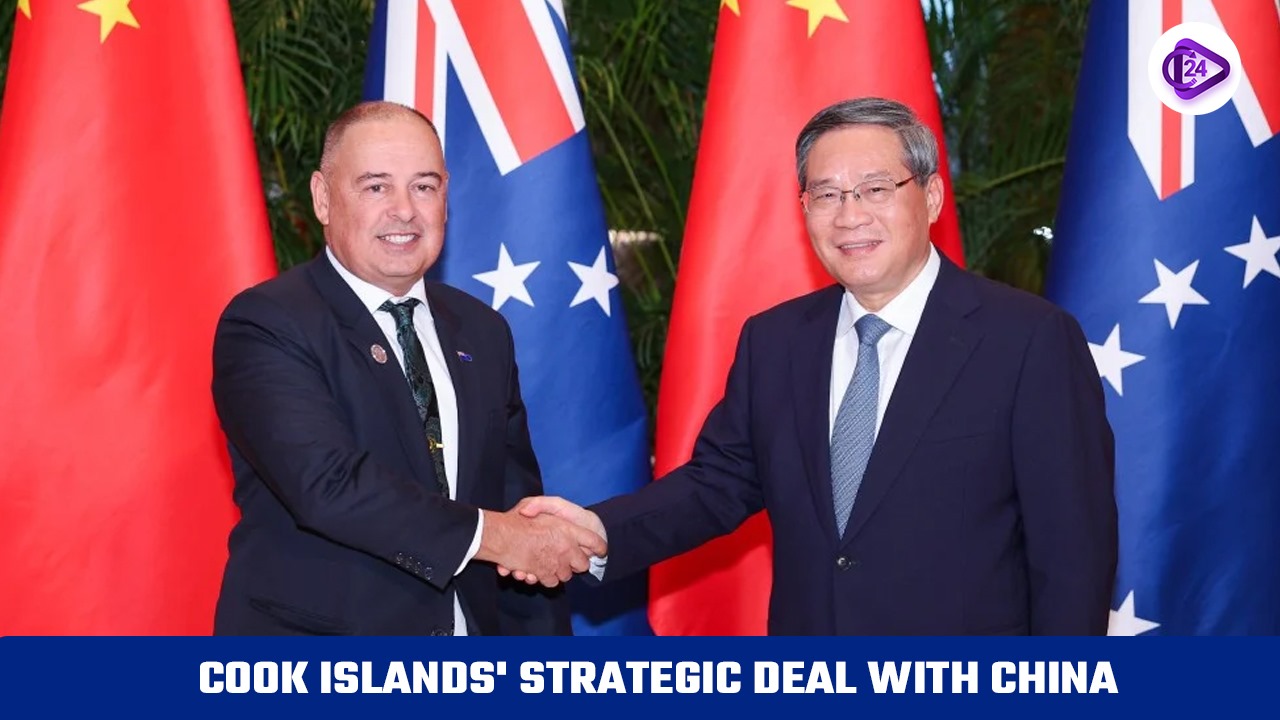
Cook Islands’ Strategic Deal with China: Opportunities and Challenges

Through their strategic partnership with China the Cook Islands received complete coverage for trade development alongside investment opportunities along with infrastructure expansion as well as ocean research projects. The implementation of the agreement provides economic prosperity and increased seabed mineral exploration but creates geopolitical difficulties for New Zealand because it failed to advise the nation ahead of time. The New Zealand government worries that Chinese growing influence in the Pacific region will reduce its ability to lead in the Pacific area. The agreement produces problems regarding environmental consequences and diminishing national independence. This expansion by China has the potential to reshape Pacific strategic relations which Western countries now need to confront China's deepening control in the Indo-Pacific area.

Context 

  • The Pacific nation of Cook Islands which governs itself with 17,000 citizens has established a detailed strategic agreement with China that addresses trade and investment together with infrastructure development as well as transportation systems and oceanic scientific collaboration.

  • The document was signed by Cook Islands PM Mark Brown together with Chinese Premier Li Qiang in Harbin.

  • Through its free association with New Zealand the Cook Islands receives budget support together with New Zealand's provisions of foreign affairs and defense assistance.

Key Developments

  • Through this strategic partnership Cook Islands and China will collaborate using a framework in both economic and scientific domains.

  • The Cook Islands engaged in discussions with Chinese research institutes because they wanted to investigate nickel and cobalt deposits found in deep-sea oceanic nodules.

  • New Zealand displayed apprehension about the accord because of insufficient prior consultation before its signing date.

Implications of the Agreement

  • For the Cook Islands:

    • The Cook Islands could enhance their development with more Chinese funding directed toward infrastructure improvement and increased trade activities.

    • Deep-sea research collaboration would allow nations to use seabed mineral resources through mineral exploration research.

    • The Cook Islands must find proper ways to sustain friendly connections between China and New Zealand simultaneously.

  • For New Zealand:

    • Because of its traditional alliance New Zealand faces declining power in the region.

    • The lack of consultation before the partnership forms doubts regarding the diplomatic relationship between the two nations.

  • For China:

    • The agreement functions as part of China’s initiative for growing Pacific influence to challenge Western involvement specifically targeting Australia New Zealand and the United States.

    • Economic Leverage: Potential access to natural resources like seabed minerals.

Challenges and Concerns

  • More active Chinese diplomatic and economic operations in the Pacific region increase tensions between Chinese authorities and Western countries.

  • Deep-sea mining operations in Cook Islands waters potentially pose severe ecological threats to the environment.

  • The economic dependence on China increases the likelihood of China exercising political influence over the country.

  • The third issue is regional stability since additional Pacific nations will copy these actions thus affecting Pacific geopolitical balances.

Broader Implications for the Indo-Pacific Region

  • Beijing’s Pacific initiatives uphold the goals of its Belt and Road Initiative (BRI) framework.

  • USA and Australia together with New Zealand might boost their counter-engagement operations in the Pacific region.

  • The Cook Islands model demonstrates potential for future China-Pacific cooperation through Pacific diplomacy.

Conclusion

  • China has stepped up its diplomatic presence in the Pacific through this alliance that establishes better positions throughout the Pacific area.

  • The correct approach demands economic prosperity without letting down sovereignty or national interests.

AI Integration in U.S. Government Services: Workforce Transformation

Under the leadership of Elon Musk within the Department of Government Efficiency the organization examines the possibility of substituting U.S. Department of Education contract personnel with AI chatbots through an initiative that aligns with President Trump's workforce reduction program and service modernization goals. AI technology offers to eliminate 1,600 human workers handling student loan inquiries through automated call center functions while cutting down operational costs. Aim to implement a document analysis program using AI technologies in the future according to the General Services Administration. The efficiency benefits of AI come with disadvantages that endanger employment positions and degrade service quality while creating legal challenges and exposing private information to risk. An AI-powered public services approach at federal agencies could create an implementable standard for future projects of this kind. 

Context

  • Elon Musk leads the Department of Government Efficiency (DOGE) in its evaluation of AI chatbots as potential replacements for contract workers who aid the U.S. Department of Education.

  • President Trump leads a workforce reduction and public service modernization effort through AI automation as part of his executive strategy.

Key Developments

  • The Education Department maintains 1,600 human operators to manage 15,000 daily inquiries regarding student loans. The goal of AI chatbots is to function alongside human employees at these service locations or take their positions completely.

  • AI-driven automation serves as the department's primary long-term measure for minimizing costs in call center operations because it has lowered funding by 38%.

  • AI systems possess the potential to gain Accenture's $700 million help desk partnership because its current contract is approaching its termination date.

  • DOGE has made future plans to deploy AI chatbots within the General Services Administration (GSA) for document analysis and contract management tasks.

Justifications for AI Integration

  • The recent shift at DOGE aims to resolve the 2023 FAFSA crisis after receive hundreds of thousands of unaddressed inquiries which exceeded 5.4 million total requests.

  • DOGE staff will accomplish workforce efficiency by encouraging employees to leave their positions voluntarily and later introducing AI solutions to replace them.

  • The program establishes AI-led government services which may expand to different federal agencies in the future.

Challenges and Concerns

  • The implementation of AI in place of human workers will create unemployment problems within the contract workforce sector.

  • Service Quality Faces Challenges Because AI Faces Troubles With Dealing With Complex Queries About Student Loans And Financial Aid.

  • The implementation of automation through forced employee rescinding received legal opposition when a federal judge issued a temporary block.

  • The adoption of AI-driven services generates two major data privacy problems due to student information protection risks and improper utilization of student data.

Broader Implications

  • Successful implementation of AI automation technology would transform federal employment by moving bureaucrats toward the role of technocrats.

  • The use of AI-powered governance improvements has received support from both the Trump and Biden presidential administrations as part of their technological advancements in policymaking.

  • The successful implementation of the Education Department's AI strategy may establish standards for implementing AI across different sections of public service operations.

Conclusion

  • The proposal remains under evaluation. Such an implementation would become the largest AI-driven transformation of federal operations and thus reshape worldwide governance structures.

  • The implementation of solutions must strike a harmony between operational enhancements and stable employment conditions and service quality levels.

Frequently Asked Questions (FAQs)

The current affairs cover recent national and international events related to UPSC, SSC, Banking, Railways, and State PCS.

You need to read about the current affairs daily, and revise them every week and every month to keep them longer in your memory.

Yes, Class24 provides free downloadable Daily Current Affairs PDFs for easy revision.

Yes, you can practice MCQs and quizzes to boost your exam preparation.

Absolutely. The content is written in simple, easy-to-understand bilingual language suitable for beginners.

Go to class24.com and click on the current affairs section directly, where you find everything that you need.

ssc-toppers

Start Learning Today with Class24

Related current affairs

Class24 offers free video lectures for smart preparation, covering CGL, CPO, CHSL, MTS, and GD exams. Learn from expert faculty, revise concepts easily, practice with PYQs, and improve speed and accuracy through high-quality, exam-focused video lessons anytime, anywhere.

Get success in your hand. Start study anytime anywhere.

The journey becomes simple and enjoyable when you start taking interest in it. And through our app “Class24”, we will be your trusted partners in developing that interest.

Daily Quizzes
Mock Tests
Ongoing

No ongoing tests right now.