
Day: February 1, 2025

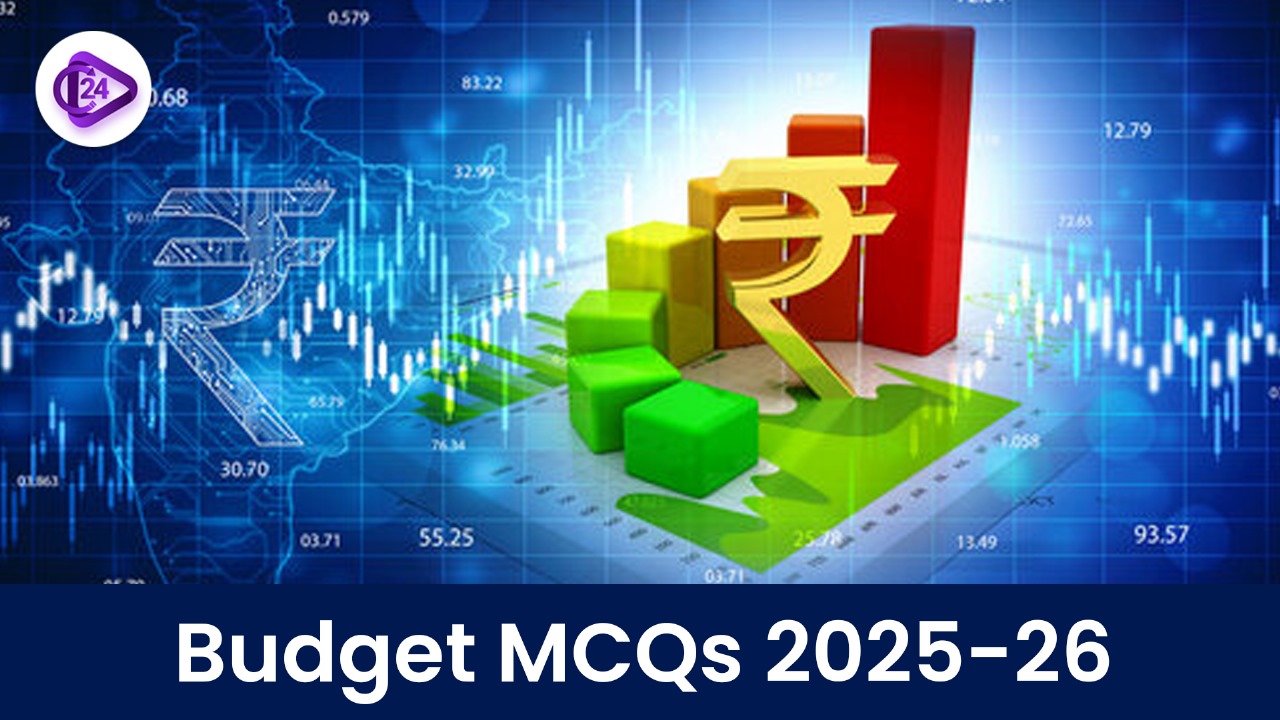
Budget MCQs 2025-26, Download Free PDF

The 2025-26 Union Budget is the year's most critical event affecting individual people and business operations and the macroeconomic factors in India. Taxpayers and industry experts require in-depth knowledge about key budgetary provisions and fiscal strategies to achieve understanding. The document presents an extensive collection of multiple-choice questions about 2025-26 budget highlights which serves to keep readers informed for better preparation. The Budget MCQs 2025-26 offers an excellent resource that serves students preparing for exams and professionals conducting discussions. They also provide valuable knowledge for anyone interested in expansion. You can obtain the free PDF document to challenge your knowledge and maintain your academic lead.

View: Union Budget Latest Quiz

1. What is the fiscal deficit target set by government administration for 2025-26?

  1. 3.6% of GDP
  2. 4.0% of GDP
  3. 4.4% of GDP
  4. 5.2% of GDP

2. The 2025 Union Budget introduced exemption from Basic Customs Duty (BCD) for?

  1. Platinum findings
  2. Cancer drugs
  3. Motorcycles with engine capacity ≤1600 CC
  4. All of the above

3. In the 2025 Union Budget the middle-class taxpayers acquired tax exemption through the new tax slabs with a specified threshold limit.

  1. ₹1 lakh monthly income
  2. ₹12 lakh annual income
  3. ₹15 lakh annual income
  4. ₹18 lakh annual income

4. The budget for the MSME sector in 2025 Union Budget witnessed growth through additional funding directed at all three of the following sectors.

  1. Tourism
  2. Manufacturing
  3. Export development
  4. All of the above

5. What budgetary amount has been dedicated to the PM Jan Arogya Yojana in 2025 to provide healthcare services for gig workers?

  1. ₹10,000 crore
  2. ₹15,000 crore
  3. ₹20,000 crore
  4. ₹25,000 crore

6. The Atal Tinkering Labs plan to establish laboratories in what number of government schools?

  1. 25,000
  2. 50,000
  3. 75,000
  4. 1,00,000

7. The 2025 Union Budget has established new income tax brackets that apply to persons earning up to:

  1. ₹10 lakh
  2. ₹12 lakh
  3. ₹15 lakh
  4. ₹20 lakh

8. Basic Customs Duty exemption on which item has the government implemented as part of export promotion measures according to the 2025 Budget?

  1. Wet blue leather
  2. Cancer treatment drugs
  3. Fish paste
  4. Handicraft exports
  5. All of the above

9. What measures has the government funded with ₹1 lakh crore through its 2025 Union Budget?

  1. Rural health programs
  2. Urban Challenge Fund
  3. National Manufacturing Mission
  4. Skill development initiatives

🔹 "Union Budget 2025-26 ka पूरा विश्लेषण Bhuvnesh Sir द्वारा! अगर आप जानना चाहते हैं कि इस बजट में आपके लिए क्या खास है, तो नीचे दिया गया वीडियो जरूर देखें।"

10. The Basic Customs Duty for fish hydrolysate used in aquatic feed production experienced a reduction to at a level of 5% as part of the 2025 Union Budget.

  1. 5%
  2. 10%
  3. 15%
  4. 20%

11. The fiscal deficit target set in the 2025 Union Budget holds all the following elements true. 

  1. No less than 4.4% of the gross domestic product will be the fiscal deficit target during 2025-26.
  2. The government plans to lower fiscal deficit to reach 4.0% of GDP by 2026.
  3. The fiscal deficit target amounts to 4.8% of GDP during 2025 financial year.

Choose the correct statement from the following options according to the fiscal deficit target in the 2025 Union Budget:

(a) 1 and 2 only
(b) 2 and 3 only
(c) 1 and 3 only
(d) 1, 2, and 3

12. Several accurate statements exist about the “National Centres of Excellence in Artificial Intelligence” launched through the 2025 Budget.

  1. Developing functional expertise stands as the main goal behind this specific initiative in artificial intelligence.
  2. The government proposes to use ₹500 crore as funding for creating these centers.
  3. The establishment of these centers is restricted to the best private educational institutions.

The correct answer regarding the fiscal deficit target in 2025's Union Budget can be found below.

(a) 1 and 2 only
(b) 1 and 3 only
(c) 2 and 3 only
(d) 1, 2, and 3

13. During the 2025 Budget presentation the government announced plans to extend the tax deduction benefits available to elderly citizens. The Budget therefore consisted of which three major provisions?

  1. An increase has been made to ₹1 lakh as the threshold amount for TDS deductions on interest income.
  2. Senior citizens now receive income tax exclusivity beyond ₹5 lakh.
  3. A separate tax rate targeting pension receiver senior citizens has been suggested by the government.

Use the following code to identify the accurate statement:

(a) 1 only
(b) 1 and 2 only
(c) 2 and 3 only
(d) 1, 2, and 3

14. The fiscal deficit target set in the 2025 Union Budget holds all the following elements true.

  1. No less than 4.4% of the gross domestic product will be the fiscal deficit target during 2025-26.
  2. The government plans to lower fiscal deficit to reach 4.0% of GDP by 2026.
  3. The fiscal deficit target amounts to 4.8% of GDP during 2025 financial year.

Choose the correct statement from the following options according to the fiscal deficit target in the 2025 Union Budget:
(a) 1 and 2 only
(b) 2 and 3 only
(c) 1 and 3 only
(d) 1, 2, and 3

15. Several accurate statements exist about the “National Centres of Excellence in Artificial Intelligence” launched through the 2025 Budget.

  1. Developing functional expertise stands as the main goal behind this specific initiative in artificial intelligence.
  2. The government proposes to use ₹500 crore as funding for creating these centers.
  3. The establishment of these centers is restricted to the best private educational institutions.

The correct answer regarding the fiscal deficit target in 2025's Union Budget can be found below.
(a) 1 and 2 only
(b) 1 and 3 only
(c) 2 and 3 only
(d) 1, 2, and 3

16. During the 2025 Budget presentation the government announced plans to extend the tax deduction benefits available to elderly citizens. The Budget therefore consisted of which three major provisions?

  1. An increase has been made to ₹1 lakh as the threshold amount for TDS deductions on interest income.
  2. Senior citizens now receive income tax exclusivity beyond ₹5 lakh.
  3. A separate tax rate targeting pension receiver senior citizens has been suggested by the government.

Use the following code to identify the correct statement:
(a) 1 only
(b) 1 and 2 only
(c) 2 and 3 only
(d) 1, 2, and 3

Q.17 which of the following measures was introduced in the 2025 budget to enhance the availability of credit to MSME 

  1. Increased Credit Availability With Guarantee Cover From 5 Crore To 10 Crore 
  2. Scheme For Women Business Owner From Sc St Community With Financing Option Up To Rs 2 Crore 
  3. A National Manufacturing Mission To Support All Sizes Of Manufacturing Industries 

Answer From The Code Below 
(a) only 1 

(b) 1 and 2 only

(c) 1 and 3 only

(d) 1, 2 and 3

Q.18 The government Rs 1 lakh crore urban challenge fund aims to achieve which of the following objectives 

  1. Making cities more efficient and growth oriented by improving infrastructure 
  2. Providing capital for Urban Health projects 
  3. Promoting green and sustainable technologies in Metropolitan areas 

select the correct answer using the code below 
(a) only 1 
(b) 1 and 2 only 
(c) 1 and 3 only 
(d) 1,2 and 3

Q.19 Which sector will receive funding for the establishment of national centre of excellence in the 2025 budget 

(a) Education 
(b) Artificial intelligence 
(c) Manufacturing 
(d) Agricultural Research

Q.20 Which of the following is not a component of Union budget capital expenditure 
(a) Investment infrastructure 
(b) Loans to state government 
(c) Daily operational cost 
(d) Capital receipts

21. Which of the following is the focus of 2025 budgets National manufacturing mission 
(a) Increasing manufacturing in rural area 
(b) Supporting large and small scale manufacturing industries 
(c) Promoting exports 
(d) Encouraging automation in industries

22. Which of the following sector receives specific mentioned in the 2025 Union budget for developing rural infrastructure 
(a) Agriculture 

(b) MSME 
(c) Urban Development 
(d) All of the above

23. What is the new limit for TDS on rental income as per the 2025 budget 
(a) 2.4 lakh 
(b) 3.5 lakh 
(c) 6 lakh
(d) 10 lakh

24. The government has launched National centre of excellence in which field an outlay of 500 crore?
(a) Robotics 
(b) Artificial intelligence 
(c) Renewable energy 
(d) Biotechnology

25. Under the 2025 Union budget which sector was allocated enhanced credit availability up to 10 crore for 
(a) Manufacturing 

(b) Service industry 
(c) Retail 
(d) Export industry

26. The new Tax slab introduced in the 2025 budget aim to provide exemptions to middle class individual earning less than 
(a) 6 lakh per annum 

(b) Rs 10 lakh per annum 
(c) Rs 12 lakh per annum 
(d) Rs 15 lakh per annum 

27. Following government scheme is aimed at promoting agricultural productivity in the 2025 budget 
(a) Kisan Samman Nidhi 
(b) PM Dhan Dhanya Krishi Yojana 
(c) Aatmnirbhar Krishi Yojana 
(d) Pradhanmantri fasal Bima Yojana

28. What new provision has been introduced for senior citizen in the 2025 Union budget regarding TDS on interest income 
(a) Rs 50,000

(b) Rs 75,000 
(c) 1 lakh 
(d) 2 lakh

29. Which of the following items were fully exempted from basic custom duty under 2025 Union budget to boost domestic manufacturing and exports 

Cobalt and Lithium ion battery scrap
Platinum findings 
Wet blue leather 

Select the correct answer using the code below:
(a) 1 and 2 only
(b) 2 and 3 only
(c) 1 and 3 only
(d) 1, 2, and 3

30. What is the fiscal deficit target set for the year 2025 26 in the union budget 2025 
(a) 4.0% of GDP 

(b) 4.4 % of GDP 
(c) 5.0 % of GDP 
(d) 3.8 % of GDP

Conclusion

The Union Budget for 2025-26 holds significant importance for taxpayers, industry professionals, and government organizations alike. Taxpayer groups and industry professionals together with government organizations must consider how these areas are affected by the established budgetary changes. The selection of multiple-choice questions (MCQs) available here covers key points from the budget that provides critical information for examination study and educational discussions. Multiple-choice questions in the budget cover fiscal deficit objectives along with tax reliefs and health care plans together with export development and Small and Medium Enterprises (SMEs) support systems. The solution to these questions provides essential information about budget provisions as well as their economic sector impacts. You can access the free PDF document with these MCQs as an effective study resource to check your comprehension together with staying informed and maintaining scholarly performance.

India’s Budget 2025-2026: Key Highlights, Reforms, and Economic Strategies for Growth

The Union Budget for 2025-2026 was introduced by Finance Minister Nirmala Sitharaman during February 1, 2025 to start a significant economic period for India. The Budget provides India with its crucial transformation plan by prioritizing inclusive augmentation and job creation and technological development alongside international market expansion. The government launched crucial strategic initiatives to work on agriculture and MSMEs alongside investments and exports because these sectors aim to strengthen both workforce capability and financial strength. India aims to solve its internal demands through these vital domains to expand its worldwide reach.

Budget Estimates: 

  • The money received from all sources except borrowings reached ₹34.96 lakh crore.
  • Total expenditure: ₹50.65 lakh crore
  • Net tax receipts: ₹28.37 lakh crore
  • Fiscal deficit: 4.4% of GDP
  • Gross market borrowings: ₹14.82 lakh crore
  • Capex expenditure: ₹11.21 lakh crore (3.1% of GDP)
New tax slabs
  • The new tax system grants middle-class taxpayers total tax exemption if their monthly earnings stay below ₹1 lakh (annual income below ₹12 lakh).
  • The Salaried Class can escape income tax obligations if their yearly income does not exceed ₹12.75 lakh because of the standard deduction amounting to ₹75,000.

Revised Income Tax Slabs:

  • ₹0–4 Lakh: NIL
  • ₹4–8 Lakh: 5%
  • ₹8–12 Lakh: 10%
  • ₹12–16 Lakh: 15%
  • ₹16–20 Lakh: 20%
  • ₹20–24 Lakh: 25%
  • Above ₹24 Lakh: 30%

The government improved taxation deductions for older citizens and increased the limits which trigger TDS on rental transactions and TCS obligations.

Focus on Growth Engines:

The "Focus on Growth Engines" component in the 2025-2026 Budget summarizes essential sectors especially agriculture, MSMEs and investment that drive India's economic expansion. The government develops these sectors through productivity growth and business support and innovation promotion in order to establish job markets which encourage economic self-provider and global market competitiveness. The government has implemented these programs which will lead India toward sustainable economic development throughout the next decade.

Agriculture:
  • The Prime Minister Dhan-Dhaanya Krishi Yojana received launch funding to increase agricultural productivity by offering modified Kisan Credit Card (KCC) Scheme loans of up to ₹5 lakh.
  • Initiative for Aatmanirbharta in Pulses will apply special emphasis to pulse production through a six-year national mission.
  • Comprehensive programs for vegetables, fruits, and cotton productivity.
MSMEs:
  • Enhanced credit availability with guarantee cover for MSMEs (from ₹5 crore to ₹10 crore).
  • A new scheme enables initial women business owners from SC/ST communities to obtain financing worth up to ₹2 crore.
  • The government plans to create a National Manufacturing Mission which will support every size of manufacturing industry.
Investment:
  • Atal Tinkering Labs intends to set up 50,000 laboratories across government schools to develop innovation along with functional expertise.
  • National Centres of Excellence in Artificial Intelligence with an outlay of ₹500 crore for educational purposes.
  • Broadband connectivity to all government secondary schools and rural health centers.
  • A ₹1 lakh crore Urban Challenge Fund works toward making cities growth centers.
  • The government targets to invest ₹10 lakh crore through asset monetization programs and will execute the Jal Jeevan Mission for water supply initiatives.
Development in Exports:
  • Digital infrastructure for international trade, such as BharatTradeNet.
  • The government should work on establishing domestic industrial capacities which integrate globally while maintaining support for homegrown electronic products.
Financial Sector and Regulatory Reforms:
  • The government plans to increase insurance foreign direct investment limits beyond 74% to reach 100%.
  • The Jan Vishwas Bill 2.0 contains provisions to decriminalize more than 100 legal provisions.
  • The expansion of the Investment Friendliness Index of States should be accompanied by a high-level committee dedicated to regulatory reforms in order to ease business operations.
Fiscal Management:
  • The government expects a fiscal deficit at 4.8% for the financial year 2025 but aims to decrease it to 4.4% by the following year 2026.
  • Government Expenditure: ₹50.65 lakh crore with an allocation of ₹1.5 lakh crore for state capital expenditure.
Welfare & Support Programs:
  • PM Jan Arogya Yojana provides healthcare services to Gig Workers along with identity cards.
  • Enhancement of support for elderly citizens involves increasing the threshold of ₹50,000 TDS deductions for interest income to ₹1 lakh.
Focus on Innovation and Education:
  • Centre of Excellence in Artificial Intelligence for educational applications.
  • Gyan Bharatam Mission for the survey and conservation of over 1 crore manuscripts and knowledge systems.
Trade & Industry:
  • The government lowered Basic Customs Duty (BCD) tariffs for essential minerals and batteries as well as medical equipment and shipbuilding to boost national production.
  • TCS on Rent: Raised from ₹2.4 lakh to ₹6 lakh.
Tax Simplification and Reforms:
  • Self-Assessment Tax Returns: Extended time limit for updated returns from 2 to 4 years.
  • TDS on Rent: Increased threshold for deductions to ₹6 lakh.
Exemptions & Reductions:
  • Basic Customs Duty (BCD) exemptions on life-saving medicines and rare disease treatments.
  • The Indian government judged strategic minerals crucial for battery and shipbuilding industries by removing Basic Customs Duty restrictions to maintain domestic capabilities.
Promoting Domestic Manufacturing:
  • The manufacturing of fish products under an Inverted Duty Structure will benefit from lower Basic Customs Duty rates along with higher rates for interactive flat-panel displays built in India.
International Trade and Export Support:
  • Sheep farmers benefit from BCD exemptions regarding wet blue leather products as part of their handicrafts and perishable item export initiatives.
Items That Got Cheaper
  • Cancer & Rare Disease Drugs: 36 drugs exempt from Basic Customs Duty (BCD).
  • Fish Products: BCD on fish paste reduced from 30% to 5%; BCD on fish hydrolysate reduced from 15% to 5%.
  • Critical Minerals: Cobalt, lithium-ion battery scrap, and 12 minerals fully exempt from Basic Customs Duty (BCD)
  • Platinum Findings: Basic Customs Duty (BCD) reduced from 25% to 6.4%.
  • Shipbuilding Materials: Basic Customs Duty (BCD) on raw materials for ship manufacturing exempted for 10 years.
  • Motorcycles: BCD on bikes ≤1600 CC reduced to 40% (from 50%); >1600 CC reduced to 30% (from 50%).
  • Handicraft Exports: Exemption from BCD to boost exports.
  • Wet Blue Leather: Full exemption from BCD to support leather exports.
Items That Got Costlier
  • Knitted Fabrics: BCD increased to 20% or ₹115 per kg, whichever is higher.
  • Interactive Flat Panel Displays: BCD increased to 20% from 10%.

About Budget:

As India's most significant financial statement the Union Budget outlines government projected revenues and spending programs during the years between April 1 to March 31. Under Article 112 of the Indian Constitution the "Annual Financial Statement" has been defined as the Budget while the Finance Minister delivers this document to Lok Sabha on February 1 annually. The government uses the Budget to define their financial strategies together with taxation proposals while setting their fiscal policies which support economic growth and stability and overall welfare.

Budget in Parliament

Each year the Finance Minister presents the Union Budget to Parliamentary members on February 1. The delivery happens first in Lok Sabha after which the Finance Minister delivers his budget speech about government fiscal policies and financial estimates. Parliament conducts multiple stages of examination on the budget following the speech until it gets transformed into an official law.

1. Introduction
  • The Indian Constitution defines the budget as the "Annual Financial Statement" (Article 112). 
  • The term "budget" is not mentioned in the Constitution.
  • The budget is a statement of estimated receipts and expenditures of the government for a given financial year, running from April 1 to March 31.
  • The Union Budget is presented annually on February 1 by the Finance Minister in the Lok Sabha.
Historical Context
  • The first Budget in pre-independent India was presented in 1860 by James Wilson, the then British Indian Government's Finance Minister.
  • After independence, India’s first post-independence Budget was presented in 1947 by Finance Minister RK Shanmukham Chetty.
  • John Mathai took over as Finance Minister after Sir Chetty’s resignation and presented the Union Budgets for 1949-50 and 1950-51.
  • The 1949-50 budget marked the first budget for a unified India, incorporating all princely states post-independence.
Budget Preparation
  • The Department of Economic Affairs, under the Ministry of Finance, is the nodal body responsible for preparing the Union Budget.
Budget Classification 

The Union Budget is divided into two primary sections:

  • Revenue Budget: This includes the government’s expected income for the year, primarily through taxes, and covers day-to-day operating expenses.
  • Capital Budget: This focuses on the government’s investments in assets, liabilities, and large-scale expenditures such as infrastructure development.
Structure of the Budget
  • Part A: This section covers the macroeconomic overview, including government schemes, policies, and priorities for the year.
  • Part B: This section includes the Finance Bill, which contains taxation proposals, such as revisions to income tax, and other fiscal measures.
Budget In Constitution of India
  • Annual Financial Statement (Article 112)
  • Demands for Grants (Article 113): Estimates of expenditure for various government ministries. These need to be approved by the Lok Sabha.
  • Finance Bill (Article 110): A Money Bill that includes proposals for taxes and fiscal policies

Fiscal Policy Statements under the FRBM Act, 2003:

  • Macro-Economic Framework Statement: Outlines key economic targets like GDP and fiscal deficit.
  • Medium-Term Fiscal Policy cum Fiscal Policy Strategy Statement: Provides strategies to achieve fiscal targets.

🚀 "Union Budget 2025-26 is here! What are the key changes, tax updates, and economic impacts? Watch Bhuvnesh Sir’s in-depth analysis now!"

The content of the Budget consists of:

  • Estimates of revenue and capital receipts
  • Ways and means to raise revenue
  • Estimates of expenditure
  • Details of actual receipts and expenditures of the previous financial year, including reasons for any deficit or surplus.

Economic and financial policy for the upcoming year, which includes:

  • Taxation proposals
  • Revenue prospects
  • Spending programs
  • Introduction of new schemes and projects

Six Stages in Enactment of the Budget

  1. Presentation of the Budget: The Union Finance Minister presents the budget in Lok Sabha on 1st February each year, followed by a budget speech and laying it before both houses.
  2. General Discussion: Lok Sabha discusses the budget or any principle involved, but no cut motion or voting takes place. The Finance Minister responds at the end.
  3. Scrutiny by Departmental Committees: The demand for grants is scrutinized by departmental standing committees during a 3-4 week recess. They submit their report to the House afterward.
  4. Voting on Demand for Grants: Lok Sabha votes on each demand for grants. However, no voting is done on the expenditure charged on the Consolidated Fund of India.
  5. Passing of Appropriation Bill: An Appropriation Bill is passed to allow withdrawal from the Consolidated Fund of India for government expenses.
  6. Passing of Finance Bill: The Finance Bill is introduced to implement the government’s financial proposals for the next fiscal year.
Changes Introduced in 2017
  • Advancement of Budget presentation to February 1 (earlier presented on the last working day of February), 
  • The merger of the Railway Budget with the General Budget, and 
  • Doing away with plan and non-plan expenditure.
Objectives of Government Budget
  • Reallocation of Resources– It helps to distribute resources keeping in view the social and economic conditions of the country.
  • Reducing Inequalities in Income and Wealth– Government aims to bring economic equality by imposing taxes on the elite class and spending the collected money on the welfare of the poor.
  • Contributing to Economic Growth– A country’s economic growth is based on the rate of investment and savings. Therefore, the budgetary plan focuses on preparing adequate resources for investing in the public sector and raising the overall rate of investments and savings.
  • Bringing Economic Stability– The Budget focuses on avoiding business fluctuations so as to accomplish the aim of financial stability. Policies such as Deficit Budget (during deflation) and Surplus Budget (during inflation) assist in balancing the prices in the economy.
  • Managing Public Enterprises– Many public sector industries are built for the social welfare of the people. The Budget is planned to deliver different provisions for operating such business and imparting financial help.
  • Reducing Regional Differences– It aims to reduce regional inequalities by promoting the installation of production units in the underdeveloped regions.

Components of Budget

Types of Budgets

Types of Budgets refer to different categories of government financial plans. The main types are Revenue Budget, which covers routine expenses like taxes and salaries, and Capital Budget, which focuses on long-term investments like infrastructure. Other types include Zero-Based Budgeting, where every expense is re-evaluated, and Outcome Budgeting, which measures the effectiveness of government programs. Gender Budgeting ensures financial resources are allocated to promote gender equality. These budgets help manage resources, promote stability, and address various social and economic goals.

1. Revenue Budget:

  • Revenue Receipts: Income the government earns through taxes (e.g., excise duty, income tax) and non-tax sources (e.g., dividends, profits, interest).
  • Revenue Expenditure: Expenditure that doesn't affect government assets or liabilities, like salaries, pensions, interest payments, and administrative expenses.

2. Capital Budget:

  • Capital Receipts: Receipts that lead to a decrease in assets or an increase in liabilities, such as funds from disinvestment (selling government assets) or borrowing.
  • Capital Expenditure: Spending aimed at creating assets or reducing liabilities, such as investments in infrastructure or loans to states.

3. Other Types of Budgets:

  • Zero-Based Budgeting: A method where every expense is evaluated from scratch, and each function is analyzed for its necessity and cost.
  • Outcome Budget: Focuses on the results and impact of the budgeted funds. Introduced in 2005 to assess the outcomes of government programs.
  • Gender Budgeting: Involves assessing and restructuring the budget to promote gender equality by allocating funds for female empowerment, welfare, and development programs.

4. Budget Types:

  • Balanced Budget: When expenditure equals revenue for the fiscal year.
  • Surplus Budget: When revenue exceeds expenditure (government has extra funds).
  • Deficit Budget: When expenditure exceeds revenue, requiring borrowing to cover the gap.

5. Measures of Government Deficit:

Revenue Deficit: The excess of revenue expenditure over revenue receipts.

  • Formula: Revenue Deficit = Revenue expenditure – Revenue receipts

Fiscal Deficit: The difference between the government’s total expenditure and its receipts (including non-debt receipts).

  • Formula: Fiscal Deficit = Total expenditure – (Revenue receipts + Non-debt creating capital receipts)

Primary Deficit: The fiscal deficit minus interest payments. It shows the government's fiscal position excluding past debt obligations.

  • Formula: Primary Deficit = Fiscal Deficit – Interest payments

6. Total Revenues and Types of Receipts

Total Revenues:

  • This refers to the total amount of money a government can raise through various means.
  • Key methods of raising revenues:
    • Tax Revenues: Revenue generated by levying taxes (e.g., GST, income tax, corporate tax, excise duty, customs).
    • Non-Tax Revenues: Includes income earned from non-tax sources, such as dividends from government-owned enterprises, fees, fines, and grants.
    • Disinvestment Revenues: Money raised through the sale of public sector undertakings (PSUs) or government assets.
  • Receipts: Types of Receipts:
    • Revenue Receipts:
    • These do not create liabilities for the government.
    • Includes tax revenues (e.g., GST, income tax, etc.) and non-tax revenues (e.g., dividends, fees, fines).
  • Non-Debt Capital Receipts:
    • These receipts do not create future obligations or liabilities.
    • Examples include:
      • Recovery of loans (when the government collects previously given loans).
      • Proceeds from disinvestment (selling government shares in PSUs).
  • Debt-Creating Capital Receipts:
    • These involve higher liabilities and create future repayment commitments.
    • Examples include:
      • Borrowings (government borrows money, increasing its future obligations).
      • Loans raised by the government.

Conclusion

The Union Budget plays a crucial role in steering the country's economic and financial policies, aiming to balance the nation's priorities, such as growth, welfare, and stability. By carefully allocating resources across various sectors, it seeks to promote economic development, reduce inequalities, and ensure sustainable growth. The different types of budgets, including Revenue, Capital, and specialized ones like Gender Budgeting, enable the government to address diverse needs, from day-to-day expenses to long-term investments. Through a well-structured budget, the government aims to foster financial stability, support economic expansion, and improve living standards for all citizens.


Indian Union Budget 2025-2026: India’s Strategic Path to Economic Growth and Global Leadership

The Union Budget for 2025-2026 appeared before the nation on February 1, 2025 when Finance Minister Nirmala Sitharaman delivered it to the parliament. The Budget focuses on inclusive growth alongside innovation and job creation to enhance these main sectors: Agriculture, MSMEs, Investments and Exports. The government seeks to create a Viksit Bharat (Developed India) by promoting sustainable development alongside life-quality improvements for every Indian citizen along with global position growth.

The government directs its strategic initiatives toward Agriculture, MSMEs, Investment and Exports because their convergence strengthens India's financial position worldwide. Developing a Completed India serves as the main direction for this initiative which emphasizes national well-being through sustainable development and improved standards of living for all Indians.

Key Highlights of the 2025-2026 Budget

1. Agriculture as the 1st Engine of Growth: Empowering Farmers and Ensuring Food Security

The economy of India maintains agriculture as its essential base because it supports work opportunities for more than half of its population. The 2025-2026 budget presents programs designed to enhance agricultural productivity and food security while granting farmers updated capabilities.

Prime Minister Dhan-Dhaanya Krishi Yojana (PMDDKY):

  • The program focuses on 100 districts showing low agricultural productivity levels. The program unites existing programs with specific interventions to enhance farmers' access to irrigation facilities and crop diversity options and post-harvest storage solutions as well as credit facilities.

Mission for Aatmanirbharta in Pulses:

  • The government has initiated a 6-year program to achieve Indian self-sufficiency in pulses by cultivating Tur and Urad and Masoor crops. Through the mission the government will maintain profitable prices while advancing better methods for post-harvest management of essential crops.

National Mission on High-Yielding Seeds:

  • The mission launch will concentrate on creating climate-robust seed types which demonstrate superior yield production. The mission seeks to build up research capability while boosting agricultural production levels.

Makhana Board in Bihar:

  • A special board dedicated to Makhana (fox nuts) production and processing and marketing has been established to benefit Bihar as its leading Makhana-producing district. Through this program farmers will gain authority while increasing their earnings through training that happens at Farmer Producer Organizations (FPOs).
Agricultural Focus Areas Details
Agriculture Growth Focus on improving irrigation, crop diversification, and post-harvest storage.
Pulses Mission Supporting self-sufficiency in pulses, increasing productivity, and ensuring fair prices for farmers.
High Yielding Seeds Mission Developing climate-resilient and high-yield seed varieties for better farm output.

Impact: These policies will positively impact 1.7 crore farmers by enhancing rural living conditions and sustaining India's food security together with agricultural exports abroad.

2. MSMEs as the 2nd Engine of Economic Growth: Building India’s Manufacturing Backbone

The Indian economy depends heavily on the MSME sector because it produces major portions of manufacturing output and employment opportunities while generating important export revenue. The Budget implements different initiatives to boost MSME growth while improving financial availability and advancing technology development.

Key MSME Proposals:

Increased Credit Guarantee:

  • The government increased Micro and Small Enterprises (MSEs) credit guarantee prospects from ₹5 crore to ₹10 crore. Through this move the government plans to unleash ₹1.5 lakh crore more in available credit which will benefit MSMEs seeking capital and running their business expansion projects.

Customized Credit Cards for Micro Enterprises:

  • The government is establishing ₹5 lakh limit credit cards for micro-entrepreneurs who register through the Udyam Portal.

Fund of Funds for Startups:

  • The Fund of Funds initiative received funding of ₹10,000 crore to facilitate investments for startups and technology-based innovations.

Support for Women Entrepreneurs:

  • Women along with SC/ST and first-time business owners will gain access to term loans under a new scheme up to ₹2 crore for business expansion.
Key MSME Initiatives Details
Credit Guarantee Enhancement Increasing credit availability to MSMEs, improving access to finance.
Start-Up Fund of Funds Expanding the support system for startups and innovation.
Women Entrepreneurs Scheme Providing ₹2 crore loans to support first-time women entrepreneurs.

Impect: These proposed measures should support 5.7 crore MSMEs while boosting their worldwide market competitiveness and generating millions of employment opportunities throughout the nation.

🚀 "Union Budget 2025-26 is here! What are the key changes, tax updates, and economic impacts? Watch Bhuvnesh Sir’s in-depth analysis now!"

3. Investment as the 3rd Engine of India's Economic Future

Economic growth needs investment as its main driving force. Through various reforms the Budget seeks to attract home and international investors while promoting innovation steps and simplifying business operations.

Key Investment Proposals:

Personal Income Tax Relief:

  • Under the new income tax system people who earn less than ₹12 lakh receive no tax assessment which eliminates the middle class tax burden while boosting their financial capacity.

Public-Private Partnerships (PPP):

The government has allocated ₹1.5 lakh crore through no-interest loans for state funding of capital projects. The partnership with the private sector will use these funds to implement infrastructure developments.

Clean Tech Manufacturing Support:

A Clean Tech Manufacturing Mission receives funding to establish four key clean technology manufacturing areas including solar PV cells and electric vehicle batteries together with wind turbines along with electric motors. The program establishes sustainable industrial practices to assist India in its climate goal fulfillment.

Investment Focus Areas Details
Tax Reforms for Middle Class No tax for incomes up to ₹12 lakh and increased tax benefits.
Public-Private Partnerships ₹1.5 lakh crore to encourage infrastructure development.
Clean Tech Manufacturing Supporting the production of solar PV cells, EV batteries, and wind turbines.

Impact: These reforms will boost investment quantity as well as economic development to convert India into a top business destination.

4. Exports as the 4th Engine for Global Growth

The Indian government remains dedicated to extending Indian operations worldwide by elevating export levels. The Budget contains provisions to enhance economic relations and market competitiveness of India in the worldwide trading sector.

Key Export Proposals:

Export Promotion Mission:

  • The establishment of a sectoral export promotion mission serves to find essential markets that need specific export assistance.

BharatTradeNet Platform:

  • The new digital trade documentation system through BharatTradeNet will let exporters manage their processes more efficiently and minimize delayed procedures.
Export Promotion Initiatives Details
Export Promotion Mission A focused mission with sectoral targets to increase India's exports.
BharatTradeNet Platform A unified platform for streamlined trade and export financing.

Impact: These steps will boost Indian exports and strengthen trade partnerships as well as generate business prospects from various industrial sectors.

Income Tax Slabs for 2025-2026: A More Tax-Friendly Regime for the Middle Class

The Government introduced fresh tax brackets during the 2025-2026 Budget to give middle-class taxpayers economic benefit which simultaneously stimulates both spending and investments. Under the new tax structure the income tax system follows this specific breakdown:

Income Range Tax Rate Taxable Income Tax Payable
Up to ₹4 lakh Nil ₹0 – ₹4,00,000 ₹0
₹4 lakh to ₹8 lakh 5% ₹4,00,001 – ₹8,00,000 ₹20,000
₹8 lakh to ₹12 lakh 10% ₹8,00,001 – ₹12,00,000 ₹40,000
₹12 lakh to ₹16 lakh 15% ₹12,00,001 – ₹16,00,000 ₹60,000
₹16 lakh to ₹20 lakh 20% ₹16,00,001 – ₹20,00,000 ₹80,000
₹20 lakh to ₹24 lakh 25% ₹20,00,001 – ₹24,00,000 ₹1,00,000
Above ₹24 lakh 30% ₹24,00,001 and above ₹1,20,000 and above

Tax Rebate on Income Up to ₹12 Lakh

  • In the new tax system individuals who earn up to ₹12 lakh can file their tax return without any obligation.
  • Salaries receive increased disposable income through a standard deduction amounting to ₹75,000.

Impact: These proposed reforms will redistribute funds to middle-class populations which will boost both spending and saving activities and investable finances.

Fiscal Policy and Economic Outlook

The projected fiscal deficit for 2025-2026 will reach 4.4% of GDP as authorities maintain their efforts to consolidate finances while making essential public investments in priority industries. The government has dramatically raised its capital expenditure budget to ₹10.18 lakh crore because infrastructure development remains a top priority.

Fiscal Parameters Values
Fiscal Deficit (2025-2026) 4.4% of GDP
Total Expenditure ₹50.65 lakh crore
Net Tax Receipts ₹28.37 lakh crore

Conclusion

India experiences its transformational economic growth phase through the implementation of the 2025-2026 Union Budget. The government has identified agriculture together with MSMEs and infrastructure and export development as key initiatives to establish India's leadership position on the world stage during upcoming decades. Through its priorities supporting inclusive growth and tax relief and innovation alongside job creation India will fulfill its goal to become a Viksit Bharat (Developed India).
 

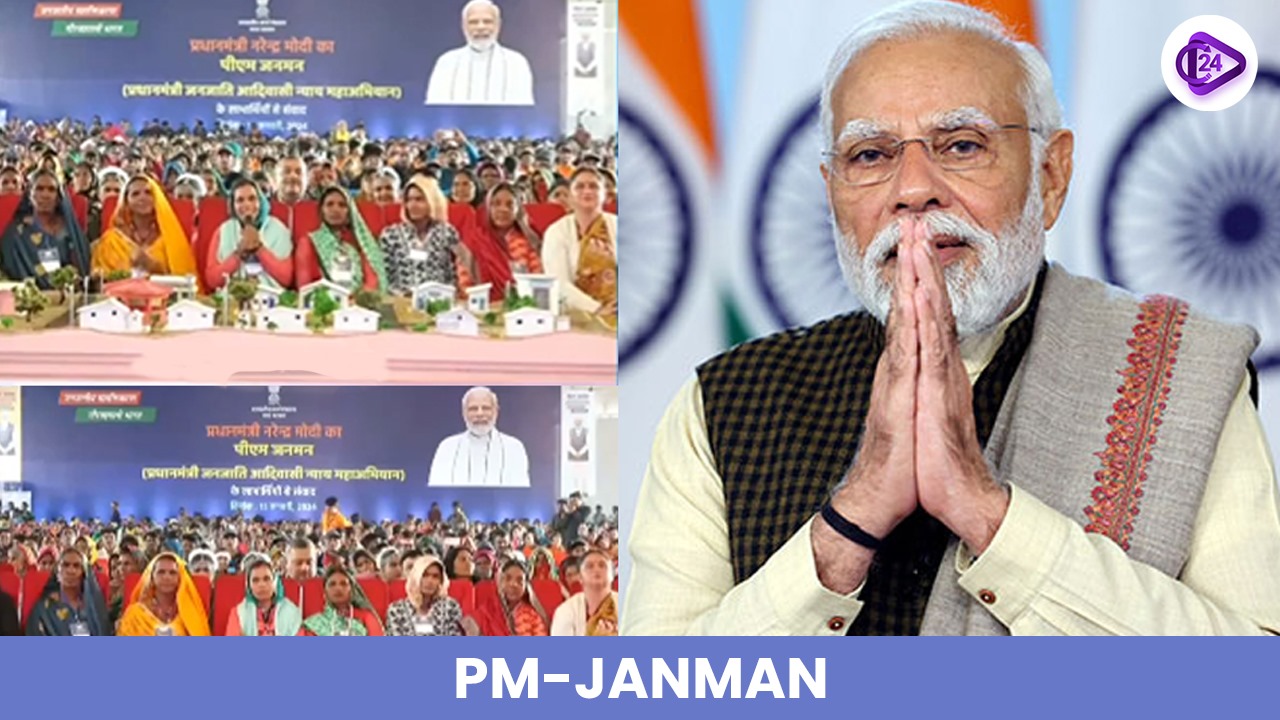
PM-JANMAN projects set to boost growth and prosperity in Maharashtra

The government Ministry of Rural Development authorized 27 roads totaling 50.13 kilometers in Maharashtra for the Pradhan Mantri Janjati Adivasi Nyaya Maha Abhiyan (PM-JANMAN) project for Rs. 50.35 crore. The goal of this project is to develop communication systems for Particularly Vulnerable Tribal Groups (PVTGs) to create better socio-economic conditions along with urban-rural bridges and economic growth advancement. PM-JANMAN implements basic infrastructure programs including housing projects and water system constructions together with healthcare facilities and skills programs as part of its extensive approach to assisting the vulnerable PVTGs who remain distant from mainstream society because of their basic subsistence lifestyle. The program has set 75 PVTG communities in India as its primary target for improving their condition.

Aim of the project

  • The program aims to enhance communication routes to Especially Vulnerable Tribal Groups (PVTGs).

  • The state will improve the economic standard of life for its tribal communities.

  • The development project will connect remote villages with urban centers.

  • The plan supports economic progress together with trade activities across rural domains.

  • The government should expand healthcare facilities along with educational institutions and market services.

  • Create new employment opportunities.

What is PM-JANMAN?

Under the Pradhan Mantri Janjati Adivasi Nyaya Maha Abhiyan (PM-JANMAN) initiative India provides strategic solutions to the essential requirements of its Particularly Vulnerable Tribal Groups (PVTGs). Through the combined efforts of nine Ministries including the Ministry of Tribal Affairs, the scheme executes 11 essential interventions to developthe  living standards of tribal communities. 

Aim of JANMAN

  • The scheme includes four main components which are permanent housing alongside road connectivity along with piped water supply and mobile medical units and hostel construction.

  • Establishment of Anganwadi facilities and skill development centers.

  • The Ministry of Ayush aims to establish Ayush Wellness Centers and make corresponding facilities available to PVTGs.

  • The Ministry of Skill Development will establish training facilities in PVTG communities to teach professional skills according to their location.

About PVTGs

PVTGs are considered more vulnerable than Scheduled Tribes because they used to be called Primitive Tribal Groups. The Census of 2011 shows that Odisha maintains the largest PVTG population in India. The 75 PVTG communities found across 18 states and Union Territories maintain separate characteristics which include isolated living locations as well as minimal levels of literacy and traditional hunting practices. The PM-JANMAN scheme works to better these communities through vital service provision while developing their economy and improving their total life quality.

Conclusion

Through PM-JANMAN India has established an important strategic plan to enhance Particularly Vulnerable Tribal Group subsistence. This program devotes its attention to infrastructure development and healthcare delivery and skill-building initiatives because it aims to help marginalized communities rise while closing the distance between different areas. The project employs comprehensive methods to boost PVTG's social-economic strength which will promote sustainable tribal area development.

Women Naval Officers Reach Point Nemo: Graveyard of Satellites

The Navika Sagar Parikrama II circumnavigation expedition aboard INSV Tarini achieved its significant milestone when two women officers of the Indian Navy arrived at the remote Point Nemo. The maritime expedition started at Goa on October 2, 2024, before the ship completed its journey at Lyttelton Port, New Zealand by December 22, 2024. The crew embarked on their most extended sea voyage as they sailed to Port Stanley in the Falkland Islands which required them to travel 5600 nautical miles.

What is Point Nemo?

  • Point Nemo in the South Pacific Ocean functions as the most inaccessible section of Earth because it serves as the Oceanic Pole of Inaccessibility. The satellite graveyard exists in this region because space agencies on purpose send spacecraft here during their retirement phase to avoid creating space wreckage. Since 1993 more than 260 space debris items including NASA’s Skylab and Russia’s Mir space station have been directed to crash at this specific spot.

  • NASA together with aerospace agencies established in 1993 the two options to dispose of defunct spacecraft through placing them in “graveyard orbit” or sending them to “water grave” to minimize space debris.

  • Operational spacecraft face considerable dangers from space debris which consists mainly of failed satellites. The disposal program has been established to decrease potential threats.

  • The space agencies at Point Nemo intentionally lead defunct satellites to sink into the water instead of remaining in orbit since this preserves oceanic space rather than adding to orbital space debris.

  • The remote location of Point Nemo represents the “oceanic pole of inaccessibility” which makes it a suitable selection area for satellite disposal since it exists far from human influence and marine habitats.

Named after Captain Nemo

The marine environment surrounding this area lacks essential nutrients which it poses an unfavorable living environment for aquatic organisms. Named after Captain Nemo from Jules Verne’s Twenty Thousand Leagues Under the Sea, “Nemo” translates to “no one” in Latin, highlighting its isolation.

Conclusion

The INSV Tarini crew’s Point Nemo navigation showcased India’s strengthening position in worldwide maritime discovery, particularly through their successful accomplishment of the female naval officers. Global organizations now focus on satellite graveyard management at Point Nemo because of its strategic role in space debris regulation. Through this expedition, India demonstrates its dedication to enhancing its naval capabilities alongside scientific exploration and research programs.

Frequently Asked Questions (FAQs)

The current affairs cover recent national and international events related to UPSC, SSC, Banking, Railways, and State PCS.

You need to read about the current affairs daily, and revise them every week and every month to keep them longer in your memory.

Yes, Class24 provides free downloadable Daily Current Affairs PDFs for easy revision.

Yes, you can practice MCQs and quizzes to boost your exam preparation.

Absolutely. The content is written in simple, easy-to-understand bilingual language suitable for beginners.

Go to class24.com and click on the current affairs section directly, where you find everything that you need.

ssc-toppers

Start Learning Today with Class24

Related current affairs

Class24 offers free video lectures for smart preparation, covering CGL, CPO, CHSL, MTS, and GD exams. Learn from expert faculty, revise concepts easily, practice with PYQs, and improve speed and accuracy through high-quality, exam-focused video lessons anytime, anywhere.

Get success in your hand. Start study anytime anywhere.

The journey becomes simple and enjoyable when you start taking interest in it. And through our app “Class24”, we will be your trusted partners in developing that interest.

Daily Quizzes
Mock Tests
Ongoing

No ongoing tests right now.