
Day: January 16, 2025

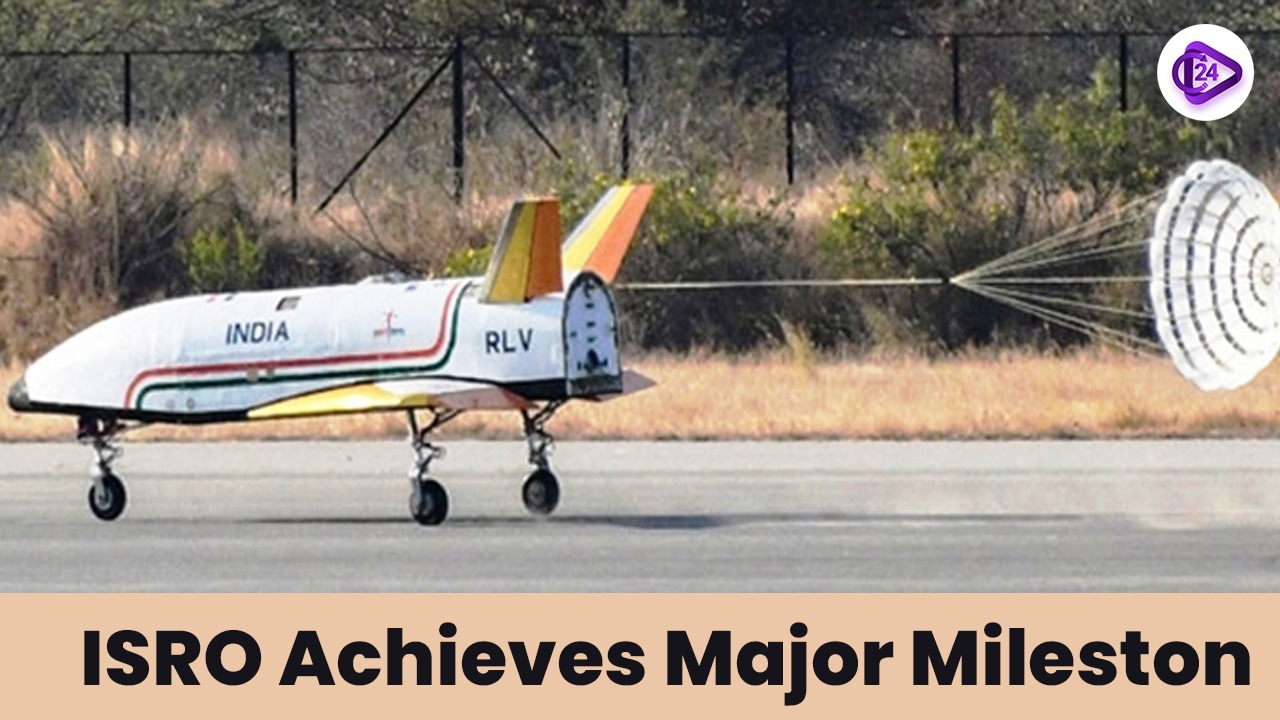
ISRO Achieves Major Milestone with Successful SpaceX Mission

ISRO has recently made India the fourth country in the world to do spacecraft docking technology by recently completing the Space Docking Experiment (SpaDeX). This has been achieved by putting two small satellites into orbit through docking a milestone in India’s space exploration. The critical trajectories for the mission were achieved through the successful launch of the SpaceX mission on 30 December 2024, thus showing great progress in India’s space advancement and technological capabilities.

Key Points

SpaDeX Mission Overview:

  • SpaDeX or Space Docking Experiment is a mission that is being proposed to establish an in-orbit demonstration of small spacecraft docking.

  • The mission used two satellites, SDX01(Chaser) and SDX02 (Target) which were deployed into orbit by PSLV C60 rocket.

  • ISRO closely practiced the actual sea rendezvous on January 12, 2085, and made an actual approach within three meters of the target before starting the actual docking process on January 13, 2085.

  • ISRO's SpaceX mission on December 30, 2024, aims to achieve a historic feat: Do anything ranging from docking or merging two satellites in space.

  • This mission, named “Space Docking Experiment,” will demonstrate India’s capability in applying spacecraft docking technology.

Mission Details:

  • PSLV-C60 will be the first mission that will carry two satellites SDX01 and SDX02 that are equipped with India’s own developed BDS.

  • The satellites will orbit at an altitude of 470 km, and precise proximity and docking shall be accomplished.

Key Objectives:

  • Ensure that power transfer between satellites that are docked occurs.

  • Orbital utilizes payloads after undocking which should support functionality for two years.

  • Carry out 24 payload experiments using PSLV’s fourth stage, POEM-4, and demonstrate microgravity.

Impact:

  • Colloquially known as SpaDeX, it will go down in the annals of space exploration as the path-breaking Indian innovation that will help foster scientific development of satellite servicing, multiple launch missions, and futuristic manned astronautic ventures while placing India in the firmament of space technology pinnacle along with the US, Russia, and China.

Conclusion

SpaDeX is envisioned to help foster substantial leaps in satellite-servicing missions, multiple-launch scenarios, and other future manned space exploration. It helps to place India on par with such powers of the world as the United States, Russia, or China in Space Technology. Furthermore, the mission establishes the path for India’s Bharatiya Antariksh Station (BAS) and future Moon voyaging missions, satellite restoration and refueling, and curtailed mission costs. It is crucial for extended stay, and exploration, like Chandrayaan-4, Indian Space Station, and Gaganyaan.


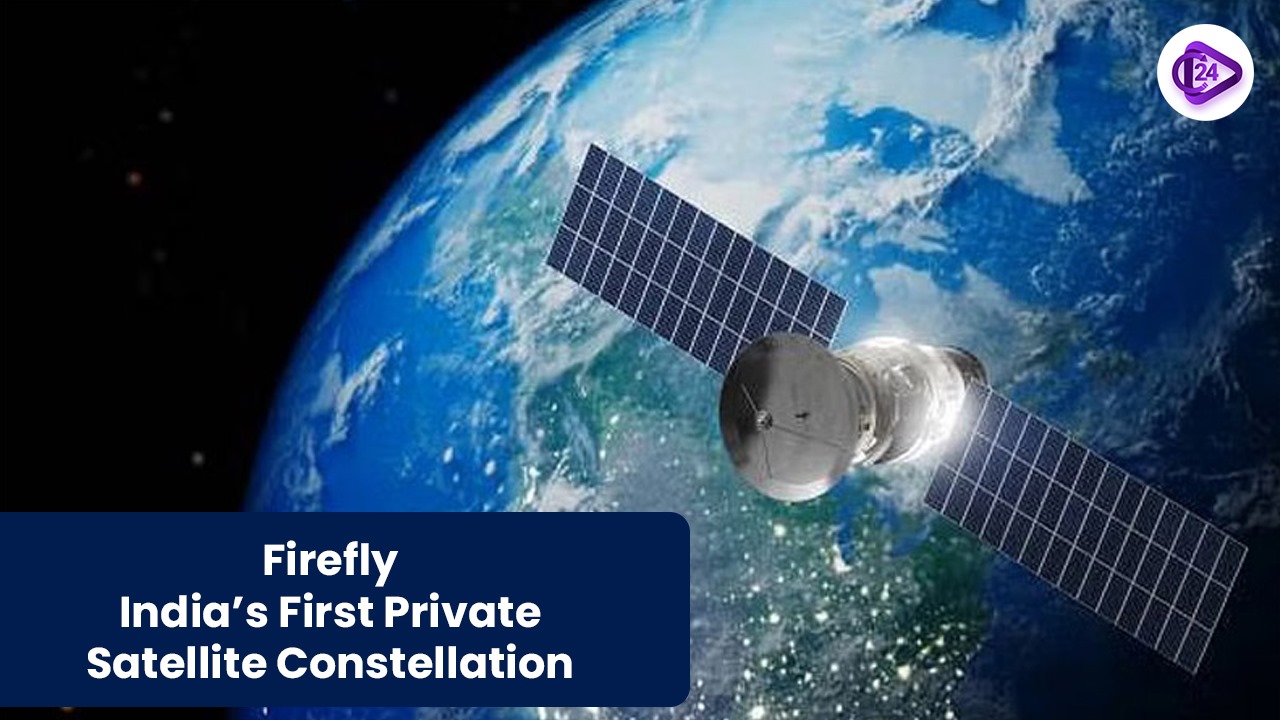
India’s First Private Satellite Constellation ‘Firefly’ Marks a Milestone in Space Innovation

India‘s private space industry, a Bengaluru-based space startup Pixxel has flagged off its first private satellite constellation known as Firefly. These satellites which were successfully lifted off by the SpaceX Falcon-9 rocket from the Vandenberg Space Force Base in California are a big boost to India’s space systems architecture as they offer high-definition hyperspectral imaging for earth observation in the areas of space research for environment and defense. The three firefly satellites placed into low earth orbit (LEO) allow India to compete in the commercial space market with other international space agencies.

Key Highlights

  • Pixxel: A Bengaluru-based space start-up company that was founded in 2019 by Awais Ahmed and Kshitij Khandelwal. It raised $95 million and sent the first private hyperspectral imaging satellite constellation of India, Firefly into orbit.

  • Firefly Satellites: The first-time hyperspectral imaging satellites from India with five meters clarity, far ahead of other commercial satellites that offer only 30 meters clear images.

  • SpaceX Falcon-9: Preliminary to placing the Firefly satellites in a 550-kilometre low earth orbit from the Vandenberg Space Force Base in California.

  • Indian Private Space Sector: The constellation Firefly illustrates the development of private space industries in India and the role of the Indian government’s space sector reforms in 2020.

  • Hyperspectral Imaging: A revolutionary technology, applied in Firefly satellites, which makes it possible to observe small changes in the Earth’s ecosystems, critically important for tracking environmental changes, studying climate shifts, and defense purposes.

  • Make in India: The Firefly constellation is one of the representations of the expansion of the Indian space industry under the Make in India and Atmanirbhar Bharat campaigns.

Impact on India’s Space Ecosystem:

  • Private Sector Growth:

    • Pixxel’s success also shows the fact India’s private space industry is expanding after the government approved the space reforms in 2020 that allowed the privatization of the space industry.

    • Pixxel is now one of the most backed space startups globally, thus boosting the upcoming Indian space industry.

  • Make in India and Atmanirbhar Bharat:

    • The constellation is in tune with India’s Make in India and Atmanirbhar Bharat campaigns pointing to the country’s potential to design and produce hi-tech space solutions at home.

    • But it also has a role in demonstrating India’s increasing autonomy in the space industry as the country continues to foster homegrown innovations.

  • International Standards and Competitiveness:

    • The present paper brings out how the Firefly constellation is helping India to achieve new international benchmarks in hyperspectral imaging and to emerge as a strong contender in the commercial space market scenario.

    • The technology that Pixxel is bringing to bear on space data collection places India on par with players from across the globe in the earth observation and space business.

Conclusion

The actual start of the Firefly satellite constellation has been a revolutionary step in expanding Indo’s space capability and becoming a leader in space technologies. Pixxel has effectively worked that this is how new international satellite firms should run the commercial application of hyperspectral imaging and satellite technology that Pixxel has unveiled is what has not only helped India become less reliant on foreign space agencies but also meet new international standards of commercial operation of space firms. While India strives to foster its private space industry, the Firefly constellation put India in a stance to be a world-leading space power and create a new potential for revolutionizing industries and unlocking many strategic advantages for the nation in the years to come.

India Strengthens Maritime Defense, PM Dedicates Three Frontline Naval Combatants to the Nation

Prime Minister Narendra Modi on January 15, 2025, will launch the three frontline naval combatants Surat, Nilgiri, and Vaghsheer at a commissioning ceremony to be hosted in the Naval Dockyard in Mumbai. This event clearly shows India has come a long way in transforming into a ‘Make in India” Naval Power and will open up a new era in the defense proposition of the country in the 21st Century. As these ships and submarines are completely or almost built in India, commissioning demonstrates India’s ascending naval strength and programs and the spirit of Atmanirbhar Bharat Abhiyan. The Prime Minister highlighted that India is committed to being a dependable Maritime Partner for the stability of the seas and his government stressed that these platforms serve the purpose of propelling national security, and economic growth and possessing a strategic influence across the world.

Key Highlights of the Event:

  • INS Surat (Guided Missile Destroyer):

    • The P15B project’s fourth and final ship is a guided missile destroyer.

    • Still, amongst the most advanced in the world and 75% Malaysian-made.

    • Fitted with modern weapon systems, weapon suites, sensors, and system networks.

  • INS Nilgiri (Stealth Frigate):

    • The first of the order of the programmed P17A Stealth Frigate project.

    • Developed by the Indian Navy Warship Design Bureau with state of the art in survivability, seakeeping, and stealth characteristics.

    • Is the successor of the indigenous Frigates.

  • INS Vaghsheer (Scorpene-Class Submarine):

    • The sixth P75 Scorpene series submarine demonstrates India’s expanding capacity in submarine construction.

    • Developed in cooperation with the Naval Group of France, however, mostly locally manufactured.

Important Indian Navy Projects

  • Project 15B: Guided-Missile Destroyers

    • Objective: Design a more advanced vessel of the Kolkata-class destroyers.

    • Builder: Mazagon Dock Limited (MDL).

    • Ships in the Project:

      • INS Vishakapatnam: Commissioned.

      • INS Mormogaon: Ready for trials.

      • INS Imphal: Advanced stage of outfitting.

      • INS Surat: Expected to launch in 2022.

  • Project 75: Kalvari-Class Submarines

    • Objective: Purchase of six diesel-electric attack submarines capable of conducting ‘Kalvari’ class operations.

    • Key Features:

      • Air Independent Propulsion (AIP) system for an added time of sub-merge operations.

      • Derived from Scorpene-class Submarines (by French Naval Group and  Navantia).

    • Submarines under P75:

      • INS Kalvari (launched 2015, Commissioned 2017).

      • INS Khanderi (joined service 2019).

      • INS Karanj ( expected commissioning 2021)

      • INS Vela (commissioned 2021).

      • INS Vagir (launched 2020).

      • INS Vagsheer (Expected to Join 2021).

    • Purpose: Combat patrols and scouting, intelligence gathering, anti-submarine warfare, anti-surface ship engagements, and mining.

  • Project 75I: India-Class Submarines

    • Objective: Six new generation diesel-electric submarines equipped with AIP.

    • Key Features:

      • Gearing AIP, ISTAR (intelligence, surveillance, target acquisition, and reconnaissance), Special Operations Forces (SOF) capabilities, and warfare capabilities including antisubmarine warfare (ASW), anti-ship warfare (ASuW), antisubmarine helicopter warfare (AShW) and land attack.

  • Indian Navy’s 30-Year Submarine Building Plan

    • Initiated in 1999 for the construction of 24 submarines by 2030.

      • 6 nuclear-powered submarines (INS Arihant, INS Arighat, and others).

      • 18 conventional submarines (including those under Projects 75 and 75I).

    • Current status: With commissioned INS Arihant India’s only nuclear-powered submarine and on the other hand INS Arighat is to be commissioned soon.

Conclusion

The launch of INS Surat, INS Nilgiri, and INS Vaghsheer has been one of the memorable achievements towards making India a global maritime power and a defense manufacturing hub in the world. Not only does the event indicate the improvement of the Indian Navy, but it is also a positive indicator of the political elevation of India in terms of geopolitical, economic growth, and strategic security framework of the region and indeed the global arena. With India modernizing its military and defense infrastructure at present, the Make in India target is important in cutting dependence on foreign parts suppliers, the growth of the economy, and the provision of employment. This course signals a giant leap towards the realization of India’s dream of a developed country with a robust, indigenous defense industry.

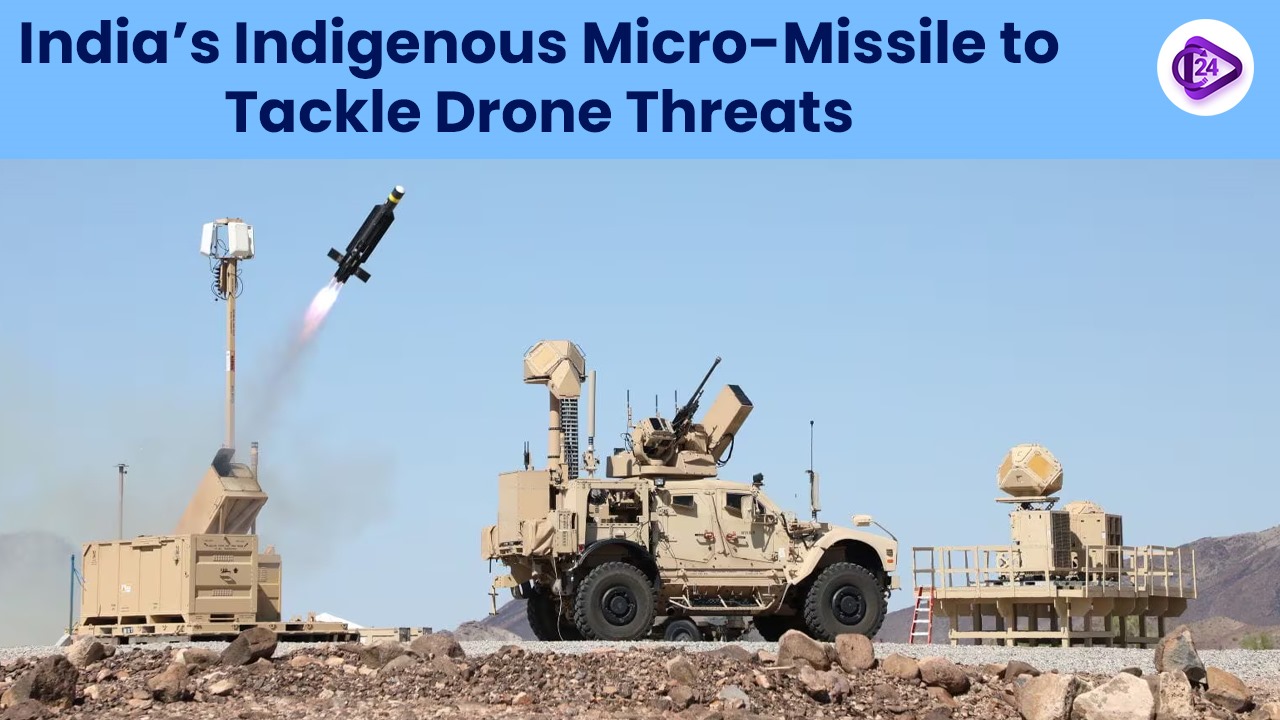
Bhargavastra: India’s Indigenous Micro-Missile System for Counter Drone Threats

A recent landmark defense tech event came to India as it test-fired its first locally developed micro-missile system called the Bhargavastra to counter the growing menace of swarm drones. The trials were carried out at Gopalpur Seaward Firing Ranges on January 12 & 13, 2025 and these are a major leap for India in its military strength. The Bhargavastra system is designed to counter drone threats proactively, provides multiple layers of defense mechanisms, and can be moved around and integrated with the existing defense systems. The ongoing advancement of drone warfare makes Bhargavastra gear up to be very relevant in the battle to protect India’s skies and enhance the country’s defense structure.

Key Features of Bhargavastra:

  • Detection and Engagement:

    • Bhargavastra can identify relatively small-sized incoming drones at a range exceeding 6 kilometers.

    • These threats can be eliminated by the system’s capability of using guided micro-munitions that target the enemy up to distances of 2.5 kilometers away.

  • Multi-Layered Defence:

    • It is specifically conceived to be effective when defending against several drone threats at once.

    • It can fire over 64 micro-missiles simultaneously, thus making the system capable of handling mass drone attacks or swarming.

  • Mobility and Versatility:

    • Thus, Bhargavastra is mounted on mobile companies that can afford to quickly move to different textures of the territory, including mountainous ones.

    • This flexibility makes it possible for the system to be easily adjusted to the operation’s requirement, making it an awful tool for the Indian Armed Forces.

  • Integration with Existing Systems:

    • The system has enhanced Command-and-Control functions to allow compatibility with foremost military networks.

Successful Missile Programs of India

  1. Integrated Guided Missile Development Programme (IGMDP).

    • Start Date: 1983

    • Completion: 2008

    • Objectives:

      • Build basic Indigenous missile development capability

      • Indigenously develop a spectrum of missiles that can effectively provide coverage to India’s defense forces

    • Key Products:

      • Prithvi (Surface-to-Surface Missile)

      • Akash (Surface-to-Air Missile)

      • Nag (Anti-Tank Guided Missile)

      • Trishul (Short-range Surface-to-Air Missile)

      • Agni series (Ballistic Missiles)

  2. India and Russia’s BrahMos Aerospace Joint Venture

    • Established: 1998

    • Partners: India’s Defense Research and Development Organisation (DRDO) & Russia’s NPO Machine building

    • Key Product:

      • BrahMos or supersonic cruise missile

      • BrahMos is among the fastest cruise missiles globally and can be vertically launched from multiple systems.

  3. India’s Ballistic Missile Defence Programme

    • Start Date: 1999

    • Features:

    • End atmosphere and exo-atmosphere intercepting capabilities based on a two-tiered method.

    • Key Products:

      • Prithvi Air Defence (PAD) / Pradyumna (Ballistic Missile Interceptor)

      • Surface to Surface Missile System (SSM) / Prithvi, Agni, Akash, and Trishul / Indigenously developed Ballistic Missile Defence System; Advanced Air Defence (AAD) / Ashwin

      • They enable India to intercept adversaries’ ballistic missile threats and therefore make them stop their attacks.

  4. Independent Projects

    • Since 2008: In fact, after the IGMDP programme India has started several independent missile programmes.

    • Key products:

      • Agni Series (Advanced Ballistic Missiles)

      • K-Missiles (Cruise Missiles)

      • Hypersonic Technology Demonstrator Vehicle (Ongoing development of hypersonic missile technology)

Types of Missiles

Classification of Missiles based on speed

  • Subsonic Missiles

    • Speed: Below the speed of sound also known as, Mach 1.

    • Examples:

      • U.S. Harpoon (Anti-ship missile)

      • Indian PRITHVI (Short-Range Ballistic Missile)

  • Supersonic Missiles

    • Speed: Faster than Mach 1 but slower than Mach 5

    • Examples:

      • Russian Iskander (Tactical ballistic missile)

      • Indian BrahMos which is a supersonic cruise missile.

  • Hypersonic Missiles

    • Speed: At least five times the speed of sound that is over Mach 5.

    • Examples:

      • China DF-ZF  (Hypersonic glide vehicle)

      • Russia Avangard

      • India’s Shaurya/ Sagarika (maximum speed 7.5 Mach)

Classification of Missiles based on Trajectory

  • Ballistic Missiles

    • Trajectory: Ballistic flight with lofted trajectory and glider phase of unpowered free fall following the boost phase

    • Examples:

      • Agni series

      • Prithvi series of Ballistic missiles.

  • Hypersonic Missiles

    • Feature: Ballistic missile reaching or exceeding hypersonic velocities while re-entering the Earth’s atmosphere

    • Examples:

      • Technology China DF-17 (Hypersonic glide vehicle)

      • Russia Avangard (Boost-glide system).

      • India's Status: The “Technology Demonstration” stage of HGVs

  • Cruise Missiles

    • Feature: Surface-to-surface missiles seeking targets on land or sea and flying in the Earth’s atmosphere at constant velocities.

    • Types of Cruise Missiles:

      • Subsonic Cruise Missiles 

        • Speed is below the speed of sound i.e less than Mach 1

        • Examples:

          • U.S. Tomahawk (BGM-109)

      • India Subsonic Cruise Indian Nirbhay

        • Intermediate-Range Cruise Missiles (Speed greater than Mach 1 but less than Mach 5)

        • Examples:

          • Bramos (a Supersonic cruise missile that has a speed of Mach 3).

      • Hypersonic Cruise Missiles (Speed greater than Mach 5).

        • Examples:

          • Russia 3M22 Zircon Hypersonic cruise missile (High speed- Mach 8)

          • India BrahMos II (Under development planned for the speed above Mach 8 based on Zircon)

Classification of Missiles based on Propulsion

  • Solid Propulsion

    • Description: Uses high-density fuel such as Hydroxyl-terminated polybutadiene (HTPB) fuel. It is affordable, easy to handle, and effective.

    • Examples:

      • Prithvi (Ballistic missile)

      • BrahMos (Cruise missile)

  • Liquid Propulsion

    • Description: Uses liquid fuels (e.g., Hydrazine, Liquid Hydrogen) and oxidizers (e.g., Nitrogen Tetroxide, Liquid Oxygen). It also offers optimal efficiency and throttle ability as compared to the traditional study.

    • Examples:

      • Agni series ballistic missile system.

      • Akash surface-to-air missile system

      • Note: Agni-Prime was recently successfully tested with solid propellant making the missile lighter than all other Agni series missiles.

  • Hybrid Propulsion

    • Description: A dual type of propellant, both solid and liquid type.

    • Examples:

      • Used in the prototype of the BrahMos hypersonic cruise missile.

  • Cryogenic Propulsion

    • Description: It uses liquid oxygen and hydrogen and has a very high energy density.

    • Examples:

      • Used in the Agni-V, Intercontinental Ballistic Missile (ICBM).

  • Ramjet/Scramjet Propulsion

    • Description: Air-breathing engines that are utilized for hypersonic ballistic and cruise missile systems.

    • Examples:

      • Under development: India’s HGV (Hypersonic Glide Vehicle)

      • BrahMos II (Cruise Missile missile type hypersonic)

Conclusion

The successful demonstration of Bhargavastra establishes India as having the potential in the realm of defense technology and demonstrates its ability to contain the new and dangerous threat of swarm drones. As an electronic warfare weapon, Bhargavastra gives a fitting response to any attempt to tamper with Indian airspace and empowers Trident to add more teeth to the Indian Armed Forces. 

Frequently Asked Questions (FAQs)

The current affairs cover recent national and international events related to UPSC, SSC, Banking, Railways, and State PCS.

You need to read about the current affairs daily, and revise them every week and every month to keep them longer in your memory.

Yes, Class24 provides free downloadable Daily Current Affairs PDFs for easy revision.

Yes, you can practice MCQs and quizzes to boost your exam preparation.

Absolutely. The content is written in simple, easy-to-understand bilingual language suitable for beginners.

Go to class24.com and click on the current affairs section directly, where you find everything that you need.

ssc-toppers

Start Learning Today with Class24

Related current affairs

Class24 offers free video lectures for smart preparation, covering CGL, CPO, CHSL, MTS, and GD exams. Learn from expert faculty, revise concepts easily, practice with PYQs, and improve speed and accuracy through high-quality, exam-focused video lessons anytime, anywhere.

Get success in your hand. Start study anytime anywhere.

The journey becomes simple and enjoyable when you start taking interest in it. And through our app “Class24”, we will be your trusted partners in developing that interest.

Daily Quizzes
Mock Tests
Ongoing

No ongoing tests right now.