
Day: January 8, 2025

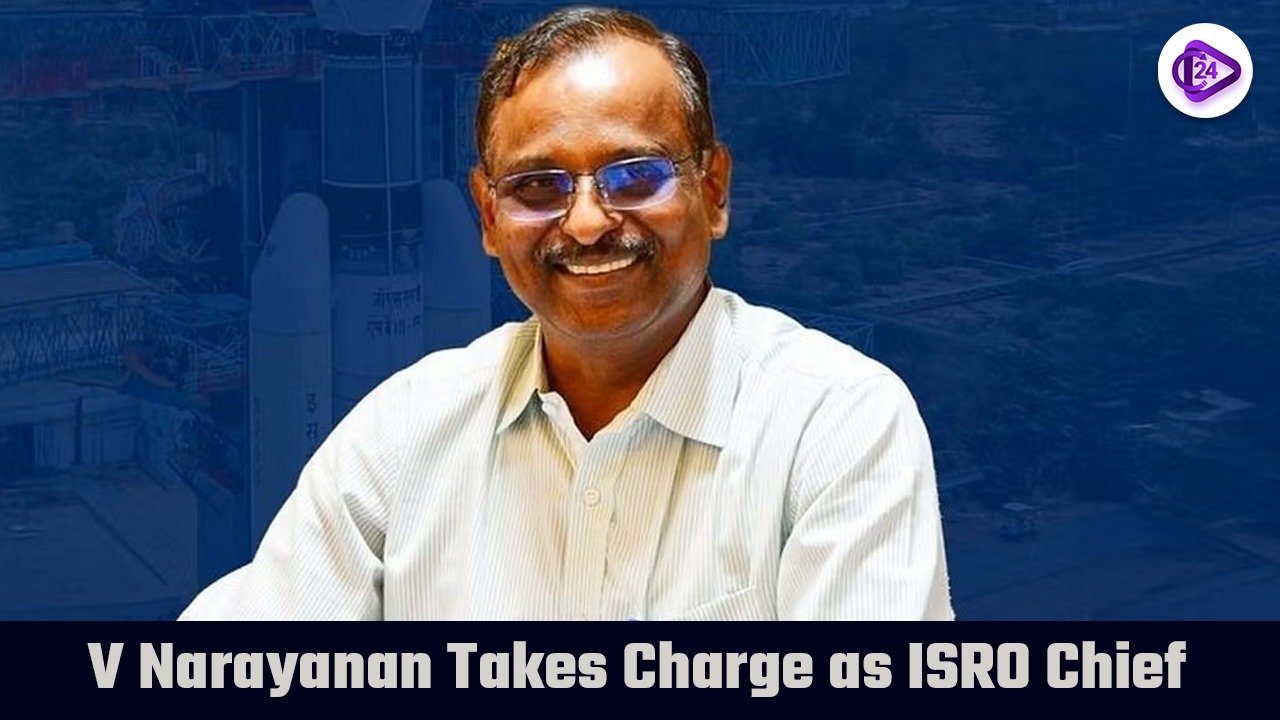
V Narayanan Appointed as ISRO Chief and Secretary of the Department of Space

ISRO has its new rocket scientist chairperson V Narayanan for the Indian Space Research Organisation, and secretary for the Department of Space while heading the Space Commission as well. Narayanan will take over from S Somanath, whose term ends next week, and ends his major tenure starting from January 14, 2022.

It was the Appointments Committee of the Cabinet that sanctioned Narayanan for the position and with a term of two years in office, his start date is on the 14th of January, 2025.

An Extraordinary Career Spanning Four Years

His career milestones include:

  • Early Contributions: ISRO is lucky to have Narayanan on its team; he was part of the organization starting in 1984 at the Vikram Sarabhai Space Centre working on sounding rocket, ASLV and PSLV projects.

  • Cryogenic Engineering Expertise: One year later in 1990 he achieved MTech in Cryogenic Engineering at the Indian Institute of Technology, Kharagpur which was significant throughout his working experience.

  • Leadership in Cryogenic Propulsion: In 1960, Narayanan joined the Liquid Propulsion Systems Centre (LPSC), and he worked there as a key person in evolving cryogenic propulsion systems. He is currently assigned the position of director at LPSC.

  • C25 Cryogenic Project: In his capacity as the Director, he led the creation of the C25 Cryogenic Stage for the Geosynchronous Satellite Launch Vehicle Mark III (GSLV Mk III), an important new development in India’s space program.

A Visionary Leader for ISRO in the Future

Under Narayanan’s leadership, ISRO is expected to embark on several ambitious missions and projects, including:

  • Gaganyaan Mission: A very important though small stride towards attaining the capability of manned space exploration, the first human space flight mission ever conducted by India.

  • Chandrayaan-4: A sequel to India’s successful lunar missions, enhancing the colonization of the Moon by the country.

  • Mars Mission 2.0: India's second Mars exploration mission, capitalizing on the Mars Orbiter Mission (Mangalyaan).

  • Venus Orbiter Mission: The country’s first attempt at heading towards the mysterious planet of Venus in a broader sense to expand the space agency’s reach towards planetary missions.

  • India’s Space Station Development: A long-term crewed orbital study, and the soon-to-be-established indigenous space station are other frameworks that seek to place India at the forefront of the endeavor.

Legacy and Expectations

Narayanan steps into the new post of the ISRO chief when he takes charge of an organization that is already on the cutting edge of technology and science. His term is expected to consolidate India’s profile as a capable nation in space and advanced technology leadership.

Hailing from a background of propulsion systems, and having delivered previous projects for ISRO, Narayanan is equipped to lead the organization to the next level and steer the future developments that will occupy the Indian space sector.

Conclusion

As the new ISRO chief, V Narayanan is poised to lead India into an exciting phase of space exploration. His experience and leadership will be crucial for the success of future missions and solidifying India’s position as a global space leader.

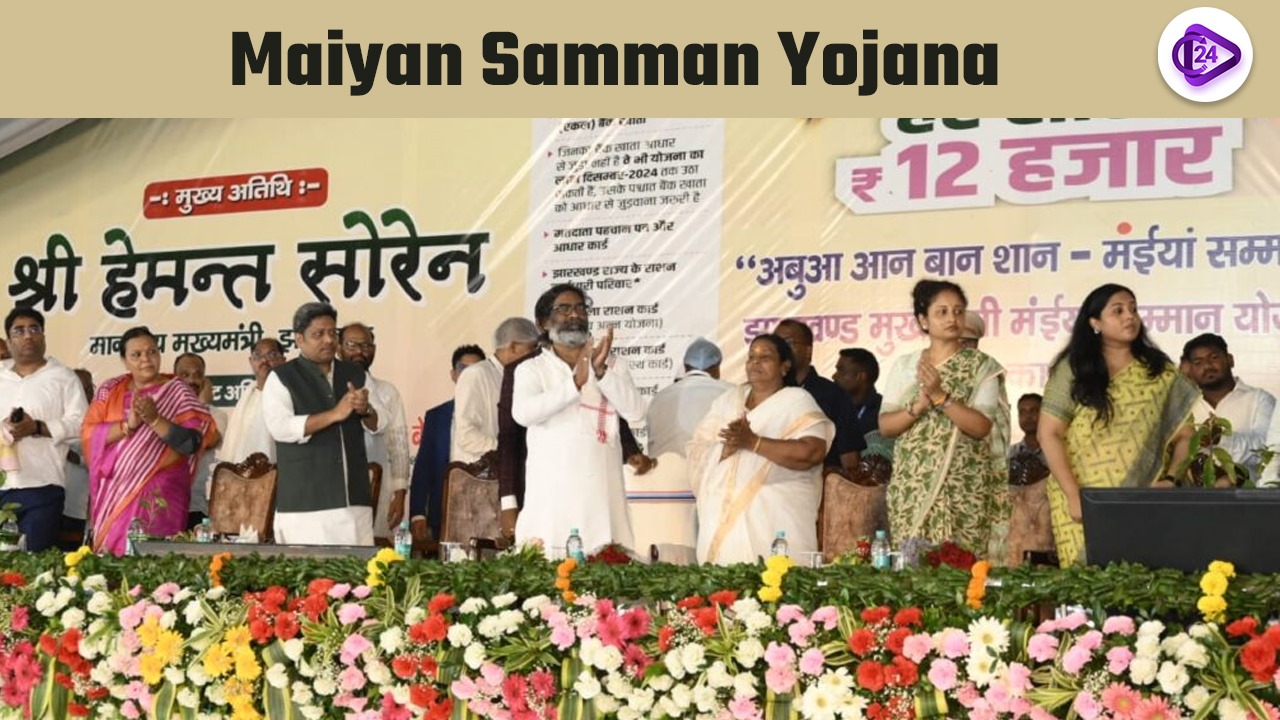
Maiyan Samman Yojana: Jharkhand Initiative for Women’s Empowerment

Jharkhand Chief Minister Hemant Soren has emphasized his government's commitment to improving women's rights and eradicating poverty through the ‘Maiyan Samman Yojana.’ With an allocation of ₹1,415.44 crores, the program aims to benefit 56.61 lakh women, providing direct financial assistance and fostering economic independence. The initiative is set to uplift rural women and address challenges faced by historically marginalized communities in the state.

Jharkhand Chief Minister Hemant Soren stressed his government's desire to strengthen the rights of women and solve the problem of poverty by providing ₹1,415.44 crores to 56.61 lakh of women under the state’s ‘Maiyan Samman Yojana’.

The meeting originally planned for December 28, 2021, was rescheduled because of the mourning period in the country after the death of former Prime Minister Manmohan Singh. During the event in Namkun, Soren expounded the developmental function of this undertaking in improving the status of rural women and eradicating challenges associated with the earlier elucidated historical depredation of Jharkhand as a state with a crude demography of poverty, backwardness, and displacement.

Direct Financial Assistance:

  • The program started in August 2023 as designed for women between 18 and 50 years old with subsidies for dependent children.

  • It shows that monthly honorariums fixed at ₹1,000 will rise to ₹2,500 starting December 2024.

Scope and Impact:

  • Today tiny program affects over 56 lakh women and aims at their economic independence and, consequently, empowering them at the community level.

  • It has been taken as a revolution in the socio-economic development of Jharkhand state and is supposed to be responsible for the electoral victory of the INDIA bloc in the state.

Other state with similar Scheme

  1. Tamil Nadu

    • Amma Two Wheeler Scheme: It offers subsidized two-wheelers as transport options to working women to enhance their mobility and economically empower them.

  2. Uttar Pradesh

    • Kanya Sumangala Yojana: Provides funding for the girl child at different points in her life in order to help her through school and other needs.

  3. West Bengal

    • Kanyashree Prakalpa: Supports girl's education by giving out scholarships yearly and stopping girl-child marriages.

  4. Odisha

    • Mission Shakti: On the economic independence of women through mobilization of self-help groups and skills acquisition.

  5. Madhya Pradesh

    • Ladli Laxmi Yojana: Provides monetary incentives to families for the imparting of education and other needs of a girl child.

  6. Telangana

    • KCR Kit Scheme: Gives money and other products to women in their pregnancies to ensure their delivery in hospitals.

  7. Rajasthan

    • Rajshree Yojana: Scholarships to equip economically weaker sections to give birth and educate girl children.

  8. Karnataka

    • Bhagyalakshmi Scheme: Provides financial assistance to liquidate the poor family’s liability towards the girl child's education for her protection in the future.

Looking Ahead

The program stands in tune with the overall policy framework of the Jharkhand government where social inclusion and gender equality are envisaged goals. By increasing honorariums pacifically, focusing on rural areas, and increasing awareness of the effectiveness of the scheme, the ‘Maiyan Samman Yojana’ is likely to remain one of the main priorities of developmental growth in Jharkhand.

Conclusion

The Maiyan Samman Yojana is a significant step in Jharkhand's journey toward gender equality and economic independence for women. With increasing honorariums and a focus on rural areas, this program will continue to play a vital role in the state’s socio-economic development.

MSP Reform: Farmer Income Security and the Call for Legal Guarantees

Farmer leader Jagjit Singh Dallewal’s indefinite fast entered its 43rd day as the Parliamentary Standing Committee on Agriculture, has recommended a “legally binding” MSP. Minimum Support Price (MSP) refers to the price the government offers to crops to buy from farmers in a bid to rescue them from hefty losses caused by market prices.

Key Aspects of MSP:
 

  • Established by: Set by the CACP in consultation with the Ministry of Agriculture and approved by the CCEA in India.

  • Crops Covered: MSP is declared for 23 crops including cereals, pulses oilseeds, and Commercial crops such as cotton and Jute.

Purpose

  • Stabilise farmer’s income.

  • Hedge against fluctuation of price.

  • Fund agriculture and discourage the sale of produce at low prices to evade the market.

Need for MSP for Farmers

  • Income Stability

    • MSP guarantees the farmers against loss-making due to either a price drop occasioned by a glut or low market demand.

    • Example: The price for moong in Rajasthan in 2024 was incidentally ₹6,467 per quintal although the MSP was ₹8,682.

  • Inequitable Market Dynamics:

    • Most farmers exercise little negotiation power on traders and sell their produce in local markets which offer very low prices in most cases below the MSP.

    • Data: Market retail structure tells that more than 80 of farmers rely on APMC.

  • Rising Costs of Production:

    • So while MSP is an important way through which farmers get their costs met, rising input costs including fertilizers and diesel make MSP essential for ensuring a profitable income.

    • Example: The cost of fertility and diesel between 2020 and 2024 increased by 15-20% (Ministry of Agriculture).

  • Addressing Rural Poverty:

    • MSP is helpful to avoid the forced sale of agricultural produce and help the small and marginalized farmers of India who are 86%of the farmers in the country.

Challenges of Full Legalization

  • High Fiscal Cost: If MSP was given directly to all MSP crops its total amount would go all the way to ₹7.5 lakh crore per annum, fully constituting 17% of the Union Budget and leaving very little for anything else.

  • Market Disruption: High mandatory MSP can have adverse effects such as market crowding out of the private sectors and effectiveness leading to reduced market competitiveness.

  • Administrative Complexity: Supervising the application of MSP in millions of farmers and different regions of production and crops is not an easy task.

  • Alternative Approaches:

  • Deficit Payment Scheme: You can pass on the rest benefits without direct procurement to the farmers such as the difference between Market Price (MP) and MSP.

  • Private Sector Role: This means that one should make private buyers buy what is within or above the MSP to help share these costs.

  • Market Intervention: Fixed a minimum floor price for commodities to be auctioned in APMC thereby stabilizing the actual market rates.

  • Direct Compensation Model: Both introduce price difference compensation which is expected to peg the cost at approximately ₹30,000-₹50,000 crore in a year.

Limitations of MSP

  • Budgetary Stress: It is equally important to know that absorbing 17% of the budget for MSP would mean less investment in absolute priorities like health, education, and infrastructure among others.

  • Regional Inequity: Today’s MSP benefits are mainly(with majority stakeholders) with those states like Punjab Haryana and UP while sidelining the farmers of other underdeveloped states.

  • Environmental Risks: Where there are guaranteed MSPs, there is often increased cultivation of water-intensive crops and hence increased water strain and depletion of water sources.

  • Market Inefficiencies: Implementation of such a policy as MSP to regulate the market may discourage private enterprises leading to market inefficiencies and lesser innovations.

Way Ahead

  • Expand MSP Procurement: Need to enhance inclusion; add pulses, oilseeds, and millets.

  • Empower Farmer Producer Organizations (FPOs): Enshrine collective bargaining, and improved markets for farming populations.

  • Leverage Technology: Some actions that could be involved include utilizing e-NAM and blockchain technology for a proper price discovery and observation mechanism.

  • Reform APMCs: Ensure the local market factors interconnect with the global systems to work as a buffer to prices and improve efficiency.

  • Farmer Awareness Campaigns: Agriculture keeps the farmers informed with regard to the use of the MSP mechanism and other possibilities such as agro-processing and income diversification.

Conclusion

Although an ideal, legally binding MSP can significantly improve the income security of farmers, it must be applied cautiously to meet financial responsibility, market rationality, and inclusion. The use of technology, suitable innovation, and the support of other parties guarantee that Indian agriculture will be sustainable and non-discriminatory in the long run.

Powerful 6.8 Magnitude Earthquake Strikes Tibet, Leaves Destruction in Its Wake

The earthquake with a magnitude of 6.8 hit northeast India near Tibet’s Lhasa city on the early morning of January 7, 2025, and left at least 126 people dead, as per a Chinese media report. The earthquake occurred in Dingri County in Shigatse City, Tibet immediately after 9 a.m. local standard time and had a focal depth of 10 kilometers according to the China Earthquake Networks Centre.

According to the U.S. Geological Survey (USGS), the earthquake registered at a 7.1 magnitude, making it recurrent seismicity on the Southern Tibetan Plateau region owing to the East-India tectonic plate’s continued interaction with the Eurasian plate. 

USGS observed that the region had heavy earthquakes in the recent past with 10 earthquakes of magnitude 6 and above recorded around a 250 km radius of the epicenter within the past century.

Going by the current statistics, the death toll has continued to rise, with more than 188 persons injured while over 3,600 houses have been demolished. In the neighboring countries there were shaken, even such cities as Kathmandu (Nepal), Thimphu (Bhutan), and Kolkata (India).

Earthquake Hazard and Mitigation in India

  • Definition: Earthquakes are sudden shaking or trembling of the Earth’s surface resulting from the movement of tectonic plates or through an eruption of volcanic rocks.

  • India's Vulnerability: It may be noted that approximately 59%of the total geographical area of the country is threatened by moderate to severe levels of seismicity.

  • Impact Mitigation: Reduction of consequences through using code-approved and designing structures and employing them to reinforce existing structures.

The vulnerability and risk of earthquake in India

Seismic Zones:

The least seismic area of India is categorized into four zones that are Zone II to Zone V.

Zone V: High Impact/Very High Damage Risk (Kashmir, Northeast, Andaman & Nicobar).

Zone IV: High Damage Risk (e.g., Delhi, parts of Himachal, Bihar, Gujarat).

Zone III: Low to moderate Flood damage risk states include; Low risk – Kerala and Goa; moderately low risk – parts of TN and KA.

Zone II: Low Damage Risk (Other areas of the country).

High-Risk Areas:

  • Himalayas: Sensitive because of the occurrence of the Indian Plate that is subducting beneath the Eurasian Plate.

  • Peninsular India: Geophysical features include risk from intraplate faults and paleo rift zones that are poorly understood but for which examples can be quoted such as the Kachchh and the Narmada-Son rifts.

  • Notable Earthquakes: Kaiser I, Shillong 1897, Kangra 1905, Bihar-Nepal 1934, Assam-Tibet 1950.

Aggravated Risk:

This phenomenon is caused by such factors as the speed of the urbanization process, infrastructure development in dangerous zones, and other developmental works.

Impacts 

  • Structural Damage: It is noteworthy that most of the deaths are caused simultaneously by building collapses.

  • Surface Rupture: Ground displacement results in the destruction of infrastructure.

  • Tsunamis: Some of the earthquakes that occur along submarine trenches are capable of causing tsunamis.

  • Liquefaction: Saturated deposits have properties similar to liquids and hence undermine the foundations.

  • Fires: Broken pipelines cause fires same as when electrical systems are wrecked.

  • Economic Disruption: decline in sources of income and closure of industrial establishments.

Mitigation and strategies

  • Building Codes: Ensuring compliance with the matters concerning earthquake-resistant construction.

  • Land Use Planning: Staying away from areas in the construction of risky structures.

  • Public Awareness: A few examples of informative topics are: Earthquake education among the populace.

  • Disaster Preparedness: Communications and alerts as well as equipment preparatory stocks and management plans.

  • Risk Assessment: Annual review of seismic risks in cities and towns.

India’s Preparedness

  • National Centre for Seismology: Sensors of earthquakes and gives timely alarm.

  • National Earthquake Risk Mitigation Project: Emphasizes the development of legal capacities, roles, and the role of the public.

  • Seismic Micro-Zonation: Helps to determine dangerous areas in large cities in order to promote effective planning of cities.

  • Awareness Campaigns: Activities such as sensitization are weekly exercises conducted by NDMA.

  • Building Regulations: Requirements as provided by BIS and other related agencies for the design and construction of structures that would stand the ravages of disasters.

Challenges

  • High Seismic Activity: Retrofitting costs are high.

  • Unplanned Urbanization: Weak structures most especially in the areas that are prone to natural disasters.

  • Tourism Expansion: Increases pressure in the areas that are prone to seismism.

  • Regulation Lapses: It is important to also note that most buildings fail to meet statutory requirements regarding construction codes.

  • Public Awareness: People are not very aware of how to protect themselves and their belongings when an earthquake occurs.

  • Financial Constraints: Lack of funds to put into practice the measures that are taken to isolate the infected animals.

Way Forward

  • Proactively enhance the implementation of constructing codes.

  • Inform the population and prepare them.

  • Increase the financial funding for research and renovation of infrastructure.

  • Promote more persons who are seismic-proof for urban structures.

  • Ensure that there are enough sources of funding required in the management of disasters as well as the responses.

Looking Ahead

The earthquake calls for a better disaster preparedness program, improved study on earthquakes, and strong structures in the Himalayan region. This is why governments and global institutions need to enhance cooperation to enhance the early warning systems, raise construction standards for large projects like the Yarlung Tsangpo dam, and subsequently develop plans for how to prevent environment-related disasters that are linked to such huge projects.

While this region is still in the process of recovering from this awful earthquake, there is a dire necessity for sustainable measures to save the lives, income sources, and resources of millions of people living in the shadow of the great Himalayas.

Conclusion

The earthquake in Tibet highlights the vulnerability of earthquake-prone regions and the need for improved disaster preparedness and seismic resilience in the Himalayas. Enhanced building codes, public awareness, and better emergency response plans are essential to mitigate future risks.

India’s GDP Growth Set to Hit Four-Year Low at 6.4% in FY 2024-25

India's GDP growth is forecasted to fall to 6.4% in FY 2024-25, marking a significant dip from the 8.2% growth in the previous fiscal year. The slowdown is attributed to weakening manufacturing output and lower investment growth, signaling a potential end to the post-pandemic economic boom. This projection comes from the National Statistics Office (NSO) and presents a more conservative outlook compared to the Reserve Bank of India's (RBI) 6.6% estimate. The manufacturing sector, a major contributor to India's economic engine, is expected to see limited growth.

Presented by the Ministry of Statistics and Programme Implementation, it is below the RBI’s estimate of 6.6 % for the same period. Areas that led to the slowing down are expected weaknesses in manufacturing and investment categories.

Sectoral Analysis: Also decreased manufacturing and investment decline

Manufacturing is predicted to rise by only 5.3% here, compared to 9.9% the previous financial year. Likewise, investment growth will slow down to 6.4% in FY 2023-24 from 9.0%in the previous fiscal year which depicts that there is less capital formation and industrialization.

Analysts believe that the output decline may be due to increased Input prices, global economic uncertainty, and hard monetary policies affecting these key industries. The slowing down of manufacturing activity is in tune with the global slowdown in industrial activities due to geo-political and supply chain hitches.

Bright Spot: The momentum in the agricultural sector increases

On the other hand, the growth outlook for the agriculture sector is expected to be much higher at 3.8% from 1.4 % in the previous year. This rebound is thought to have been fuelled by good monsoons and government measures to boost demand in rural areas, which should help soften business slowdown.

Actions for Policy Makers and Expenditures

These advance estimates are useful for the Government to have an idea of the economic scenario before the Union Budget. Reduced rates of GDP growth and economic revival will pose an impact on the kind of fiscal policies that would be adopted, giving rise to a kind of equipoise between the expansion of fiscal deficit and its contraction. 

Recent trends and nominal growth outlook are hardly different from the above-stated empirical findings, assuming conservative intra-sample values for various parameters and screening out the outliers.

The announcement comes after the company posted growth figures from previous quarters indicating that growth was slowing. The real GDP numbers were 5.4% for the July-September quarter of 2023-24, down an 18-month low, while the real GDP had expanded 6.7% in the immediate preceding quarter.

On the other hand, nominal GDP is anticipated to continue to grow at a steady rate with a growth of 9.7% in FY 2024 -25 as compared with 9.6% in the previous FY 2023 -24. 

Challenges Ahead

India’s economic situation remains a challenge due to diminishing global demand, rising inflation rates, and geopolitical risks. Asian consumers continue to be major spenders, but weak manufacturing and investment prospects show why focused policies will be needed to maintain the region’s growth pace.

Conclusion

As India predicts, it may be a year of slow economic advancement, but it remains a question for the Indian government and central bank on how to manage the current weaknesses for the strategic future stance. To tackle the projected slowdown, there’s likely to be an emphasis on increasing manufacturing, revival of investments, and guaranteed inclusive growth.

Frequently Asked Questions (FAQs)

The current affairs cover recent national and international events related to UPSC, SSC, Banking, Railways, and State PCS.

You need to read about the current affairs daily, and revise them every week and every month to keep them longer in your memory.

Yes, Class24 provides free downloadable Daily Current Affairs PDFs for easy revision.

Yes, you can practice MCQs and quizzes to boost your exam preparation.

Absolutely. The content is written in simple, easy-to-understand bilingual language suitable for beginners.

Go to class24.com and click on the current affairs section directly, where you find everything that you need.

ssc-toppers

Start Learning Today with Class24

Related current affairs

Class24 offers free video lectures for smart preparation, covering CGL, CPO, CHSL, MTS, and GD exams. Learn from expert faculty, revise concepts easily, practice with PYQs, and improve speed and accuracy through high-quality, exam-focused video lessons anytime, anywhere.

Get success in your hand. Start study anytime anywhere.

The journey becomes simple and enjoyable when you start taking interest in it. And through our app “Class24”, we will be your trusted partners in developing that interest.

Daily Quizzes
Mock Tests
Ongoing

No ongoing tests right now.