

Day: January 3, 2025

Indian Researchers Develop Injectable Hydrogel for Targeted Cancer Treatment

Cancer remains a devastating world health problem that has continued to cause the death of millions of people across the world. Treatment modalities that are currently available like chemotherapy, radiation, or surgeries are typically restricted by serious side effects. In a groundbreaking development, researchers from the Indian Institute of Technology (IIT) Guwahati and Bose Institute Kolkata have introduced an innovative solution, an injectable hydrogel designed to deliver anti-cancer drugs topically and accurately at the disease site.

A Collaborative Breakthrough

  • This new hydrogel was recently described in a futuristic study appearing in Materials Horizons, the internationally recognized journal of the Royal Society of Chemistry. 

  • This work was carried out by Prof. Debapratim Das, Dr. Kuldip Jana and Tanushree Das from IIT Guwahati and Ritvika Kushwaha from IIT Guwahati, Satyajit Halder and Anup Kumar Misra from Bose Institute Kolkata.

  • The injectable hydrogel is designed to co-deliver chemotherapy drugs from within the tumor mass thus reducing peripheral toxicity typical of systemic therapies. 

  • It has the potential to alter the therapy modality of cancer posing some of the biggest questions to current forms of therapy.

Problems With Conventional Treatments

Cancer therapies like chemotherapy and surgery are often hampered by their limitations:

  • Surgical Interventions: These are not always possible for internal organ tumors or metastasized cancer thus are other therapeutic modalities required.

  • Chemotherapy: Although useful it is a systemic treatment that affects both malignant and healthy cells causing severe detrimental effects such as nausea, fatigue, and toxicity toward the host’s organs.

To overcome these problems researchers are now more inclined towards nanotechnology and biomaterial for better drug delivery systems. The hydrogel designed by the Indian team is an exemplar of efforts made in this direction.

what makes the hydrogel unique?

Hydrogels are water-swollen, cross-linked polymeric structures that possess fluids incorporating capability and resemblance to the tissues of living beings. This makes them particularly suitable for biomedical applications. The injectable hydrogel developed by the team boasts several unique properties:

  • Biocompatible and Biodegradable Composition: Self-assembled from ultra-short peptides, the hydrogel of the isolate is innocuous and degradable in the organism.

  • Localized Drug Delivery:  the hydrogel remains implanted and confined at the tumor site, and releases the drug only under certain stimulus or stimulus that are unique to tumour conditions. In this case, high glutathione (GSH) levels that exist in tumour cells.

  • Controlled Drug Release: The hydrogel provides a long and continuous release of the anti-cancer drug, with limited contact with the surrounding healthy tissues and reduced systemic toxicity.

Preclinical Success

The effectiveness of the hydrogel was first confirmed in preclinical trial involving a murine model of breast cancer. A single injection delivered about 75% tumor size reduction within 18 days and the chemotherapy drug selected was Doxorubicin. However, no side effects were observed in the other organs, which gives the hydrogel a powerful safety feature.

The study also showed that hydrogel increases the accumulation of drug inside cancer cells, causes cell cycle disruption and a form of cell death, making it a four-dimensional approach to combating tumors.

The benefits of the proposed method over traditional ones.

This hydrogel-based treatment offers numerous benefits over conventional approaches:

  • Reduced Dosage and Toxicity: Targeted delivery contributes to reduced drug concentrations, hence reduced toxicity effects.

  • Improved Precision: Another advantage with the hydrogel is that it works only at the tumor site, sparing rest of the ordinary cells in the body.

  • Sustained Effectiveness: This hydrogel holds advantages of being able to release drug continuously at the tumor site and serve as a reservoir for the drug.

Future Prospects

The research team is hopeful for future uses of this technology and the ongoing studies aim to:

  • Achieve the greatest amount of tumor size reduction, at once.

  • Establish its suitability for other kinds of cancer.

  • The next stage is clinical trials, and the researchers are reaching out for linkages with partners to bring this useful technology to the market.

Cancer: A Persistent Global Challenge

Cancer is one of the most frequent diseases causing people’s death. WHO has predicted that globally cancer contribute to 9.6 million deaths in the year 2020 the most popular types of cancer are lung, colon, liver, stomach, and breast. Modern medicine still offers no cure for diseases or cures are in exchange for serious side effects. Huge breakthrough in cancer research that is injectable hydrogel now holds high potential for future treatments. As a result of the inclusion of scholarly peer-reviewed scientific research and actual clinical experience in medicine, this invention can save millions of lives and enhance the quality of cancer care around the world.

Conclusion

The injectable hydrogel designed by Indian researchers is a perfect example of how science has a solution to almost all problems that affect healthcare services. Posing both physical and chemical characteristics, this technology holds a vast potential to change current anti-cancer therapy by reducing toxicity, increasing the effectiveness of the therapy ,and targeting the tumor cells specifically. When the researchers advance to clinical trials, the medical fraternity all over the world looks forward to the results of this revolutionary discovery.

India submits its Fourth Biennial Update Report to UNFCCC, Maps Climate Change Progress

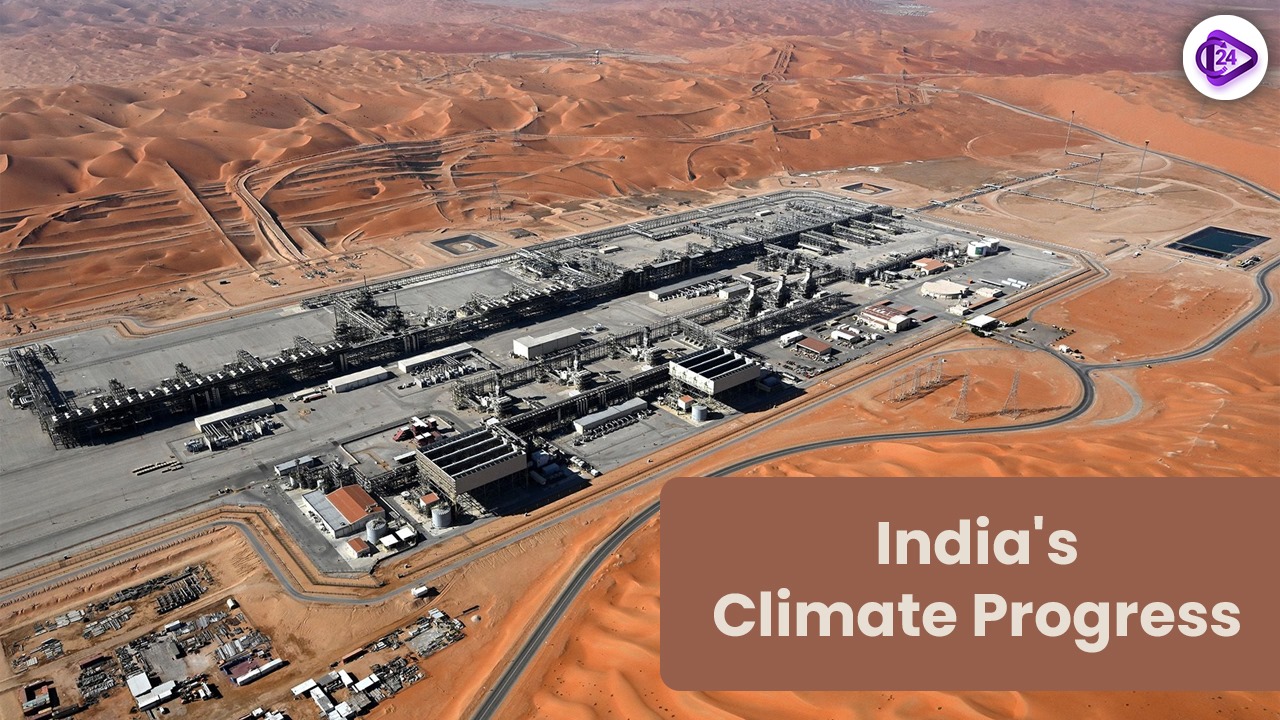
India has once again come forward for climate war by submitting its 4th Biennial Update Report (BUR-4) to United Nations Framework Convention on Climate Change (UNFCCC) on 30th December, 2024. The report documents India’s advancement in the concept of sustainable economic development by providing the National Greenhouse Gas (GHG) Inventory for the year 2020 and important milestones under the climate change plan.

About the BUR-4 Report

  • Reduction in GHG Emissions

    • India’s total greenhouse gas emissions without  (excluding Land Use, Land-Use Change, and Forestry – LULUCF) for the year 2020 were 2959 million tonnes of CO2 equivalent.

    • Net emissions, including (excluding Land Use, Land-Use Change, and Forestry – LULUCF) totalled 2,437 million tonnes of CO2 equivalent and were 7.93% lower than 2019.

    • The energy sector implemented the broadest amount of emissions, 75.66% while the agriculture was 13.72% for industrial processes and product use at 8.06% and waste at 2.56%.

  • Role of Forest and Tree Cover

    • Those of forests and trees absorbed 522 million tonnes of CO2 in 2020, the equivalent of ‘neutralizing’ 22% of total carbon dioxide emissions.

    • During the period 2005- 2021 the additional carbon sink of CO2 was 2.29 billion tones.

  • Emission Intensity and Renewable Energy Growth

    • Despite its rapid economic growth, India saw a 36% decline of its CO2 intensity of GDP between 2005 and 2020, clear evidence of an improved climate-change-embedded eco-efficiency.

    • About 46.52% of the cumulative installed electricity generation capacity in India attained the set mark by October 2024 to align with the fossil-free development drive, meaning that renewable energy has expanded significantly.

  • Forest and Tree Cover Expansion

    • India’s forest and tree cover stands at 25.17 % of geographical area base further affirming India’s commitment towards afforestation and wildlife conservation.

‘Highlights Of India Under NDCs’

India’s BUR-4 details significant milestones under its climate goals:

  • Renewable Energy Expansion:

    • Cumulative renewable electricity generation and capacity was 203.22GW with generation of 156.25GW in 2024 from 35GW in march 2014 excluding large hydro power projects for new installed capacity.

  • Proactive Climate Action:

    • Though historically and currently contributing little to carbon emissions, India has been quite assertive of climate change policies.

    • Activities demonstrating the Application of Principle of Equity & CBDR-RC – UNFCCC & Paris Agreement.

Remark by Union Environment Minister

Union Minister for Environment, Forest, and Climate Change, Shri Bhupender Yadav, pointed at India as one of the world leaders in achieving sustainable development. He said the achievements are evidence of PM Shri Narendra Modi’s policy direction of making the country an economic power while at the same time ensuring sustainable development.

India’s Vision

Down below, the new Indian BUR-4 exemplifies New Delhi’s commitment to fight climate change in pursuit of development goals. 

Climate Change: A nation with a very low individual carbon dioxide emissions, India remains an active participant in world climate policy making. On the three pillars of renewable energy, afforestation, and emission throughput rate, it can be seen that India is on track towards its 2030 Paris Agreement goals.

Conclusion

India’s 4th Biennial Update Report to the UNFCCC highlights significant progress in addressing climate change through emission reductions, renewable energy expansion, and afforestation efforts. The country has made remarkable strides in reducing its carbon intensity while simultaneously fostering economic growth. With a commitment to the Paris Agreement and sustainable development, India continues to lead by example on the global climate stage. The BUR-4 report underscores India's dedication to combating climate change and achieving its 2030 climate goals, setting a benchmark for other nations to follow.


Nano-formulated melatonin: Possibly, the Parkinson disease therapy breakthrough

Scientists have recently discovered that melatonin, a hormone that regulates the sleep/wake cycle, shows enhanced antioxidative and neuroprotective properties when formulated at the nanoscale. This breakthrough formulation could be therapeutically applied to treat Parkinson’s disease (PD), offering hope for better management of this progressive neurological disorder.

Scientists have recently established that melatonin, a hormone regulating the sleep/functions cycle, has better antioxidative and neuroprotective features when formulated at the nanoscale, it can be used therapeutically to treat Parkinson’s disease (PD).

Overview of Parkinson’s Disease and Contribution to Melatonin

Parkinson's a chronic progressive disease whose main pathophysiology is the degeneration of the Dopaminergic neurons because of the buildup of the synuclein protein in the brain. On the preventive aspect, there are no PD medications other than which aim at curing the disease, but only offer symptomatic management, a reason why new therapeutic strategies are required in PD.

There is melatonin, a hormone produced in the pineal gland and a potent mediator dependent on the circadian cycle as well as with antioxidative effects. Based on prior research, melatonin may promote mitophagy, an intuitive cellular recycling that helps eliminate damaged mitochondria, decrease oxidation stress and preserve neurons.

However, the current melatonin therapy is constrained by problems like low bioavailability, sensitivity to oxidation, and problems associated with delivering the drug to the brain.

Achievements Made by Indian Scientist

To overcome these challenges, the researchers at Institute of Nano Science and Technology (INST), Mohali have synthesized a nano-formulation of melatonin using human serum albumin as a nanocarrier. This new delivery system ensures that melatonin bioavailability increases while at the same time guaranteeing its delivery to the brains for optimum therapeutic value.

Key findings include

  • Improved Mitophagy and Mitochondrial Biogenesis: The nano- melatonin formulation improved the efficiency of mitophagy process and promoted the synthesis of functional mitochondria when the models received pesticide intoxication.

  • Enhanced Neuroprotection: The formulated compound exhibited higher efficacy in scavenging of reactive species and saved dopaminergic neurons against death in ex vivo as well as in vivo models of PD.

  • Epigenetic Regulation: Nano-formulation also caused the over expression of BMI1 as described to have a role in mitophagy. This work was the first to demonstrate that BMI1 protects neurons from oxidative stress and degeneration in Parkinson’s models.

Key Outcomes and Implications

The study, published in ACS Applied Materials & Interfaces, highlighted the potential of nano-melatonin to revolutionize Parkinson's therapy:

  • Sustained Drug Release: Nano-formulation was effective in sustaining the release of and carry melatonin to the brain area where it originates from.

  • Improved Cellular Dynamics: Increased mitophagy and antioxidant cellular signaling downregulated oxidative stress and promoted neuron viability.

  • Broader Applications: The discoveries offer the opportunity to address other dysregulated diseases with mitophagy, as well as Alzheimer’s and Huntington’s.

Conclusion and future prospects

In addition to identifying the molecular targets and pathways by which melatonin improves Parkinson’s disease, this study also confirms melatonin as a safer and more efficacious therapeutic. The researchers confidently believe that further investigation of nano-formulated melatonin could help millions of patients with neurodegenerative disorders to improve the quality of their lives. Advanced systems of drug delivery are being used in this invention making it a clear testimony to the fact that India is leading in coming up with solutions to various health issues using Science and technology.

Bridging the Digital Divide: India’s Schools and the Technology Gap

India’s education system is at a juncture, highlighting improvement, which has occurred as well as persistent inequities, indicated by the UDISE+ report: 2023-24 database. Among its most striking findings is the limited penetration of digital technology in schools, more specifically, only 57.2% possess functional computers, and only 53.9% have internet connections. These are worrisome figures given that education is being thrust to the forefront of change in the digital age.

A Tale of Progress and Gaps

On the brighter side, over 90% of schools have now basic facilities like electricity and separate toilets for girls/boys which have been added under one or the other Government Schemes. However, facilities adapted for disability access: ramps (available in only 52.3% of schools), and technology are still highly contrasting. These gaps demonstrate the systematic realities of implementing the stated goals embodied under the NEP 2020 and the SDGs.

The situation though worsens when the regional division is taken into consideration. For example, schools in West Bengal are primarily primary and elementary (79%) while secondary schools are scarce (11.6%); thus, high drop-out rates among the learners as they advance in school. In this case, secondary school enrollment is dominant at 75.6% while there is a paucity of offering focal schools at just 6.1% which affects early education.

Dropouts and Study Retention Issues

  • Increasing Dropout Rates: Dropout increases at higher education level from 5.2% in middle school to 10.9% in secondary level. 

  • Retention Rates: Drop-out rates reverse from 85.4% at the preparatory stage to 45.6% in secondary education showing that students’ attrition progresses with class levels. 

Gross Enrolment Ratio (GER) Inequalities

  • Preparatory Level: GER is 96.5% showing a good enrollment at the first level of education. 

  • Foundational Level: GER is a lot lower at 41.5%, indicating early childhood care and education enrolment difficulty. 

  • Middle and Secondary Levels: GERs are 89.5% and 66.5%, lower than the previous year, due to the student’s transition from one level to another in their learning process. 

State-Wise Disparities

  • West Bengal: More of it includes 79% of foundational and preparatory schools, while only 11. 6% of secondary schools; this can result in higher dropout rates in the higher classes. 

  • Chandigarh: concentrated more in the secondary level education 75.6% but only few and insufficient with the fundamental level of education 6.1%, this decreases the educational facility on early education. 

Digital Infrastructure

  • Functional Computers: When it comes to functional computers only 57.2% of the schools possessed them which shows the digital gap. 

Rural vs. Urban Divide

There is strong evidence that education for rural children in India is worse compared to urban children. With better infrastructure teaching fraternity and equipment accessibility in urban areas, rural schools suffer from severe infrastructure inadequacies. It has also now emerged that about 27 of all rural schools do not have access to drinking water, while over 22% of the same schools do not have a functioning toilet. The lack of these basics results in high dropout levels, more so for girls due to the long distances they cover in transit and insecurity challenges. Closing this gap needs concentrated expenditure on facilities in the rural zones, fixtures of connection, and policy interventions that address problems of the country regions.

Gender Inequality in Education

Thus gender inequality, for example, in access to education is still critical in many countries, especially in those with conservative and lower GDPs. Even after awareness schemes such as Beti Bachao Beti Padhao the dropout rates for girls are much higher as compared to boys, especially in the secondary and higher level education. Some of the main reasons include early marriages, societal pressures, and financial challenges among others. To tackle these problems requires community participation, educational sponsorships, and gender sensitive infrastructure including compliant washrooms and secure transport means.

Curriculum as well as individual learning outcomes 

There have been called various Indian curriculum putting more emphasis on memory operating abilities than on creativity and innovative skills operation. The disconnection between what is taught in school and content relevant to a fast-changing job market prepares graduates poorly for employment.

The National Education Policy (NEP) 2020 has gone some way in the right direction by proposing the use of experiential learning and skills, as well as interdisciplinary studies. However, its implementation presupposes a continuation of the general measures and adequate resource provision across the states.

Special Needs Education

The rights of disabled students are still violated in the independent Indian state as they continue to be one of the most neglected groups in school. Though policies require equal education, only 52.3% of the schools have a ramp for easy wheelchair access, and a very few tecahers training in a special method.

Inclusive classrooms are very important but it call for tremendous investment in coming up with the teachers, schools and tools to make the classroom more friendly for the impaired students.

Application of Technology in Equity and Inclusion

Information technology being pivotal to focused curriculum implementation can therefore not be an option but a necessity in schools. This is very well illustrated by the outcome of the pandemic situation where the availability of computers and internet has been mandatory for the continuation of education. However, analysis of the UDISE+ data points to the continuation of a persistent digital divide that could deepen learning achievement inequities.

It is still beneficial to have an Aadhaar-linked unique education ID for tracking the flow and dropouts and all in this is a welcome move towards affecting focused and precise improvements. These IDs help in planning and implementing specific interventions and try to eliminate the layer of duplications in government programs such as Samagra Shiksha and PM POSHAN. These rates are significantly low and they vary by state with Meghalaya at 24.1%, Bihar at 38.8%, and Manipur at 51.8% compared to the national average of 79.4 %. If Aadhaar is not made universal it will remain impossible to attempt at providing successful equal access to education.

Teacher rostering and school physical resources

Teacher Stock-Out and Pupil Teacher Ratio (PTR) are factors determinants of equity in education. States such as Jharkhand, Bihar, and West Bengal exceed the NEP-recommended PTR of 30:1. Mass enrollment of students with 1 at the secondary level and limited resources will put a lot of pressure. At the same time, the states including Assam, Odisha, and Karnataka may have redundant infrastructure owing to the low ratio of students to schools. Thus, there is a need to strike a perfect balance between these two extremes so that resources are well coordinated to fit the local needs.

A Call to Action

The UDISE+ report is informative, its findings emphasize the need for:

  • Investment in Digital Infrastructure: Increased accessibility of functional computers and dependable internet in schools should be of paramount importance in the country. This change might be accelerated by public-private partnerships.

  • Addressing Regional Disparities: It therefore ensured that targeted initiative needed to be implemented to ensure equality in both basic and post basic educational facilities across states.

  • Enhancing Teacher Training and Deployment: Overcoming PTR discrepancies can be achieved by concentrating on teacher recruitment’s reinforcement and distribution fairness.

  • Universal Aadhaar Seeding: There is a need to achieve a cent percent Aadhaar linkage to ensure proper monitoring of various education schemes under the government’s rule for efficient governance.

  • Reducing Dropout Rates: It is therefore crucial that there are driving efforts to improve retention rates more so in secondary education to ensure universalisation of education by the year 2030.

Conclusion

India’s goal of inclusive “education for all” spelled out in the NEP 2020, assumes its future accessibility based on filling gaps in the digital divide, physical infrastructure, and teacher distribution. This information from UDISE+ means being an effective map of where interventions are required, and a call to action for policymakers, educators, and stakeholders. While the nation works hard to achieve the set 2030 goals and aspirations, the ideal goal must always be to have all children regardless of location or background, receive quality education.

India’s Role in Global Textile Trade: Growth, Challenges & Future

Textile industry of India is one of the oldest and most important sectors in India economy. It is instrument in positively contributing to the GDP, exports and employment and development of both rural and industrial spheres. Therefore, the sector cuts across from fiber production up to apparel production and the creation of many brands and livelihoods. Being a largest exporter of cotton, jute and silk, India is also emerging as a major player in upcoming modern segments like technical textiles. These developments point to the industry’s entrance into domestic and international markets thereby advancing the role of economic development.

India in global trade

  • Currently, India occupies the 6th position in the global export market of Textile and Apparel (T&A) and provides 3.9% of the total Textile and Apparel (T&A) exports.

  • Overall exports of T&A, of which handicrafts, stood at 8.21% of the total exports of all products during the FY 2023-24.

  • Major export destinations: USA and EU, which make up around 47% of total exports.

Share of exports:

  • The Textile and Apparel T&A export for April to October of FY 2024-25 is $21,358 million up by 7% against $20,007 million of the same period of the FY 2023-24.

    • Ready Made Garments (RMG): $8,733 Mn (41%)

    • Cotton Textiles: $7,082 Mn (33%)

    • Man-Made Textiles: $3,105 Mn (15%)

  • Growth was observed in all commodities, except:

    • Wool: Declined by 19%.

    • Handloom: Declined by 6%.

  • There were some disturbances in the geopolitical trends, which have affected exports in certain periods of time such as the Red Sea Crisis and Bangladesh Crisis of early 2024.

Import Trends

  • Total import of Textile and Apparel products contracted by 15% from FY 2022-23, $10,481 Mn to FY 2023-24, $8,946 Mn.

  • In case of April-October of the FY 2024-25 total imports is reduced by 1% $5,425 Mn from $5,464 Mn in the comparative period of the last financial year.

  • Category-wise share of imports:

    • Man-Made Textiles: Approximately $1,859 Mn (34%) through these gaps in the demand and supply of services in this sector.

    • Imports of Cotton Textiles increased as domestic production capacity to meet demand for long staple cotton fibre used by the industry.

Key Observations

  • India has a positive balance of trade in Textile and Apparel sector.

  • The imported goods may be to meet re-export demand or specific industries need for input or intermediate product.

  • Export performance is therefore determined by the international market, the home market, transportation and political factors.

  • Effects of import trend are indicative of increasing demand for domestic products and availability of enhanced production capabilities, which boosts India's textiles industry.

Importance of Indian Textile Industry

  • Economic Contribution:

    • Textile sector of India makes up around 2.3% of India’s Gross Domestic Product (GDP) and brings 7% of industries turnover.

  • Employment Generation:

    • After agriculture, it is the second-largest employer directly providing employment to more than 45 million people and 100 million in the allied industries.

  • Export Strength:

    • The textile sector contributes 12% of the total exports and in the financial year 2023 the exports were $ 44.4 billion.

  • Diverse Offerings:

    • India has a competitive edge in the mass categories such as cotton, jute and silk and in segments like technical textile and man-made fibres (MMF).

Challenges of Textile Industry in India

  • Raw Material Price Volatility: Volatility or rhe fluctuation of price especially of cotton, destabilizes the production cost and returns on investments.

  • Technological Upgradation: Some of the units have decayed machinery which hampers production and efficiency in today’s competitive global markets.

  • Environmental Concerns: Since the concerns immense utilization of resources, it is vital that environmentally sustainable strategies are applied.

  • Global Competition: The competition for Indian garment factories is intense because countries such as Bangladesh, Vietnam, and China, where costs of production are comparatively cheaper and have the advantage of favorable trade relations.

Government Initiative for textile growth: 

  • Production Linked Incentive (PLI) Scheme:

    • Having been initiated with an ambitious state fund of ₹10,683 crore, this scheme is aimed at enhancing the production of man-made fibres and technical textiles, for which about ₹19,000 crore fixed industrial investment proposals and provided employment to 7.5 lakh people.

  • National Technical Textiles Mission:

    • It will cost ₹1,480 crore to set up, the government aims to boost production and research to place India at the forefront of technical textiles worldwide.

  • Amended Technology Upgradation Fund Scheme (ATUFS):

    • Grants loans to finance current production equipment upgrades and efficiency enhancement.

  • Skill Development through Samarth Scheme:

    • More than 10 lakh youth are being imparted training for textile trades to fulfill the industry requirements.

  • MITRA Parks:

    • The government is to set up 7 Mega Integrated Textile Regions and Apparel Parks to lure investment with enabling infrastructure and amenities.

Conclusion

Textile industry has continued to occupy a key place in the framework of Indian economy which is signatory to its artistic and industrial traditions. Laying down a vision, making strategic investments, fostering technology, and formulating and enacting effective policies, for years India ushers in high growth in the sector to enhance its overbearing global presence making the sector a sustainable growth model.

Frequently Asked Questions (FAQs)

The current affairs cover recent national and international events related to UPSC, SSC, Banking, Railways, and State PCS.

You need to read about the current affairs daily, and revise them every week and every month to keep them longer in your memory.

Yes, Class24 provides free downloadable Daily Current Affairs PDFs for easy revision.

Yes, you can practice MCQs and quizzes to boost your exam preparation.

Absolutely. The content is written in simple, easy-to-understand bilingual language suitable for beginners.

Go to class24.com and click on the current affairs section directly, where you find everything that you need.

ssc-toppers

Start Learning Today with Class24

Related current affairs

Class24 offers free video lectures for smart preparation, covering CGL, CPO, CHSL, MTS, and GD exams. Learn from expert faculty, revise concepts easily, practice with PYQs, and improve speed and accuracy through high-quality, exam-focused video lessons anytime, anywhere.

Get success in your hand. Start study anytime anywhere.

The journey becomes simple and enjoyable when you start taking interest in it. And through our app “Class24”, we will be your trusted partners in developing that interest.

Daily Quizzes
Mock Tests
Ongoing

No ongoing tests right now.