

Daily Quizzes
Mock Tests
No tests attempted yet.
Select Category
Folk Dances of India: In Detail

Enquire Now
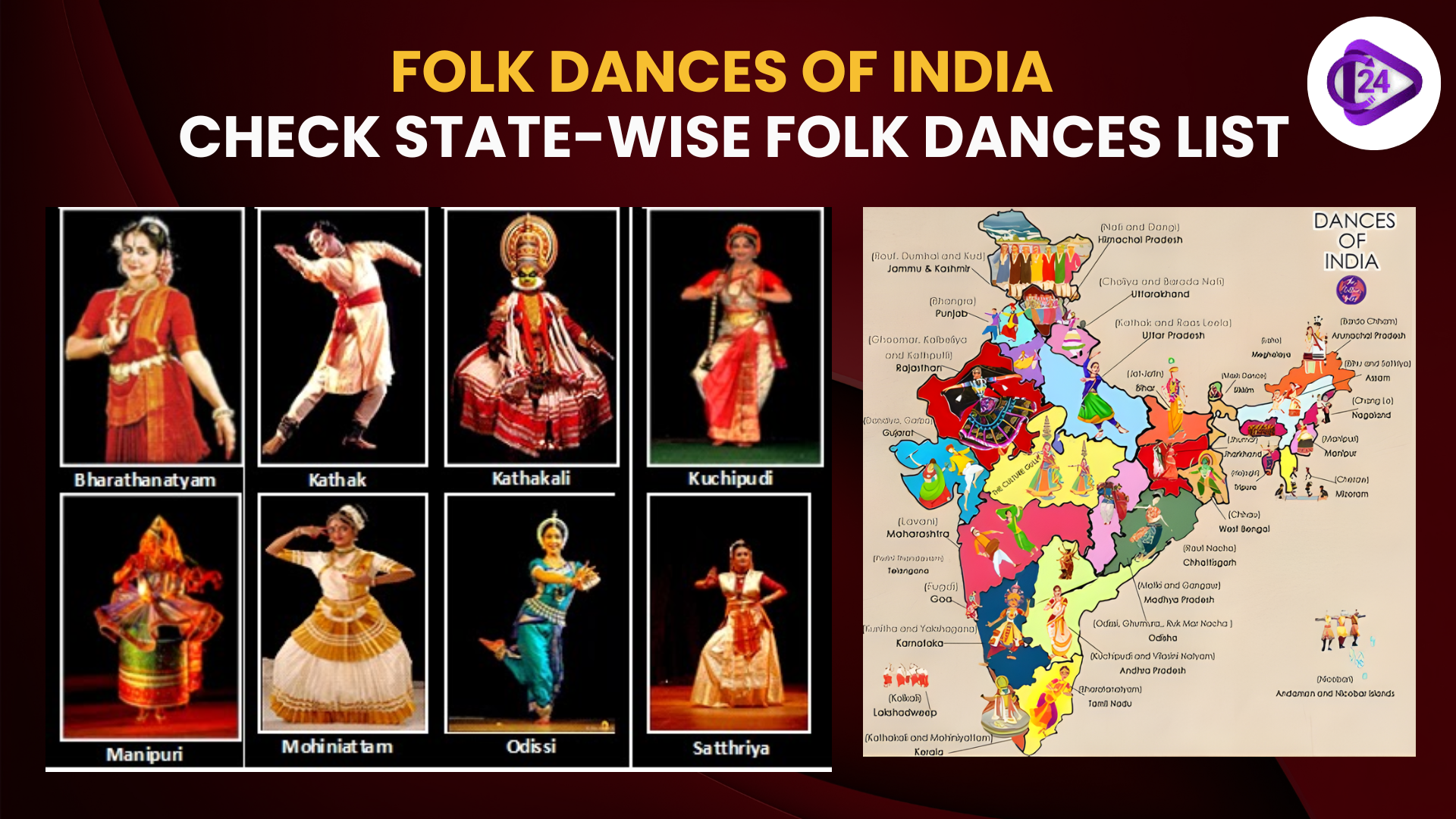
India is known worldwide for its rich culture and heritage, and one of the most vibrant parts of this heritage is the Folk Dances of India. Every state in India has its own traditional dance form that reflects its history, customs, festivals, and lifestyle. These dance forms are deeply connected to rural life, agriculture, religious beliefs, and social celebrations.
We will explore the state-wise folk dances of India, their importance, cultural background, and significance. This article is especially useful for students preparing for competitive exams like SSC, UPSC, Railway, State PSC, and other government exams.
What are the folk dances of India?
Folk dances are traditional dance forms performed by local communities during festivals, harvest seasons, weddings, and religious ceremonies. Unlike classical dances, folk dances are simple, energetic, and performed in groups.
They represent:
- Regional identity
- Community bonding
- Traditional customs
- Celebration of nature and seasons
The Indian Folk Dance List is vast because India is culturally diverse, with 28 states and 8 union territories.
What are the folk dances of India?
Folk dances are traditional dance forms performed by local communities during festivals, harvest seasons, weddings, and religious ceremonies. Unlike classical dances, folk dances are simple, energetic, and performed in groups.
They represent:
- Regional identity
- Community bonding
- Traditional customs
- Celebration of nature and seasons
The Indian Folk Dance List is vast because India is culturally diverse, with 28 states and 8 union territories.
Folk Dances of North India
Punjab
- Bhangra
- Giddha
Bhangra is one of the most famous folk dances of India. It is performed during Baisakhi and harvest festivals. Giddha is performed by women and includes traditional songs called boliyan.
Haryana
- Dhamal
- Phag
- Loor
These dances are performed during Holi and harvest celebrations.
Himachal Pradesh
- Nati
- Chamba
Nati is recognized as one of the largest folk dance performances in the world.
Uttarakhand
- Chholiya
- Jhora
Chholiya is a traditional sword dance performed during weddings.
Uttar Pradesh
- Raslila
- Nautanki
- Kajri
Raslila is based on the life of Lord Krishna and is popular in Mathura and Vrindavan.
Rajasthan
- Ghoomar
- Kalbelia
- Bhavai
Ghoomar is a graceful dance performed by women in long flowing ghagras. Kalbelia is performed by the snake-charmer community.
Jammu & Kashmir
- Rouf
- Dumhal
Rouf is performed by women during festivals and special occasions.
Folk Dances of South India
Tamil Nadu
- Karagattam
- Kummi
- Kolattam
Kummi is one of the oldest folk dances of Tamil Nadu.
Kerala
- Theyyam
- Thiruvathirakali
- Oppana
Thiruvathirakali is performed by women during the festival of Onam.
Karnataka
- Yakshagana
- Dollu Kunitha
Yakshagana is a dance-drama that combines music, dialogue, and dance.
Andhra Pradesh
- Lambadi
- Veeranatyam
Telangana
- Perini
- Bonalu Dance
Perini is an ancient warrior dance.
Folk Dances of East India
West Bengal
- Chhau
- Baul
Chhau dance is known for colorful masks and martial art movements.
Odisha
- Ghumura
- Gotipua
Gotipua is considered the precursor of Odissi classical dance.
Bihar
- Jat Jatin
- Bidesia
Jharkhand
- Karma
- Paika
Karma dance is performed by tribal communities.
Folk Dances of West India
Gujarat
- Garba
- Dandiya Raas
Garba and Dandiya are popular during Navratri and are among the most performed traditional dances in India.
Maharashtra
- Lavani
- Koli
Lavani is famous for its energetic rhythm and expressive performance.
Goa
- Fugdi
- Dhalo
Folk Dances of Central India
Madhya Pradesh
- Matki
- Tertali
- Grida
Chhattisgarh
- Panthi
- Raut Nacha
Folk Dances of North-East India
North-East India is culturally rich and has unique tribal dance traditions.
Assam
- Bihu
Bihu dance is performed during the Rongali Bihu festival, celebrating the harvest.
Manipur
- Thang Ta
- Lai Haraoba
Meghalaya
- Nongkrem
Mizoram
- Cheraw (Bamboo Dance)
Cheraw is performed using bamboo sticks and is very popular.
Nagaland
- War Dance
Arunachal Pradesh
- Bardo Chham
Tripura
- Hojagiri
Importance of Folk Dances in Indian Culture
The Traditional Dances of India play a crucial role in preserving the country’s heritage. They are not just performances but a reflection of people’s lifestyle, emotions, and history.
1. Cultural Preservation
Folk dances keep ancient traditions alive.
2. Social Unity
They promote community bonding and teamwork.
3. Festival Celebration
Most folk dances are linked to harvest festivals, religious events, and seasonal changes.
4. Identity of States
Each state is recognized by its unique dance form, contributing to India’s cultural diversity.
Difference Between Folk Dance and Classical Dance
| Folk Dance | Classical Dance |
|---|---|
| Simple and energetic | Structured and disciplined |
| Community-based | Professionally trained |
| Performed during festivals | Based on the Natya Shastra |
| Regional focus | Pan-Indian recognition |
Examples:
- Folk: Bhangra, Garba, Lavani
- Classical: Bharatanatyam, Kathak, Odissi
Folk Dances of India for Competitive Exams
For SSC, UPSC, Railway, and State PCS exams, questions are often asked like:
- Bhangra belongs to which state?
- Cheraw dance is related to which state?
- Garba is performed in which festival?
- Chhau dance is associated with which states?
So remembering the State-wise Folk Dances of India is very important for the General Knowledge section.
Most Popular Folk Dances of India
Some of the most famous Indian folk dances are:
- Bhangra – Punjab
- Garba – Gujarat
- Ghoomar – Rajasthan
- Bihu – Assam
- Lavani – Maharashtra
- Chhau – Odisha / West Bengal
- Yakshagana – Karnataka
- Cheraw – Mizoram
These dances are performed not only in India but also internationally.
Role of Folk Dances in Modern India
Today, folk dances are showcased in:
- School annual functions
- Republic Day celebrations
- Cultural festivals
- International cultural exchange programs
- Reality shows
Government initiatives and cultural organizations are promoting Indian Folk Dance Forms globally.
Important Links
| Indian Classical Dance | Indian Art and Culture Current Affairs |
| Folk Festivals in India | Important UNESCO World Heritage Site GK Questions |
Conclusion
The Folk Dances of India – State-wise List reflects the unity in diversity of our country. Every region has its own rhythm, costume, music, and story. These dances preserve traditions, strengthen community bonds, and celebrate life.
Understanding the State Wise Folk Dances of India is not only important for exams but also essential to appreciate the richness of Indian culture.
India’s cultural beauty lies in its diversity, and folk dances are the colorful threads that connect people across states, languages, and traditions.
Frequently Asked Questions