

Rajya Sabha Election 2026

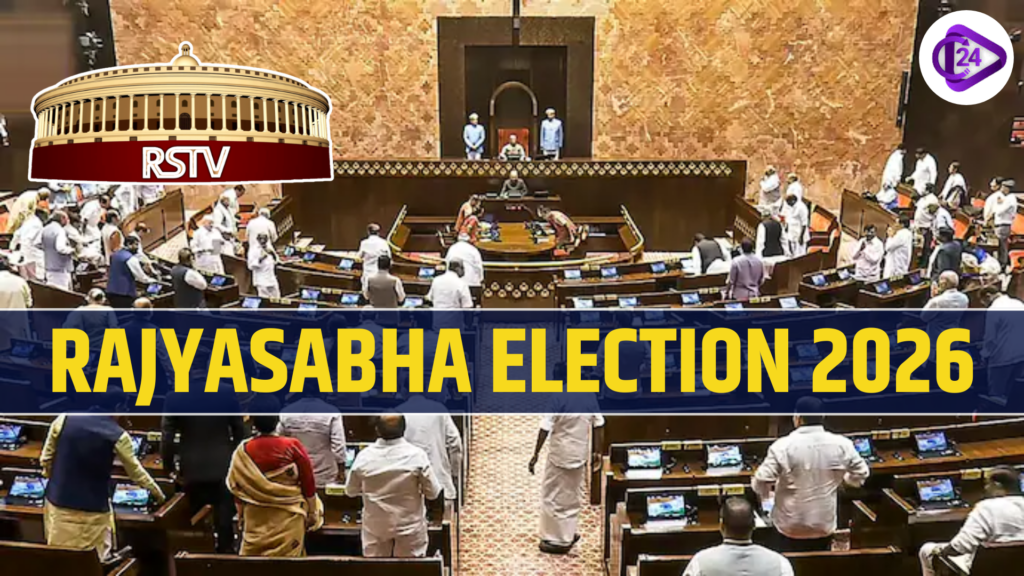
The Rajya Sabha Election 2026 is scheduled as part of the regular biennial cycle to fill seats in India’s upper house of Parliament. According to the Election Commission of India, polling is set for March 16, 2026, to elect members for 37 seats across 10 states where terms are coming...

The Rajya Sabha Election 2026 is scheduled as part of the regular biennial cycle to fill seats in India’s upper house of Parliament. According to the Election Commission of India, polling is set for March 16, 2026, to elect members for 37 seats across 10 states where terms are coming to an end. These elections are indirect, with elected members of state legislative assemblies casting their votes through a proportional representation system using the single transferable vote. The outcome is significant, as it will determine party strength in the Council of States and influence the passage of key national legislation.

How Is the Rajya Sabha Election Conducted?

  • Members of the Rajya Sabha are elected indirectly, not by the general public. They are chosen by elected members of state legislative assemblies and, in certain union territories, by members of their respective electoral bodies, as provided under the constitution.

  • The election process is administered by the Election Commission of India, which issues the schedule covering nominations, scrutiny, withdrawal of candidature, polling, and counting of votes.

  • The system used is proportional representation through the single transferable vote (STV) method. This ensures that seats are allocated in proportion to the strength of political parties in the state assembly.

  • Instead of casting one simple vote, MLAs rank candidates in order of preference on the ballotpaper.

  • A specific vote quota is calculated using a prescribed formula. A candidate must secure this minimum number of votes to be declared elected.

  • Voting is conducted through an open ballot system, meaning MLAs must show their marked ballot to their authorised party agent before placing it in the ballot box.

  • After counting and transferring preference votes, candidates who meet the required quota are officially declared elected to the Rajya Sabha.

PYQs on Rajya Sabha

Question Answer
Consider the following statements about the Rajya Sabha:
(1) It has no power to reject or amend a Money Bill,
(2) It cannot vote on Demands for Grants,
(3) It cannot discuss the Annual Financial Statement.
Which of the statements given above is/are correct?
Only (1) is correct.
About the Rajya Sabha:
(1) It is not subject to dissolution,
(2) Its term is five years,
(3) One-third of members retire every two years,
(4) Minimum age of a member is less than 25 years.
Which of the statements given above are correct?
(1) and (3) are correct.
How many members of the Rajya Sabha can be nominated by the President of India?
(a) 10
(b) 12
(c) 14
(d) 16
(b) 12
Seats allocated to states in the Rajya Sabha are based on:
(a) Fertility rate
(b) Per capita income
(c) Birth rate
(d) Population of the state
Who elects members to the Rajya Sabha?
(a) Direct public vote
(b) President of India
(c) Elected Members of State Legislative Assemblies
(d) Governors of States
(c) Elected Members of State Legislative Assemblies

Conclusion (Rajya Sabha Election)

The Rajya Sabha election plays a vital role in maintaining the federal structure of India’s parliamentary system. Through indirect voting and proportional representation, it ensures fair representation of states in national lawmaking. The process strengthens democratic balance, continuity, and stability in Parliament, contributing to informed debate and responsible governance.


Rising Global Tensions 2026: Opportunities & Risks for India’s Economy
IMD Issues Big Warning: More Heatwave Days, Higher Minimum Temperatures
Artemis II Mission: NASA’s First Crewed Lunar Flyby in 50 Years Explained
India Hosts IONS Maritime Exercise 2026 in Kochi Port
India’s Major Share in Global Maternal Deaths
Japan Launches World’s First Freight-Only Bullet Train: Revolutionising High-Speed Logistics
01 April 2026
30 March 2026
28 March 2026
23 March 2026
20 March 2026
19 March 2026
18 March 2026
17 March 2026
16 March 2026
14 March 2026

Start Learning Today with Class24

Buy a course

SSC

Railway

Banking

Teaching Exams

Rajasthan Exams

K12 Courses

Class24 Mobile Application

Class24 also has a mobile application so that it becomes easily accessible and convenient. This can be downloaded on an Android device. Users have appreciated this app and the content provided as 4.1 out of 5 is its rating in the App Store. People loved it because Class24 is giving content which is extremely rich in every sense. The app comprises a wide variety of features for smooth learning:

  • User-Friendly Interface: The app is categorized into various sections so that students can navigate and access various resources with ease.
  • Offline Access: The study materials can be downloaded and the student can access them even when not connected to the internet.
  • Inbuilt eBook Reader: There is a lightning-fast reader for eBooks within the app, so reading is seamless.
  • Progress Tracking: The app tracks student’s progress in preparation and keeps them organized and focused.

Courses and Subjects Offered

The total syllabus will be covered, and there are in-depth practice materials so as to give deep preparation in the courses designed to each one of them. All the subjects come under the aegis of courses offered by Class24 to meet different needs of various aspirants such as:

Preparation Tips for All Exams

Preparation tips for all exams mentioned below:

  • Previous Year Papers: Try to attempt at least 5-10 years of question papers to know the pattern of questions, how much difficulty one would face while answering, and how many frequently asked topics were in the examination.
  • Take Mock Tests: Attempt Mock Tests regularly in order to time and accuracy. You may analyze the performance and make an improvement for weak areas.
  • Focus on Time Management: Solve questions in the given time to make a habit of having speed and efficiency. Allocate time sensibly between Paper 1 and Paper 2, while appearing in the examination.
  • Current Affairs: For Current Affairs and TET exams, be updated about current affairs, teaching aptitude, and general awareness.
  • Regular Revision: Spend your daily and weekly time for revisions to not forget concepts and formulas. Use flashcards or do self-summary notes for quick revisions.
  • Understand the Exam Pattern and Syllabus: Understand the pattern of your exam paper and syllabus very well. Both Current Affairs and CSIR NET examinations are two-tier ones and involve both Paper 1, which consists of general aptitude and Paper 2 that involves specific aptitude subjects.
  • Make a Study Plan: Divide the preparation time into three phases of concept building, revision, and mock tests. Allocate more time to weaker areas while maintaining equilibrium with stronger sections.
  • Online Coaching or Study Groups: Enroll in online coaching programs like Class24 to get proper guidance and a structured approach to the study. Study groups will be useful to discuss doubts and share resources.
  • Stay Consistent and Motivated: Maintain a steady study schedule. Stay motivated by making small achievable goals.
  • Use Quality Study Materials: Suggested study material refers to a textbook, a set of previously published question papers, and web sources such as Class24.

Conclusion

Class24 is a one stop solution for aspirants preparing for Current Affairs, CSIR NET, SET, UP PGT English, UP TGT PGT, UPHESC Assistant Professor, TET, IGNOU B.Ed and other competitive exams. There are structured courses, live classes, mock tests along with the guidance of experts to assist candidates in achieving success in their respective fields.

Get success in your hand. Start study anytime anywhere.

The journey becomes simple and enjoyable when you start taking interest in it. And through our app “Class24”, we will be your trusted partners in developing that interest.

Daily Quizzes
Mock Tests
Ongoing

No ongoing tests right now.