

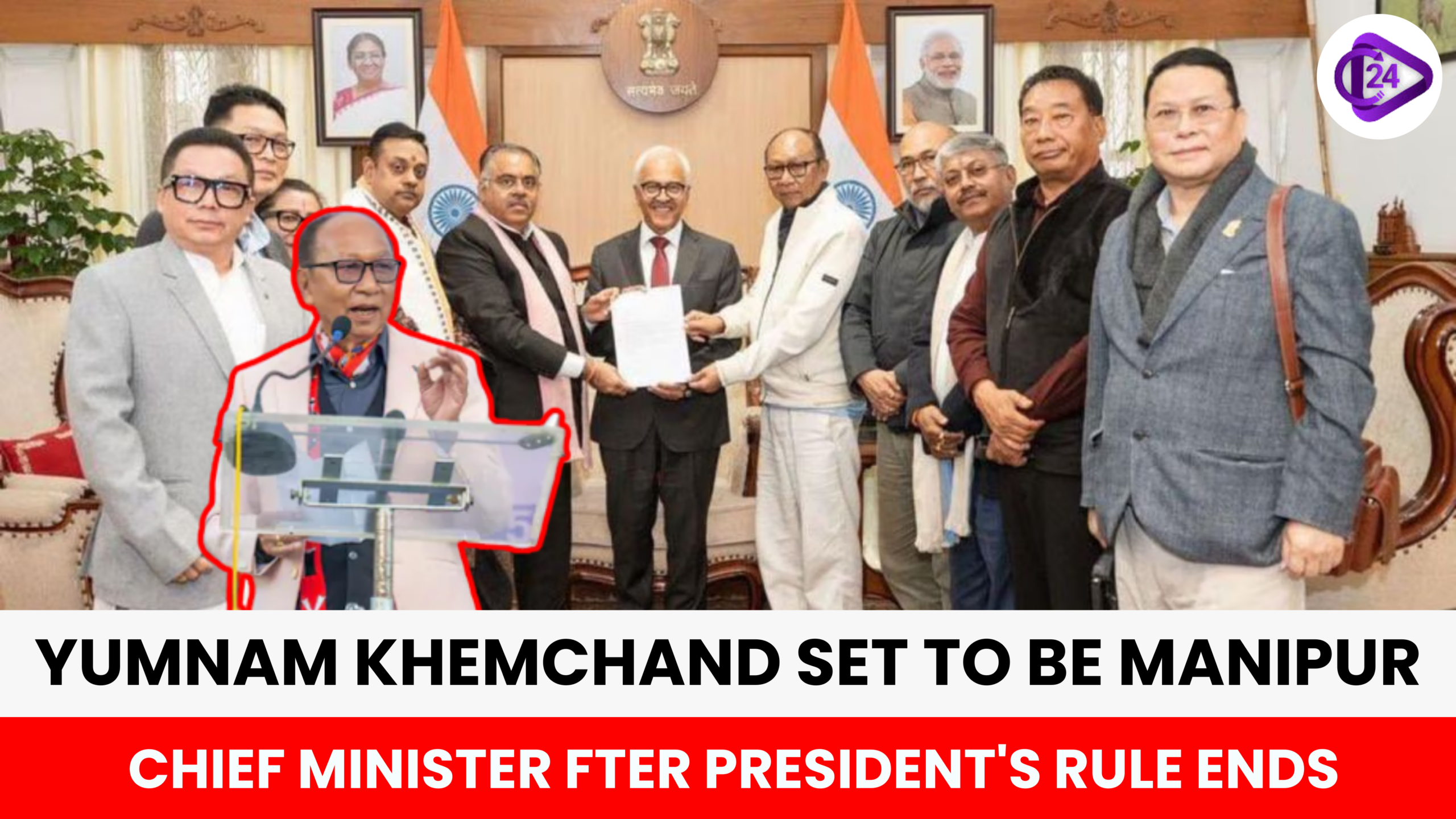
Yumnam Khemchand Singh has become the Chief Minister of Manipur, where the President signs an ordinance repealing the President's Rules in the state, and the presidency of Manipur comes under the formal control of the administration of the State. On 4 February 2026, the Ministry of Home Affairs made a notification rescinding President-Rule in Art.356 of the Constitution, allowing a government to be elected democratically. After its revocation, the BJP Legislature Party elected as its leader Yumnam Khemchand Singh, who was allowed to take the oath and introduce the oath as the new Chief Minister of Manipur. The end of the central control is the reinstatement of state governance upon his appointment.
President’s Rule in India: Definition, Constitutional Basis & Effects
The President's Rule is the suspension of a state government and that of direct rule by the Union government in accordance with Article 356 of the Constitution of India in cases where a state is not able to operate in conformity with the provisions of the Constitution. The President, at this time, governs the state with the Governor until normality in governance is restored.
President’s Rule and Constitutional Basis & Effects
-
President's Rule is created according to Article 356 of the Constitution of India when a state government is not functioning in the specified way in accordance with the regulations in the Constitution.
-
It can be suspended by the report of a Governor or other reliable data on the inefficiency of the constitutional apparatus.
-
The President makes a proclamation that presupposes the executive powers of the state government.
-
Both Houses of Parliament are required to approve this proclamation within two months, or else it will stop functioning.
-
After approval, the President's Rule will be in force for six months at a time.
-
It may be renewed after every six months (maximum of three years), with parliamentary consent.
-
The possibility to extend further than a year needs special terms of an emergency in the country or approval that it is impossible to hold elections.
Effects of President’s Rule
-
The Council of Ministers is replaced, and the chief minister stops being a holder of office.
-
The State Legislative Assembly can be suspended or dissolved.
-
The state is governed by the President via the Governor, who has the capacity to be the executive head.
-
Parliament takes up legislative roles of the state, including budgetary control.
-
Parliament or the President, through ordinances, makes laws on behalf of the state.
-
President Rule is rather designed as a provisional solution before democracy is returned to power.
Recently Asked PYQs on the President and Articles
| Exam | Year | Question | Options | Correct Answer |
|---|---|---|---|---|
| UPSC Prelims | 2017 | Which of the following are not necessarily consequences of the imposition of President’s Rule in a State? | (a) Dissolution of State Assembly (b) Dismissal of Council of Ministers (c) Dissolution of Local Bodies (d) Suspension of Legislature | (a) and (c) |
| UPSC Prelims | 2018 | When President’s Rule is imposed in a State, who exercises the powers of the State Legislature? | (a) Governor (b) President (c) Parliament (d) Supreme Court | (c) Parliament |
| SSC CGL | 2022 | Under which Article of the Constitution can President’s Rule be imposed in a State? | (a) Article 352 (b) Article 355 (c) Article 356 (d) Article 360 | (c) Article 356 |
| SSC CHSL | 2020 | President’s Rule means the State is governed by: | (a) Chief Minister (b) Governor (c) Parliament through the President (d) Supreme Court | (c) Parliament through the President |
| RRB NTPC | 2021 | President’s Rule in a State can continue initially for a maximum period of: | (a) 3 months (b) 6 months (c) 1 year (d) 2 years | (b) 6 months |
| RRB Group D | 2019 | Which authority recommends the imposition of President’s Rule in a State? | (a) Supreme Court (b) Election Commission (c) Governor (d) Prime Minister | (c) Governor |
| UPPSC | 2016 | President’s Rule was imposed for the first time in India in which State? | (a) Punjab (b) PEPSU (c) Kerala (d) Assam | (b) PEPSU |
| SSC GD | 2018 | Approval of the President’s Rule by Parliament must be obtained within: | (a) 1 month (b) 2 months (c) 3 months (d) 6 months | (b) 2 months |
| MPSC | 2020 | Which Article empowers Parliament to exercise legislative powers of a State during President’s Rule? | (a) Article 356 (b) Article 357 (c) Article 352 (d) Article 360 | (b) Article 357 |
| Railway JE | 2019 | The maximum duration of President’s Rule in a State is: | (a) 1 year (b) 2 years (c) 3 years (d) 5 years | (c) 3 years |
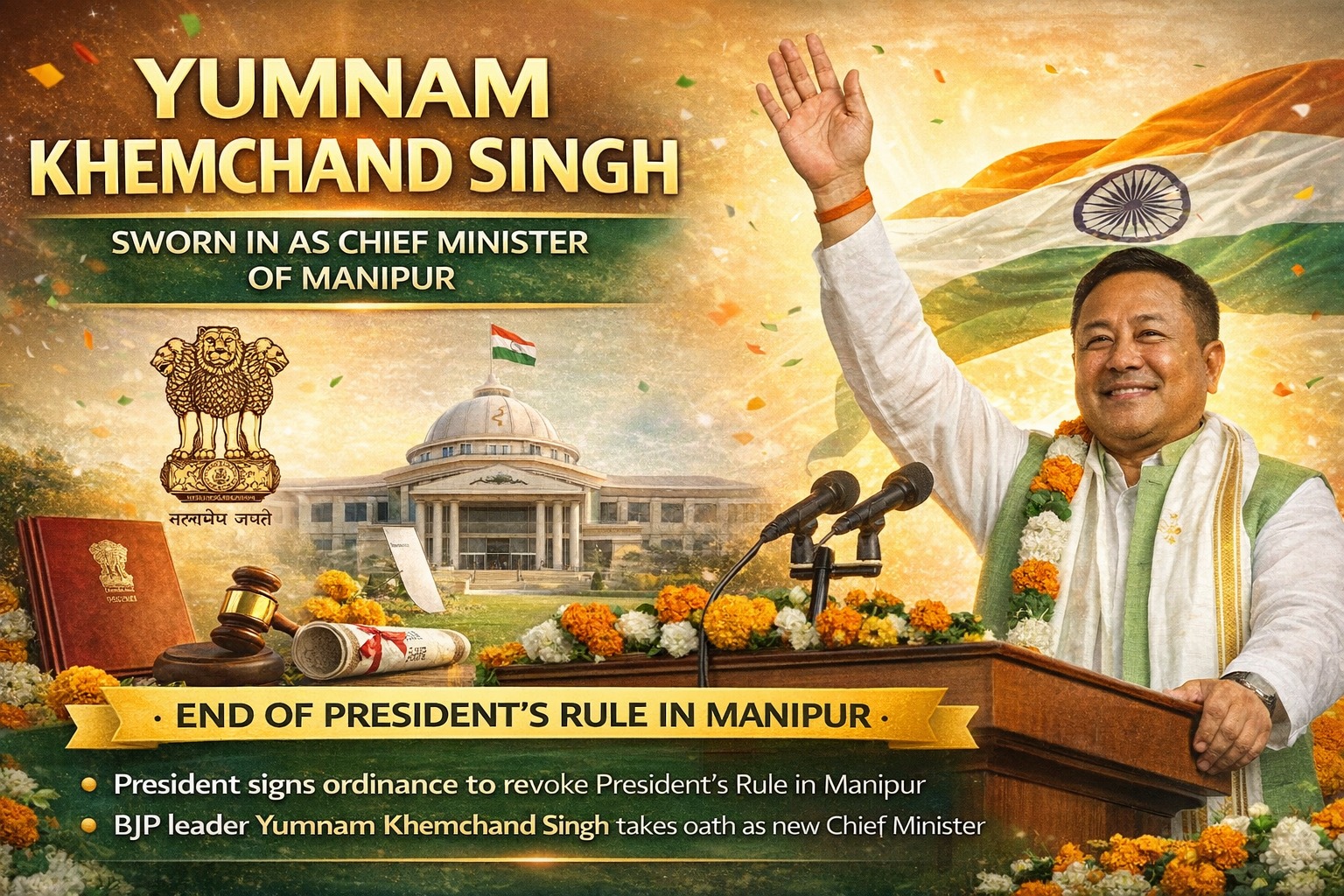
Conclusion (Yumnam Khemchand Becomes Chief Minister of Manipur)
The democratic rule in Manipur is signaled by the appointment of Yumnam Khemchand Singh as Chief Minister of the state and thus the end of the President Rule in the state. His leadership is imperative to a new emphasis on stability, growth, and reconciliation, which promises successful management and political sanity in Manipur.